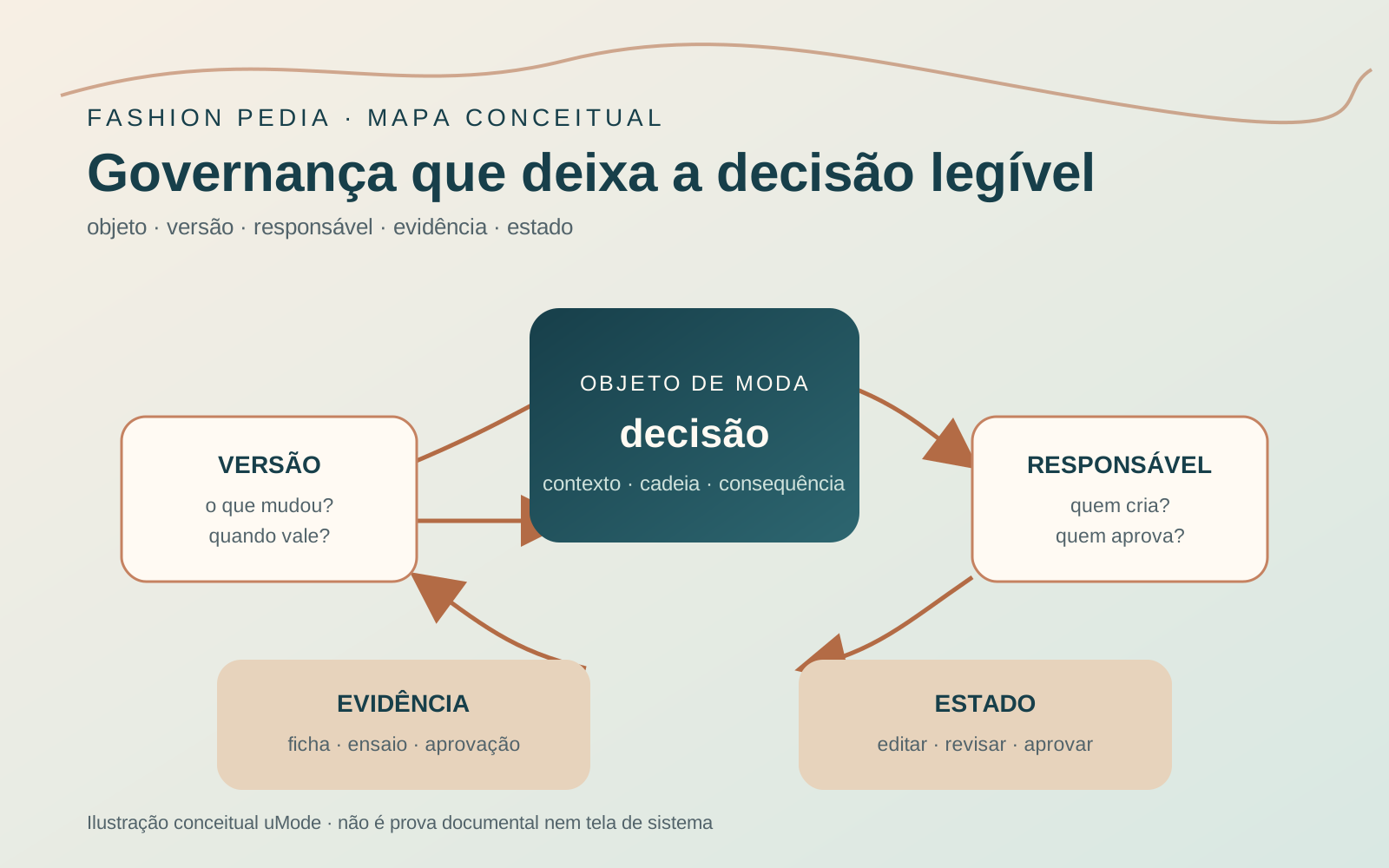
How to structure a fashion tech pack
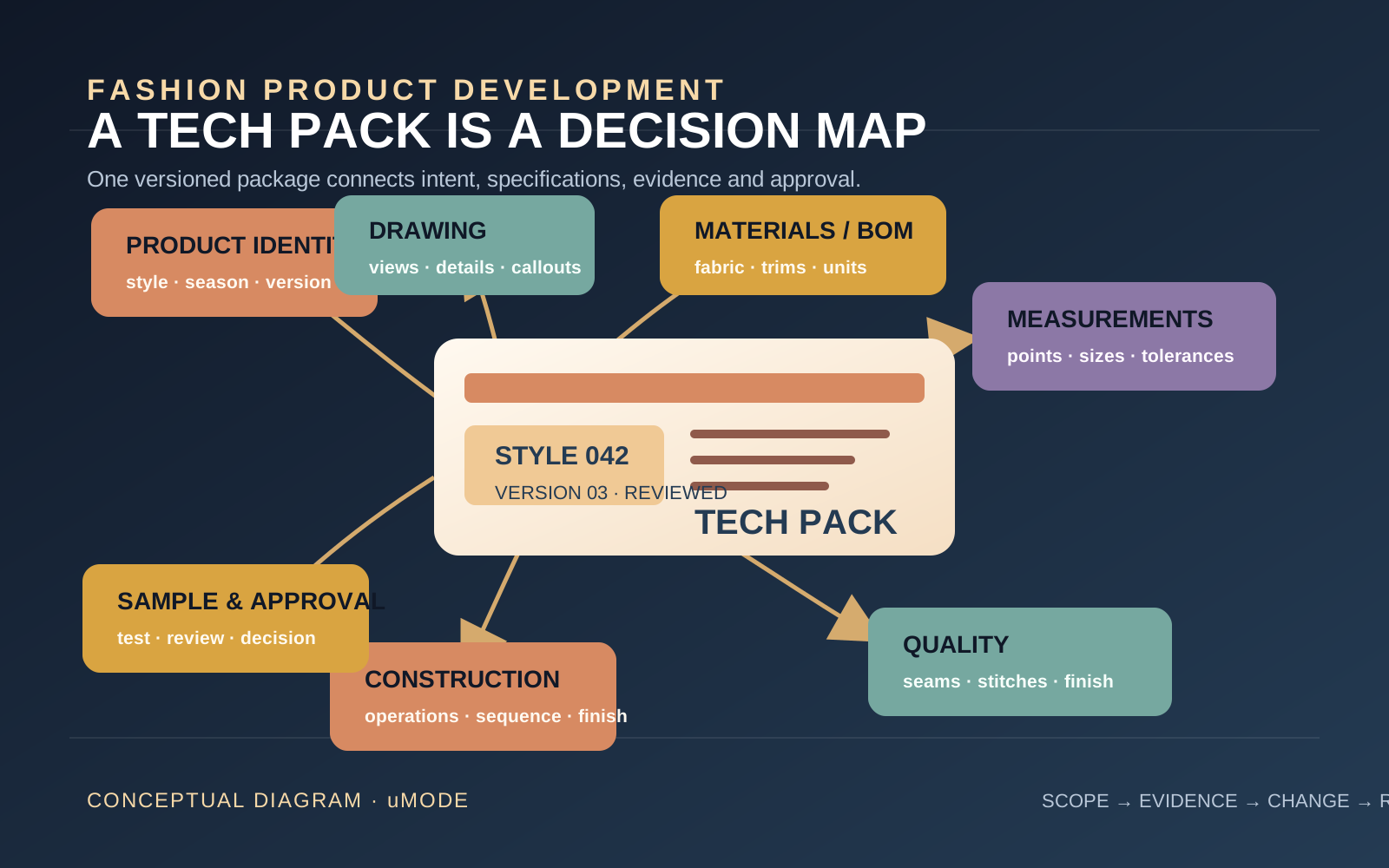
How to structure a fashion tech pack: turn product intent into a verifiable technical package for development, sampling, and manufacturing. It should bring together scope, drawings, measurements, materials, construction, labelling, quality, tolerances, approvals, and change history under an identifiable version.
On this page
What is How to structure a fashion tech pack?
To structure a fashion tech pack, communicate how a garment product should be built, checked, and changed. Operationally, define it as a technical package for a product or style, with a version reference and an accountable release owner. The Skills England standard describes a tech pack as an information package for communicating the components needed to construct a product. That places it between the creative brief and execution: it turns a design decision into observable requirements without replacing product engineering judgement.
Start with a header: style code, name, collection or season, date, version, status, owner, and supplier or package destination. Then state the scope. A file may cover a whole garment, a component, a colourway, or an approval stage; mixing those levels makes it difficult to know which change was authorised. Also record dependencies on the technical drawing, bill of materials (BOM), and size range.
How should the technical components be organised?
Organise the package in the order in which another person must make decisions: product identification, working drawings, materials, construction, measurements, labelling, quality, samples, and review. Skills England lists specifications, working drawings, measurements, labelling, quality standards, tolerances, and materials among product tech-pack content. Treat that list as a core, not as a universal template: each operation should add the fields its product and supply chain require.
In the drawing section, use enough views to show front, back, side, and details that do not fit in the main view. In materials, identify fabric, declared composition, colour, trims, components, and permitted substitutions. The BOM should distinguish structural items from finishing items and state a unit or application point. In construction, describe the sequence or operation when it affects fit, strength, appearance, or cost.
The measurement table should separate point of measure, size, target measurement, unit, and tolerance. Do not hide the grading rule: connect the table to the patternmaking or base pattern the team actually uses. For quality, define what will be observed, by which method, at which stage, and who decides the result. The cited standard uses seam types, stitch types, tolerances, and product finish as examples of production-quality specifications.
How should samples, approvals, and changes be controlled?
Treat a sample as evidence of a decision, not as a loose attachment. The minimum flow is to issue a version, make or receive the sample, record measurements and observations, mark deviations, decide whether to approve, correct, or reject, and publish the next version. The occupational standard includes sample development, material or product testing, and sample review, analysis, and approval in development work.
Each comment should identify the problem location, related requirement, action, owner, and next milestone. Separate a proposed change from an approved change. A new fabric, changed measurement, or replacement label must update the affected field and history rather than silently overwrite the previous version. The standard also lists bills of material, change logs, quality standards, and tolerances among technical records; together they form the backbone of tech-pack version control.
Keep an open-issues list and an exit criterion. “Approved” should mean that the criteria defined for that stage were met; it does not mean every supply-chain risk has disappeared. The relationship between the package and manufacturing must remain explicit because the same occupational standard places product development in an end-to-end process from design to distribution.
How should labelling and file exchange be handled?
Include the information that must reach the product and supplier, but validate regulatory requirements for the destination market. For textile products sold in Brazil, Inmetro lists responsible-party identification, country of origin, fibre composition, care instructions, and size or dimension when applicable. It also requires those details to be permanent, visible, and in Portuguese. Labelling should therefore not remain a generic note: record wording, position, method, language, and the person responsible for checking it.
When the package moves between systems or partners, standardise file names, units, formats, identifiers, and versions. W3C describes Web standards as building blocks for a digitally connected world and says its standards are optimised for interoperability, among other attributes. This does not make a tech pack a Web standard; it supports a design principle instead: when files are exchanged digitally, the convention should reduce different interpretations between parties.
What are the limits of a tech pack?
A tech pack is not automatically the same as a technical drawing, BOM, purchase order, pattern, or final approval. It may point to those objects, but each operation must state authority, format, and point of use. It also does not replace testing, fitting, inspection, or human decision-making. A complete document can expose a missing requirement; it cannot guarantee that the sample was executed correctly.
The package is most useful when it makes the product discussable in parts: drawing, material, measurement, construction, finish, label, quality, and status. When a change crosses more than one part, update the related references and preserve the decision rationale. That allows product development and engineering to locate the change, keeps the technical specification documentary, and gives quality control verifiable criteria without turning neighbouring documents into synonyms.
Connections
technical specification · technical drawing · bill of materials (BOM) · size range · version control · product development and engineering
Verified facts
- The Skills England occupational standard defines a tech pack as an information package designed to communicate the information and components needed to construct a product.
Source: skillsengland.education.gov.uk ↗ - The standard lists bills of material, change logs, quality standards, and tolerances among technical records in product development.
Source: skillsengland.education.gov.uk ↗ - For production support, the standard includes developing tech packs with specifications, working drawings, measurements, labelling, quality standards, tolerances, and materials.
Source: skillsengland.education.gov.uk ↗ - The standard treats incorrect completion of tech packs, specifications, tracking, review notes, and product history as having consequences that should be explained.
Source: skillsengland.education.gov.uk ↗ - The production-quality specifications cited by the standard include seam types, stitch types, tolerances, and product finish.
Source: skillsengland.education.gov.uk ↗ - The standard includes sample development, material or product testing, and sample review, analysis, and approval in development work.
Source: skillsengland.education.gov.uk ↗ - The occupational standard relates product development to an end-to-end process from design to distribution.
Source: skillsengland.education.gov.uk ↗ - For textile products sold in Brazil, Inmetro lists responsible-party identification, country of origin, fibre composition, care instructions, and size or dimension when applicable.
Source: gov.br ↗ - Inmetro requires those details to be presented permanently, visibly, and in Portuguese.
Source: gov.br ↗ - W3C describes Web standards as blueprints or building blocks for a consistent and harmonious digitally connected world.
Source: w3.org ↗ - W3C says its standards are optimized for interoperability, security, privacy, accessibility, and internationalization.
Source: w3.org ↗
Related entries

Fashion product technical specification
A technical specification is the controlled information set that translates an approved fashion product into verifiable sampling and manufacturing requirements. It brings together drawings, materials, measurements, construction, tolerances, identification, labelling, comments and revision history; its content varies by category, company, market and stage.
Fashion technical drawing
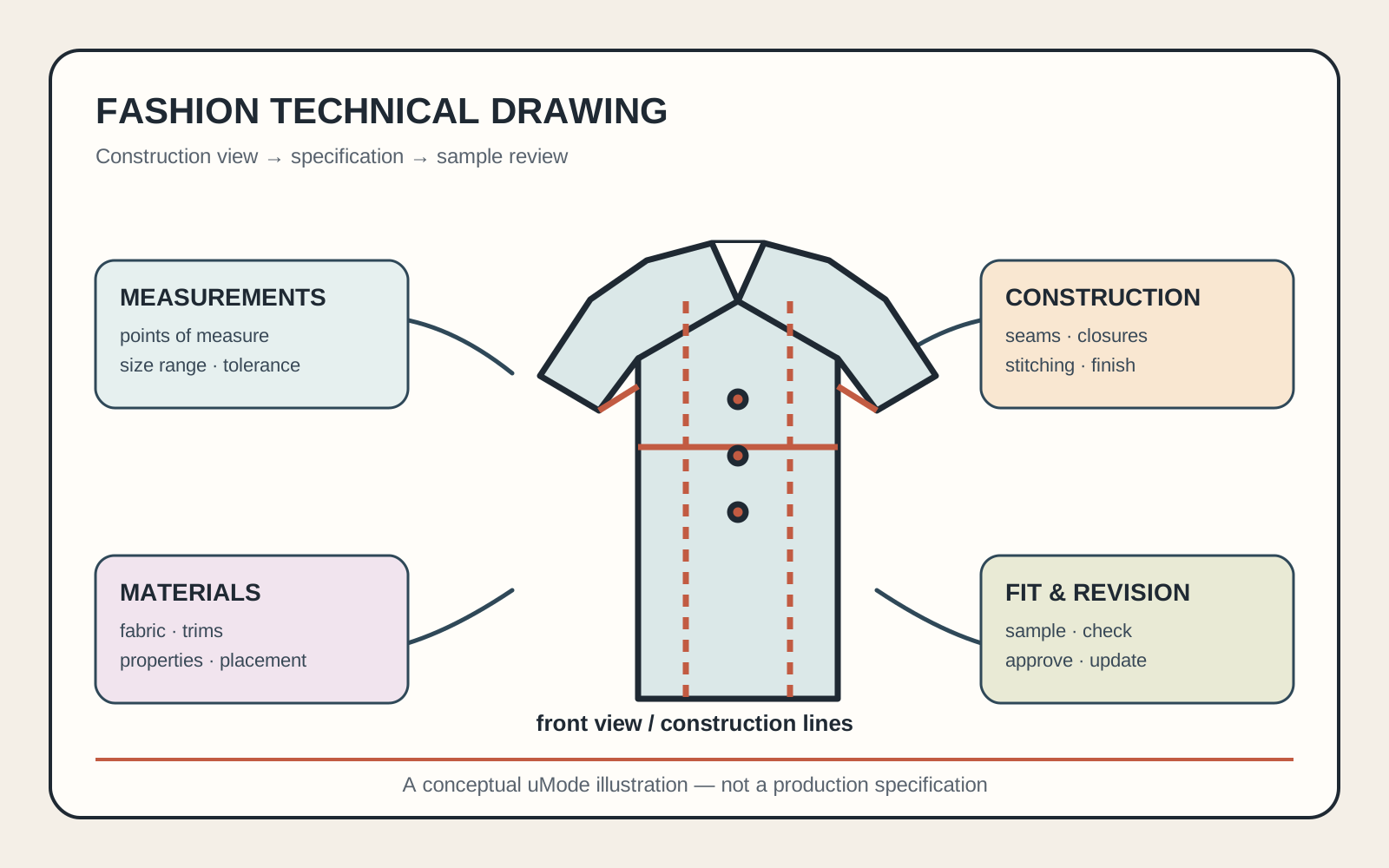
Fashion technical drawing is a construction-oriented representation used to communicate a garment’s form, details, measurements and manufacturing decisions. In apparel development it connects with patternmaking, specifications, fitting, materials and production; it does not replace a complete tech pack or physical validation.
Apparel bill of materials (BOM)
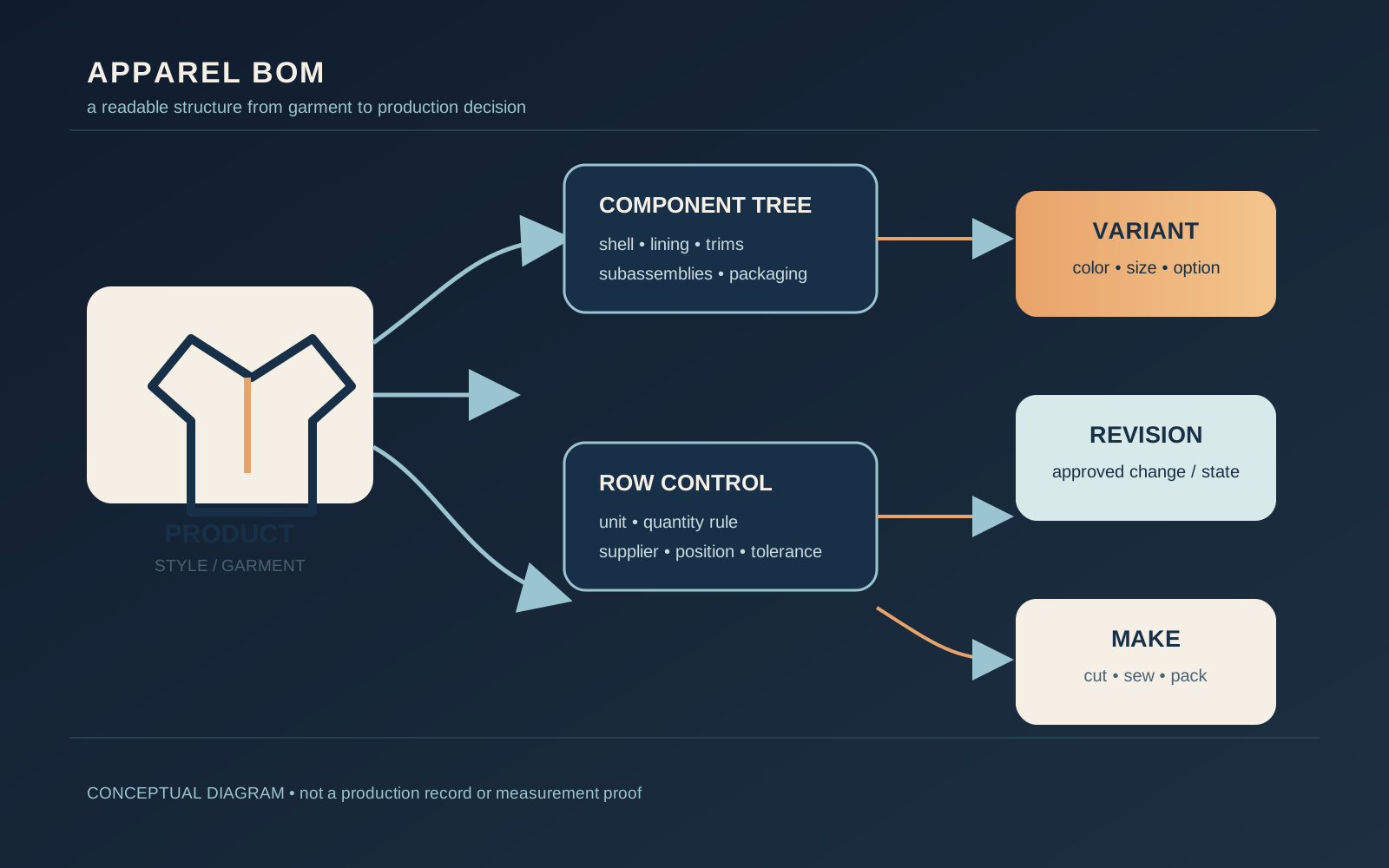
Apparel bill of materials (BOM). An apparel bill of materials organizes the component structure of a garment: raw materials, parts, components, subassemblies, and the quantities needed to make the product. For a collection, it should separate hierarchy, variant, and revision so it is not mistaken for calculated consumption, available inventory, or accounting cost.
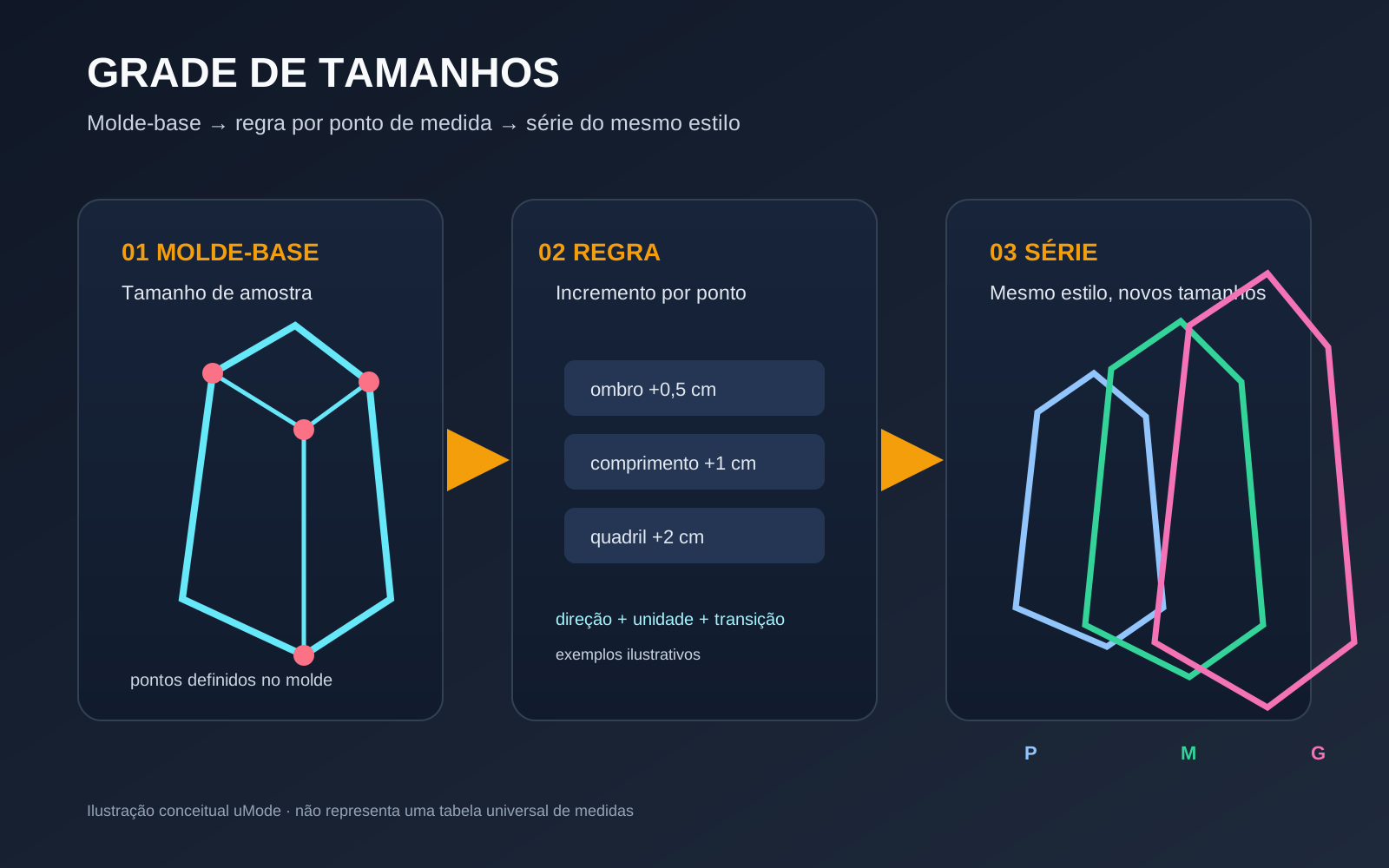
Size grading
Size grading is the process of turning base-size or sample-size patterns into additional sizes by using a specification sheet or grading increments. A rule changes defined points on the pattern to form a size range for the same style; it does not replace patternmaking or create a new shape.
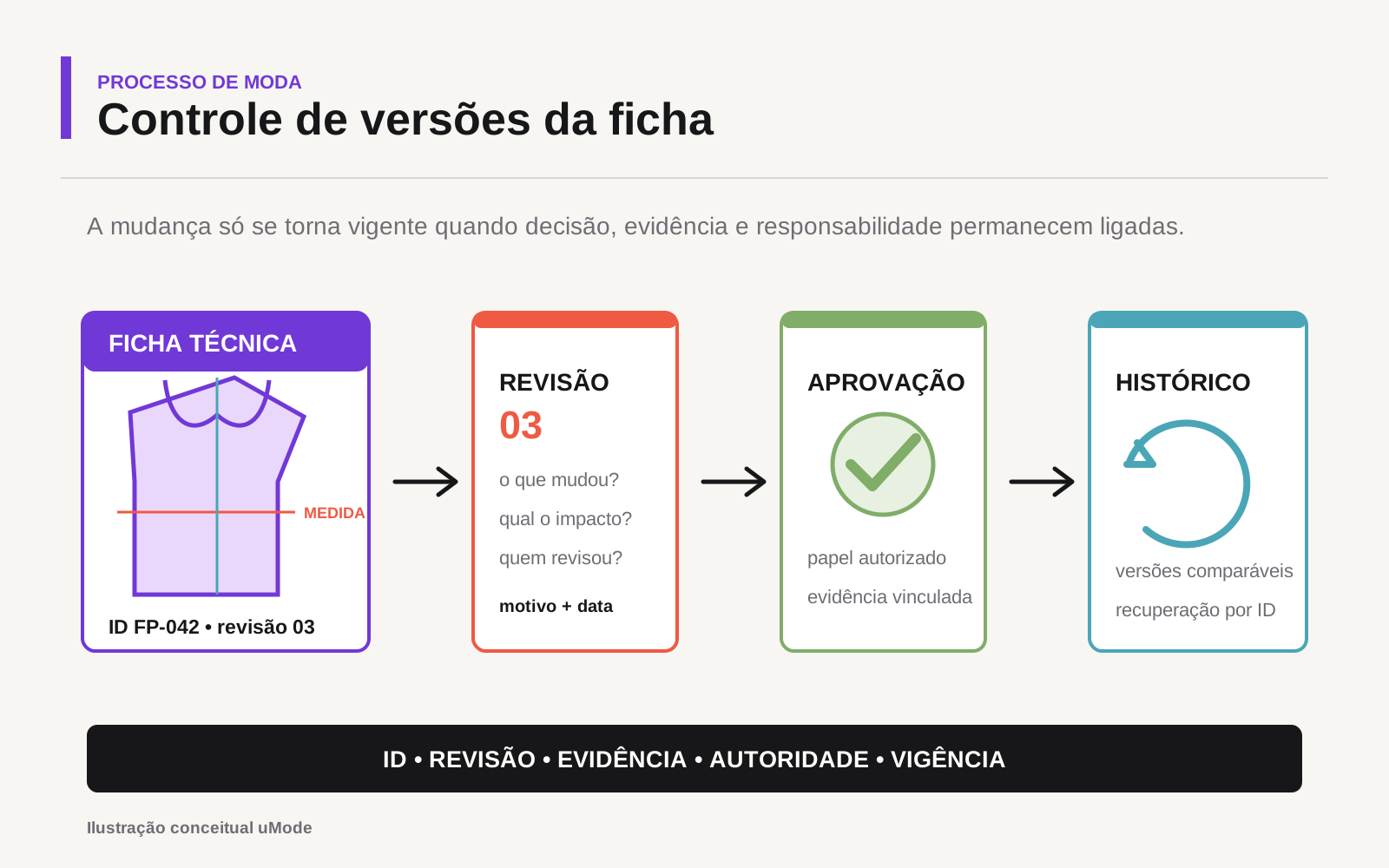
How to control tech pack versions
How to control tech pack versions. Controlling tech pack versions means recording every product change with an identifier, owner, reason, status, approval and effective date. The method applies configuration-control and product-lifecycle principles to the concrete decisions of an apparel supply chain.
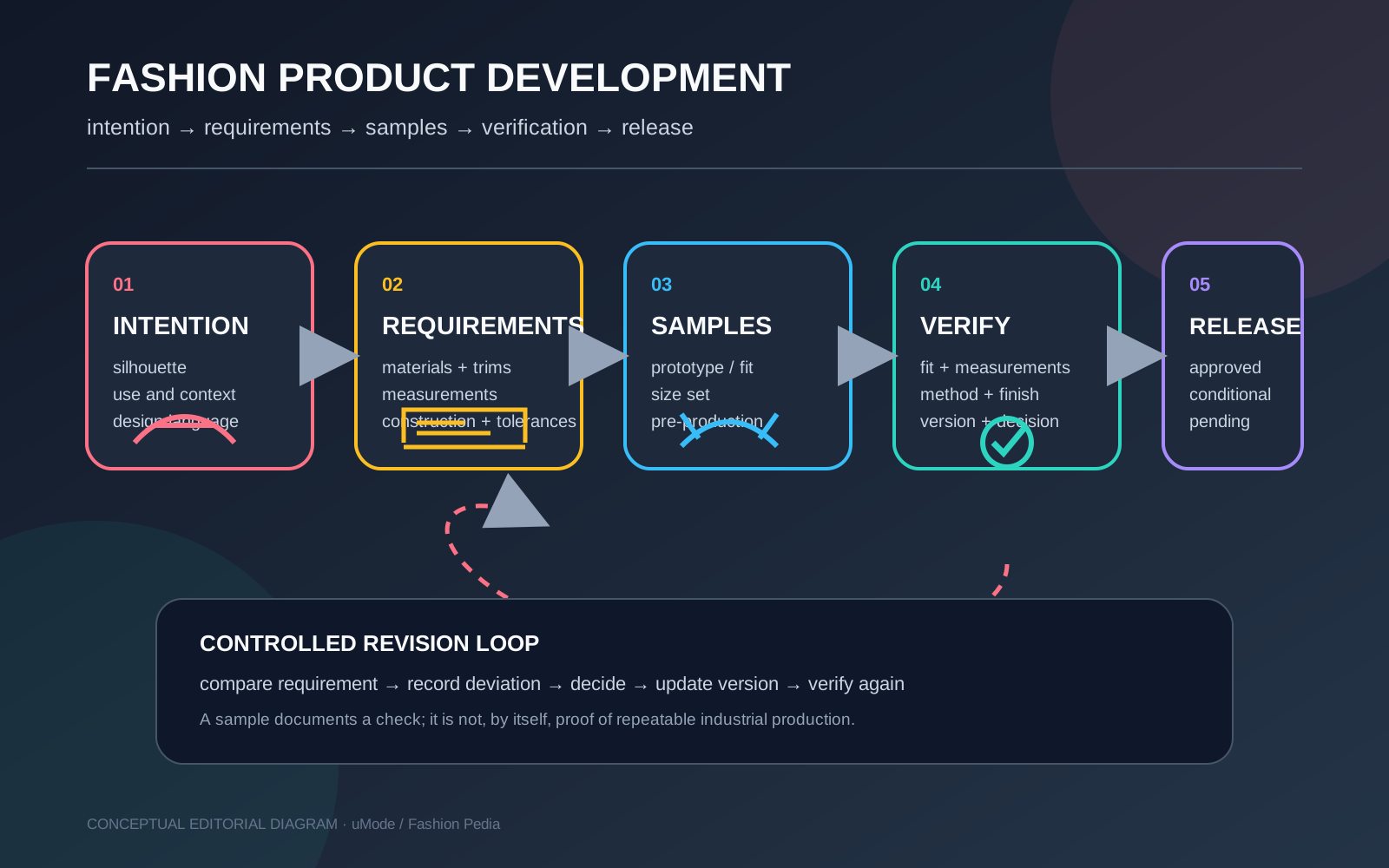
Fashion Product Development and Engineering
Fashion product development and engineering turns a design intention into verifiable requirements for building, fitting, revising, and releasing a garment or collection. The process connects concept, technical specification, patternmaking, materials, construction, measurements, samples, quality, cost, and lifecycle data without treating aesthetic approval as proof of industrial repeatability.
Sources
- https://skillsengland.education.gov.uk/media/2305/st0540_fashion-textiles-product-technologist-epa_for_publication_2-october-2018.pdf
- https://www.gov.br/inmetro/pt-br/acesso-a-informacao/perguntas-frequentes/avaliacao-da-conformidade/produtos-texteis/o-que-a-medida-regulatoria-para-produtos-texteis-estabelece
- https://www.w3.org/standards/
Want to apply this to your operation?