Fashion Product Development and Engineering
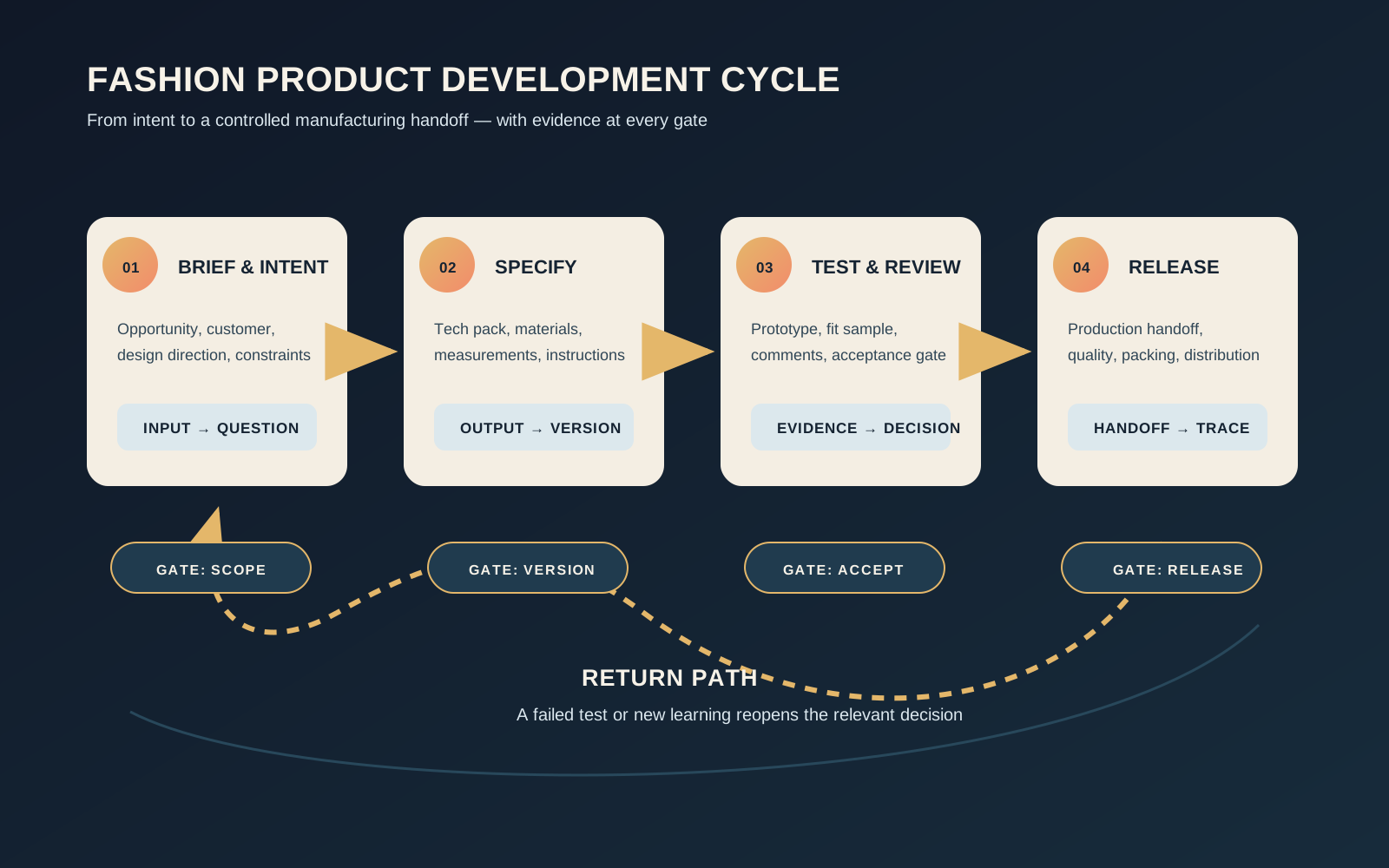
Fashion product development and engineering turns a design intention into verifiable requirements for building, fitting, revising, and releasing a garment or collection. The process connects concept, technical specification, patternmaking, materials, construction, measurements, samples, quality, cost, and lifecycle data without treating aesthetic approval as proof of industrial repeatability.
On this page
What is Fashion Product Development and Engineering?
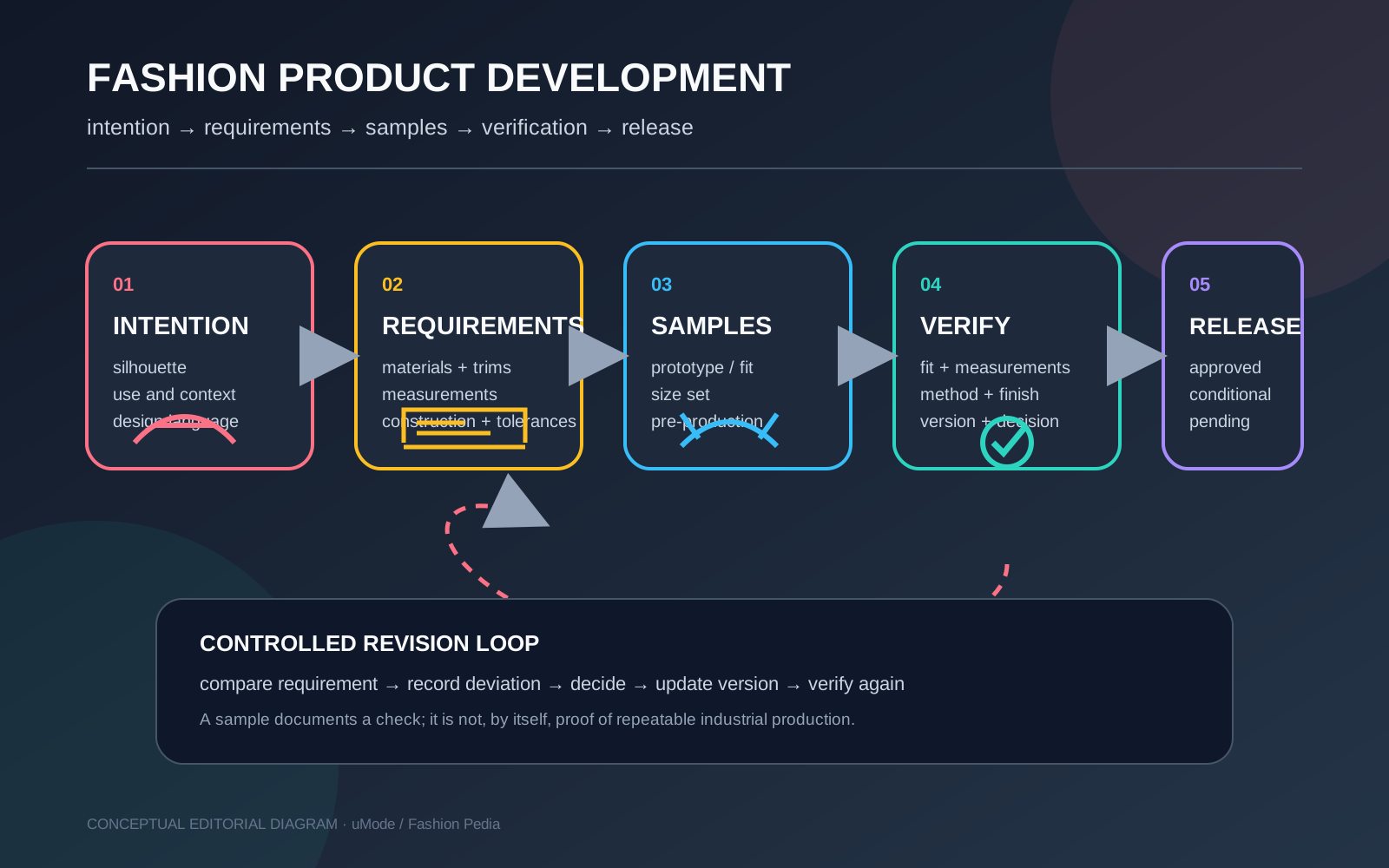
Fashion product development and engineering is the process of turning a design intention into a buildable, testable, and revisable specification. FIT places product development between concept development and pre-production and includes PLM, costing, construction, and quality in its training scope. Editorially, this means treating a garment as a set of requirements: silhouette, raw material, components, construction, measurements, tolerances, finish, target cost, and acceptance criteria.
Start with the decision that must be made. For a shirt, it may be fit approval; for trousers, grading behavior; for a jacket, assembly sequence; for a collection, release of materials and suppliers. That decision determines what belongs in the technical specification, which points belong in the measurement table, and what kind of sample is needed. Images alone do not define a product: each requirement needs a way to be checked.
How does a concept become a verifiable product?
The workflow begins with a product intention and a drawing that must be translated into technical language. The team can decompose the style into parts, materials, trims, operations, measurement points, and tolerances. Patternmaking turns proportions into patterns; the specification records construction and components; the sample makes the requirement observable; the fit session produces comments; and each change receives an explicit decision.
Keep the questions for each milestone separate. A prototype may investigate volume and proportion. A fit sample may test fit and measurement points. A size-set sample may reveal grading behavior. A pre-production sample may check whether material, construction, finish, and method align before release. These categories are a recommended control model for development, not a claim that every company uses the same labels.
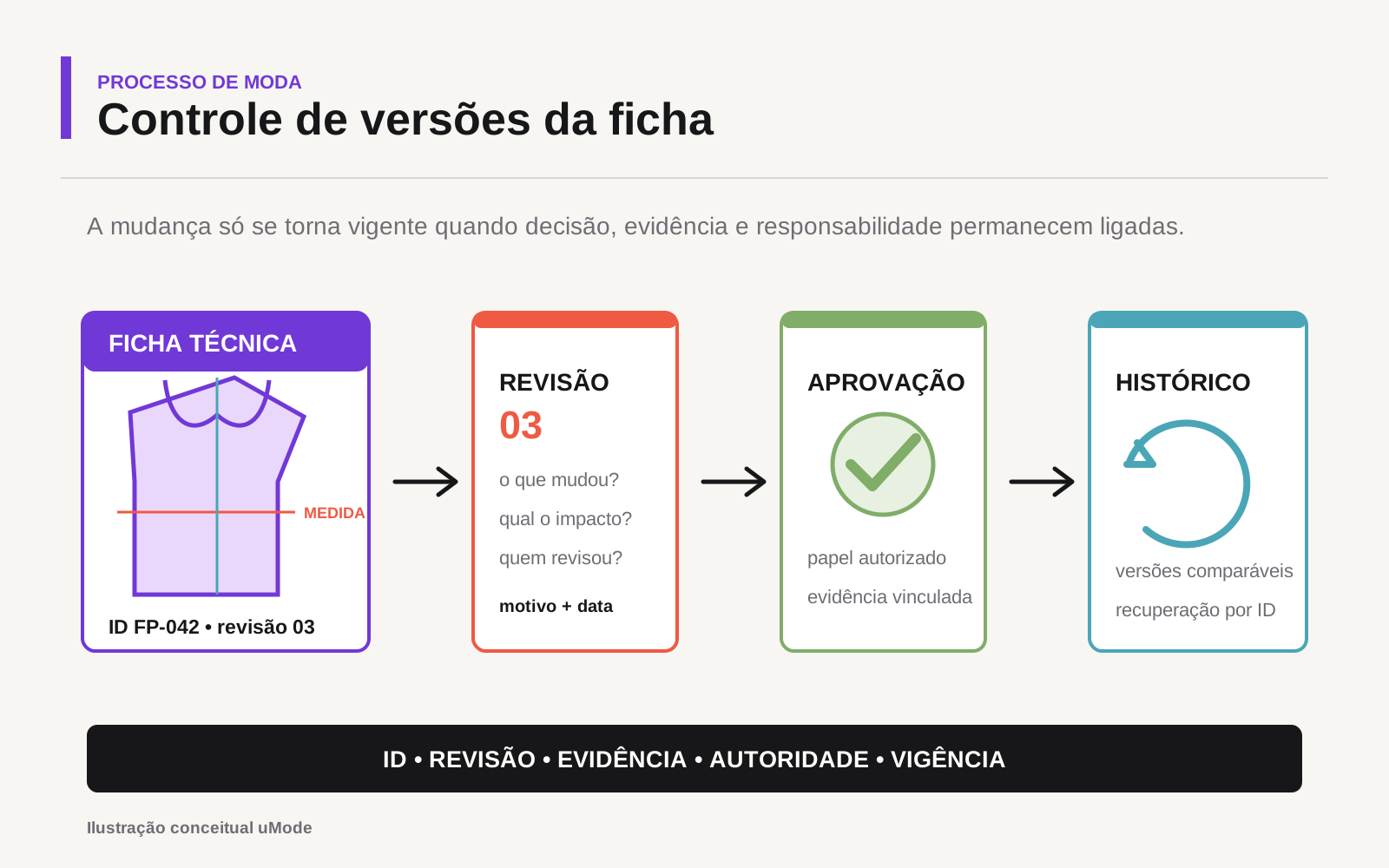
The technical specification should make intention and execution comparable: technical drawing, material composition and reference, component list, measurements, tolerances, seams, finishes, labels, packaging, and assembly notes. If a decision changes length, width, trim, or operation, record the previous value, new value, reason, owner, date, and approval. The version number must travel with the sample that was sent; an approval without a version is ambiguous.
How should data, quality, and release be controlled?
NIST describes PLM as managing the flow of product and process data throughout the lifecycle. In fashion, the practical implication is to treat the specification, measurement table, bill of materials, and fit comments as related objects rather than loose attachments. A fashion PLM structure can organize states, permissions, and approvals, but the system does not decide by itself whether fit, construction, or cost is acceptable.
A sample gate can ask: Was the approved material used? Is the garment on the correct version? Are measurement points within tolerance? Does the observed construction match the drawing and specification? Does the finish withstand the defined test? Was the fit comment resolved or accepted as an exception? Record the outcome as approved, rejected, conditionally approved, or pending, with an owner and next action. A fit sample is evidence for a specific check; by itself it does not prove industrial repeatability.
NIST also connects data context, traceability, and integration across design, planning, manufacturing, and inspection. In a fashion operation, that principle helps connect a component change to consumption, cost, timing, supplier, product record, and channel communication. The relationship with sourcing and supplier management needs a defined scope: a document review, an approved sample, and an audit are not synonyms for permanent capacity or guaranteed quality.
For products subject to specific regulatory requirements, define the legal scope before turning an obligation into an internal checklist. Regulation (EU) 2024/1781, for example, sets digital product-passport requirements where applicable acts require such a passport; it is not permission to claim that every fashion garment already has one. Data discipline—accuracy, completeness, currency, and interoperability—is a governance reference, not an automatic compliance mark.
Which limits prevent weak product decisions?
Product engineering is more than a technical drawing, and development is more than schedule tracking. The result depends on the alignment of requirement, material, method, measurement, sample, supplier, and decision. Version control reduces ambiguity but cannot repair a poorly defined tolerance. A complete measurement table cannot compensate for an unsuitable pattern. A beautiful sample does not demonstrate that a factory process will repeat the same result.
NIST's CPM gives equal status to function, form, and behavior; that distinction is useful when reviewing fashion products without reducing everything to appearance. Ask what the garment must do, how it must look, and how it must behave in the intended use or defined test. Then attach each answer to a verifiable requirement and a decision. This keeps fashion product development and engineering connected to collection management and fashion quality without making them synonyms.
Connections
technical specification · measurement table · patternmaking · fit sample · version control · fashion PLM · sourcing
Verified facts
- FIT describes product development as central to every fashion brand and places the work from concept development through pre-production.
Source: fitnyc.edu ↗ - FIT lists product lifecycle management, costing development, product construction, quality assurance, sustainable sourcing, and marketing development among the focuses of its certificate.
Source: fitnyc.edu ↗ - FIT includes specification development and communication standards across production and quality assurance in its product-development content.
Source: fitnyc.edu ↗ - NIST describes PLM systems as managing the flow of data about products and processes throughout the lifecycle so that information reaches the right systems at the right time.
Source: nist.gov ↗ - NIST states that contextualizing manufacturing data relative to other lifecycle phases is necessary for understanding system behavior and satisfying traceability requirements.
Source: nist.gov ↗ - In a reference implementation, NIST fuses data from design, planning, manufacturing, and inspection to support lifecycle decision making.
Source: nist.gov ↗ - NIST's CPM supports PLM with reliable, complete, and efficient data models from product conceptualization through disposal.
Source: nist.gov ↗ - CPM gives equal status to a product or artifact's function, form, and behavior.
Source: nist.gov ↗ - NIST's product-information framework is intended to capture product, design-rationale, assembly, and tolerance information from early conceptual design through the full lifecycle.
Source: nist.gov ↗ - The same NIST framework connects its data components to direct access by PLM systems and to a detailed description of products and design rationale.
Source: nist.gov ↗ - Regulation (EU) 2024/1781 requires data included in a digital product passport to be accurate, complete, and up to date where the applicable regime requires that passport.
Source: eur-lex.europa.eu ↗ - Regulation (EU) 2024/1781 requires digital product-passport data to be based on open standards and, as appropriate, interoperable, machine-readable, structured, searchable, and transferable.
Source: eur-lex.europa.eu ↗
Related entries

Fashion product technical specification
A technical specification is the controlled information set that translates an approved fashion product into verifiable sampling and manufacturing requirements. It brings together drawings, materials, measurements, construction, tolerances, identification, labelling, comments and revision history; its content varies by category, company, market and stage.
How to control tech pack versions
How to control tech pack versions. Controlling tech pack versions means recording every product change with an identifier, owner, reason, status, approval and effective date. The method applies configuration-control and product-lifecycle principles to the concrete decisions of an apparel supply chain.

Fashion PLM: data, product, and lifecycle
Fashion PLM is the structured management of the data, decisions, and workflows that follow a product and a collection from concept through post-launch. It connects tech packs, materials, costs, samples, approvals, suppliers, and versions so that every function works from a traceable product definition.
Sourcing and supplier management
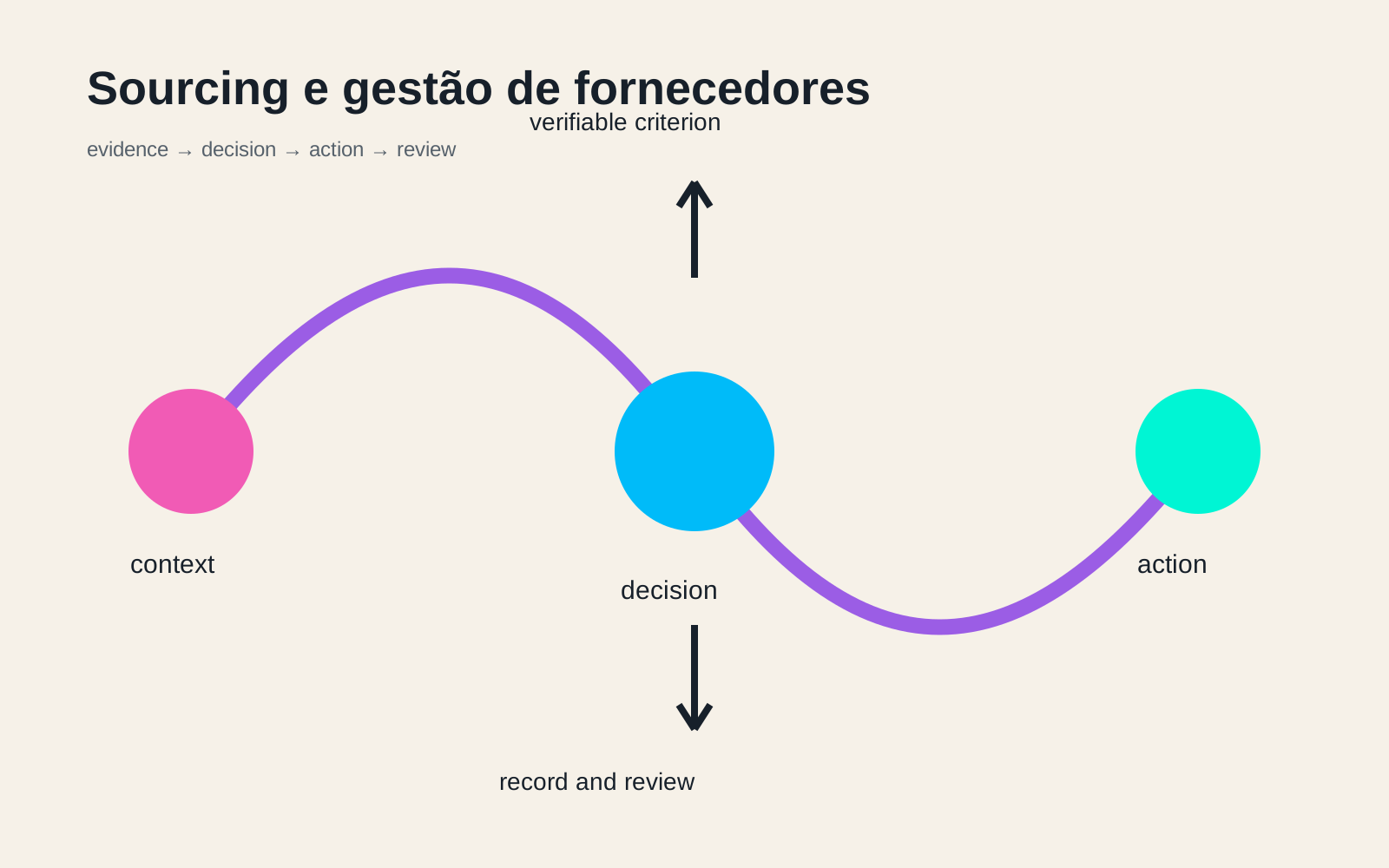
Sourcing and supplier management. Fashion sourcing requires visibility into units and processes, prioritization of human risks, worker dialogue, remediation and a decision trail tied to orders and lots.
Sources
- https://www.fitnyc.edu/academics/academic-divisions/ccps/noncredit/product-development.php
- https://www.nist.gov/publications/contextualizing-manufacturing-data-lifecycle-decision-making
- https://www.nist.gov/publications/cpm-core-model-product-data
- https://www.nist.gov/publications/product-information-modeling-framework-product-lifecycle-management
- https://eur-lex.europa.eu/eli/reg/2024/1781/oj/eng
Want to apply this to your operation?