Size grading
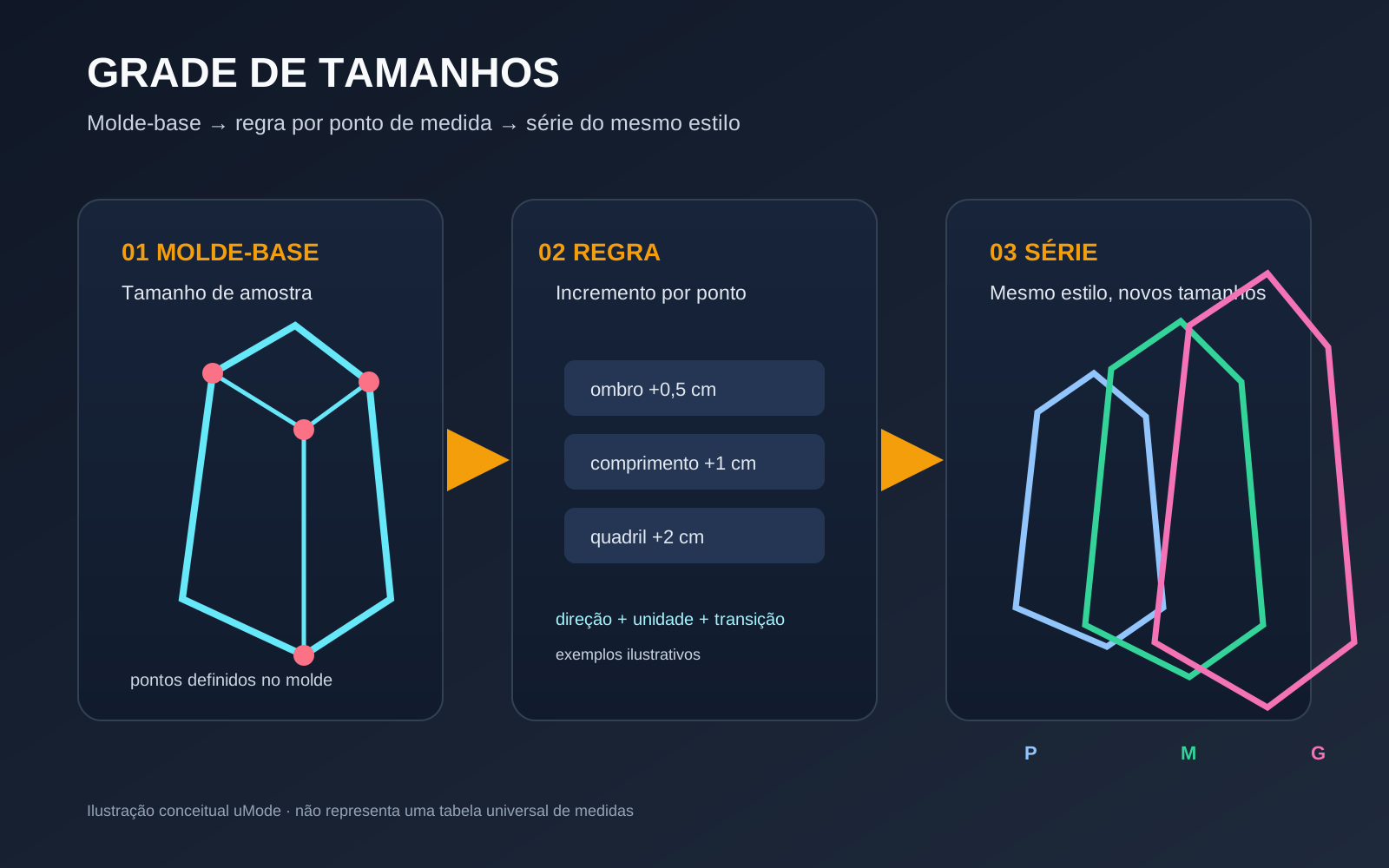
Size grading is the process of turning base-size or sample-size patterns into additional sizes by using a specification sheet or grading increments. A rule changes defined points on the pattern to form a size range for the same style; it does not replace patternmaking or create a new shape.
On this page
What is Size grading?
Size grading is the process of turning base-size or sample-size patterns into additional sizes with a specification sheet or grading increments. The result is a range for the same style, not a collection of unrelated shapes. The rule acts on defined pattern points, so the first decision is to identify the base pattern being enlarged or reduced and the range that must be built.
The distinction from patternmaking is essential: grading does not create shape; it increases or decreases the original shape. It is not prototyping either, because it does not replace building and fitting a garment. In a technical workflow, the approved pattern remains the reference, while the graded set derives from it without erasing the design identity.
How does a grading rule become a size range?
The transformation uses increments associated with pattern points rather than one factor applied uniformly to the whole garment. Standard rules may begin with ergonomic body measurements and be mathematically extrapolated or interpolated according to a patternmaking system. “Mathematical” therefore does not mean that every point changes proportionally: each point can have its own change and direction, defined in the specification sheet.
In practice, read the grading sheet together with the pattern and the chosen unit. Record the point, direction, increment between sizes, and transition being considered; then compare the generated shape with the original design. This avoids treating “two sizes up” as a universal measurement. A size is a position in the range; an increment is the rule connecting two positions.
Which methods execute grading?
The literature describes three basic methods: cut and spread, pattern shifting, and computer grading. In cut and spread, the pattern is cut and its pieces are spread to grade up or overlapped to grade down. In pattern shifting, the pattern is moved and redrawn according to the rule. In computer grading, the work is executed digitally with pattern-drafting software. The common element is controlled application of increments, not the creation of new patternmaking.
The method changes how the work is executed and checked. A manual procedure makes the alteration visible on paper; a digital procedure keeps the operation in a computerized pattern environment. In either case, checking should return to measurement points, the specification sheet, and the approved design rather than relying only on the size label.
How is a graded range checked before production?
FIT’s Technical Design curriculum includes analyzing a grading specifications sheet and grading basic patterns in a full size range without compromising the original design. The same curriculum includes analyzing garment fit and documenting problems clearly and concisely. These two moves connect rule and result: the graded range must preserve the design and still be examined on the body or on the produced garment.
FIT describes following a garment through pattern development, construction, and fitting, with a Technical Specifications Packet. Before outsourced cutting and sewing, grading provides the specific pattern sets those operations require. It therefore connects to fit validation, technical documentation, and PLM, but it should not be confused with assortment mix or demand planning: those fields may decide variety and quantity, while grading technically transforms the pattern for one style.
Verified facts
- Apparel pattern grading turns base-size or sample-size patterns into additional sizes using a size specification sheet or grading increments.
Source: en.wikipedia.org ↗ - Pattern grading can be performed manually or digitally with computerized pattern-drafting software.
Source: en.wikipedia.org ↗ - Standard grading rules are based on ergonomic body measurements and mathematically extrapolated or interpolated according to patternmaking systems.
Source: en.wikipedia.org ↗ - There are three basic pattern-grading methods: cut and spread, pattern shifting, and computer grading.
Source: en.wikipedia.org ↗ - In cut and spread grading, pattern pieces are cut and spread to grade up or overlapped to grade down.
Source: en.wikipedia.org ↗ - Grading does not create shape; it only increases or decreases the size of the original shape.
Source: makersrow.com ↗ - FIT's Technical Design curriculum includes analyzing a grading specifications sheet and grading basic patterns in a full size range without compromising the original design.
Source: fitnyc.edu ↗ - FIT's Technical Design curriculum includes analyzing garment fit and documenting problems clearly and concisely.
Source: fitnyc.edu ↗ - FIT describes following a garment through pattern development, construction, and fitting, while creating a Technical Specifications Packet.
Source: fitnyc.edu ↗ - Grading is a necessary step before outsourcing sewing because sewing requires sets of specific patterns for cutting and sewing.
Source: en.wikipedia.org ↗
Related entries

Fashion product technical specification
A technical specification is the controlled information set that translates an approved fashion product into verifiable sampling and manufacturing requirements. It brings together drawings, materials, measurements, construction, tolerances, identification, labelling, comments and revision history; its content varies by category, company, market and stage.
Garment fitting
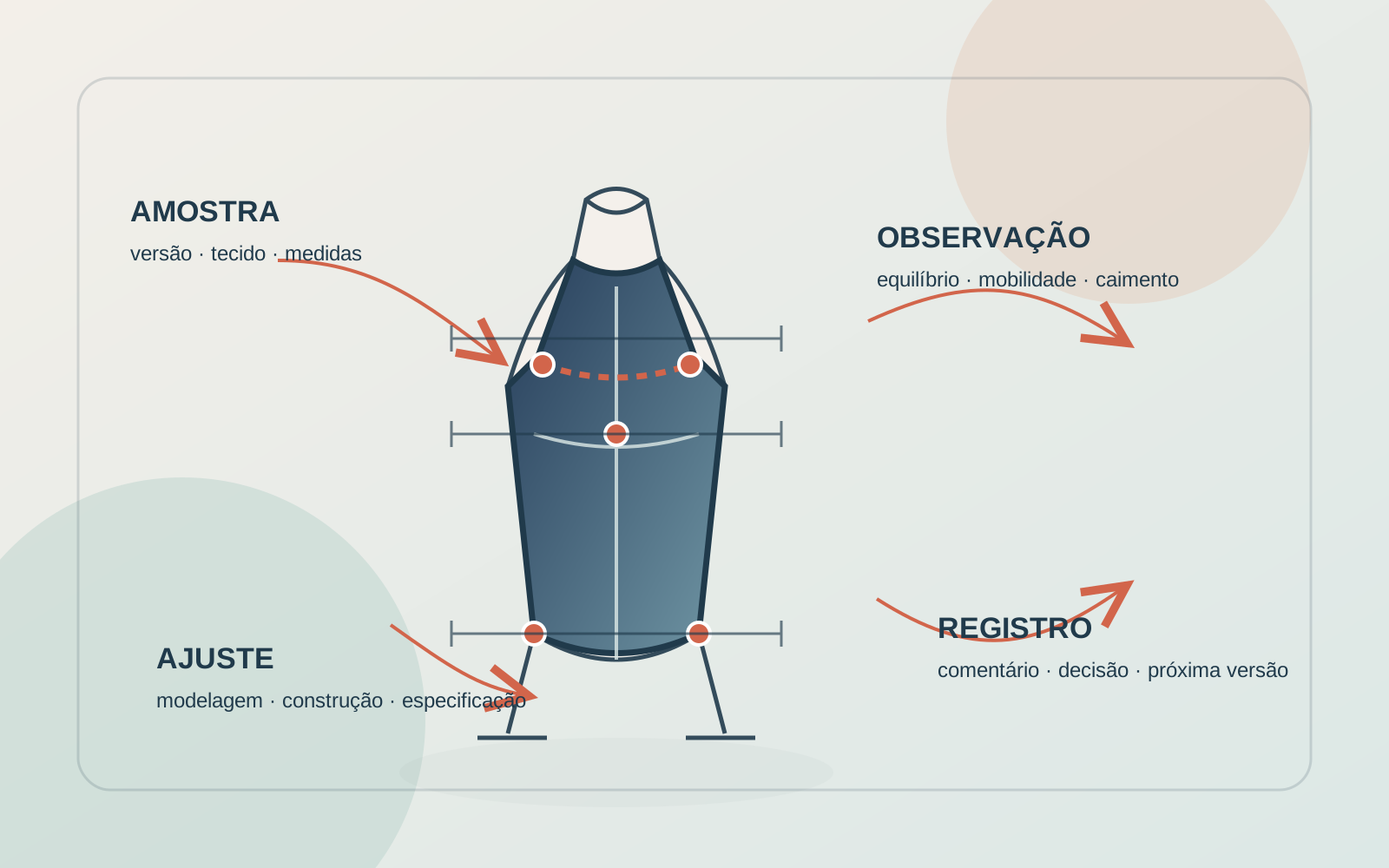
Garment fitting is the process of comparing a dressed sample with a style's design, specifications, and intent. The team observes fit, balance, movement, and construction, records decisions, and sends changes into the next version.
Demand planning in fashion
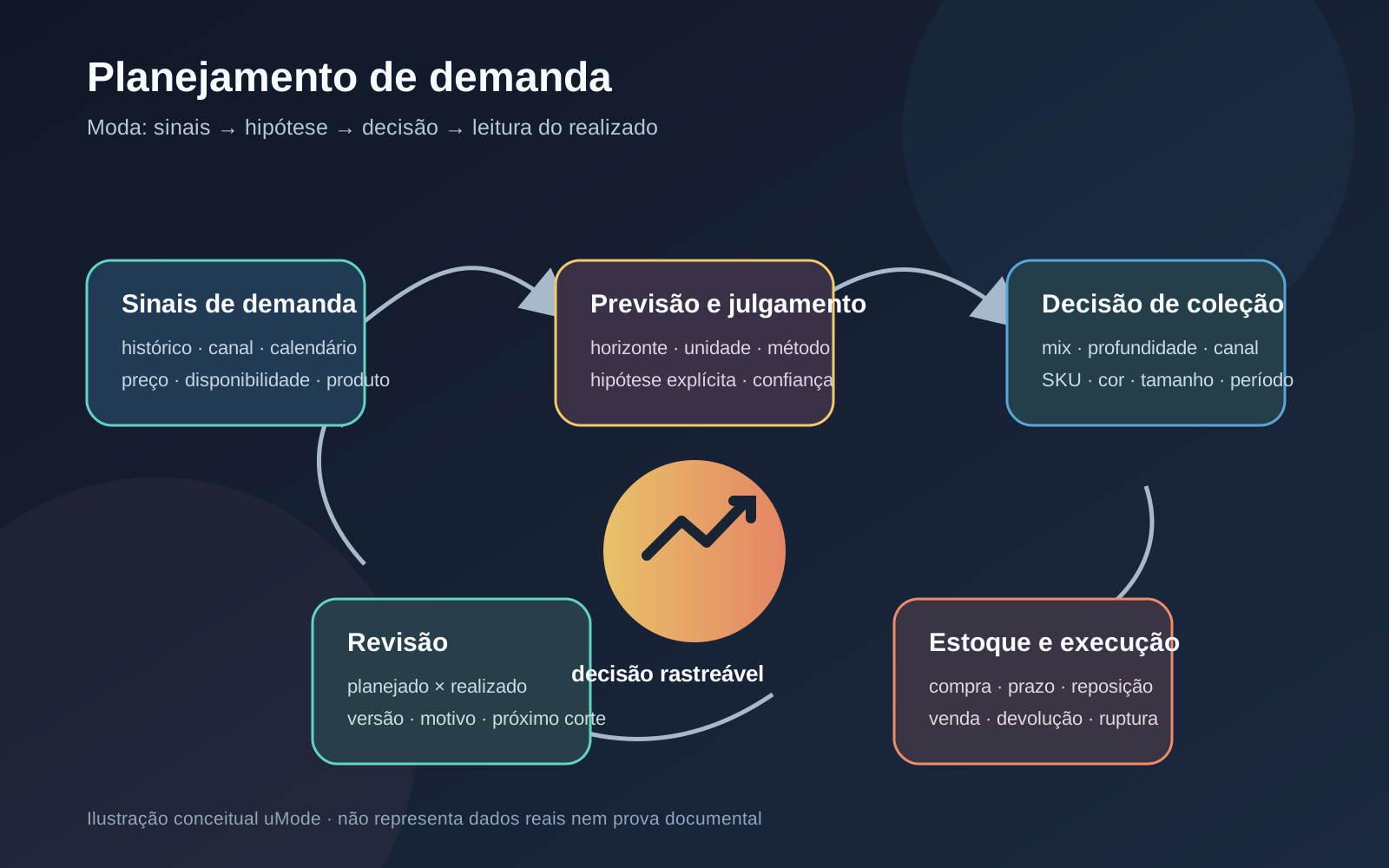
Demand planning in fashion turns demand signals, history, calendar context and judgement into explicit decisions about assortment, volume, channel and review. It combines forecasting with governance: every hypothesis needs a horizon, unit, owner and rule for revision when the collection or market changes.
Sources
Want to apply this to your operation?