Creative fashion brief
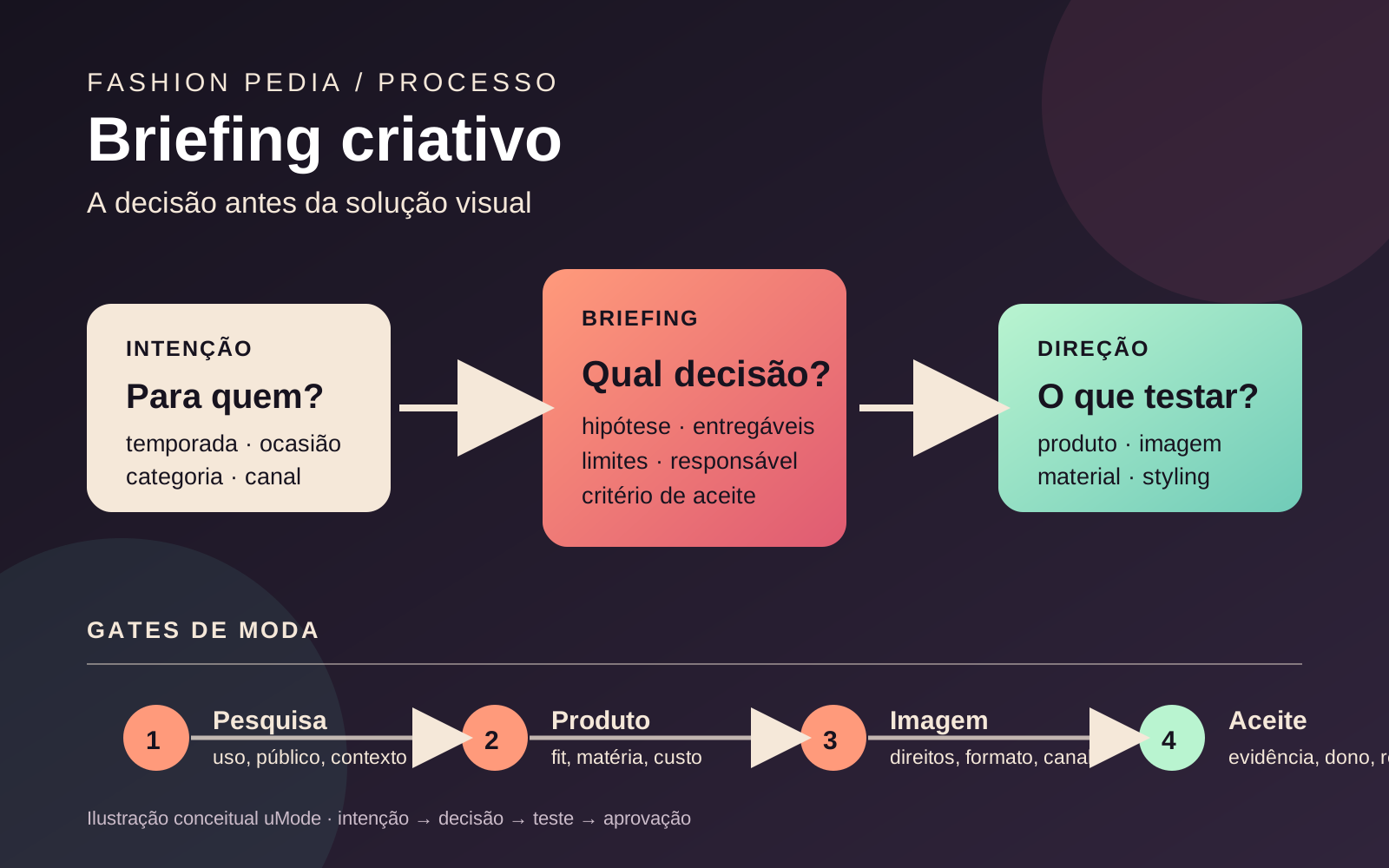
A creative fashion brief turns an intention for a collection, product, image, or campaign into a bounded creative problem. It connects season, audience, category, assortment, materials, channel, deliverables, constraints, owners, and approval criteria without prescribing the visual solution.
On this page
What is Creative fashion brief?
A creative fashion brief is an alignment document for a concrete decision: launch an autumn line, develop a jacket, shoot an editorial, or build a campaign for a defined channel. It records the problem before the answer and separates intent, requirement, preference, and hypothesis. Collection planning supplies the horizon; the brief defines the slice that creative, product, and business must solve.
Name the season, audience, use occasion, category, price range, market or channel, expected volume, and calendar stage. This is not a universal form. A product brief asks about silhouette, construction, raw material, trims, size range, fit review, and the path to a technical sheet; an image brief asks about casting, location, styling, light, framing, formats, and usage rights.
How does intent become a collection, product, or image decision?
The first line should answer which decision will be made, by whom, and by when. Describe the audience through behavior and context, not only age; state the category and its role in the collection map; and make the out-of-scope area explicit. For a knitwear capsule, “lightness for a transitional season” is a direction to investigate, while composition, weight, acceptable shrinkage, and target cost are questions to confirm with product and suppliers.
The Double Diamond is useful because it was created as a clear, comprehensive, visual description of design process, and because its two diamonds represent broad or deep exploration followed by focused action. In fashion, that means opening the field of relevant references, users, materials, and market context before narrowing to a line, silhouette, or image thesis. The Design Council describes Discover as speaking to and spending time with people affected by an issue; translate that principle into questions about fitting, wearing, buying, selling, and reading an image.
Define turns findings into a more precise challenge. Record the design question, the hypothesis to test, and the criteria for an acceptable answer: line coherence, fabric performance, pattern-cutting feasibility, margin, timing, channel fit, or content legibility. Develop calls for different answers and co-design with a range of people; in fashion, compare three collar constructions, two materials, or two styling routes before selecting a direction.
Deliver means testing at small scale, rejecting what does not work, and improving what does. A test may be a proto sample, a fit session, a campaign still, a product page, or a color read in a retail setting. The Double Diamond is not linear: feedback can reopen research. Keep the brief’s versions, hypothesis changes, and reasons for revision instead of hiding the route behind a final moodboard.
Which fields protect execution and approval?
Organize the brief in four blocks. Under “intent,” state the commercial or editorial objective, message, audience, occasion, and decision indicator. Under “deliverables,” list drawings, color direction, samples, technical sheets, prototypes, photos, video, copy, formats, quantities, and destinations. Under “constraints,” record calendar, budget, material availability, production capacity, safety, image rights, licenses, brand rules, and accessibility. Under “acceptance,” name the approver, gate, evidence required, and response if the sample or image is rejected.
Accessibility belongs in the communication brief from the start. WCAG is an international standard for web content accessibility; when the deliverable includes e-commerce, a landing page, video, or digital catalog, turn that requirement into verifiable tasks for content, contrast, navigation, alternative text, captions, and testing. Do not leave accessibility until after the shoot: connect each format to a reading criterion and an owner.
Rights need their own field. Copyright protects original works of authorship fixed in a tangible medium; it does not protect ideas, systems, or methods of operation, although it may protect the way they are expressed. The reference folder should therefore distinguish concept, image, drawing, type, music, photography, video, and copy, with owner, license, territory, term, medium, and permission. A visual research reference does not automatically become campaign material; confirm permission before turning inspiration into an asset.
Name the final owner for scope, cost, risk, and acceptance evidence. Creative may defend the visual thesis; product may reject an unworkable construction; merchandising may identify an assortment conflict; legal may limit image or music; marketing may adapt the channel. The brief works when those authorities are present before approval, not when conflict arrives as a vague comment in the last round.
How should a brief be reviewed before creative work?
Read it as a sequence of decisions. Can the opening question fit in one sentence? Are season, line, category, and channel bounded? Does the audience appear in a use situation? Does every deliverable have an owner, format, and date? Does every critical material or process have a feasibility question? Does acceptance describe something observable, rather than asking for “impact” or “sophistication”? If an answer depends on research, mark the gap as a hypothesis rather than certainty.
Review a collection brief alongside collection management, fashion trend research, and sourcing and supplier management without mixing their authorities. The brief guides creation; it does not replace a technical sheet, fit review, budget, contract, safety test, channel plan, or legal approval. Aesthetic approval does not prove textile performance, margin, availability, or usage rights.
Close the round by recording the version, accepted decisions, open questions, rejected alternative, next owner, and reopening condition. The brief is ready to guide work when anyone in the fashion chain can see what must be decided, what evidence to bring, and which boundary cannot be crossed.
Verified facts
- The Double Diamond is a clear, comprehensive and visual description of the design process.
Source: designcouncil.org.uk ↗ - The Design Council launched the Double Diamond in 2004.
Source: designcouncil.org.uk ↗ - The two diamonds represent exploring an issue widely or deeply and taking focused action.
Source: designcouncil.org.uk ↗ - Discover involves speaking to and spending time with people affected by the issues.
Source: designcouncil.org.uk ↗ - Insight from discovery can help define the challenge in a different way.
Source: designcouncil.org.uk ↗ - Develop encourages different answers and co-design with a range of people.
Source: designcouncil.org.uk ↗ - Deliver tests solutions at small scale, rejects what will not work, and improves what will.
Source: designcouncil.org.uk ↗ - The Double Diamond is not linear and uses feedback to improve products and services iteratively.
Source: designcouncil.org.uk ↗ - WCAG is an international standard for web content accessibility.
Source: w3.org ↗ - Copyright protects original works of authorship fixed in a tangible medium of expression.
Source: copyright.gov ↗ - Copyright does not protect ideas, systems, or methods of operation, although it may protect their expression.
Source: copyright.gov ↗ - A work is protected when it is created and fixed in a tangible form that is perceptible.
Source: copyright.gov ↗
Related entries
Collection planning
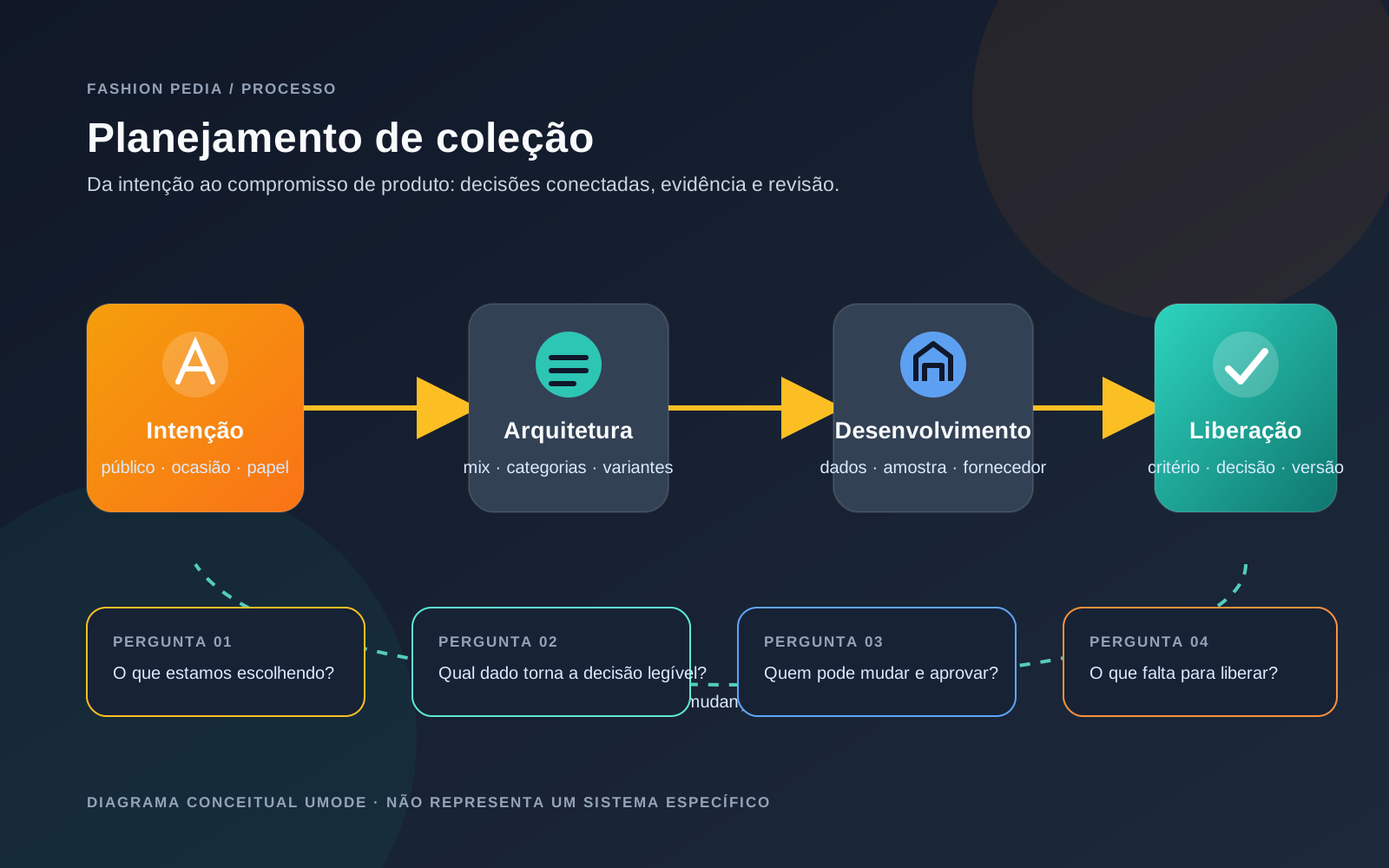
Collection planning is the process of turning a collection intention into controlled decisions about products, data, stages, owners, changes and release criteria. It connects product direction, development, sourcing and information without reducing the plan to a calendar or a software tool.

Collection management
Collection management coordinates a fashion line's journey from idea through production, service and disposal by connecting people, product data, processes, decisions, versions and events across teams and partners.

Fashion product technical specification
A technical specification is the controlled information set that translates an approved fashion product into verifiable sampling and manufacturing requirements. It brings together drawings, materials, measurements, construction, tolerances, identification, labelling, comments and revision history; its content varies by category, company, market and stage.
Sources
Want to apply this to your operation?