How to control tech pack versions
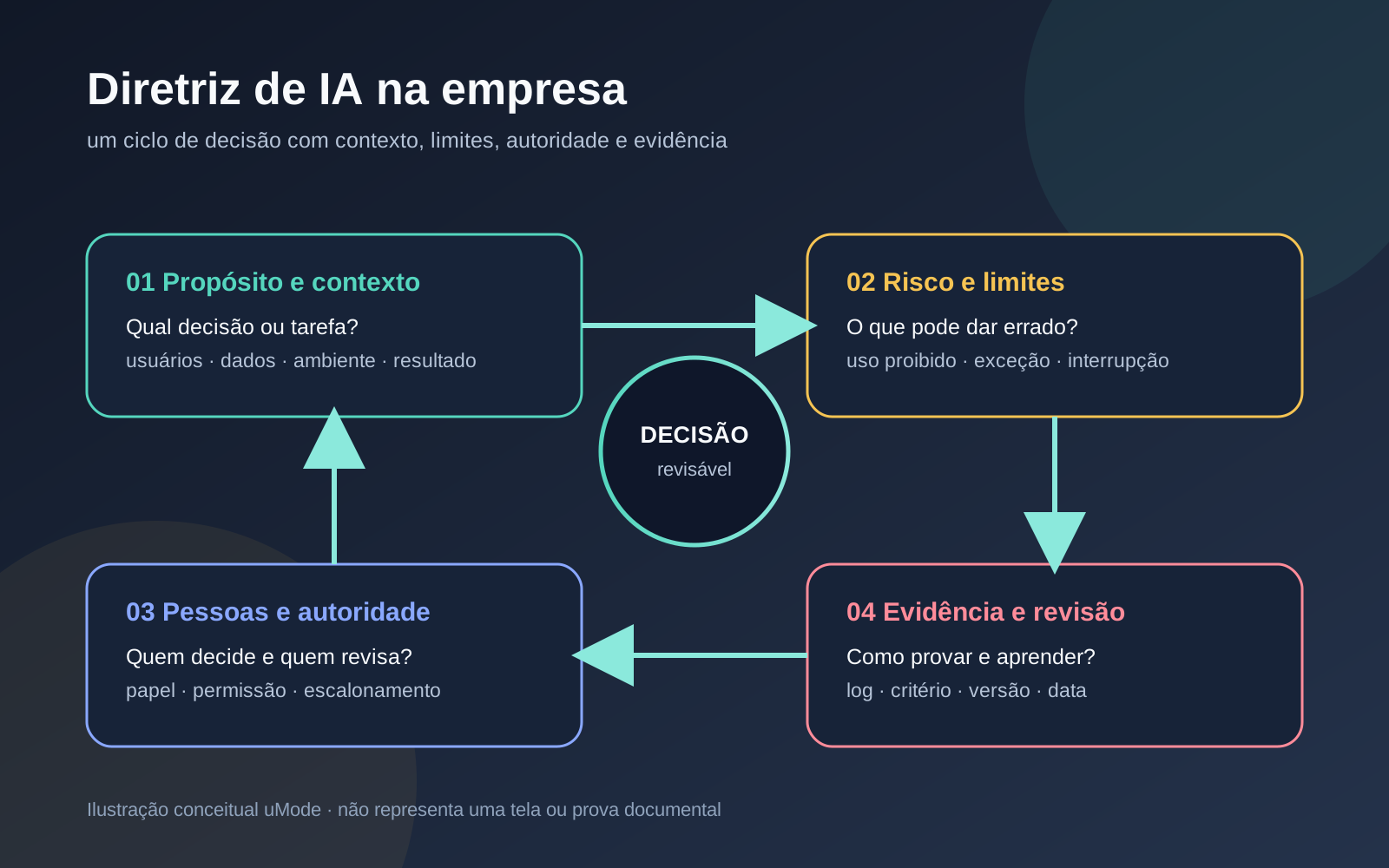
How to control tech pack versions. Controlling tech pack versions means recording every product change with an identifier, owner, reason, status, approval and effective date. The method applies configuration-control and product-lifecycle principles to the concrete decisions of an apparel supply chain.
On this page
What is How to control tech pack versions?
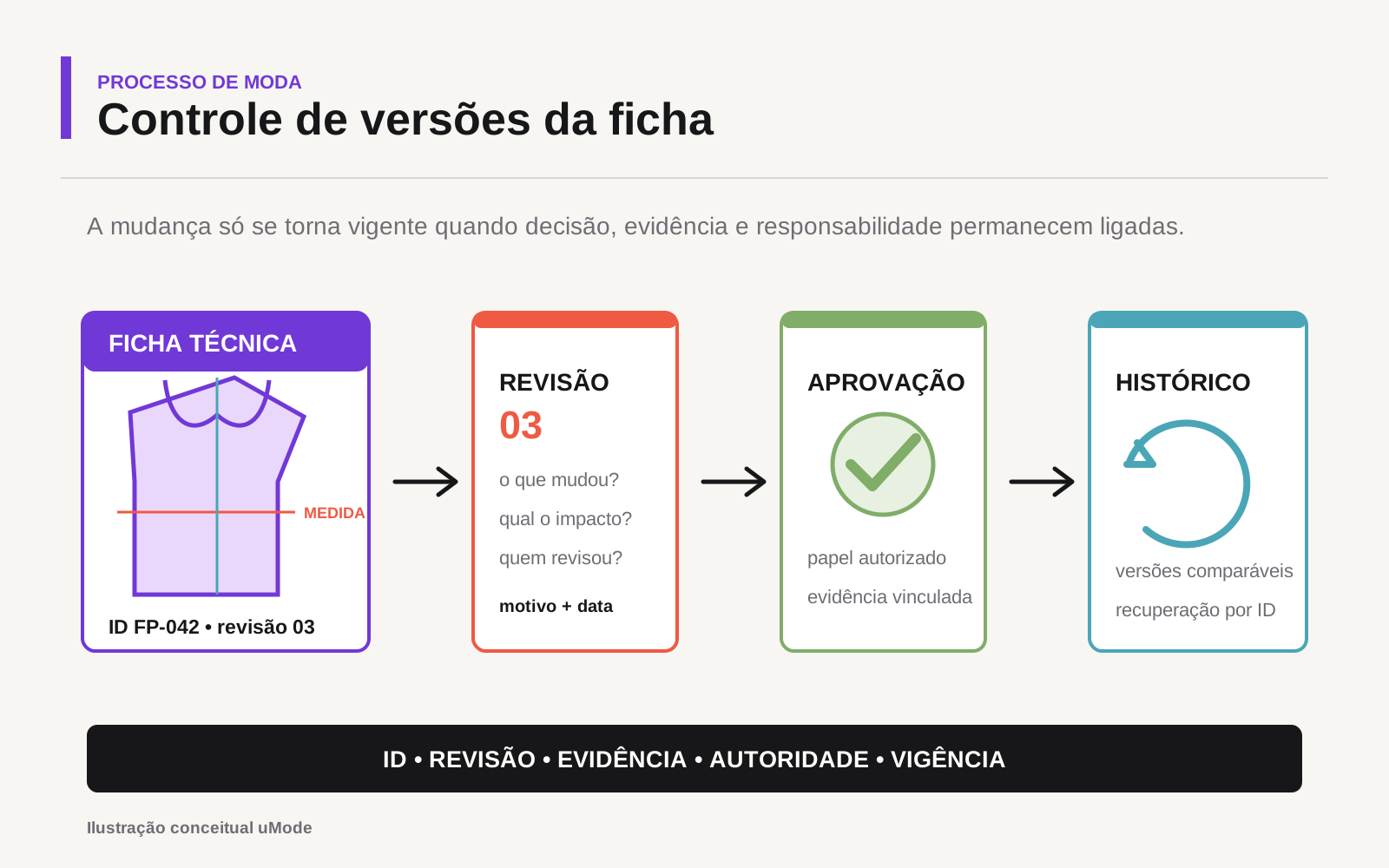
Controlling a version means turning the tech pack into a decision record, not merely renaming a file. Define the object first: style, color, size, material, component or combination described by the document. Then assign a revision identifier and record what changed, why it changed, who reviewed it, who approved it and when it becomes effective. This applies the principle of configuration management to apparel by keeping initialization, change and monitoring visible.
A revision should point to its predecessor and to the affected elements: technical drawing, construction, measurements, tolerances, composition, trims, finishing, label, packaging, costing or care instruction. Do not assume every change deserves the same route. State which fields are critical and what consequence each status has. A measurement change may call for another fit sample; a trim substitution may require supplier validation; a copy correction may follow a different path.
How should the revision record be structured?
Use a control line that can be read without opening a chain of attachments: tech-pack ID | revision | status | author | date | reason | impact | approver | effective date | evidence. The history must make it possible to compare revisions and recover an earlier version, capabilities associated with version control. Fashion data governance fixes the meaning of fields such as “approved,” “superseded” and “in test”; without that definition, two teams may use the same label for different decisions.
Separate editing from approval. The person changing measurements or composition may not be the person authorized to release the information to patternmaking, buying or production. Create visible states such as draft, under review, approved for sample, approved for production, superseded and archived. Names can vary, but every state needs an entry, an exit and an accountable role. The current tech pack must be distinguishable from copies exported for comments.
The tech pack should gather or point to the documents that support the decision: technical drawing, measurement chart, bill of materials, fit comment, test report or supplier approval. An attachment is not automatically evidence. The record should identify which file or event is the evidence, when it was checked and which revision it supports. For cross-functional products, a centralized repository may reduce data dispersion, but each decision still needs a defined authority.
How do you distribute the correct version to the supply chain?
Distribute by object and destination, not only by folder. Patternmaking, development, quality, buying, supplier and production may need different views of the same tech pack, but each must be able to identify the effective revision. Collection management organizes dependencies between styles and stages; fashion PLM can connect product data, people and processes across the lifecycle, while ERP, PIM, DAM or spreadsheets may have other responsibilities.
Before releasing a revision, ask four questions: what changed; which components or operations are affected; who must approve it; and which old instruction must stop being used. If the change happens after a sample or purchase order, record the exception and the decision to continue. Do not delete a rejected attempt: retain its status, reason and relation to the selected revision. A useful audit trail records who requested, approved and implemented the change and the rationale for it.
For the supplier handoff, include the identifier, revision, issue date and confirmation channel. Ask the sample, comment or order to cite the same revision; that makes a mismatch findable without relying on conversation memory. Apparel traceability extends this link to a lot, supplier, transformation and supporting document. Version control cannot prevent every copy outside the system, but it can state which record must be formalized as the reference.
How can you test whether the history works?
Run a recovery test that starts with a garment or lot and works back to the tech pack, revision, approval and corresponding evidence. Then reverse the path: select a revision and identify the samples, suppliers and orders that received it. If any link depends on an unidentified file, a contextless message or an overwritten version, the workflow has a gap to repair.
Measure decisions, not file volume. Useful process indicators may include revision conflicts found, time from request to approval, open exceptions, records without an owner and time required to reconstruct a sample’s history. These are management instruments, not universal targets. The purpose is to find where information loses authority and act on the cause: ambiguous field, excessive permission, undefined status, delayed integration or an out-of-band change.
Use product data quality to review the routine: stable identifiers, explicit units, complete critical fields and values consistent with the revision. Relate the process to fashion product development and quality control without treating a tool as a substitute for technical judgment. A controlled tech pack matters because it makes change comparable, approval attributable and the effective version recoverable.
Verified facts
- A version-control system records changes to files over time so that specific versions can be recalled.
Source: git-scm.com ↗ - Version control makes it possible to compare changes over time and see who modified something and when.
Source: git-scm.com ↗ - A version-control system can revert files or an entire project to an earlier state.
Source: git-scm.com ↗ - In a distributed system, each clone can mirror a repository and its full history.
Source: git-scm.com ↗ - NIST defines configuration management as activities that establish and maintain the integrity of products and systems by controlling initialization, change and monitoring processes.
Source: csrc.nist.gov ↗ - NIST places configuration management throughout the system development life cycle.
Source: csrc.nist.gov ↗ - IBM describes PLM as an approach for managing a product lifecycle from concept through disposal.
Source: ibm.com ↗ - IBM identifies people, data, processes and business systems as elements integrated by PLM.
Source: ibm.com ↗ - IBM describes centralized product-data repositories as supporting collaboration across teams.
Source: ibm.com ↗ - IBM relates PLM version control to tracking every product iteration and enforcing user-specific permissions.
Source: ibm.com ↗ - IBM describes audit trails as histories of who requested, approved and implemented a change and the rationale for it.
Source: ibm.com ↗ - Oracle describes PLM as managing a product's complete journey from ideation through service and disposal.
Source: oracle.com ↗ - Oracle includes items, parts, products, documents, requirements, engineering change orders and quality workflows among PLM data and processes.
Source: oracle.com ↗
Related entries

Fashion product technical specification
A technical specification is the controlled information set that translates an approved fashion product into verifiable sampling and manufacturing requirements. It brings together drawings, materials, measurements, construction, tolerances, identification, labelling, comments and revision history; its content varies by category, company, market and stage.

Fashion PLM: data, product, and lifecycle
Fashion PLM is the structured management of the data, decisions, and workflows that follow a product and a collection from concept through post-launch. It connects tech packs, materials, costs, samples, approvals, suppliers, and versions so that every function works from a traceable product definition.
Fashion product development
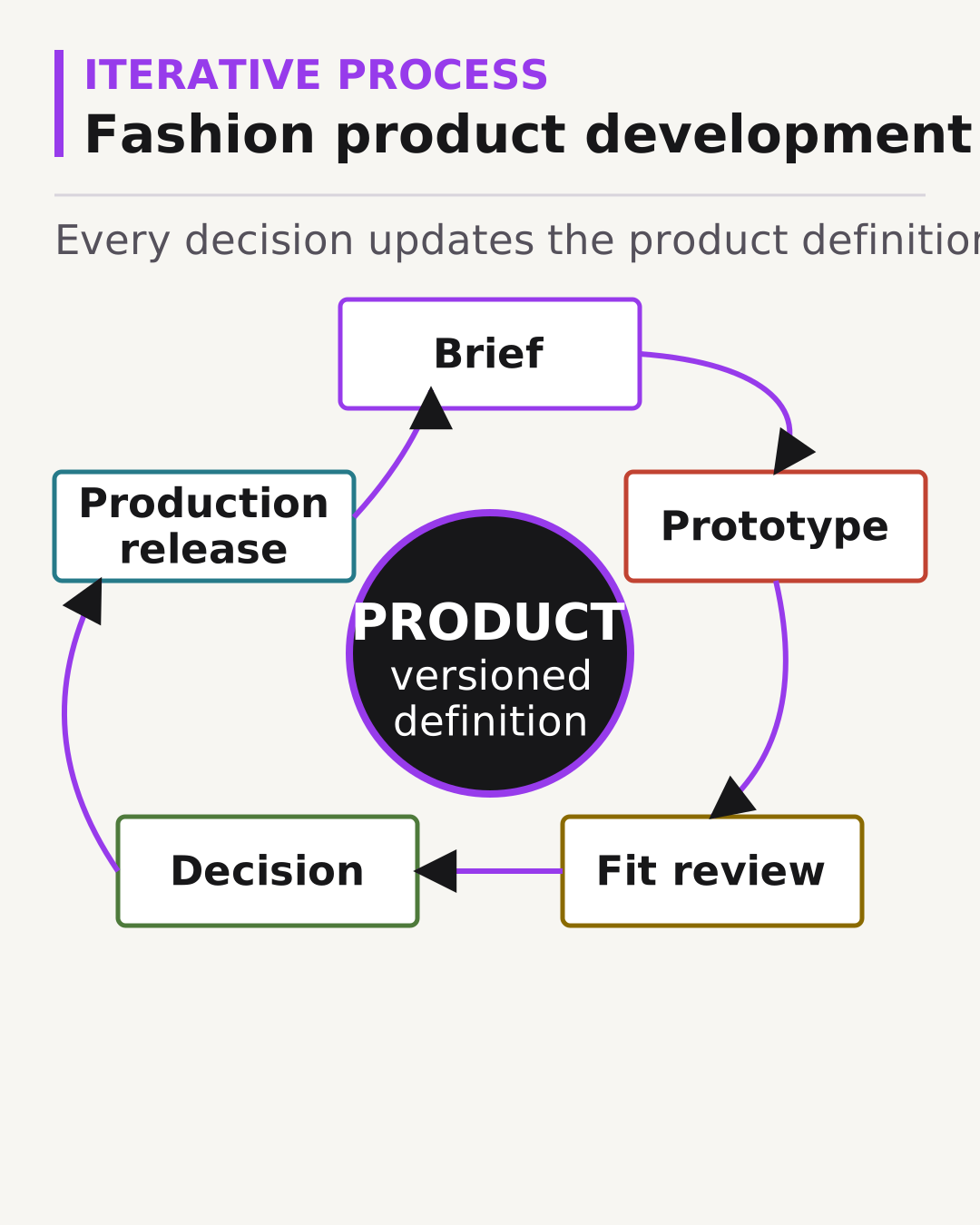
Fashion product development is the process that turns an opportunity or brief into a product specified and approved for manufacturing. It coordinates concept, assortment, materials, patternmaking, samples, fit, cost, quality, compliance and timing through decision cycles rather than an isolated creative sequence.
How to structure fashion data governance
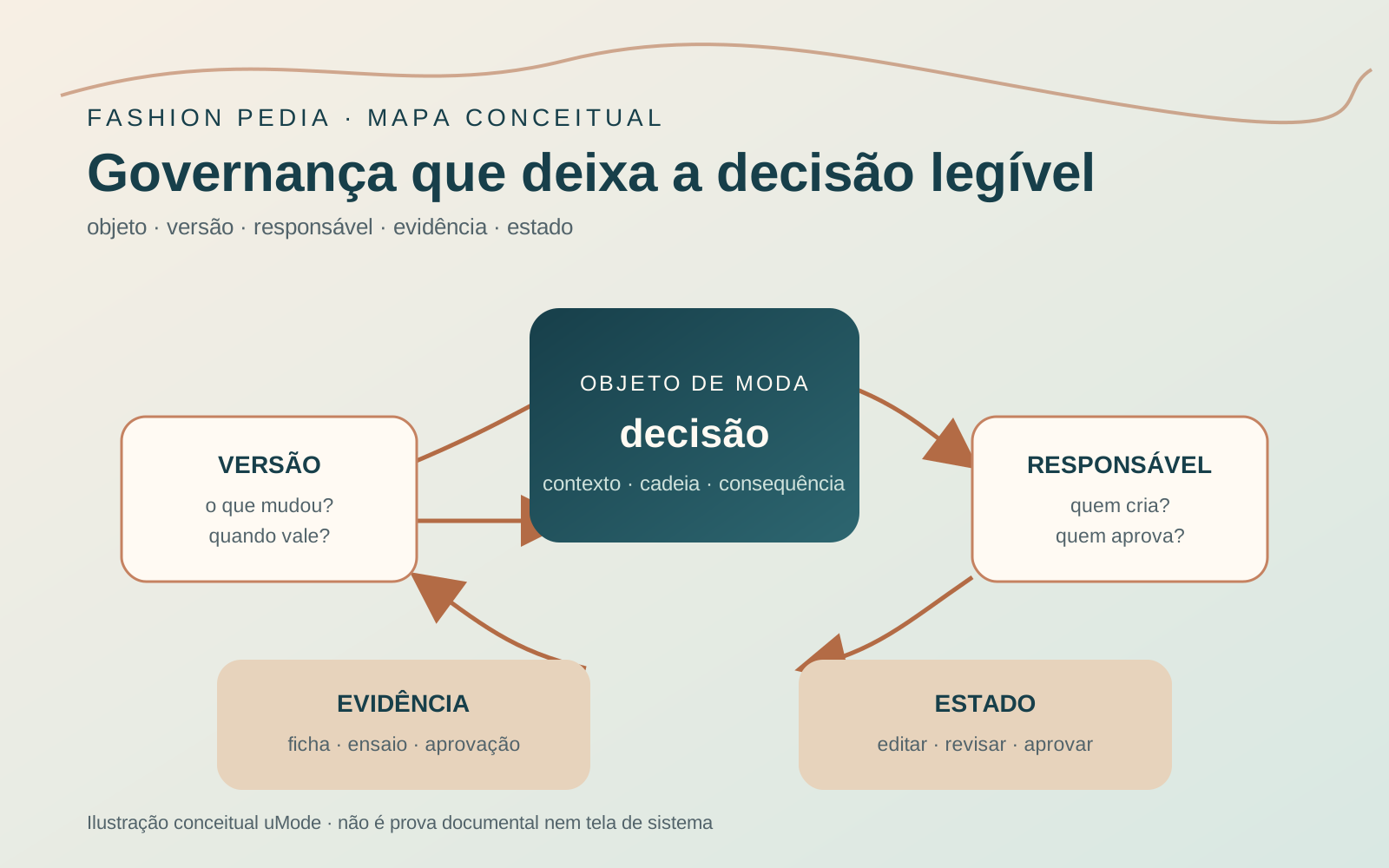
How to structure fashion data governance. Fashion data governance organizes objects, meanings, owners, versions, permissions and evidence around product and supply-chain decisions. A useful structure starts with a critical workflow, states what must be known at each step, and connects a decision to the record that lets another person verify it.
Traceability in the fashion supply chain
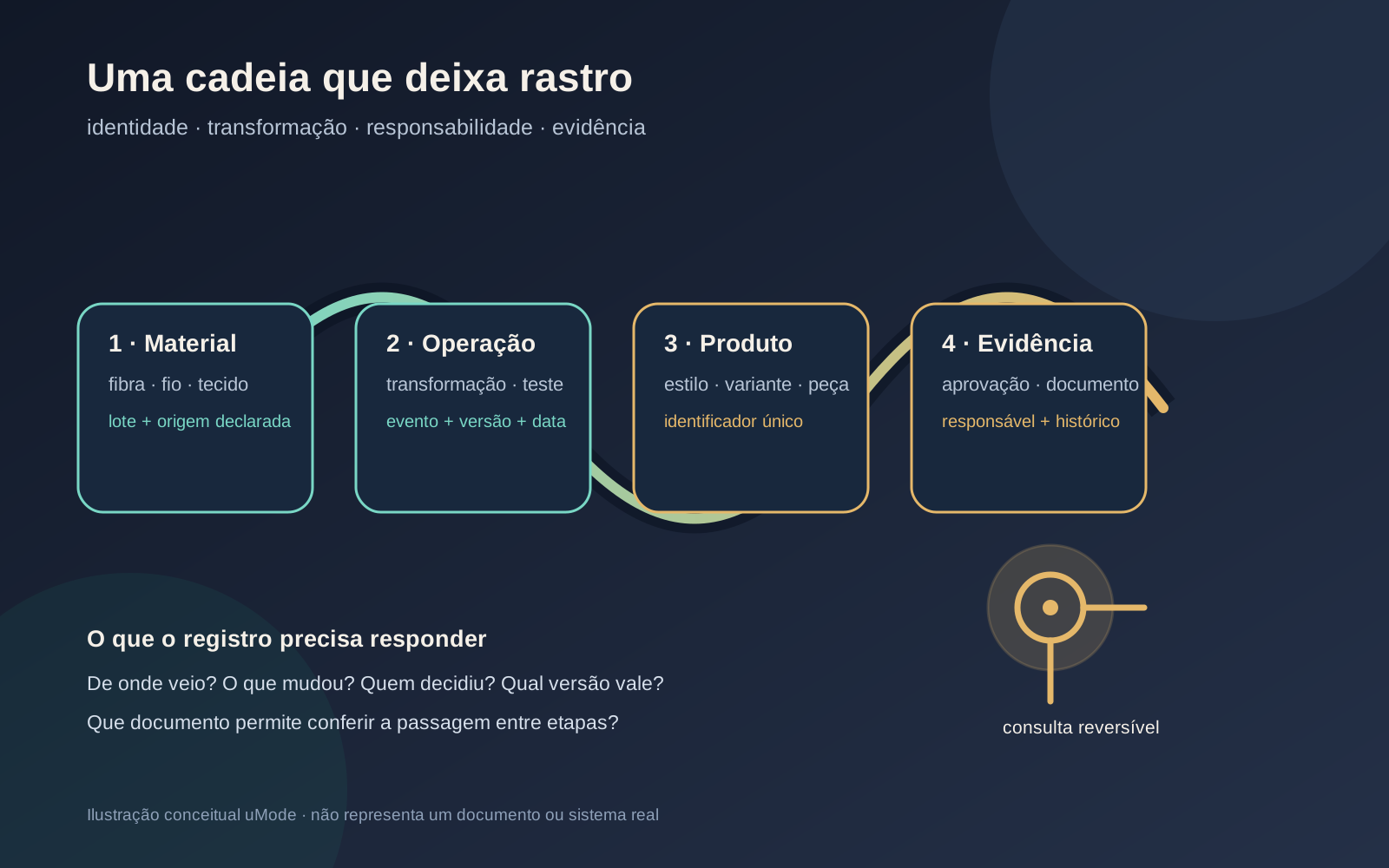
Traceability in the fashion supply chain. Fashion supply-chain traceability is the process of linking a product, material or component to the entities, activities, responsible parties and records that explain its transformation and movement. In practice, it combines identifiers, events, relationships and evidence so a product history can be checked.

Apparel quality control
Apparel quality control combines specifications, inspection, and testing to check whether fabrics, trims, and garments meet the expected performance for a product and end use. The process can examine color, drape, hand, durability, conformance, defects, fit, seam integrity, shrinkage, and drying performance. Quality decisions depend on the product and its intended use.
Sources
Want to apply this to your operation?