How to structure fashion data governance
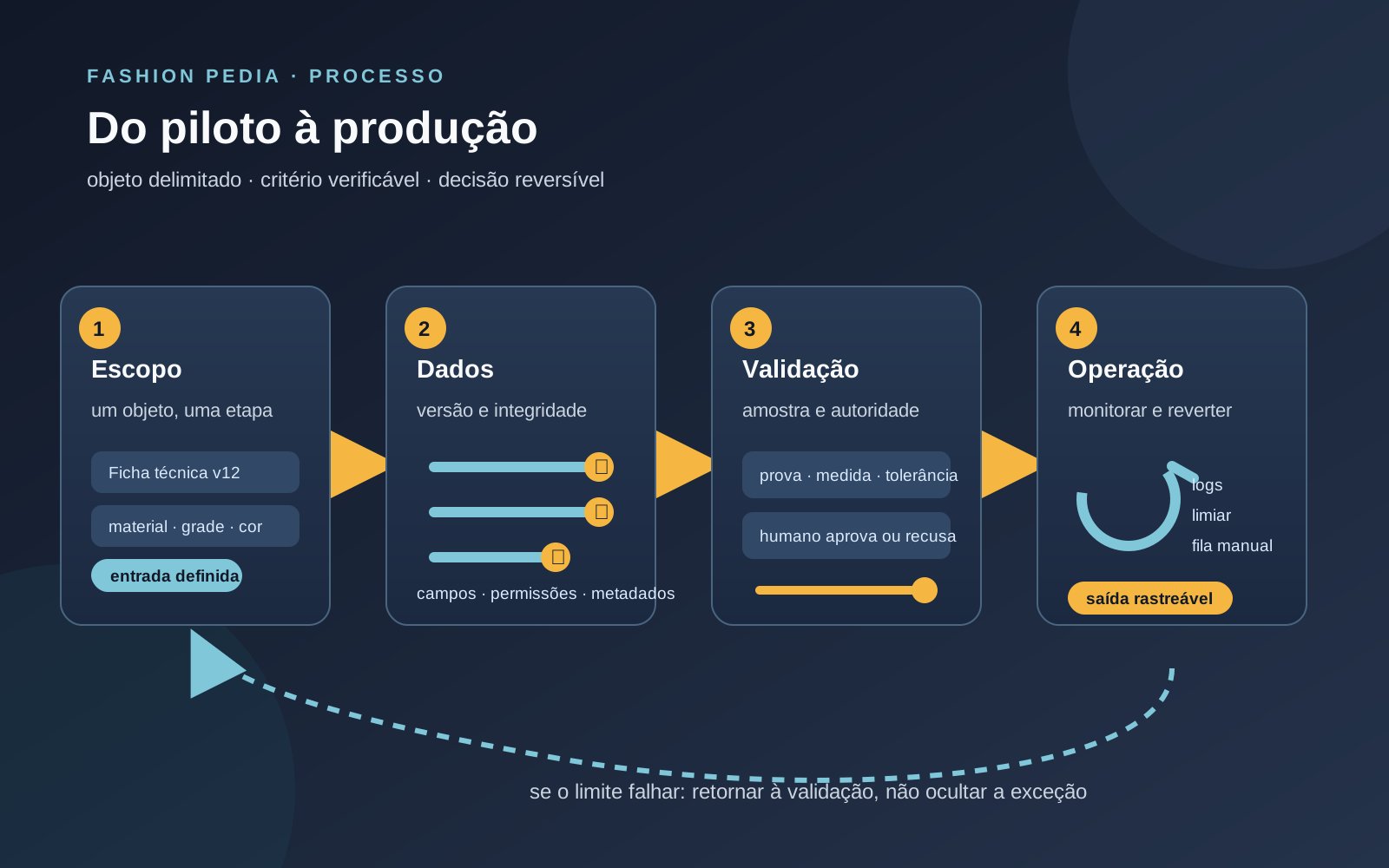
How to structure fashion data governance. Fashion data governance organizes objects, meanings, owners, versions, permissions and evidence around product and supply-chain decisions. A useful structure starts with a critical workflow, states what must be known at each step, and connects a decision to the record that lets another person verify it.
On this page
- What is How to structure fashion data governance?
- How should objects, stages and responsibilities be mapped?
- How should versions, access and exceptions be controlled?
- How can systems be integrated without creating a confused source of truth?
- How can governance be measured without building an ornamental dashboard?
What is How to structure fashion data governance?
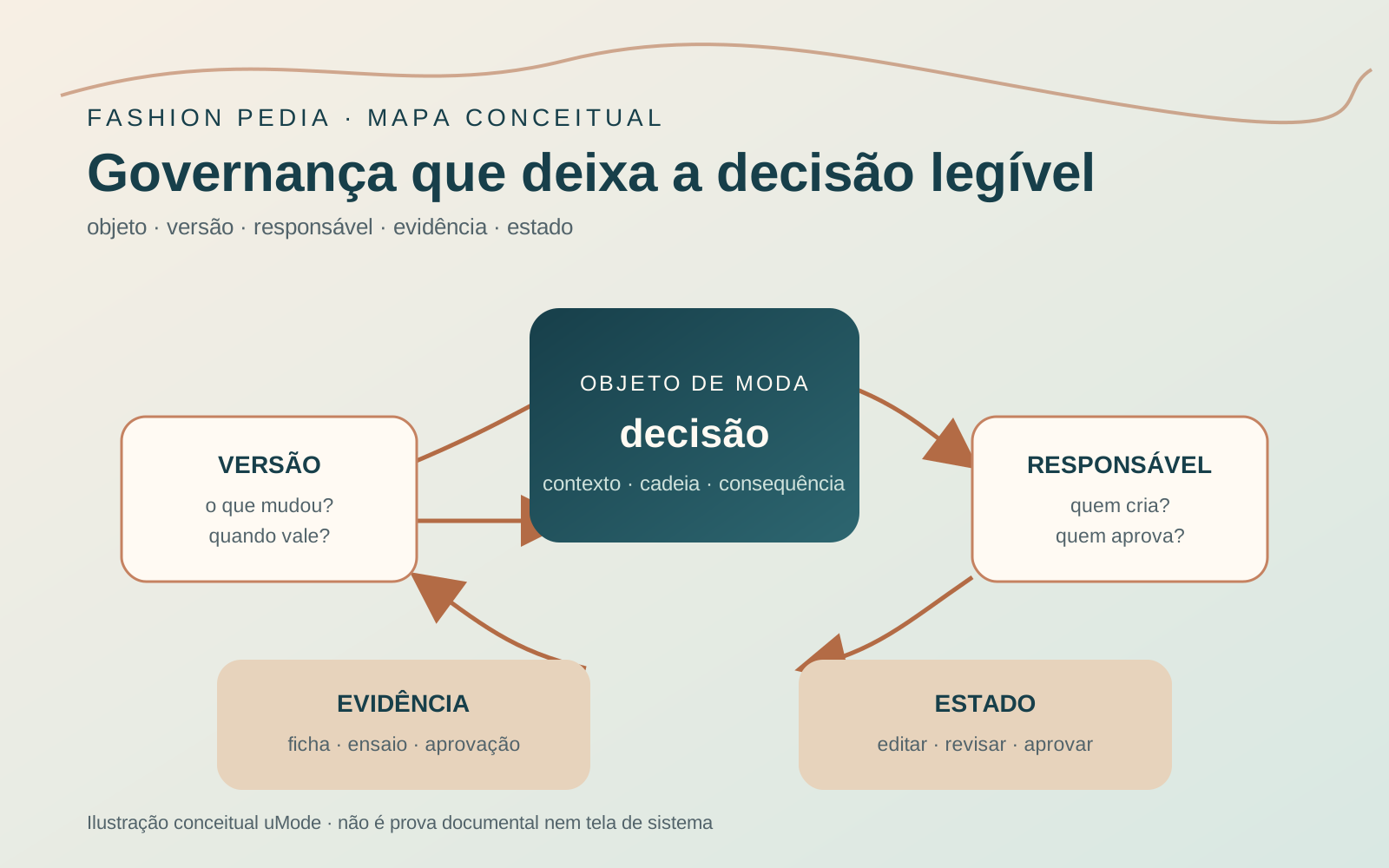
Fashion data governance is the process of deciding which objects exist, what each field means, who may change it, and what evidence supports each state. In apparel, a style, color, material, measurement, supplier, sample and lot need to remain identifiable without losing their relationships. The starting point is not buying a tool: it is choosing a critical decision and making its information verifiable. Product data quality helps separate completeness, consistency, freshness and fitness for use.
How should objects, stages and responsibilities be mapped?
Start by drawing the route of a decision: brief, development, approval, buying, production, distribution and sale. For every stage, record the object being consulted, the event that changes its state, the person responsible for the action, the approver and the expected evidence. A technical pack, for example, should point to a style and a revision; a composition change should show who proposed it, what impact was assessed and which version became effective.
Separating a definition from its rationale makes the flow easier to read. NIST describes lifecycle models that relate product, process, context and decisions; in fashion, this can be applied to measurements, materials, trims, tests, costs and category requirements. Collection management organizes dependencies between lines, while Fashion PLM can keep product records across the lifecycle. Governance should state where each piece of information originates and which system receives the approval, rather than assuming that every system is an equivalent source.
How should versions, access and exceptions be controlled?
Define states with an entry condition, an exit condition and an authority: editing, submitted for review, approved, superseded and archived are not synonyms. History should preserve the sequence of changes and distinguish an authorized correction from an old copy. For every permission, associate purpose, scope and duration; broad access for convenience can increase the chance of out-of-process changes, but the concrete rule must reflect the data's risk and the company's context.
An operational exception needs a reason, an owner, an expiry date and a closure criterion. If a supplier sends a measurement outside the standard, the record should point to the discrepancy, the provisional decision and the later confirmation. If data is exported to another system, the revision identifier should travel with the copy. Technical-pack version control and traceability are not synonyms: the first follows the evolution of a definition; the second reconstructs relationships among product, transformation, lot, partner and document.
How can systems be integrated without creating a confused source of truth?
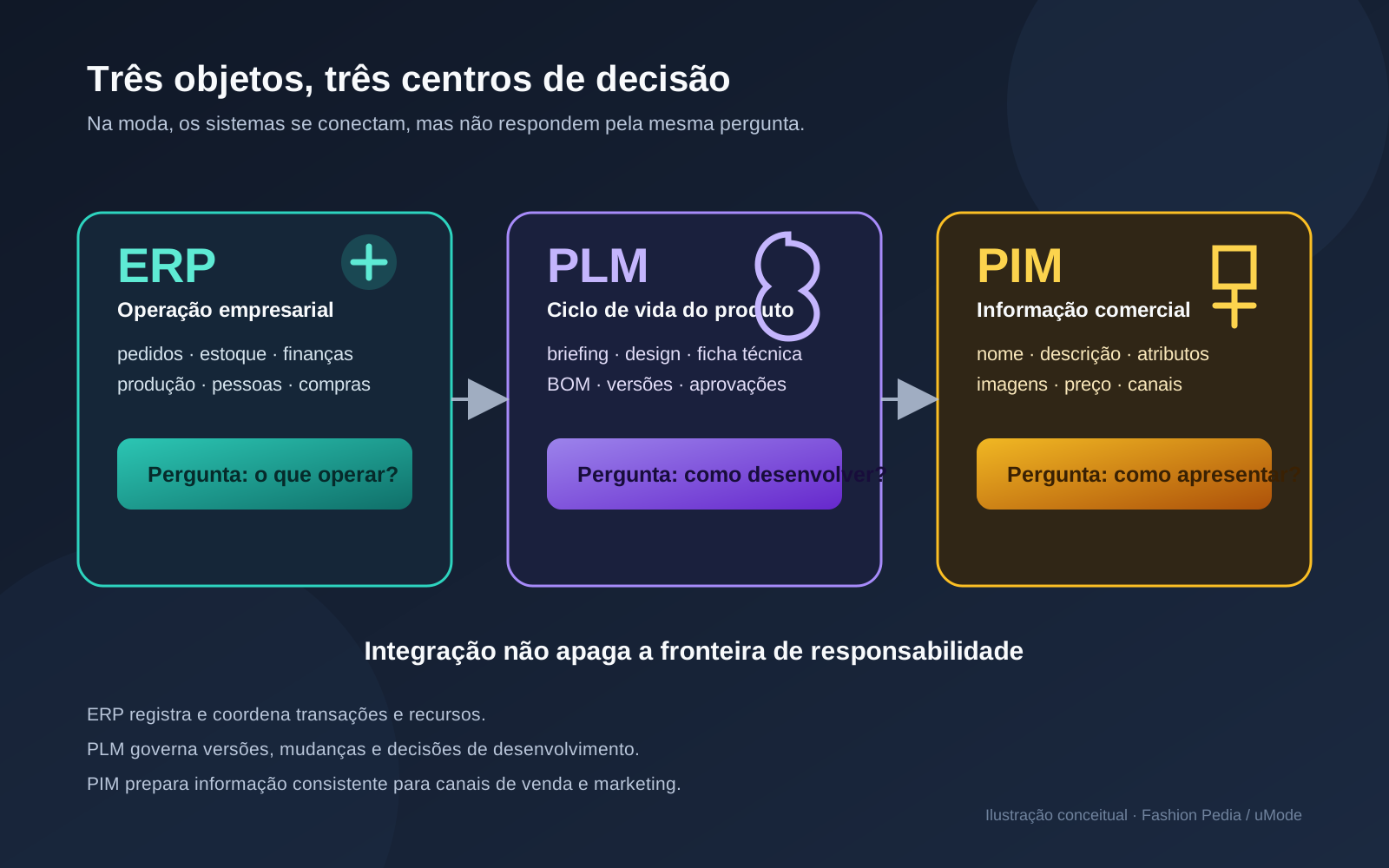
Useful integration starts with data contracts: identifier, definition, unit, format, state, update frequency and failure handling. ERP, PLM and PIM may occupy different positions; connecting systems does not automatically make every copy an official record. Open standards and shared vocabularies help when teams exchange data, but each company still needs to define local meaning and the person who resolves conflicts.
For fashion catalogs, describe product, variant, color, size, composition and channel with the same rigor used for a technical pack. Schema.org offers a broad Product category, and W3C treats standards as an interoperability foundation; that can guide a publishing layer, but it does not replace internal approval, quality or security rules. The practical question is: if two systems disagree, which record prevails, who decides and how does the correction return to its origin?
How can governance be measured without building an ornamental dashboard?
Measure decisions, not only record counts. Useful indicators include the share of objects with an owner, completeness by stage, duplicates, information age, version conflicts, approval time, open exceptions and the success of reconstructing a lot. A full dashboard can hide copied values, incompatible units or approvals without evidence; combine counts with sample checks, workflow interviews and tests that start from a product and find its history.
Implementation can follow a short cycle: choose a critical workflow, name the objects, publish definitions, test a real exception, measure rework and adjust the rules. Then expand by category or channel without silently creating a second definition of “approved”. Infrastructure grows when shared meaning remains stable and extensions are explicit.
Verified facts
- Product Lifecycle Management (PLM) systems manage the flow of product and process data throughout the product lifecycle so that the right information is delivered at the right time to the right systems.
Source: nist.gov ↗ - NIST describes contextualizing data across lifecycle phases as a necessary step toward understanding system behavior and satisfying traceability requirements.
Source: nist.gov ↗ - Supporting PLM throughout product life, from conceptualization to disposal, requires reliable, complete and efficient data models.
Source: nist.gov ↗ - NIST's Core Product Model gives equal status to three aspects of a product: function, form and behavior.
Source: nist.gov ↗ - An extension of the Core Product Model provides a way to associate design rationale with the product.
Source: nist.gov ↗ - NIST's product information modeling framework is intended to capture product, design rationale, assembly and tolerance information from conceptual design through the full lifecycle.
Source: nist.gov ↗ - W3C standards are blueprints or building blocks for a consistent and harmonious digitally connected world.
Source: w3.org ↗ - W3C states that its web standards are optimized for interoperability, security, privacy, web accessibility and internationalization.
Source: w3.org ↗ - W3C publishes recommendations and develops technical specifications through a process designed to maximize consensus, ensure quality, and earn endorsement and adoption.
Source: w3.org ↗ - Schema.org defines Product as any product or service being offered, including examples such as a pair of shoes, a concert ticket, a car rental, a haircut or an online-streamed episode.
Source: schema.org ↗
Related entries
How to improve product data quality
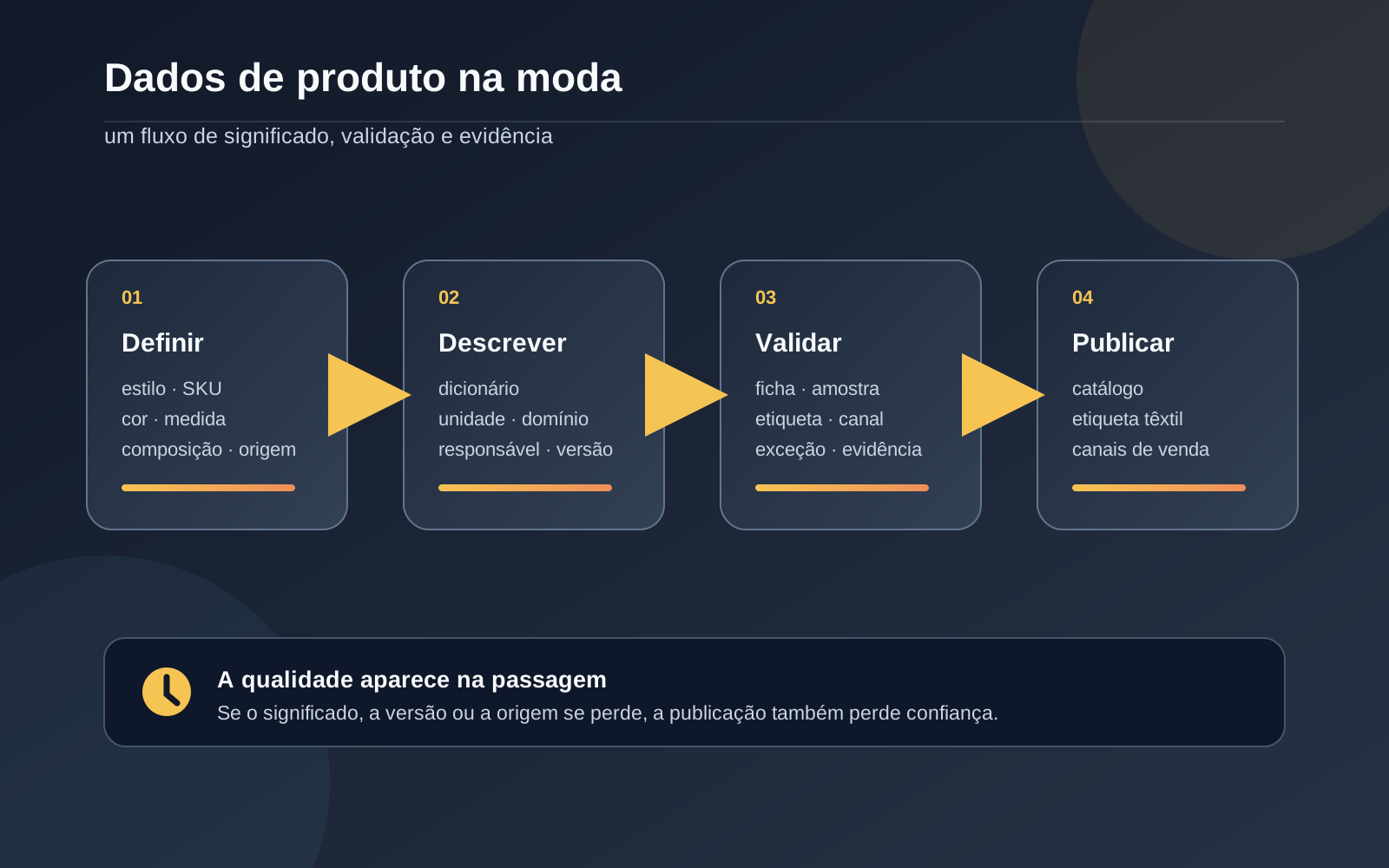
How to improve product data quality. Improving product data quality in fashion means separating style, variant, technical attribute and regulatory record; defining every field; validating source and format; and controlling the handoff from tech pack to catalog, label and sales channel. The process becomes dependable when each exception has an owner, evidence and a version.
How to control tech pack versions
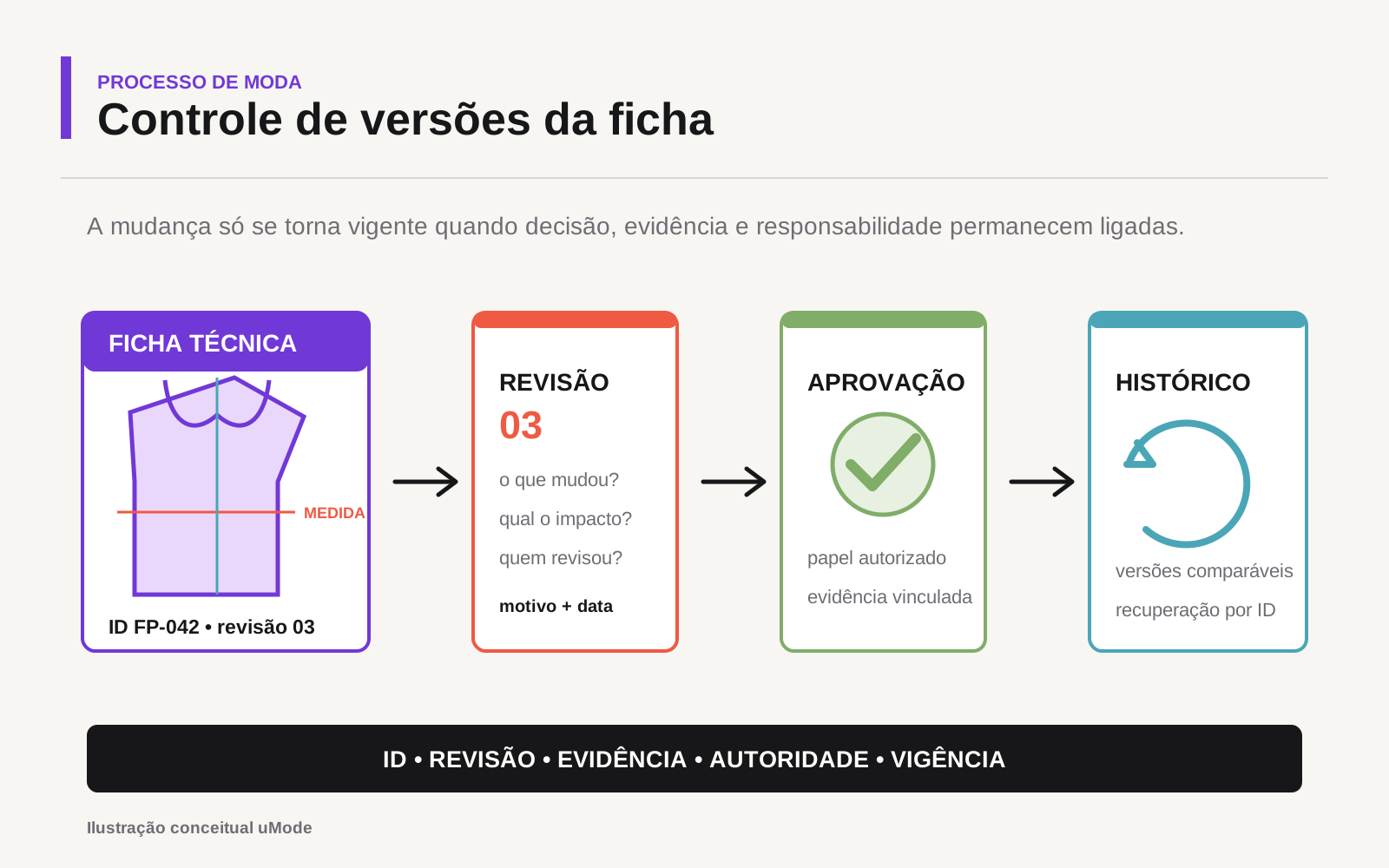
How to control tech pack versions. Controlling tech pack versions means recording every product change with an identifier, owner, reason, status, approval and effective date. The method applies configuration-control and product-lifecycle principles to the concrete decisions of an apparel supply chain.
Traceability in the fashion supply chain
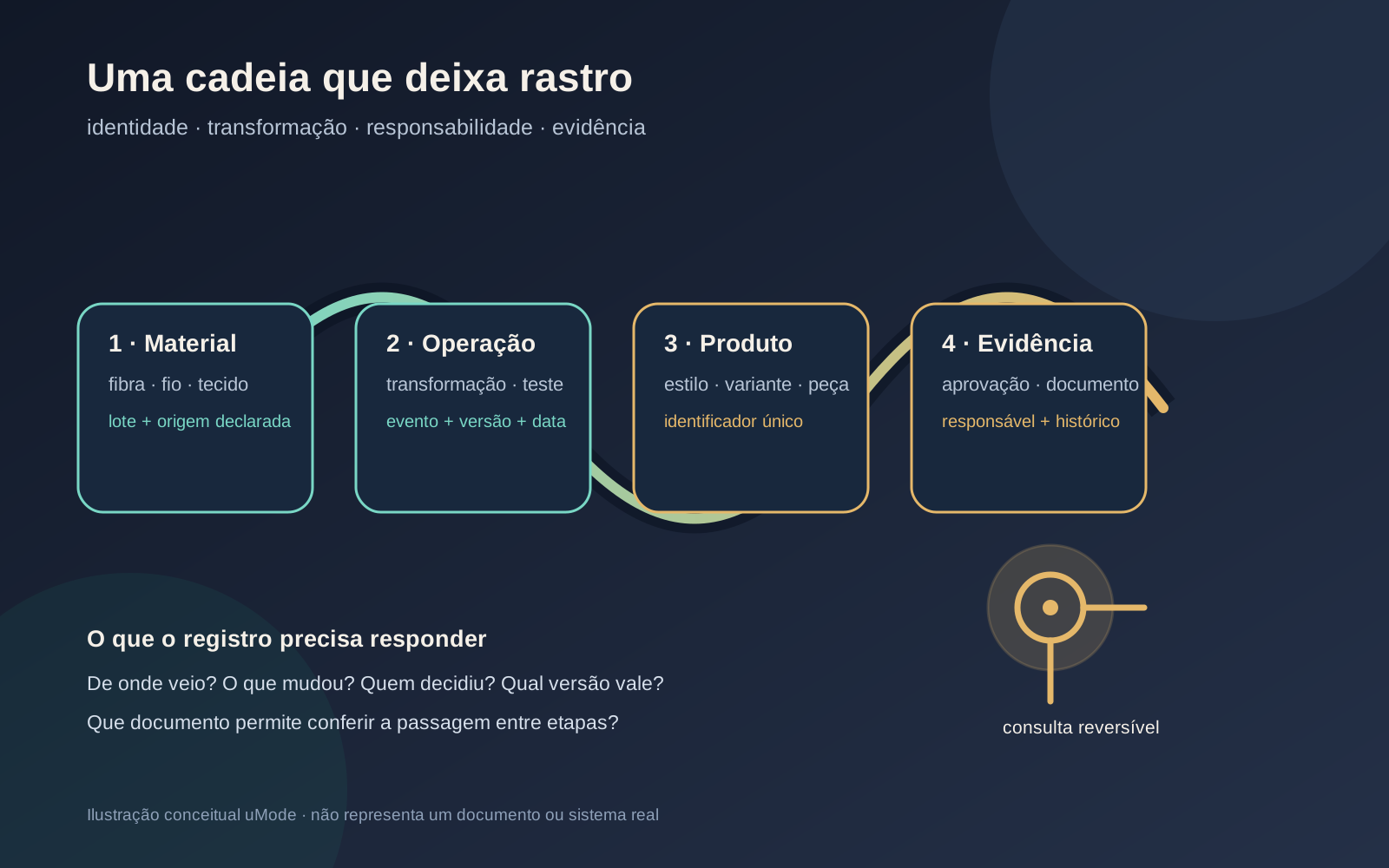
Traceability in the fashion supply chain. Fashion supply-chain traceability is the process of linking a product, material or component to the entities, activities, responsible parties and records that explain its transformation and movement. In practice, it combines identifiers, events, relationships and evidence so a product history can be checked.
ERP, PLM, and PIM
ERP, PLM, and PIM organize different objects in a fashion value chain: ERP integrates business processes and transactional data; PLM follows product lifecycle decisions and development; and PIM centralizes, enriches, and distributes product information for sales and marketing channels.

Collection management
Collection management coordinates a fashion line's journey from idea through production, service and disposal by connecting people, product data, processes, decisions, versions and events across teams and partners.

Fashion PLM: data, product, and lifecycle
Fashion PLM is the structured management of the data, decisions, and workflows that follow a product and a collection from concept through post-launch. It connects tech packs, materials, costs, samples, approvals, suppliers, and versions so that every function works from a traceable product definition.
Sources
- https://www.nist.gov/publications/contextualizing-manufacturing-data-lifecycle-decision-making
- https://www.nist.gov/publications/cpm-core-model-product-data
- https://www.nist.gov/publications/product-information-modeling-framework-product-lifecycle-management
- https://www.w3.org/standards/
- https://schema.org/Product
Want to apply this to your operation?