Fashion technical drawing
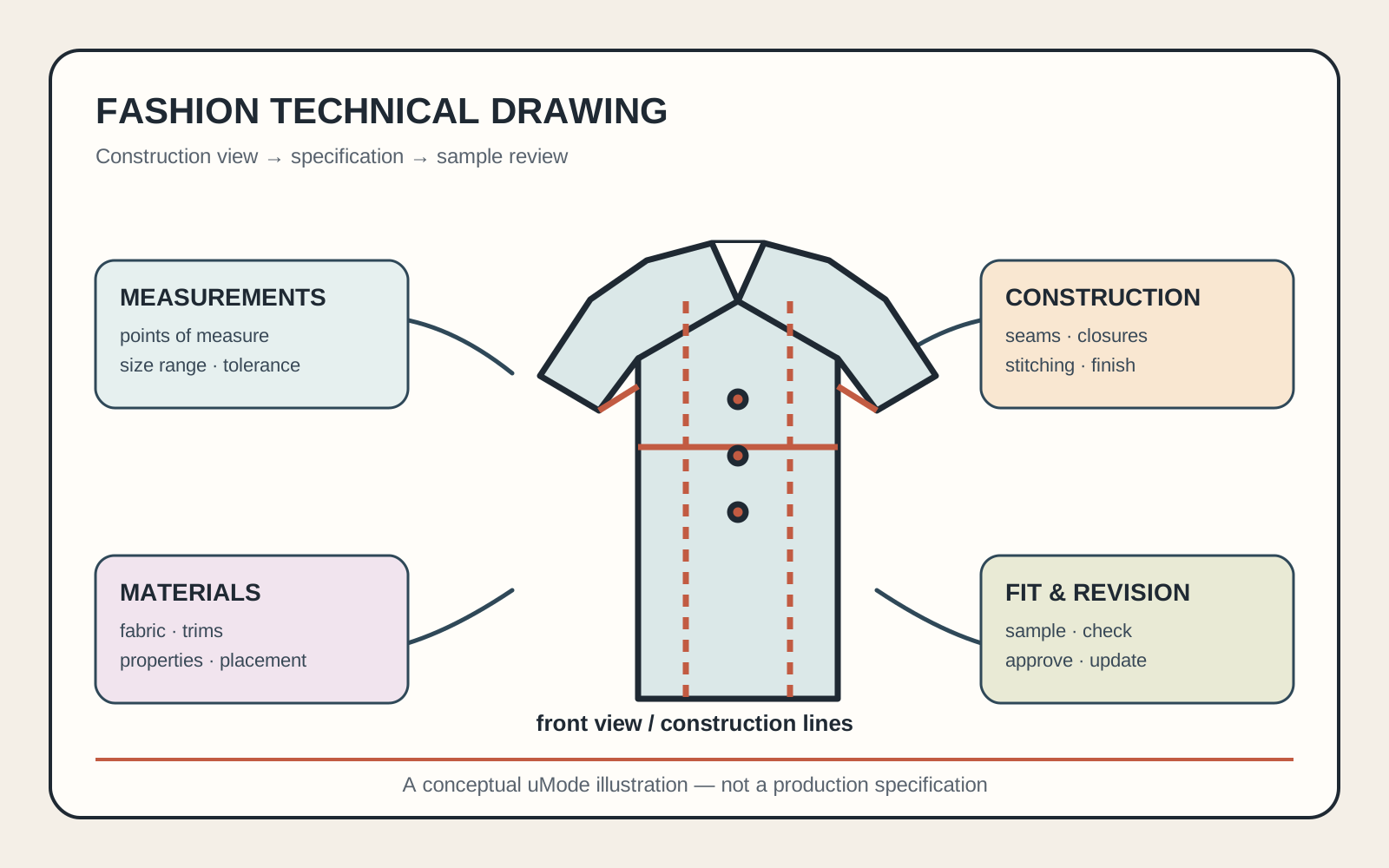
Fashion technical drawing is a construction-oriented representation used to communicate a garment’s form, details, measurements and manufacturing decisions. In apparel development it connects with patternmaking, specifications, fitting, materials and production; it does not replace a complete tech pack or physical validation.
On this page
What is Fashion technical drawing?
Fashion technical drawing is a construction-oriented representation: its purpose is to make a garment’s form, components and development decisions legible. FIT describes technical designers as a link between designers and patternmakers, with attention to fit, function, details and standards across sizes. Technical drawing therefore belongs to fashion product development, not to mood illustration.
The representation should be read with the tech pack, apparel patternmaking and a fit sample. Rather than forcing every decision into one image, a team can use views, callouts and enlarged details for construction, while written specifications record what the drawing cannot make verifiable. FIT’s program brings together technical drawing, specification review, patternmaking, fitting, PLM, 3D fit and production, showing that drawing operates inside a development system.
What should a technical drawing communicate?
The answer depends on the product, but the communication must be clear enough to guide construction and checking. FIT learning outcomes include documenting how a garment is to be constructed in language clear to the manufacturer, following the item through pattern development, construction and fitting, and creating a Technical Specifications Packet. This gives the drawing a concrete role between design, apparel suppliers, patternmaking and production.
Measurements and material are part of that reading. FIT includes measuring blouses, pants, skirts, jackets, dresses and intimate apparel, while recognizing different measurement methods used in industry. It also links fabric properties to pattern development, sewing, pressing, finishing and fit. A technical view should therefore not be treated as a universal description of fabric behavior: material, measurement method and construction remain identifiable in the document set.
In practice, a sheet can separate front view, back view, enlarged detail and construction notes; a measurement table and fit criteria complete the information. Agree on the visual convention before circulation so that a line, callout or symbol does not receive incompatible interpretations across teams.
How does it enter garment development?
Technical drawing participates in a chain that runs from concept to final product. NC State describes fashion product development as stages that affect one another and lists CAD, body scanning, patternmaking, automated pattern cutting and garment construction among the field’s knowledge areas. This places technical drawing beside patternmaking, fit samples and quality control without making those artifacts synonyms.
A useful working sequence is: identify the style and version; draw the views and details; associate measurement points and materials; review construction with patternmaking; compare the sample with specifications; and record approved changes. FIT’s degree covers grading, marking and specifications and makes the relationship between technical design and production and manufacturing cycles explicit. Revision should therefore follow changes to pattern, material, finish and measurement rather than updating only the picture.
NC State also combines product-development courses with economics, supply-chain management and textile science and processes. That framing explains why a technical drawing must communicate with textile materials, sourcing and production: a visual decision may have construction, dimensional or operational consequences that the sheet alone cannot resolve.
What are the limits and common confusions?
Technical drawing is not a pattern, not a fit test and not the complete tech pack. It communicates construction intent, while checking depends on complementary documentation and an appropriate garment or sample. It also does not replace market requirements. For textile products marketed in Brazil, Inmetro lists identification, origin, fibre composition, care instructions and size or dimension when applicable as mandatory information; those data belong in specifications and textile labelling, not as assumptions drawn from an illustration.
The difference between a technical drawing and a tech pack is scope: the first prioritizes construction representation; the second gathers requirements, measurements, materials, versions and checking criteria. PLM can organize records and approvals, while quality control checks defined criteria. Confusing these layers creates an apparently complete image while leaving critical decisions without an owner, method or record.
Verified facts
- In professional practice, technical design connects designers and patternmakers and helps address fit, function, details and standards across garment sizes.
Source: fitnyc.edu ↗ - FIT teaches technical design across the development process, from pattern to finished garment, using live models and 3D avatars to study fit.
Source: fitnyc.edu ↗ - FIT’s program includes specification review, technical sketching, patternmaking, fittings, PLM, computerized patternmaking, 3D fit and production.
Source: fitnyc.edu ↗ - FIT’s degree covers grading, marking and specifications and teaches the relationship between technical design and production and manufacturing cycles.
Source: fitnyc.edu ↗ - FIT teaches pattern corrections, computerized flat patterns, tech packages and checking whether finished garments meet specifications.
Source: fitnyc.edu ↗ - FIT learning outcomes include documenting how a garment is to be constructed in language that is clear to the manufacturer.
Source: fitnyc.edu ↗ - FIT links following a garment through pattern development, construction and fitting with creating a Technical Specifications Packet.
Source: fitnyc.edu ↗ - FIT outcomes include measuring blouses, pants, skirts, jackets, dresses and intimate apparel while recognizing different industry measurement methods.
Source: fitnyc.edu ↗ - FIT teaches how fabric properties relate to pattern development, sewing, pressing, finishing and fit.
Source: fitnyc.edu ↗ - NC State’s Fashion Development and Product Management concentration presents fashion product development from concept to final product and emphasizes that the stages affect one another.
Source: textiles.ncsu.edu ↗ - NC State lists CAD, body scanning, patternmaking, automated pattern cutting and garment construction among the concentration’s areas of knowledge.
Source: textiles.ncsu.edu ↗ - NC State combines product-development courses with economics, supply-chain management and knowledge of textile science and processes.
Source: textiles.ncsu.edu ↗ - For textile products marketed in Brazil, Inmetro lists identification, origin, fibre composition, care instructions and size or dimension when applicable as mandatory information.
Source: gov.br ↗
Related entries

Fashion product technical specification
A technical specification is the controlled information set that translates an approved fashion product into verifiable sampling and manufacturing requirements. It brings together drawings, materials, measurements, construction, tolerances, identification, labelling, comments and revision history; its content varies by category, company, market and stage.
Garment patternmaking
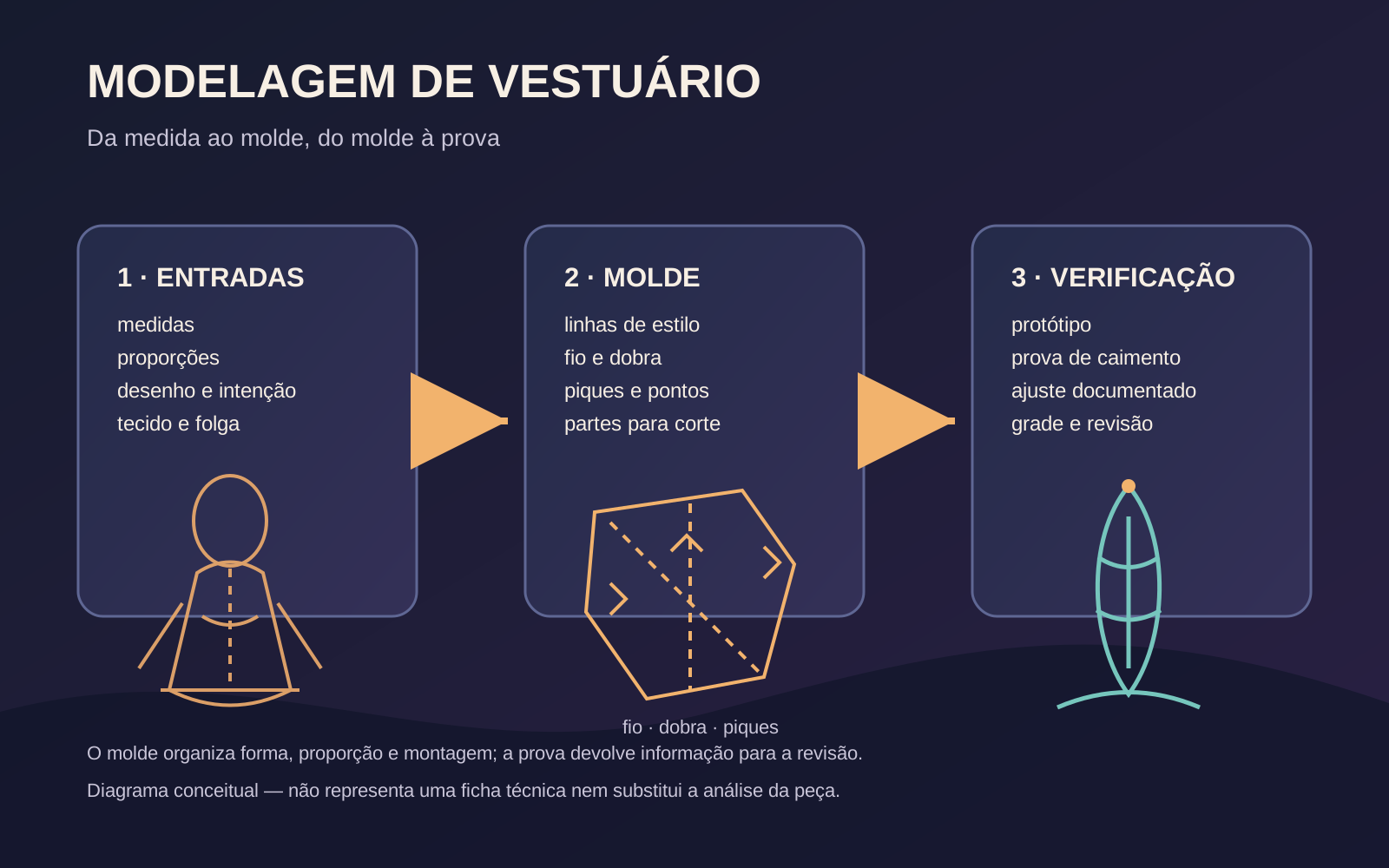
Garment patternmaking is the technique of turning measurements, proportions, and design intent into patterns used to cut and assemble a garment. It connects a block, flat pattern construction or draping with fabric information, production markings, fitting, alterations, and grading; the result is a testable development basis, not an automatic guarantee of fit.
Fashion product development
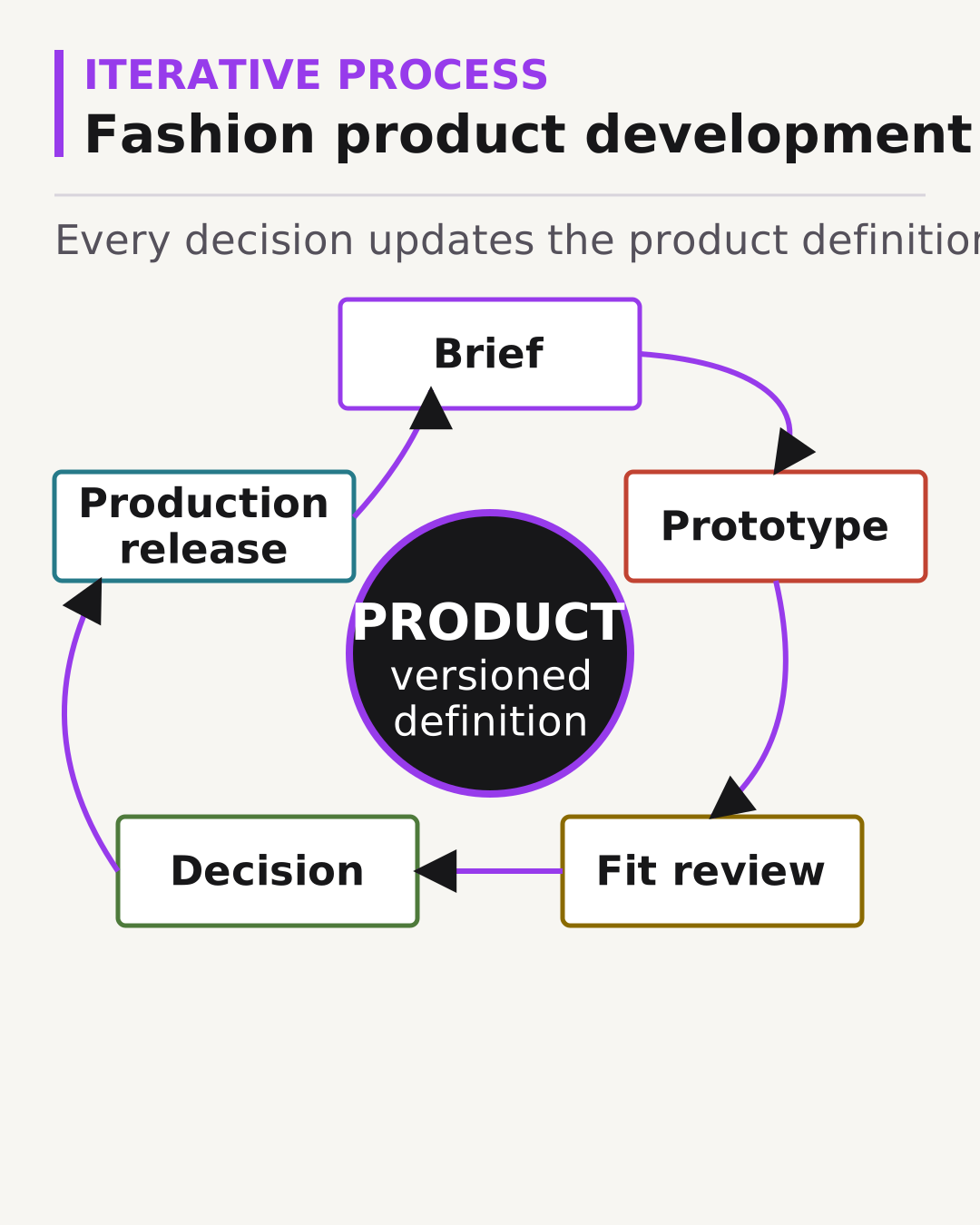
Fashion product development is the process that turns an opportunity or brief into a product specified and approved for manufacturing. It coordinates concept, assortment, materials, patternmaking, samples, fit, cost, quality, compliance and timing through decision cycles rather than an isolated creative sequence.

Fashion PLM: data, product, and lifecycle
Fashion PLM is the structured management of the data, decisions, and workflows that follow a product and a collection from concept through post-launch. It connects tech packs, materials, costs, samples, approvals, suppliers, and versions so that every function works from a traceable product definition.
Sources
- https://www.fitnyc.edu/academics/academic-divisions/business-and-technology/technical-design/index.php
- https://www.fitnyc.edu/academics/academic-divisions/business-and-technology/technical-design/degree-details/index.php
- https://www.fitnyc.edu/academics/academic-divisions/business-and-technology/technical-design/degree-details/outcomes.php
- https://textiles.ncsu.edu/academics/undergraduate/fashion-development-and-product-management/
- https://www.gov.br/inmetro/pt-br/acesso-a-informacao/perguntas-frequentes/avaliacao-da-conformidade/produtos-texteis/o-que-a-medida-regulatoria-para-produtos-texteis-estabelece
Want to apply this to your operation?