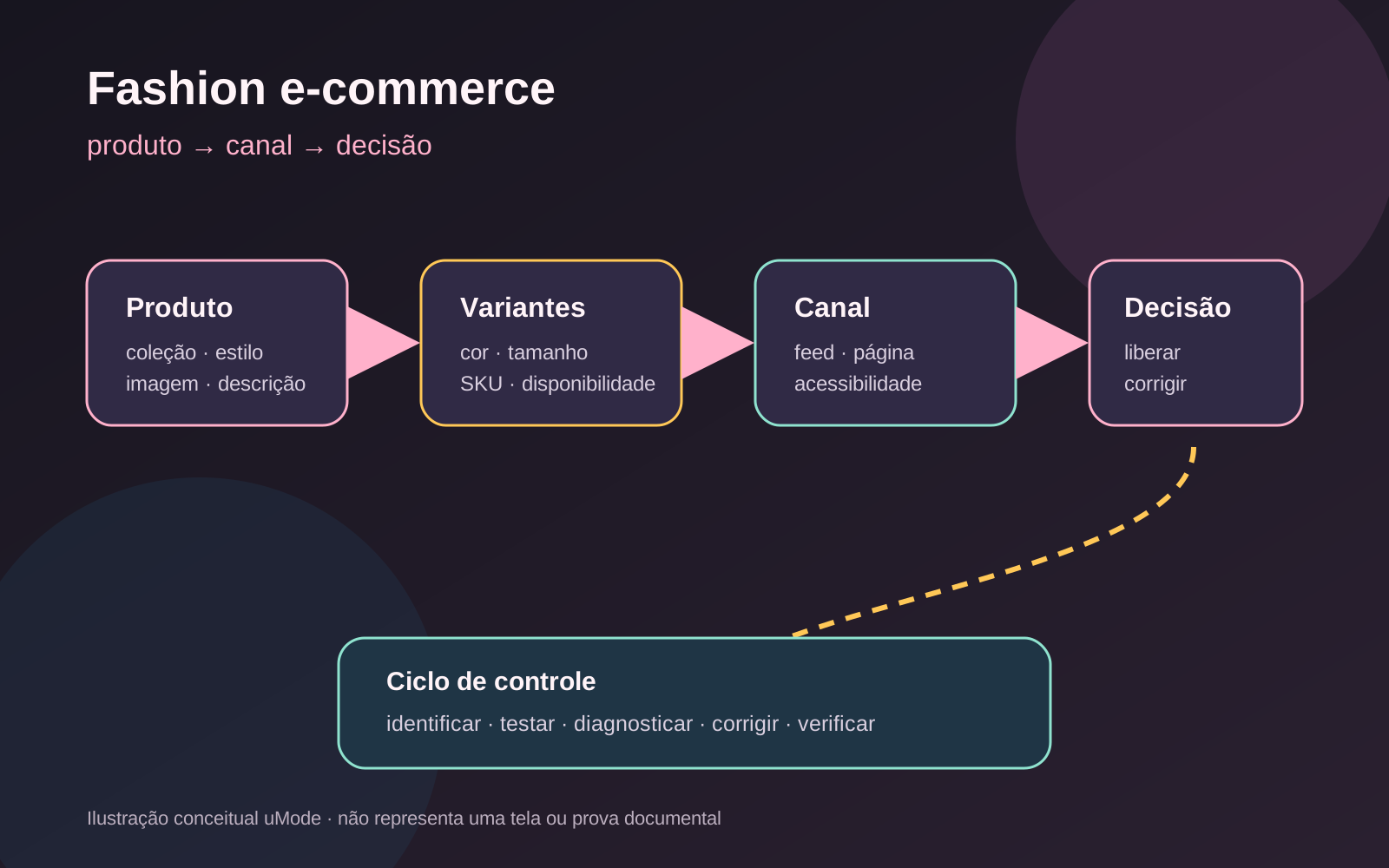
Fashion DAM
Fashion DAM is the process of storing, organizing, finding, controlling and distributing a collection's digital files while keeping metadata, permissions, versions, rights and provenance connected to product context. In practice, it turns images, videos, tech packs and derivatives into an operating base for design, wholesale, retail and communications.
On this page
What is Fashion DAM?
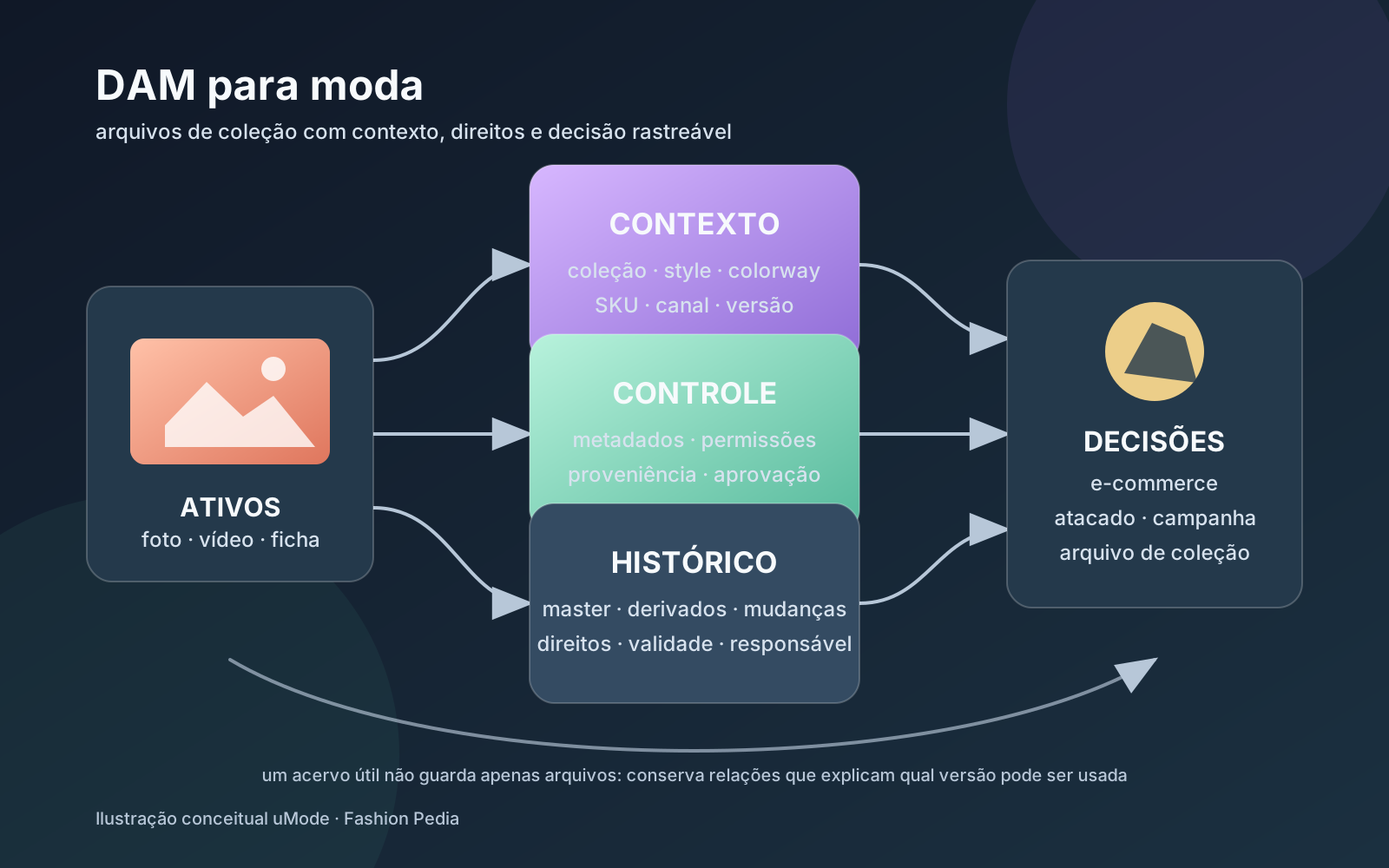
Fashion DAM is the process of organizing collection assets so a team can find the right version, understand its context and know whether it may be used. DAM covers storing, organizing, managing, retrieving and distributing digital files; in fashion operations, that can include campaign imagery, runway video, tech packs, drawings, presentations, graphics and channel derivatives. The point is not to accumulate folders. It is to connect each asset to a style, colorway, SKU, channel, version, owner and usage right.
The system needs to be centralized and searchable, but the editorial design comes before the tool. For each file, a team can establish a stable identifier, a collection taxonomy and metadata that describes season, line, product, variant, crop, language, channel and approval state. That structure keeps a master separate from an e-commerce, wholesale, press or social derivative without forcing someone to infer the answer from a filename.
How does the asset library follow a collection through development?
The library follows development when every handoff leaves a legible relationship between an asset, an activity and a responsible party. In the W3C PROV-DM model, an entity can be digital, an activity unfolds over time and can transform or generate entities, and an agent bears responsibility for an activity or entity. For apparel, this vocabulary can describe a photograph as an entity, a fitting or approval as an activity, and a person or team as an agent without confusing the final file with the process that produced it.
That framing helps across product development, tech pack, production, merchandising and communications. A drawing may produce a campaign image; a color adjustment may require new renderings; an approval may release only selected channels. The DAM should retain the link between the master, its derivatives, the usage date, the decision owner and the relevant permission. When a collection changes, its history explains what was replaced and why instead of leaving a team to choose between visually similar files.
A controlled rollout can start with one line, one collection or a delivery stream that repeatedly creates rework. The team defines required fields, approval states, naming rules, duplicate handling and the event that ends an image's validity. It then tests search and permissions with people from design, product and channel teams. The intended result is a rule different functions can apply consistently, not an automatic promise of lower cost or higher speed.
What governance does a fashion DAM need?
Governance must connect metadata, rights, access, versions and responsibility. IBM describes DAM as able to control user permissions, access control, versioning and metadata management; that supplies a technical foundation, while a fashion operation still has to decide who approves a master, who may create a derivative and who may publish an image in each channel.
Provenance makes that decision inspectable. W3C defines provenance as information about entities, activities and people involved in producing data or a thing, information that can support assessments of quality, reliability or trustworthiness. An asset record can therefore carry origin, transformation, approval, owner, usage period and product relationship. Image rights, music licenses, photographer permissions and territory restrictions should be decision fields, not notes buried in a conversation.
The boundary with PIM and PLM needs to be explicit. DAM governs files and their use contexts; PIM organizes product information for presentation and distribution; PLM follows product-lifecycle information and decisions. A project can integrate all three, but every field needs an authority, an update rule and a conflict path. DAM should not become a catch-all for attributes owned elsewhere or replace collection governance.
Where does DAM meet the digital product passport for apparel?
The connection appears when visual assets and documents must remain linked to the product model, batch or item they describe. Regulation (EU) 2024/1781 says digital product passport data should be accurate, complete and up to date, and requires open standards plus an interoperable, machine-readable, structured, searchable and transferable format. It also says passport data refers to the product model, batch or item as specified by the applicable delegated act.
For fashion, that reinforces a registration discipline: a product image should not lose its link to its variant, a composition document should not circulate without scope, and a channel derivative should not look like the source record. The regulation also notes the environmental impact associated with textiles' short use phase and identifies clothing as the largest share of textile consumption in the Union. This does not make DAM proof of circularity; it shows why context, validity and a product link matter when the asset library participates in a wider information chain.
The limit matters as much as the connection. DAM can make files findable and governable, but it cannot by itself prove a garment's composition, a photograph's authorization or the correctness of an attribute. Each assertion needs a source record or document, and each exception needs an owner and a review date. In that way, fashion DAM remains an asset-management process rather than being mistaken for a tool, product catalog, tech pack or digital product passport.
Verified facts
- DAM is a process for storing, organizing, managing, retrieving and distributing digital files.
Source: ibm.com ↗ - A DAM solution creates a searchable, centralized repository where teams can access media assets.
Source: ibm.com ↗ - A DAM solution enables an organization to control user permissions, access control, versioning and metadata management.
Source: ibm.com ↗ - A digital asset is a valuable file in digital format that is searchable via metadata and includes access and usage rights.
Source: ibm.com ↗ - Digital assets include documents, images, audio files, video content, presentations, animations, media files and graphics.
Source: ibm.com ↗ - Provenance is information about entities, activities, and people involved in producing a piece of data or thing, which can be used to form assessments about its quality, reliability or trustworthiness.
Source: w3.org ↗ - PROV-DM is the conceptual data model that forms a basis for the W3C provenance family of specifications.
Source: w3.org ↗ - In PROV-DM, an entity is a physical, digital, conceptual, or other kind of thing with some fixed aspects.
Source: w3.org ↗ - In PROV-DM, an activity occurs over a period of time and may consume, process, transform, modify, relocate, use or generate entities.
Source: w3.org ↗ - In PROV-DM, an agent bears some form of responsibility for an activity, for the existence of an entity, or for another agent's activity.
Source: w3.org ↗ - Regulation (EU) 2024/1781 states that digital product passport data should be accurate, complete and up to date.
Source: eur-lex.europa.eu ↗ - Regulation (EU) 2024/1781 requires digital product passport data to be based on open standards and an interoperable, machine-readable, structured, searchable and transferable format.
Source: eur-lex.europa.eu ↗ - Regulation (EU) 2024/1781 says digital product passport data shall refer to the product model, batch or item as specified in the applicable delegated act.
Source: eur-lex.europa.eu ↗ - Regulation (EU) 2024/1781 notes that textiles have a short use phase and that clothing accounts for the largest share of textile consumption in the Union.
Source: eur-lex.europa.eu ↗
Related entries
Fashion PIM
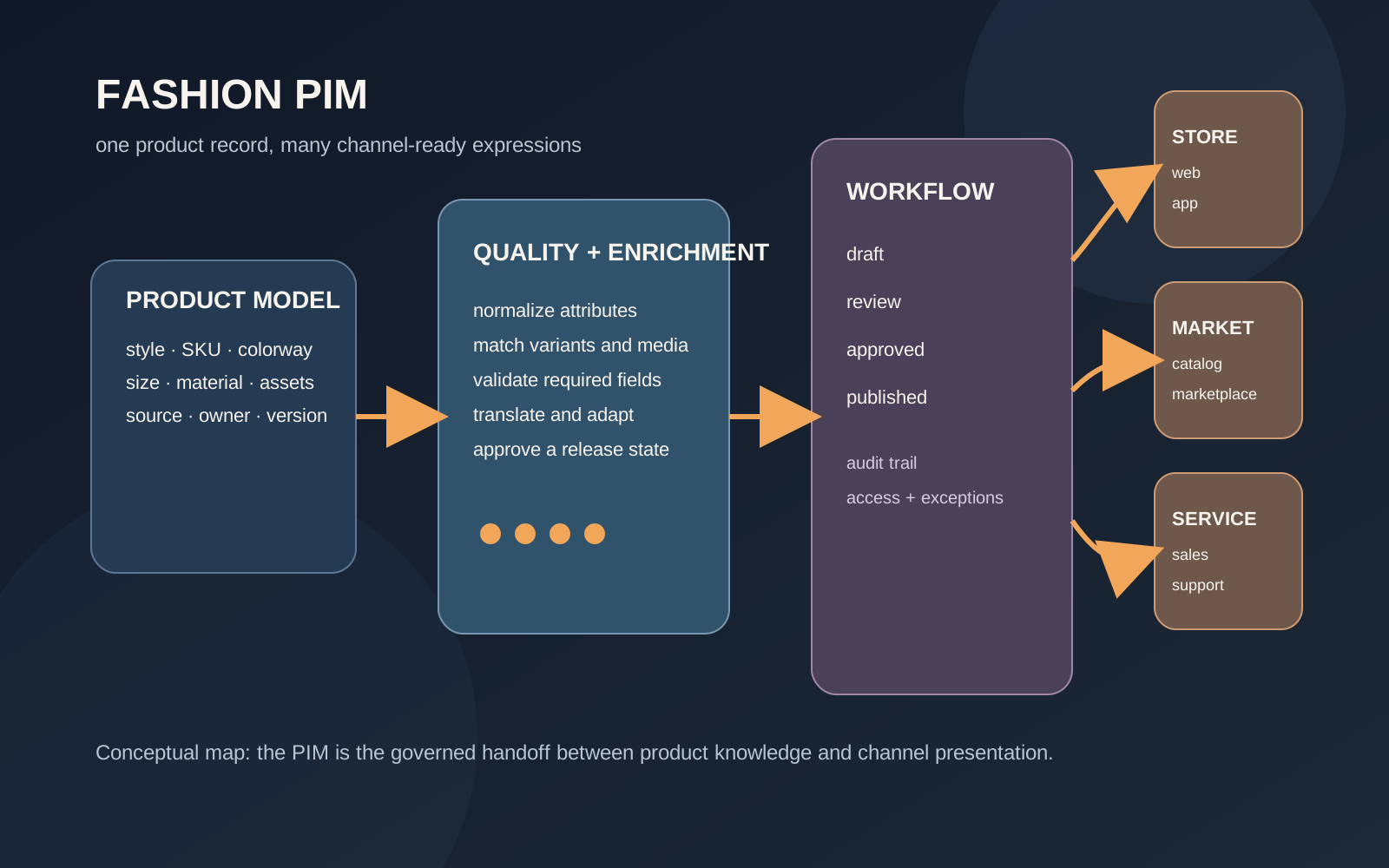
Fashion PIM is the process of organizing, enriching, validating and distributing product data to the channels that present a collection. It combines a data model, quality rules, ownership and integrations; it is not merely a catalog and does not automatically replace PLM, ERP or DAM.

Fashion PLM: data, product, and lifecycle
Fashion PLM is the structured management of the data, decisions, and workflows that follow a product and a collection from concept through post-launch. It connects tech packs, materials, costs, samples, approvals, suppliers, and versions so that every function works from a traceable product definition.
Fashion SKU
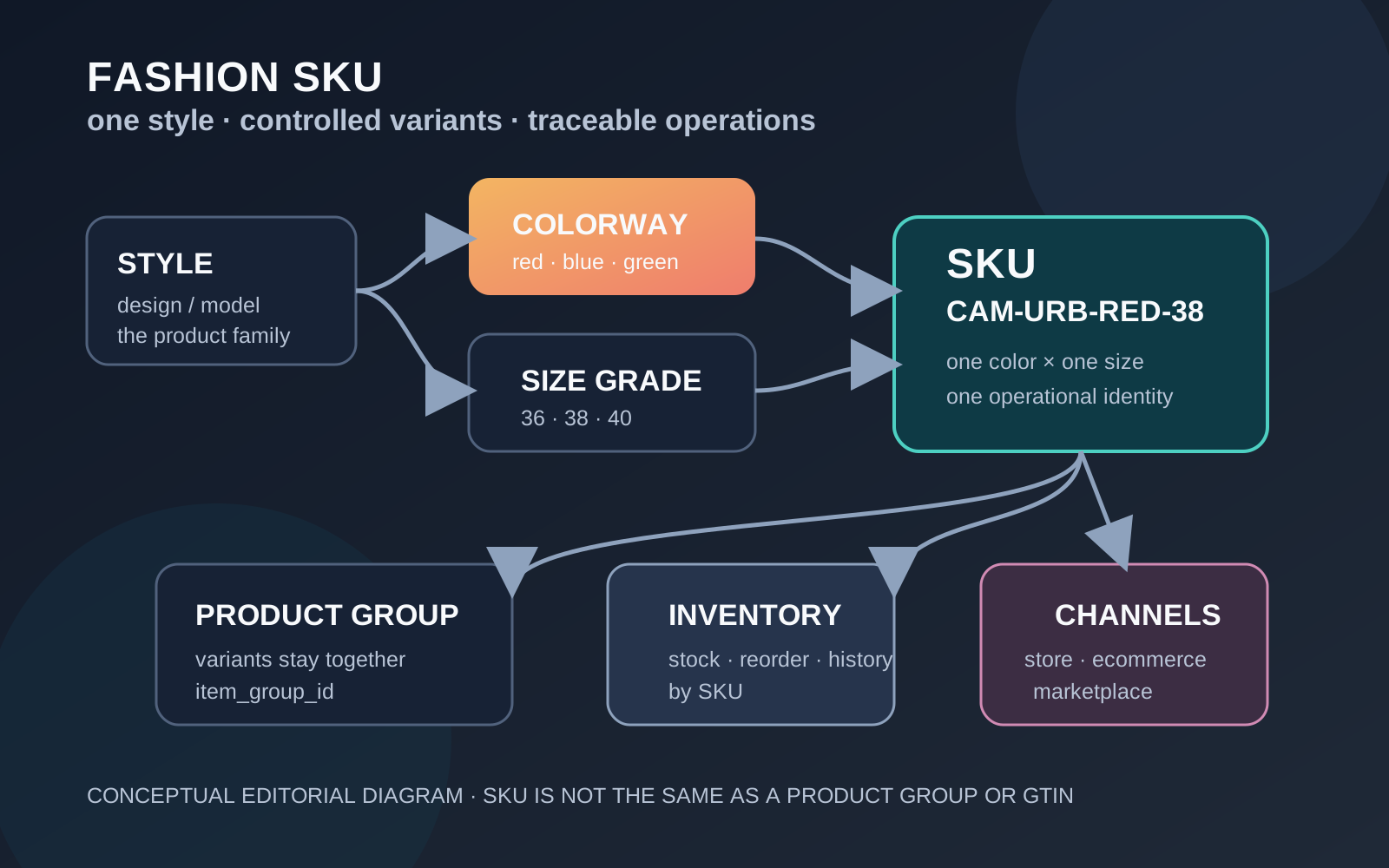
A fashion SKU is an identification unit used to distinguish items and variants in inventory control. In apparel, the useful distinction is between the individual SKU, the product group, color and size attributes, and assortment decisions.
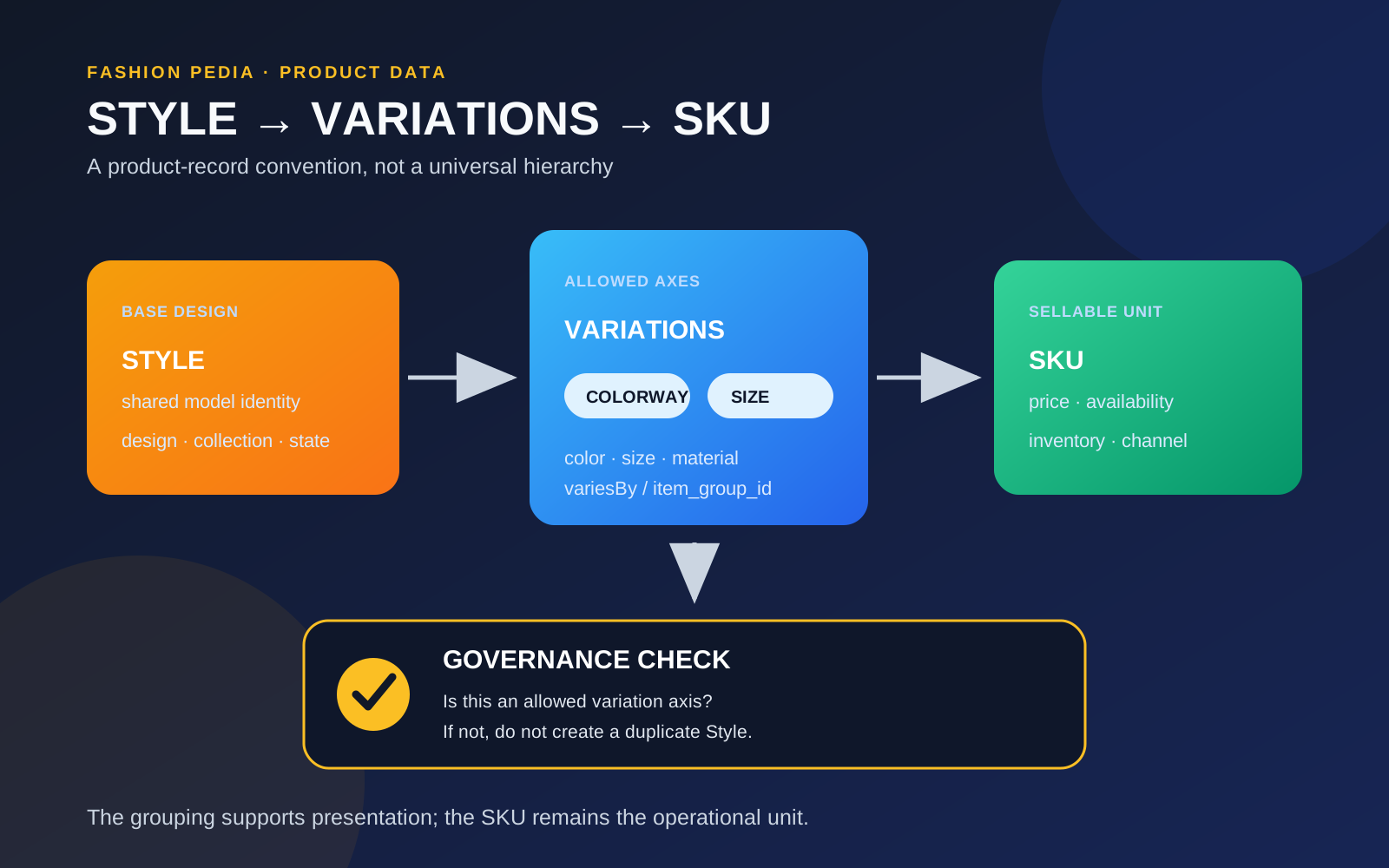
Style in a product record
Style in a product record. In a fashion product record, Style can serve as the grouping for a base design and the decisions shared by its variations, but it is not a universal hierarchy. Operationally, that grouping must be separated from color and size variations and from the sellable unit identified by an SKU.
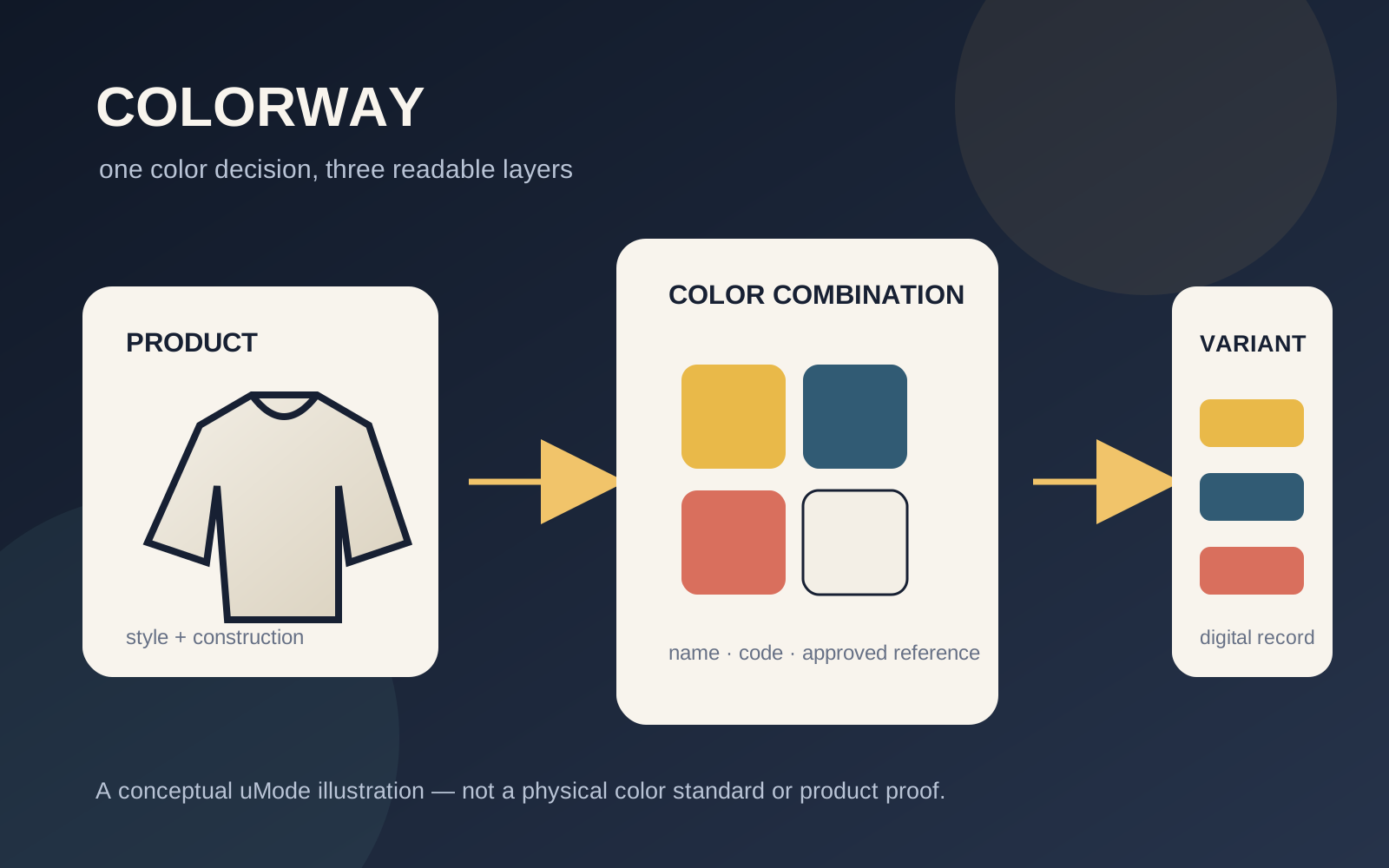
Colorway in fashion
Colorway in fashion. A colorway is a named combination of colors used to distinguish one version of a product. In fashion operations, the combination should remain legible across the product record, the approved reference, and the digital presentation, without treating a commercial name, a physical color, and a variant code as interchangeable.

Fashion product technical specification
A technical specification is the controlled information set that translates an approved fashion product into verifiable sampling and manufacturing requirements. It brings together drawings, materials, measurements, construction, tolerances, identification, labelling, comments and revision history; its content varies by category, company, market and stage.
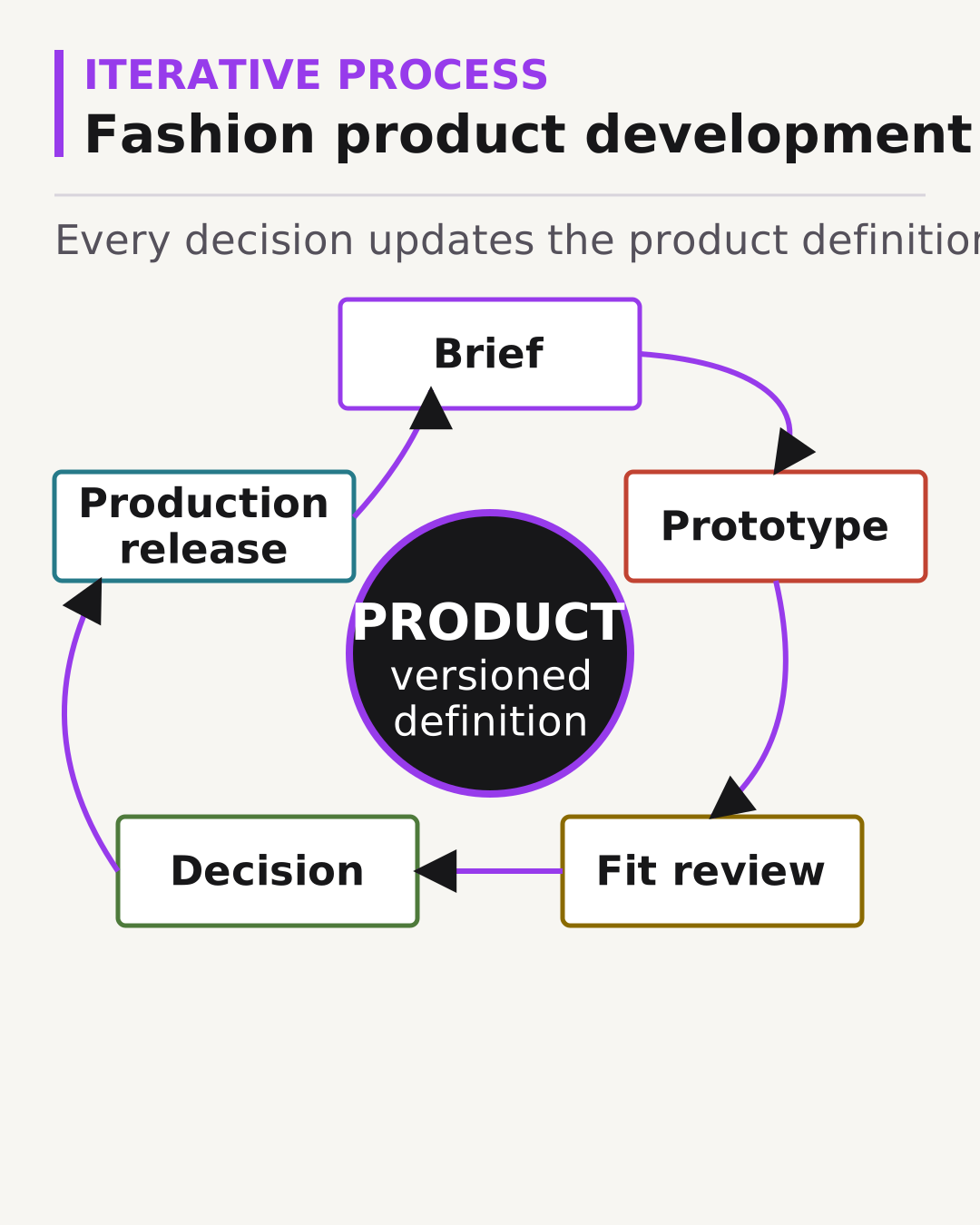
Fashion product development
Fashion product development is the process that turns an opportunity or brief into a product specified and approved for manufacturing. It coordinates concept, assortment, materials, patternmaking, samples, fit, cost, quality, compliance and timing through decision cycles rather than an isolated creative sequence.
Sources
Want to apply this to your operation?