Fashion PLM: data, product, and lifecycle
Fashion PLM is the structured management of the data, decisions, and workflows that follow a product and a collection from concept through post-launch. It connects tech packs, materials, costs, samples, approvals, suppliers, and versions so that every function works from a traceable product definition.

What is fashion PLM?
Fashion PLM is the structured management of a product's definition and evolution throughout its lifecycle. Its subject is not only the final file: it includes the data, relationships, processes, and decisions that link concept, development, sourcing, production, commercialization, and post-launch. NIST research describes PLM as managing the flow of product and process data so that suitable information reaches the right systems when it is needed.
In fashion, this structure brings together the sketch, tech pack, composition, materials, measurements, variants, costs, samples, suppliers, and approvals. The Skills England occupational standard for fashion product technology illustrates the breadth of the technical record: specifications, measurements, bills of material, change logs, quality standards, and tolerances all support the development and production of a garment.
PLM does not replace every company system. It maintains the product definition and history, while an ERP usually concentrates transactions, purchasing, inventory, and accounting. Integration between the layers reduces re-entry and parallel versions. A collection map may provide a visual reading of the range, but it needs to point to the same records, versions, and states in the product lifecycle.
How does PLM organize a collection?
PLM organizes a collection through identity, related objects, responsibilities, and traceable changes. Each style can link a brief, variants, materials, trims, measurements, technical images, pre-costing, suppliers, samples, comments, and approval milestones. The version identifies which definition is current; history preserves what changed; permission determines who may view, alter, or approve.
This structure supports collection governance. A gate may require minimum information before movement between design, development, sample, purchase, and production. Design rationale also matters: product models researched by NIST associate decisions and their reasons with the record instead of retaining only the outcome. This helps explain why a measurement, material, color, or supplier changed.
Information exchange crosses functions and organizations. Interoperability and data standards are therefore part of the PLM problem, not an implementation detail. ISO/TS 10303-4439 includes versions, documents, dates, approvals, and configuration change within lifecycle support; these elements make it possible to follow a product without confusing its current state with an older copy.
How is PLM evolving?
PLM is evolving from a file repository into a base of contextualized lifecycle information. Contextualizing means linking a data point to the phase, product, version, process, and decision to which it belongs. This supports traceability and makes it possible to generate knowledge without losing the record's origin.
The digital product passport established by European Regulation 2024/1781 reinforces this direction for product groups covered by specific acts: data must be accurate, complete, current, structured, and interoperable. AI in fashion adds new ways to locate, compare, and analyze information, but it depends on the same foundation: stable identity, the correct version, authorized access, and a traceable decision. Technology changes; PLM's central function remains necessary.
Verified facts
- PLM systems manage the flow of product and process data throughout the lifecycle so that the right information reaches the right systems at the right time.
Source: nist.gov ↗ - Contextualizing data from one lifecycle phase relative to the others is a necessary step toward understanding system behavior and satisfying traceability requirements.
Source: nist.gov ↗ - Supporting PLM throughout a product's life requires reliable, complete, and efficient product-data models.
Source: nist.gov ↗ - NIST's Core Product Model gives equal status to a product's function, form, and behavior.
Source: nist.gov ↗ - An extension of NIST's Core Product Model provides a way to associate design rationale with the product.
Source: nist.gov ↗ - NIST's product-information framework was intended to capture product, design rationale, assembly, and tolerance information from conceptual design through the full lifecycle.
Source: nist.gov ↗ - Product-data models enable information exchange across organizations, actors, processes, and lifecycle stages.
Source: nist.gov ↗ - ISO/TS 10303-4439:2025 includes versions, definitions, documents, dates, approvals, and configuration changes within product lifecycle support.
Source: iso.org ↗ - The British occupational standard for fashion product technology includes drawings, specifications, measurements, materials, grade rules, bills of material, change logs, and tolerances in technical packs.
Source: skillsengland.education.gov.uk ↗ - European Regulation 2024/1781 requires data in a digital product passport to be accurate, complete, and up to date when applicable acts require the passport.
Source: eur-lex.europa.eu ↗ - The same regulation requires digital product passport data to use open standards and an interoperable format that is machine-readable, structured, searchable, and transferable.
Source: eur-lex.europa.eu ↗
Related entries
Collection governance: roles, gates, and evidence
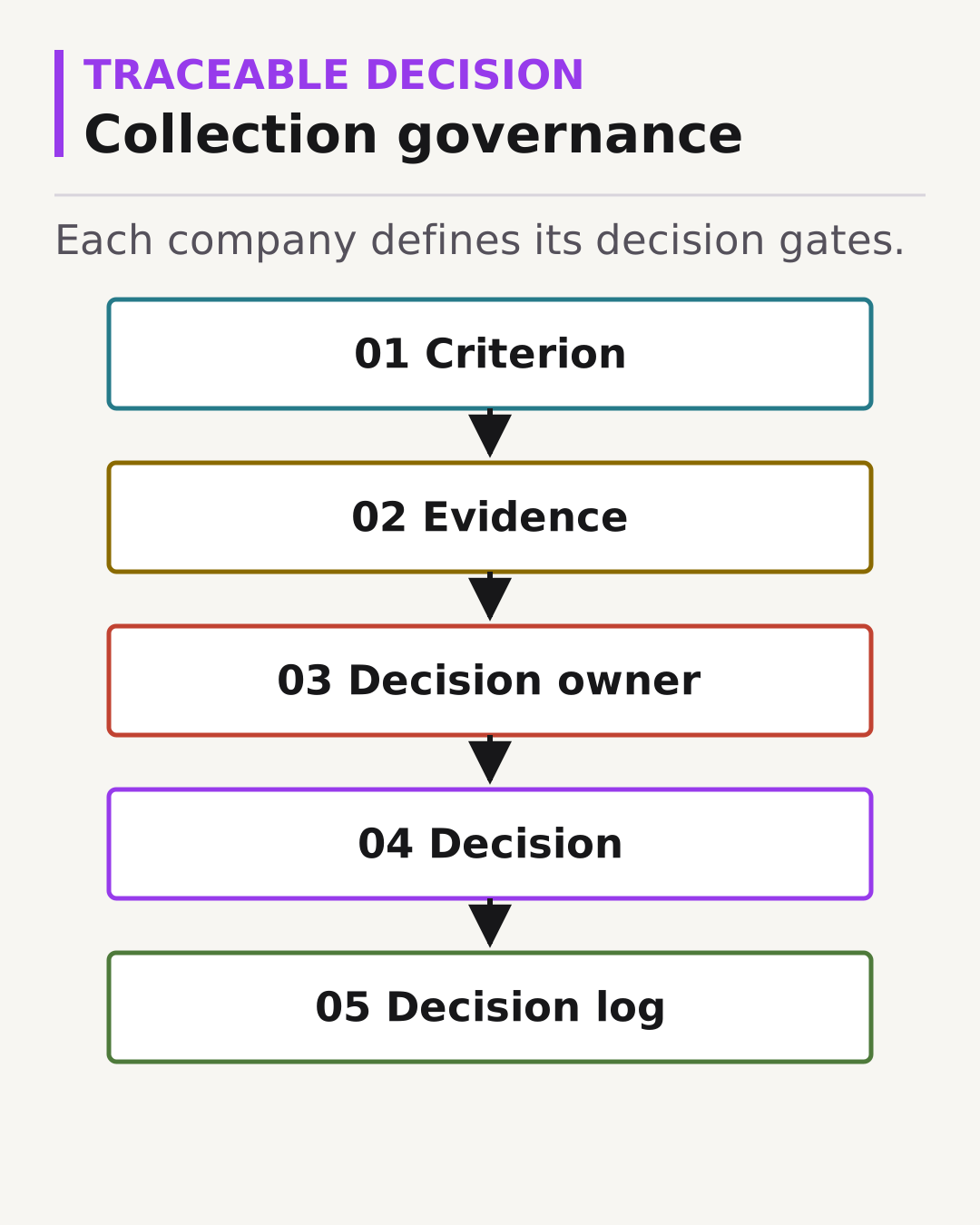
Collection governance describes the practice of making roles, criteria, evidence, decisions, and exceptions explicit in fashion development. The term does not designate one industry standard; it synthesizes principles of process management, evidence-based decisions, due diligence, and traceability.

Fashion product technical specification
A technical specification is the controlled information set that translates an approved fashion product into verifiable sampling and manufacturing requirements. It brings together drawings, materials, measurements, construction, tolerances, identification, labelling, comments and revision history; its content varies by category, company, market and stage.
AI in fashion: applications and limits
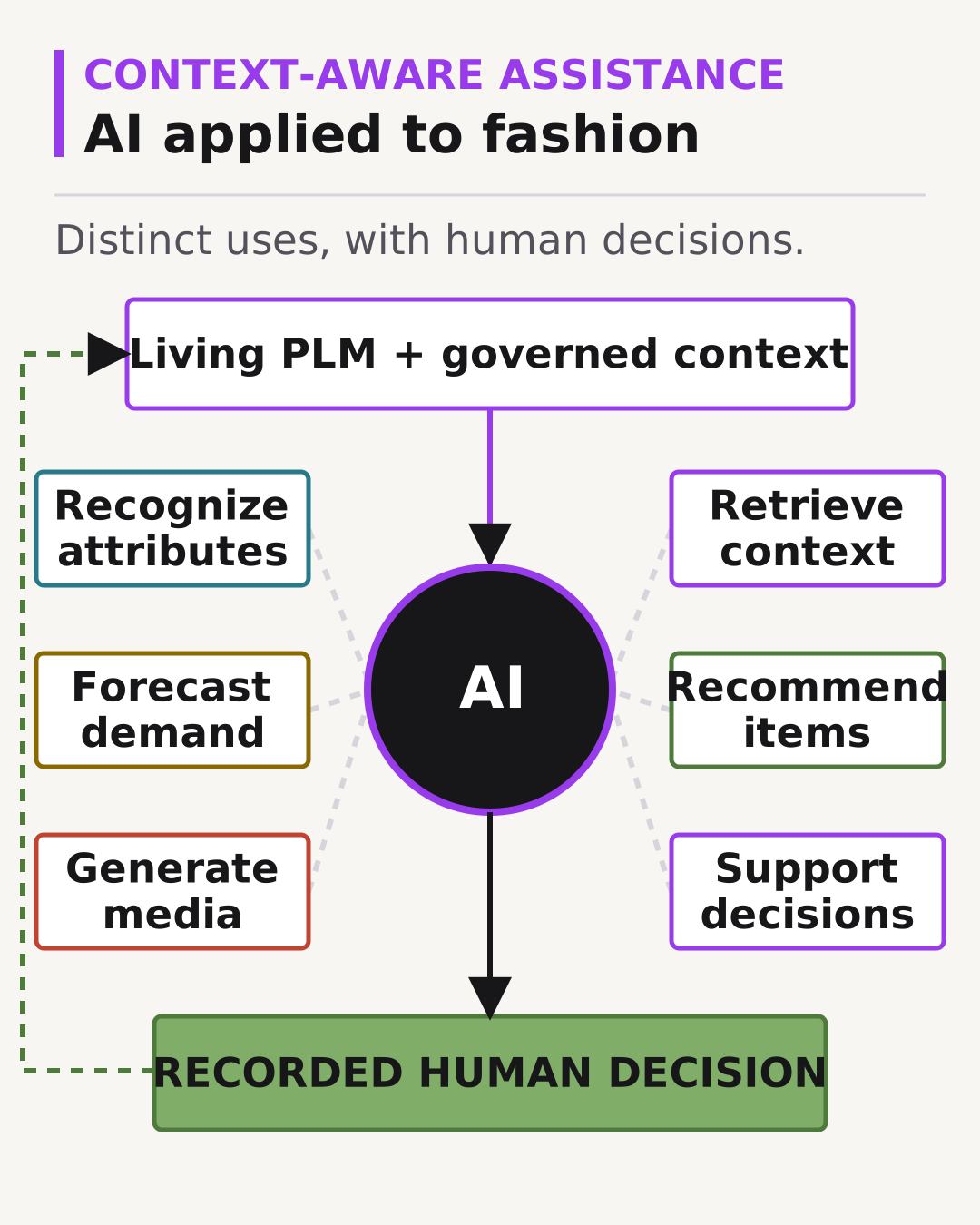
Applications of AI in fashion use computational models to recognize attributes, retrieve knowledge, generate visualizations, and support decisions across creation, development, and commercialization. Their limits depend on the data, use context, evaluation, human oversight, and integration with the product workflow.
Governing fashion context
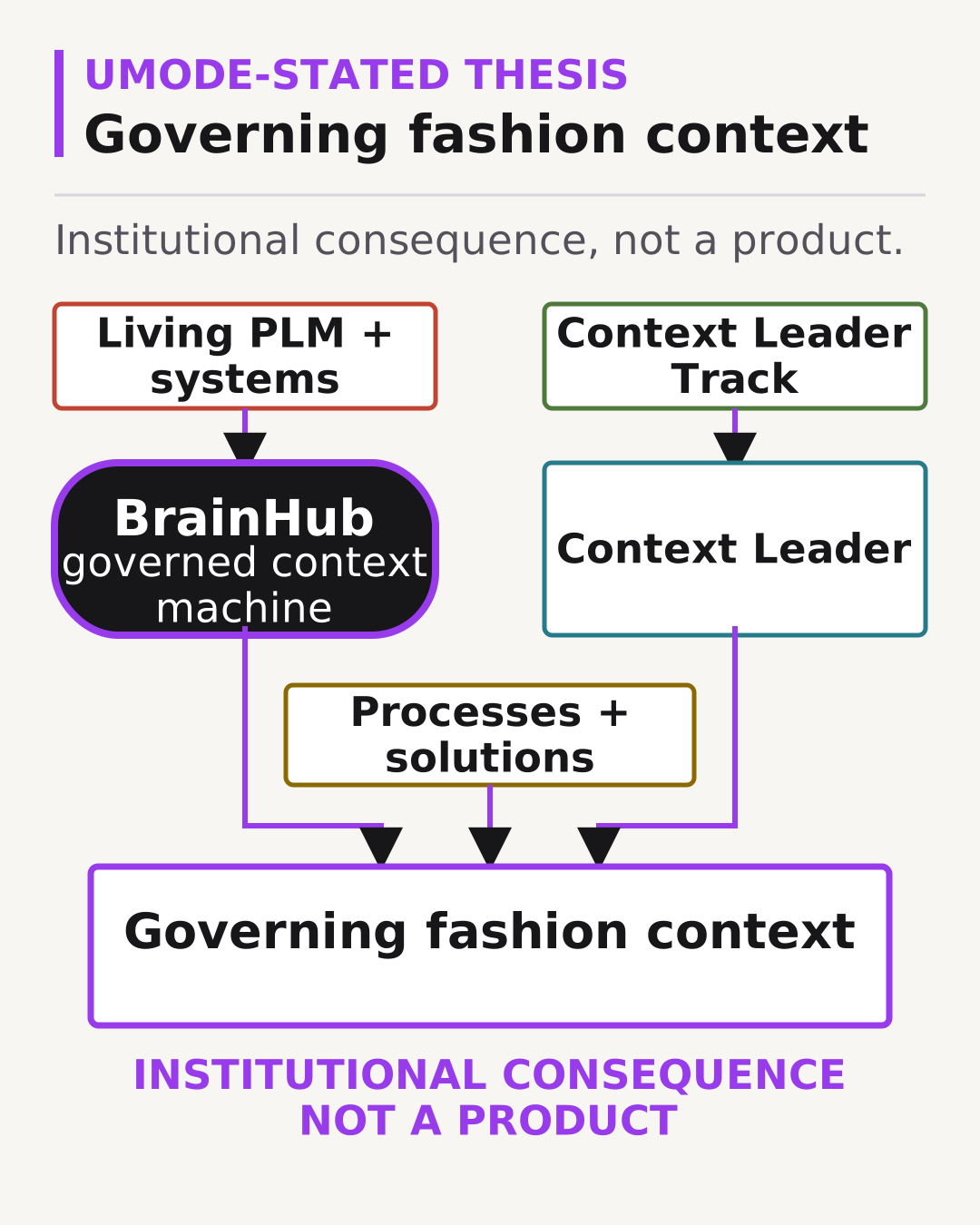
Governing fashion context is uMode's name for a proposed relationship among systems of record, BrainHub, governance, and the Context Leader Track. The expression is not a product, technical standard, or recognized industry category, and no independent validation of its outcomes has been published.
Sources
- https://www.nist.gov/publications/contextualizing-manufacturing-data-lifecycle-decision-making
- https://www.nist.gov/publications/cpm-core-model-product-data
- https://www.nist.gov/publications/product-information-modeling-framework-product-lifecycle-management
- https://www.nist.gov/publications/dynamic-customization-validation-and-integration-product-data-models-using-semantic-web
- https://www.iso.org/standard/91589.html?browse=tc
- https://skillsengland.education.gov.uk/media/2305/st0540_fashion-textiles-product-technologist-epa_for_publication_2-october-2018.pdf
- https://eur-lex.europa.eu/eli/reg/2024/1781/oj/eng
Want to apply this to your operation?