Fashion product development
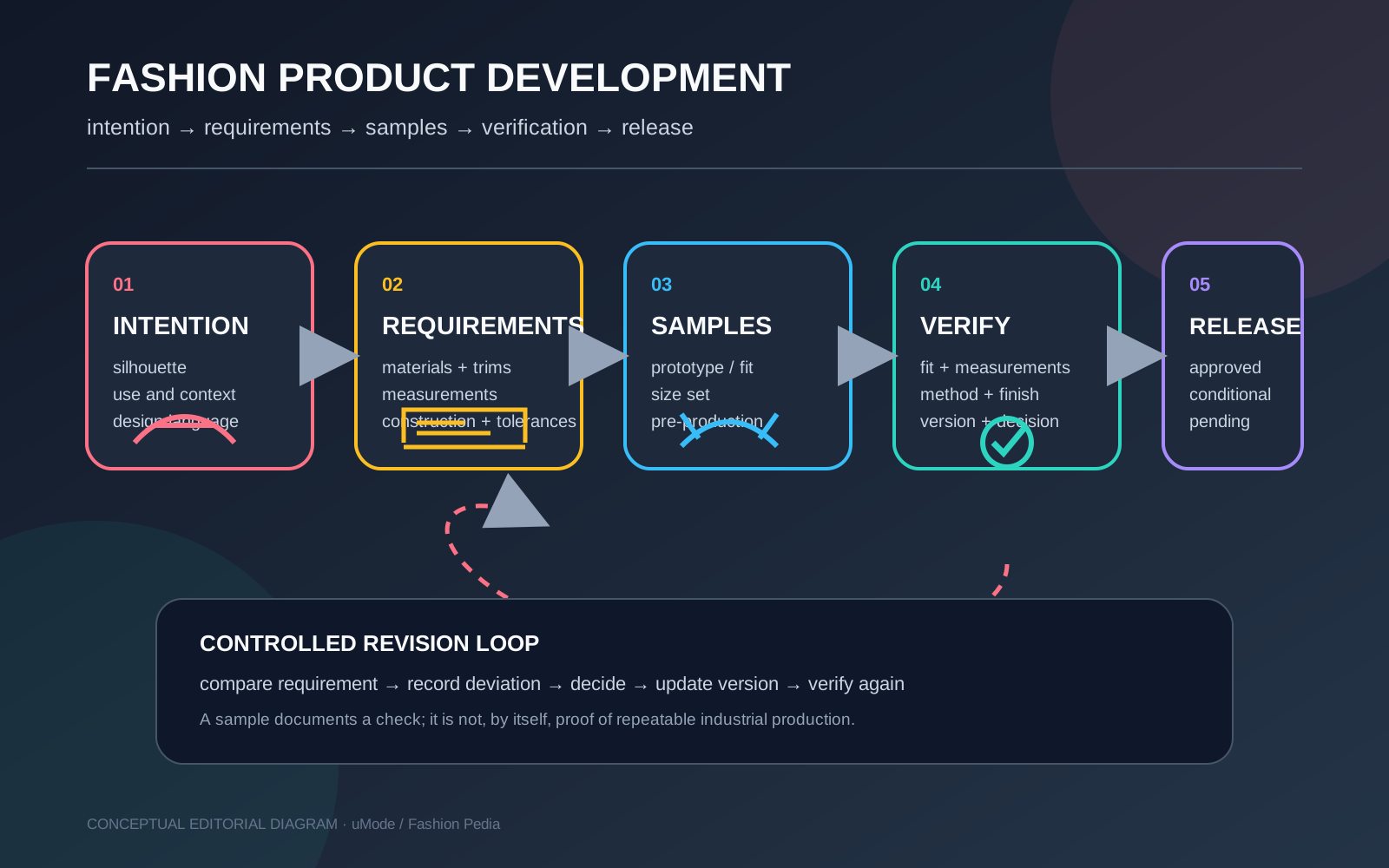
Fashion product development is the process that turns an opportunity or brief into a product specified and approved for manufacturing. It coordinates concept, assortment, materials, patternmaking, samples, fit, cost, quality, compliance and timing through decision cycles rather than an isolated creative sequence.
On this page
What is fashion product development?
Fashion product development is the controlled transition from a commercial and creative intention to a technically feasible, costed and approved item. It sits between concept and manufacturing in the textile and apparel supply chain and requires decisions from design, merchandising, product engineering, sourcing, quality and production. It is not limited to drawing a garment and does not necessarily start with a trend: it may begin with a user need, an assortment gap, a functional requirement, sales learning or a sourcing constraint.
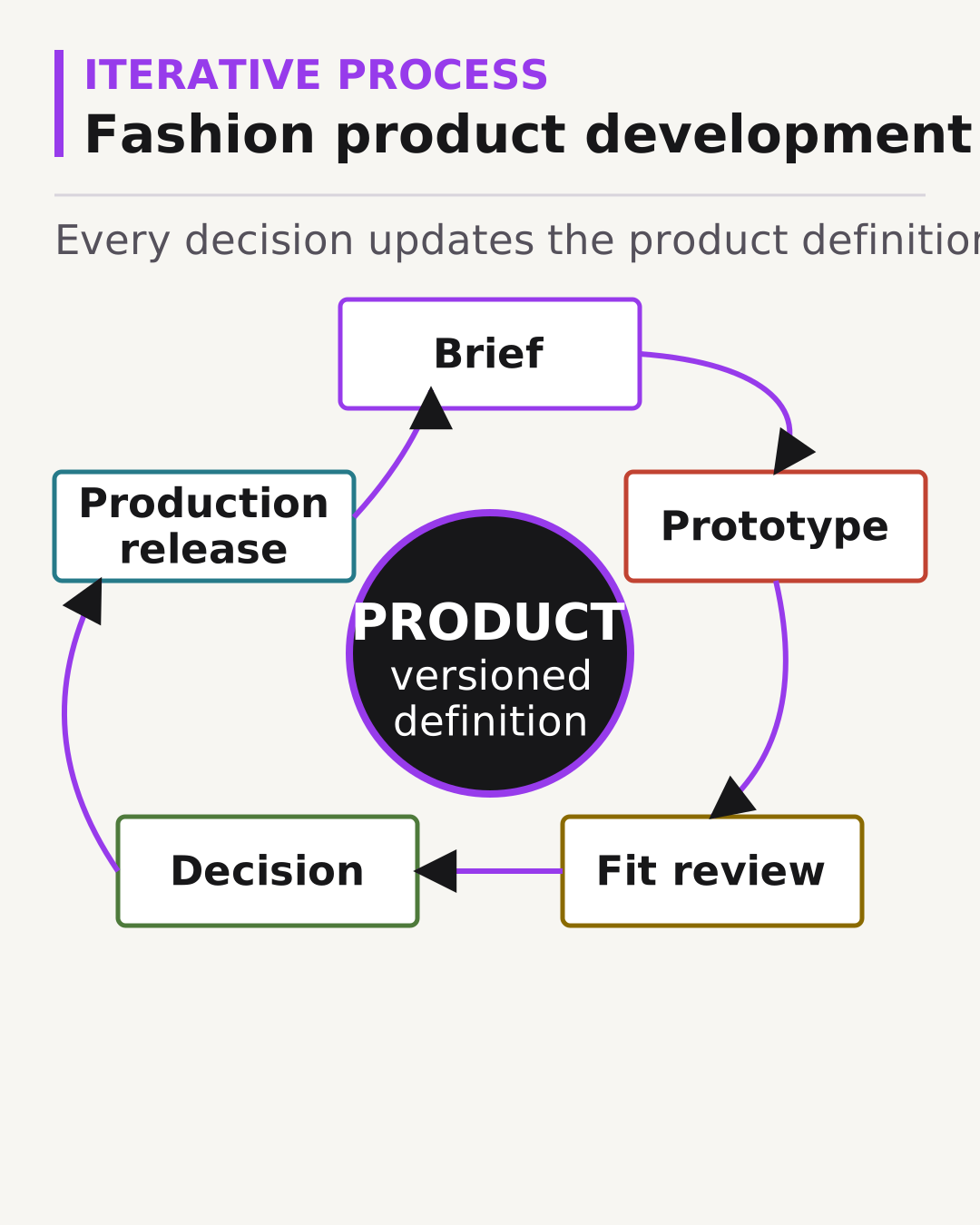
There is no single sequence for every company. Category, calendar, channel, scale, sourcing origin and degree of novelty change the activities and number of samples. Even so, the flow can be read through gates: problem definition, concept selection, technical and economic feasibility, sample validation, approval and release.
How does the process begin?
The opening stage turns scattered signals into decidable requirements. The brief records the audience, use, price range, channel, deadline, performance requirements and known limits. Line planning distributes categories, colours, sizes and depth so that each idea has a role in the range. At this point, commercial history and supply capacity help distinguish an opportunity from repetition without purpose.
After concept selection, technical drawings, materials and construction are specified in the technical specification. Research into textile materials is not an aesthetic appendix: fibre content, width, weight, stretch, shrinkage, colour, minimum quantity, lead time and tests may make a style feasible or unfeasible. Preliminary costs also need revision as consumption, components and process become known.
How is the idea validated before production?
Validation combines patternmaking, samples and approval criteria. Patternmaking converts three-dimensional form into pattern pieces; the pilot garment makes construction, fit and assembly observable; a fit session compares the result with measurements, balance, mobility, appearance and intended use. Comments should return to the drawing, pattern, materials and specification until the revised version meets agreed requirements.
Samples serve different purposes. A fit sample answers questions about fit; a photo sample serves an image requirement; a pre-production sample tests the final combination of material, colour, trims and construction. Approval of one does not automatically replace the others. Where a size range exists, pattern grading and the measurement chart need verification beyond the base size.
Which decisions release the product?
A product should advance only when responsible teams can identify its version, open issues and evidence. Gates commonly cover material and colour approval, fit, construction, cost, legal requirements, testing, packaging and supplier capacity. Quality control is not a late inspection: criteria and tolerances should exist before production to guide samples and prevent nonconformities.
The calendar connects dependencies, but a date alone does not show readiness. A status needs an operational definition, owner and exit condition. Product lifecycle management systems may organise this record, but they do not replace technical decisions, supplier negotiation or approval responsibility.
Why does development continue after launch?
The process closes the loop by comparing plan and outcome. Sales, returns, defects, use feedback, cost variance and supplier performance inform corrections and later briefs. The OECD also recommends considering at design stage the risks associated with materials and the use phase, including washing, drying, repair and lifespan.
This view makes development a learning and governance system rather than a race between sketch and factory. Clarity about decisions, versions and evidence makes the causes of rework and late cancellation traceable. The support may vary; information quality, decision criteria and accountability for each approval need to remain stable.
Verified facts
- The Fashion Institute of Technology describes fashion product development as a process that runs from concept development through pre-production.
Source: fitnyc.edu ↗ - The development scope presented by FIT includes product lifecycle management, costing, product construction, quality assurance, sustainable sourcing and market development.
Source: fitnyc.edu ↗ - FIT's programme includes post-sale analysis and the translation of post-consumer response into development parameters.
Source: fitnyc.edu ↗ - The British occupational standard evaluates product designs through criteria such as style, feasibility, cost, fit, size and body shape.
Source: skillsengland.education.gov.uk ↗ - The same standard distinguishes fit samples, photo samples and production samples.
Source: skillsengland.education.gov.uk ↗ - Sample review may involve fit sessions, user trials, measurements, and design and pattern assessment.
Source: skillsengland.education.gov.uk ↗ - Quality approval controls include inspection of materials and products, checks against specifications, spot checks, audits and final checks.
Source: skillsengland.education.gov.uk ↗ - The OECD states that a significant portion of product-related environmental impacts can be influenced during the design phase.
Source: oecd.org ↗ - When assessing a product for development, OECD guidance considers environmental characteristics alongside feasibility, cost and demand, including material choice and the use phase.
Source: oecd.org ↗ - The SENAI Institute of Textile, Apparel and Design Technology groups pilot garments, patternmaking, grading, marker planning and quality control within technical product development.
Source: institutos.sc.senai.br ↗
Related entries
Textile and apparel supply chain
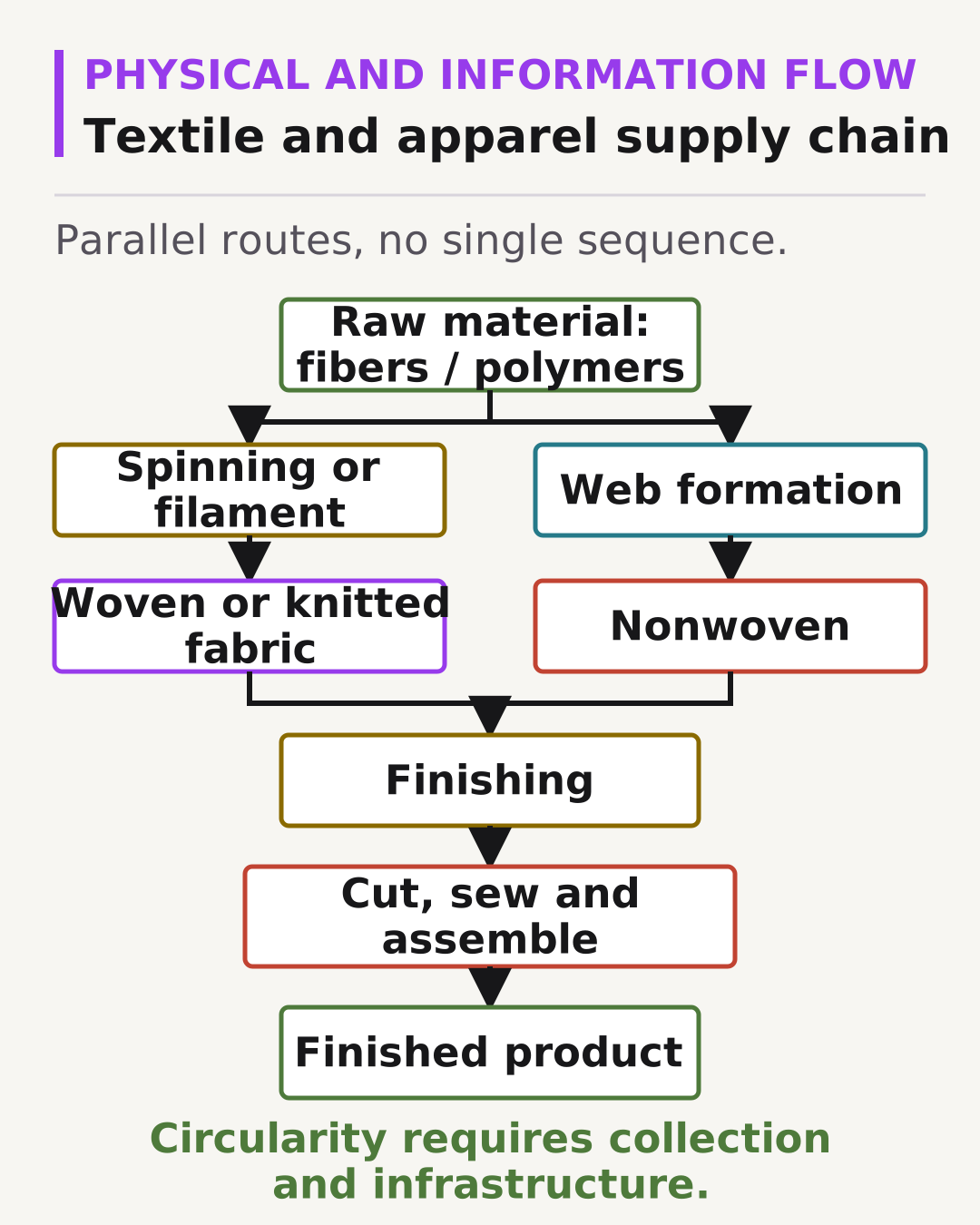
The textile and apparel supply chain transforms natural or manufactured raw materials into yarns, woven or knitted fabrics, and then finished articles. Its reference flow covers fibres, spinning, material formation, wet processing, cutting and assembly, while the real system also includes suppliers, subcontracting, distribution, use and recovery routes.

Fashion product technical specification
A technical specification is the controlled information set that translates an approved fashion product into verifiable sampling and manufacturing requirements. It brings together drawings, materials, measurements, construction, tolerances, identification, labelling, comments and revision history; its content varies by category, company, market and stage.

Fashion PLM: data, product, and lifecycle
Fashion PLM is the structured management of the data, decisions, and workflows that follow a product and a collection from concept through post-launch. It connects tech packs, materials, costs, samples, approvals, suppliers, and versions so that every function works from a traceable product definition.
Sources
- https://www.fitnyc.edu/academics/academic-divisions/ccps/noncredit/product-development.php
- https://skillsengland.education.gov.uk/media/2305/st0540_fashion-textiles-product-technologist-epa_for_publication_2-october-2018.pdf
- https://www.oecd.org/content/dam/oecd/en/publications/reports/2018/03/oecd-due-diligence-guidance-for-responsible-supply-chains-in-the-garment-and-footwear-sector_g1g89b0b/9789264290587-en.pdf
- https://institutos.sc.senai.br/textil-vestuario-design/
Want to apply this to your operation?