Style in a product record
Style in a product record. In a fashion product record, Style can serve as the grouping for a base design and the decisions shared by its variations, but it is not a universal hierarchy. Operationally, that grouping must be separated from color and size variations and from the sellable unit identified by an SKU.
On this page
What is Style in a product record?
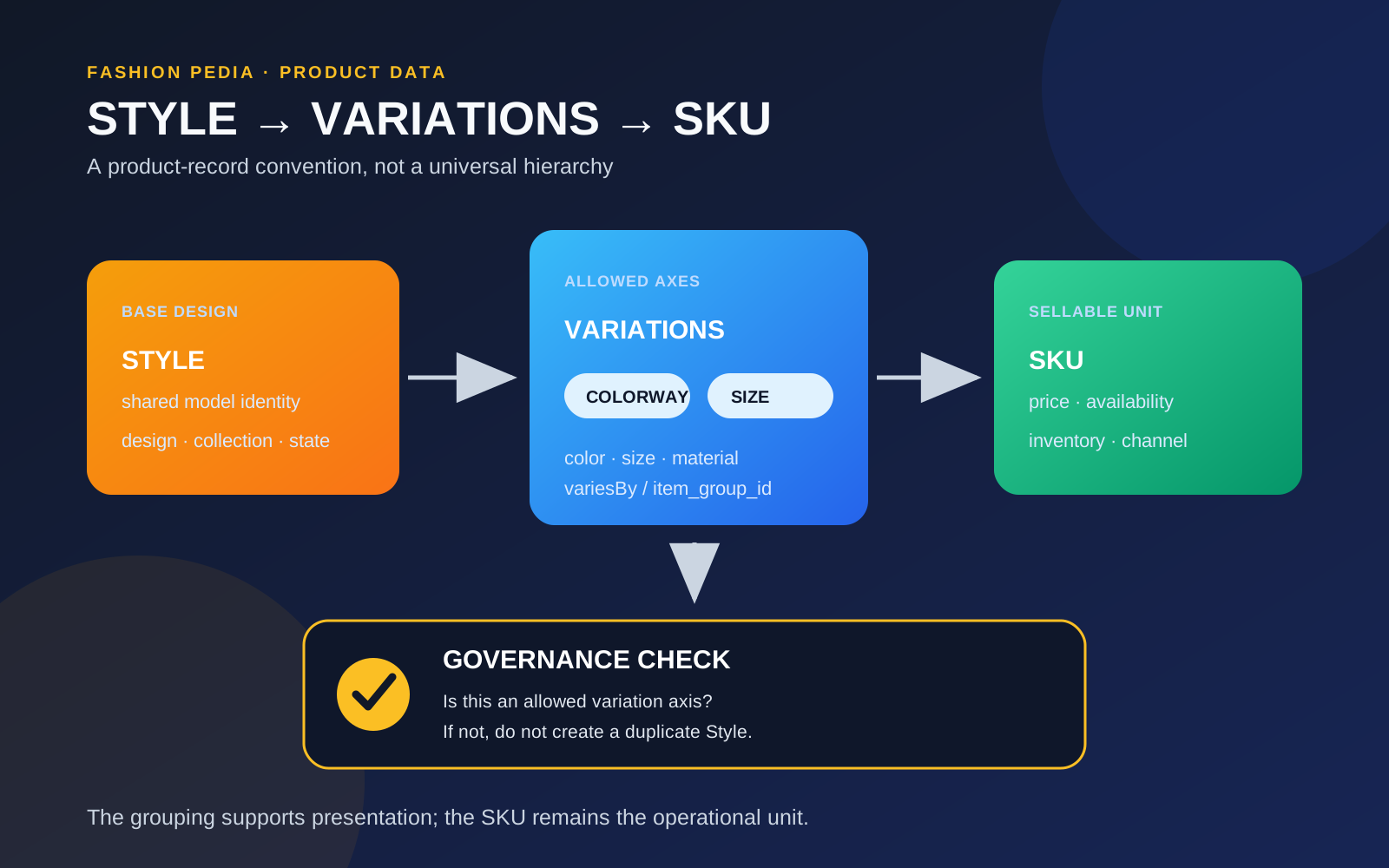
Style is a grouping convention for a product’s base design and for the decisions that remain shared across its variations. The word is not a universal hierarchy, however: each company must state what the record groups, which fields belong to it, and where commercial identity begins. Schema.org offers a useful comparison in ProductGroup, a group of products that varies by well-described properties such as color, size, or material. That comparison clarifies the idea without turning one platform’s vocabulary into a mandatory industry standard.
In a record, Style should answer “which model are we tracking?” rather than “which combination is available for sale?”. An apparel SKU represents the combination that must be located and moved; Style can gather several of those combinations. The team should document its cardinality rule: one Style may have one or several colorways and size scales, with explicit exceptions for kits, sets, or products sold as one composition.
How should Style, colorway, size scale, and SKU be separated?
The distinction becomes useful when each axis has one job. Style names the base design; colorway identifies a color or color-combination variation; size grading describes the size scale used by the product; and SKU identifies the sellable combination that needs its own price, availability, and tracking. A record does not have to use exactly these four levels, but every exception should be declared before imports and integrations.
Schema.org’s ProductGroup model reinforces two practical points: the group works as a shared prototype or template, and variesBy records the property by which variants differ. In catalog terms, this creates a direct validation question: was the variation created on an allowed axis, or did someone open a new Style to handle a difference that belongs in color, size, or material? The answer prevents duplicate base designs and keeps catalog filtering understandable.
The storefront may present a grouped product while operations must keep the unit that will be reserved or decremented. Adobe Commerce describes this pattern as a configurable product: one presentation offers options, and each variation is a separate simple product with its own SKU and individual inventory. This does not require the same implementation in another system; it shows why presentation and inventory identity should not be conflated.
Which fields and checks belong in the workflow?
Start with the data contract rather than the field label. For Style, define a stable identifier, working name, collection or line, season where relevant, development state, owner, and link to the technical sheet. For each variation, keep the allowed axes, color value, size system, approved image, and the combination that may become an SKU. This is a process-design recommendation; field names and field authority belong to the operation.
The attribute set should be treated as a scope decision. In Adobe Commerce, it determines which fields appear in the product form and which attributes are available for variations. In any PIM, PLM, or ERP, the equivalent question is: which data can create a variant, and which data only describes the product? If color and size are variation axes, material, fit, or market may remain shared attributes unless the commercial rule requires separate SKUs.
A validation matrix can use four checks: confirm that Style points to the approved base design; verify that each colorway uses an allowed value; check that the color-and-size combination belongs to the size scale; and only then create or review the SKU. The test should catch duplicate codes, a variation without an approved sample, a size outside the scale, and a non-sellable combination. When inventory is attached to variations, the aggregate state must be read carefully: in Adobe Commerce’s configurable model, stock status depends on associated variations.
Where does the grouping appear to customers?
Google Merchant Center uses item_group_id to group variants that differ in details such as color and size in apparel, so items and their variants appear together rather than separately. This field is a distribution reference, not a universal definition of Style. It provides an output test: if two combinations should be perceived as the same model, the group sent to the channel should reflect the internal convention; if they should not, the difference needs an explicit explanation.
The final decision should account for market and channel scope. A set may be one Style during development but have another composition in wholesale; a kit may need its own commercial identity; and an exclusive color may exist only in one market. Record field authority across PIM, PLM, ERP, and channel, together with the event that triggers review. This keeps the difference visible between design intent, presented variation, and the unit the business actually controls.
The key limit is not to use Style as a catch-all word. If a record only describes how a pattern changes, the closer topic is patternmaking; if it deals with fields and enrichment, it approaches catalog enrichment and taxonomy. Style belongs to the product-identification and relationship workflow. Respecting that boundary keeps the record legible for design, development, buying, inventory, and commerce without pretending that fashion has one universal taxonomy.
Verified facts
- Schema.org lists size, color, and material as examples of properties by which products in a ProductGroup can vary.
Source: schema.org ↗ - In Schema.org, a ProductGroup is not directly offered for sale; the variant products it represents can be offered for sale.
Source: schema.org ↗ - In Schema.org, variesBy indicates the property or properties by which the variants in a ProductGroup vary.
Source: schema.org ↗ - Google Merchant Center uses item_group_id to group product variants that differ in details such as color and size in apparel.
Source: support.google.com ↗ - Google Merchant Center says that item_group_id makes items and their variants appear together for customers rather than separately.
Source: support.google.com ↗ - Adobe Commerce separates a configurable product’s single presentation from its variation records.
Source: experienceleague.adobe.com ↗ - In Adobe Commerce, variation eligibility is configured through an attribute set.
Source: experienceleague.adobe.com ↗ - In Adobe Commerce, the stock status of a configurable product is determined by its associated variations.
Source: experienceleague.adobe.com ↗
Related entries
Fashion SKU
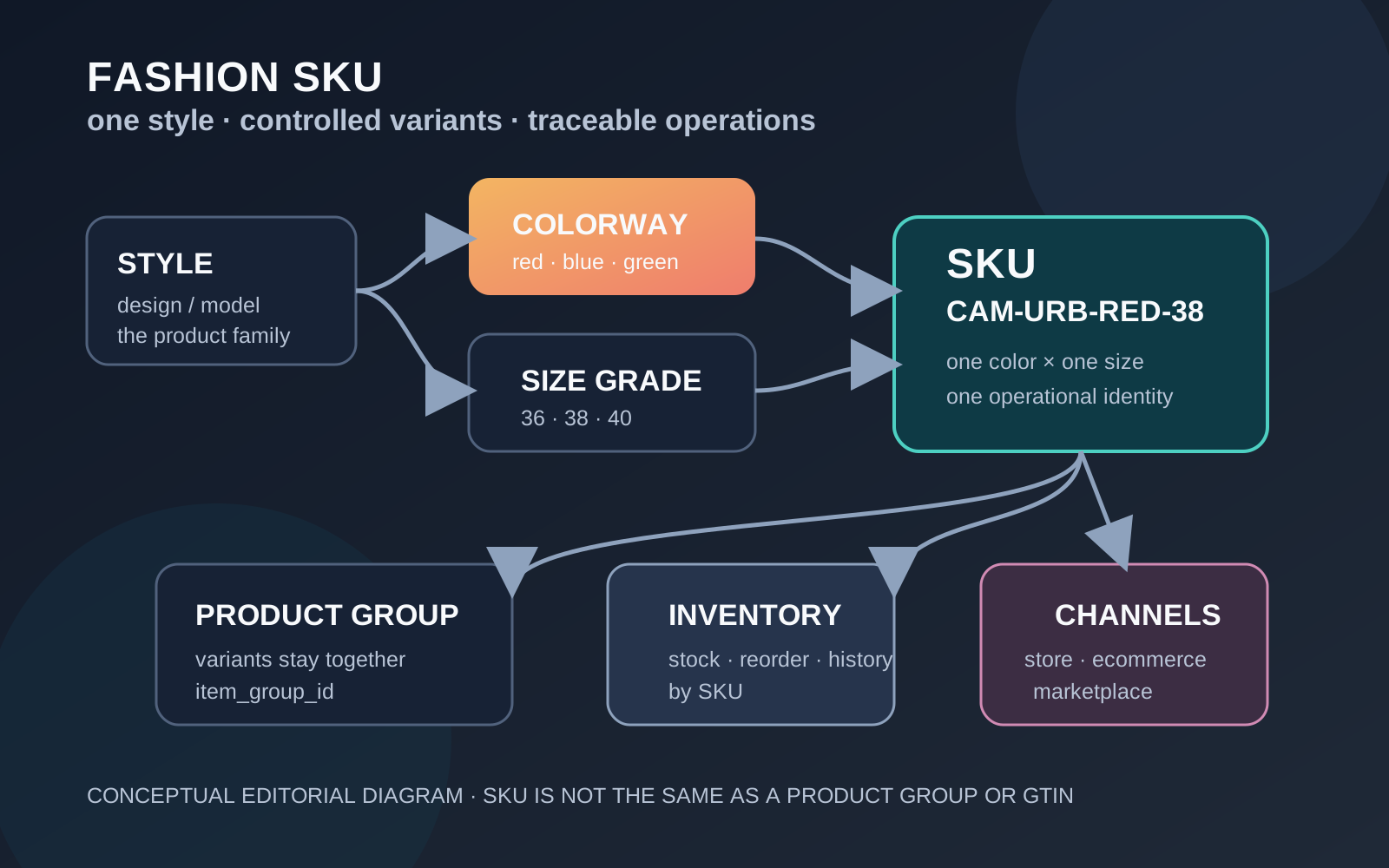
A fashion SKU is an identification unit used to distinguish items and variants in inventory control. In apparel, the useful distinction is between the individual SKU, the product group, color and size attributes, and assortment decisions.
Colorway in fashion
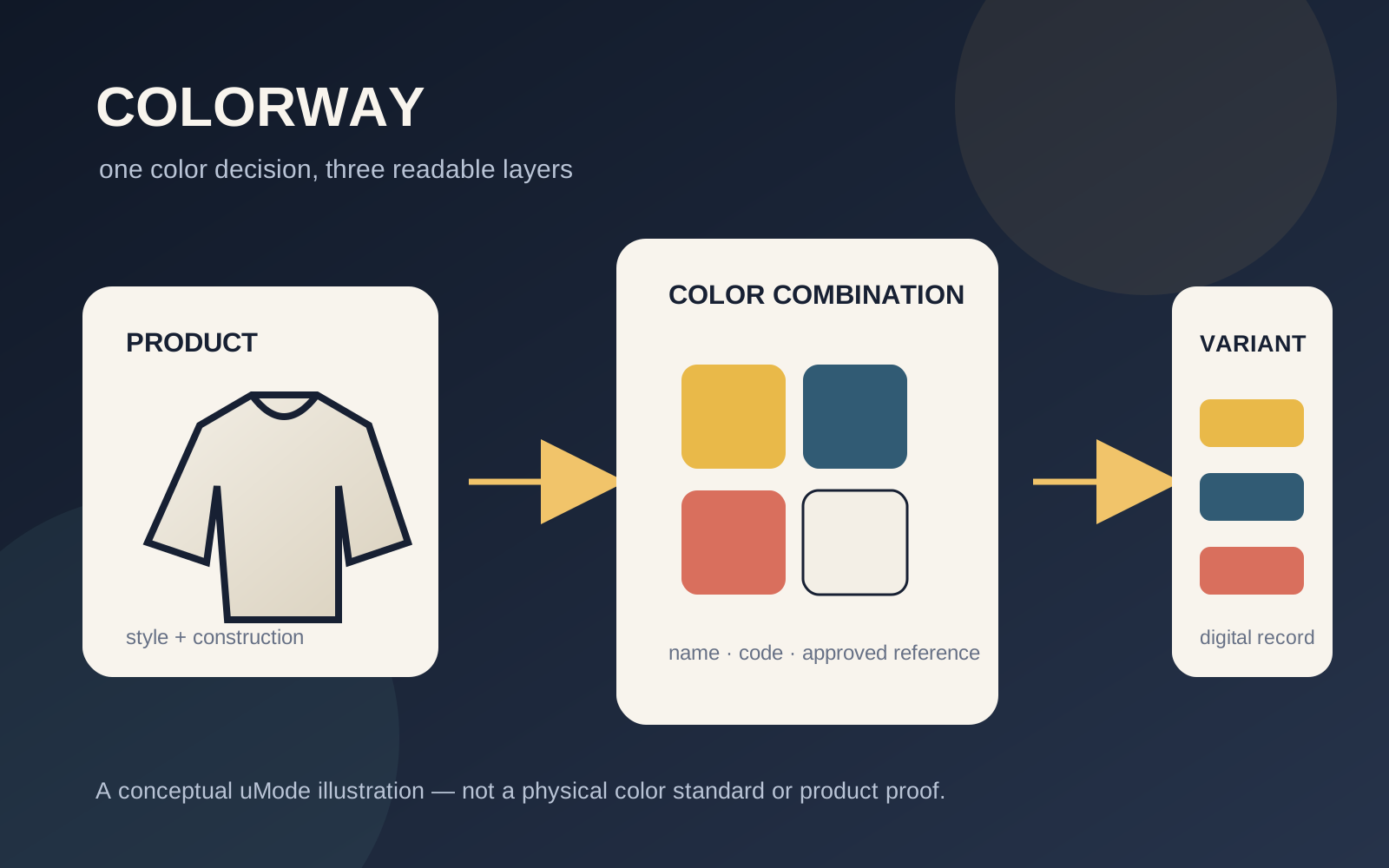
Colorway in fashion. A colorway is a named combination of colors used to distinguish one version of a product. In fashion operations, the combination should remain legible across the product record, the approved reference, and the digital presentation, without treating a commercial name, a physical color, and a variant code as interchangeable.
Size grading
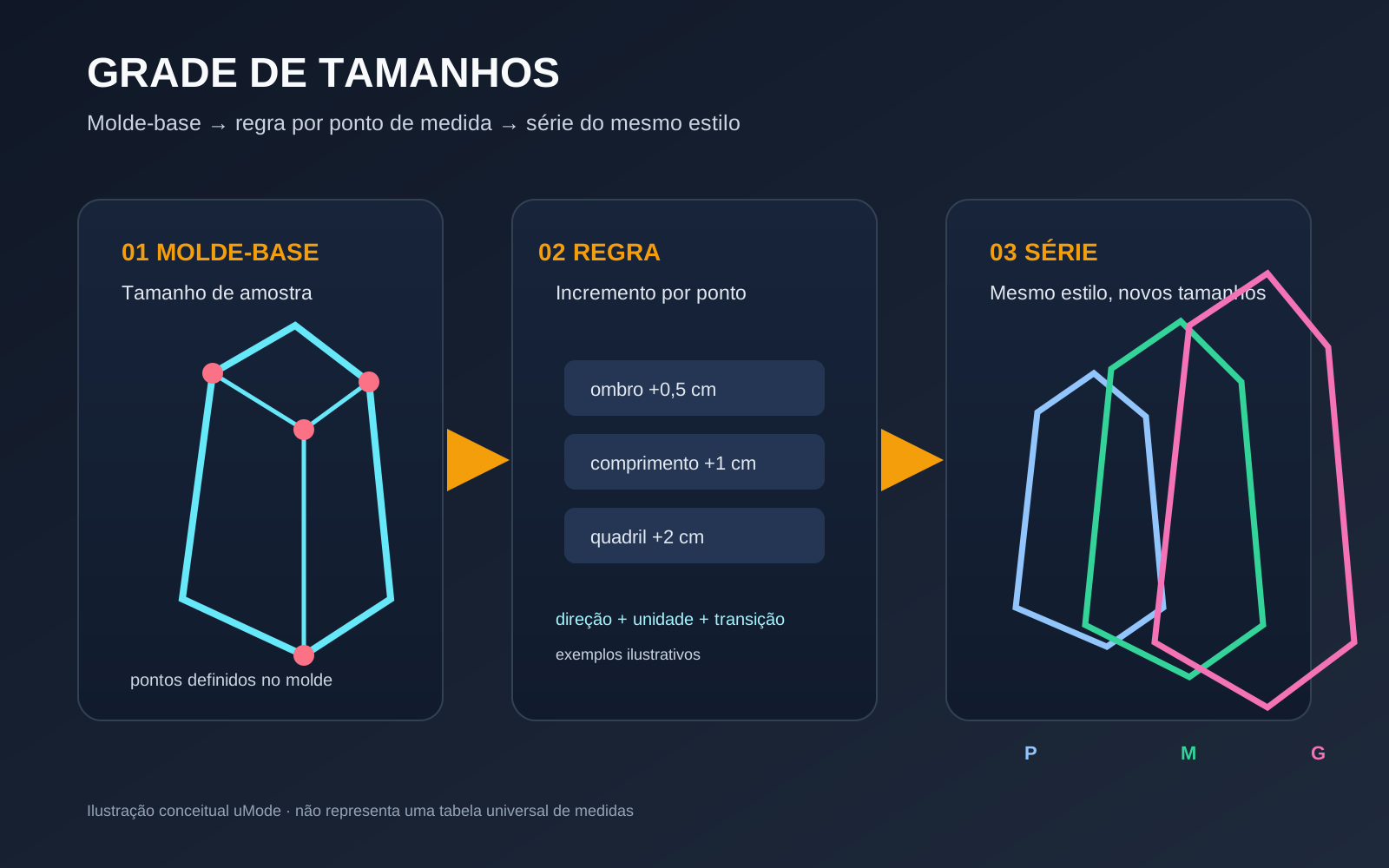
Size grading is the process of turning base-size or sample-size patterns into additional sizes by using a specification sheet or grading increments. A rule changes defined points on the pattern to form a size range for the same style; it does not replace patternmaking or create a new shape.

Fashion product technical specification
A technical specification is the controlled information set that translates an approved fashion product into verifiable sampling and manufacturing requirements. It brings together drawings, materials, measurements, construction, tolerances, identification, labelling, comments and revision history; its content varies by category, company, market and stage.
Fashion PIM
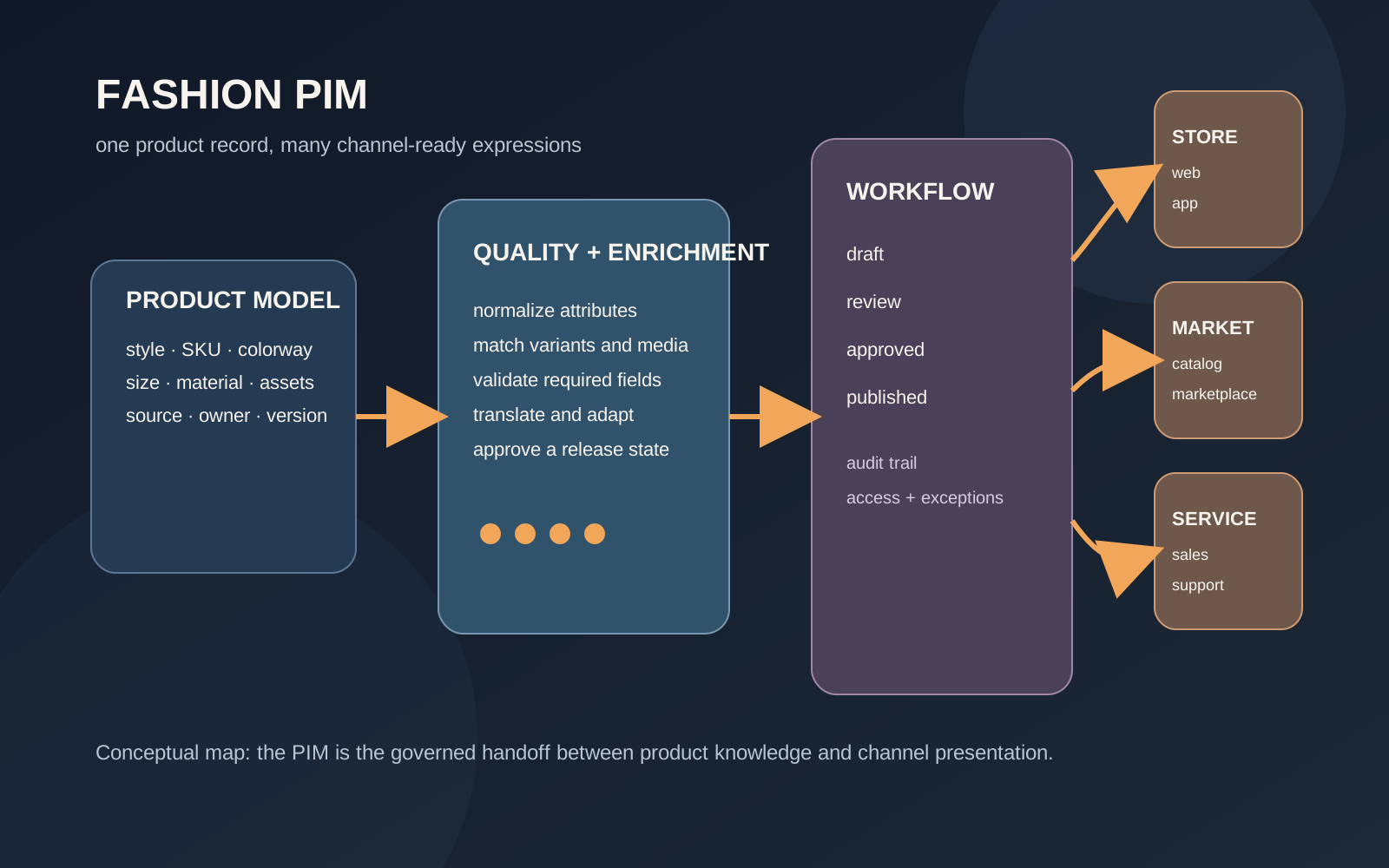
Fashion PIM is the process of organizing, enriching, validating and distributing product data to the channels that present a collection. It combines a data model, quality rules, ownership and integrations; it is not merely a catalog and does not automatically replace PLM, ERP or DAM.
Product cataloging, enrichment, and taxonomy
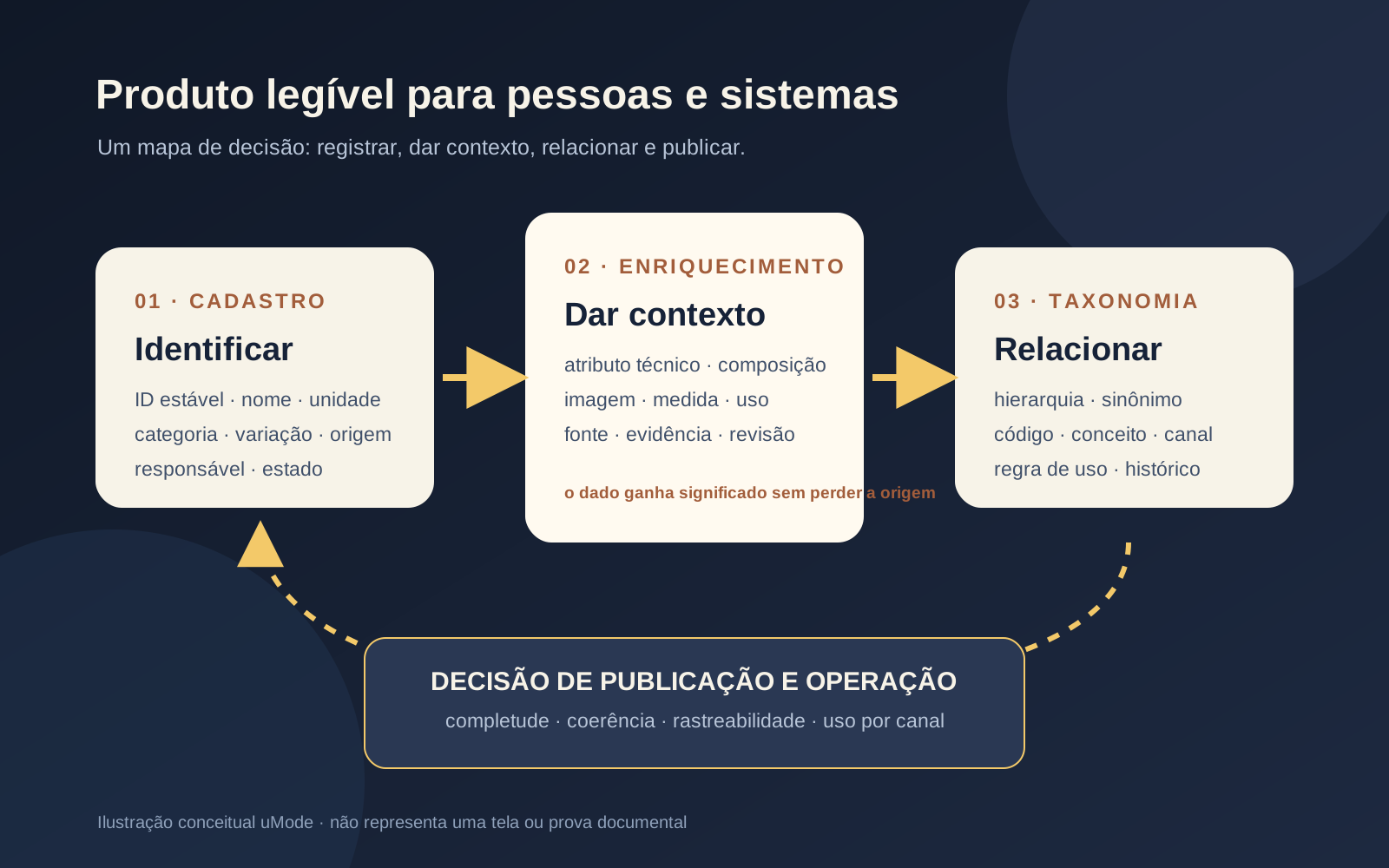
Product cataloging, enrichment, and taxonomy is a process for turning fashion objects into records that can be identified, understood, related, and used. It separates the minimum product record from contextual information and from the relationships that support consistent search, operations, and publishing.
Sources
Want to apply this to your operation?