Collection governance: roles, gates, and evidence
Collection governance describes the practice of making roles, criteria, evidence, decisions, and exceptions explicit in fashion development. The term does not designate one industry standard; it synthesizes principles of process management, evidence-based decisions, due diligence, and traceability.
On this page
What is collection governance?
Collection governance is the practice of making explicit how a company decides and records product progress through the calendar. It is not synonymous with a meeting, organization chart, or software. The practice combines decision rights, entry and exit criteria, roles, records, and exception handling. Its scope may run from the individual item to the collection map, connecting creative intent, technical feasibility, cost, timing, quality, supply, and commercial strategy.
The term does not designate a single industry standard. This synthesis brings together documented principles of process approach and evidence-based decisions, garment due-diligence guidance, and the logic of traceability events. The OECD describes garment and footwear chains as complex, dispersed, and fragmented. In that environment, a company needs to define its own rules to prevent different functions from maintaining incompatible states for the same product.
How does governance work in practice?
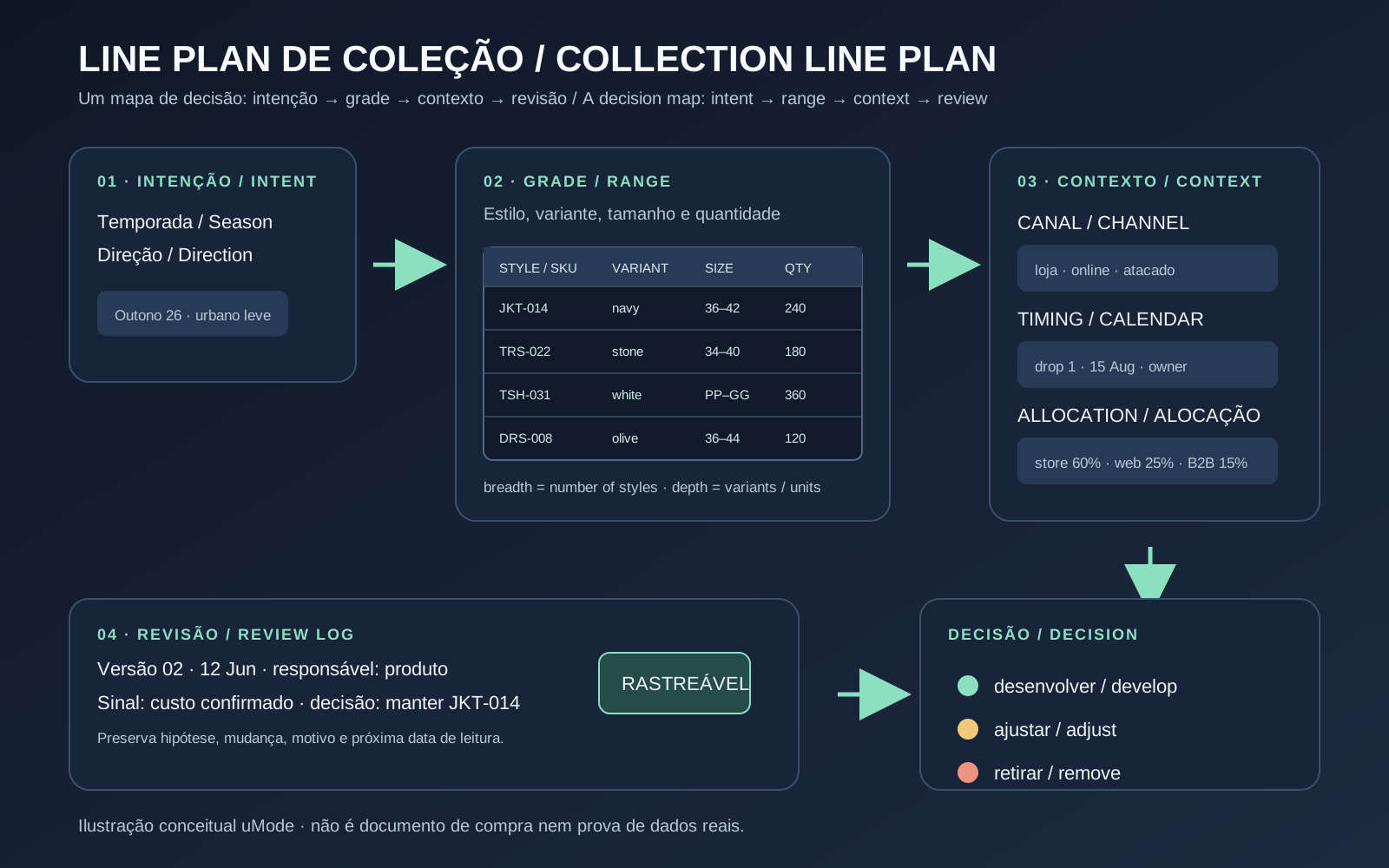
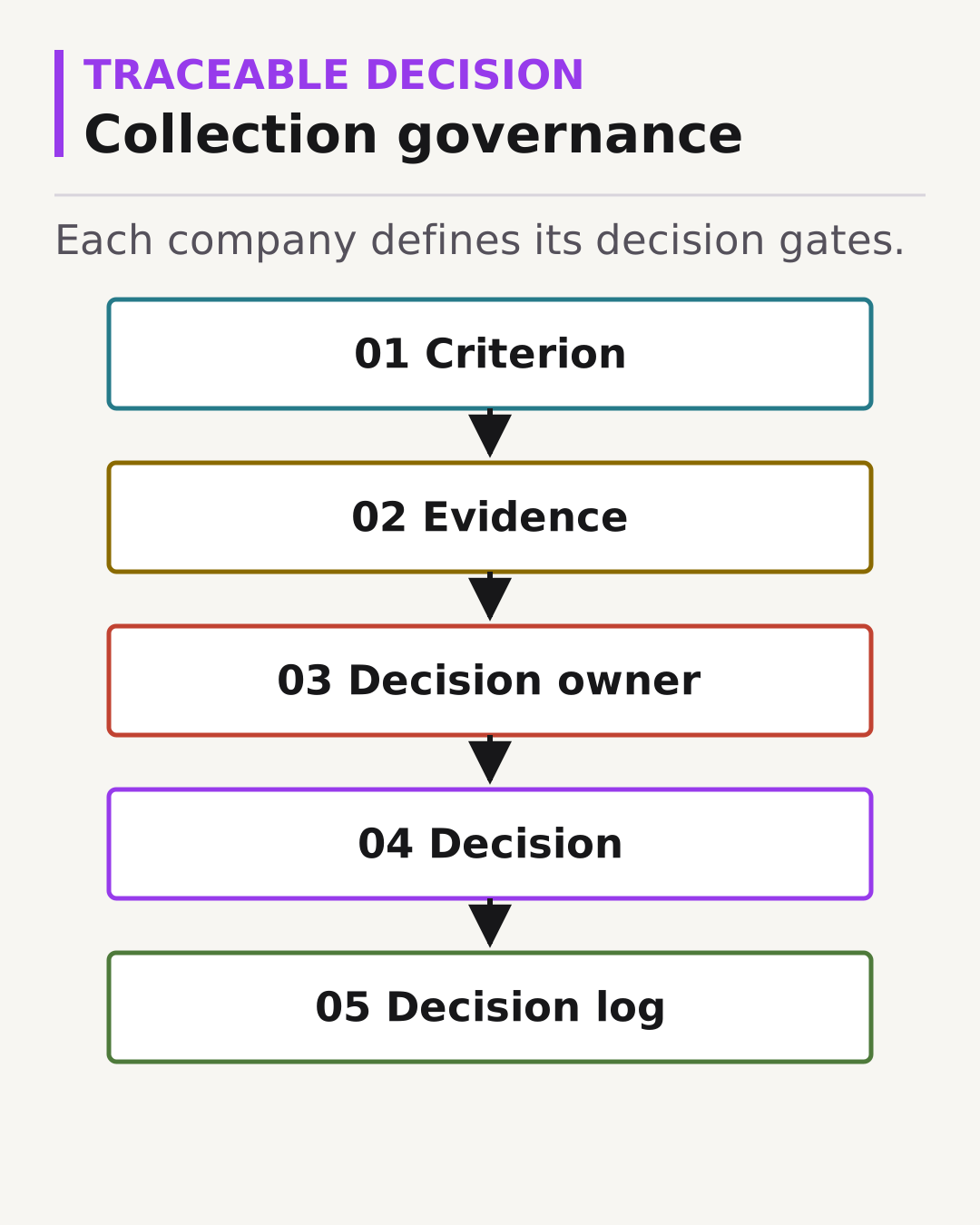
One implementation option associates every meaningful transition with an owner, criterion, and evidence. A collection gate may require an approved brief before development, a measurement chart and construction details before sampling, a target cost before purchase, or a test report before production. These examples are not universal: each company defines what it must demonstrate, who may accept risk, and how an exception is recorded.
To make status verifiable, a record may associate product, version, event, date, evidence, and responsible party. The logic is analogous to GS1 EPCIS events, which record what participated, when and where an event occurred, and its business context. In development, a company can apply this structure to sample receipt, fitting comments, measurement changes, color approval, cancellation, and release.
Roles are also an organizational design choice. Design may own intent; Product Development may translate requirements; Sourcing and supplier management may handle capacity, price, and delivery; Quality may validate criteria; Planning may read mix, volume, and date. The matrix varies. For the practice to be auditable, the model defined by the company needs to record who held authority for a decision rather than assuming one universal division of responsibilities.
Which data and controls are essential?
As a proposed minimum, the record may contain stable identity, version, responsibility, deadline, dependency, evidence, and history. These fields need to live with the product or maintain an unambiguous link to it. Fashion PLM may support this layer; the ERP receives or returns transactional data; communication tools remain useful when the final decision returns to the controlled record.
Possible indicators include time stalled by stage, sample approval rate, changes after purchase, overdue deliveries, and variance between plan and actual. The choice depends on the decision the company wants to improve. Evidence-based decision making requires knowing the source and quality of the data; an indicator without a definition and source does not demonstrate the state of the collection.
Why does collection governance matter?
Collection governance aims to reduce ambiguity before trying to reduce time. Its value needs to be assessed through process outcomes: fewer conflicting states, recoverable decisions, and changes attached to the correct version. It may also prepare the company for traceability and digital passport requirements, where data must remain accurate, current, and tied to a product, batch, or item.
In practice, good governance allows creativity and operations to negotiate with facts. The collection remains subject to change, but change gains recorded impact, authorship, and decision. This discipline connects planning, development, suppliers, and AI applied to fashion: agents may support the work, but they must not invent status, the approved version, or the authority to release a product.
Verified facts
- The OECD describes the garment and footwear supply chain as dispersed, fragmented, and complex, making labor, human rights, environmental, and integrity risks difficult to manage.
Source: oecd.org ↗ - The OECD presents its garment and footwear guidance as the only government-backed due diligence guidance for the sector and states that it was adopted by 50 governments.
Source: oecd.org ↗ - The OECD Due Diligence Checker organizes sector practice into a six-step framework.
Source: oecd.org ↗ - ISO's seven quality management principles include the process approach and evidence-based decision making.
Source: iso.org ↗ - According to the ISO principles, decisions based on the analysis and evaluation of data and information are more likely to produce desired results.
Source: iso.org ↗ - ISO's recommended actions include making needed data available to relevant people and ensuring that data and information are sufficiently accurate, reliable, and secure.
Source: iso.org ↗ - EPCIS is a GS1 standard for visibility data composed of events that record real-world occurrences related to objects.
Source: support.gs1.org ↗ - EPCIS data can track products, assets, and documents through processes spanning multiple locations and organizations.
Source: support.gs1.org ↗ - An EPCIS event records what was involved in a step, when and where it occurred, and the business context explaining why it occurred.
Source: support.gs1.org ↗ - European Regulation 2024/1781 requires manufacturers to account adequately for changes in production processes, product design, or characteristics and to reassess when conformity is affected.
Source: eur-lex.europa.eu ↗
Related entries

Fashion PLM: data, product, and lifecycle
Fashion PLM is the structured management of the data, decisions, and workflows that follow a product and a collection from concept through post-launch. It connects tech packs, materials, costs, samples, approvals, suppliers, and versions so that every function works from a traceable product definition.

Fashion product technical specification
A technical specification is the controlled information set that translates an approved fashion product into verifiable sampling and manufacturing requirements. It brings together drawings, materials, measurements, construction, tolerances, identification, labelling, comments and revision history; its content varies by category, company, market and stage.
Sources
- https://www.oecd.org/en/topics/sub-issues/due-diligence-guidance-for-responsible-business-conduct/responsible-garment-and-footwear-supply-chains.html
- https://www.iso.org/iso/pub100080.pdf
- https://support.gs1.org/support/solutions/articles/43000755325-what-is-electronic-product-code-information-services-epcis-
- https://eur-lex.europa.eu/eli/reg/2024/1781/oj/eng
Want to apply this to your operation?