Colorway in fashion
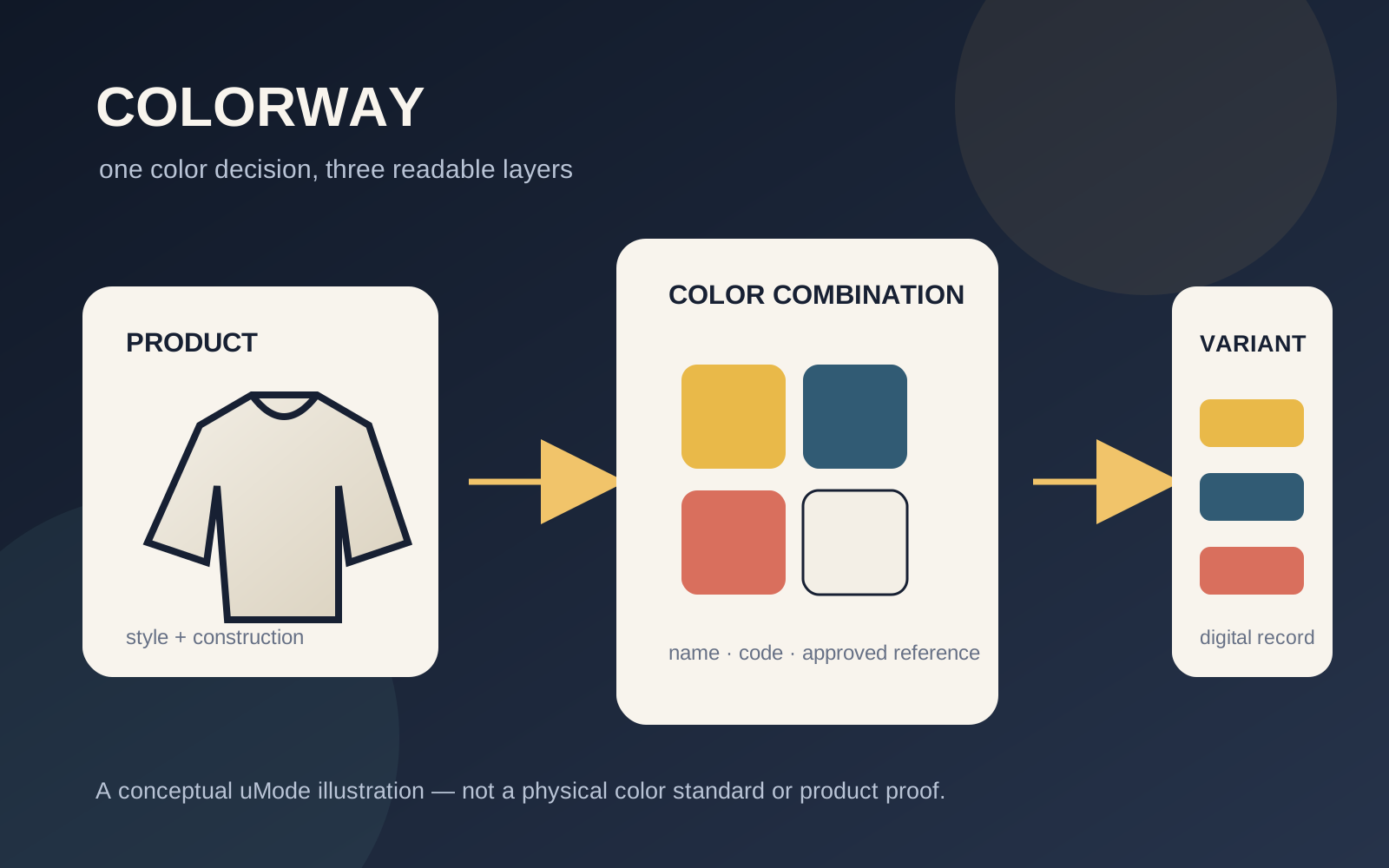
Colorway in fashion. A colorway is a named combination of colors used to distinguish one version of a product. In fashion operations, the combination should remain legible across the product record, the approved reference, and the digital presentation, without treating a commercial name, a physical color, and a variant code as interchangeable.
On this page
What is Colorway in fashion?
A colorway is a color combination used to distinguish one version of a product. Cambridge treats the term as a noun and identifies it as the American spelling of colourway; in fashion, it becomes useful when it names a concrete combination rather than acting as a broad synonym for a product style. A combination may be described by names, codes, or samples, but those records should not be treated as interchangeable.
An operational definition starts with a direct question: what changes between the base version and the variation? If only the color combination changes, colorway can be one variation dimension; if material, construction, or fit also change, the record should preserve those dimensions separately. This keeps a color label from concealing a wider product change.
How should a color combination be recorded?
The record should keep a readable name, a stable identifier, and the reference approved by the team. Google's documentation describes the color attribute as a way to describe a product's color and says it helps create accurate search filters. It also recommends using the same value shown on the landing page. As a working rule, the visible name, structured value, and approved sample should point to the same decision even when they serve different purposes.
A useful record separates the colorway from the fashion SKU. The first describes a color variation; the second identifies a commercial unit within the company's chosen system. A technical specification can carry the approved combination, while a digital product record uses the color property to make the variant findable. If the visible name is “mineral blue,” it should not be silently replaced with “blue” without recording the rule and its reason.
Where does digital representation fit?
Digital representation needs to state how color is encoded. MDN shows that RGB, HEX, HSL, and HWB can write the same color value in different formats; that does not mean every conversion preserves appearance on every surface. The CSS Color specification describes color spaces, interpolation, and mapping into an available gamut, so a team should record the space used before comparing numbers.
This matters when one variant appears in a specification, an image, a storefront, and a product page. A physical sample, an image file, and a screen value can participate in the same decision without being the same object. The record should identify the approval reference and which representations are derived from it. The conceptual visual on this page explains the relationship but does not replace a sample, standard, or measurement.
How does a colorway relate to variants?
Schema.org defines color as a product property and describes ProductGroup as a group of products that may vary by size, color, or material. This gives digital commerce a useful distinction: the group gathers the family of variations, while each product retains its own attributes. Color can be one dimension of the group without becoming the whole identity of the product.
In practice, relate the colorway to the product style, fashion SKU, technical specification, and size range only when each relationship has a defined meaning. A quality check should look for inconsistent names, variants without an approved reference, and pages that display a different color from the structured value. The goal is a reusable and verifiable color decision, not a larger field list.
Limits and common confusions
A colorway is not automatically a standardized physical color, a material, a collection, or a universal code. A name may be clear to a customer and insufficient for production; a code may be stable in one system and opaque outside it. RGB, HEX, HSL, and HWB should not be treated as four different colors when they represent the same value, and a numerical conversion should not be assumed to resolve differences in lighting, surface, or process.
The safest boundary is to keep three layers explicit: the color decision, the technical representation, and the commercial variant. The name supports communication; the approved reference guides execution; the identifier connects systems. If a color change comes with a change in fabric, finish, or shape, it needs more than one attribute and should not be reduced to “a new colorway.”
Verified facts
- In American English, colorway is the spelling used for colourway in British English.
Source: dictionary.cambridge.org ↗ - The color attribute describes a product's color and helps create accurate filters that narrow search results.
Source: support.google.com ↗ - When product variants differ by color, Google's documentation recommends providing that characteristic with the color attribute.
Source: support.google.com ↗ - Google recommends using the same color in product data as on the landing page instead of replacing a specific name with a generic one.
Source: support.google.com ↗ - The Schema.org color property represents the color of a product and expects a Text value.
Source: schema.org ↗ - ProductGroup represents a group of products that varies in described ways, such as by size, color, or material.
Source: schema.org ↗ - The CSS colors module describes colors, color blending, opacity, and how these effects can be applied to HTML content.
Source: developer.mozilla.org ↗ - RGB, HEX, HSL, and HWB can represent the same color value when written in different formats.
Source: developer.mozilla.org ↗ - The CSS Color specification describes how colors are interpolated and how colors are mapped to an available gamut.
Source: w3.org ↗ - In the CSS specification, sRGB is represented by a triplet of red, green, and blue values identifying a point in that color space.
Source: w3.org ↗
Related entries
Style in a product record
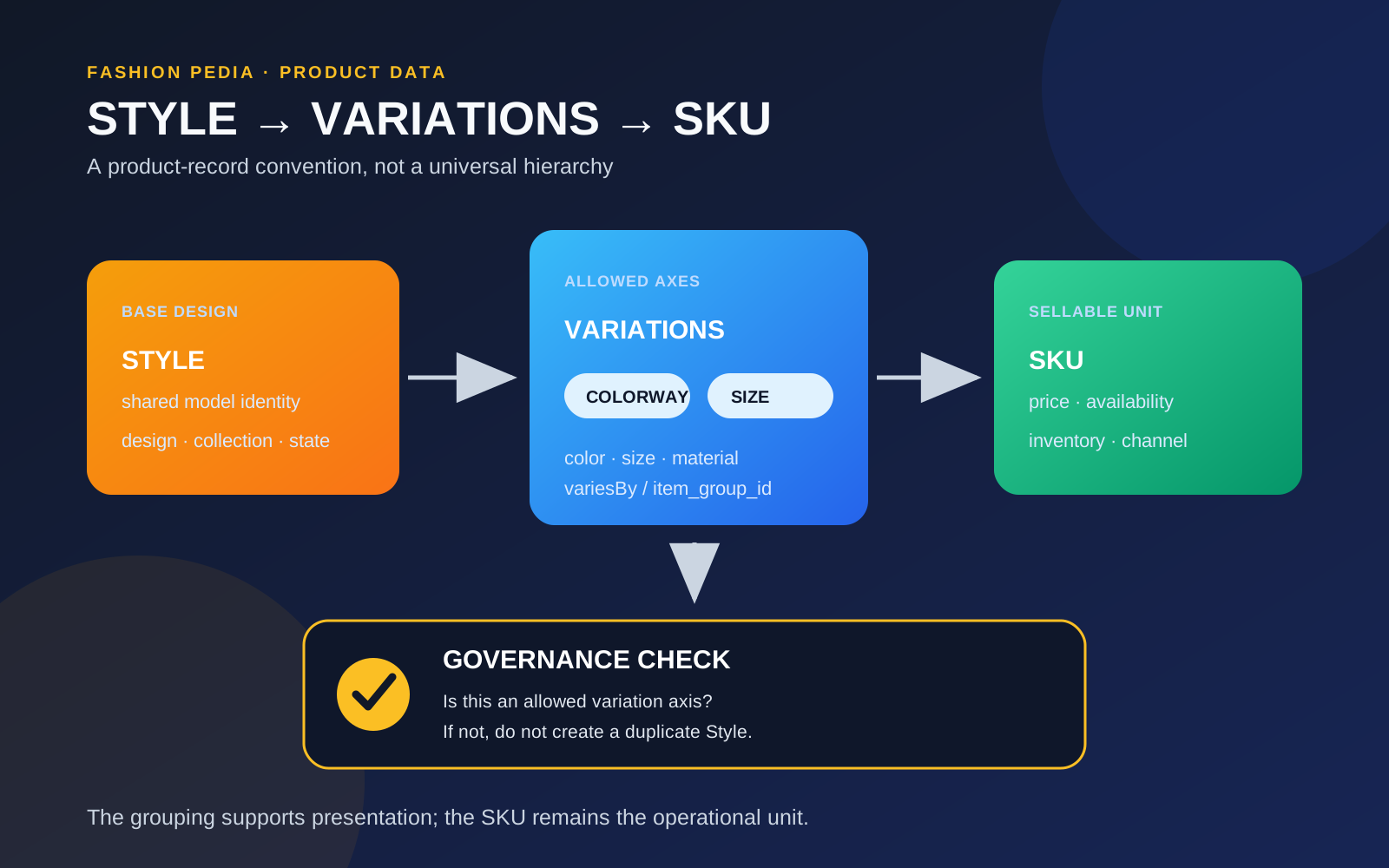
Style in a product record. In a fashion product record, Style can serve as the grouping for a base design and the decisions shared by its variations, but it is not a universal hierarchy. Operationally, that grouping must be separated from color and size variations and from the sellable unit identified by an SKU.
Fashion SKU
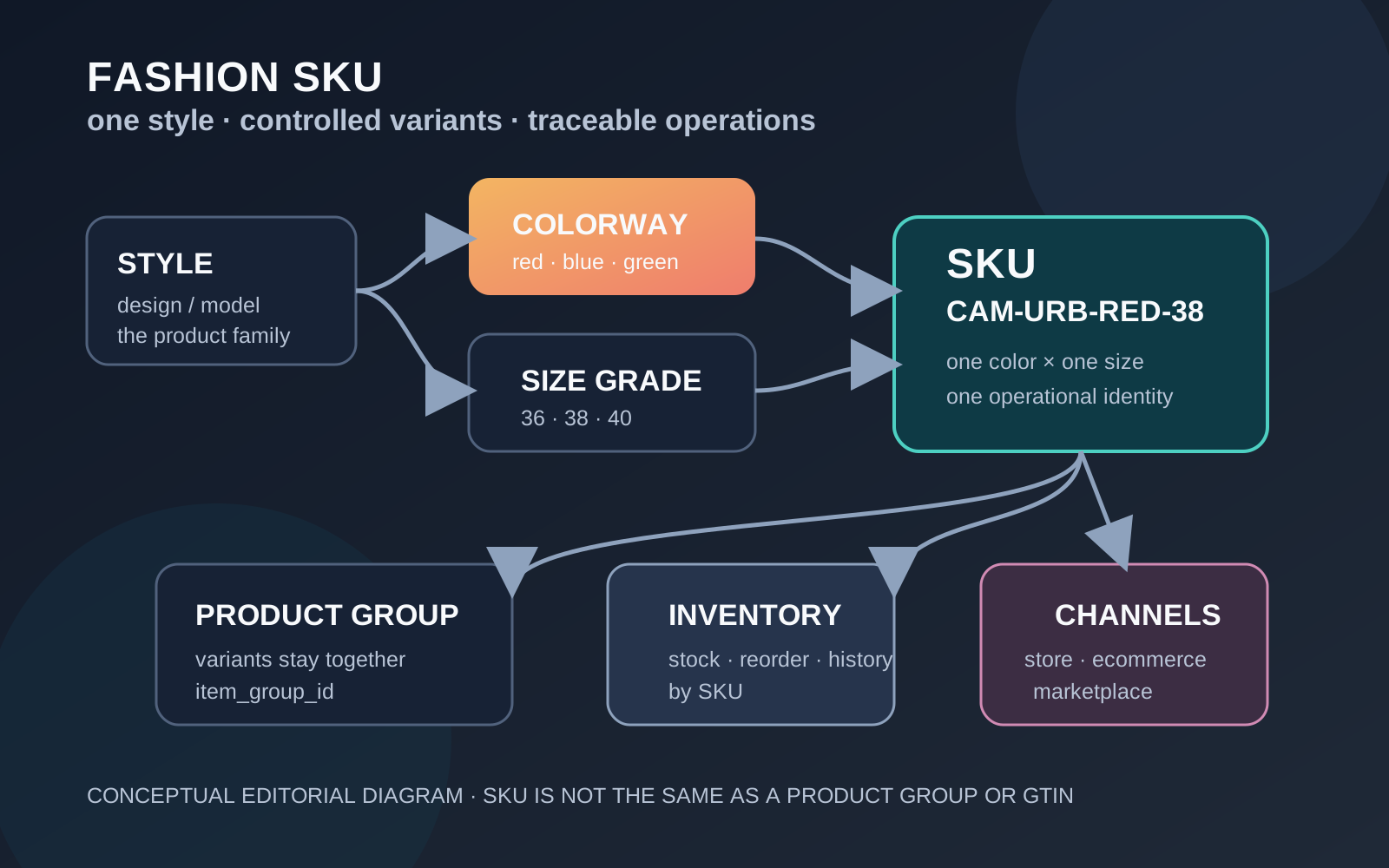
A fashion SKU is an identification unit used to distinguish items and variants in inventory control. In apparel, the useful distinction is between the individual SKU, the product group, color and size attributes, and assortment decisions.

Fashion product technical specification
A technical specification is the controlled information set that translates an approved fashion product into verifiable sampling and manufacturing requirements. It brings together drawings, materials, measurements, construction, tolerances, identification, labelling, comments and revision history; its content varies by category, company, market and stage.
Size grading
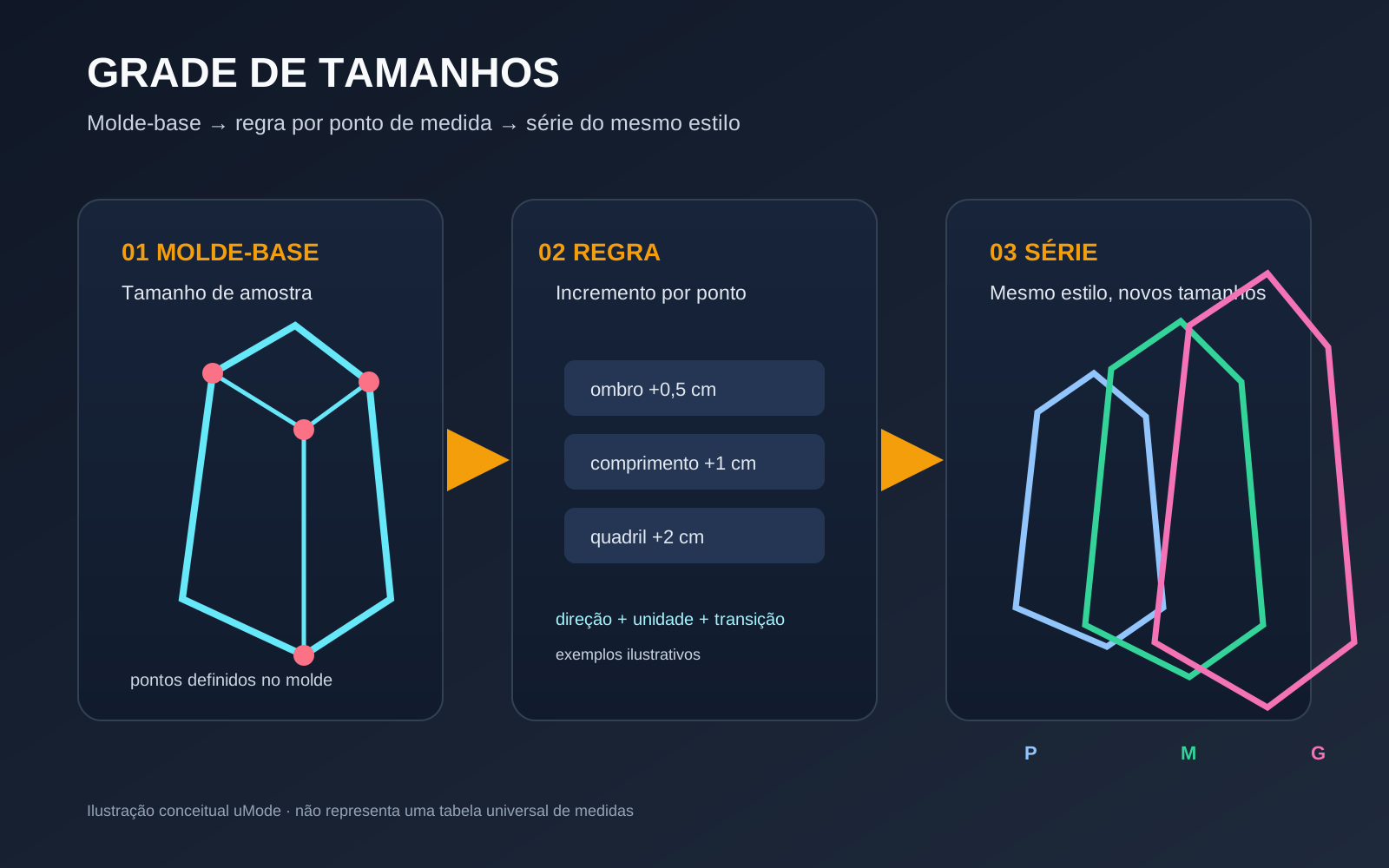
Size grading is the process of turning base-size or sample-size patterns into additional sizes by using a specification sheet or grading increments. A rule changes defined points on the pattern to form a size range for the same style; it does not replace patternmaking or create a new shape.
Sources
Want to apply this to your operation?