Fashion PIM
Fashion PIM is the process of organizing, enriching, validating and distributing product data to the channels that present a collection. It combines a data model, quality rules, ownership and integrations; it is not merely a catalog and does not automatically replace PLM, ERP or DAM.
On this page
What is Fashion PIM?
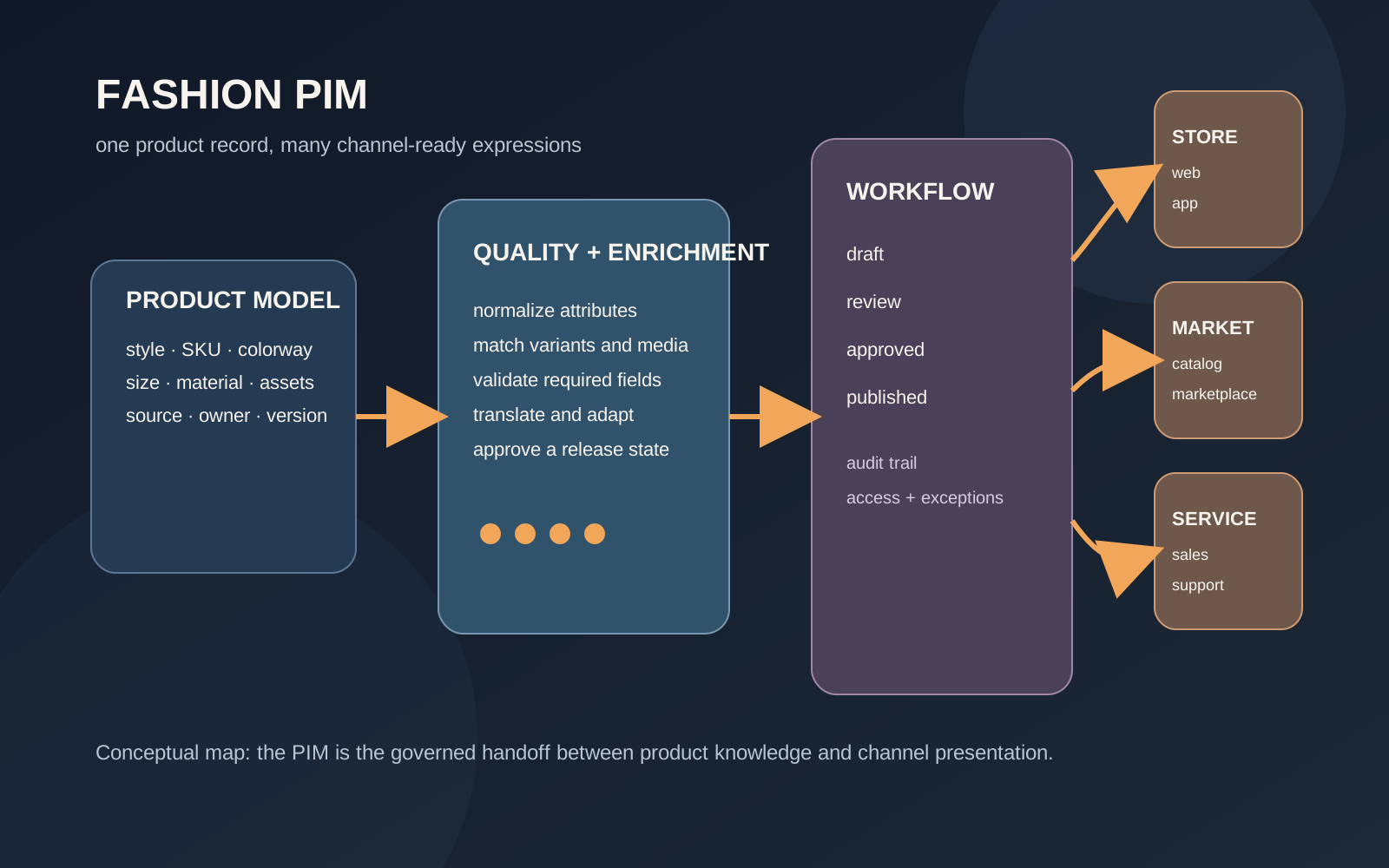
Fashion PIM is the process of organizing, enriching, validating and distributing product data to the channels that present a collection. Rather than treating the catalog as an isolated list, the process connects attributes, variants, media, translations, rules, owners and publication states. The useful unit is the product that must be understood by design, development, catalog operations, retail and e-commerce.
Its scope should remain distinct from fashion PLM, fashion DAM and fashion ERP. PIM handles product information prepared for presentation and channel use; the boundary with neighboring disciplines depends on which authority the company assigns to each field. A technical pack may be the source for technical attributes while PIM keeps the version prepared for a particular channel.
How does the information flow work?
The first step is a model that names the style, SKU, colorway, size, material, composition and visual assets. This is a design recommendation: each company should document which entities exist, which are attributes and who can change them. A stable identifier, an explicit source and an approval state make handoffs between teams readable.
Inputs may come from spreadsheets, suppliers, technical systems or APIs. The team then normalizes values, completes fields, relates variants and reviews descriptions and images. Pimcore describes onboarding resources that include ETL, matching and cleansing; in a fashion operation, that suggests concrete gates for composition, measurements, naming, language and image-to-variant matching. Those gates are operational guidance, not a promise of results.
The output is a record suited to each destination: owned store, marketplace, catalog, customer service or sales material. One product may need a different description length, consistent units, a specific attribute order and a channel-specific image set. The workflow should record who approved it, which version was published, when the change happened and how an exception returns for correction.
Which characteristics matter in a fashion operation?
The first characteristic is verifiable quality. Centralized information is useful only when the team can locate its origin, understand its meaning and know whether the value is approved. Define vocabulary, format, required status, owner, review date and exception rule for each group of fields. Product data quality then guides entry instead of appearing only as a final inspection.
The second is distribution without losing context. Integrations and automation can share data between channels, but copying a table does not guarantee that version, unit or owner survive. Document each field transformation, error handling and reconciliation. When the chain includes technical pack, fashion PLM and fashion DAM, draw the relationship by field and event rather than by system name alone.
The third is traceability. For products subject to environmental information requirements, European legislation describes data as accurate, complete and up to date and points to open, interoperable formats. This does not turn every PIM into a digital product passport: it means the model should preserve origin, update state and format when an applicable requirement calls for that level of information.
What are the limits and risks?
PIM does not repair a poor product definition by itself. If two teams use “color” to mean different things, centralizing the field only spreads the ambiguity. It is also unsafe to treat an image that is correct for a style as correct for every variant. The process needs ownership, review and a return path.
Security deserves its own layer. NIST describes its Cybersecurity Framework as helping organizations understand and improve cybersecurity risk management; in a PIM, that frames questions about access, supplier accounts, exports, integrations and recovery. It is not evidence that a particular implementation is secure. The design should limit permissions, record changes and test data return before opening new channels.
A prudent rollout starts with one category or collection, measures incomplete fields, variant discrepancies, approval time and rework, and only then expands. Metrics need a definition, period and denominator. Style product, fashion DAM, fashion PLM and SKU help separate identity, engineering, media and the commercial unit; they should not be merged merely because they appear in the same flow.
Verified facts
- PIM centralizes product data and seeks uniform, accurate information across all channels.
Source: pimcore.com ↗ - Automating data management can save effort, streamline workflows and minimize human error.
Source: pimcore.com ↗ - Advanced data models can be tailored, scaled and adapted to different industries.
Source: pimcore.com ↗ - A PIM platform can unify structured, unstructured and binary data in customizable models.
Source: pimcore.com ↗ - Data quality management can use real-time reporting, automated enforcement and AI-assisted insights.
Source: pimcore.com ↗ - An API-first approach can support data onboarding with ETL, matching, cleansing and onboarding interfaces.
Source: pimcore.com ↗ - Product-data distribution can share information in real time across channels and systems through integrations and automated workflows.
Source: pimcore.com ↗ - A workflow engine can centralize and streamline data and experience management with a visual designer and external integrations.
Source: pimcore.com ↗ - European legislation describes digital product-passport data as needing to be accurate, complete and up to date.
Source: eur-lex.europa.eu ↗ - European legislation requires passport data to use open standards and an interoperable, machine-readable, structured, searchable and transferable format.
Source: eur-lex.europa.eu ↗ - NIST’s Cybersecurity Framework helps organizations understand and improve cybersecurity risk management.
Source: nist.gov ↗
Related entries
Fashion DAM
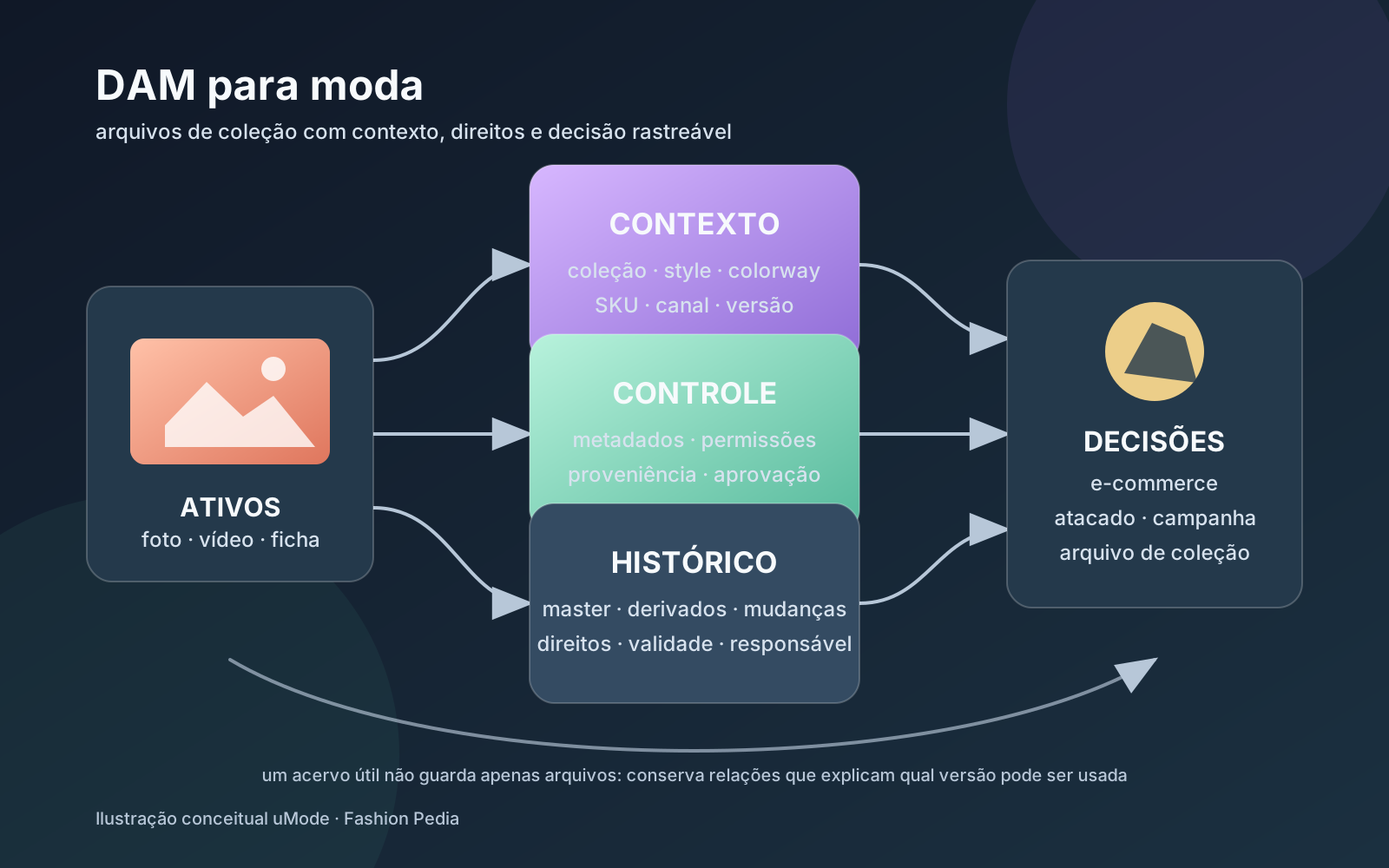
Fashion DAM is the process of storing, organizing, finding, controlling and distributing a collection's digital files while keeping metadata, permissions, versions, rights and provenance connected to product context. In practice, it turns images, videos, tech packs and derivatives into an operating base for design, wholesale, retail and communications.

Fashion PLM: data, product, and lifecycle
Fashion PLM is the structured management of the data, decisions, and workflows that follow a product and a collection from concept through post-launch. It connects tech packs, materials, costs, samples, approvals, suppliers, and versions so that every function works from a traceable product definition.
Fashion SKU
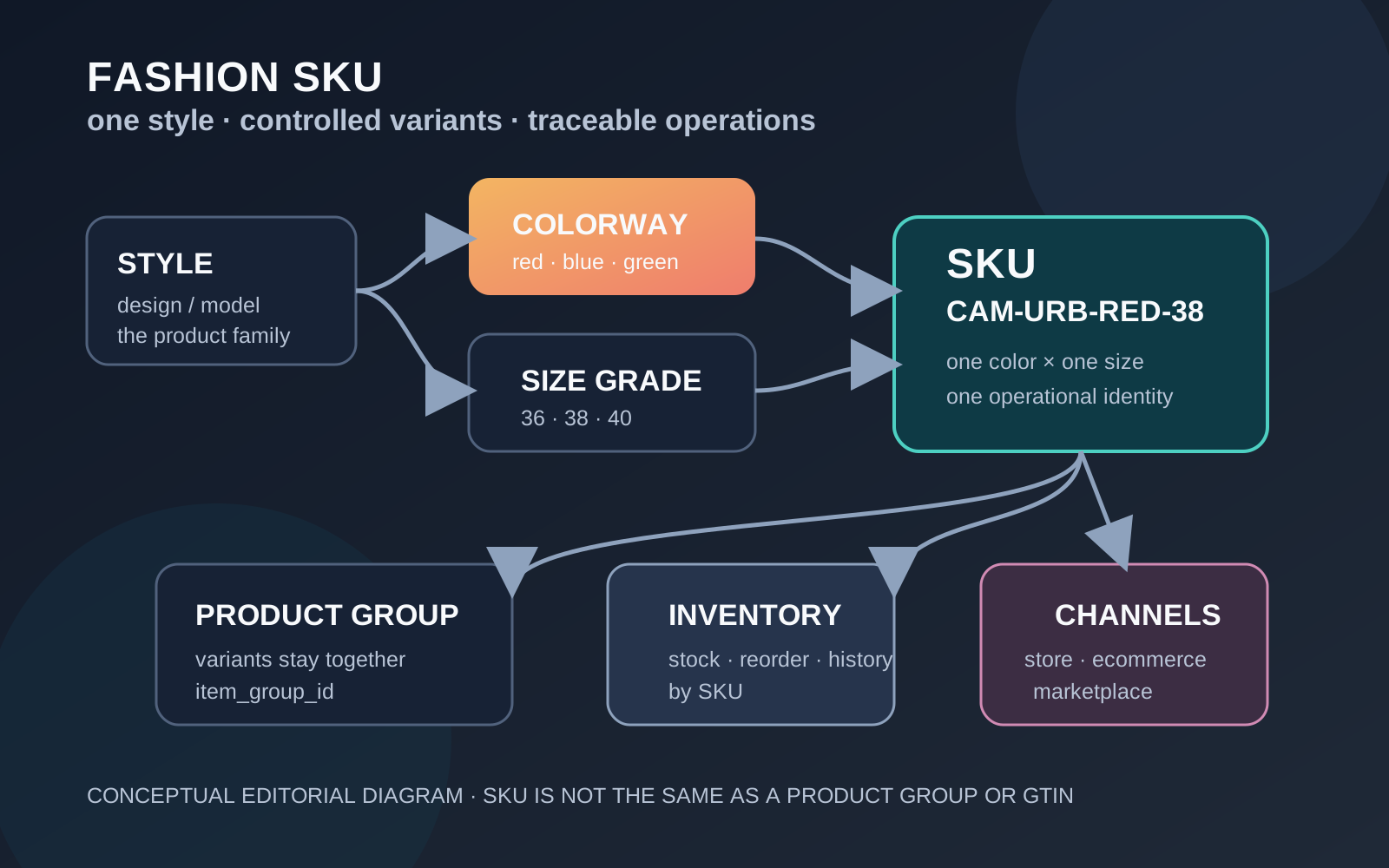
A fashion SKU is an identification unit used to distinguish items and variants in inventory control. In apparel, the useful distinction is between the individual SKU, the product group, color and size attributes, and assortment decisions.
Style in a product record
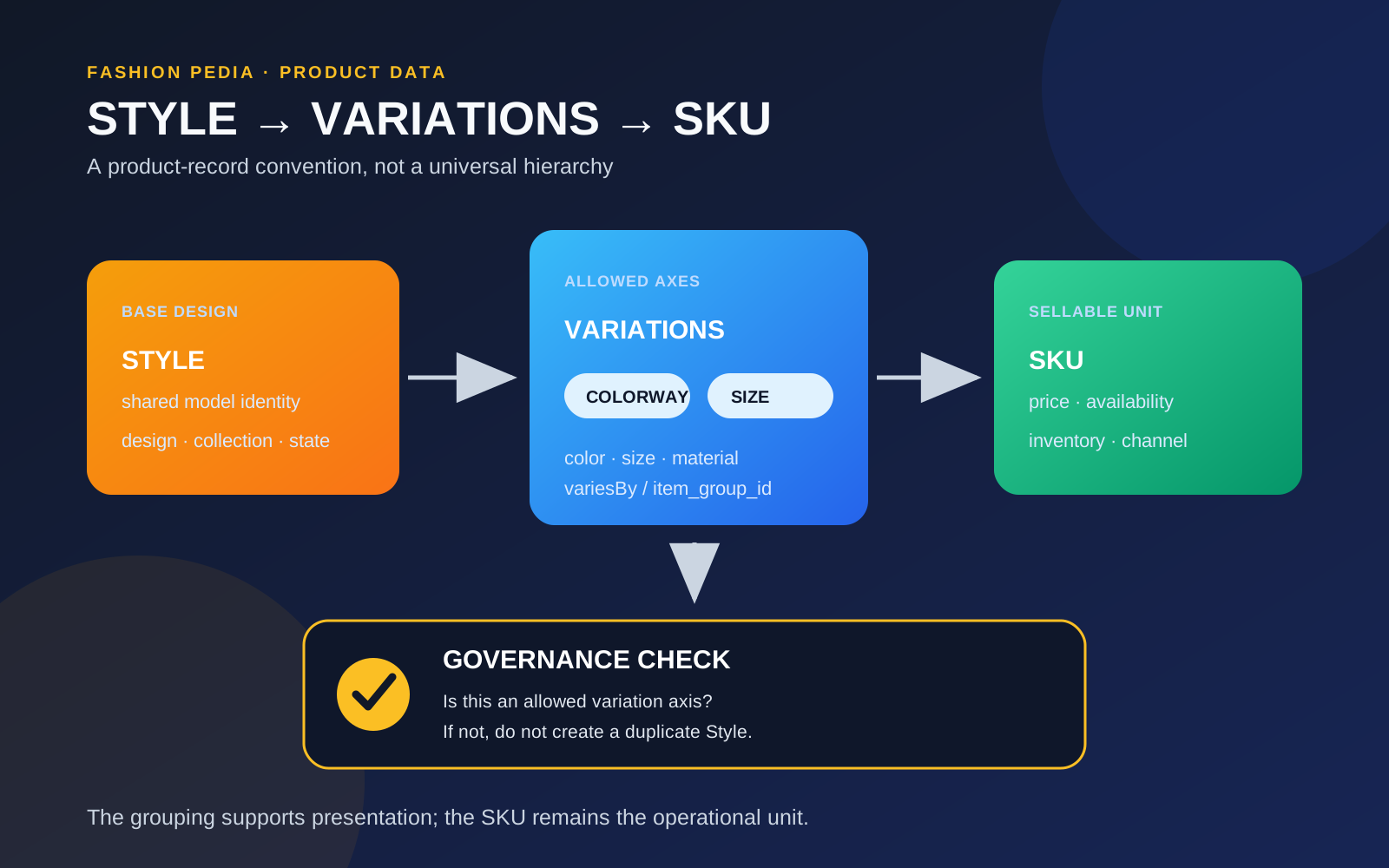
Style in a product record. In a fashion product record, Style can serve as the grouping for a base design and the decisions shared by its variations, but it is not a universal hierarchy. Operationally, that grouping must be separated from color and size variations and from the sellable unit identified by an SKU.
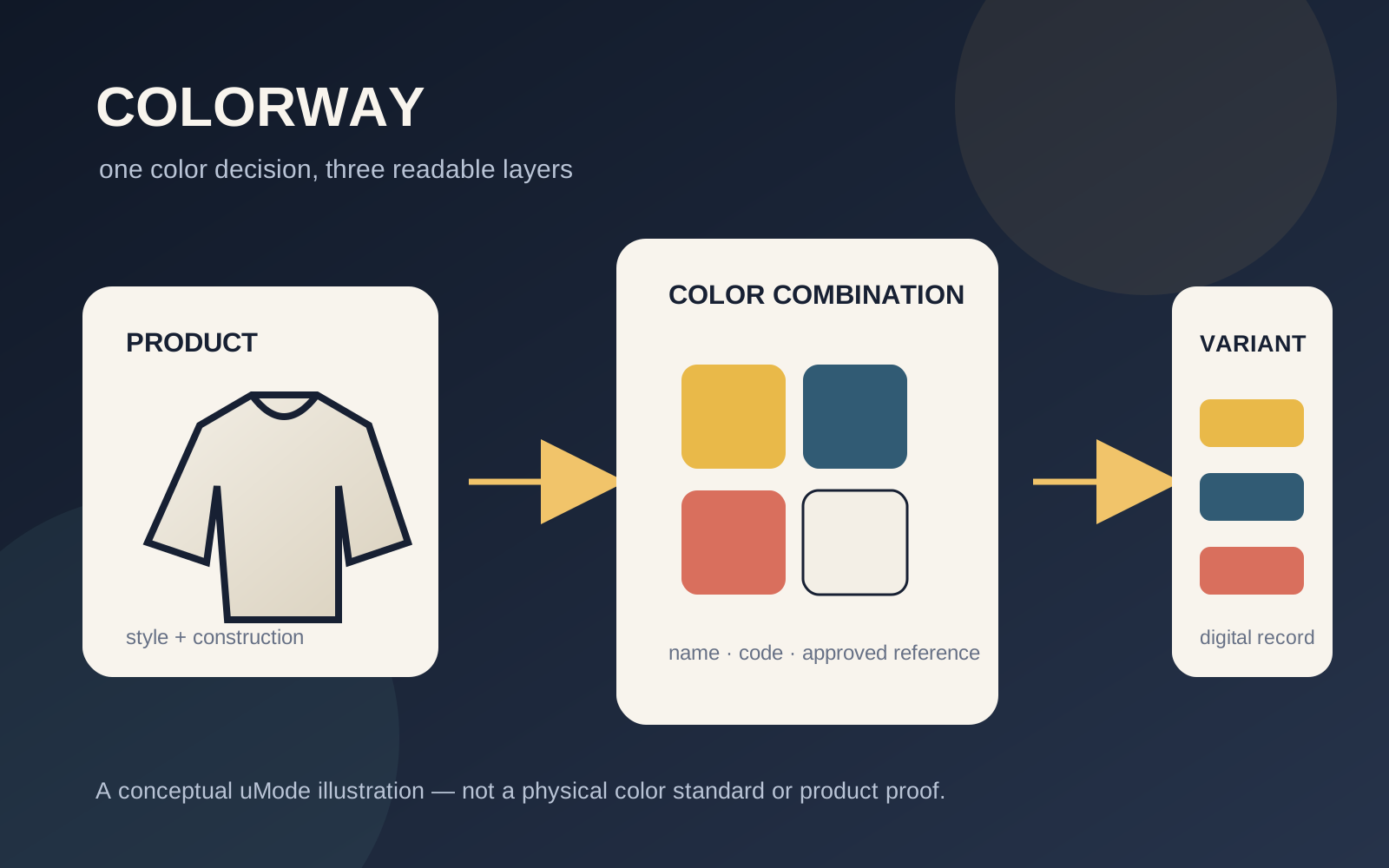
Colorway in fashion
Colorway in fashion. A colorway is a named combination of colors used to distinguish one version of a product. In fashion operations, the combination should remain legible across the product record, the approved reference, and the digital presentation, without treating a commercial name, a physical color, and a variant code as interchangeable.

How to improve product data quality
How to improve product data quality. Improving product data quality in fashion means separating style, variant, technical attribute and regulatory record; defining every field; validating source and format; and controlling the handoff from tech pack to catalog, label and sales channel. The process becomes dependable when each exception has an owner, evidence and a version.

Fashion product technical specification
A technical specification is the controlled information set that translates an approved fashion product into verifiable sampling and manufacturing requirements. It brings together drawings, materials, measurements, construction, tolerances, identification, labelling, comments and revision history; its content varies by category, company, market and stage.
Sources
Want to apply this to your operation?