Fashion e-commerce manager
A fashion e-commerce manager coordinates assortment, catalog data, variants, price, availability, experience and operational signals in a digital channel. The role turns product requirements into verifiable routines without replacing privacy, technology, logistics or product specialists.
On this page
What is Fashion e-commerce manager?
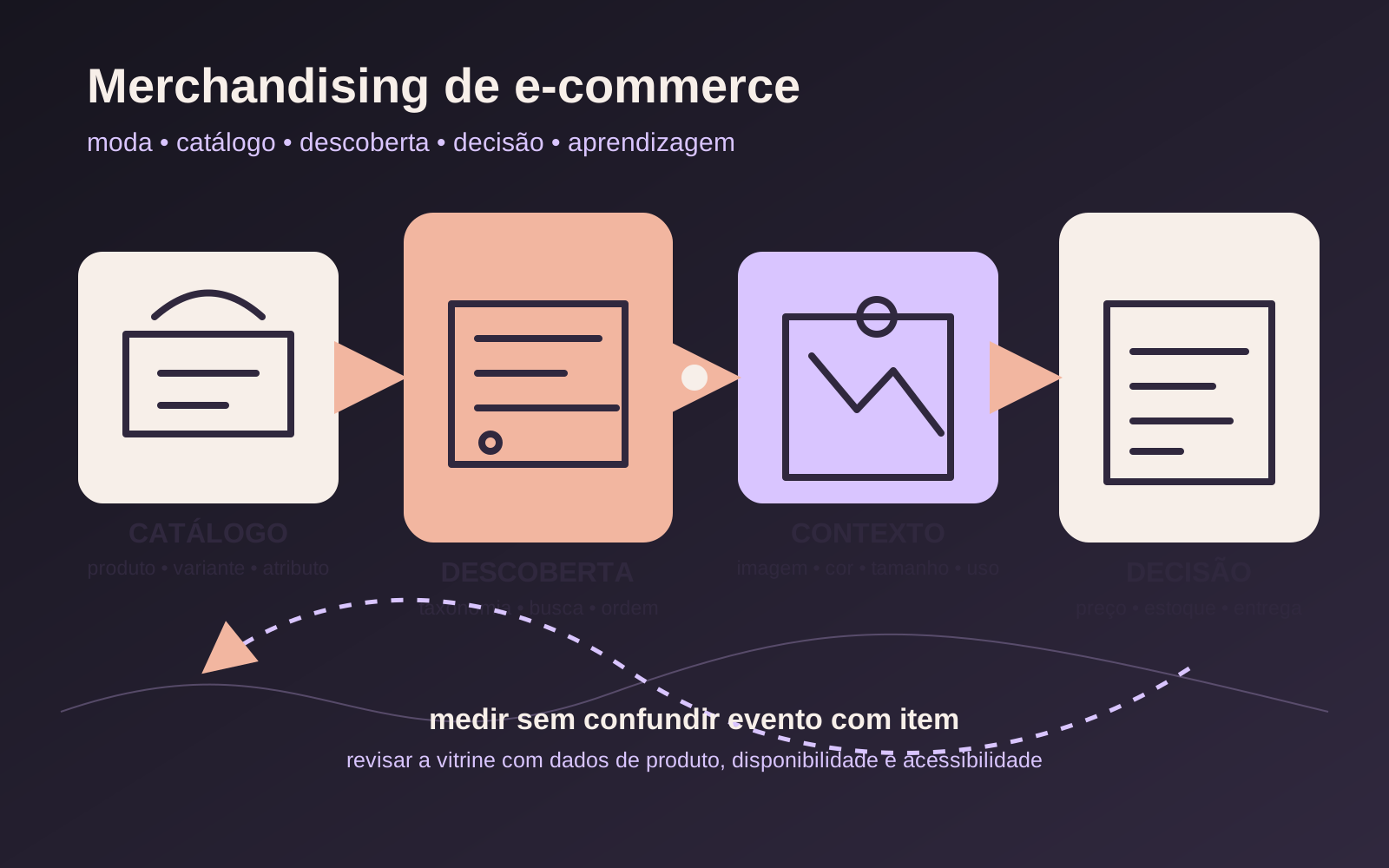
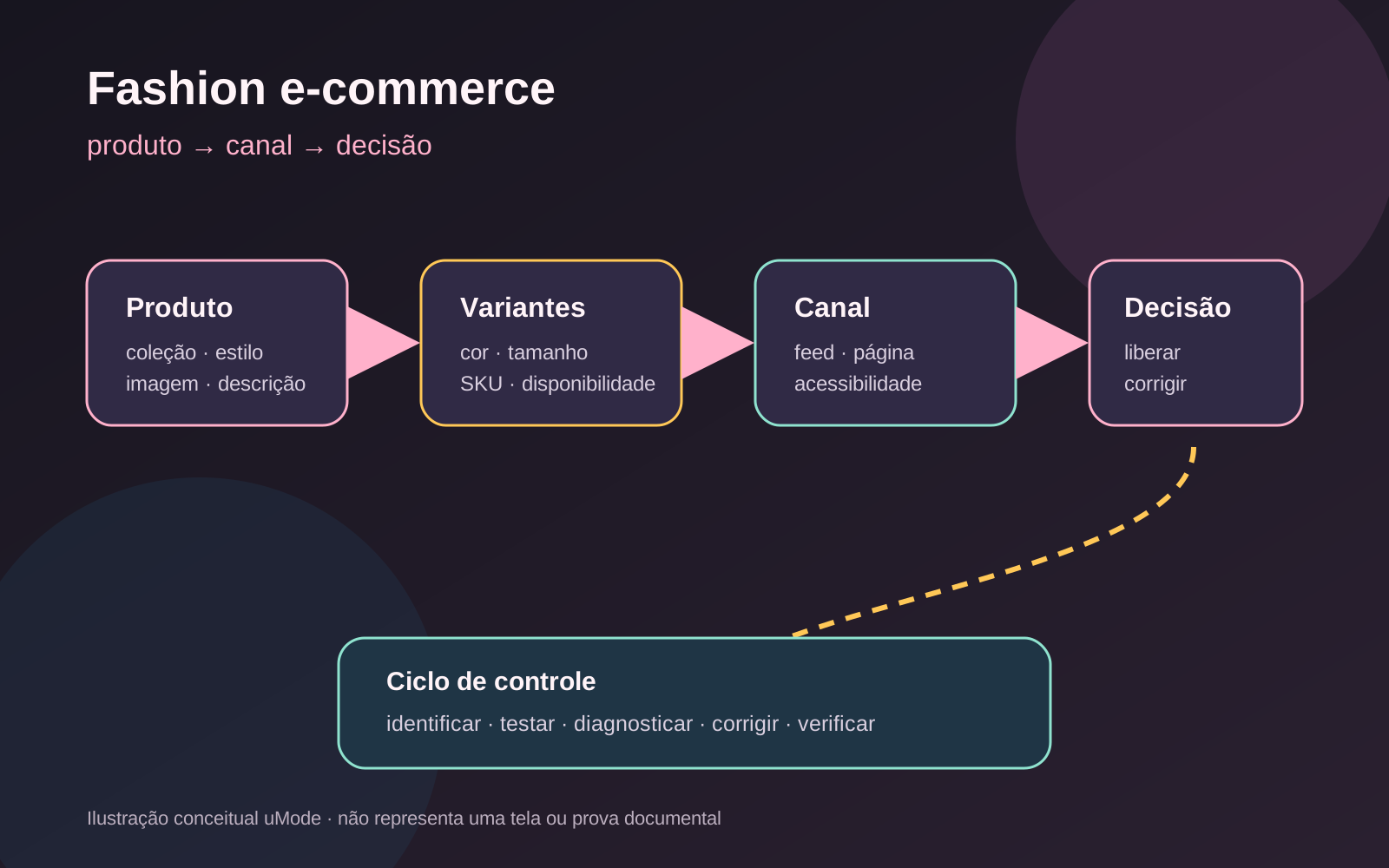
A fashion e-commerce manager coordinates the passage from product to catalog to digital channel. The job is not only to publish a garment: it is to organize how assortment, variant, color, size, price, availability, imagery and description reach the customer, and how issues return to the team. Google uses product data to match items to the right queries and considers accurate, correctly formatted data essential. This makes the role closely related to product data quality and fashion PIM, but it is not reducible to a tool.
As an operating guide, the manager can define the work unit before opening a plan: collection, style, SKU, variant, campaign, channel or inventory exception. The record then names the owner, information state, decision source and release or return criterion. This discipline creates a useful boundary between fashion e-commerce, fashion SKU and the work of product, content, customer service and logistics teams.
How do catalog data and variants affect the operation?
Catalog data affects the operation because incorrect, inaccurate or missing product information can cause disapprovals, limited eligibility and incorrect product displays in Merchant Center. Google lists missing or incorrect variant attributes among common problems, including item group ID, color and size. In fashion, this makes the variant a management object: a blue shirt in a particular size cannot be handled as if it were only the general style name.
The manager can turn that requirement into a control sequence: check product identity, review the relationship between style and variants, validate price and availability, inspect imagery and compare the feed with the published page. Google also warns that conflicting data between a feed and a website can prevent ads and free listings from showing. The practical consequence is that catalog approval must consider the whole channel, not only the source spreadsheet.
When an issue appears, Merchant Center's Issue Details Page provides diagnostic information to help identify, understand and resolve it. That record can guide a correction queue, but it does not replace the decision about who may change an attribute or the subsequent verification. The link to specification version control helps preserve what changed; the link to demand planning helps separate missing content from missing product.
How should accessibility and context data enter the work?
Accessibility should not be treated as a decorative calendar step. W3C explains that people with disabilities can use websites and tools when they are properly designed and coded, and states that making the web accessible benefits individuals, businesses and society. For the manager, this supports acceptance criteria for navigation, descriptions, contrast, interaction and channel testing; technical detail still needs validation with design, development and accessibility specialists.
WCAG 2.2 covers recommendations for web content on desktops, laptops, kiosks and mobile devices. Its success criteria are testable statements and are not technology-specific. An e-commerce routine can therefore record the requirement, applied test, result and correction instead of declaring an interface accessible merely because it uses a particular platform. The role coordinates the decision and its routing; it does not turn a technical reference into an automatic certificate.
Brazil's National E-commerce Observatory, maintained by MDIC, has areas for a dashboard, FAQs, legislation, publications and other data. These areas can be consultation points for context and monitoring, but a metric should enter a company dashboard only with a defined period, unit and origin. The relationship with fashion e-commerce metrics should keep observed data, diagnosis and action hypothesis distinct.
What are the role's limits?
The job title does not define authority by itself. One company may place channel and merchandising decisions with the manager; another may divide catalog, media, technology, service, inventory and logistics among different owners. A safer operating model states what the manager decides, recommends, monitors or sends for approval.
The role should also not turn a sound routine into a promise about conversion, lead time or revenue. Its contribution is a legible flow: identified input, verifiable requirement, assigned decision, controlled publication, diagnosis, correction and learning. Read alongside collection management, fashion PIM and product data quality, the focus remains the process connecting product and channel, not a particular tool.
Verified facts
- Google uses product data to match items to the right queries and considers accurate, correctly formatted data essential.
Source: support.google.com ↗ - Incorrect, inaccurate or missing product information can cause disapprovals, limited eligibility and incorrect product displays in Merchant Center.
Source: support.google.com ↗ - Common product-data problems include missing or incorrect variant attributes, such as item group ID, color and size.
Source: support.google.com ↗ - Conflicting data between a feed and a website can prevent ads and free listings from showing on Google.
Source: support.google.com ↗ - Merchant Center's Issue Details Page provides diagnostic information to help identify, understand and resolve problems.
Source: support.google.com ↗ - Web accessibility enables people with disabilities to use websites and tools when they are properly designed and coded.
Source: w3.org ↗ - W3C states that making the web accessible benefits individuals, businesses and society.
Source: w3.org ↗ - WCAG 2.2 covers recommendations for accessible web content on desktops, laptops, kiosks and mobile devices.
Source: w3.org ↗ - WCAG 2.2 success criteria are written as testable statements that are not technology-specific.
Source: w3.org ↗ - Brazil's National E-commerce Observatory has areas for a dashboard, FAQs, legislation, publications and other data.
Source: gov.br ↗
Related entries
Fashion PIM
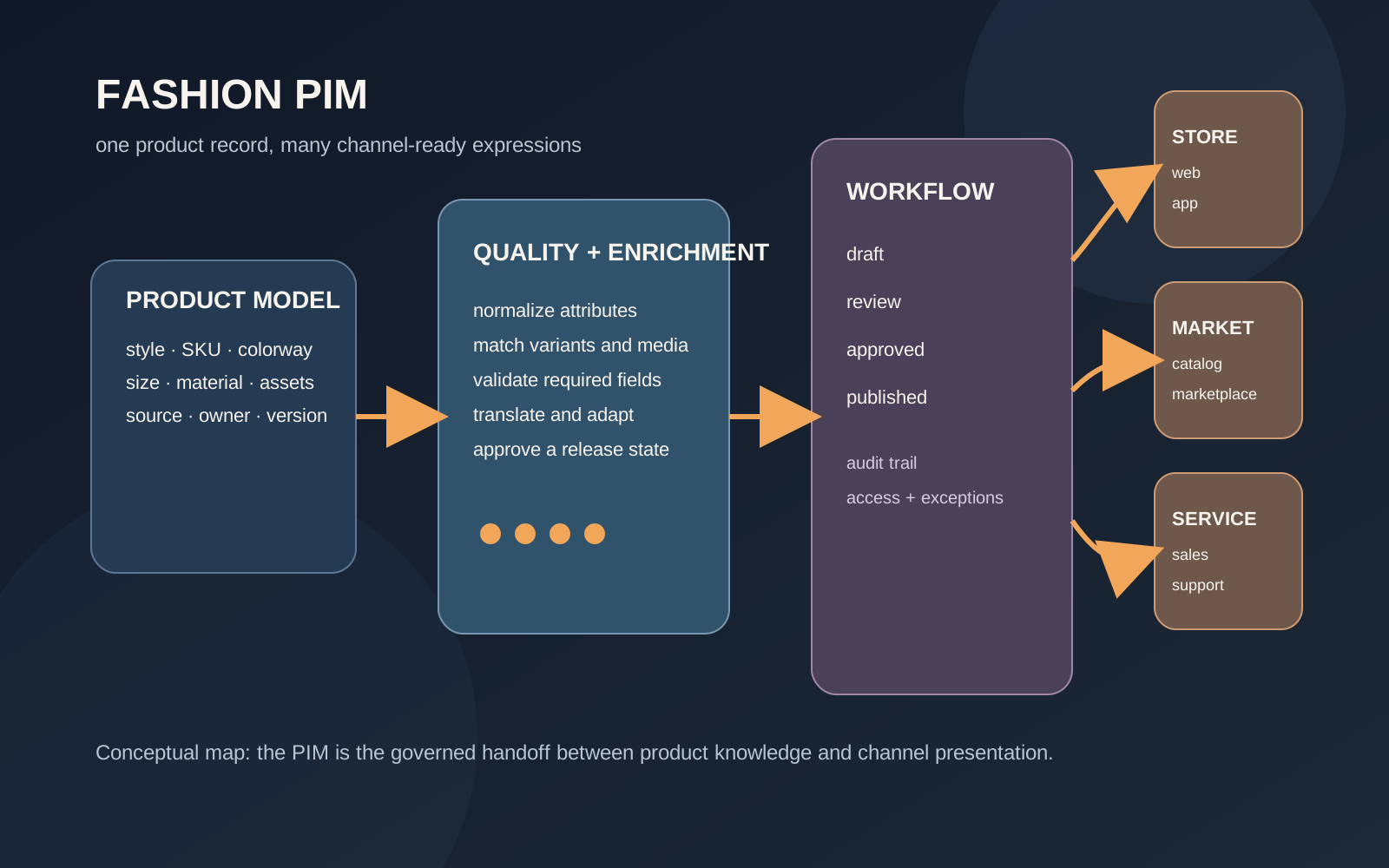
Fashion PIM is the process of organizing, enriching, validating and distributing product data to the channels that present a collection. It combines a data model, quality rules, ownership and integrations; it is not merely a catalog and does not automatically replace PLM, ERP or DAM.
Fashion SKU
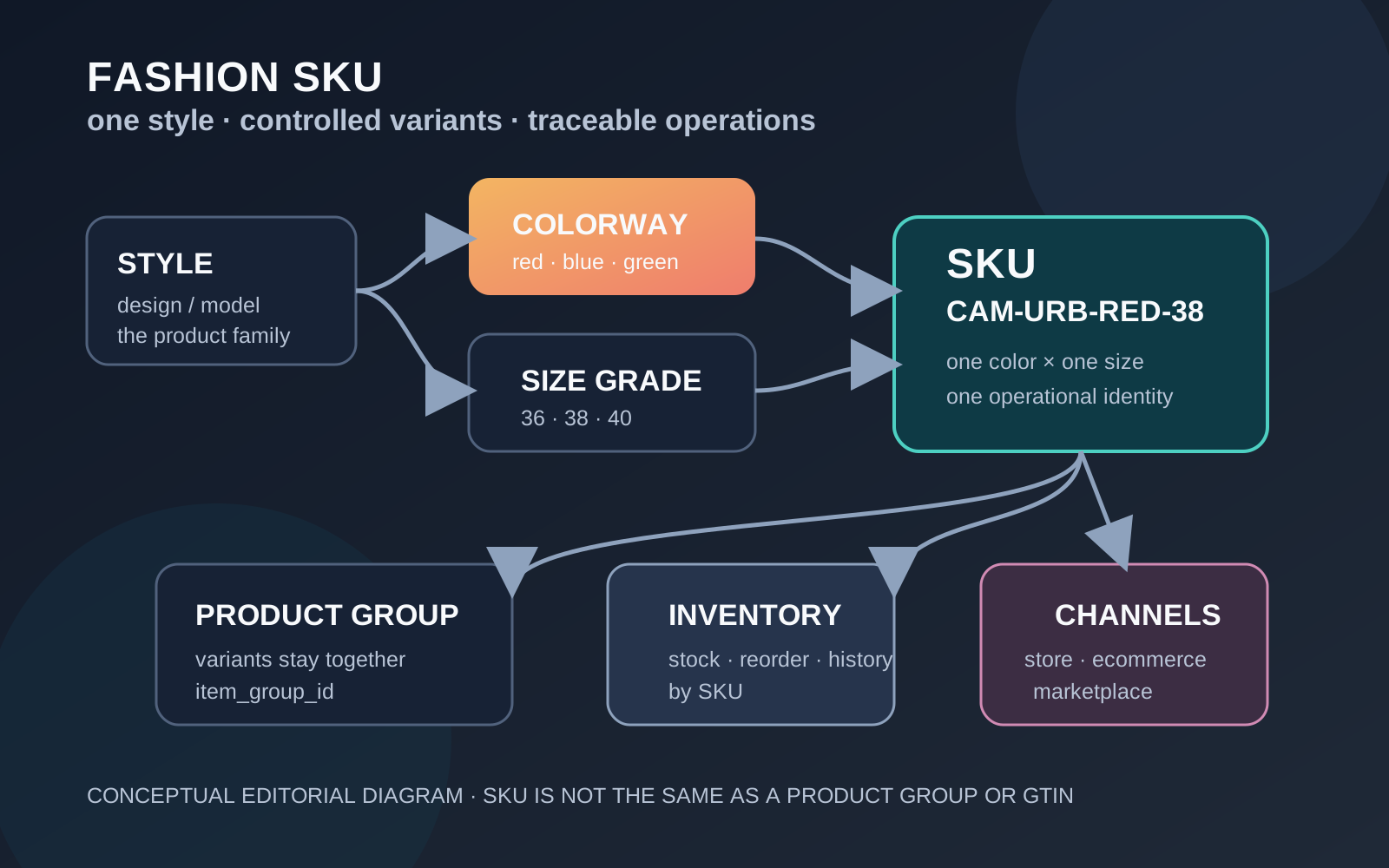
A fashion SKU is an identification unit used to distinguish items and variants in inventory control. In apparel, the useful distinction is between the individual SKU, the product group, color and size attributes, and assortment decisions.
How to improve product data quality
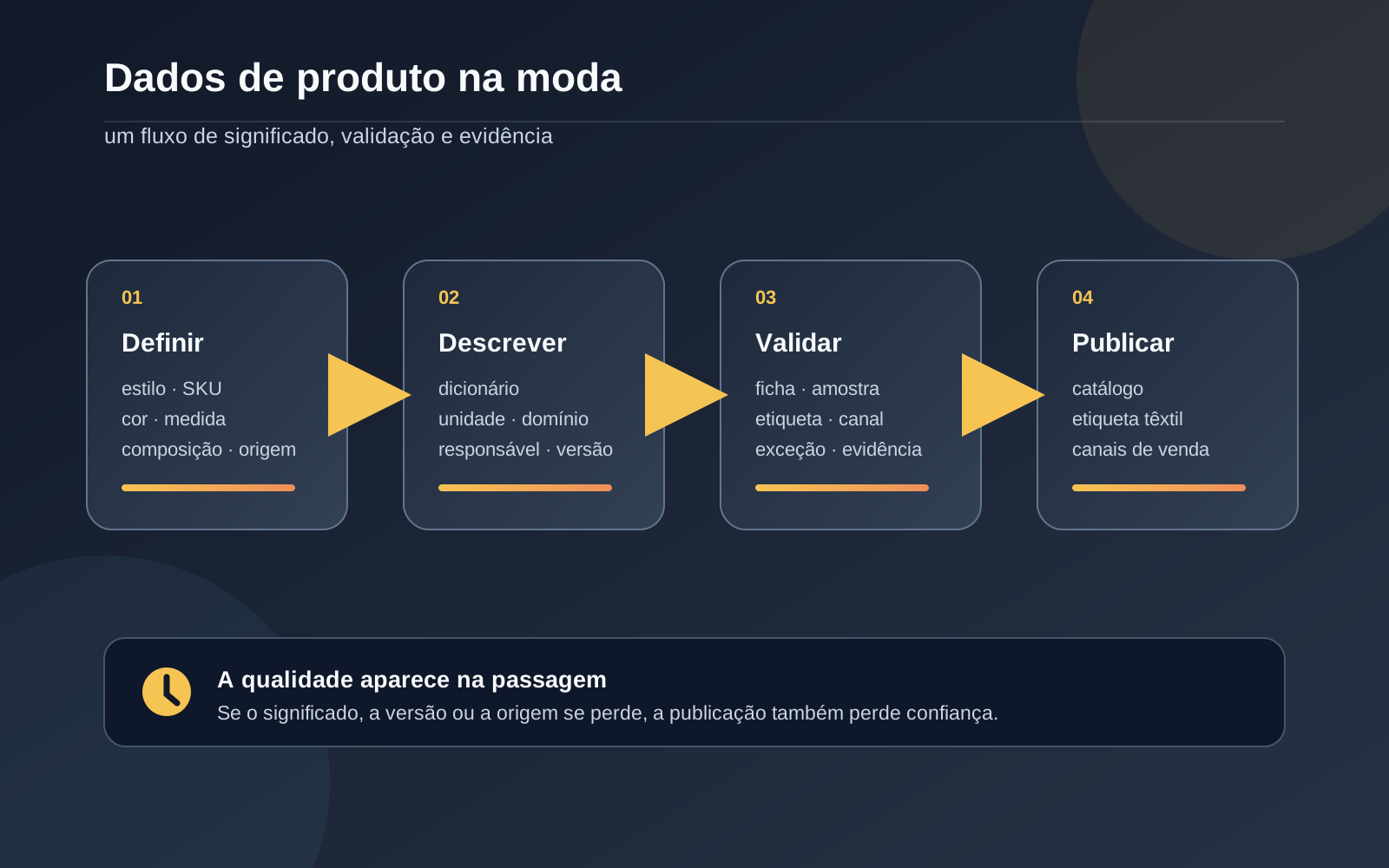
How to improve product data quality. Improving product data quality in fashion means separating style, variant, technical attribute and regulatory record; defining every field; validating source and format; and controlling the handoff from tech pack to catalog, label and sales channel. The process becomes dependable when each exception has an owner, evidence and a version.
Demand planning in fashion
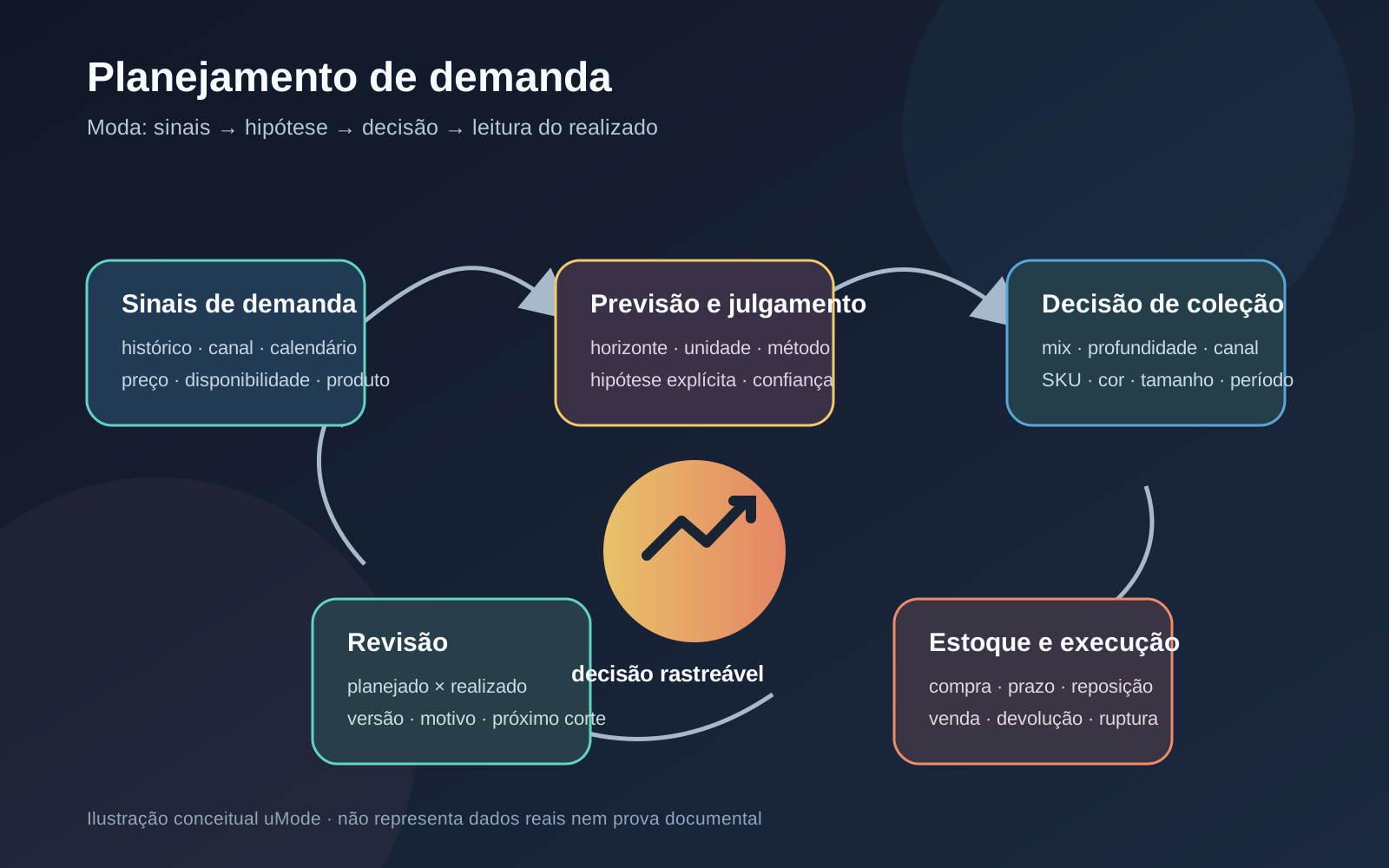
Demand planning in fashion turns demand signals, history, calendar context and judgement into explicit decisions about assortment, volume, channel and review. It combines forecasting with governance: every hypothesis needs a horizon, unit, owner and rule for revision when the collection or market changes.
Sources
Want to apply this to your operation?