Fashion SKU
A fashion SKU is an identification unit used to distinguish items and variants in inventory control. In apparel, the useful distinction is between the individual SKU, the product group, color and size attributes, and assortment decisions.
On this page
What is Fashion SKU?
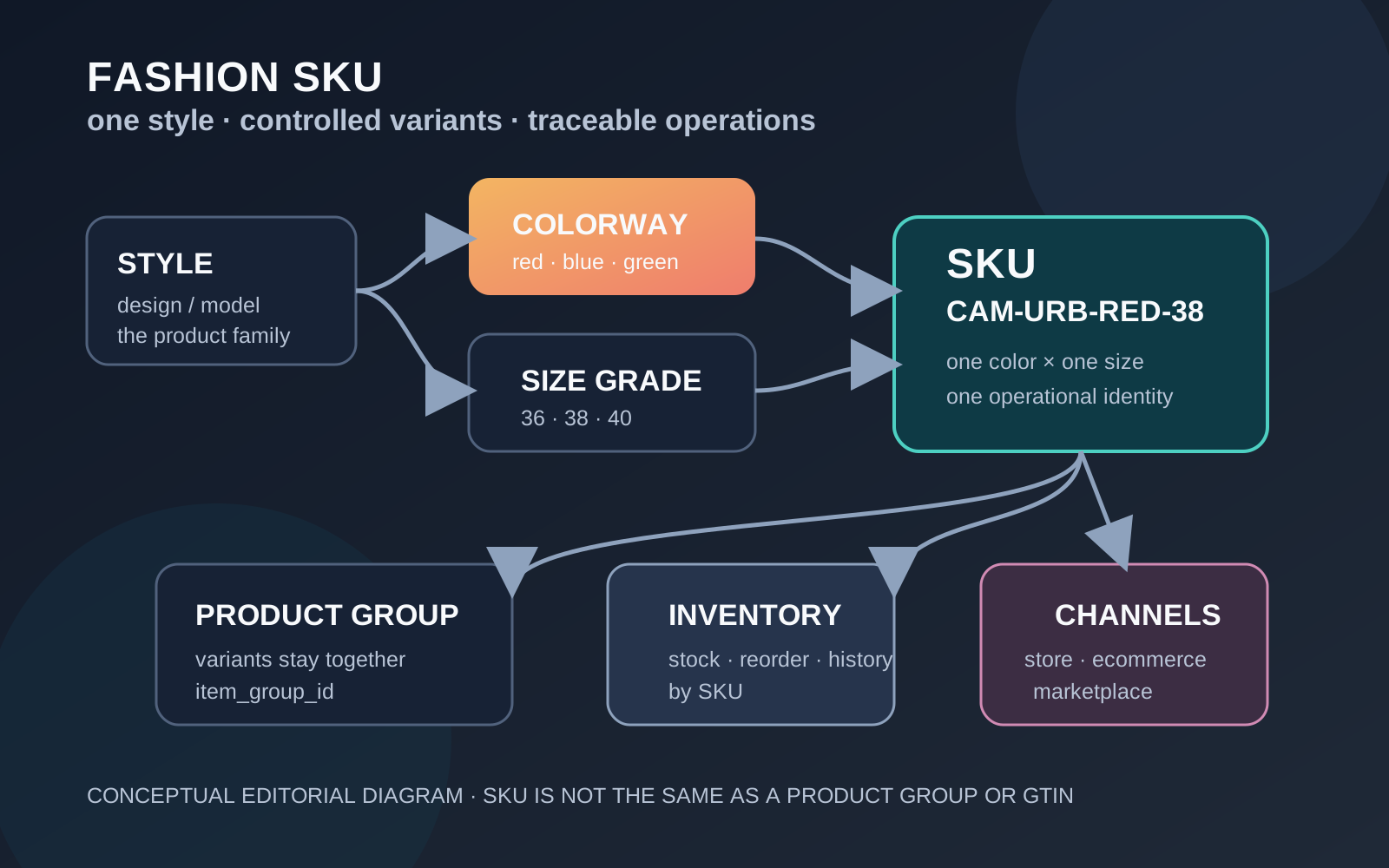
A fashion SKU is an identification unit used to distinguish a sellable or inventory-controlled item. To avoid collapsing levels, separate the style that defines the design, the colorway that defines a color combination, the size grade, and the SKU that identifies the operational variant. A code does not replace product description: it points to a record whose meaning must remain stable for the team using it.
In digital commerce, the difference between an item and a group is explicit. Google instructs merchants to submit each variant as a separate product while variants of one product share a group identifier. Thus, a T-shirt with three colors and three sizes appears as nine distinct items linked to one group; that example is a data-structure rule, not a universal collection count.
How do variant, SKU, and product group differ?
item_group_id groups variants; ID identifies one individual product. This prevents one field from carrying two decisions: “which record is this?” and “which variant family does it belong to?” In practice, a group might gather CAM-URB in red, blue, and green, while each color-and-size combination receives its own SKU, such as CAM-URB-RED-38. The example is an editorial naming convention, not a mandatory standard.
For apparel, variant data includes color, pattern, material, age, gender, size, and variant option. The listing should also be checked so that title, option, color, price, availability, and image shown on the landing page match the submitted variant. This connects catalog enrichment and PIM to the buying experience without treating PIM, ERP, or a marketplace as synonyms for SKU.
Google recommends a stable group identifier: frequent changes can create inconsistency in how variants are grouped and displayed. A team should therefore govern the coding convention by recording its scope, owner, change rule, and discontinuation treatment. The SKU can be internal; GTIN, barcode, and channel identifiers can coexist with it, but equivalence should not be assumed without an explicit business rule.
How does a SKU enter fashion inventory planning?
A SKU becomes useful when it connects a variant to inventory balance, purchasing, replenishment, and the channel where the sale occurs. Oracle describes fashion retail in terms of accurate, real-time inventory planning across channels; that provides operating context but does not prescribe one systems architecture. The same SKU can appear in a store, ecommerce, or marketplace view when scope and availability are reconciled.
SKU rationalization adds an assortment question: does each code still justify remaining in the catalog? Shopify describes the process as an optimization operation that compares a SKU’s contribution with profitability, efficiency, and business goals. For a collection, the analysis can combine stock levels, reorder points, historical sales, and customer-preference signals. A keep, reduce, or discontinue decision should preserve season, channel, and broken-size context instead of treating one low-sales observation as sufficient proof.
Life-cycle stage matters as well: Shopify recommends assessing each SKU from introduction through maturity and possible decline. This prevents a new launch from being compared with a mature basic without stating the period. In assortment, the SKU helps locate a break—for example, when one color sells while one size remains—whereas the product group shows the wider family.
What are the limits of the code?
A SKU does not explain fit, construction, composition, or garment quality by itself. Those details belong in dedicated technical packs, images, measurements, and specifications. It is also unsafe to delete a SKU merely because it sold poorly in one slice: interpretation depends on availability, price, calendar, channel, and product stage. The code organizes a decision; it does not prove the decision’s cause.
A sound convention avoids ambiguous, duplicated, or prematurely reused codes. It also makes the boundary between style, variant, inventory unit, product group, and external identifier explicit. When product, merchandising, operations, and technology teams review those boundaries together, the SKU becomes a connection point between design, catalog data, and operations—without promising that a particular system will solve governance by itself.
Verified facts
- Google describes item_group_id as an attribute for grouping variants in product data; in apparel, examples of differences include color and size.
Source: support.google.com ↗ - In Merchant Center, each variant should be submitted as a separate product, while variants of the same product share the same item_group_id.
Source: support.google.com ↗ - Google recommends using the parent SKU as item_group_id for all variants of one product and not submitting the parent SKU as a separate product.
Source: support.google.com ↗ - The ID attribute identifies one product, while item_group_id groups several products as variants.
Source: support.google.com ↗ - Google recommends a stable item_group_id value for each variant group and warns that frequent changes can create inconsistency in how variants are displayed.
Source: support.google.com ↗ - For apparel, Google advises providing attributes such as color, pattern, material, age, gender, size, and variant option when identifying the product.
Source: support.google.com ↗ - Shopify presents SKU rationalization as an inventory optimization operation that evaluates each SKU's contribution to profitability, efficiency, and business goals.
Source: shopify.com ↗ - Shopify describes SKU analysis as a comparison between sales data and inventory carrying costs.
Source: shopify.com ↗ - Shopify lists current stock levels, reorder points, and historical sales performance as relevant data for evaluating each SKU.
Source: shopify.com ↗ - Shopify includes the product life-cycle stage in the assessment of each SKU, from introduction through maturity and possible decline.
Source: shopify.com ↗ - Oracle describes fashion retail as an operation requiring accurate, real-time inventory planning across channels.
Source: oracle.com ↗ - Oracle connects inventory visibility, fulfillment, and financial management with fashion retailers operating across sales channels.
Source: oracle.com ↗
Related entries
Style in a product record
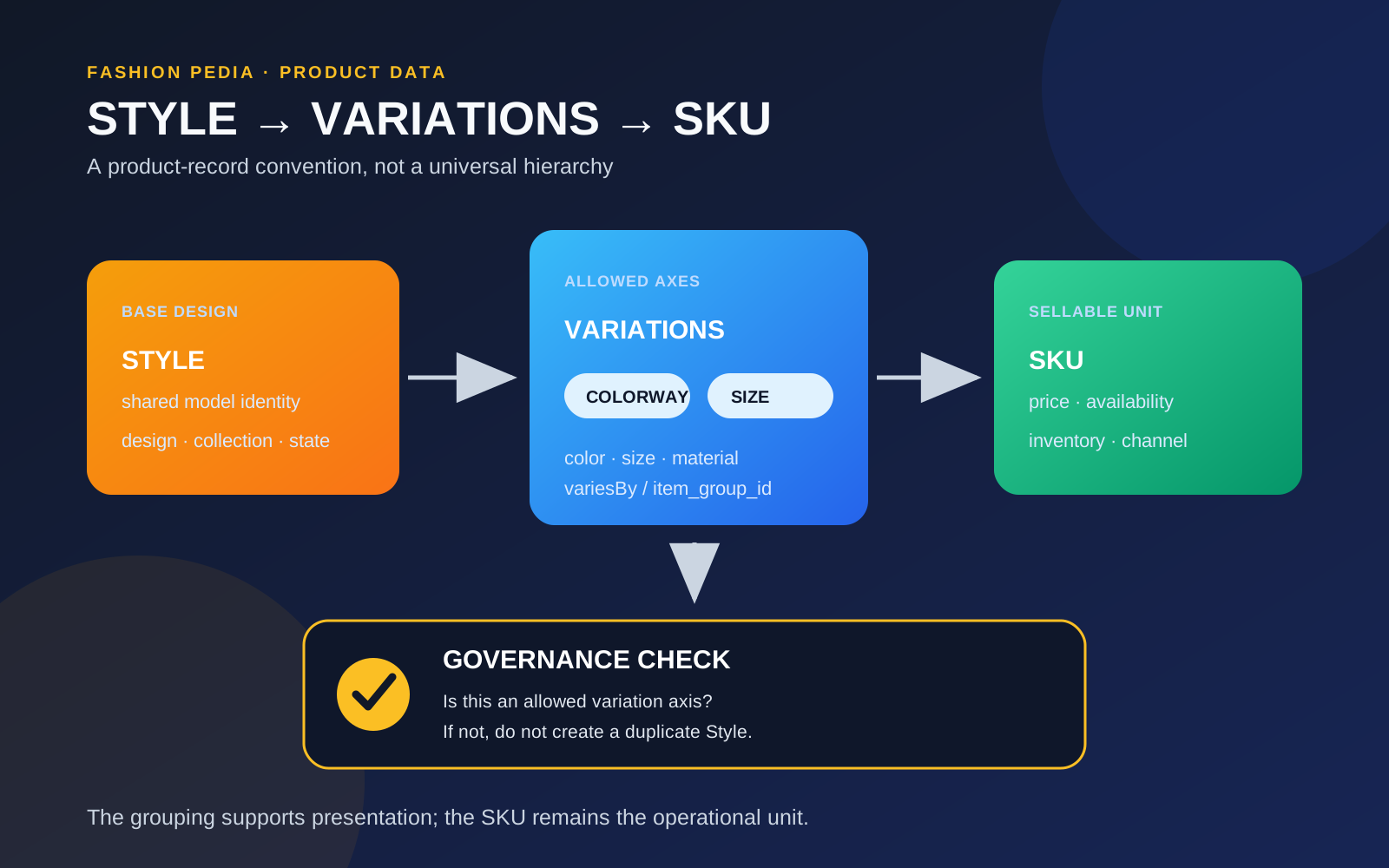
Style in a product record. In a fashion product record, Style can serve as the grouping for a base design and the decisions shared by its variations, but it is not a universal hierarchy. Operationally, that grouping must be separated from color and size variations and from the sellable unit identified by an SKU.
Colorway in fashion
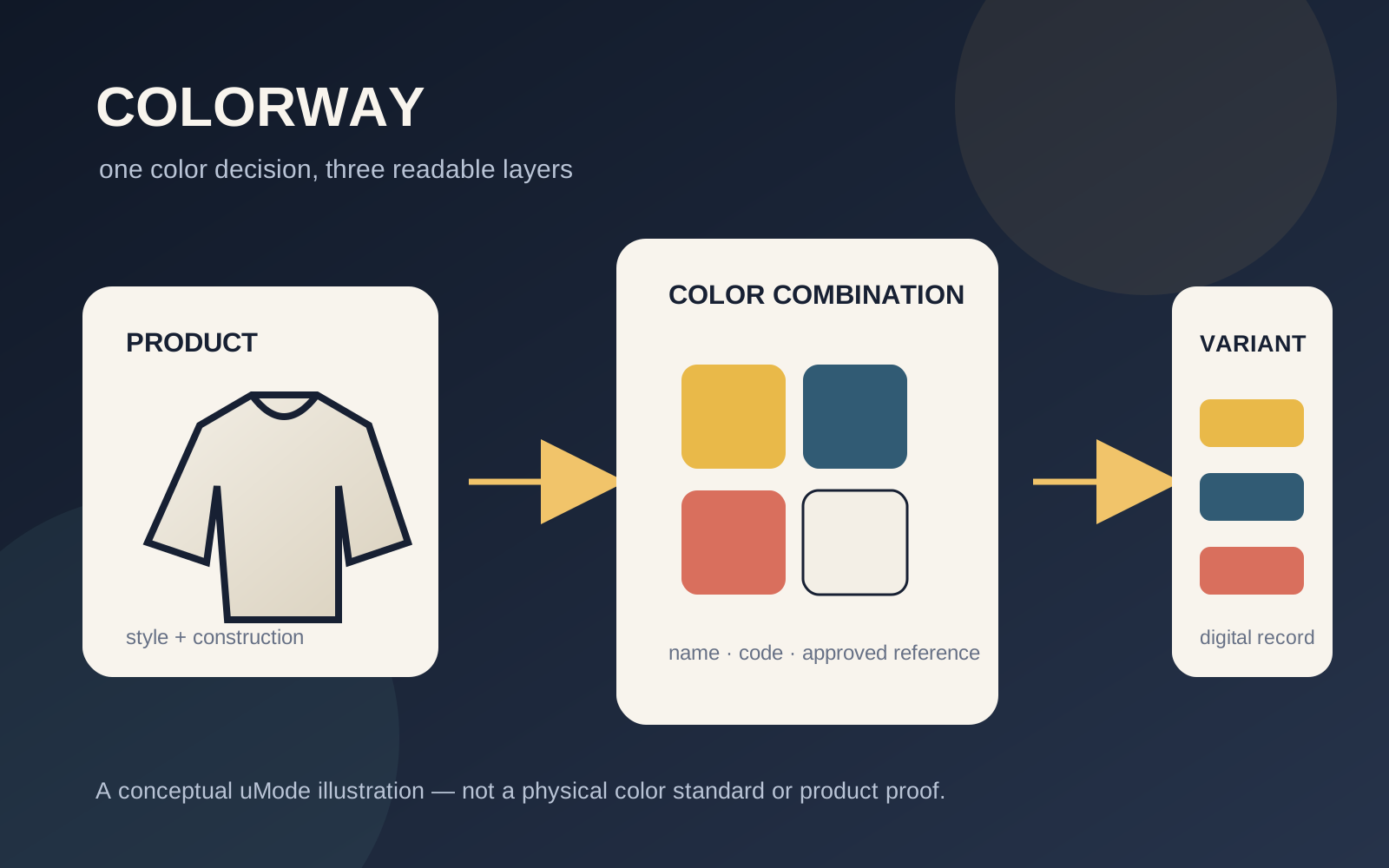
Colorway in fashion. A colorway is a named combination of colors used to distinguish one version of a product. In fashion operations, the combination should remain legible across the product record, the approved reference, and the digital presentation, without treating a commercial name, a physical color, and a variant code as interchangeable.
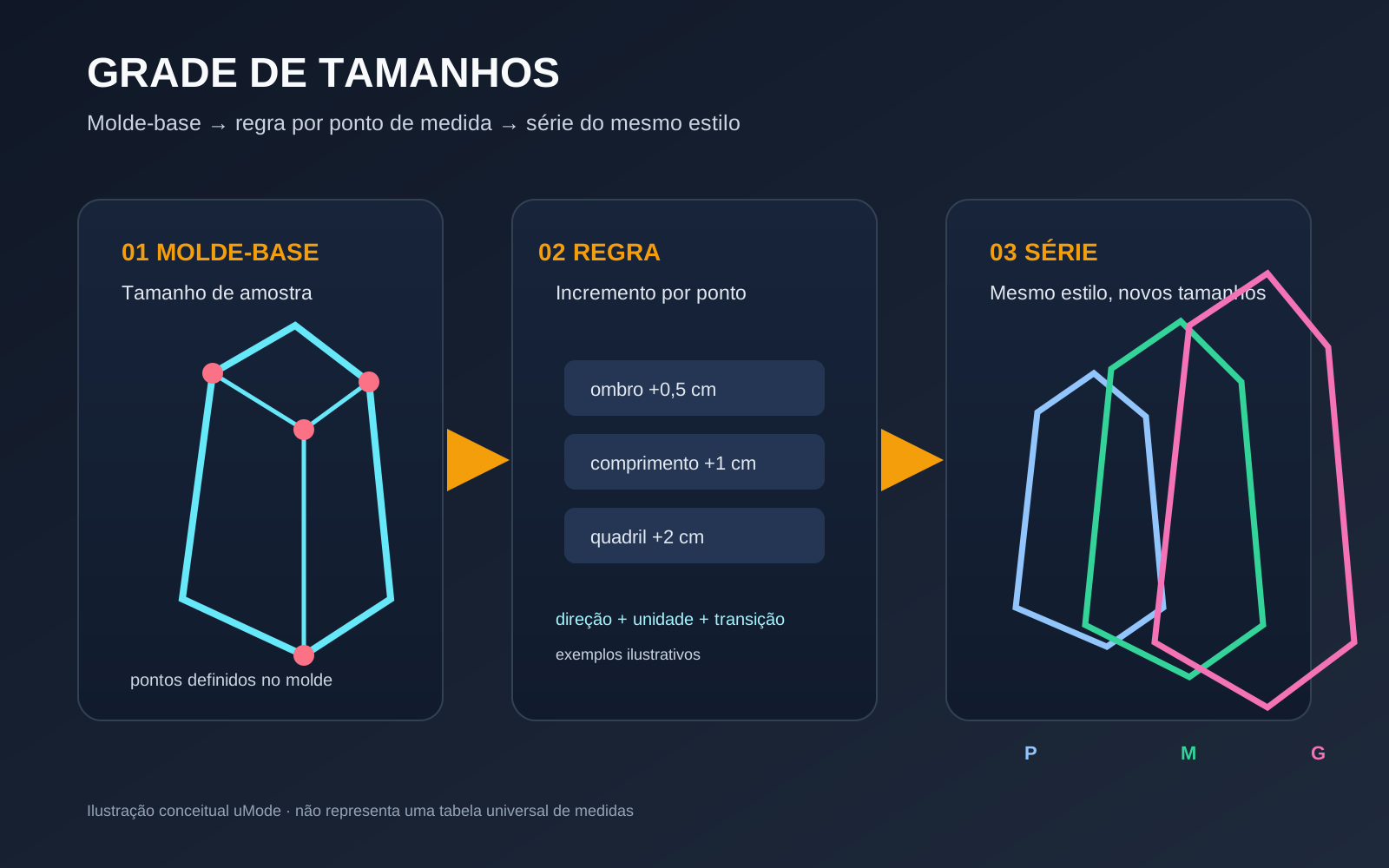
Size grading
Size grading is the process of turning base-size or sample-size patterns into additional sizes by using a specification sheet or grading increments. A rule changes defined points on the pattern to form a size range for the same style; it does not replace patternmaking or create a new shape.
Sources
Want to apply this to your operation?