How to govern AI agents in a company
How to govern AI agents in a company. In a company, governing AI agents means defining purpose, context, authority, data, supervision and records before a system is allowed to recommend or execute actions. The process combines continuous risk management with autonomy levels proportional to impact, without treating a framework as automatic permission.
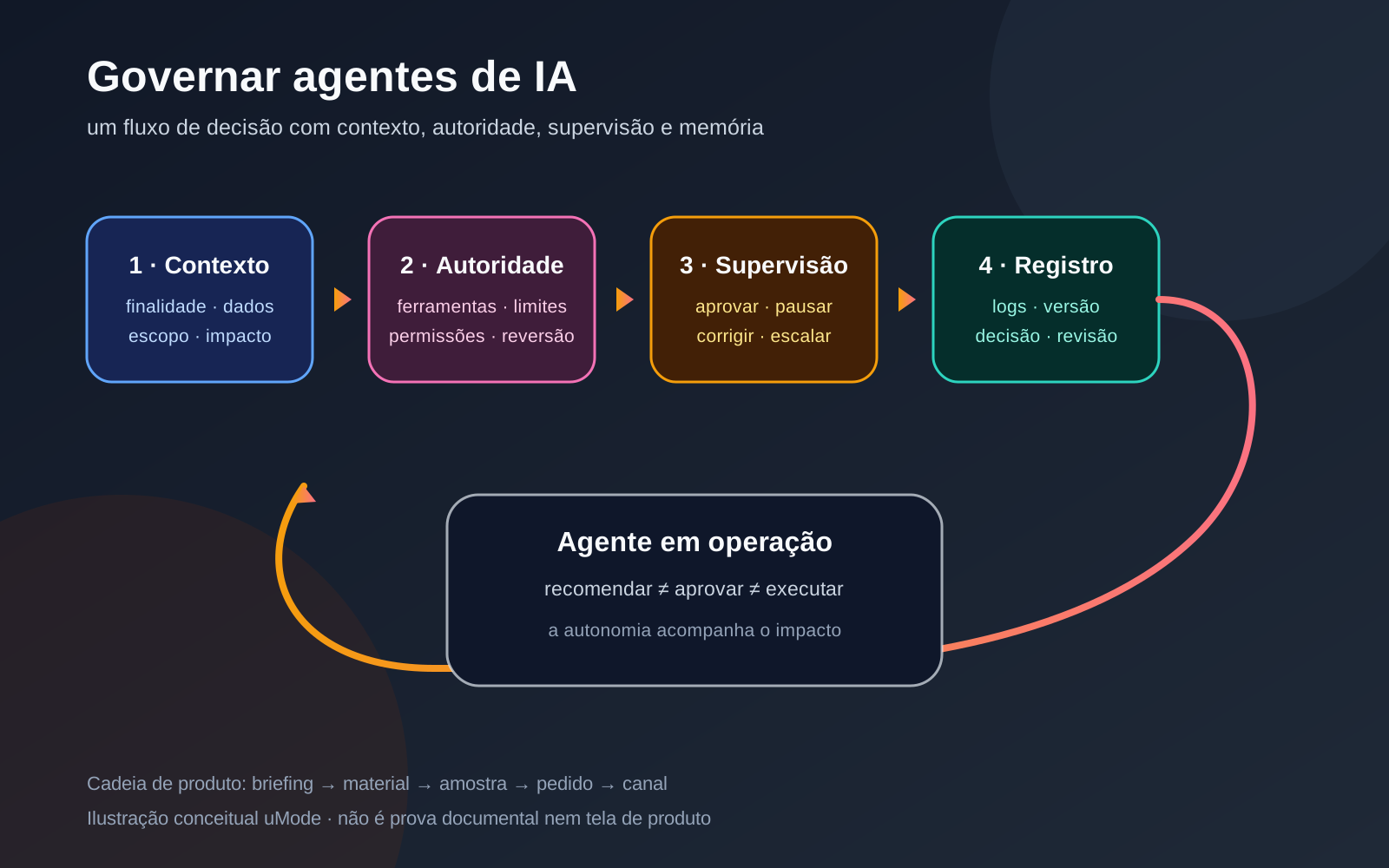
On this page
What is How to govern AI agents in a company?
Governing an AI agent means turning the ability to recommend or execute into a bounded process: purpose, context, data, tools, authority, supervision and records. NIST's AI RMF is voluntary and was created to incorporate trustworthiness considerations into the design, development, use and evaluation of AI systems. It is a management reference, not automatic permission to release autonomy.
Start with a flow inventory. Describe what the agent may read, which systems it may query, what output it produces and which action remains outside scope. In a fashion operation, this may involve a technical specification, a sample approval, a material inquiry or a supplier message. The first question is not “which model should we use?” but “which decision may the agent influence, and who remains accountable?”
How should risk, authority and supervision be structured?
The AI RMF Core organizes risk management through Govern, Map, Measure and Manage, and NIST says risk management should be continuous, timely and performed throughout the AI system lifecycle. Turn those functions into control points: a purpose and ownership rule; a context and impact map; measurements for quality, safety and failure; and a route for treatment, pause or withdrawal.
Autonomy should be graduated by the impact of an action. An agent that summarizes fit comments may need sample-based review; an agent that changes a catalog record, confirms an order or sends an external message needs explicit authority, limits and a way to stop. This distinction connects data governance with specification version control: the team needs to know which data and rule were valid when the action occurred. The history should also record refusals, corrections and exceptions, not only successful cases.
Human supervision is operational only when it defines who reviews, under what condition, with which information and with what power to block or reverse. Training may help, but it does not replace permissions, logs, acceptance criteria and an identifiable owner. When the model, supplier, tool or purpose changes, treat the change as a new evaluation point instead of assuming previous behaviour will remain valid.
What changes with risk and regulatory context?
The European Union AI Act uses risk-based rules for developers and deployers in specific AI uses. The EU Regulation also provides that high-risk AI systems should technically allow the automatic recording of events through logs over their lifetime. For a company, this reinforces two design decisions: classify the use before choosing autonomy and preserve enough evidence to reconstruct what happened.
The OECD says its AI Principles were updated in May 2024 and lists transparency and explainability, robustness, security and safety, and accountability among its values-based principles. Treat these terms as design questions: can the user understand the function? are the system's limits observable? is misuse addressed? who answers for the output? The answer must be specific to the use case, not a generic trust statement.
The UK regulatory proposal presents five values-focused cross-sectoral principles for regulators, including safety, transparency, fairness, accountability, and contestability or redress. Because regulatory regimes have their own scopes, use them for triage and seek legal analysis when a case involves people, rights, sensitive data, external obligations or effects that are difficult to reverse.
How can this be applied across a fashion product chain?
In an AI production pilot, define the object moving through the flow: brief, material, sample, order or channel. Connect the agent to AI context in the company and an AI company guideline without mixing recommendation with approval. A useful test repeats real cases, edge cases and an out-of-scope attempt; its result should state when to escalate, pause, correct or withdraw the agent.
Governance becomes concrete when the record reaches daily work. Team AI adoption should make clear when an output is a suggestion, how to record a correction and who decides an exception. For each relevant action, keep version, source, owner, decision, date and rationale. This allows intent and execution to be compared without turning a plausible response into proof of quality.
A small starting point is enough: one flow, one tool, one owner and a set of criteria. Expand only when the company can explain what the agent did, why it had that authority, which evidence supports the decision and how to stop the process. Governing agents means keeping those answers verifiable as context changes.
Verified facts
- NIST characterizes the AI Risk Management Framework (AI RMF) as voluntary guidance for applying trustworthiness considerations across an AI system's design, development, use and evaluation.
Source: nist.gov ↗ - The AI RMF Core is composed of the functions Govern, Map, Measure and Manage, which organize actions for managing AI risks.
Source: airc.nist.gov ↗ - NIST states that risk management should be continuous, timely and carried out throughout the dimensions of the AI system lifecycle.
Source: airc.nist.gov ↗ - The European Union AI Act sets risk-based rules for AI developers and deployers regarding specific uses of AI.
Source: digital-strategy.ec.europa.eu ↗ - The European Union AI Regulation requires high-risk AI systems to allow automatic recording of events through logs over the lifetime of the system.
Source: eur-lex.europa.eu ↗ - The OECD AI Principles were updated in May 2024 to take new technological and policy developments into account.
Source: oecd.ai ↗ - The OECD lists transparency and explainability, robustness, security and safety, and accountability among its values-based principles for trustworthy AI.
Source: oecd.ai ↗ - The UK regulatory proposal expects regulators to implement five values-focused cross-sectoral principles, including safety, transparency, fairness, accountability, and contestability or redress.
Source: gov.uk ↗
Related entries
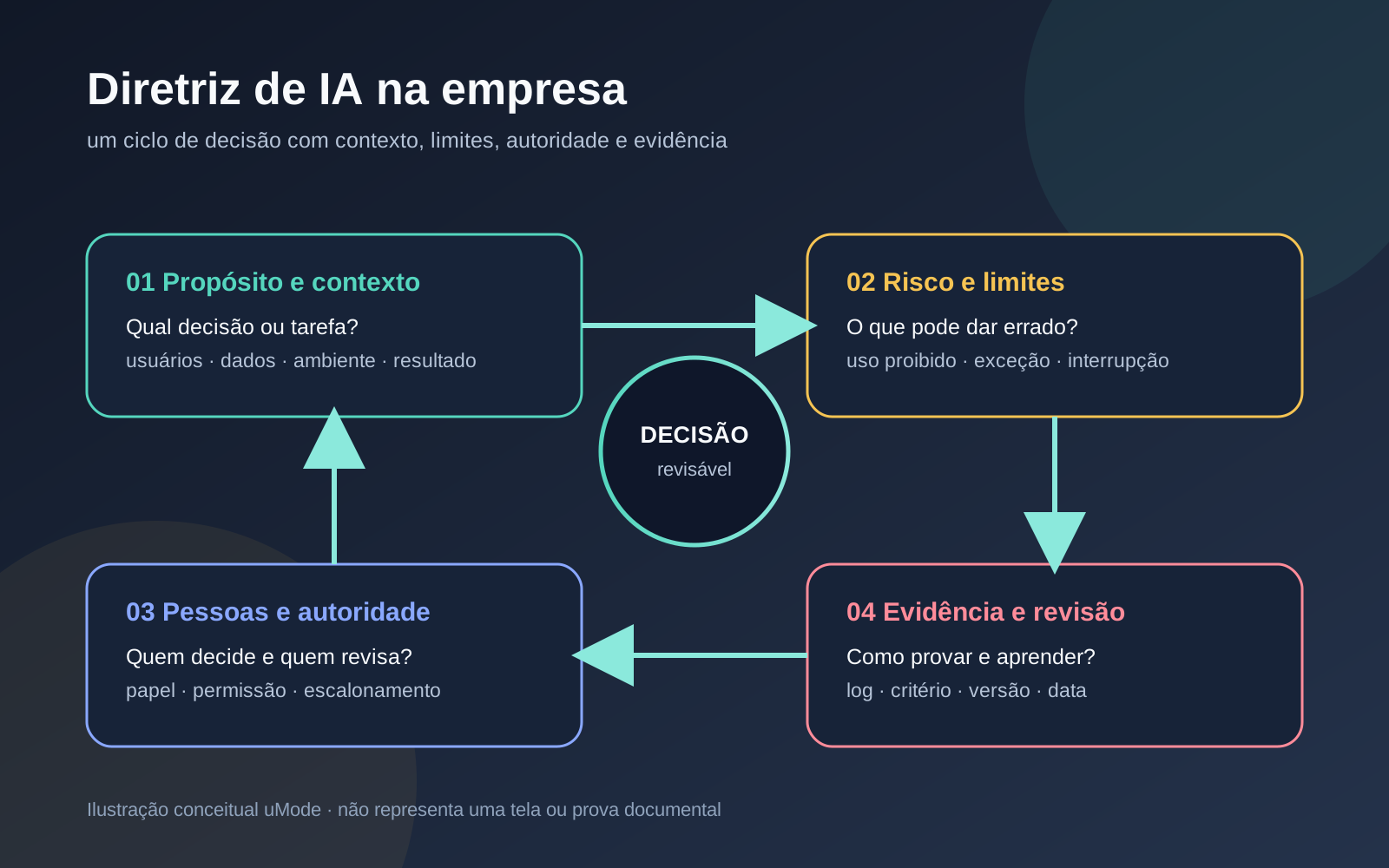
How to define an AI guideline for a company
How to define an AI guideline for a company. Defining an AI guideline for a company means turning a broad intention into operating rules for a bounded use: purpose, context, risk, authority, evidence, and review. In a fashion company, the guideline follows an object such as a tech pack, sample, material, or order without confusing an automated recommendation with an authorised decision.
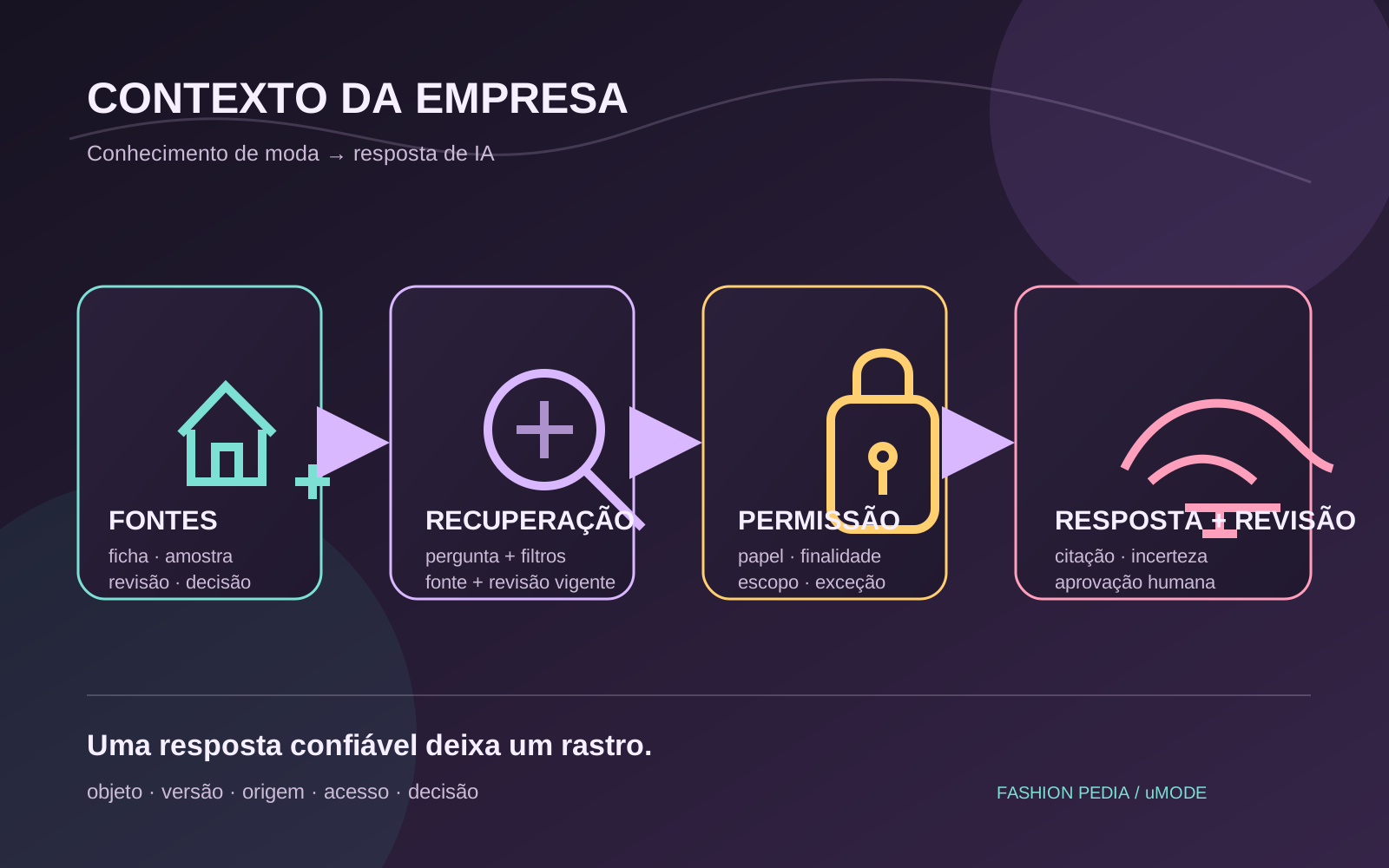
How to Give Company Context to AI
How to Give Company Context to AI. Giving company context to AI means turning scattered knowledge into retrievable information bounded by source, scope, freshness, and permission. The process combines a trusted knowledge base, relevant retrieval, clear instructions, and human evaluation—not simply a longer prompt.
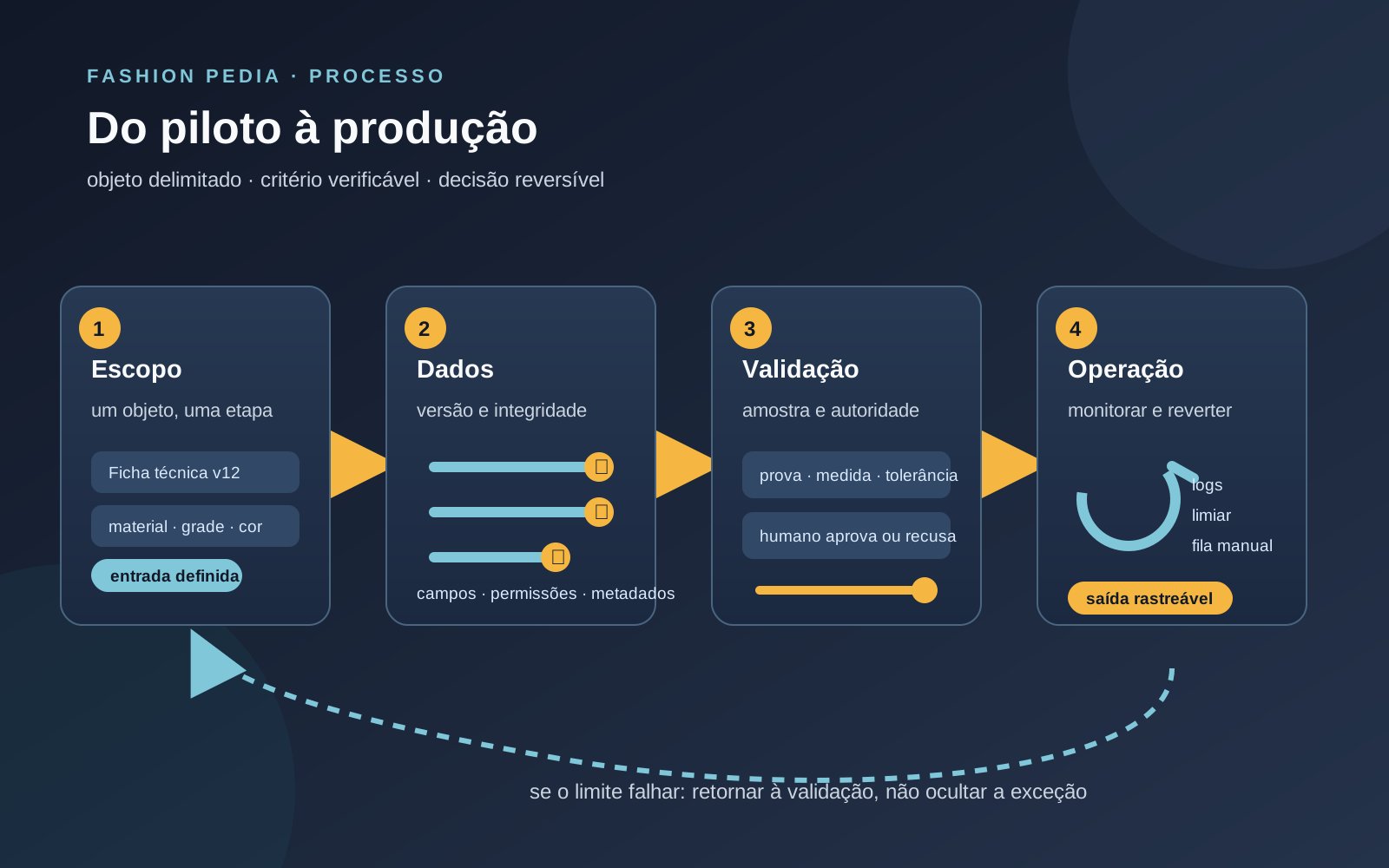
How to take an AI pilot to production
How to take an AI pilot to production means turning an experiment into a workflow controlled by an object, version, acceptance criterion, accountable owner and evidence. In fashion, the transition must connect the tech pack, sample, material, size range, supplier and order to quality and lead-time measures, while keeping a manual path when the system misses its defined limit.
How to structure fashion data governance
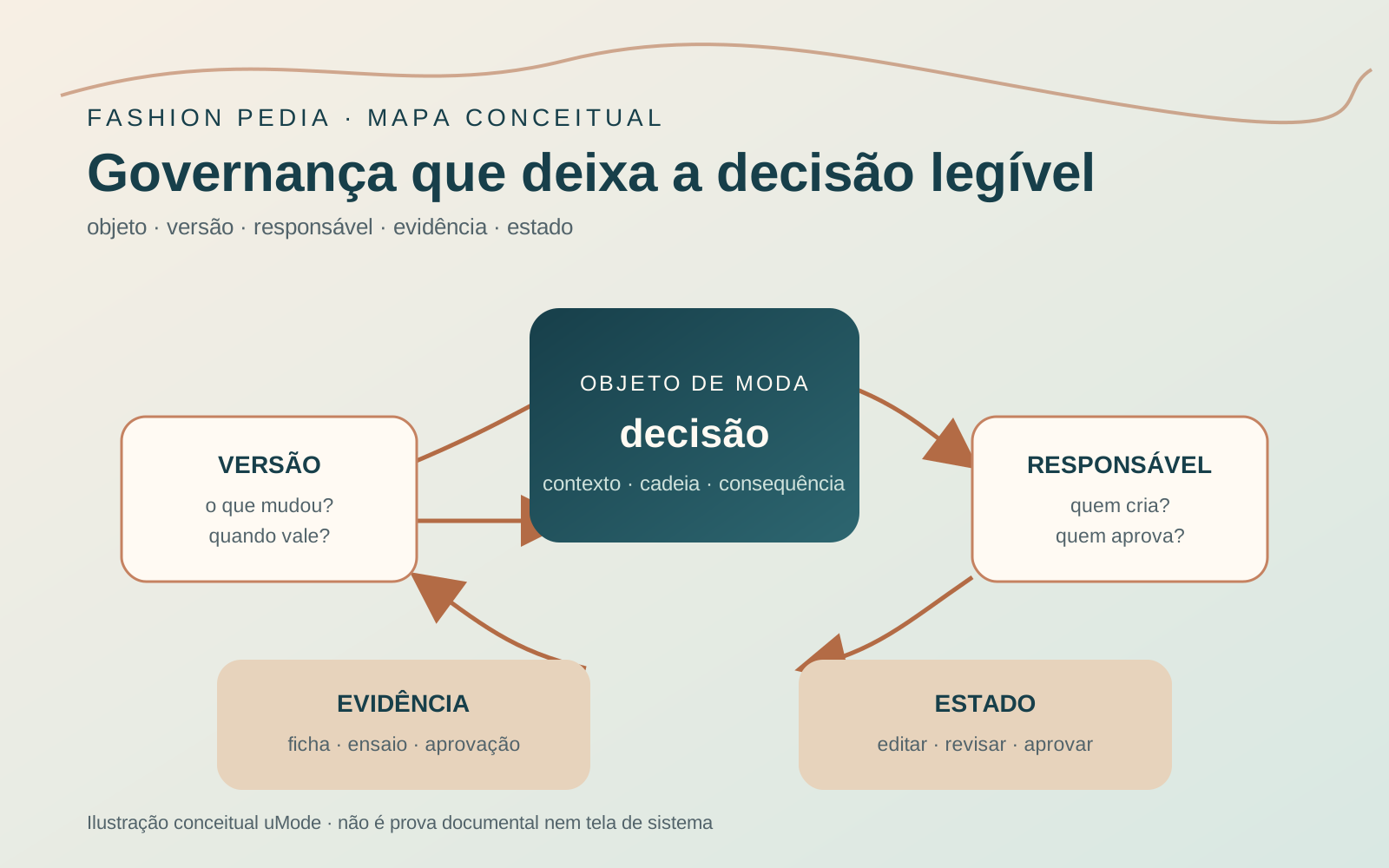
How to structure fashion data governance. Fashion data governance organizes objects, meanings, owners, versions, permissions and evidence around product and supply-chain decisions. A useful structure starts with a critical workflow, states what must be known at each step, and connects a decision to the record that lets another person verify it.
How to control tech pack versions
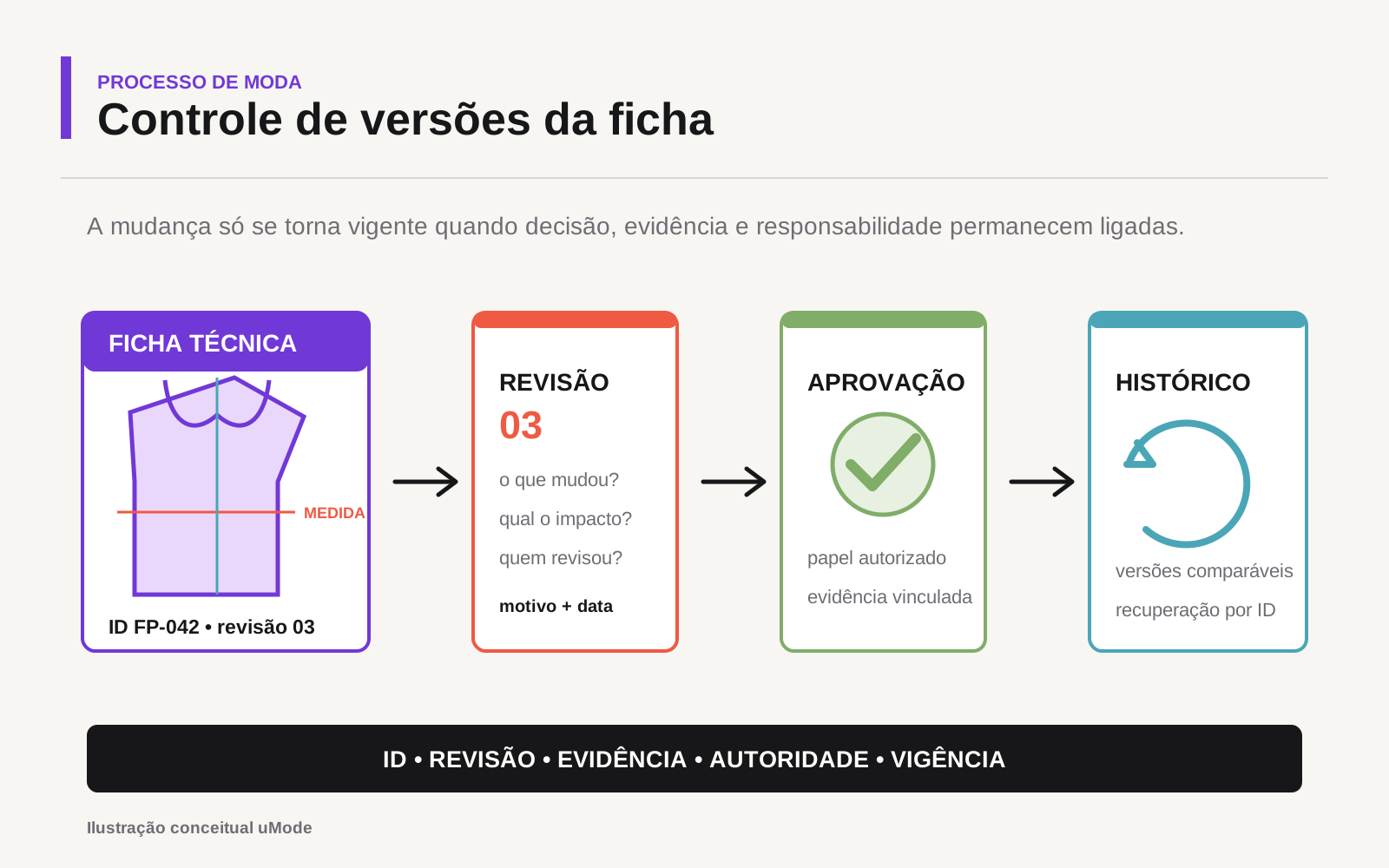
How to control tech pack versions. Controlling tech pack versions means recording every product change with an identifier, owner, reason, status, approval and effective date. The method applies configuration-control and product-lifecycle principles to the concrete decisions of an apparel supply chain.

Fashion product technical specification
A technical specification is the controlled information set that translates an approved fashion product into verifiable sampling and manufacturing requirements. It brings together drawings, materials, measurements, construction, tolerances, identification, labelling, comments and revision history; its content varies by category, company, market and stage.
Team AI adoption
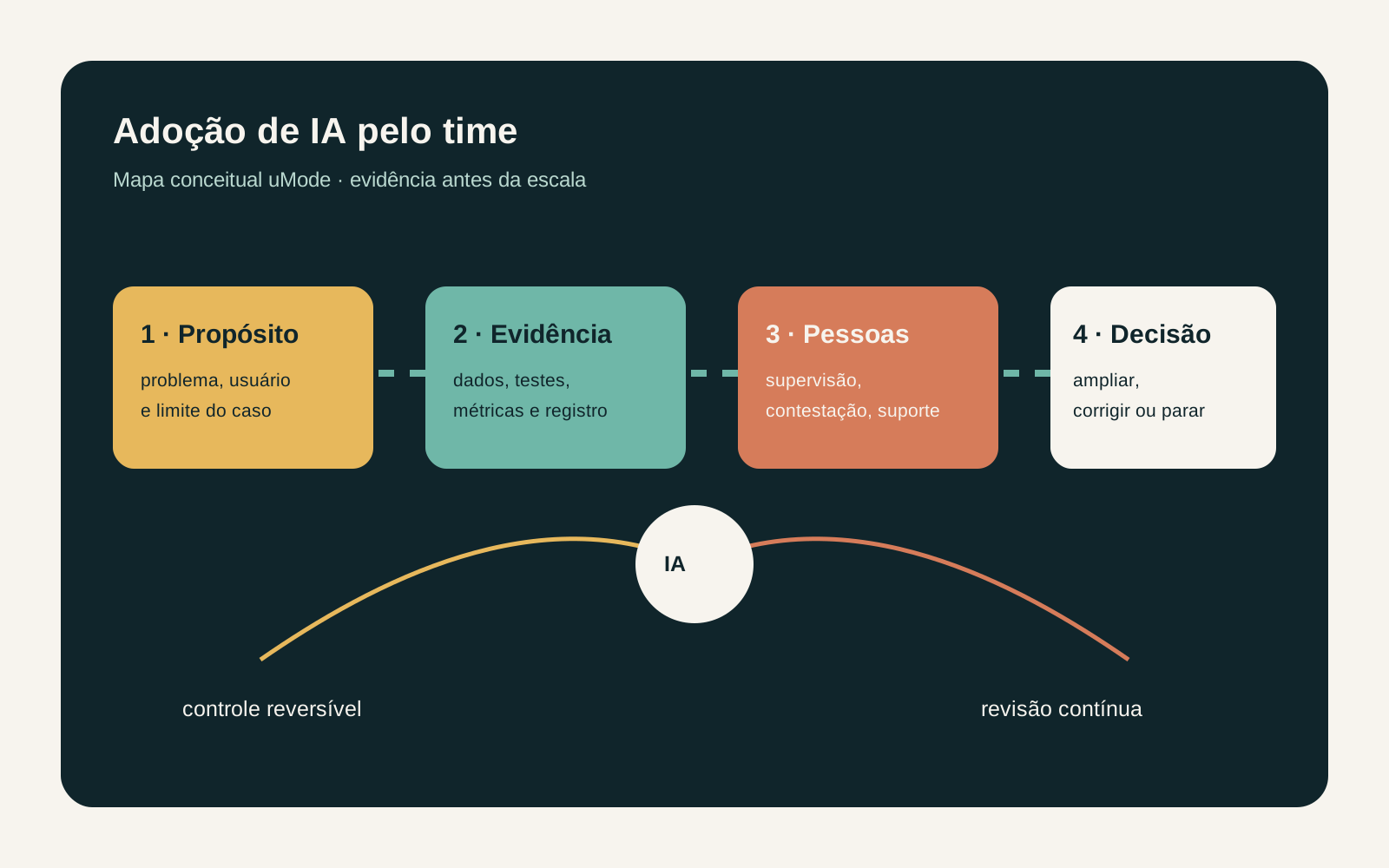
Team AI adoption turns curiosity into operating capability by defining tasks, usage boundaries, guided practice, quality measures, and practical ways to challenge outputs before a tool changes real decisions.
Sources
- https://www.nist.gov/itl/ai-risk-management-framework
- https://airc.nist.gov/airmf-resources/airmf/5-sec-core/
- https://digital-strategy.ec.europa.eu/en/policies/regulatory-framework-ai
- https://eur-lex.europa.eu/eli/reg/2024/1689/oj
- https://oecd.ai/en/ai-principles
- https://www.gov.uk/government/publications/ai-regulation-a-pro-innovation-approach/white-paper
Want to apply this to your operation?