How to define an AI guideline for a company
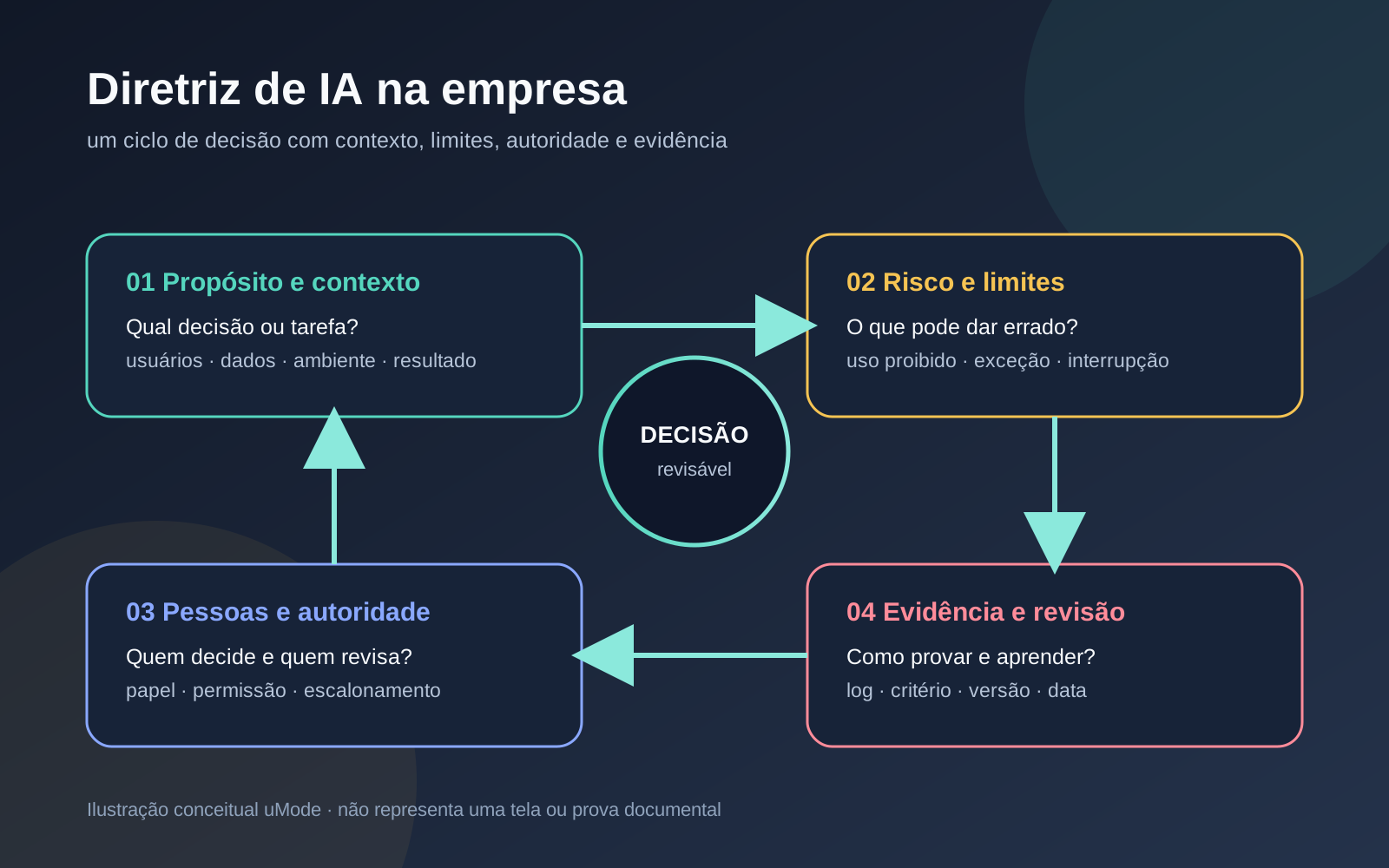
How to define an AI guideline for a company. Defining an AI guideline for a company means turning a broad intention into operating rules for a bounded use: purpose, context, risk, authority, evidence, and review. In a fashion company, the guideline follows an object such as a tech pack, sample, material, or order without confusing an automated recommendation with an authorised decision.
On this page
What is How to define an AI guideline for a company?
An AI guideline must turn an intended use into a verifiable boundary: what object enters, what outcome is expected, who may act, which decision remains human, and what evidence must remain. NIST's AI RMF is intended for voluntary use and seeks to incorporate trustworthiness considerations into the design, development, use, and evaluation of AI systems; use it as a structural reference, not as automatic permission for an application.
Start with one scope sentence: “in this workflow, AI may support X, using Y as its source, under Z's review.” In fashion, X might be organising fit comments, comparing versions of a tech pack, suggesting fields for a product record, or locating discrepancies between a sample and a specification. Do not make “use AI” the objective. Also record what is out of scope, which data may not enter, and which event stops the workflow.
How should risk, responsibility, and evidence be mapped?
The AI RMF Core organises risk management into govern, map, measure, and manage. NIST also advises that risk management should be continuous, timely, and performed throughout the AI system lifecycle, with diverse and multidisciplinary perspectives that may include actors outside the organisation. This supports a guideline that returns to design when data, supplier, model, channel, or purpose changes.
Apply the map to each stage of product development: input, transformation, output, owner, permission, and acceptance criterion. For a material suggestion, request the source and version consulted; for a sample classification, name the confirmer; for a supplier message, preserve review before sending. The minimum record should allow the decision to be reconstructed without relying on one person's memory.
The European Commission describes risk-based rules for AI developers and deployers regarding specific uses, with four levels: unacceptable, high, limited, and minimal or no risk. It also says that AI systems considered a clear threat to people's safety, livelihoods, and rights are banned by the AI Act. Treat these levels as a triage question, not as universal legal classification: territorial scope, the specific use, and applicable interpretation must be assessed separately.
How should the guideline fit a fashion value chain?
Adaptation to fashion starts with the object that moves through the process. In an AI production pilot, separate brief, design, material, supplier, sample, order, and channel; do not treat them as one data object. Define the source of truth, update frequency, approving person, and correction method for an invalid version. The guideline should say when a recommendation returns to agent governance, when escalation is required, and when execution is not allowed.
For personal data or decisions that affect people, include a data-protection check. The ICO offers guidance suitable for public, private, and third-sector businesses, a detailed overview of applying UK GDPR principles to information used in AI systems, and a practical risk-assessment aid for considering effects on individual rights and freedoms. These references do not replace analysis of the law applicable to a case, but they help turn “privacy” into questions about purpose, access, retention, explanation, and challenge.
Close the guideline with a short test: is the use case described? Is authority named? Is the source traceable? Does the output have an acceptance criterion? Is there a route for error, challenge, and interruption? Record version, date, owner, result, and exception. Measure what the team actually needs to observe — rework, data failures, waiting time, or review quality — without claiming improvement before comparing the same scope. Link the document to company AI context and team AI adoption so the rule follows the work rather than only the tool.
Verified facts
- NIST frames the AI RMF as a voluntary framework for bringing trustworthiness considerations into AI product, service, and system design, development, use, and evaluation.
Source: nist.gov ↗ - The AI RMF Core is composed of the functions govern, map, measure, and manage, which organise outcomes and actions for managing AI risks.
Source: airc.nist.gov ↗ - NIST advises that risk management should be continuous, timely, and performed throughout the dimensions of the AI system lifecycle.
Source: airc.nist.gov ↗ - NIST recommends that AI RMF functions reflect diverse and multidisciplinary perspectives, potentially including the views of AI actors outside the organisation.
Source: airc.nist.gov ↗ - The European Commission presents the EU AI Act as the first comprehensive legal framework on AI and says that it addresses the risks of AI systems.
Source: digital-strategy.ec.europa.eu ↗ - The EU AI Act sets out risk-based rules for AI developers and deployers regarding specific uses of AI.
Source: digital-strategy.ec.europa.eu ↗ - The European Commission describes four risk levels for AI systems in the AI Act approach: unacceptable risk, high risk, limited risk, and minimal or no risk.
Source: digital-strategy.ec.europa.eu ↗ - The European Commission says that AI systems considered a clear threat to people's safety, livelihoods, and rights are banned by the AI Act.
Source: digital-strategy.ec.europa.eu ↗ - The Information Commissioner's Office guidance on AI is suitable for businesses in the public, private, and third sectors.
Source: ico.org.uk ↗ - The ICO provides a detailed overview of how to apply UK GDPR principles to information used in AI systems.
Source: ico.org.uk ↗ - The ICO's AI and data-protection resources include a practical risk-assessment aid for organisations considering effects on individual rights and freedoms.
Source: ico.org.uk ↗
Related entries
How to govern AI agents in a company
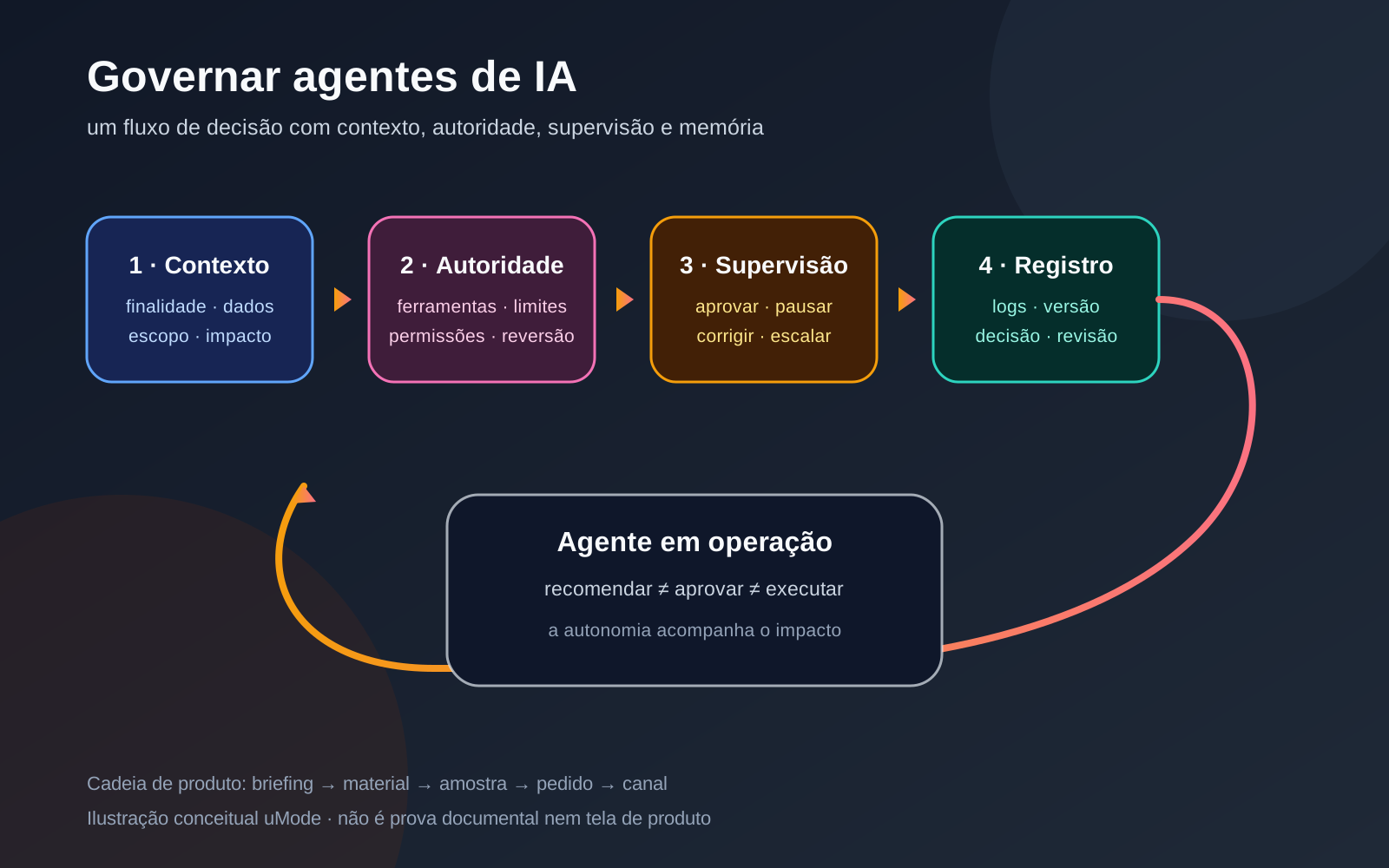
How to govern AI agents in a company. In a company, governing AI agents means defining purpose, context, authority, data, supervision and records before a system is allowed to recommend or execute actions. The process combines continuous risk management with autonomy levels proportional to impact, without treating a framework as automatic permission.
How to Give Company Context to AI
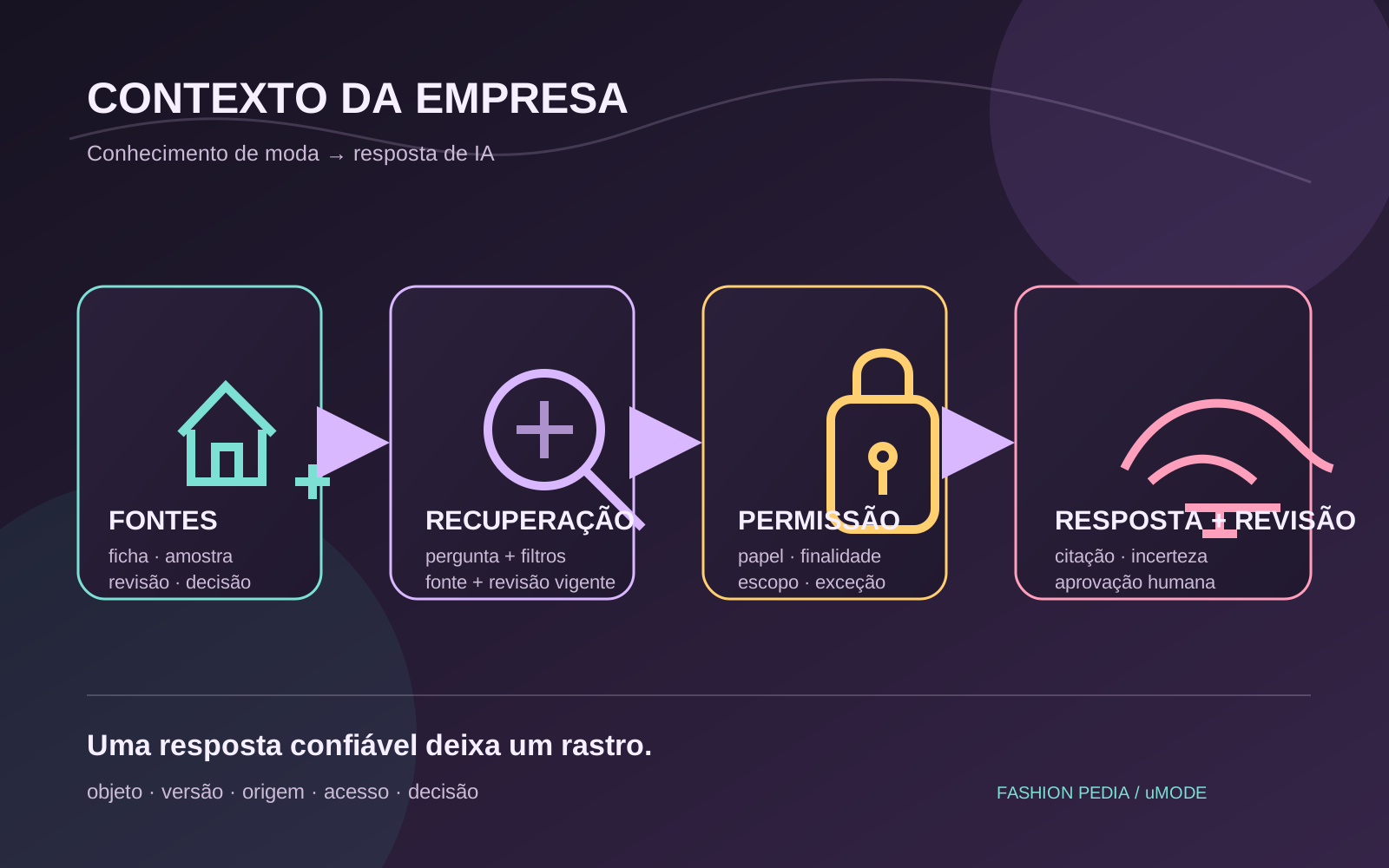
How to Give Company Context to AI. Giving company context to AI means turning scattered knowledge into retrievable information bounded by source, scope, freshness, and permission. The process combines a trusted knowledge base, relevant retrieval, clear instructions, and human evaluation—not simply a longer prompt.
How to take an AI pilot to production
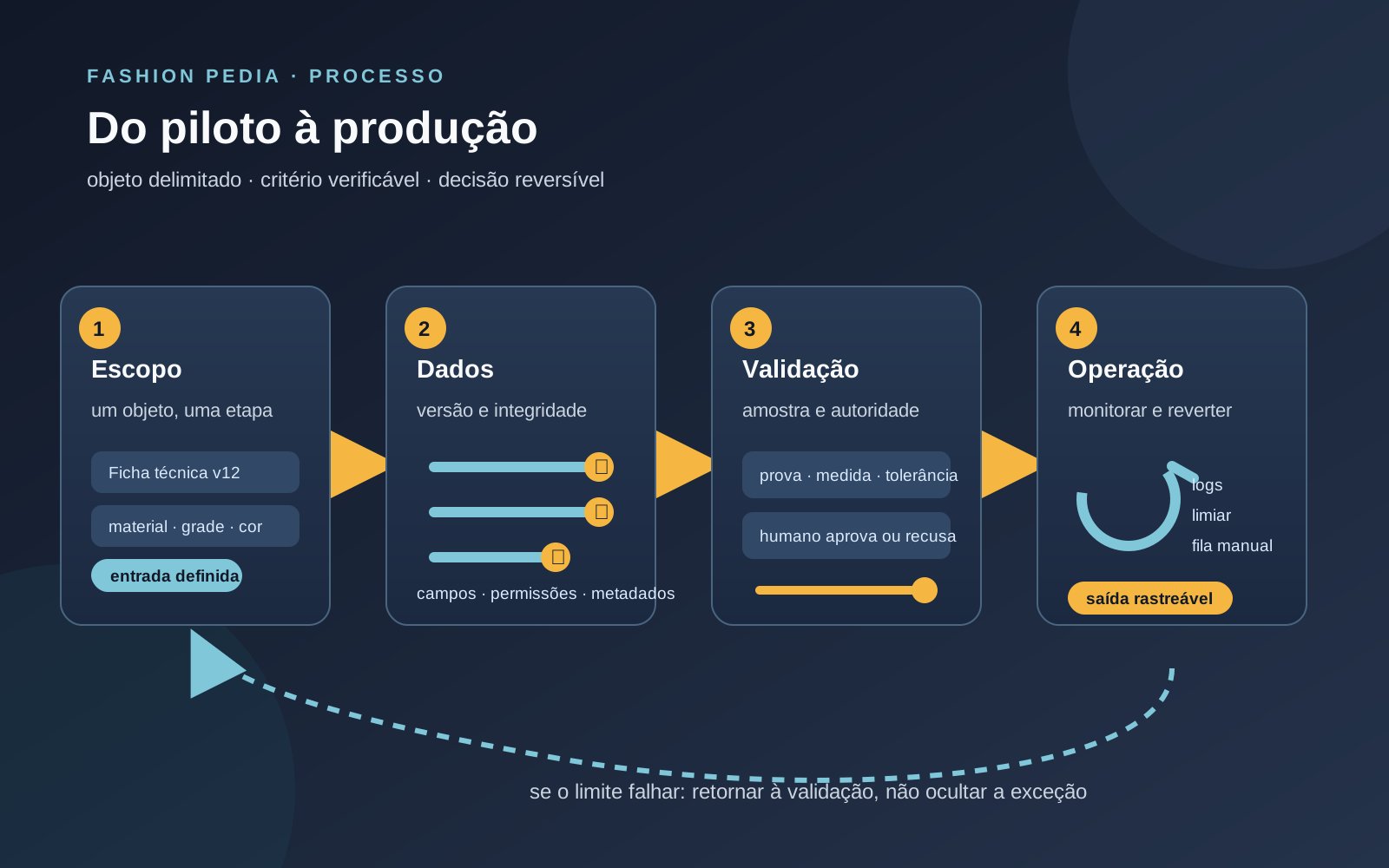
How to take an AI pilot to production means turning an experiment into a workflow controlled by an object, version, acceptance criterion, accountable owner and evidence. In fashion, the transition must connect the tech pack, sample, material, size range, supplier and order to quality and lead-time measures, while keeping a manual path when the system misses its defined limit.
Team AI adoption
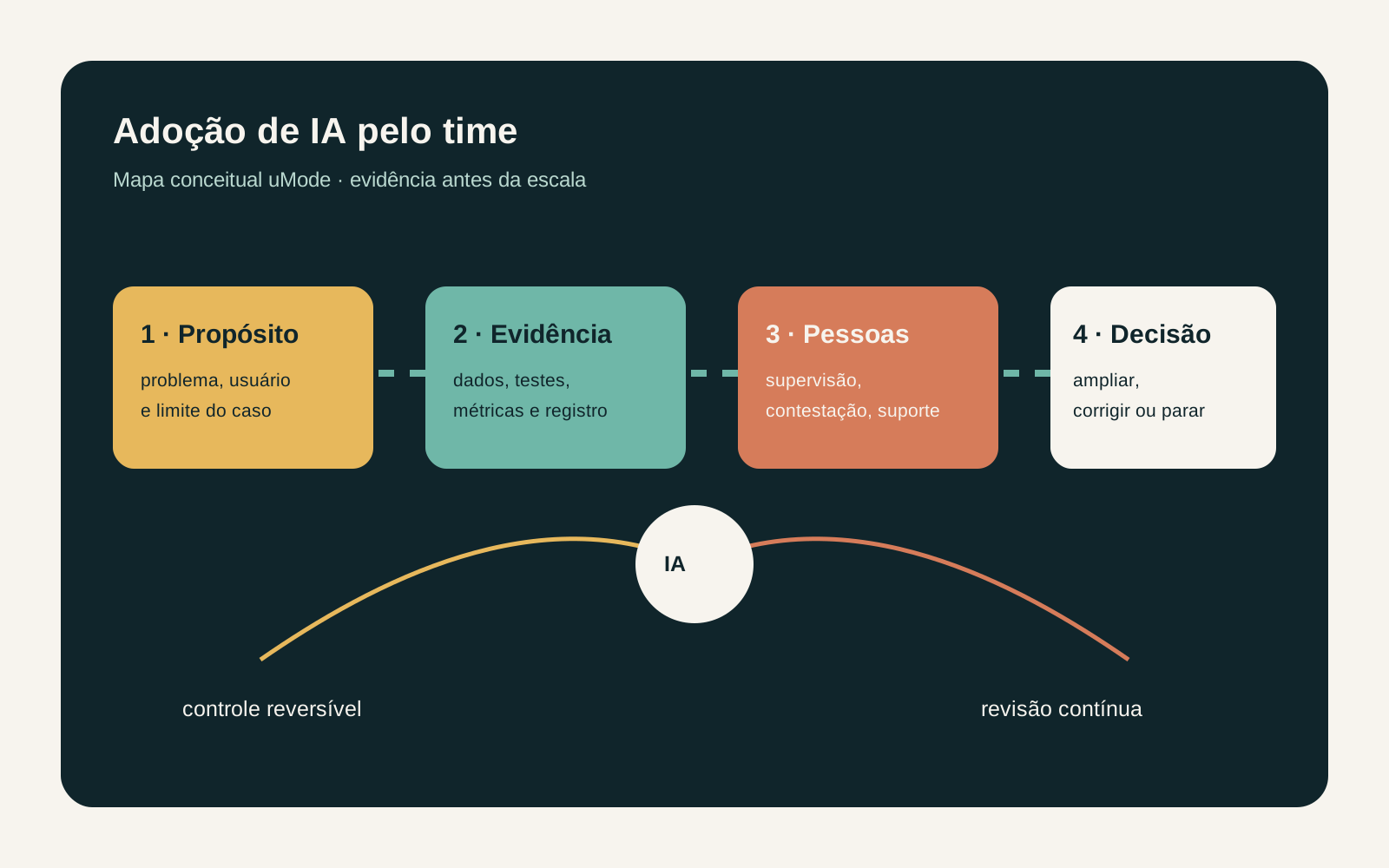
Team AI adoption turns curiosity into operating capability by defining tasks, usage boundaries, guided practice, quality measures, and practical ways to challenge outputs before a tool changes real decisions.

Fashion product technical specification
A technical specification is the controlled information set that translates an approved fashion product into verifiable sampling and manufacturing requirements. It brings together drawings, materials, measurements, construction, tolerances, identification, labelling, comments and revision history; its content varies by category, company, market and stage.
Fashion product development
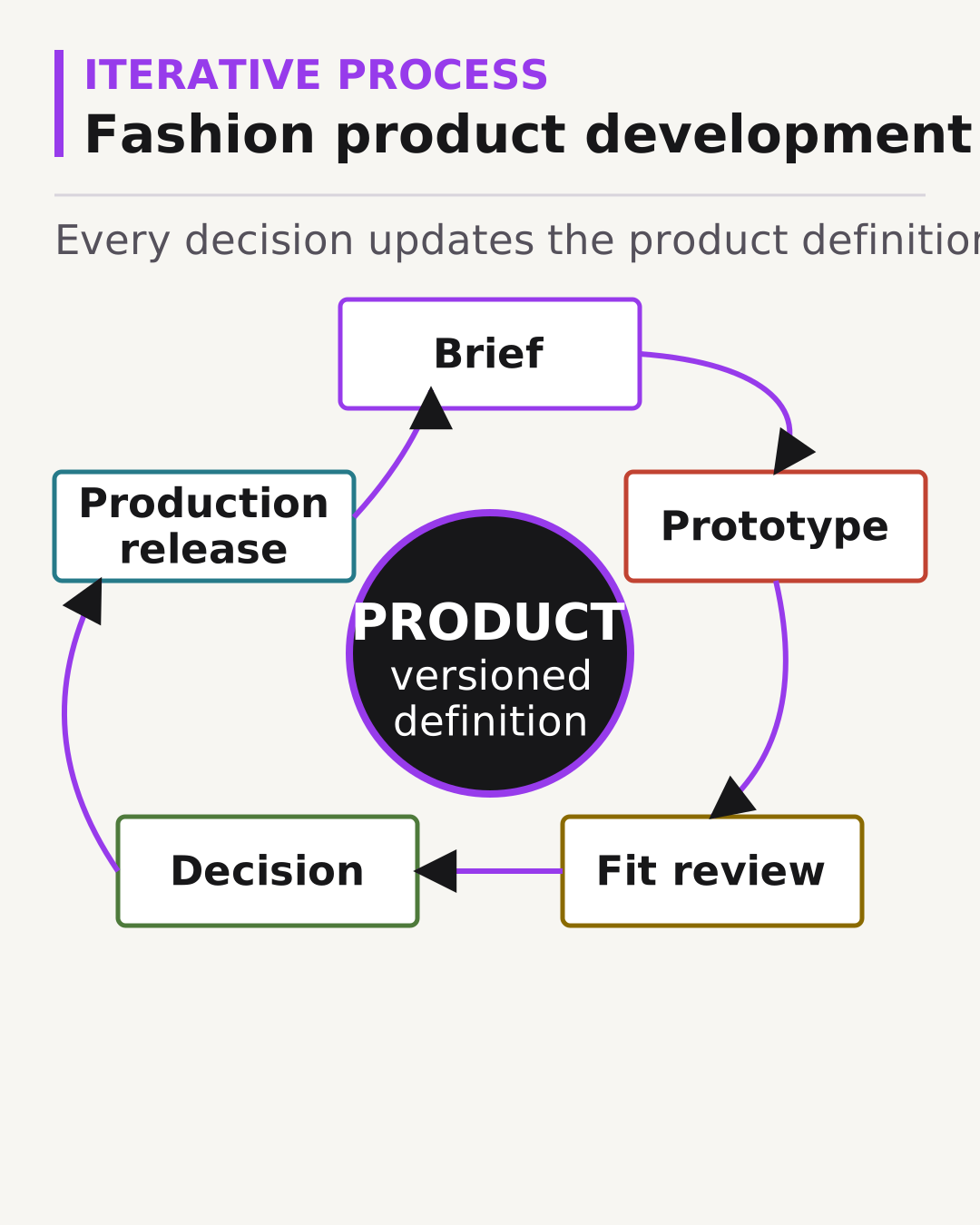
Fashion product development is the process that turns an opportunity or brief into a product specified and approved for manufacturing. It coordinates concept, assortment, materials, patternmaking, samples, fit, cost, quality, compliance and timing through decision cycles rather than an isolated creative sequence.
Sources
Want to apply this to your operation?