How to Give Company Context to AI
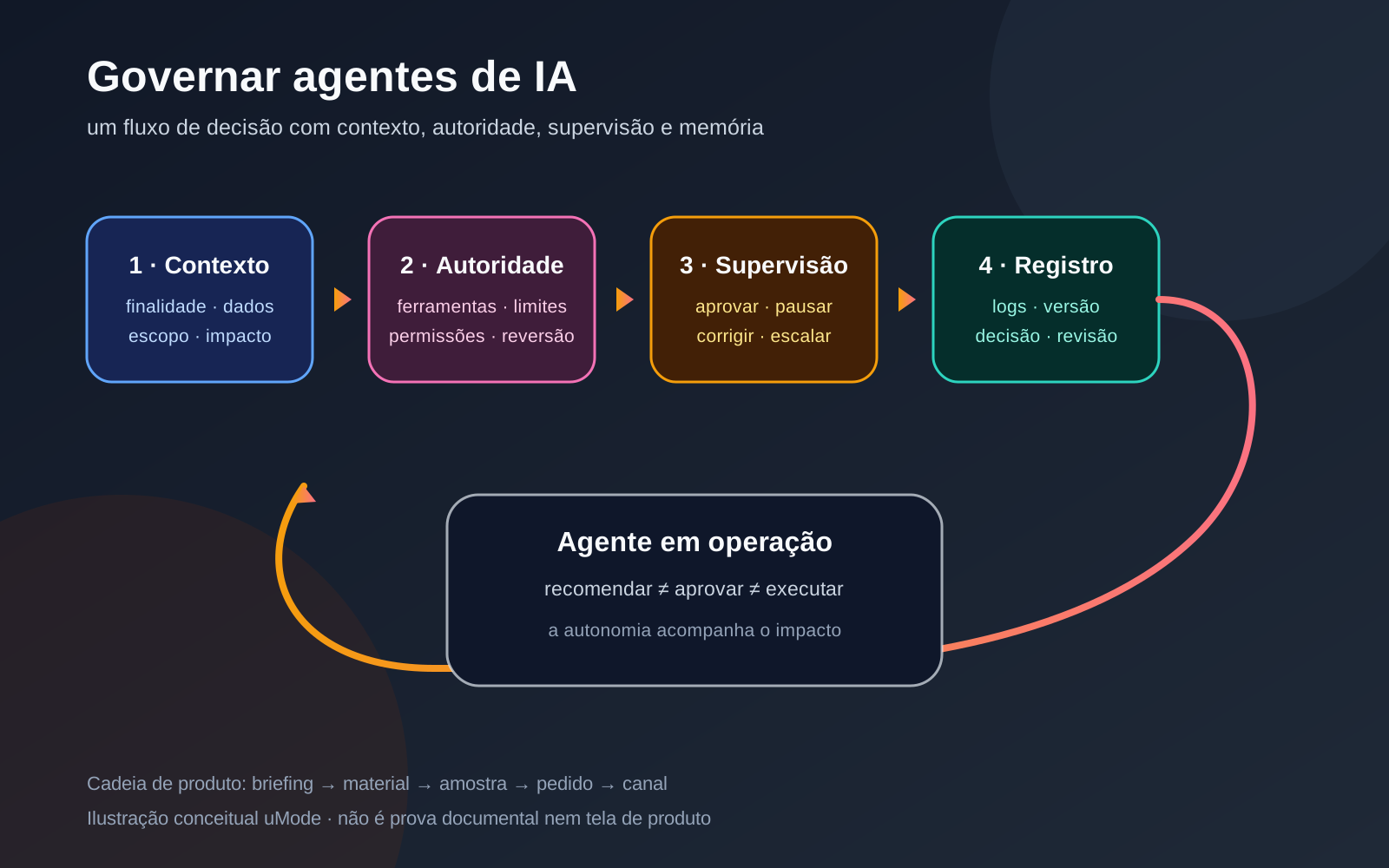
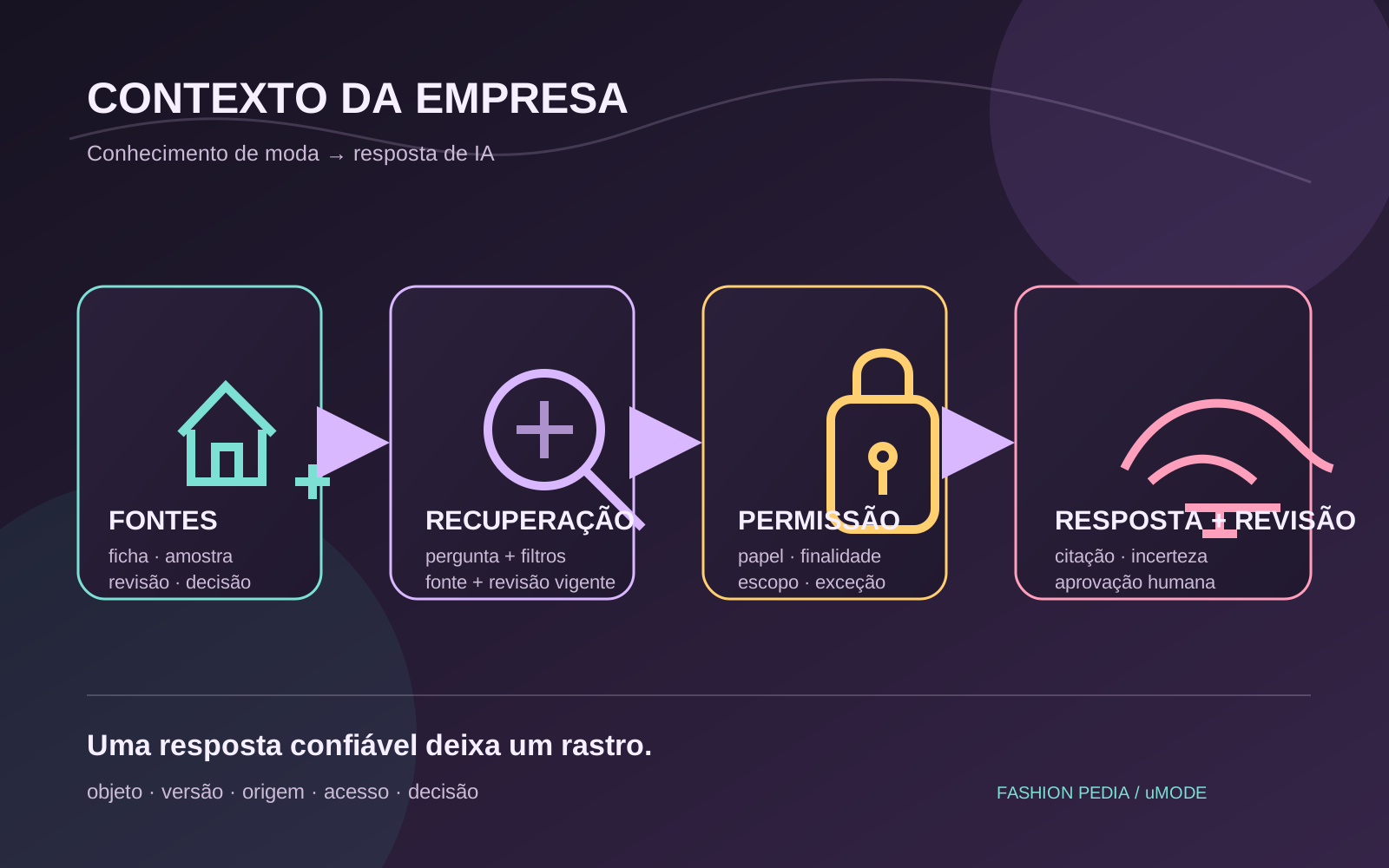
How to Give Company Context to AI. Giving company context to AI means turning scattered knowledge into retrievable information bounded by source, scope, freshness, and permission. The process combines a trusted knowledge base, relevant retrieval, clear instructions, and human evaluation—not simply a longer prompt.
On this page
What is How to Give Company Context to AI?
Giving company context to AI means organizing the knowledge needed for a decision into a traceable sequence: question, object, source, scope, permission, and response rule. In fashion, that means linking a conversation to the style, collection, tech pack, current revision, and role of the person asking. A prompt can direct the task; it cannot replace the record that supports the answer.
Start with a small, critical workflow. Choose one flow—such as comparing a sample with approved requirements—and name the documents that can answer the question. Separate the official reference from a draft, copy, or opinion. Record the owner, update date, status, and revision identifier. This connects institutional knowledge preservation to daily work without turning every company file into automatic context.
How should context be prepared before retrieval?
Prepare context through objects and relationships, not through an undifferentiated folder. A style should point to its collection, materials, measurements, supplier, samples, and decisions; a tech pack should point to the revision and approval that made it valid. For each field, write down its meaning, unit, format, owner, and validity condition. Fashion data governance helps establish who may create, review, approve, consult, and archive.
Retrieval should search only the set authorized for the question. Filter by brand, category, season, country, stage, and status before requesting an answer; then show the origin of the retrieved passages. If the question is “which measurement was approved?”, the system must distinguish a proof measurement, a tolerance, and a suggested adjustment. If no current source exists, the correct instruction is to state the gap and route it for review—not to fill it with the closest-looking revision.
This follows the RAG pattern: search queries external data and generation receives the retrieved information as context. Usefulness depends on the relevance of the knowledge base, not on the number of documents. A traceability policy should preserve the link between answer, document, revision, and approval event.
How should permissions and answers be evaluated?
Give AI only the context compatible with the purpose and the user's role. Product development may consult specifications for one line; a supplier may receive only the data needed for its order; a cost record may require another authorization. Test permission with real questions, including cases where a private document might otherwise appear in results. Version control and fashion data security make this boundary visible.
Evaluate the answer with a rubric before expanding the workflow. Check whether AI used the correct revision, separated fact from suggestion, cited the source, respected scope, and signaled uncertainty when evidence was missing. Test questions that mix color names, materials, measurements, and suppliers; this exposes ambiguity that can join different objects. NIST's Govern, Map, Measure, and Manage functions are a useful governance frame, but the company still has to translate them into owners and controls for its own process.
In practice, track document coverage with an owner, source age, citation rate, revision conflicts, unanswered queries, and human corrections. Read answer samples; a retrieval metric does not prove that an answer is appropriate for fit, construction, or quality requirements. When AI suggests a change, the final decision remains tied to the approval defined in collection management and the records of the fashion PLM.
How can a fashion team apply the process?
Begin with a high-friction, low-risk question: locate the current requirement for a garment, explain its origin, and identify what is still missing. Catalog the objects, remove known duplicates, define the access filter, build a test-question set, and ask product, patternmaking, quality, and sourcing to review it. Only then connect additional stages such as tech packs, traceability, and supplier follow-up.
Enterprise context becomes dependable when every answer can be reconstructed. The reader should be able to see which document entered, which revision was considered, why that source was permitted, and who confirmed the decision. If the flow cannot answer those questions, expanding the context window only makes the error harder to locate.
Verified facts
- NIST's AI RMF is a voluntary framework intended to help manage artificial-intelligence risks and incorporate trustworthiness considerations into the design, development, use, and evaluation of AI systems.
Source: nist.gov ↗ - NIST's Playbook organizes suggested actions into four functions: Govern, Map, Measure, and Manage.
Source: nist.gov ↗ - RAG combines traditional information-retrieval systems, such as search and databases, with generative large language models.
Source: cloud.google.com ↗ - In RAG, retrieval queries external data such as web pages, knowledge bases, and databases, then preprocesses relevant information.
Source: cloud.google.com ↗ - Grounded generation incorporates retrieved information into the language model, expanding its context so it can produce more precise and informative responses.
Source: cloud.google.com ↗ - Google Cloud states that a curated knowledge base and relevant semantic search are needed for retrieval to match the input query or context.
Source: cloud.google.com ↗ - According to Google Cloud, irrelevant retrieved information can produce generation that is grounded but off-topic or incorrect.
Source: cloud.google.com ↗ - RAG can be integrated into language-model applications or agents that need access to fresh, private, or specialized data.
Source: cloud.google.com ↗ - AWS describes RAG as a process in which a language model refers to a trusted knowledge base outside its training data before generating an answer.
Source: aws.amazon.com ↗ - AWS states that RAG can adapt a model to specific domains or an organization's internal knowledge without retraining the model.
Source: aws.amazon.com ↗
Related entries
How to structure fashion data governance
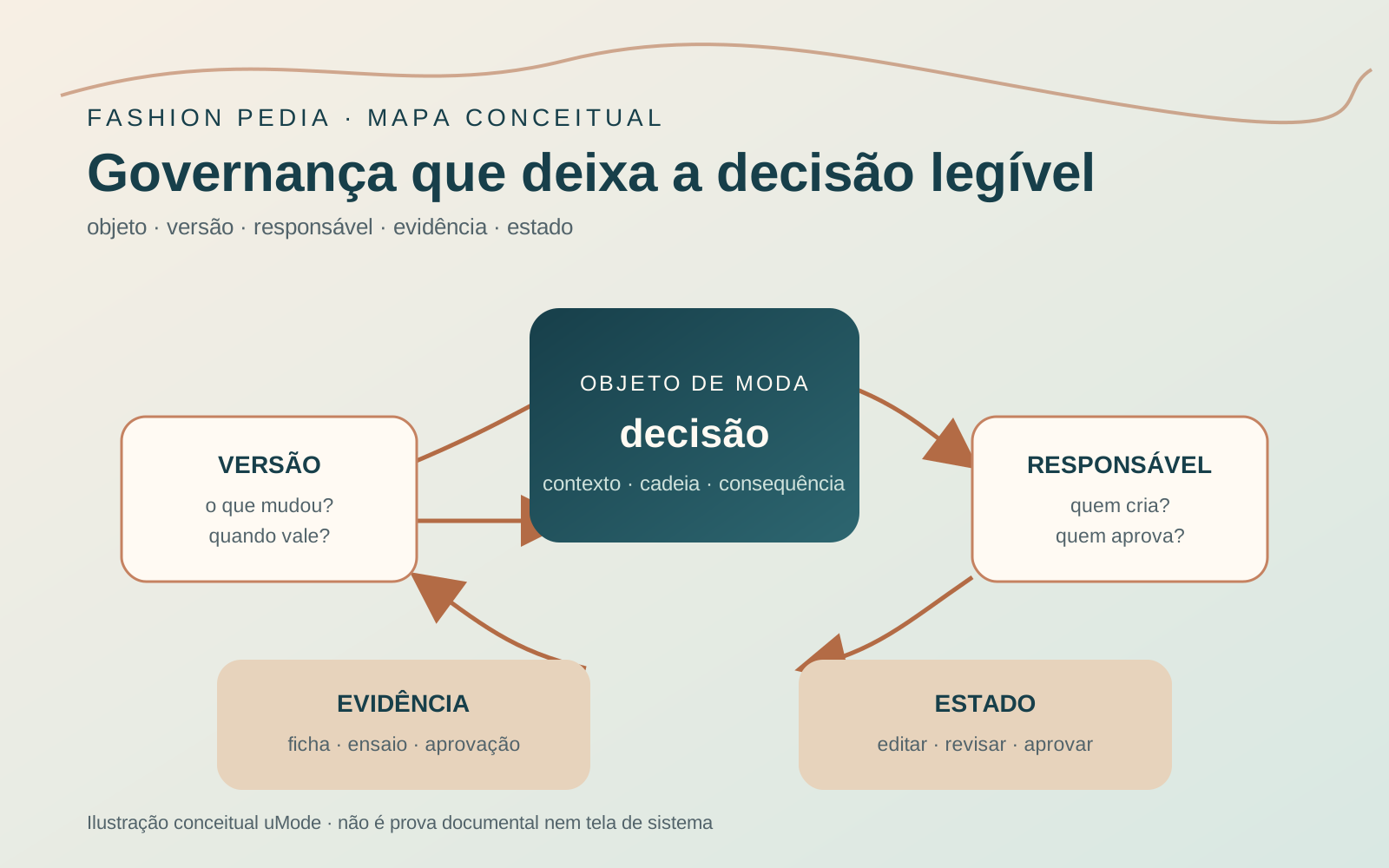
How to structure fashion data governance. Fashion data governance organizes objects, meanings, owners, versions, permissions and evidence around product and supply-chain decisions. A useful structure starts with a critical workflow, states what must be known at each step, and connects a decision to the record that lets another person verify it.
How to preserve institutional knowledge
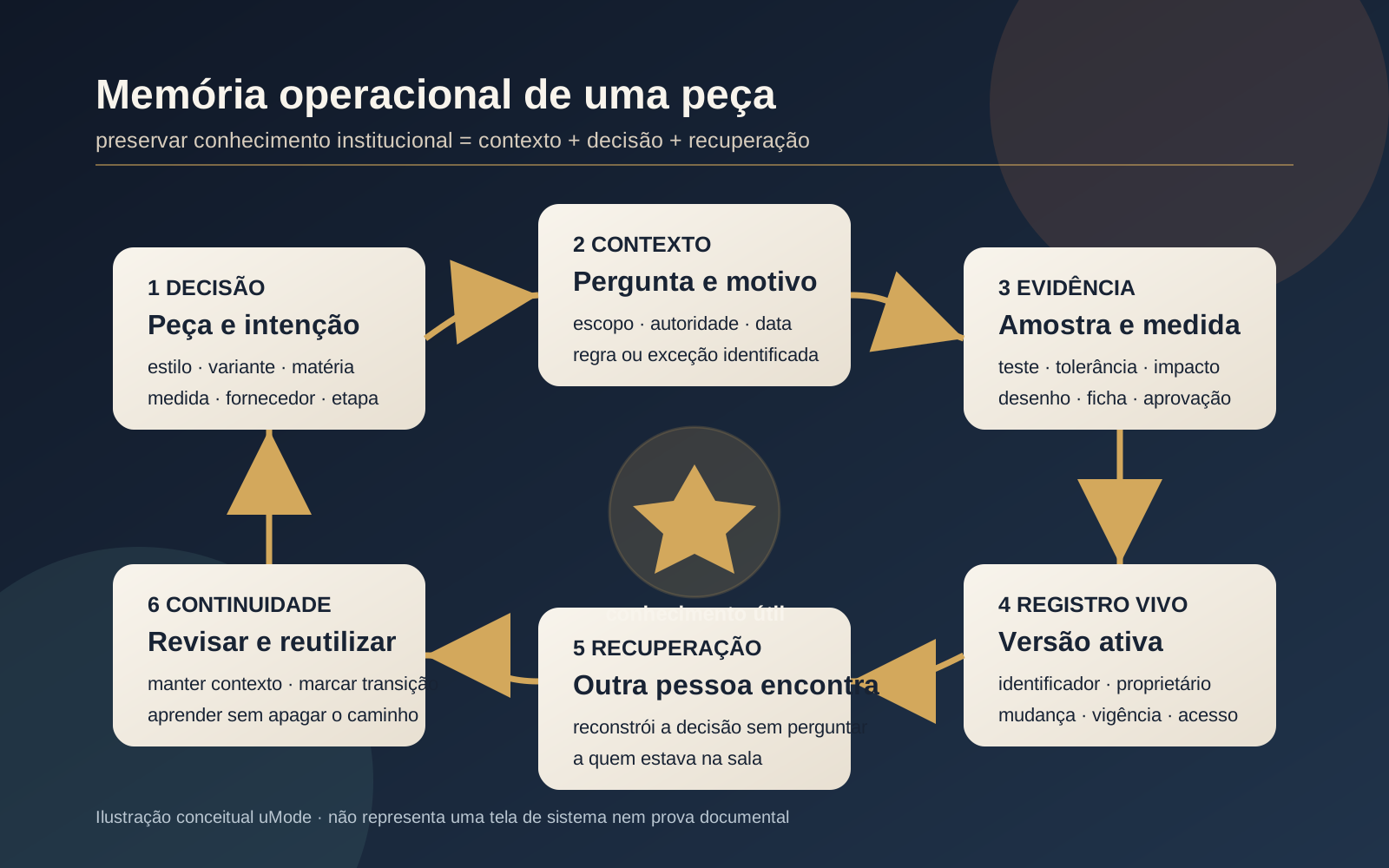
How to preserve institutional knowledge in fashion: turn product decisions, criteria, and exceptions into contextual, versioned, retrievable records. The process starts by defining the object, linking each record to its origin and authority, and ends with a real retrieval test performed by someone else.

Fashion PLM: data, product, and lifecycle
Fashion PLM is the structured management of the data, decisions, and workflows that follow a product and a collection from concept through post-launch. It connects tech packs, materials, costs, samples, approvals, suppliers, and versions so that every function works from a traceable product definition.

Fashion product technical specification
A technical specification is the controlled information set that translates an approved fashion product into verifiable sampling and manufacturing requirements. It brings together drawings, materials, measurements, construction, tolerances, identification, labelling, comments and revision history; its content varies by category, company, market and stage.
Traceability in the fashion supply chain
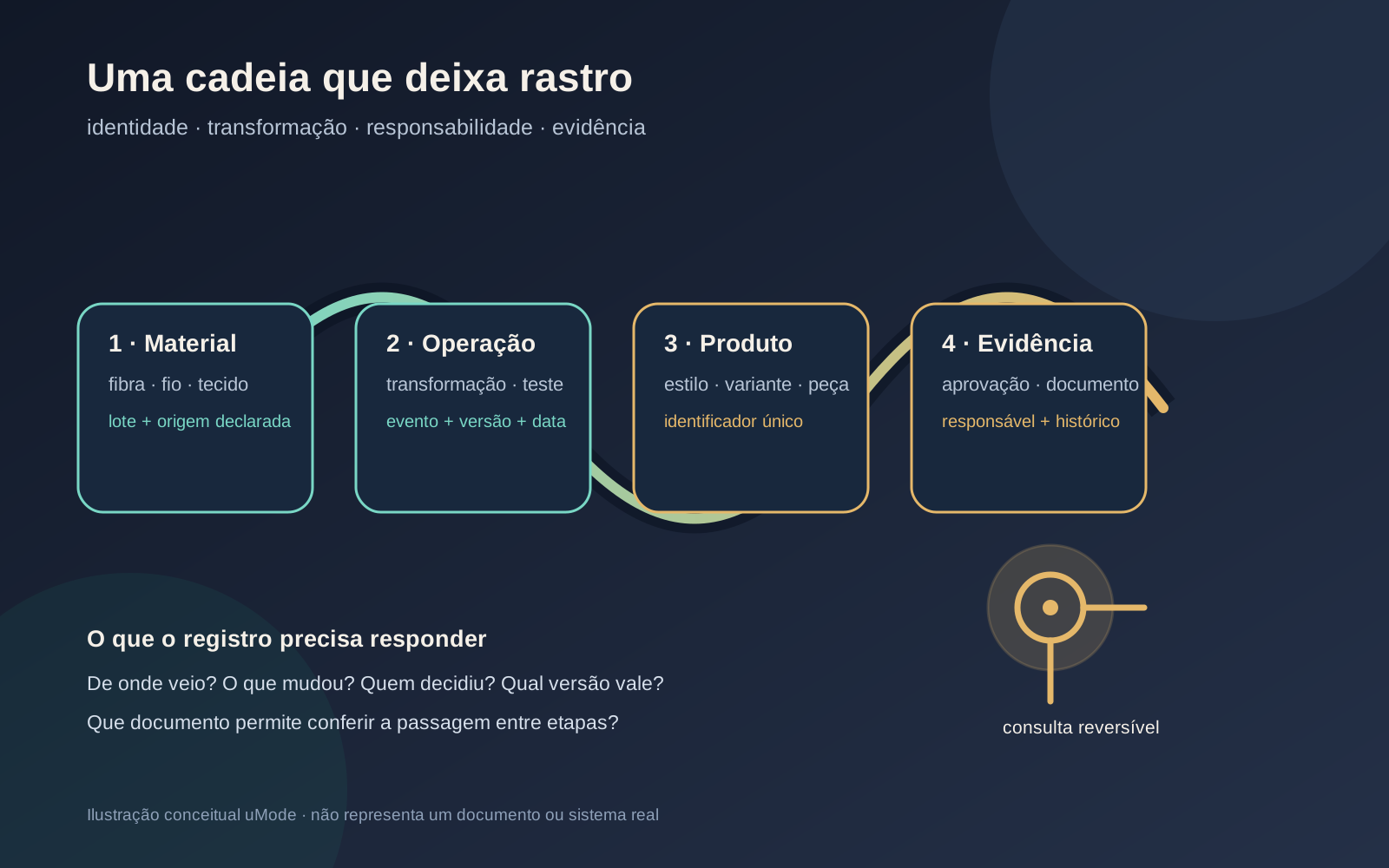
Traceability in the fashion supply chain. Fashion supply-chain traceability is the process of linking a product, material or component to the entities, activities, responsible parties and records that explain its transformation and movement. In practice, it combines identifiers, events, relationships and evidence so a product history can be checked.
Sources
Want to apply this to your operation?