Store clustering in fashion retail
Store clustering in fashion retail. Store clustering is the process of grouping points of sale around relevant patterns in location, customer behavior, assortment, or operations so retail decisions can be made with more context. In fashion, it helps distinguish store needs without assuming that every unit should receive the same mix or inventory.
On this page
What is Store clustering in fashion retail?
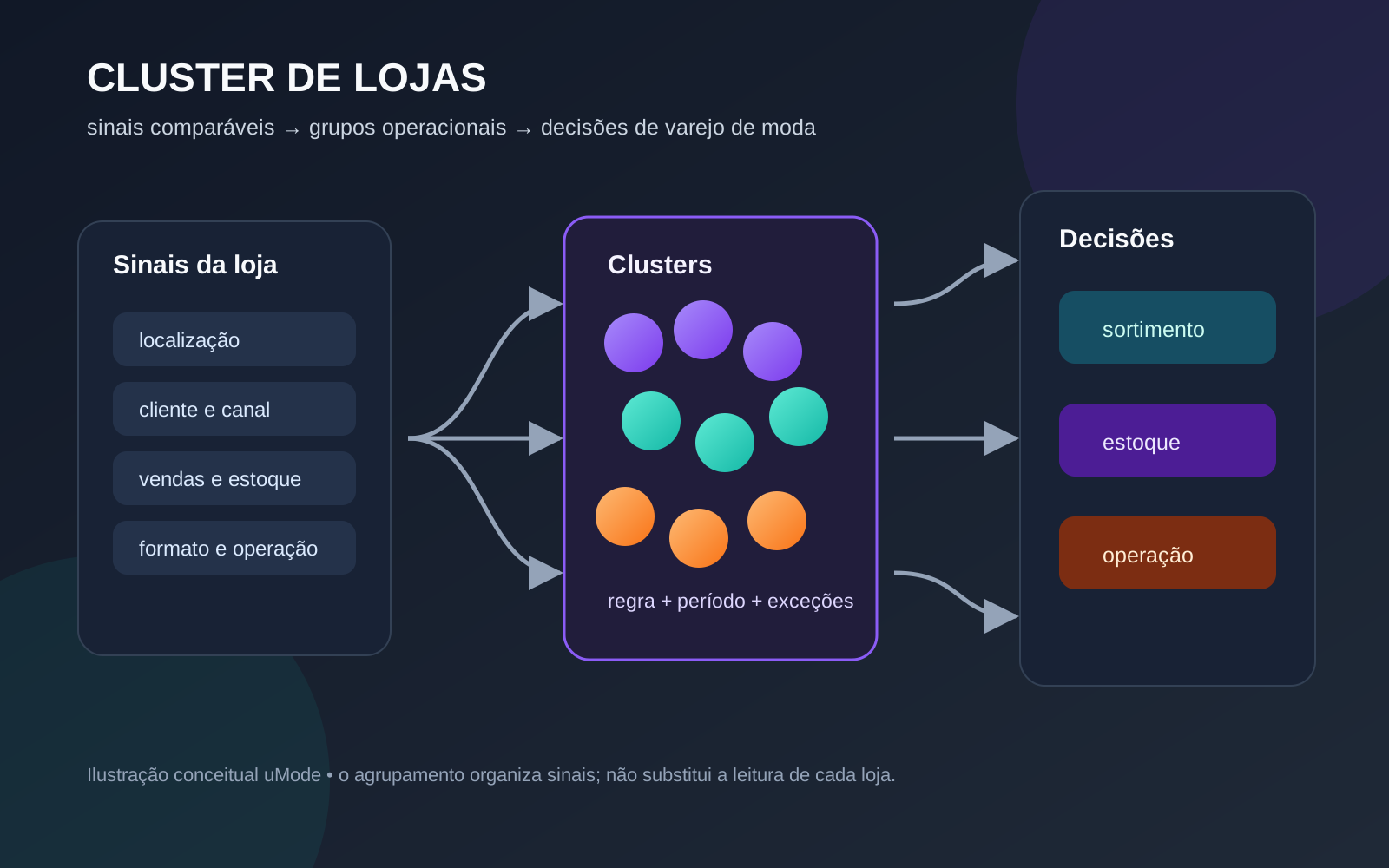
Store clustering is a way to organize points of sale around patterns that support a specific decision. The point is not to claim that stores are identical, but to make units with a shared assortment, inventory, service, or expansion need comparable. A useful fashion-retail view combines four axes: location, customer profile, buying behavior, and operating capacity. The concept connects to demand planning, initial allocation, and collection management.
Location deserves explicit attention because retail is described as a location-driven business. Location analytics can support decisions about where to grow, customer behavior, inventory, and supply-chain networks. For fashion, the same source describes geographic data being used to spot trends in key markets, visualize supply chains, and inform assortments for local customers. This does not turn spatial correlation into causal explanation: a cluster organizes signals for a decision; it does not by itself explain why one store sells more.
How can a fashion retailer build the grouping?
Start with the decision: define a local assortment, adjust size range and depth, plan inventory, guide replenishment, or compare expansion opportunities. Then state the unit of analysis, the time window, and the data that can be compared. A working matrix may bring together store, region, channel, categories, price bands, sizes, sales, inventory, returns, traffic, and service variables; the company must define each measure and its window before grouping.
Oracle describes assortment planning as defining local assortments and using clustering and size-profile optimization to create the merchandise mix. That framing is particularly useful for fashion because it connects grouping to products and size architecture rather than treating a cluster as a geographic label alone. The principle also connects with assortment planning and inventory replenishment: the group suggests a decision rule, while a store-level exception must remain visible.
Separate retrospective, explanatory, and recommendation work when evaluating an update. Descriptive analytics examines what happened after a launch, promotion, or campaign. Diagnostic analytics investigates why it happened by using other data sources. Predictive analytics uses historical data to project the future; prescriptive analytics builds a strategy from available real-time data. In clustering, these four readings can occupy different moments: describe the group, investigate differences, estimate need, and propose an action. They are not synonyms and do not guarantee future performance.
Which decisions can a store cluster support?
The first use is assortment. A cluster can organize which categories, prices, sizes, and depths will be evaluated for a set of stores; the rule should record exceptions, time window, and owner. The second is inventory: Oracle connects planning with having inventory in the right place to meet demand. The third is expansion: Shopify lists location analytics as using customer data to determine which stores should be opened or closed. In each case, the decision depends on data quality and scope, not only on the cluster name.
In fashion retail, a useful output is a record for each cluster with an operational name, included stores, signals used, validity period, covered decisions, and review triggers. Geospatial analytics can also support personalization and inventory optimization; Oracle connects connected data, automation, and AI with decision-making at scale. These are supplier descriptions of presented capabilities, not universal promises of results.
A documented cluster stays connected to collection planning, collection management, and product data quality. It should record the data version, inclusion rule, reason for an exception, and the indicator that triggers a new analysis. It is also important to separate a store cluster, a customer cluster, and a product cluster: they may interact, but they represent different objects. That boundary prevents a mean assortment from being applied to a unit whose actual situation requires specific treatment.
Limits and review questions
Before using the grouping, ask: which decision does it feed? Which data define similarity? Does the period include promotions, stockouts, or renovations? Is the group still interpretable to store operators? Is there an exception hidden by the average? The answers should travel with the cluster record. In that form, store clustering works as a reviewable fashion-retail process, not a permanent classification or a guarantee of sales.
Verified facts
- Retail is described as a location-driven business, and location analytics support decisions about growth, customer behavior, assets, inventory, and supply-chain networks.
Source: esri.com ↗ - Geospatial analytics is presented as a way to personalize customer experiences and optimize inventory in retail.
Source: esri.com ↗ - For apparel and soft home goods, geographic data can support spotting trends in key markets, visualizing the supply chain, and informing assortment decisions.
Source: esri.com ↗ - Oracle describes assortment planning as an activity that can define local assortments and use clustering and size-profile optimization to create the merchandise mix.
Source: oracle.com ↗ - Oracle connects inventory planning with having inventory available in the right place to fulfill customer demand.
Source: oracle.com ↗ - Oracle presents connected data, automation, and artificial intelligence as elements that help retailers make decisions at scale.
Source: oracle.com ↗ - Shopify defines predictive analytics as using historical data to predict the future.
Source: shopify.com ↗ - Shopify describes prescriptive analytics as helping retailers build a strategy based on available real-time data.
Source: shopify.com ↗ - Shopify describes descriptive analytics as examining data after something has happened, such as a launch, promotion, or marketing campaign.
Source: shopify.com ↗ - Shopify describes diagnostic analytics as investigating why something happened with the help of other data sources.
Source: shopify.com ↗ - Shopify lists location analytics as using customer data to determine which stores should be opened or closed.
Source: shopify.com ↗
Related entries
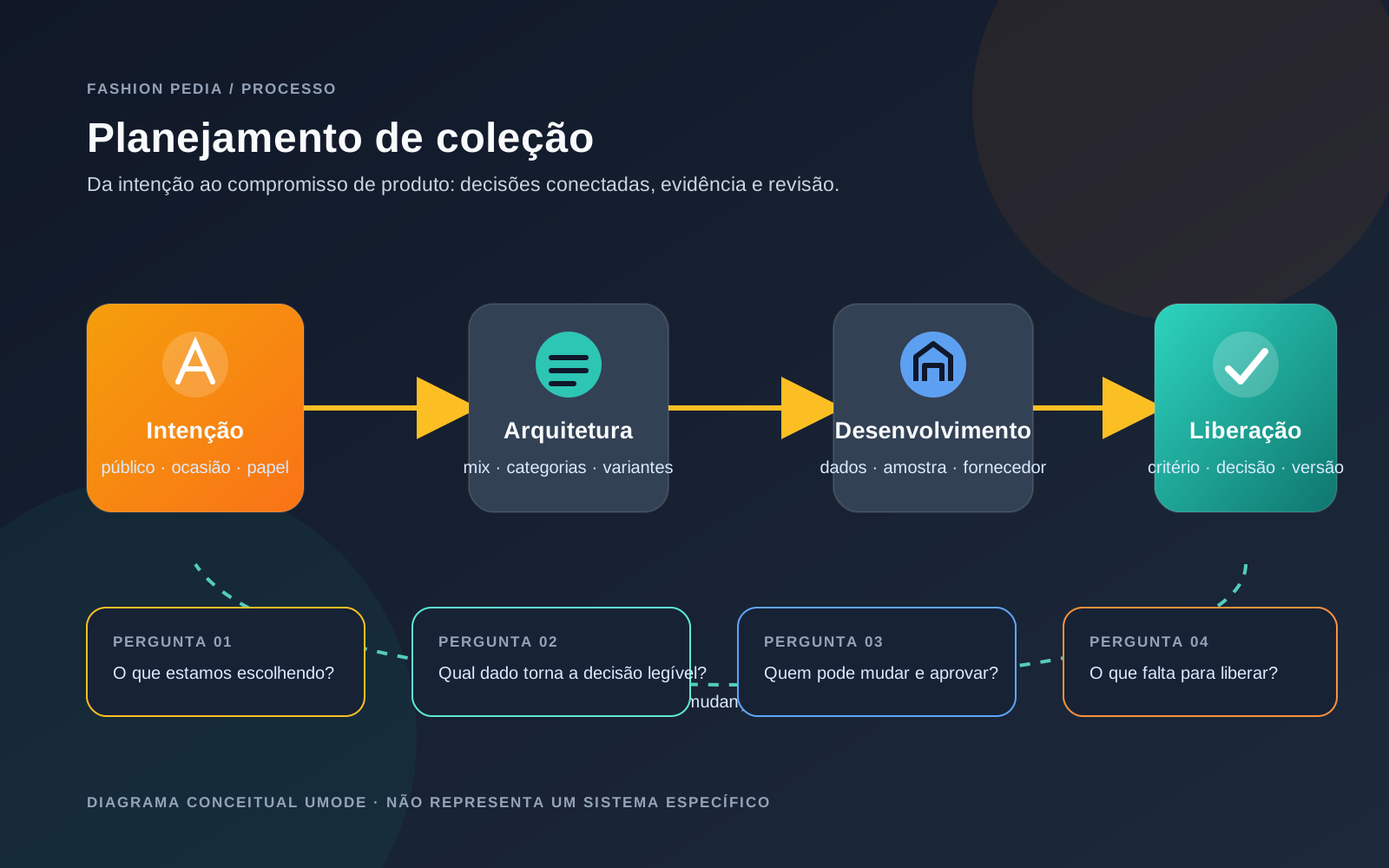
Collection planning
Collection planning is the process of turning a collection intention into controlled decisions about products, data, stages, owners, changes and release criteria. It connects product direction, development, sourcing and information without reducing the plan to a calendar or a software tool.

Collection management
Collection management coordinates a fashion line's journey from idea through production, service and disposal by connecting people, product data, processes, decisions, versions and events across teams and partners.
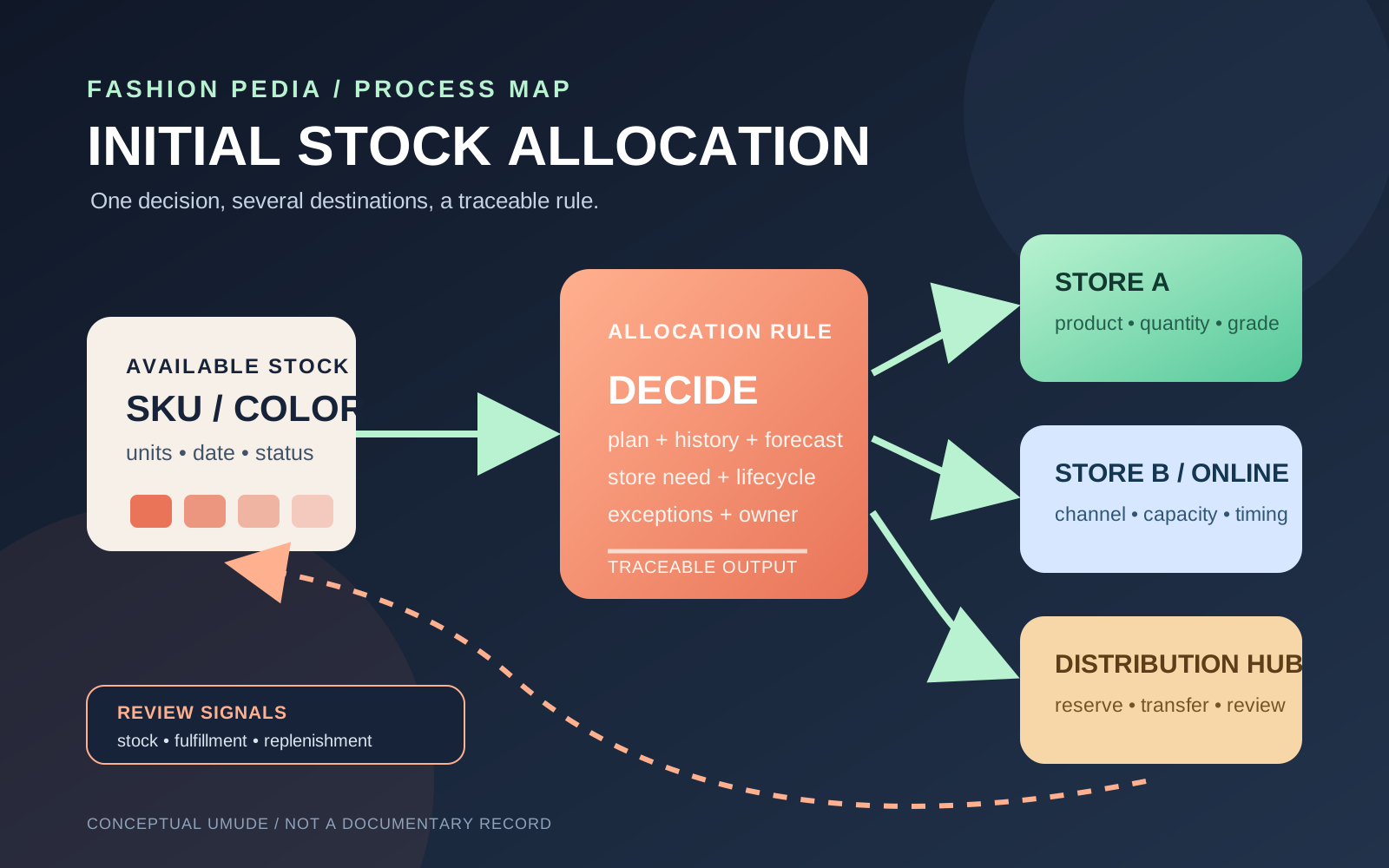
Initial Stock Allocation
Initial stock allocation is the process of deciding how the first available quantity of a product will be distributed across stores, channels, or other service points. A sound record makes the product, destination, quantity, data source, and exceptions visible.
Inventory replenishment
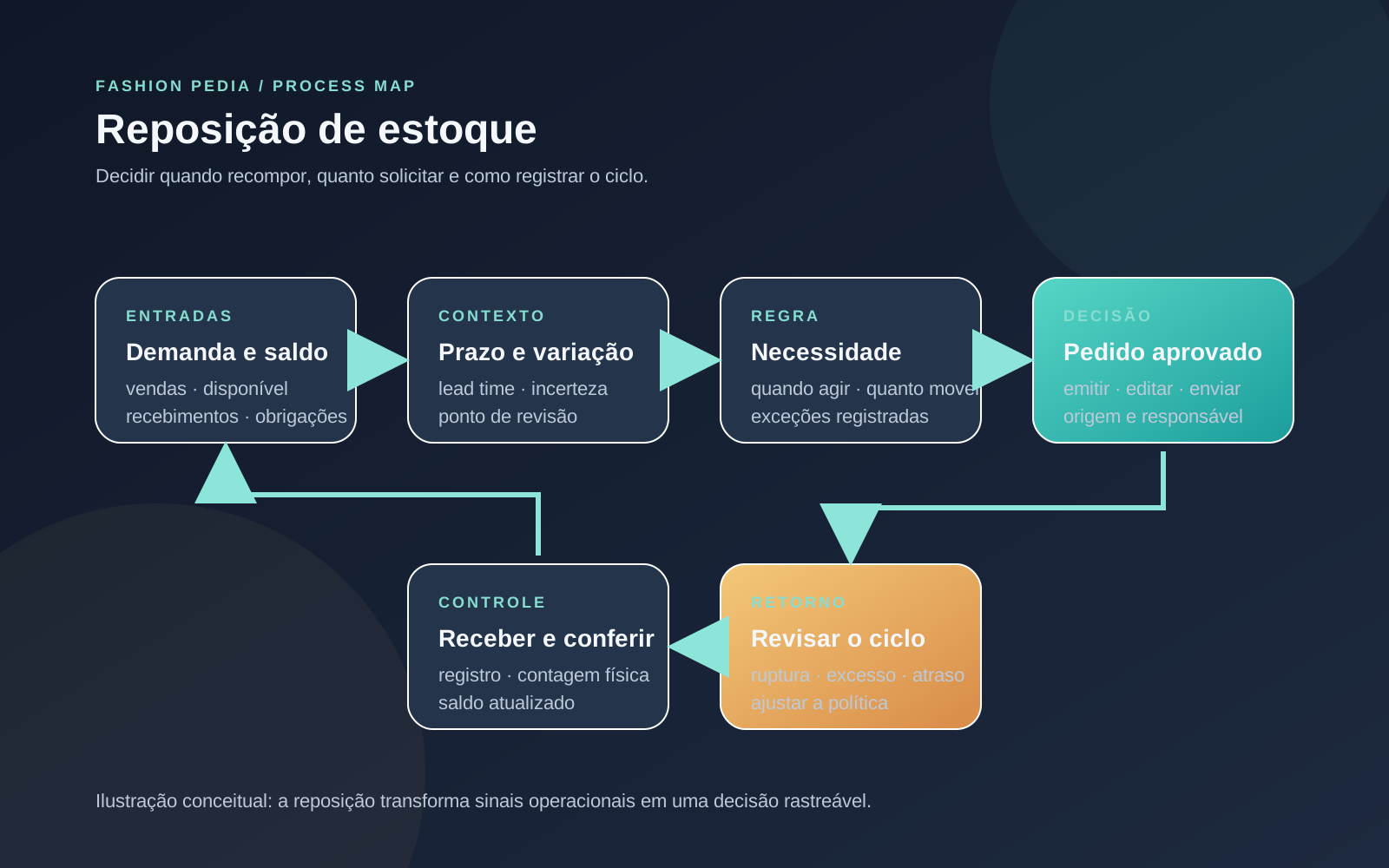
Inventory replenishment is the process of deciding when to restore an item's availability and how much to request for a future need. The decision combines recorded stock, demand, expected receipts, obligations, purchasing lead time and demand variation; the order must then be approved, received and recorded.
Demand planning in fashion
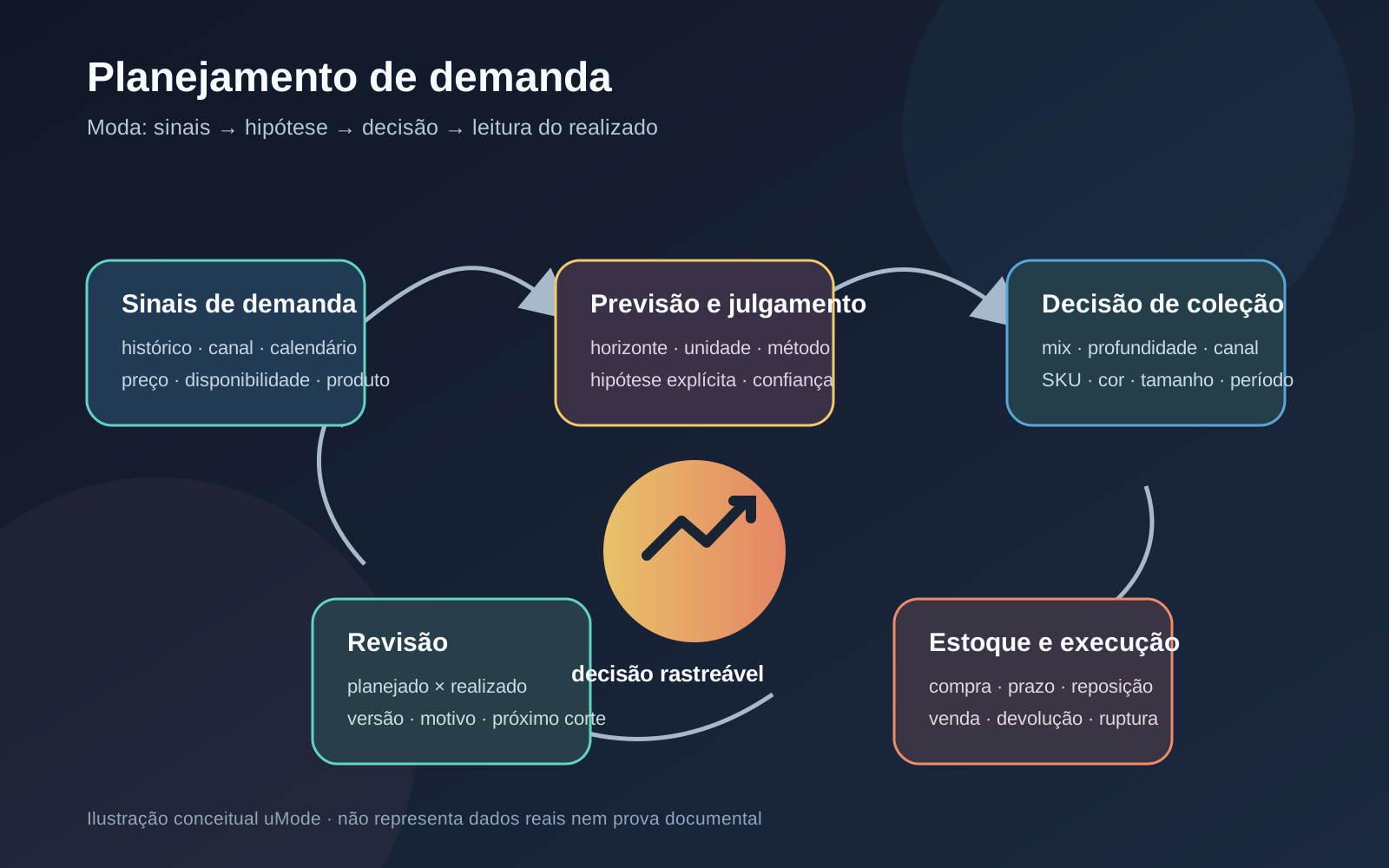
Demand planning in fashion turns demand signals, history, calendar context and judgement into explicit decisions about assortment, volume, channel and review. It combines forecasting with governance: every hypothesis needs a horizon, unit, owner and rule for revision when the collection or market changes.
Assortment planning in fashion
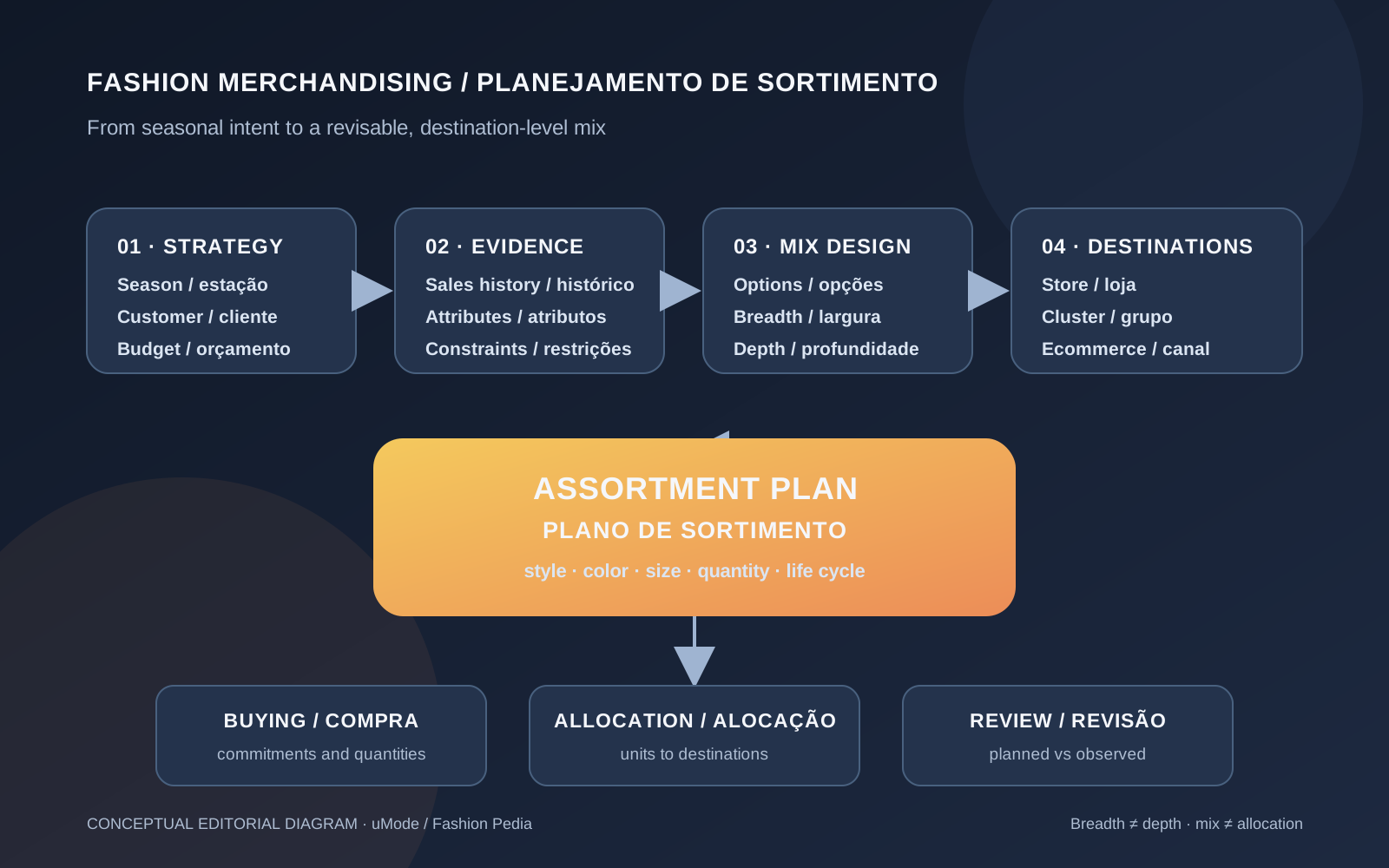
Assortment planning in fashion. Assortment planning is the process of deciding which styles, categories, colors, sizes, and quantities belong in each season, store, channel, or store group. In fashion, it turns a merchandise plan into buyable options by relating breadth, depth, and local context without confusing the mix with buying or allocation.
Sources
Want to apply this to your operation?