Collection planning
Collection planning is the process of turning a collection intention into controlled decisions about products, data, stages, owners, changes and release criteria. It connects product direction, development, sourcing and information without reducing the plan to a calendar or a software tool.
On this page
What is Collection planning?
Collection planning is the process of turning a product intention into coordinated decisions about assortment mix, calendar, data, development, sourcing and release. The first question is not which tool to use, but what is being planned: a whole collection, a line, a category, a style, a colour-and-size variant or a set of deliveries. A useful plan gives each decision an owner, version, dependency and change criterion.
The lifecycle idea helps set the boundary. IBM describes PLM as following a product from concept and design through procurement, production, service and disposal; Oracle likewise describes a journey from ideation through disposal. In apparel, this does not make collection planning identical to PLM: the former organizes collection choices and commitments, while the latter can manage product data and processes across the lifecycle.
Which decisions belong in the plan?
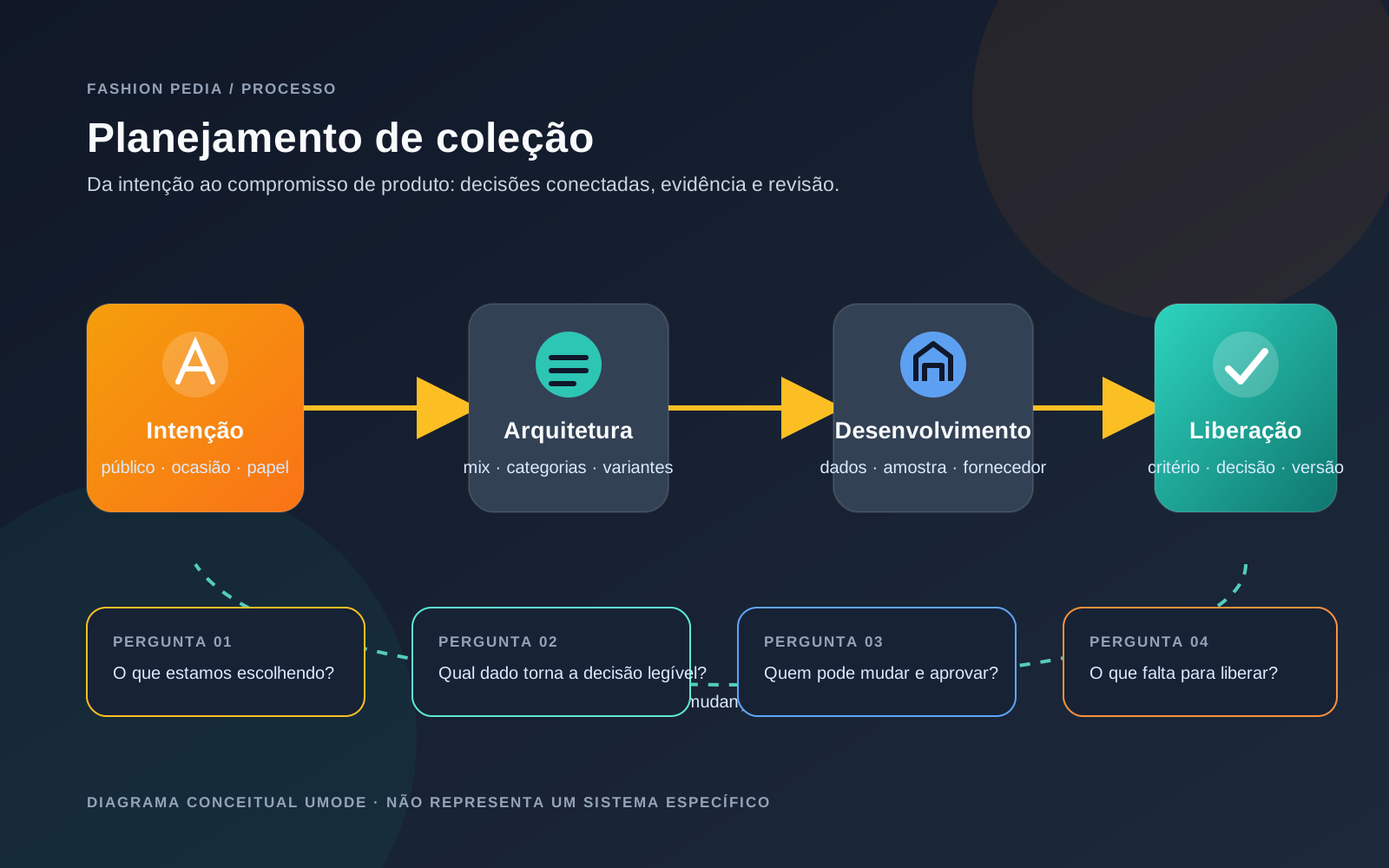
A collection plan starts with intention: audience, occasion, line role, price range and assortment hypothesis. It then makes that intention operable through categories, styles, variants, materials, sizes, channels, quantities and dates. These are not a universal recipe; they are questions that reveal what is still a decision, what is confirmed data and what remains a hypothesis.
The architecture of the collection map should connect to the line plan and assortment mix, without collapsing them into one concept. The map explains structure and relationships; the line plan organizes the line as a working view; the mix makes the planned composition explicit. For each item, record a stable identifier, current version, owner, stage, dependency and next approval criterion.
The information layer is part of planning. IBM describes PLM as integrating people, data, processes and systems and mentions centralized product-data repositories. In an apparel operation, that logic can guide connections between brief, tech pack, material, measurements, cost, sample, supplier and product master data, without assuming that centralization resolves process ambiguity.
How should changes and evidence be controlled?
Control a change by linking it to the affected product or style, previous version, reason, impact, authority and decision. A fabric change may require reviews of measurements, consumption, cost, timing, supplier and sales information; the plan should show which effects were checked instead of merely changing a calendar cell.
The bill of materials also needs a defined place. IBM describes a BOM as a comprehensive list of components and raw materials required to build and maintain a product. In collection planning, it can bridge material intention and development, but it does not replace technical specification, sample approval or availability confirmation.
To preserve the sequence of decisions, use event records: what changed, when, where in the flow and why. GS1 describes EPCIS as visibility data made of real-world events and explains that an event records what participated, when and where it happened and the business context. This is useful as an information model; it does not mean every collection plan needs to implement EPCIS.
Product changes can also have conformity implications. Regulation (EU) 2024/1781 requires certain changes in production, design or product characteristics to be considered and conformity to be reassessed when it may be affected. That obligation has its own legal scope; for an apparel team, the operational lesson is to include a regulatory-impact question in the appropriate gate, not to treat the EU rule as universal.
How can a plan be evaluated?
Evaluate the plan by asking, for every item, what will be delivered, why it was chosen, which version is current, who may change it, what evidence is missing and which decision unlocks the next stage. A visual board or spreadsheet may be sufficient when it preserves these relationships; a more complex architecture is justified only when volume, team distribution or integration needs require it.
Use indicators with explicit definitions: data completeness, changes after approval, overdue items, time between stages or the difference between planned and actual. A number alone does not explain quality or cause. Compare equivalent periods and populations, record exceptions and read the indicator alongside the evidence that produced it.
Collection planning connects to demand planning, collection management and fashion PLM, but each page answers a different question. Its value is making the collection commitment legible to design, development, buying, suppliers, production and retail, without hiding uncertainty or promising that a tool replaces judgment.
Verified facts
- IBM defines PLM as a strategic approach that manages a product lifecycle end to end, from concept and design through procurement, production, service and disposal.
Source: ibm.com ↗ - IBM describes PLM as integrating people, data, processes and business systems into an information backbone.
Source: ibm.com ↗ - IBM describes PLM tools as centralized repositories for product data that support collaboration and course correction.
Source: ibm.com ↗ - IBM defines a BOM as a comprehensive list of every component and raw material required to build and maintain a product.
Source: ibm.com ↗ - Oracle describes PLM as the strategic process of managing a product's complete journey from ideation through development, service and disposal.
Source: oracle.com ↗ - Oracle includes items, parts, products, documents, requirements, engineering change orders and quality workflows among the information and processes managed by PLM.
Source: oracle.com ↗ - GS1 defines EPCIS as a standard for visibility data made of events that record occurrences involving objects in the real world.
Source: support.gs1.org ↗ - GS1 says EPCIS data can track products, assets and documents as they move through processes, physical locations and organizations.
Source: support.gs1.org ↗ - GS1 describes an EPCIS event through what participated in a step, when and where it happened, and the business context explaining why it happened.
Source: support.gs1.org ↗ - Regulation (EU) 2024/1781 requires changes in production, design or product characteristics to be considered and conformity to be reassessed when those changes may affect it.
Source: eur-lex.europa.eu ↗
Related entries

Collection management
Collection management coordinates a fashion line's journey from idea through production, service and disposal by connecting people, product data, processes, decisions, versions and events across teams and partners.
Collection line plan
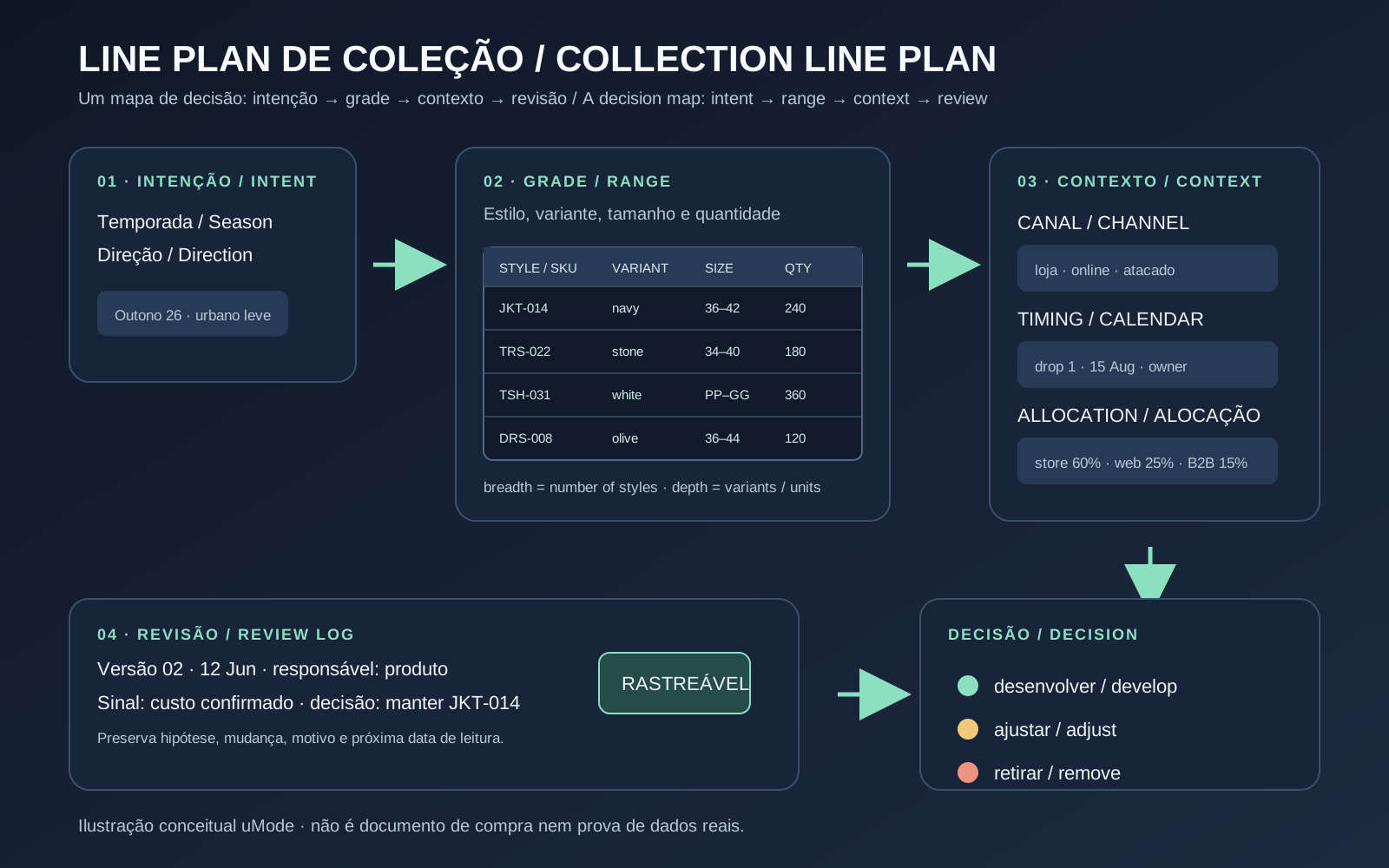
A collection line plan is the operating record that turns collection direction into a grid of styles, variants, sizes, channels, quantities and decision milestones. It defines what is planned for development or buying without replacing a tech pack, budget, forecast or product validation.
Product mix
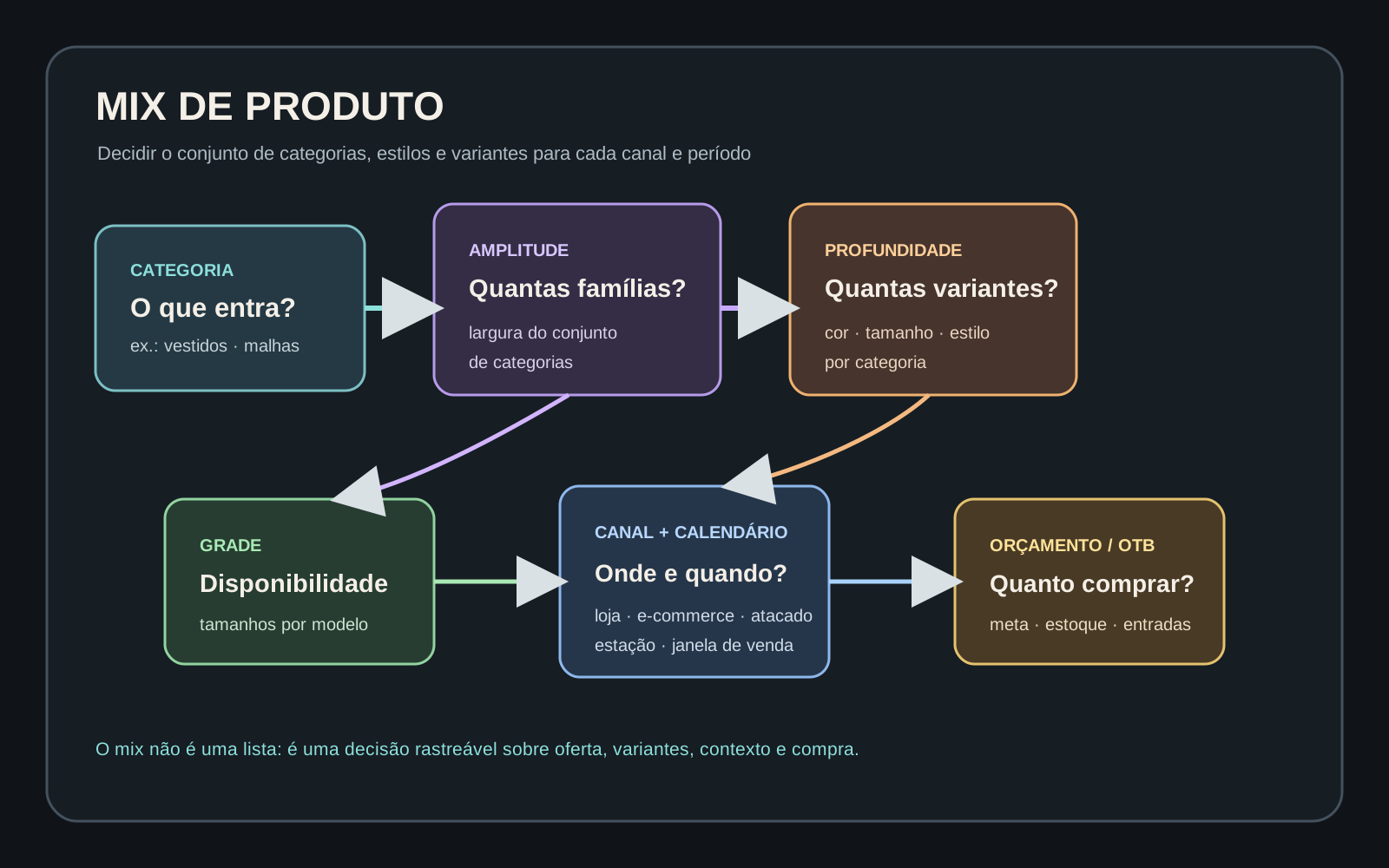
A product mix is the decision about which categories, styles, and variants a fashion operation offers in each channel and period. The process separates breadth, depth, size range, demand, and buying so a collection intention becomes a checkable offer.
Demand planning in fashion
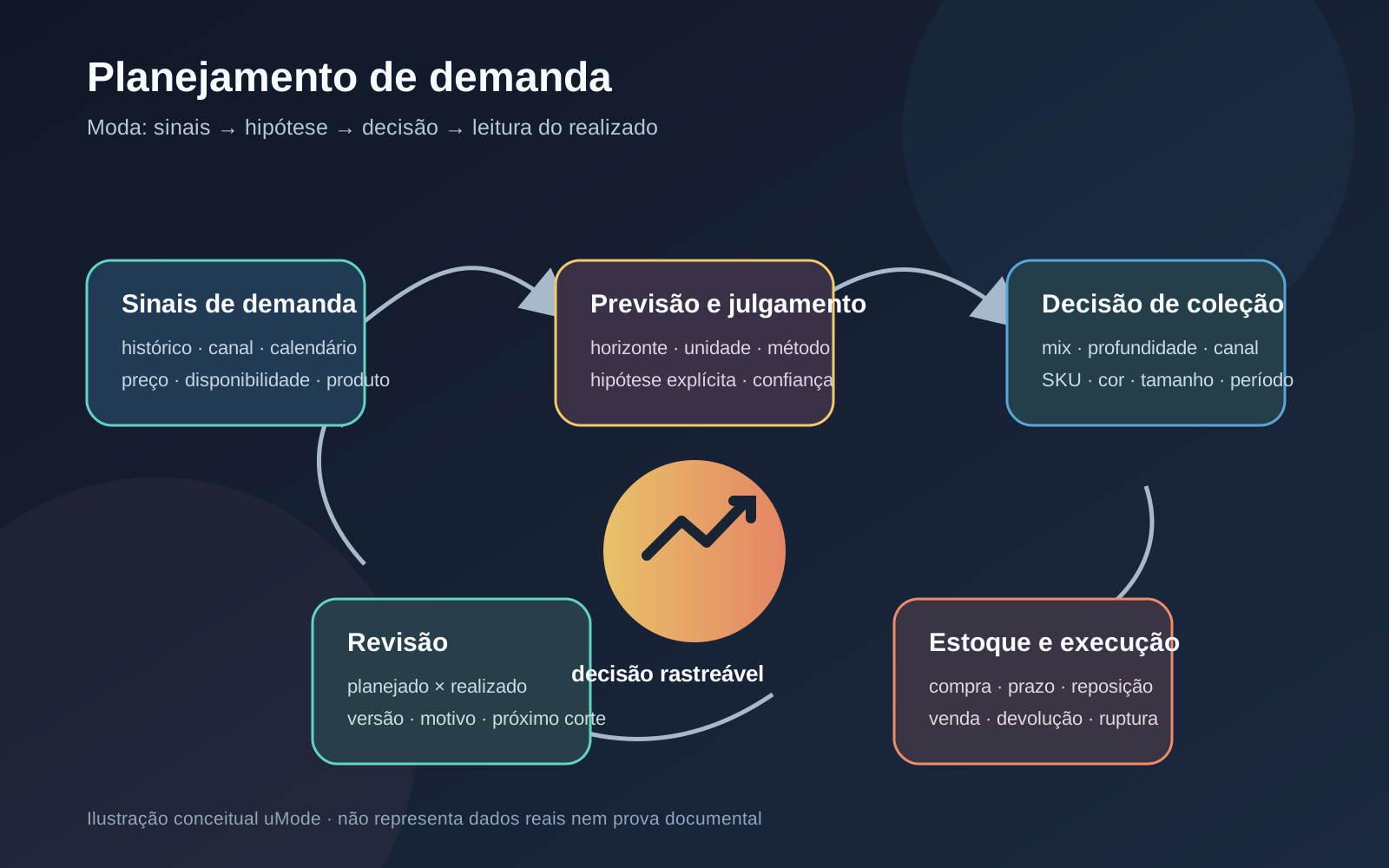
Demand planning in fashion turns demand signals, history, calendar context and judgement into explicit decisions about assortment, volume, channel and review. It combines forecasting with governance: every hypothesis needs a horizon, unit, owner and rule for revision when the collection or market changes.

Fashion PLM: data, product, and lifecycle
Fashion PLM is the structured management of the data, decisions, and workflows that follow a product and a collection from concept through post-launch. It connects tech packs, materials, costs, samples, approvals, suppliers, and versions so that every function works from a traceable product definition.

Fashion product technical specification
A technical specification is the controlled information set that translates an approved fashion product into verifiable sampling and manufacturing requirements. It brings together drawings, materials, measurements, construction, tolerances, identification, labelling, comments and revision history; its content varies by category, company, market and stage.
Sources
- https://www.ibm.com/think/topics/product-lifecycle-management
- https://www.oracle.com/scm/product-lifecycle-management/what-is-plm/
- https://support.gs1.org/support/solutions/articles/43000755325-what-is-electronic-product-code-information-services-epcis-
- https://eur-lex.europa.eu/eli/reg/2024/1781/oj/eng
Want to apply this to your operation?