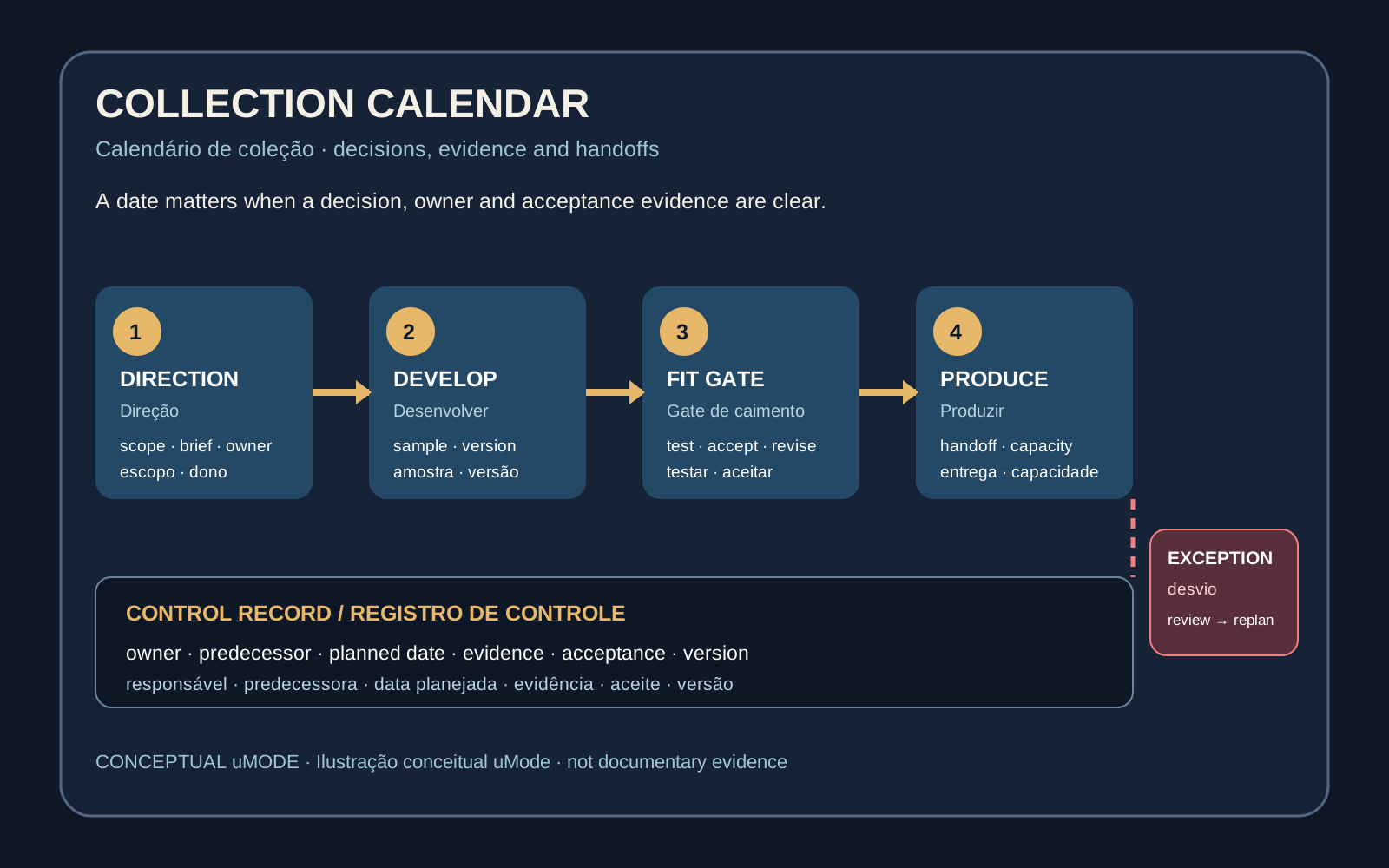
Assortment planning in fashion
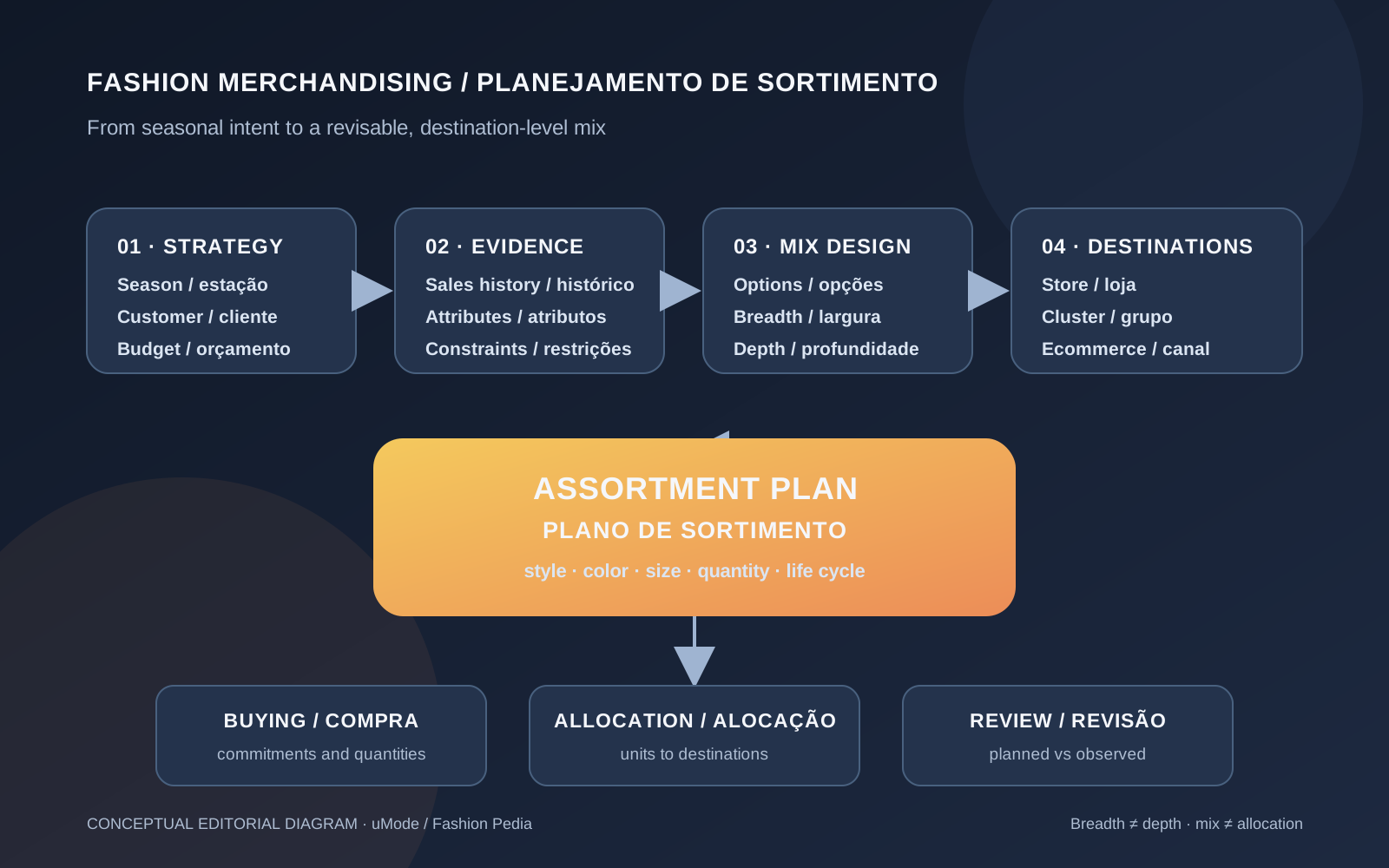
Assortment planning in fashion. Assortment planning is the process of deciding which styles, categories, colors, sizes, and quantities belong in each season, store, channel, or store group. In fashion, it turns a merchandise plan into buyable options by relating breadth, depth, and local context without confusing the mix with buying or allocation.
On this page
What is Assortment planning in fashion?
Assortment planning is the process of deciding which products enter an offer for a specific season, period, store, or channel and how they are composed. The plan moves from a broad product intention to buyable decisions: styles, colors, sizes, options, and quantities. Its boundary with collection planning is one of focus: collection planning organizes the product proposal; assortment planning decides which combination will be offered in each commercial context.
Retail Dogma describes the plan as a guide for buyers applying the buying budget. That places it alongside line planning and open to buy, but does not make them synonyms. The budget answers how much can be invested; the assortment answers which options and depths will receive that investment.
How does the process turn intent into a mix?
Start by naming the period, channel, and destination: a store, store group, ecommerce site, or another sales channel. The team can then organize the mix by category, style, color, and size. “Breadth” indicates how many different options enter; “depth” indicates how many units are planned per option. Keeping the decisions separate prevents a collection from looking broad merely because it accumulates variants, or deep merely because it concentrates units in a few styles.
Oracle describes fashion assortment planning as assigning seasonal styles to stores and channels, with a combination of styles, sizes, and colors suited to the destination. Its documentation also links assortment period, product, and store group—or cluster—and separates short-life-cycle and long-life-cycle items. In practice, this supports a destination-level view containing option, color, size range, depth, and a stated life-cycle hypothesis.
Sales history is an input, not an automatic answer. Oracle highlights several years of sales data and product attributes; a team still needs to record what changed between periods: price, availability, presentation, calendar, and channel. For a new category, keep the hypothesis explicit rather than presenting it as an observed fact.
How does it apply to stores, ecommerce, and clusters?
The plan becomes useful when every decision states where and when it applies. A retail network may use a store group with similar characteristics as a starting point, but a cluster does not remove the need to check each destination’s capacity, customer, presentation, and availability. In ecommerce, depth may depend on central availability and delivery promise; in a physical store, it also has to fit presentation and receiving constraints.
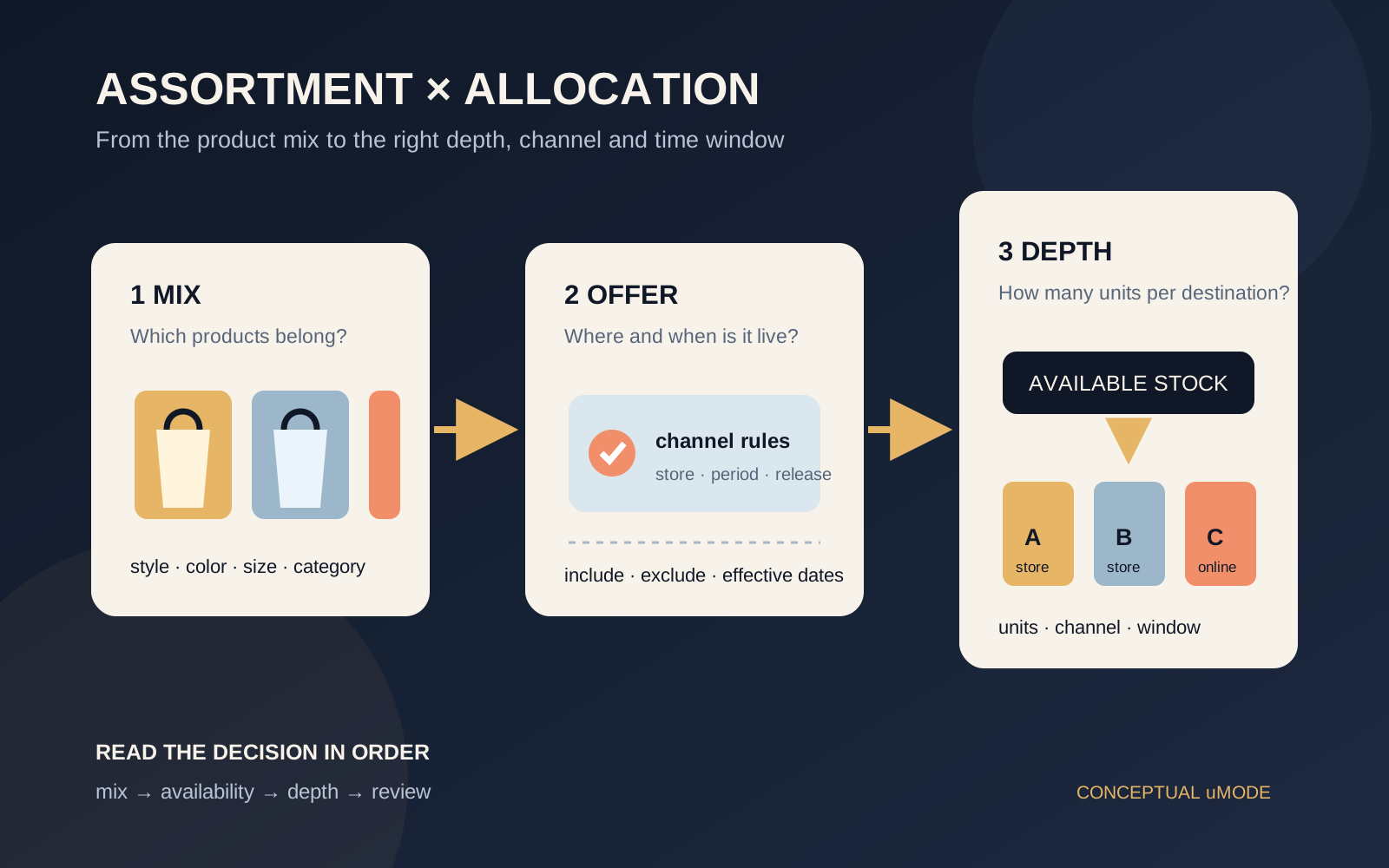
The relationship with assortment allocation comes after the mix decision: first decide which options belong to the set, then distribute units to destinations. Product-mix architecture helps name categories and roles, while color and size connect a style to its sellable SKU. The result should reach buying and replenishment with the unit clearly defined: an option, piece, case, and value are not the same denominator.
Which limits need control?
Assortment planning is not demand forecasting, buying, or allocation. It may use a forecast, guide a purchase, and feed an allocation, but each stage answers a different question. It also does not guarantee sales, margin, or inventory turn: the plan is a decision under uncertainty and depends on data quality and channel execution.
Review should compare planned and observed values without mixing options, units, and sales. A price change, stockout, or promotion can change how a style reads; returns and transfers need their own rules. Record the plan version, assumption, owner, review date, and decision for each exception. This lets the team distinguish a breadth choice from a depth choice and review sell-through without turning a local result into a universal benchmark.
Connections
collection planning · assortment allocation · product mix · size range · open to buy · line plan · sell-through
Verified facts
- Assortment planning is the process of creating a detailed plan that defines which products will be carried and sold in stores in the coming season.
Source: retaildogma.com ↗ - The assortment plan guides buyers on what to spend the buying budget on.
Source: retaildogma.com ↗ - In fashion, assortment planning assigns seasonal styles to stores and other sales channels while considering styles, sizes, and colors.
Source: oracle.com ↗ - The process is tactical and responsive to local market conditions and sudden shifts in demand.
Source: oracle.com ↗ - Assortment planning relies mainly on several years of sales data and data about product attributes.
Source: oracle.com ↗ - Merchandise planning sets a budget for the total seasonal selection, while assortment planning details products and styles by store and channel.
Source: oracle.com ↗ - Oracle describes assortment strategy as selecting the right product mix to meet demand and maximize sales and profitability.
Source: docs.oracle.com ↗ - The planning process can determine option counts and product attributes such as size, color, and material.
Source: docs.oracle.com ↗ - Oracle documentation connects assortment period, product, and store group, also called a cluster, to assortment planning.
Source: docs.oracle.com ↗ - Oracle documentation separates short-life-cycle and long-life-cycle items within the planned assortment mix.
Source: docs.oracle.com ↗ - Assortment planning is part of merchandise planning, which includes the buying budget and the creation of an assortment plan.
Source: retaildogma.com ↗ - A detailed plan can specify how many colors and sizes to carry and how many pieces to buy per size for a product.
Source: retaildogma.com ↗
Related entries
Assortment and allocation in fashion
Assortment and allocation in fashion. Allocation decides where and when inventory will be available; assortment defines which products belong in each channel or store mix. In fashion, the decisions must be read together: a variant may exist in the product record, yet it becomes a channel offer only when the assortment includes it and the availability rule is effective.
Product mix
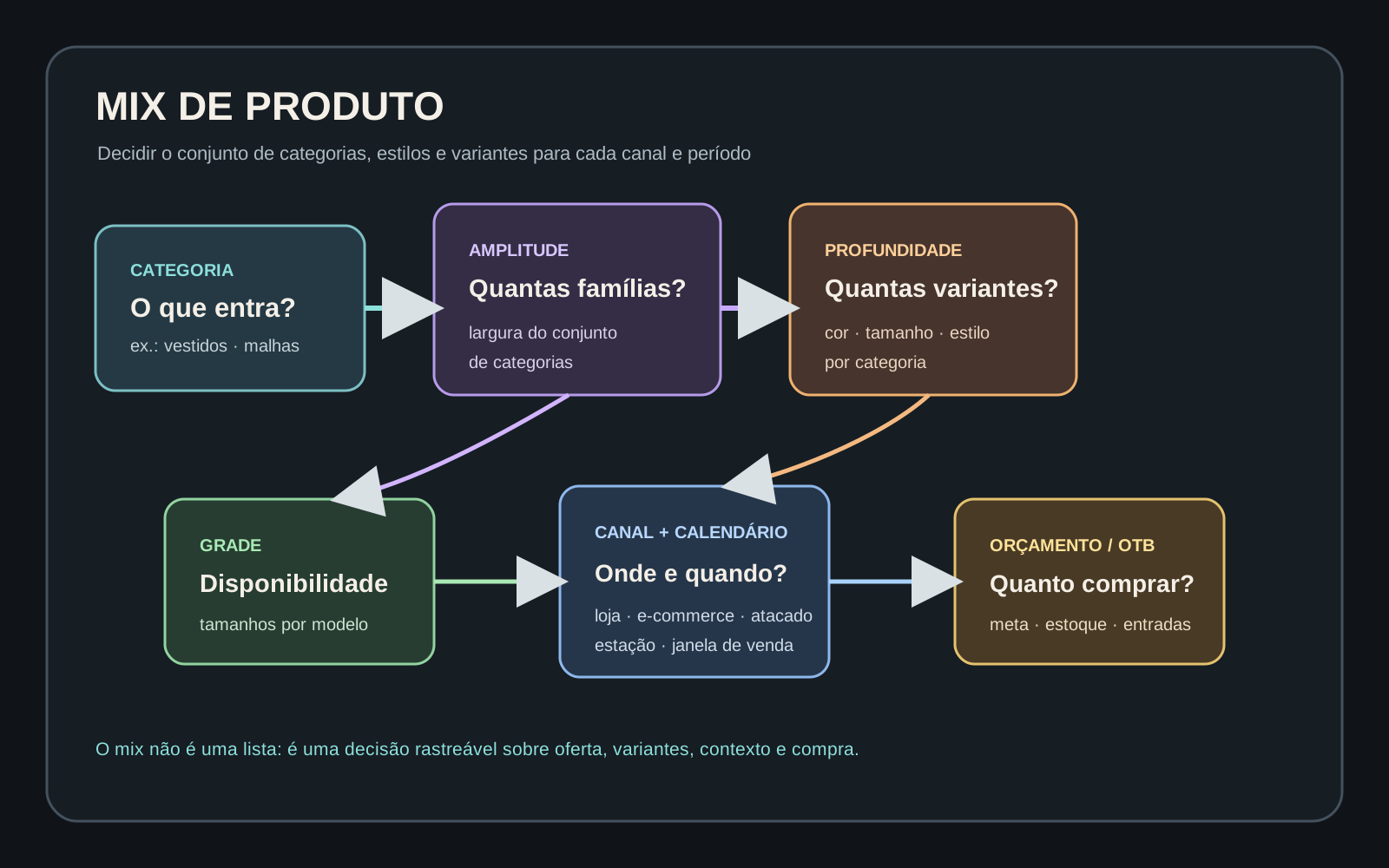
A product mix is the decision about which categories, styles, and variants a fashion operation offers in each channel and period. The process separates breadth, depth, size range, demand, and buying so a collection intention becomes a checkable offer.
Size grading
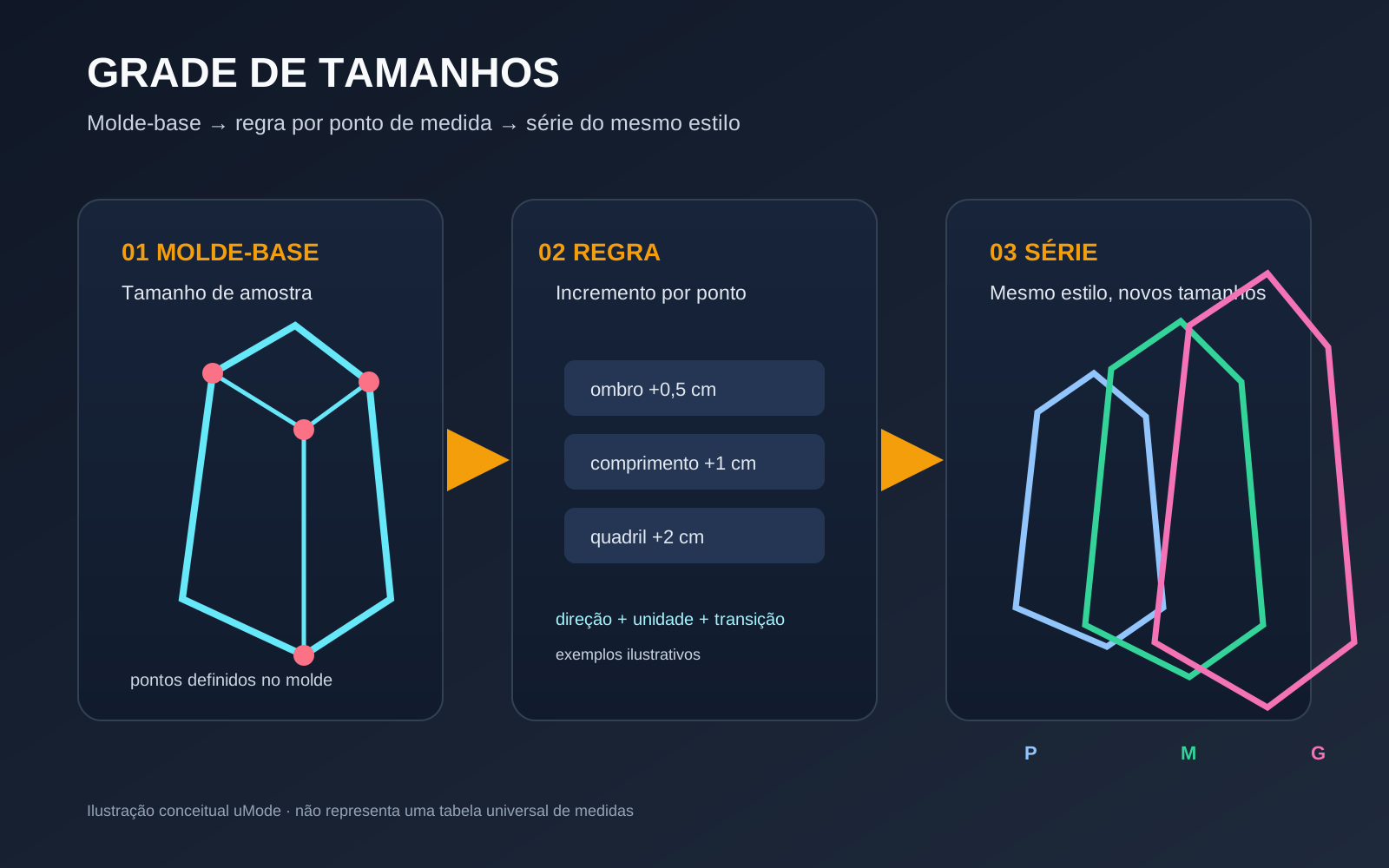
Size grading is the process of turning base-size or sample-size patterns into additional sizes by using a specification sheet or grading increments. A rule changes defined points on the pattern to form a size range for the same style; it does not replace patternmaking or create a new shape.
Open to buy in fashion retail
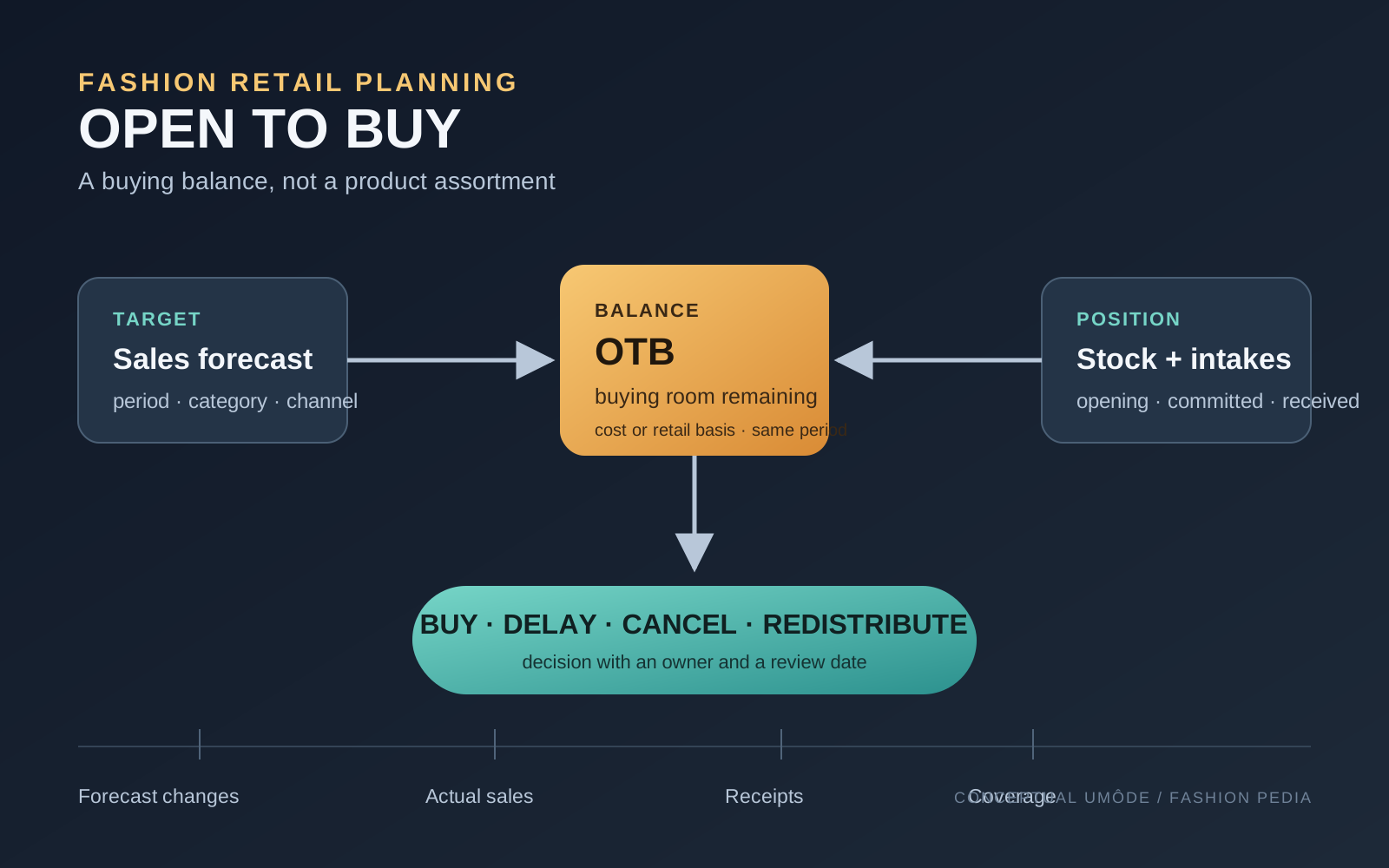
Open to buy in fashion retail. Open to buy (OTB) is a planning process that calculates how much inventory a retailer needs to buy to reach a sales target, using forecast sales, opening stock and desired closing stock. In fashion retail, the balance should be read by period, category, channel and stock cover; it guides buying without replacing assortment decisions.
Collection line plan
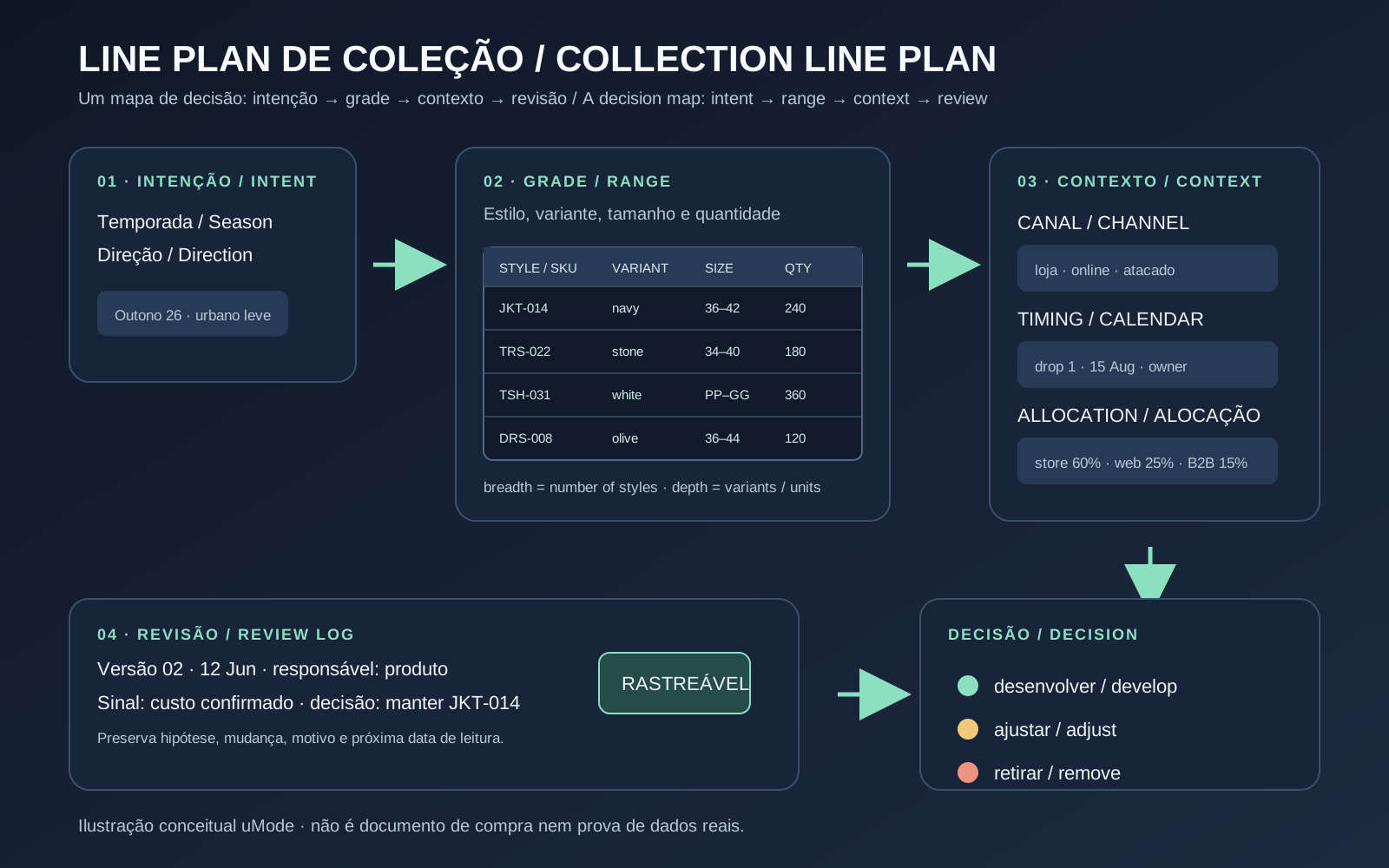
A collection line plan is the operating record that turns collection direction into a grid of styles, variants, sizes, channels, quantities and decision milestones. It defines what is planned for development or buying without replacing a tech pack, budget, forecast or product validation.
Sources
Want to apply this to your operation?