How to improve product data quality
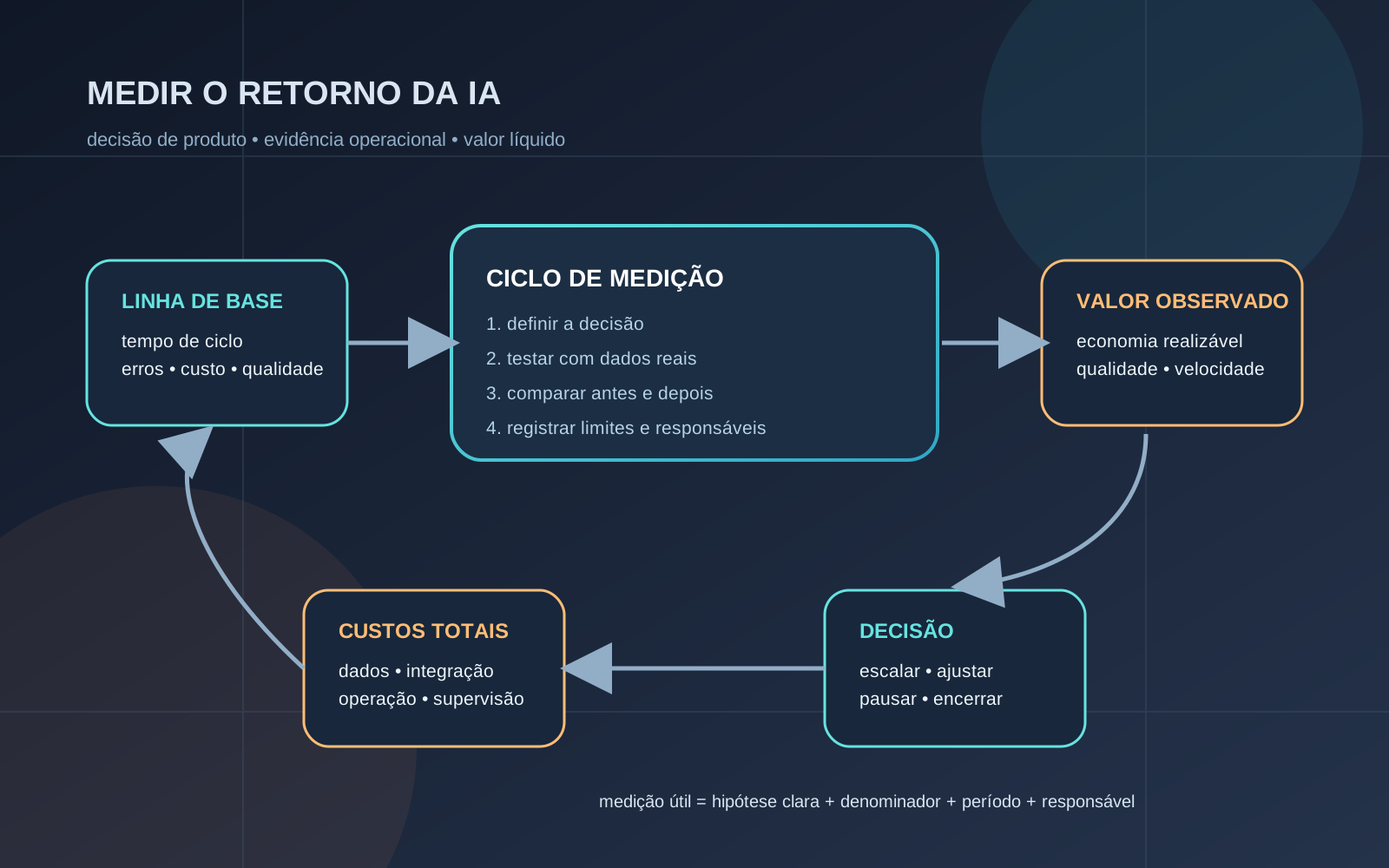
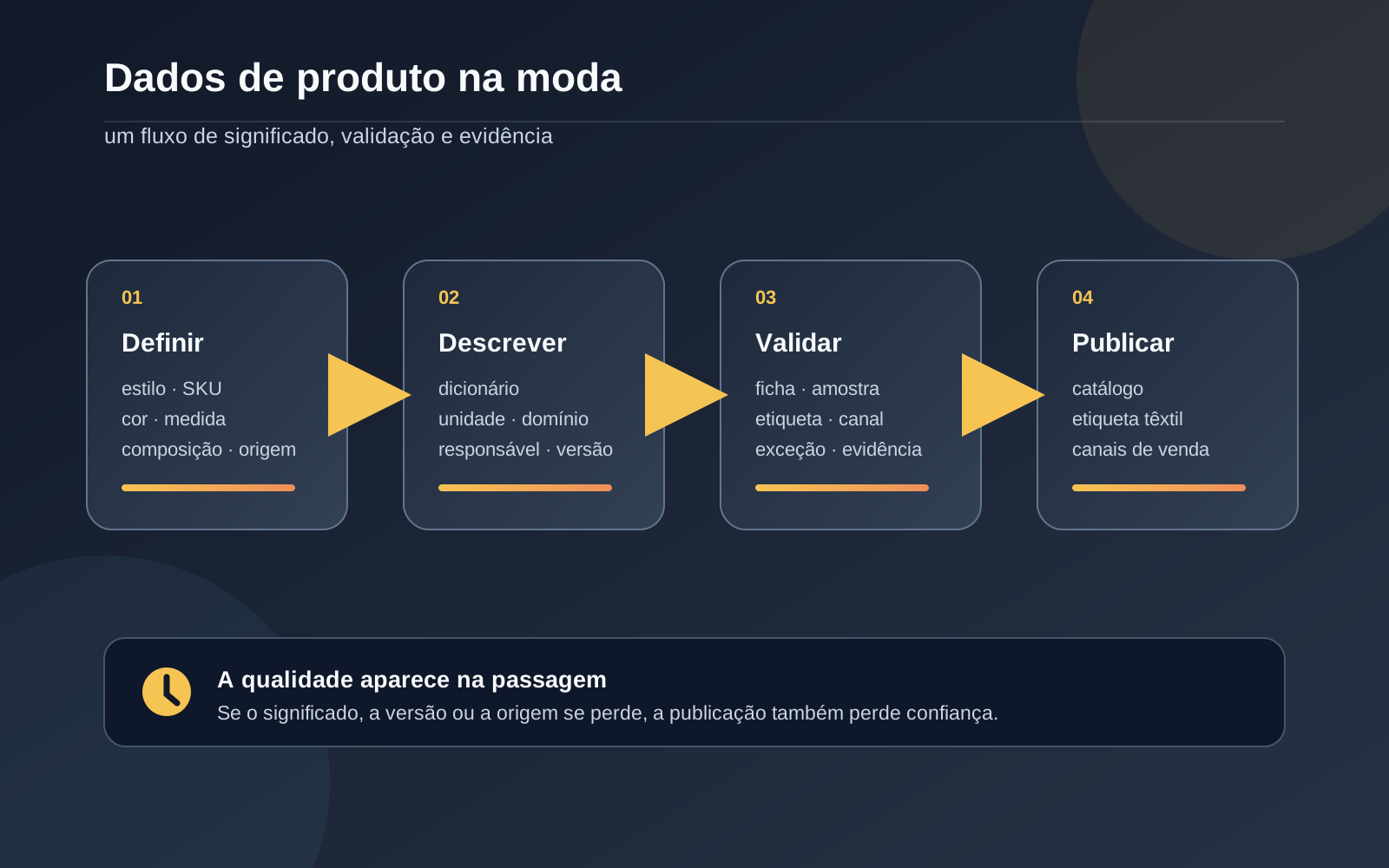
How to improve product data quality. Improving product data quality in fashion means separating style, variant, technical attribute and regulatory record; defining every field; validating source and format; and controlling the handoff from tech pack to catalog, label and sales channel. The process becomes dependable when each exception has an owner, evidence and a version.
On this page
What is How to improve product data quality?
Product data quality in fashion is the ability of a record to describe the right garment, in the right variant, with an understandable meaning and controlled use. It is not simply filling more columns: it is preventing color, composition, size, measurement or origin from changing meaning between the tech pack, fashion PIM, ERP, catalog and label.
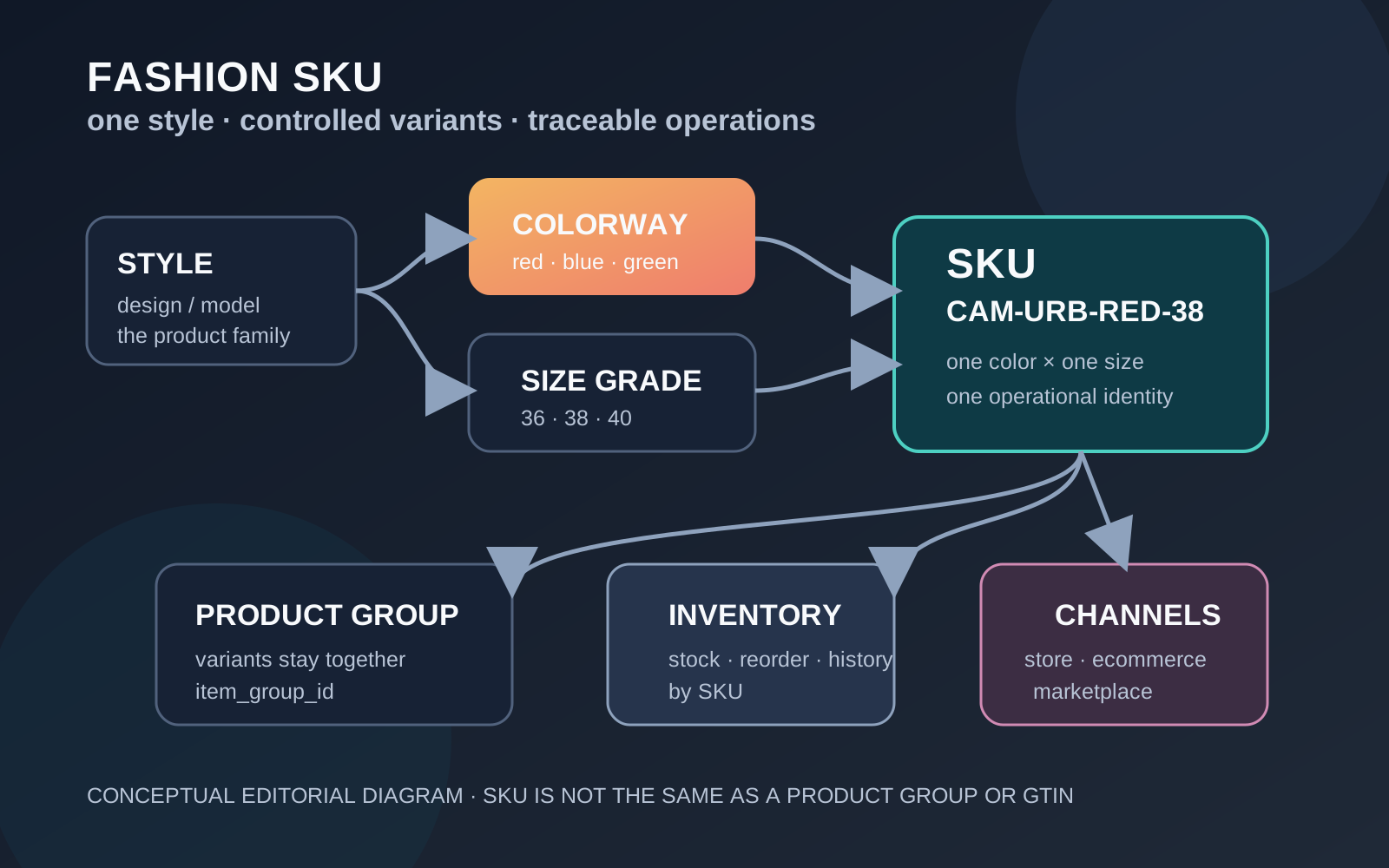
Start by separating the object. A dress style, its black size-40 SKU, a campaign image and a textile label are not the same record. Give each one a definition, a stable key, an owner and a list of consuming systems. This boundary prevents a variant correction from being treated as a change to the entire style.
How should attributes and rules be structured?
Begin with a data dictionary for the apparel chain. For category, record the hierarchy and allowed values; for color, preserve the internal code and display name; for composition, separate fiber, mass percentage and garment component; for size, declare the system, unit and measurement table. Schema.org is a useful external reference: it distinguishes category, color, brand and countryOfOrigin, while warning that applications may expect specific properties rather than a generic field.
Use rules that can be checked before publication: required field, format, unit, controlled list, acceptable range, field dependency and exception condition. A skirt may require length and a measurement table; a garment without lining should not receive a lining composition; a photograph should not be the only source of a technical attribute. When a team must infer something, mark it for review rather than treating it as confirmed data.
The vocabulary must connect with fashion DAM, tech pack and ERP, PLM and PIM without erasing provenance. W3C describes DCAT as a vocabulary for interoperability between catalogs and for describing datasets and data services with a standard model. In an operating workflow, that idea becomes a transfer contract: field name, definition, version, format, owner, consumer and update condition.
How should a garment be validated before publication?
Validate in layers, in the order in which data gains commitment. First check presence, type and format. Then compare the tech pack with the approved sample and supplier information. Next check consistency across style, color, size, composition, image, price and channel. Finally sample the rendered catalog and preserve the decision, version and exception record.
For textile products sold in Brazil, Inmetro's regulatory list includes responsible-party identification, country of origin, fibers and mass percentages, care instructions, and size or dimension when applicable. The agency also requires the information to be permanent, visible and in Portuguese. Therefore, control cannot stop at the SKU: it must verify the transformation of internal data into the label and public description. Incorrect textile information can make the product irregular; treat this check as a release requirement rather than a visual review.
When data crosses files or services, record the package version and an integrity identifier. The DCAT 3 specification includes a checksum to provide a digest for distributions; an editorial or catalog workflow can use the same reconciliation logic to detect a silent export swap. This does not prove the content is correct: it only proves that the checked package is the package that reached the next stage.
How can quality be measured without hiding the problem?
Choose metrics by object and population. For completeness, state which fields enter the denominator; for validity, define the rule a value must meet; for consistency, compare systems and versions; for duplicates, choose the reconciliation key. Also report channel, collection, category and period, because a catalog average can hide an error concentrated in one size run or supplier.
A correction routine should open an issue with affected field, received value, approved value, source, owner, date, impact and decision. Then correct the source and revalidate its copies; changing only the storefront creates a divergence for the next collection. Exception reports should distinguish missing data, conflict, out-of-domain value and stale data. That makes data governance traceable work rather than an abstract promise.
Limits and common confusions
A fashion PIM organizes product information, a DAM manages digital assets and a PLM tracks development decisions; their implementation boundaries must be defined by the operation. None of these names removes the need for a dictionary, attribute owner or approval. Likewise, a taxonomy does not replace a tech pack, and structured markup does not replace textile-label compliance.
The safest rule is to reduce ambiguity where it begins: confirm composition against the tech pack and applicable documentation, confirm measurement against the table used in patternmaking, and confirm the image against the published SKU and color. fashion PIM, fashion DAM, SKU, product style, tech pack and ERP, PLM and PIM should connect through explicit relations, not ownerless copies.
Verified facts
- Schema.org defines Product as any product or service being offered.
Source: schema.org ↗ - In Schema.org's Product definition, category can represent a category or an informal category hierarchy.
Source: schema.org ↗ - In Schema.org's Product definition, color is the color of the product.
Source: schema.org ↗ - In Schema.org's Product definition, brand is the brand associated with a product or service.
Source: schema.org ↗ - In Schema.org's Product definition, countryOfOrigin is the country of origin of the product, although the exact interpretation may vary by context and product type.
Source: schema.org ↗ - Schema.org warns that applications using specific properties typically expect those properties rather than the generic additionalProperty mechanism.
Source: schema.org ↗ - W3C describes DCAT as an RDF vocabulary designed to facilitate interoperability between data catalogs published on the Web.
Source: w3.org ↗ - W3C states that DCAT enables a publisher to describe datasets and data services in a catalog using a standard model and vocabulary.
Source: w3.org ↗ - The DCAT 3 specification adds an spdx:checksum property and spdx:Checksum class to provide a digest for DCAT distributions.
Source: w3.org ↗ - Brazil's Inmetro textile regulation requires products intended for sale to present responsible-party identification, country of origin, fibers and mass percentages, care instructions, and size or dimension when applicable.
Source: gov.br ↗ - Inmetro requires this textile information to be presented permanently, visibly and in Portuguese.
Source: gov.br ↗ - According to Inmetro, a covered textile product sold with incorrect information is irregular and subject to the penalties provided for in Law No. 9.933/1999.
Source: gov.br ↗
Related entries
Fashion PIM
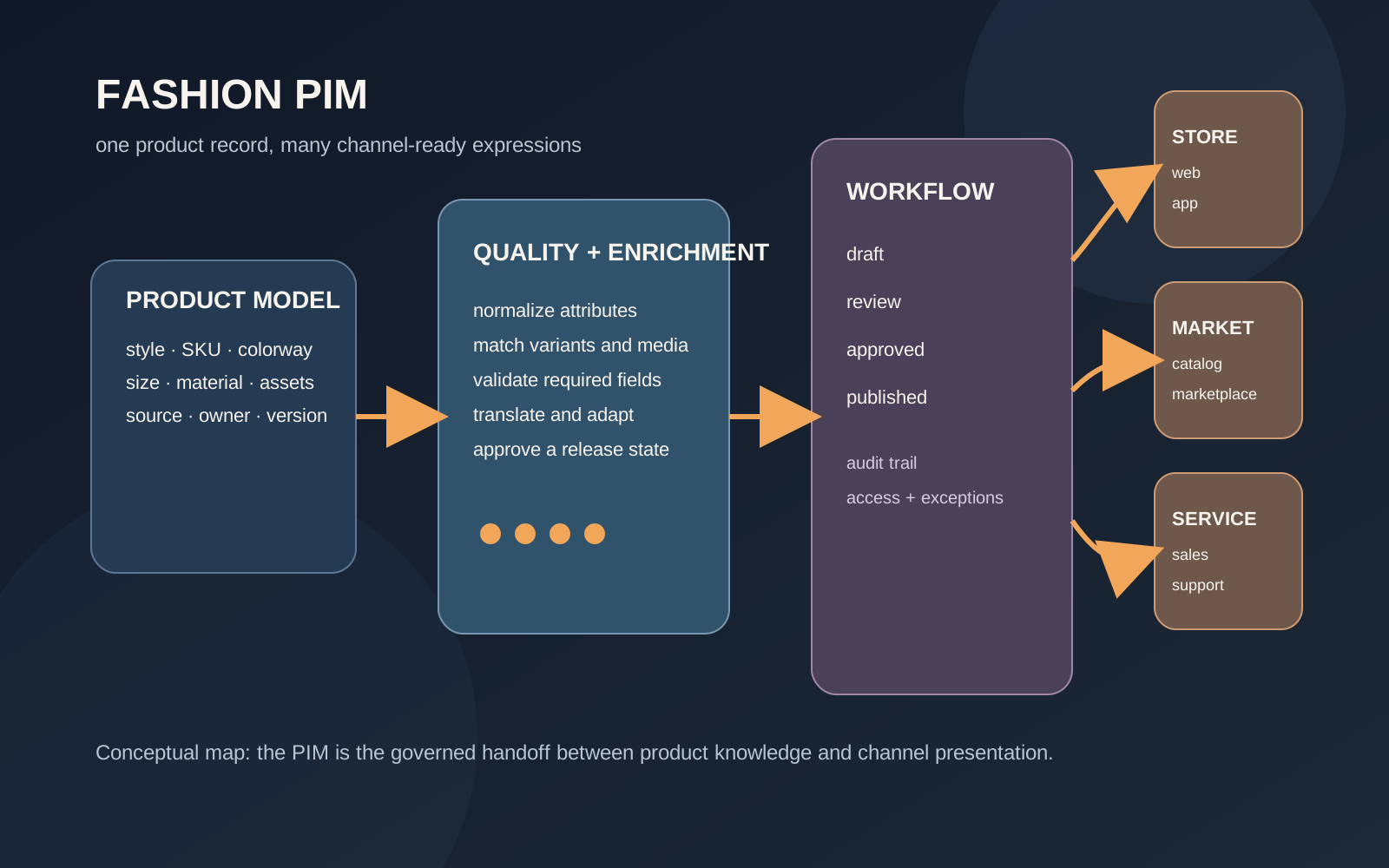
Fashion PIM is the process of organizing, enriching, validating and distributing product data to the channels that present a collection. It combines a data model, quality rules, ownership and integrations; it is not merely a catalog and does not automatically replace PLM, ERP or DAM.
Fashion DAM
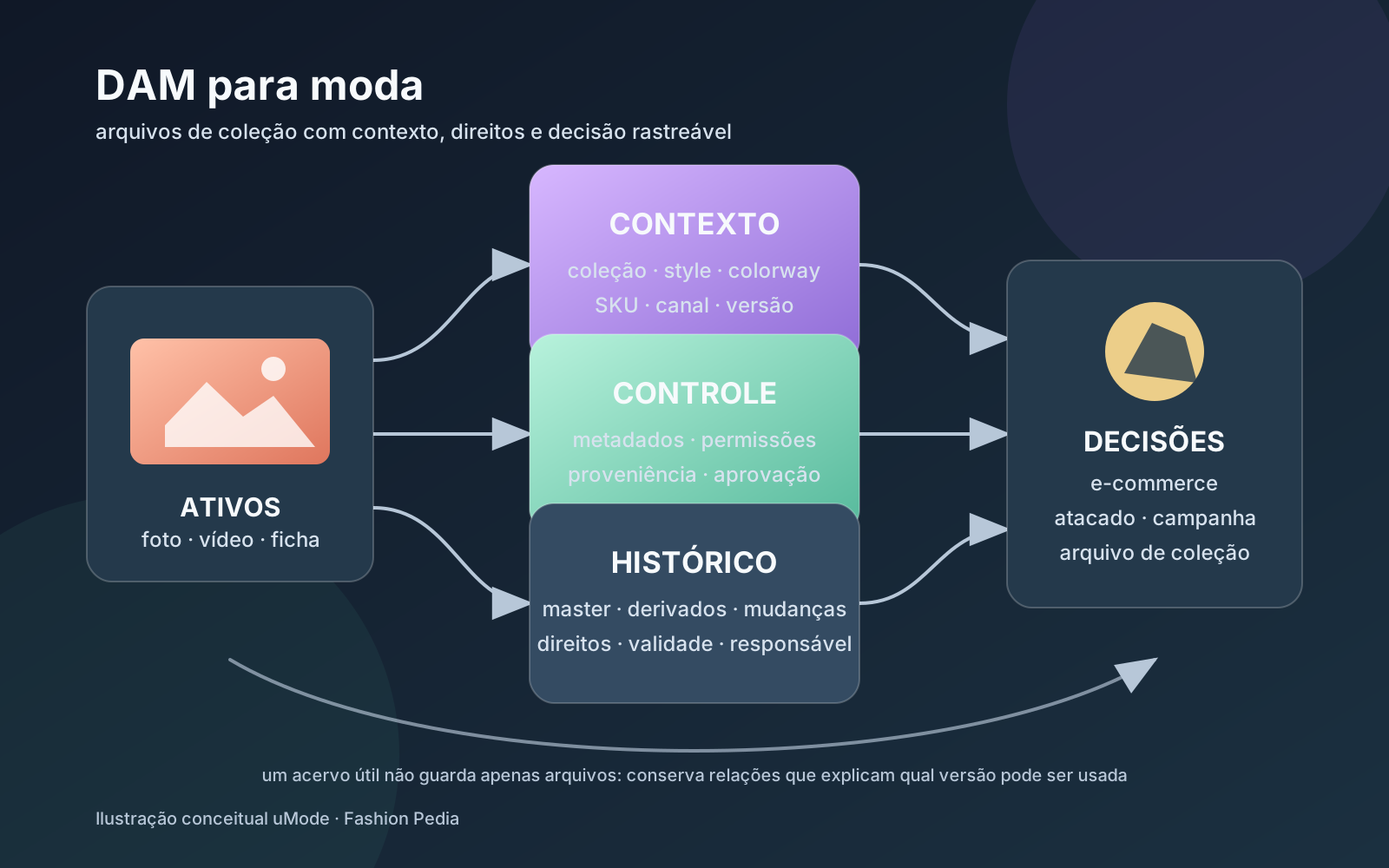
Fashion DAM is the process of storing, organizing, finding, controlling and distributing a collection's digital files while keeping metadata, permissions, versions, rights and provenance connected to product context. In practice, it turns images, videos, tech packs and derivatives into an operating base for design, wholesale, retail and communications.
Fashion SKU
A fashion SKU is an identification unit used to distinguish items and variants in inventory control. In apparel, the useful distinction is between the individual SKU, the product group, color and size attributes, and assortment decisions.
Style in a product record
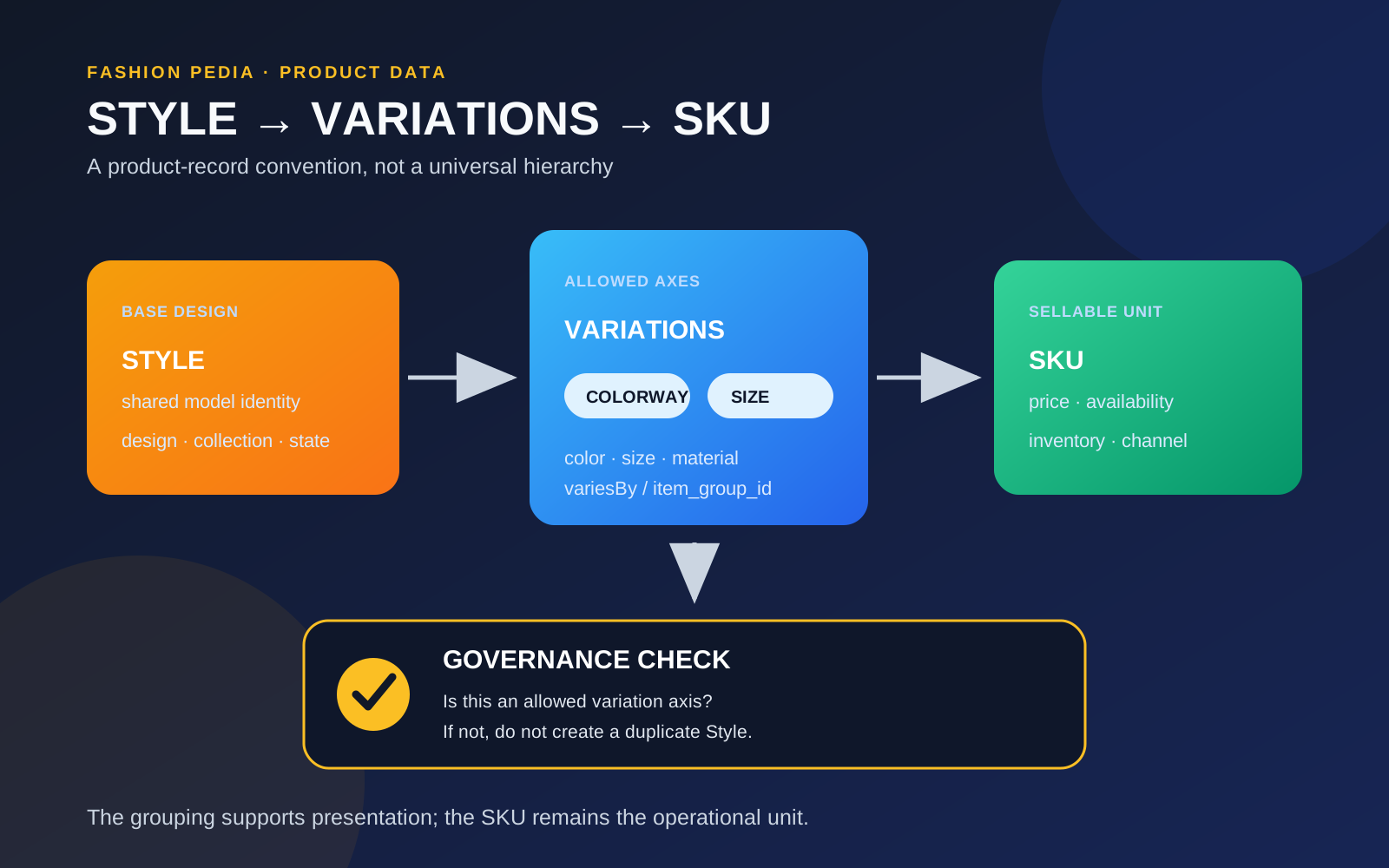
Style in a product record. In a fashion product record, Style can serve as the grouping for a base design and the decisions shared by its variations, but it is not a universal hierarchy. Operationally, that grouping must be separated from color and size variations and from the sellable unit identified by an SKU.
ERP, PLM, and PIM
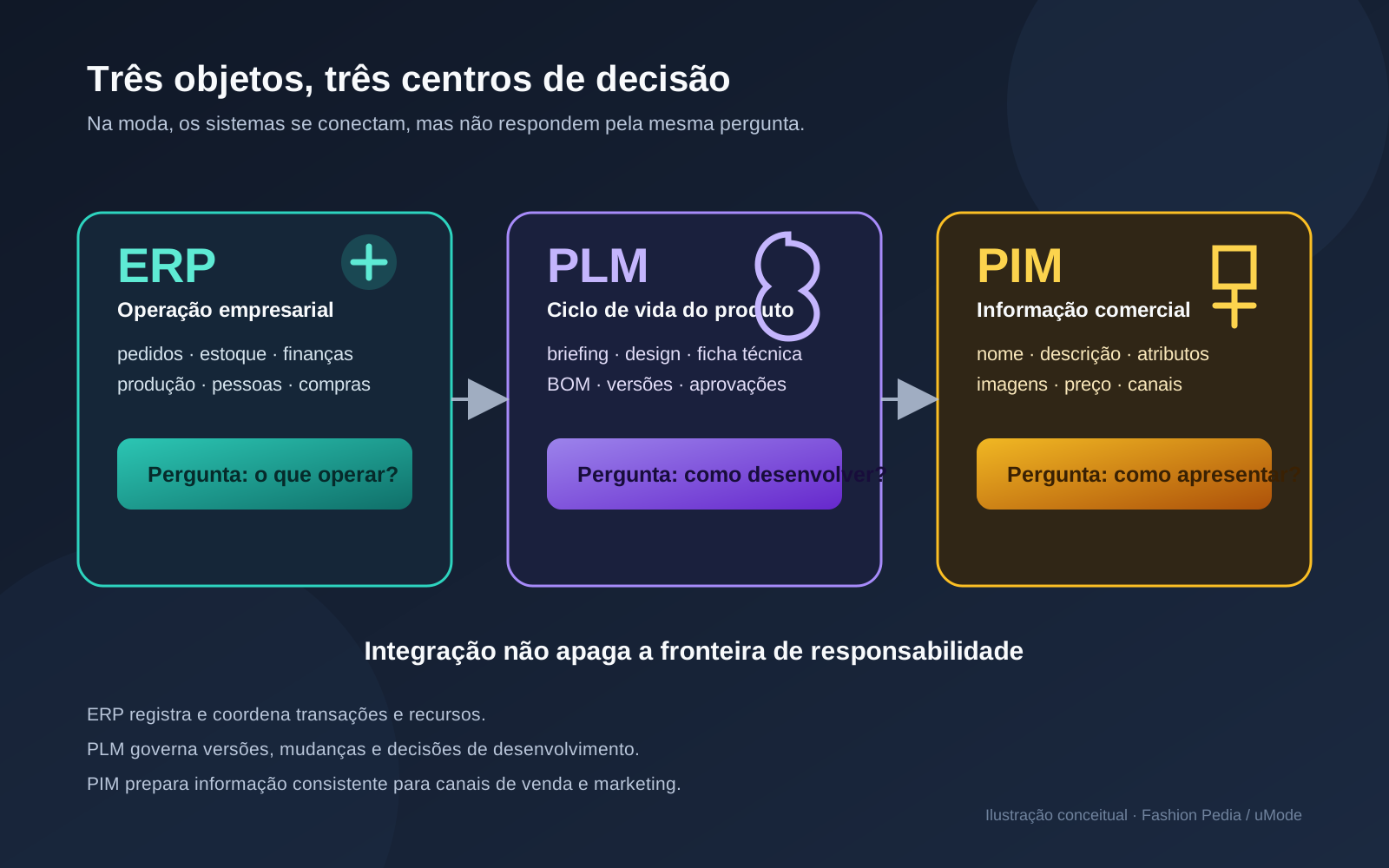
ERP, PLM, and PIM organize different objects in a fashion value chain: ERP integrates business processes and transactional data; PLM follows product lifecycle decisions and development; and PIM centralizes, enriches, and distributes product information for sales and marketing channels.
Sources
- https://schema.org/Product
- https://www.w3.org/TR/vocab-dcat-3/
- https://www.gov.br/inmetro/pt-br/acesso-a-informacao/perguntas-frequentes/avaliacao-da-conformidade/produtos-texteis/o-que-a-medida-regulatoria-para-produtos-texteis-estabelece
- https://www.gov.br/inmetro/pt-br/acesso-a-informacao/perguntas-frequentes/avaliacao-da-conformidade/produtos-texteis/se-um-produto-textil-possui-informacoes-incorretas-e-esta-sendo-comercializado-em-territorio-nacional-ele-esta-irregular
Want to apply this to your operation?