Inventory replenishment
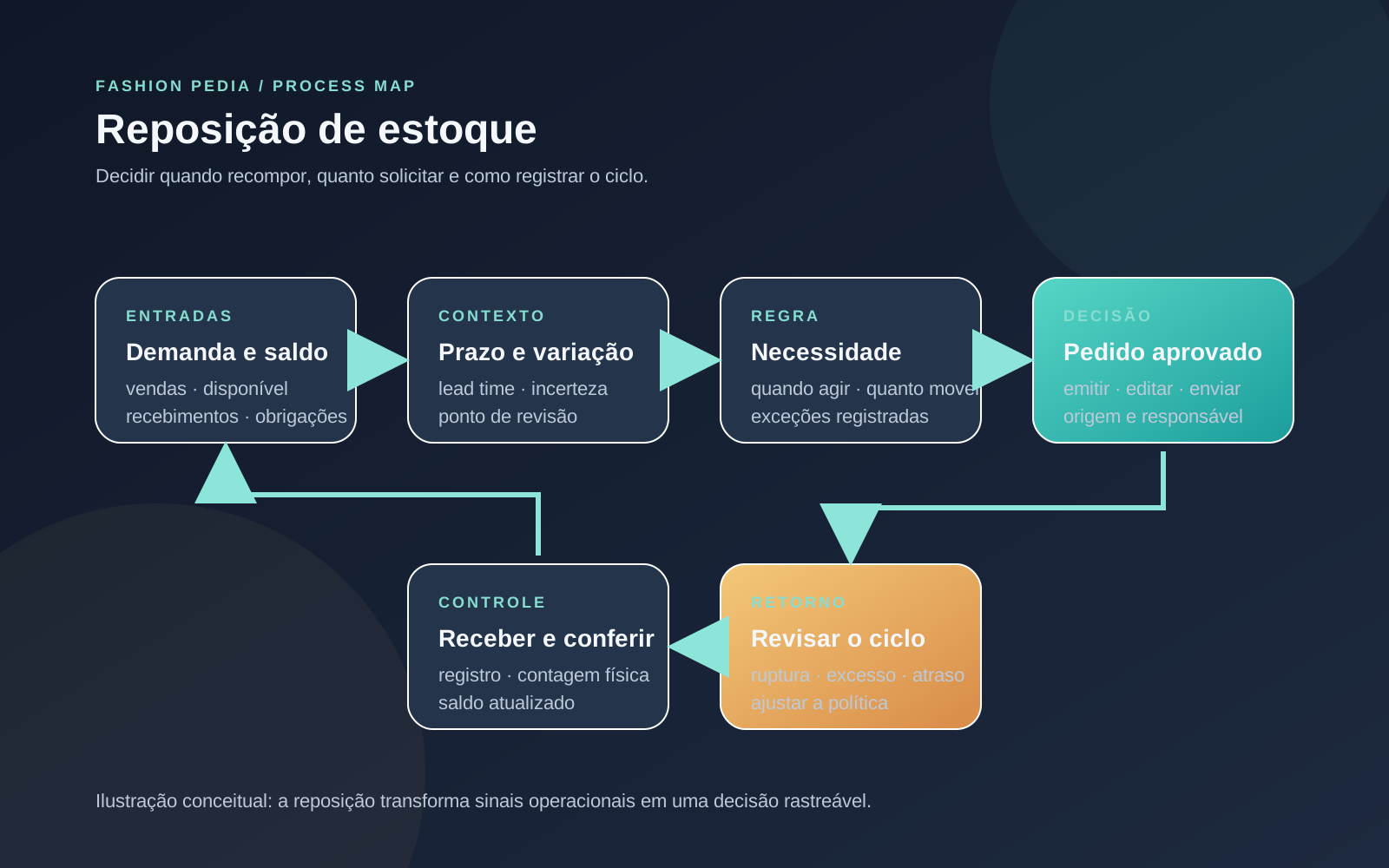
Inventory replenishment is the process of deciding when to restore an item's availability and how much to request for a future need. The decision combines recorded stock, demand, expected receipts, obligations, purchasing lead time and demand variation; the order must then be approved, received and recorded.
On this page
What is Inventory replenishment?
Inventory replenishment is the decision to restore an item's availability before a future need harms service. The record must bring together available stock, past demand, expected receipts and current obligations. This is not merely an administrative list: it defines what the team considers available and which gap the replenishment is meant to cover. Demand planning can support the reading of historical series, while initial allocation describes a different stage that precedes consumption monitoring.
The FAA source distinguishes recurring-demand items from requirements that are less predictable. For the first group, a rule can use historical average demand or a trend-adjusted forecast and should account for observed variation. A policy should therefore not copy the same parameter across every reference: state the item, location, unit, time window and exception rule.
How should the timing and quantity be defined?
The moment to act can be organized through an acquisition review point. In the FAA formulation, it combines average demand during procurement lead time with additional potential demand associated with variation. Lead time is therefore not a side note: it changes the window that the decision must cover. Fashion lead time names this operational dimension, but it does not replace measurement of the actual lead time in each flow.
Safety stock is protection against unexpected demand or a delay in receiving the shipment. It is not the same as the replenishment quantity and does not prove that a policy is correct. Record the assumption, unit of measure and event that allows the parameter to be reviewed. In a fashion operation, the team may separate style, color and size in the product record when those dimensions are needed for the decision; this is a modelling recommendation, not a universal formula.
The proposal should produce a verifiable output: an order, a transfer or no action. Keep the calculation with the data version, owner, date and reason for any manual intervention. Inventory turnover can contextualize sales velocity, but it does not determine the replenishment point or quantity by itself.
How is the cycle executed, received and reviewed?
In an Oracle-documented store workflow, a store can review orders suggested by the central office, approve or edit them, submit them to the vendor and also create its own orders. The process distinguishes tracking statuses such as open, submitted, confirmed, partially received and closed. Operationally, “order submitted” and “stock available” are different milestones; the record should show the status of each document.
Checking begins with the receipt record and comparison with the physical quantity. The FAA guide defines location inventory accuracy as the relationship between recorded inventory and inventory physically found, and connects the measure to recorded receipts and organized locations. Replenishment therefore does not end at submission: include receipts, issues, returns, excesses and adjustments in the data trail. Product data quality makes the dictionary used by each field explicit.
Review can monitor stockouts, excess, delays, partially received orders and count discrepancies, always with a stated period and denominator. According to NIST, time-series analysis is one possible tool for inventory studies and sales forecasting; it does not remove the need to check changes in context. Store clusters can organize policies by group, but should not hide differences in assortment, lead time or availability.
Limits and relationships in the fashion chain
Replenishment is not the same as markdown: the first seeks to restore availability, while the second changes the commercial condition of the item. It is also not synonymous with sourcing and supplier management, which addresses the relationship and supply decision at origin. A replenishment rule should remain tied to the product record, location and period that support it instead of becoming a fixed target applied to every collection.
Verified facts
- Inventory management depends on up-to-date records of available stock, past demand, expected receipts and current obligations for future requirements.
Source: faa.gov ↗ - For recurring-demand items, stock levels can use average past demand or a forecast adjusted by a trend factor while accounting for demand variation.
Source: faa.gov ↗ - An acquisition review point can combine average demand during procurement lead time with additional potential demand arising from variation.
Source: faa.gov ↗ - Safety stock protects against stockouts caused by unexpected demand or delays in receiving a replenishment shipment.
Source: faa.gov ↗ - Location inventory accuracy compares the record with the quantity physically available and helps assess whether receipts and movements were recorded.
Source: faa.gov ↗ - Inventory records should cover receipts, issues, returns, excess documents, survey documents and inventory adjustments.
Source: faa.gov ↗ - In an Oracle-documented store workflow, a store can review orders suggested by the central office, approve or edit them and submit them to a vendor; it can also create its own orders.
Source: docs.oracle.com ↗ - The Oracle-documented replenishment flow distinguishes statuses such as open, submitted, confirmed, partially received and closed.
Source: docs.oracle.com ↗ - Time-series analysis can be applied to sales forecasting and inventory studies, among other industrial applications.
Source: itl.nist.gov ↗
Related entries
Initial Stock Allocation
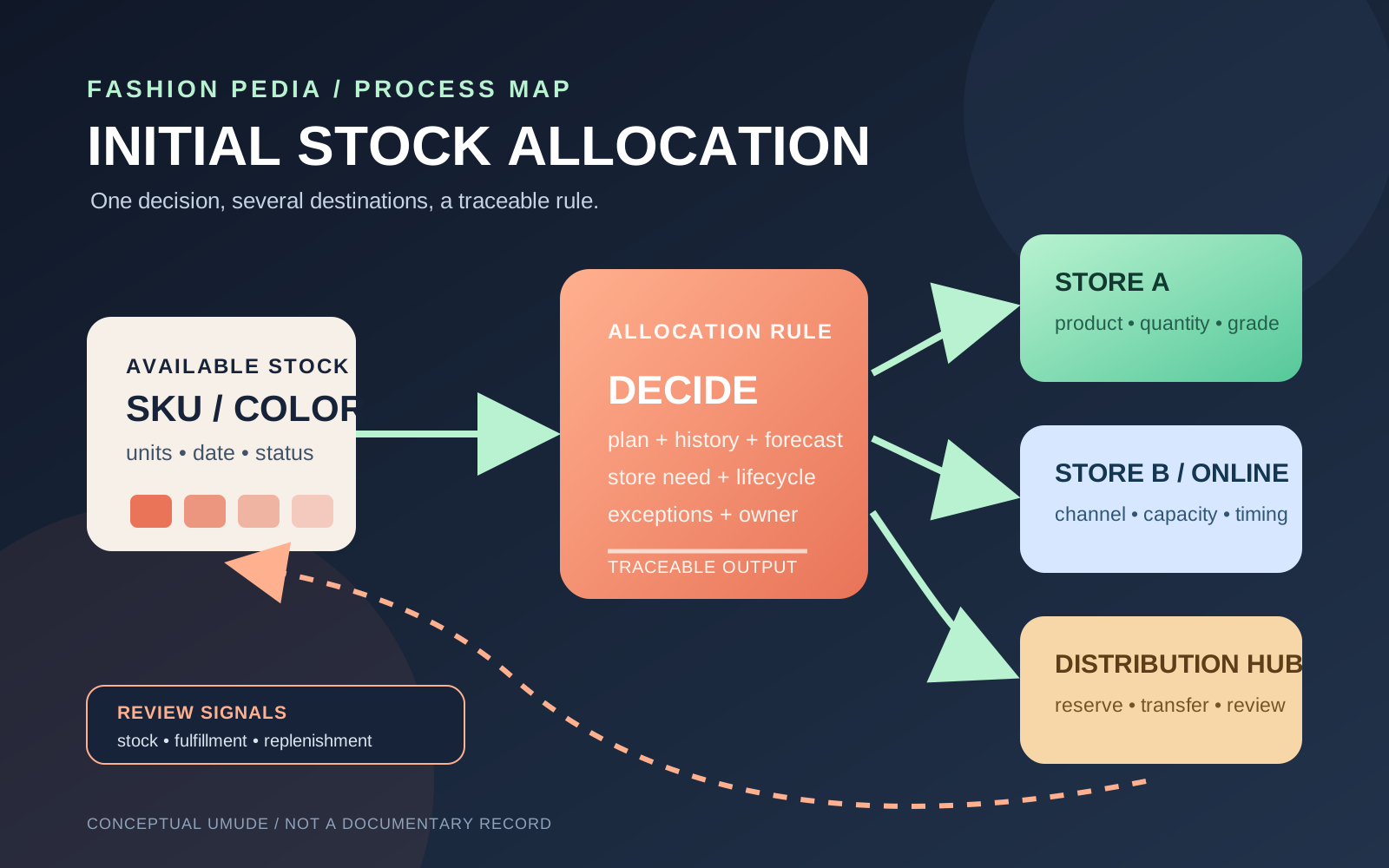
Initial stock allocation is the process of deciding how the first available quantity of a product will be distributed across stores, channels, or other service points. A sound record makes the product, destination, quantity, data source, and exceptions visible.
Inventory turnover
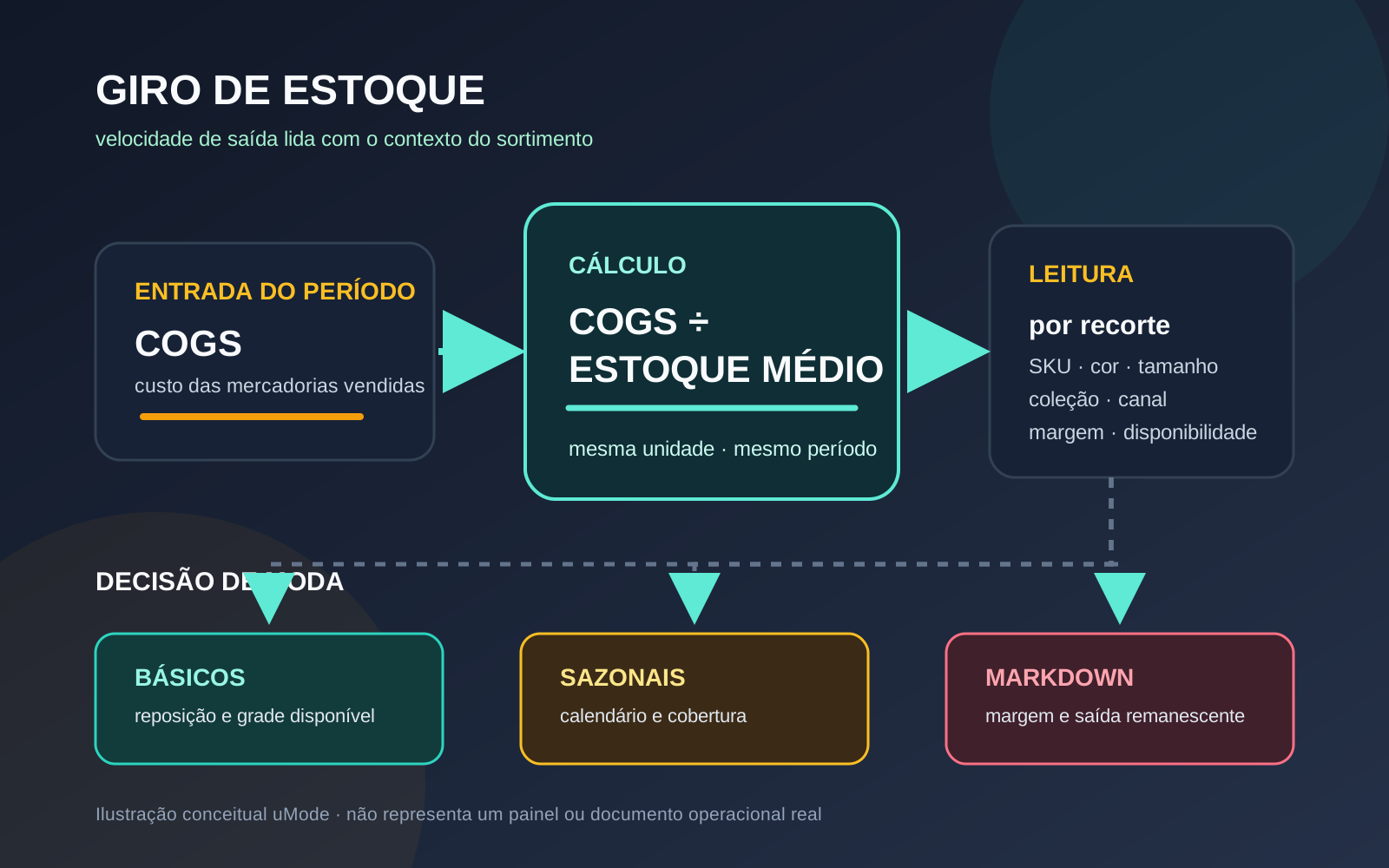
Inventory turnover is the ratio of cost of goods sold to average inventory over a defined period. In fashion retail, it must be read by product, collection, and channel alongside availability, margin, coverage, and markdowns, because speed of movement does not explain assortment quality on its own.
Demand planning in fashion
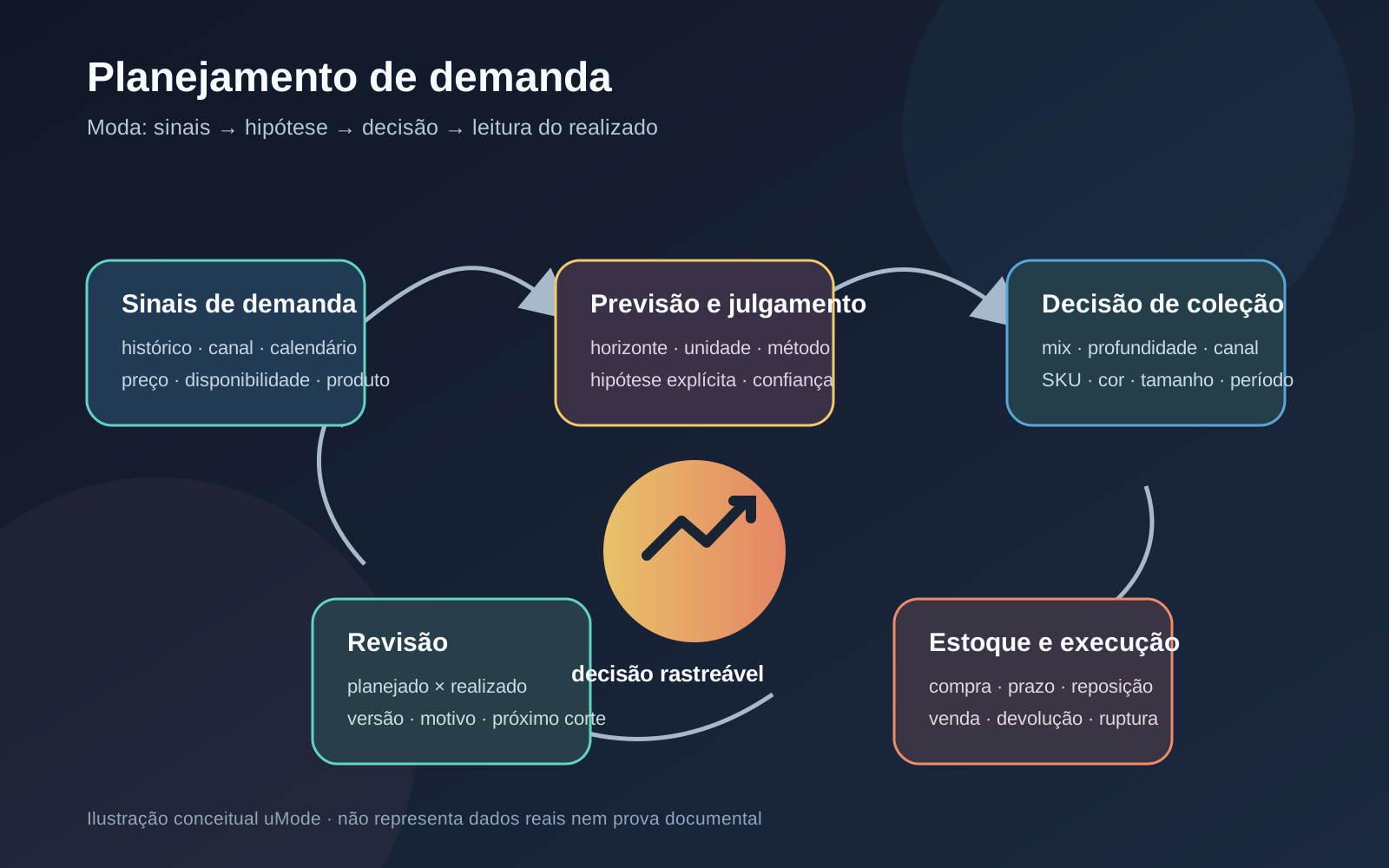
Demand planning in fashion turns demand signals, history, calendar context and judgement into explicit decisions about assortment, volume, channel and review. It combines forecasting with governance: every hypothesis needs a horizon, unit, owner and rule for revision when the collection or market changes.
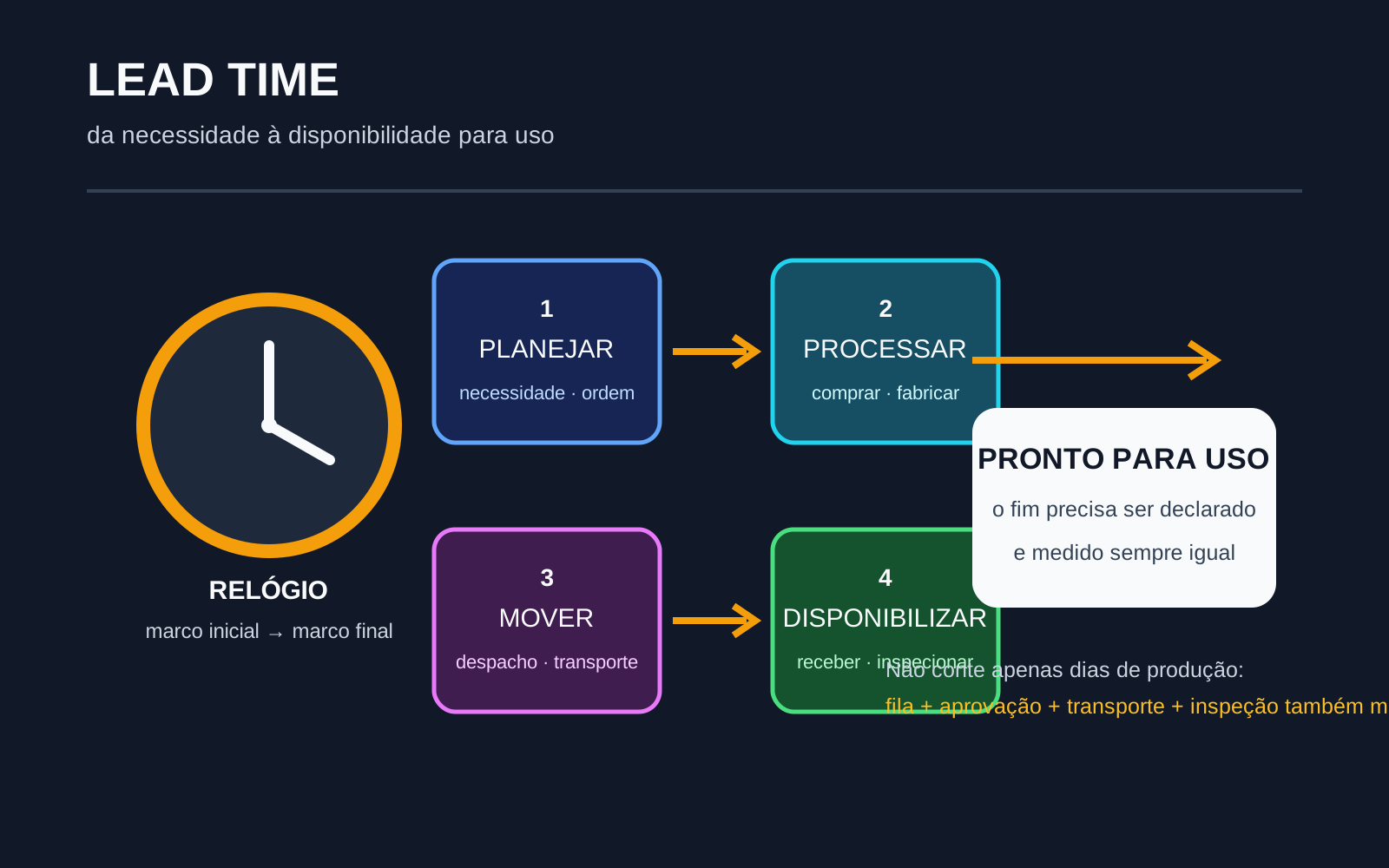
Lead time in the fashion supply chain
Lead time in the fashion supply chain. Lead time in a fashion supply chain is the elapsed time between defined operational milestones, such as ordering and receipt or design and production. A useful measure states its object, start, end, waiting periods, calendar, unit and availability condition.
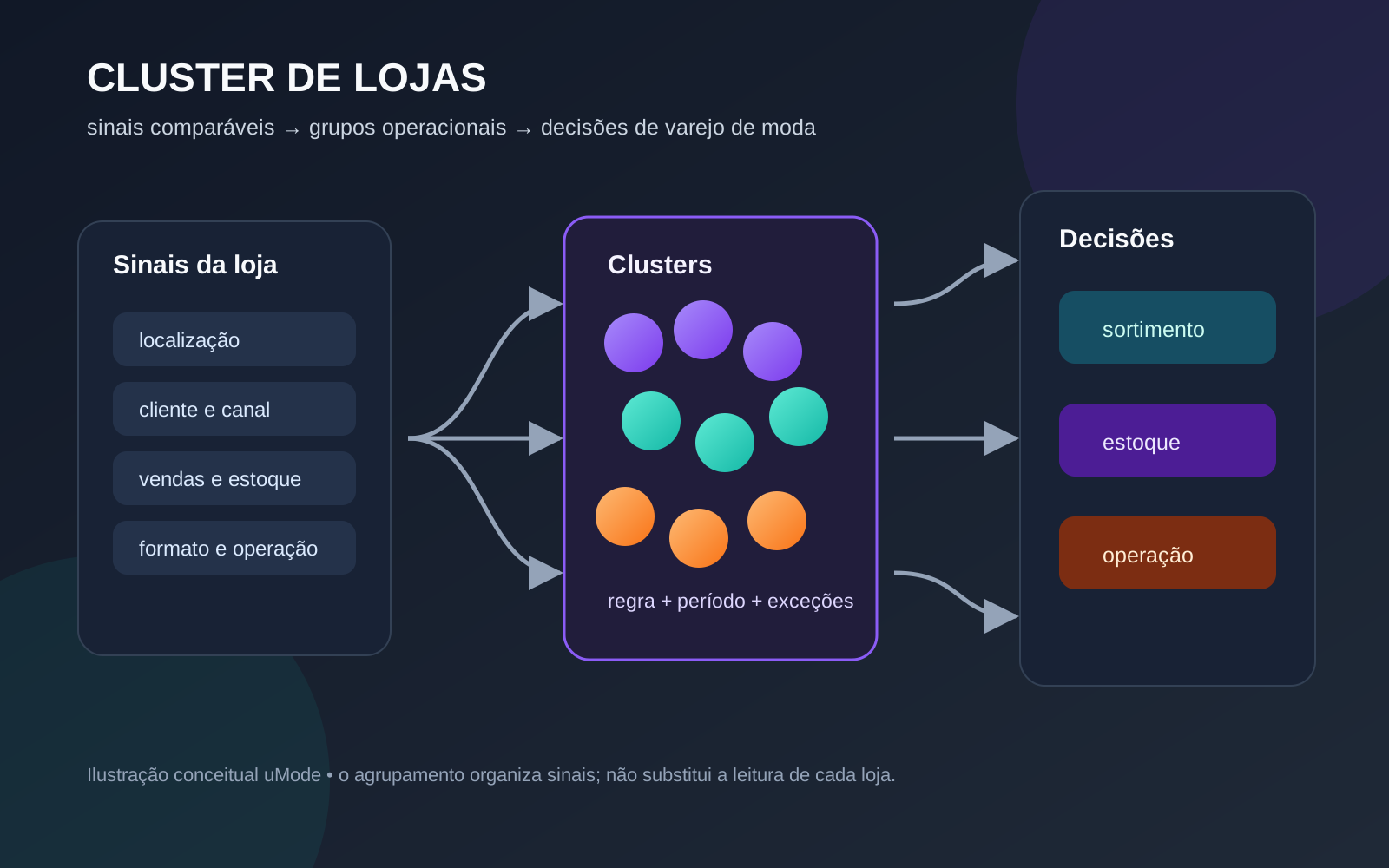
Store clustering in fashion retail
Store clustering in fashion retail. Store clustering is the process of grouping points of sale around relevant patterns in location, customer behavior, assortment, or operations so retail decisions can be made with more context. In fashion, it helps distinguish store needs without assuming that every unit should receive the same mix or inventory.
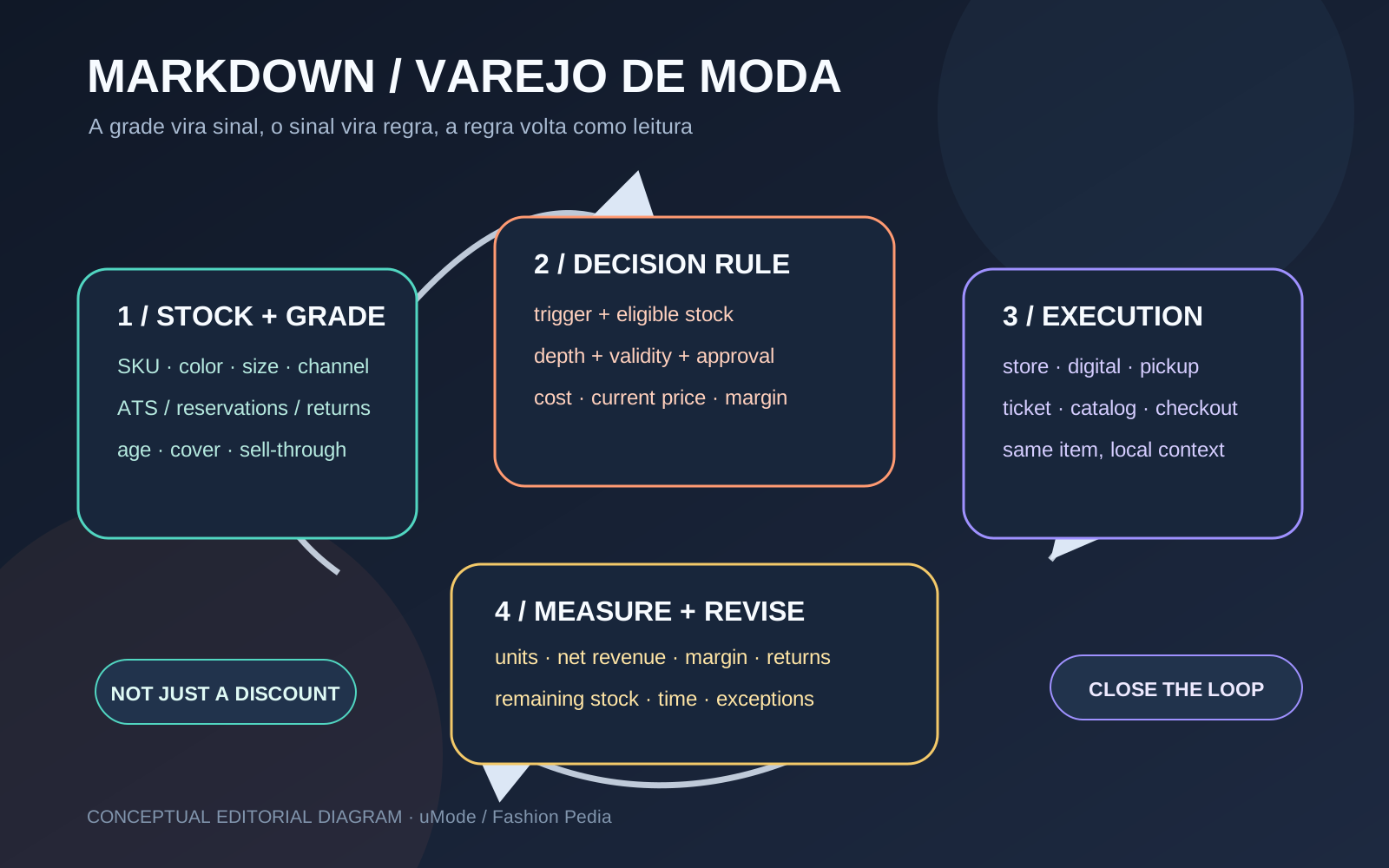
Fashion retail markdown
Fashion retail markdown is a controlled price reduction applied to a defined product, location, and channel to move stock while preserving visibility into size availability and margin. The process starts with sellable inventory and sales signals, applies a documented rule, and measures the result rather than treating a new ticket price as the result itself.
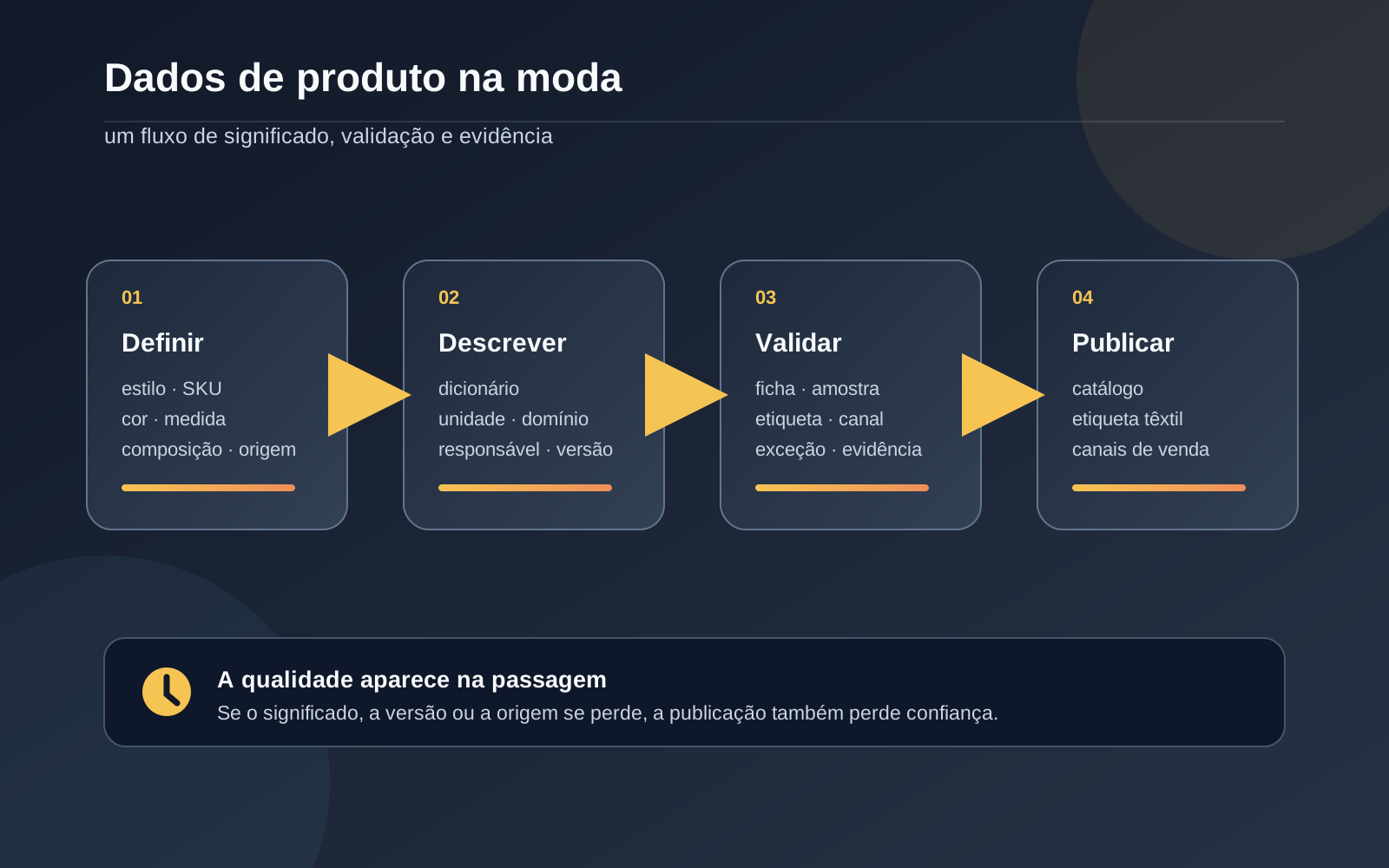
How to improve product data quality
How to improve product data quality. Improving product data quality in fashion means separating style, variant, technical attribute and regulatory record; defining every field; validating source and format; and controlling the handoff from tech pack to catalog, label and sales channel. The process becomes dependable when each exception has an owner, evidence and a version.
Sources
Want to apply this to your operation?