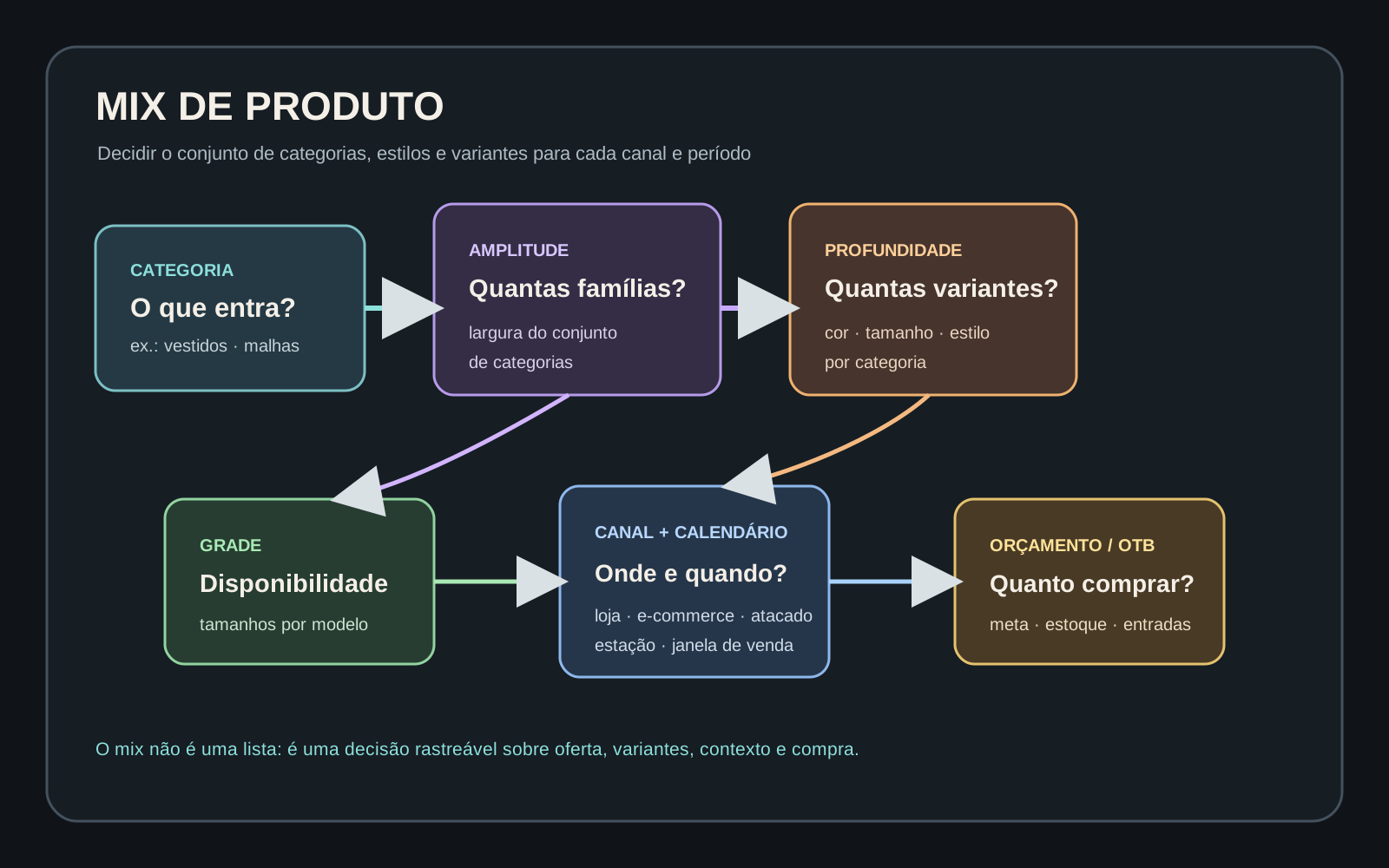
Product cataloging, enrichment, and taxonomy
Product cataloging, enrichment, and taxonomy is a process for turning fashion objects into records that can be identified, understood, related, and used. It separates the minimum product record from contextual information and from the relationships that support consistent search, operations, and publishing.
On this page
What is Product cataloging, enrichment, and taxonomy?
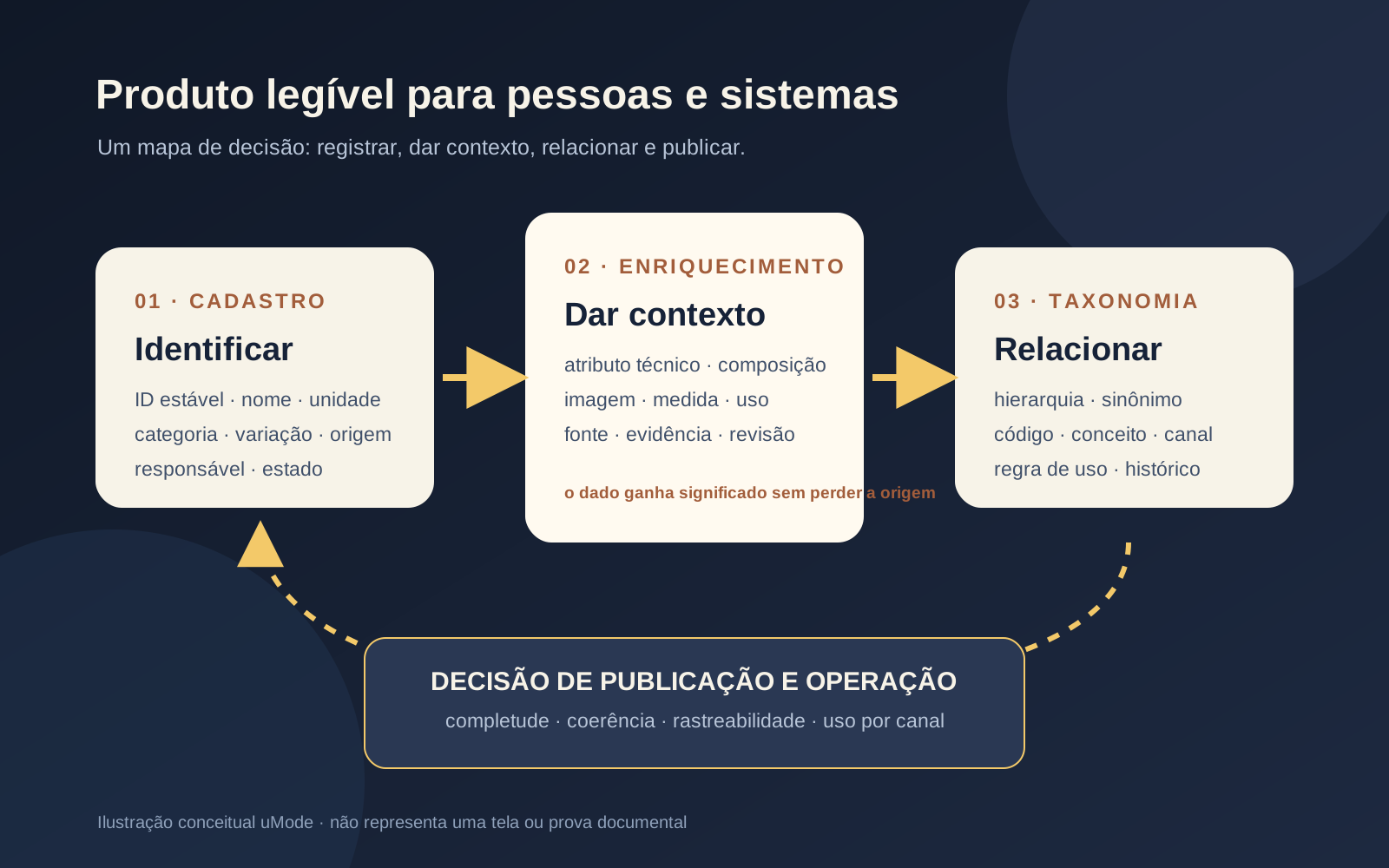
Product cataloging, enrichment, and taxonomy is an information process that turns a garment, material, or variant into an object that creation, development, operations, and publishing teams can understand. Cataloging fixes the minimum identity; enrichment adds context; taxonomy establishes relationships and navigation paths. The boundary with fashion PIM, fashion DAM, fashion SKU, product style, product data quality, and ERP, PLM, and PIM differences should stay explicit: these are connected scopes, not synonyms.
Name the working unit before filling fields. It may be a style, color, size, composition, image, technical sheet, or channel offer. Without that choice, one attribute acquires different meanings and the catalog mixes product-level data with variant-level data.
How should the minimum product record be structured?
The minimum record identifies an object so another person can find it without relying on memory. Define a stable identifier, working name, initial category, variant, unit, data origin, owner, and record state. Also record what has not been confirmed; a visible gap is more useful than a value filled by assumption.
For fashion, separate style, color, and size when they have different operational lives. A record may point to material, textile composition, measurement, supplier, and collection, but each relationship needs a maintenance rule. The catalog does not need to carry the entire development history: it needs to point to the right source and preserve the link to technical sheet and product sample when those records exist in the graph.
What does enrichment add?
Enrichment adds information that helps a decision without erasing the data origin. Add technical attributes, composition, measurements, care instructions, images, use context, size availability, and channel context only when each has a definition and an owner. Distinguish information supplied by a team, received from a supplier, interpreted by an editor, and reviewed as a value.
A useful attribute specification answers: what does it mean, which format does it accept, which values are allowed, which unit applies, who updates it, when it is reviewed, and which systems consume it. One color may need a commercial name, an internal code, and a visual description; do not collapse those layers into one answer. In a flow connected to product catalog and product content, origin should travel with the transformation to the channel.
How does taxonomy guide use and navigation?
Taxonomy organizes concepts, hierarchies, synonyms, and relationships so people and systems can find the same object through compatible paths. Start with the task the classification must support: buying, development, sourcing, search, filtering, reporting, or publishing. Then define preferred concepts, alternate terms, codes, levels, concept relationships, and exception rules.
A hierarchy is not merely a neat tree. A category needs an entry criterion, examples, and a boundary; a level change should preserve history and make older records findable. If “jacket” and “coat” are treated as equivalent in one channel, the rule should state where that equivalence applies and where the concepts remain distinct. fashion taxonomy, product attribute, and faceted search may connect, but each answers a different question.
How can quality be tested before publishing?
Test complete records, incomplete records, duplicates, incorrect units, unauthorized synonyms, and attributes that conflict with a category. Compare the result in the source system and in the consuming channel. Measure completeness, consistency, duplication, and correction time only after defining the population, formula, period, and owner; a metric does not replace investigation of the record.
The process is sufficiently defined when someone can identify the object, explain where each value came from, find its related concepts, and know which exception requires a decision. This trail reduces ambiguity without promising that a tool, a hierarchy, or a single indicator will solve the whole operation.
Verified facts
- SKOS is a common data model for sharing and linking knowledge organization systems on the Web.
Source: w3.org ↗ - Thesauri, taxonomies, classification schemes, and subject heading systems share similar structures that SKOS makes explicit.
Source: w3.org ↗ - The SKOS model provides a standard, low-cost migration path for bringing knowledge organization systems to the Semantic Web.
Source: w3.org ↗ - In SKOS, concepts can be identified by URIs, labeled in one or more languages, documented, linked to other concepts, and organized into hierarchies and association networks.
Source: w3.org ↗ - Schema.org defines Product as any offered product or service, including a pair of shoes.
Source: schema.org ↗ - In Schema.org, additionalProperty represents a property-value pair for an additional characteristic without a matching property.
Source: schema.org ↗ - In Schema.org, category is a category for the item, and greater signs or slashes can informally indicate a category hierarchy.
Source: schema.org ↗ - In Schema.org, colorSwatch is an image visualizing a Product color and should match the textual description in color.
Source: schema.org ↗ - Google documentation says product structured data can make information appear in richer ways in Search, Google Images, and Google Lens.
Source: developers.google.com ↗ - Google distinguishes two main classes of product structured data: product snippets and merchant listings.
Source: developers.google.com ↗
Related entries
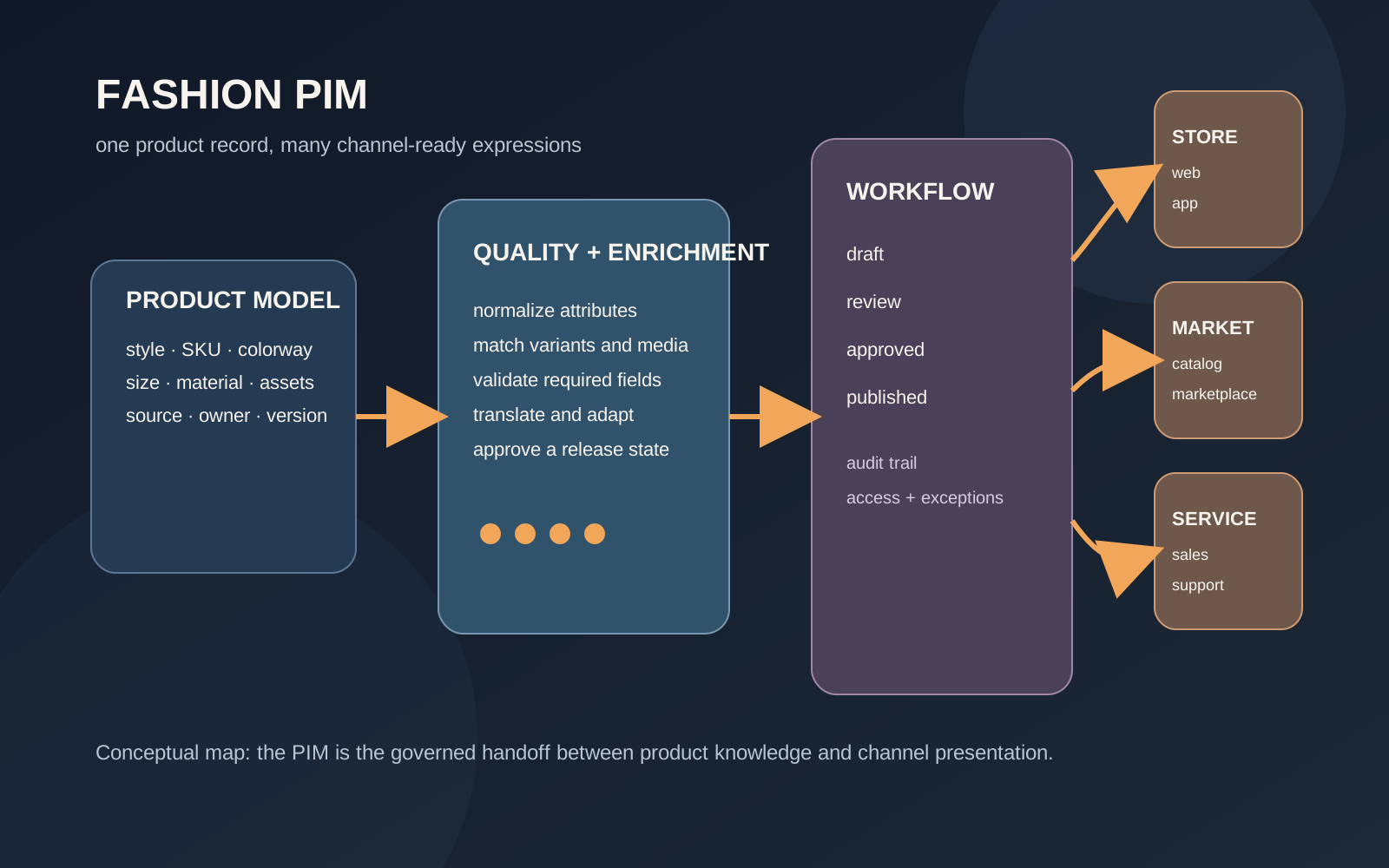
Fashion PIM
Fashion PIM is the process of organizing, enriching, validating and distributing product data to the channels that present a collection. It combines a data model, quality rules, ownership and integrations; it is not merely a catalog and does not automatically replace PLM, ERP or DAM.
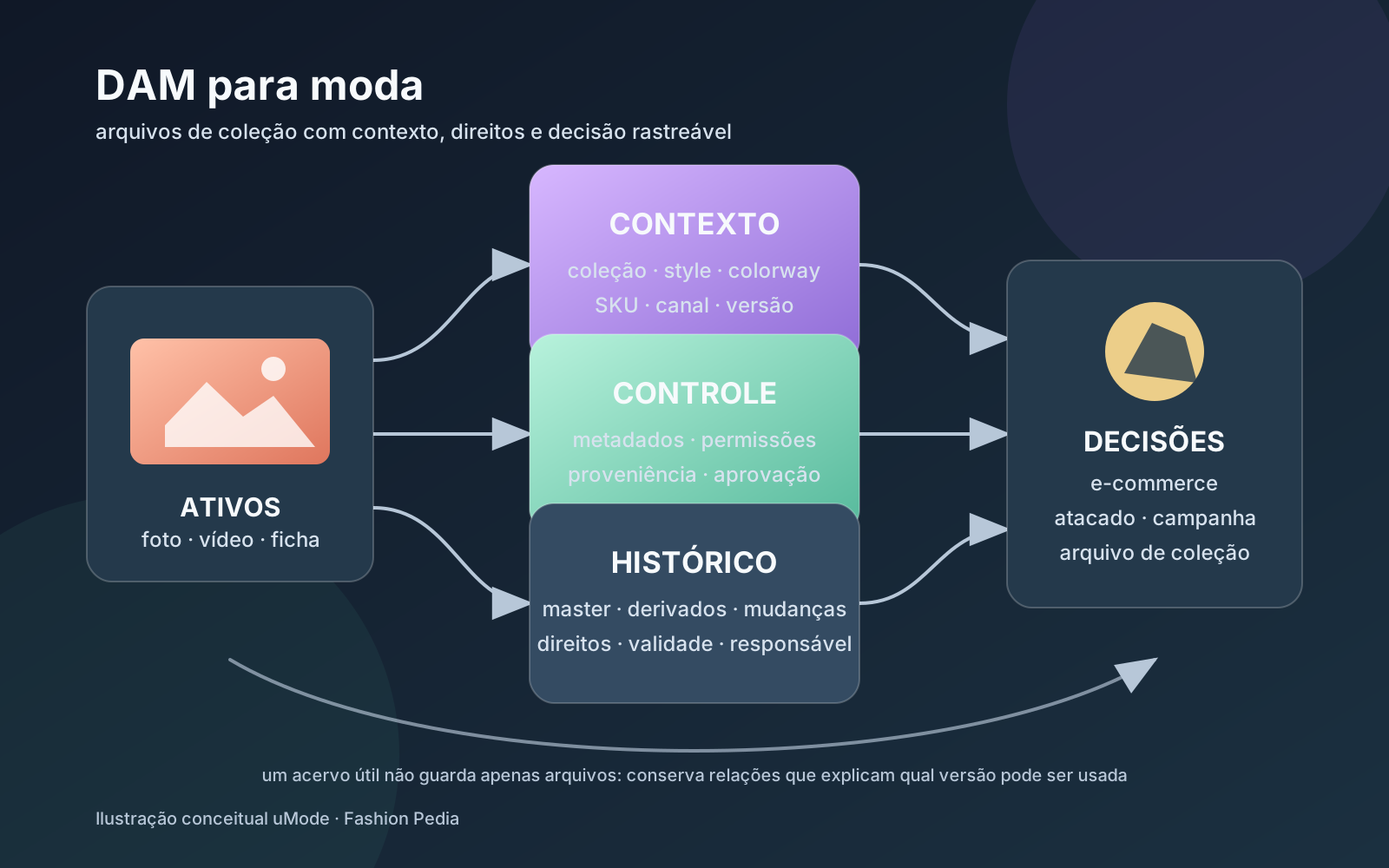
Fashion DAM
Fashion DAM is the process of storing, organizing, finding, controlling and distributing a collection's digital files while keeping metadata, permissions, versions, rights and provenance connected to product context. In practice, it turns images, videos, tech packs and derivatives into an operating base for design, wholesale, retail and communications.
Fashion SKU
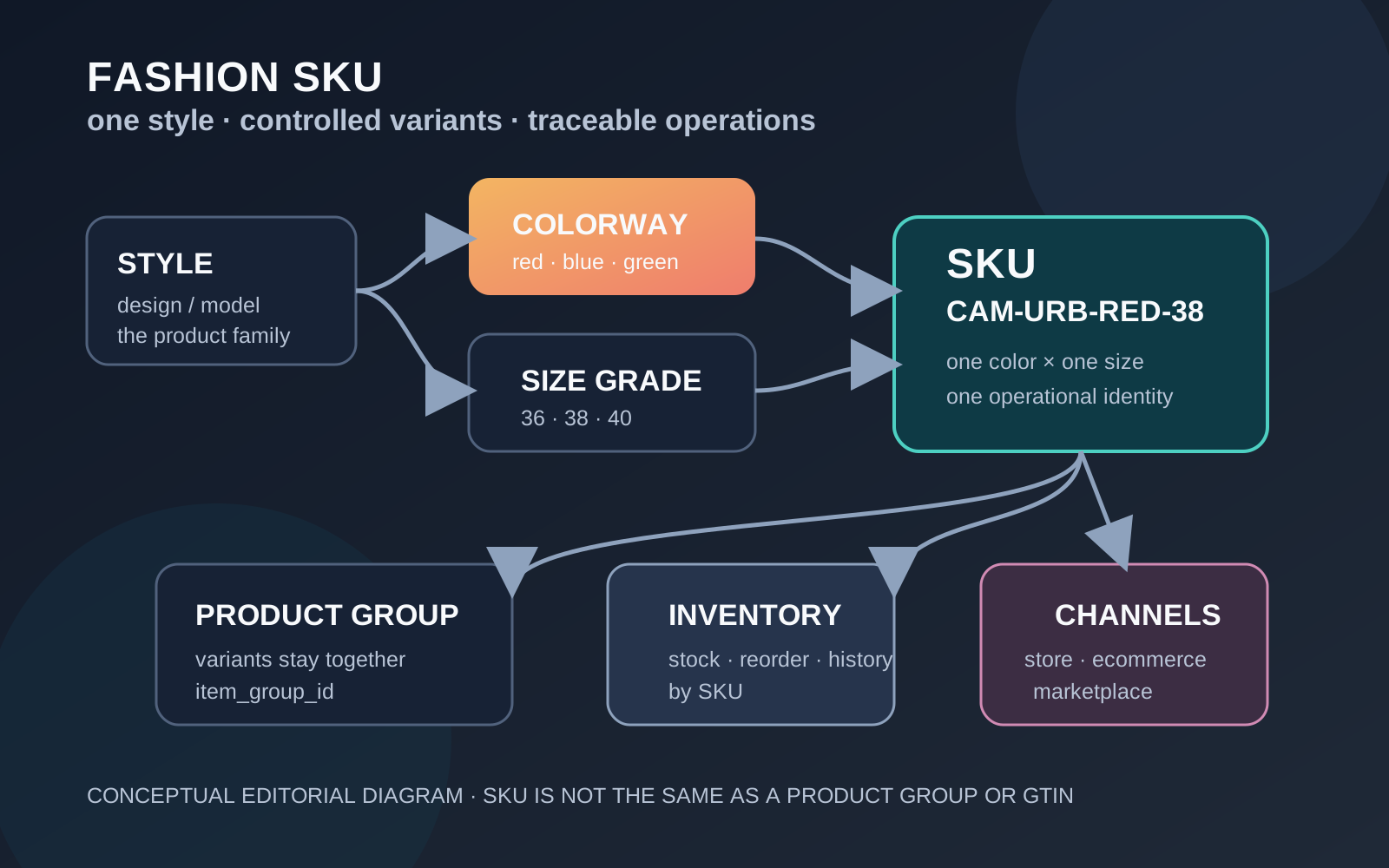
A fashion SKU is an identification unit used to distinguish items and variants in inventory control. In apparel, the useful distinction is between the individual SKU, the product group, color and size attributes, and assortment decisions.
Style in a product record
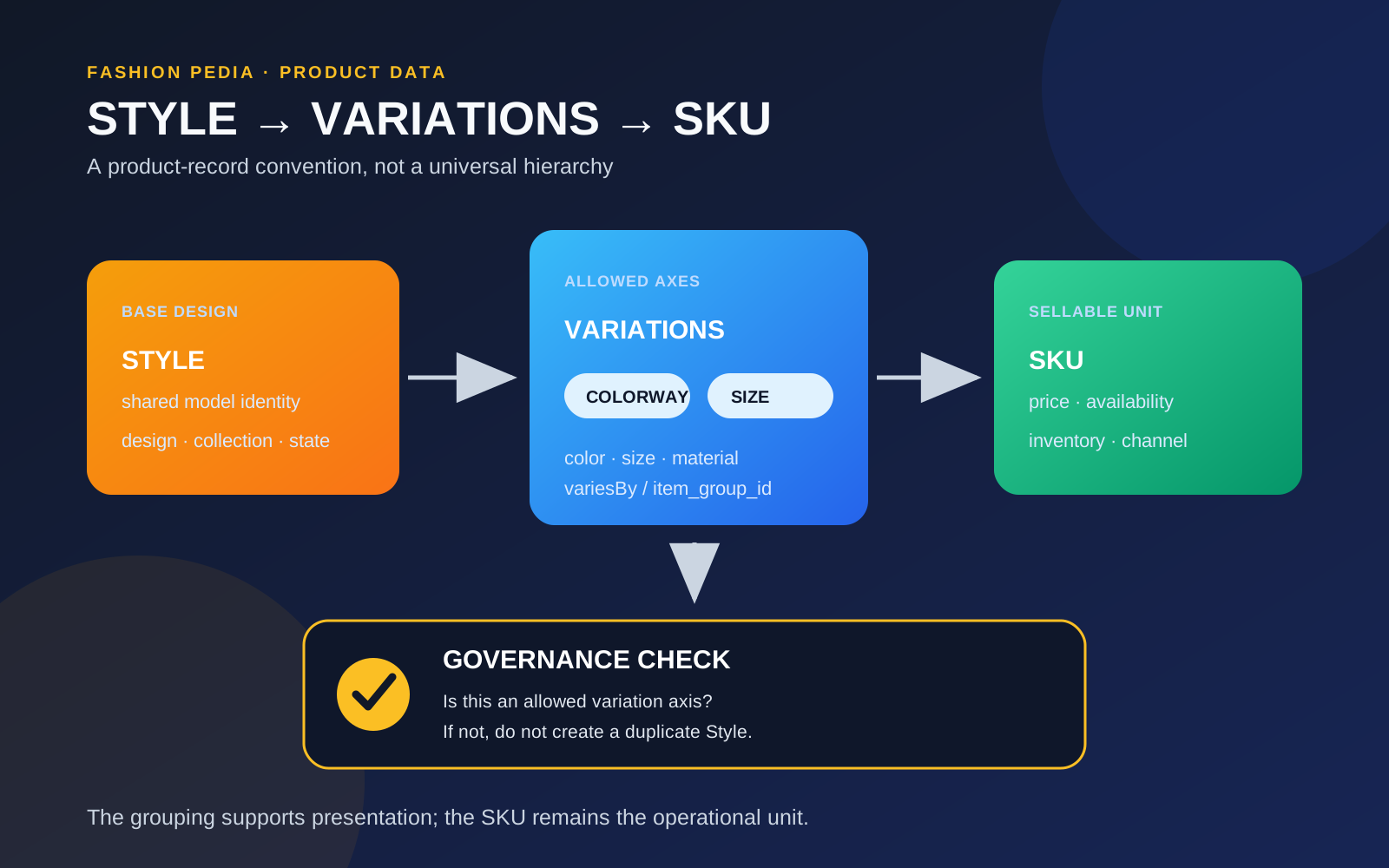
Style in a product record. In a fashion product record, Style can serve as the grouping for a base design and the decisions shared by its variations, but it is not a universal hierarchy. Operationally, that grouping must be separated from color and size variations and from the sellable unit identified by an SKU.
How to improve product data quality
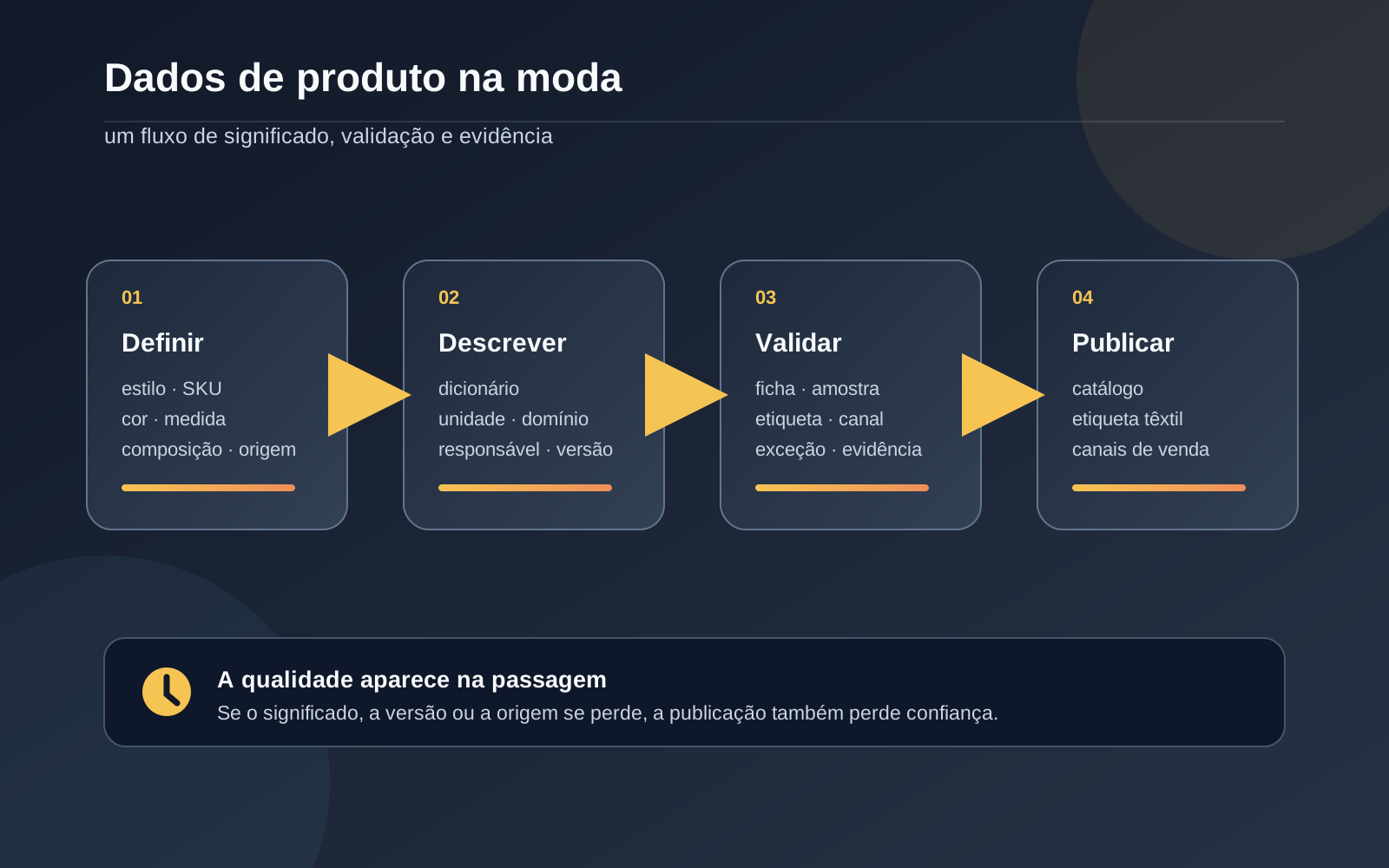
How to improve product data quality. Improving product data quality in fashion means separating style, variant, technical attribute and regulatory record; defining every field; validating source and format; and controlling the handoff from tech pack to catalog, label and sales channel. The process becomes dependable when each exception has an owner, evidence and a version.
ERP, PLM, and PIM
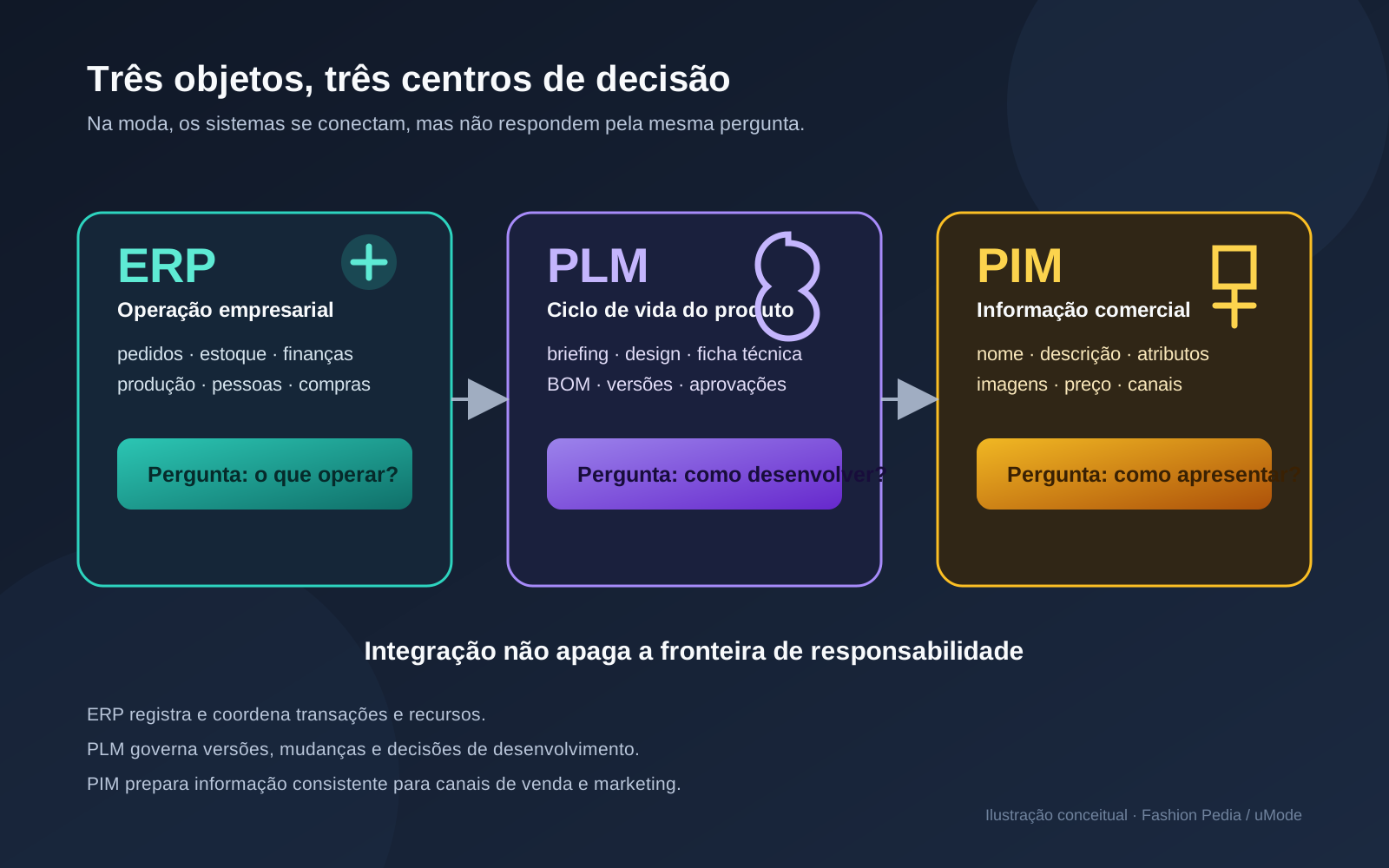
ERP, PLM, and PIM organize different objects in a fashion value chain: ERP integrates business processes and transactional data; PLM follows product lifecycle decisions and development; and PIM centralizes, enriches, and distributes product information for sales and marketing channels.
Sources
Want to apply this to your operation?