ERP, PLM, and PIM
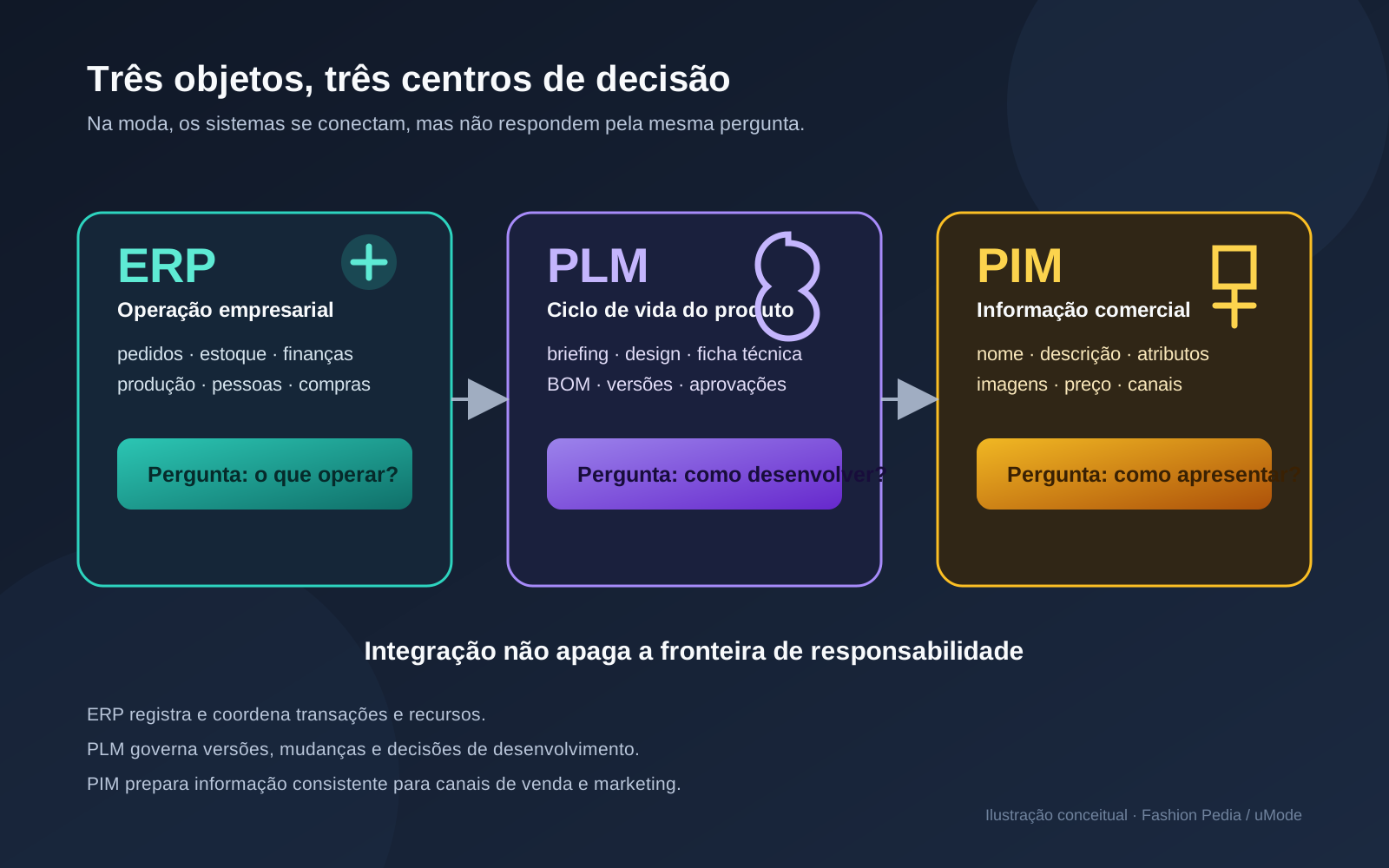
ERP, PLM, and PIM organize different objects in a fashion value chain: ERP integrates business processes and transactional data; PLM follows product lifecycle decisions and development; and PIM centralizes, enriches, and distributes product information for sales and marketing channels.
On this page
What is ERP, PLM, and PIM?
ERP, PLM, and PIM are not synonyms: ERP integrates and automates business processes, PLM follows a product through its lifecycle, and PIM prepares product information for publication across channels. This distinction matters in fashion because a collection moves through development, operations, and commercial presentation without becoming one undifferentiated record.
PLM should be read as a product-decision layer. It can cover concept, design, procurement, production, service, and disposal while connecting people, data, processes, and systems. In apparel development, that brings together a tech pack, requirements, versions, a product BOM, change orders, and approvals. The key question is how the product changes and why a decision was made.
ERP answers a different question: how the business operates. The category integrates core processes and can bring together finance, manufacturing, and human resources; it can also keep transactional and operational data in a central database. In a fashion value chain, that scope relates to orders, purchasing, inventory, production, and financial movements. ERP does not replace product-development decisions or commercial product copy.
How does PIM differ in a fashion value chain?
PIM organizes the information that must reach sales and marketing channels. It can store, organize, manage, enrich, and distribute data such as product names, descriptions, specifications, and prices while maintaining a central reference for publication. In fashion operations, this draws a boundary between channel-ready commercial information and the development history held in PLM.
The quality question also changes by system. In PLM, teams check versions, requirements, changes, approvals, and relationships between components. In ERP, they check transactions, resources, orders, and operational records. In PIM, they check completeness, consistency, validation, language, and channel suitability. Inriver lists centralized data, enrichment, organization, validation, quality assurance, and multilingual support among essential PIM capabilities.
These boundaries do not prevent integration. An approved tech pack can feed data needed for operations; operational data can inform development decisions; and selected attributes can be prepared for e-commerce. Integration should declare which system owns each object, which version is valid, and which fields may be changed at each stage. That is a design guideline, not an automatic property of every implementation.
How can teams choose the right scope without confusing systems?
Start with the question the team needs to answer. If the question is “what was bought, produced, invoiced, or moved?”, the object is operational and the scope leans toward ERP. If it is “which product version was approved, with which components and changes?”, the scope leans toward PLM. If it is “which product information will be published in each channel and language?”, the scope leans toward PIM. The question prevents a category from being chosen by software name alone.
In practice, draw a small matrix with object, owner, source of truth, version, approval, integration, and destination. For a fashion brand, a style may begin in PLM, participate in an ERP transaction, and receive descriptions and attributes in PIM. The same style appears in all three contexts, but with different purposes and rules. Linking ERP for fashion, PLM for fashion, and PIM for fashion keeps the vocabulary precise.
The limits matter. A central data repository does not, by itself, resolve missing fields, unclear ownership, or undefined approval criteria. Integration also does not authorize every system to edit everything. To reduce confusion, record the event that starts each flow, the expected output, exception handling, and the evidence that permits acceptance or rejection. This connects the topic to fashion data governance without turning ERP, PLM, and PIM into synonyms.
What changes in fashion work?
The distinction changes the conversation between design, development, sourcing, production, retail, and e-commerce. PLM holds product logic; ERP coordinates operations; PIM organizes commercial presentation. A useful diagnosis first asks which object is incomplete or inconsistent, and only then evaluates integration, permissions, approvals, and maintenance.
The comparison must also separate category capability from business outcome. The sources describe software functions and scope; they do not support a universal promise of speed, conversion, cost reduction, or superiority. For a real decision, the company still needs to test its workflow, data, channels, and exceptions. The central boundary is simple: ERP, PLM, and PIM can work together, but they do not answer for the same layer of the value chain.
Verified facts
- PLM is a strategic approach to managing a product lifecycle from concept and design through procurement, production, service, and disposal.
Source: ibm.com ↗ - PLM integrates people, data, processes, and business systems into an information backbone.
Source: ibm.com ↗ - PLM tools provide centralized repositories for product data.
Source: ibm.com ↗ - Oracle describes PLM as managing a product journey from ideation through development, service, and disposal.
Source: oracle.com ↗ - PLM software manages information and processes at every step of a product or service lifecycle across globalized supply chains.
Source: oracle.com ↗ - The PLM scope described by Oracle includes items, parts, products, documents, requirements, engineering change orders, and quality workflows.
Source: oracle.com ↗ - ERP is a type of business management software used to integrate and automate core business processes.
Source: microsoft.com ↗ - An ERP unites functions such as finance, manufacturing, and human resources.
Source: microsoft.com ↗ - ERP systems store transactional and operational data in a central database.
Source: microsoft.com ↗ - PIM can store, organize, manage, enrich, and distribute product information across channels as a single source of truth.
Source: akeneo.com ↗ - A PIM can consolidate product names, descriptions, specifications, and prices.
Source: akeneo.com ↗ - A PIM keeps product data connected, accurate, and ready to publish across every channel.
Source: inriver.com ↗ - Inriver lists centralized product data, enrichment, organization, validation, quality assurance, and multilingual support among essential PIM capabilities.
Source: inriver.com ↗
Related entries

Fashion PLM: data, product, and lifecycle
Fashion PLM is the structured management of the data, decisions, and workflows that follow a product and a collection from concept through post-launch. It connects tech packs, materials, costs, samples, approvals, suppliers, and versions so that every function works from a traceable product definition.
Fashion PIM
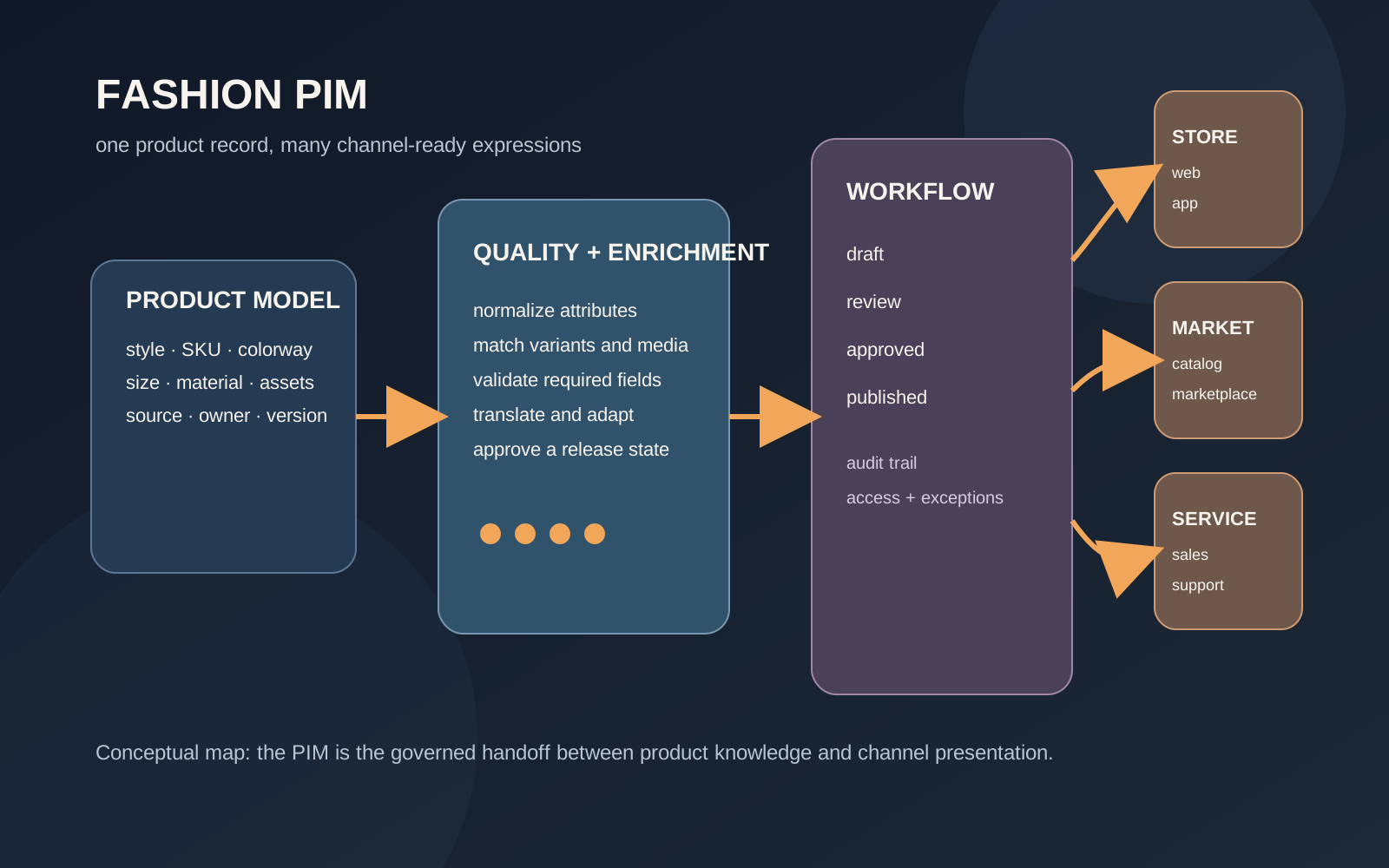
Fashion PIM is the process of organizing, enriching, validating and distributing product data to the channels that present a collection. It combines a data model, quality rules, ownership and integrations; it is not merely a catalog and does not automatically replace PLM, ERP or DAM.
How to structure fashion data governance
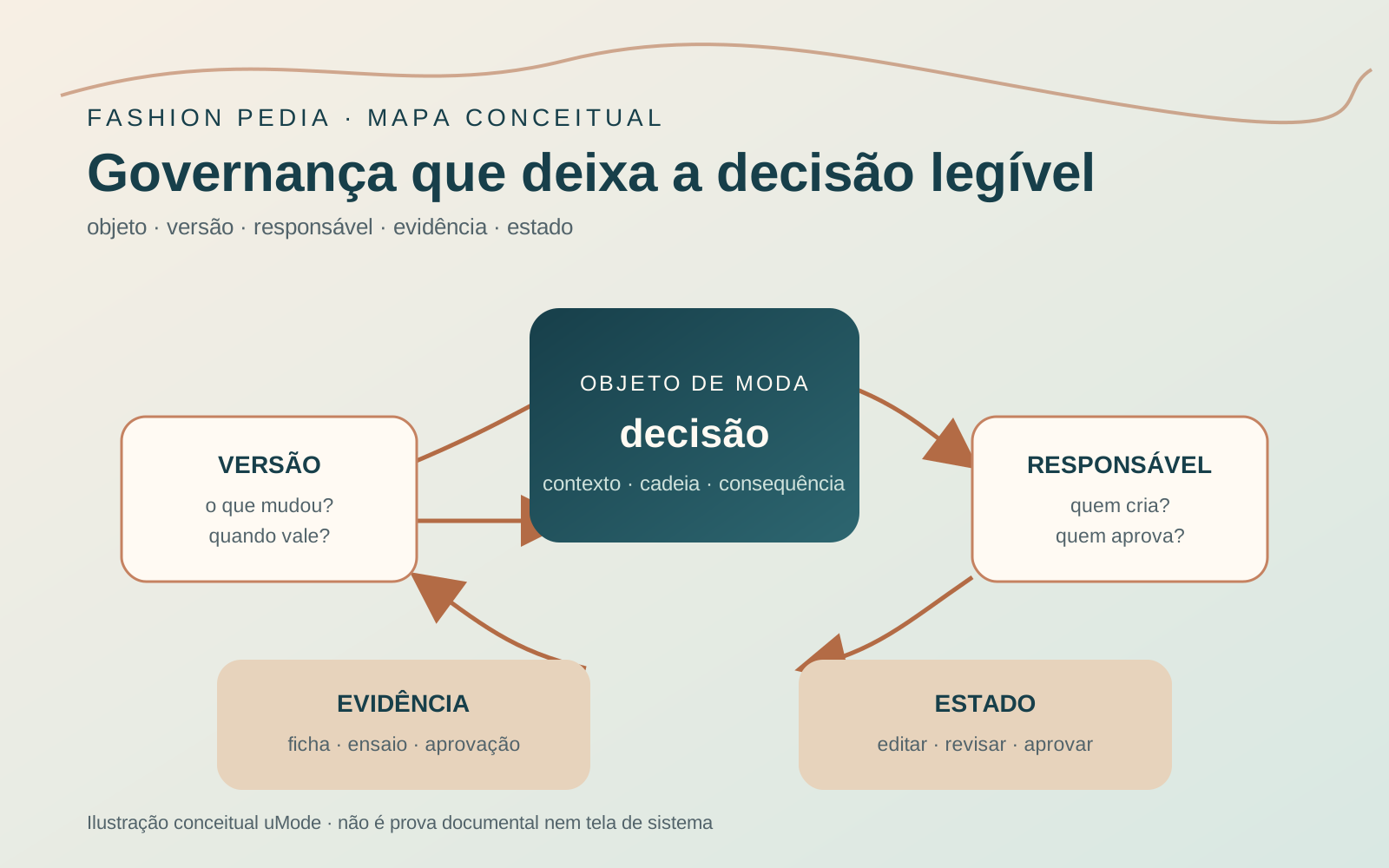
How to structure fashion data governance. Fashion data governance organizes objects, meanings, owners, versions, permissions and evidence around product and supply-chain decisions. A useful structure starts with a critical workflow, states what must be known at each step, and connects a decision to the record that lets another person verify it.

Fashion product technical specification
A technical specification is the controlled information set that translates an approved fashion product into verifiable sampling and manufacturing requirements. It brings together drawings, materials, measurements, construction, tolerances, identification, labelling, comments and revision history; its content varies by category, company, market and stage.
Sources
- https://www.ibm.com/think/topics/product-lifecycle-management
- https://www.oracle.com/scm/product-lifecycle-management/what-is-plm/
- https://www.microsoft.com/en-us/dynamics-365/resources/what-is-erp
- https://www.akeneo.com/glossary/product-information-management-pim/
- https://www.inriver.com/resources/what-is-pim/
Want to apply this to your operation?