MOQ in the fashion supply chain
MOQ in the fashion supply chain. MOQ (minimum order quantity) is the smallest quantity a supplier accepts in a single order. In fashion, the rule is useful only when it states whether the threshold applies to a style, SKU, color, size, material, lot, case, or order value, and when it is tested against demand, cash, space, and leftover-stock risk.
On this page
What is MOQ in the fashion supply chain?
MOQ is the smallest quantity a supplier accepts in a single order. In fashion, however, “quantity” is not precise enough: the buying brief must state what is being counted. The threshold may apply to a style, SKU, color, size, fabric, finish, lot, case, or total order value. That definition separates a readable commercial condition from a surprise at order approval.
The first question in an RFQ should be: “MOQ for what?”. One supplier may accept 300 pieces of a style but require 300 per color; another may work with closed cases or a minimum spend. Record the unit, multiples, tolerances, quotation validity, and whether variants can be consolidated. Link the rule to the fashion RFQ, purchase order, and sourcing and supplier management.
How does MOQ change across product, color, size, and lot?
A simple MOQ is a fixed minimum for a product and may follow the size of a production run. A complex MOQ combines variables such as product type, delivery location, technical parameter, unit, value, seasonality, or manufacturing condition. That is why “MOQ: 500” is not enough in a collection spreadsheet.
For a fashion size-and-color grid, separate style, color, and size before simulating the order. A 4 × 3 grid can turn a per-variant threshold into twelve different commitments; that is an operational reading, not a universal formula. Also confirm whether colors can be mixed, whether the lot must follow case multiples, and whether fabric or trims introduce their own minimum. These questions connect MOQ to the textile and apparel chain, fashion lead time, and demand planning.
MOQ is not EOQ. The first is a supplier acceptance rule; the second is a company calculation intended to balance ordering and holding costs. An EOQ below the MOQ therefore does not authorize a smaller purchase: it exposes a conflict that must be negotiated, consolidated, or accepted as risk.
How should cost, cash, and inventory impact be assessed?
Assessing an MOQ means testing whether the minimum volume fits likely demand and financial capacity, not automatically choosing the smallest or largest option. A high MOQ can improve unit pricing, but it ties up more cash, space, and sell-through capacity; in seasonal or trend-sensitive categories, leftover risk deserves its own scenario line.
A low MOQ reduces the upfront outlay and storage requirement. In return, more frequent orders can raise administrative and transportation costs, and the unit price may be less favorable. Before accepting, compare the order’s total cost, inventory holding cost, selling window, collection calendar, and replenishment likelihood. If the minimum does not fit, alternatives include a surcharge, a different supplier, variant consolidation, or phased delivery—provided the condition is written and confirmed.
The requirement also reflects mass-production economics: a supplier asks for a stock commitment because producing larger volumes can be more cost-effective for its operation. That does not turn the MOQ into the brand’s sales forecast; the volume still has to be tested against the mix and selling window.
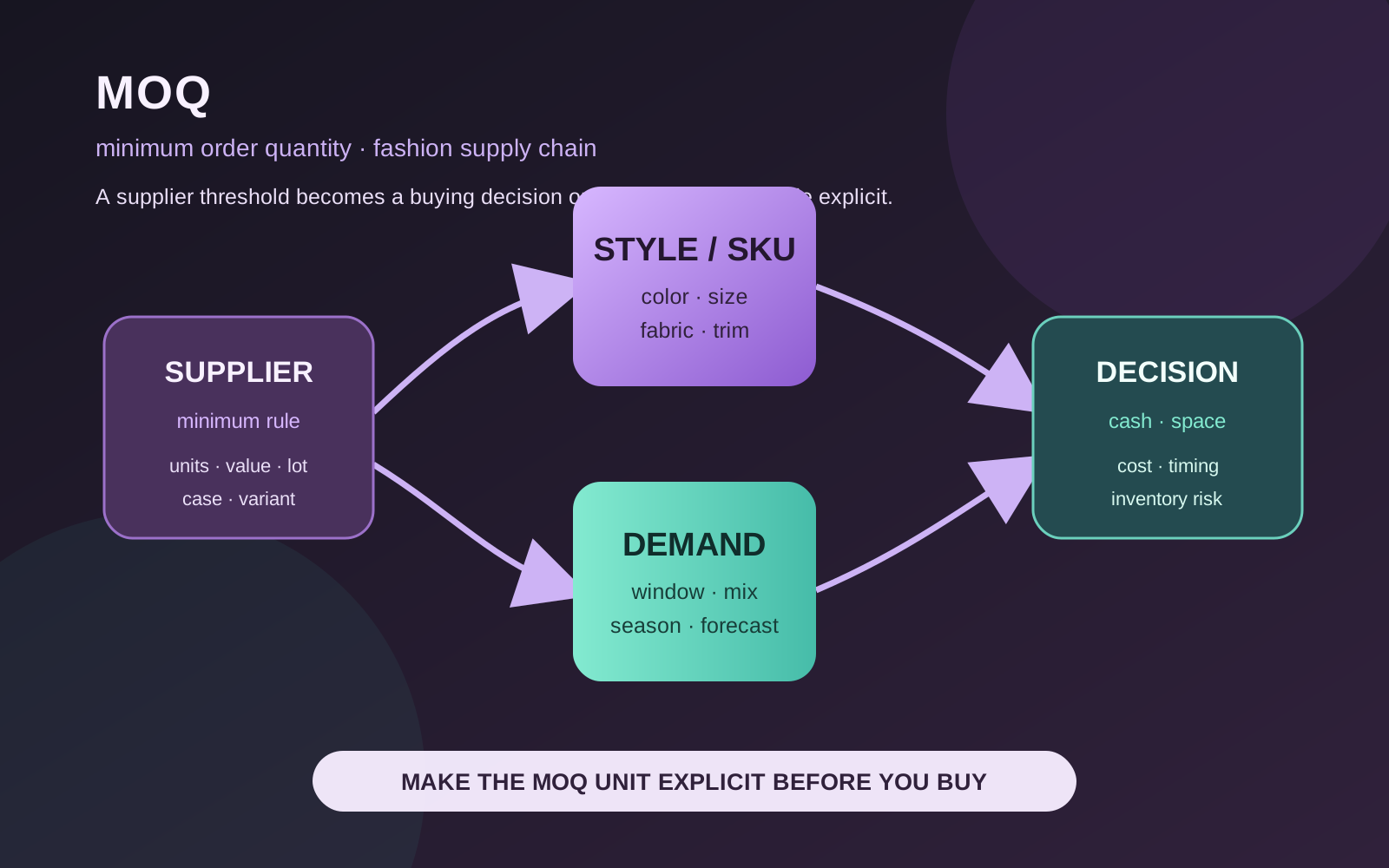
Demand planning should use the available cut of past sales, trends, competition, seasonality, and campaigns; do not replace that work with a sell-in guess. In the decision map, MOQ is a supplier constraint that must connect with the sourcing manager, purchase order, and fashion inventory. This page’s visual is conceptual: it explains decision relationships and does not prove any supplier’s volume, capacity, or price.
Which questions belong in the negotiation?
Ask the supplier for the exact MOQ unit, calculation basis, multiples, per-variant minimums, what happens below the threshold, and which components carry their own minimums. Then return a proposal showing demand by window, color-and-size mix, calendar, target price, delivery, and responsibility for excess stock.
A fashion negotiation becomes clearer when each concession has an observable counterpart: consolidate colors, accept phased delivery, use a standard material, test a capsule, or review the minimum after a first order. Do not treat MOQ as a quality seal or an automatic buying recommendation. It is a condition in the replenishment process; the final decision depends on product, supplier, cost, timing, demand, and inventory risk.
Verified facts
- MOQ is the smallest quantity a supplier accepts in a single order.
Source: shopify.com ↗ - A supplier can set MOQ by number of units or by total order value.
Source: shopify.com ↗ - A complex MOQ can require packaging multiples or separate minimums for colors and sizes.
Source: shopify.com ↗ - MOQ is the supplier's permitted minimum, while EOQ is the quantity a company calculates as most cost-effective.
Source: shopify.com ↗ - Suppliers use MOQs to cover fixed production costs such as tooling, machine setup, and labor time per run.
Source: shopify.com ↗ - A high MOQ can reduce unit cost through volume purchasing.
Source: shopify.com ↗ - A high MOQ can tie up cash, increase storage, and create obsolete-stock risk.
Source: mrpeasy.com ↗ - A low MOQ reduces upfront capital and space needs, but can raise administrative, delivery, or unit costs.
Source: mrpeasy.com ↗ - A simple MOQ is a fixed minimum for a particular product and may follow the size of a production batch.
Source: mrpeasy.com ↗ - A complex MOQ can combine product types, delivery locations, parameters, units, or minimum spend.
Source: mrpeasy.com ↗ - MOQ setting should consider demand, customer fluctuations, market dynamics, and competitive positioning.
Source: mrpeasy.com ↗ - Demand planning for production volumes can analyze past sales, trends, competition, seasonality, and campaigns.
Source: mrpeasy.com ↗ - If a company cannot meet an MOQ, it may look for another supplier or pay a surcharge below the minimum.
Source: shopify.com ↗ - Suppliers may require an MOQ because mass production is more cost-effective, requiring a brand to commit to a quantity of stock.
Source: shipbob.com ↗
Related entries
Sourcing and supplier management
Sourcing and supplier management. Fashion sourcing requires visibility into units and processes, prioritization of human risks, worker dialogue, remediation and a decision trail tied to orders and lots.
RFQ in the fashion supply chain
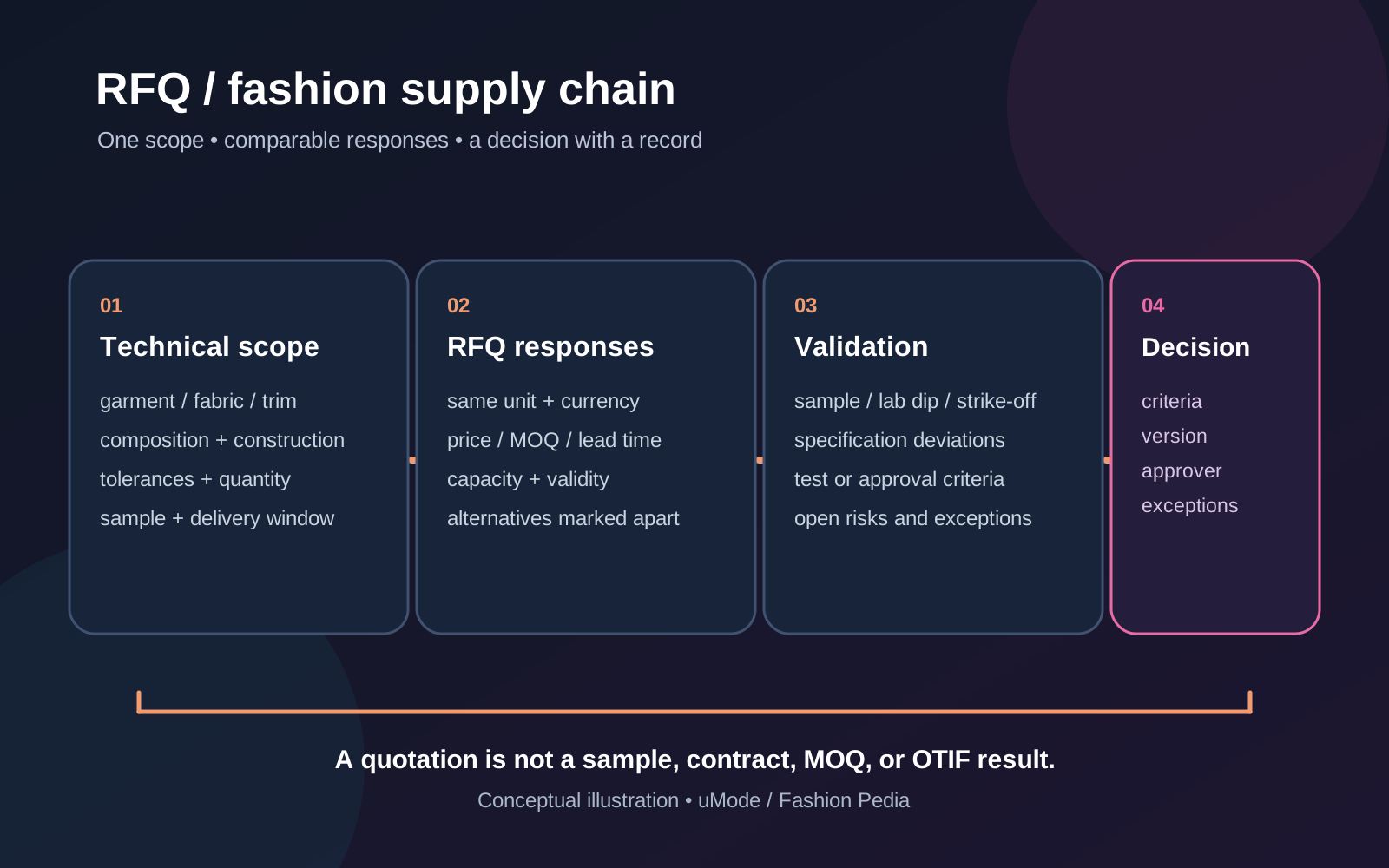
RFQ in the fashion supply chain. An RFQ (Request for Quotation) is a process for requesting and comparing quotations against the same product, service, or material scope. In fashion, it turns garment, fabric, trim, or finishing requirements into a response-ready request, separates price from capacity and timing, and records which requirement version supported the decision.
Purchase order in the fashion industry
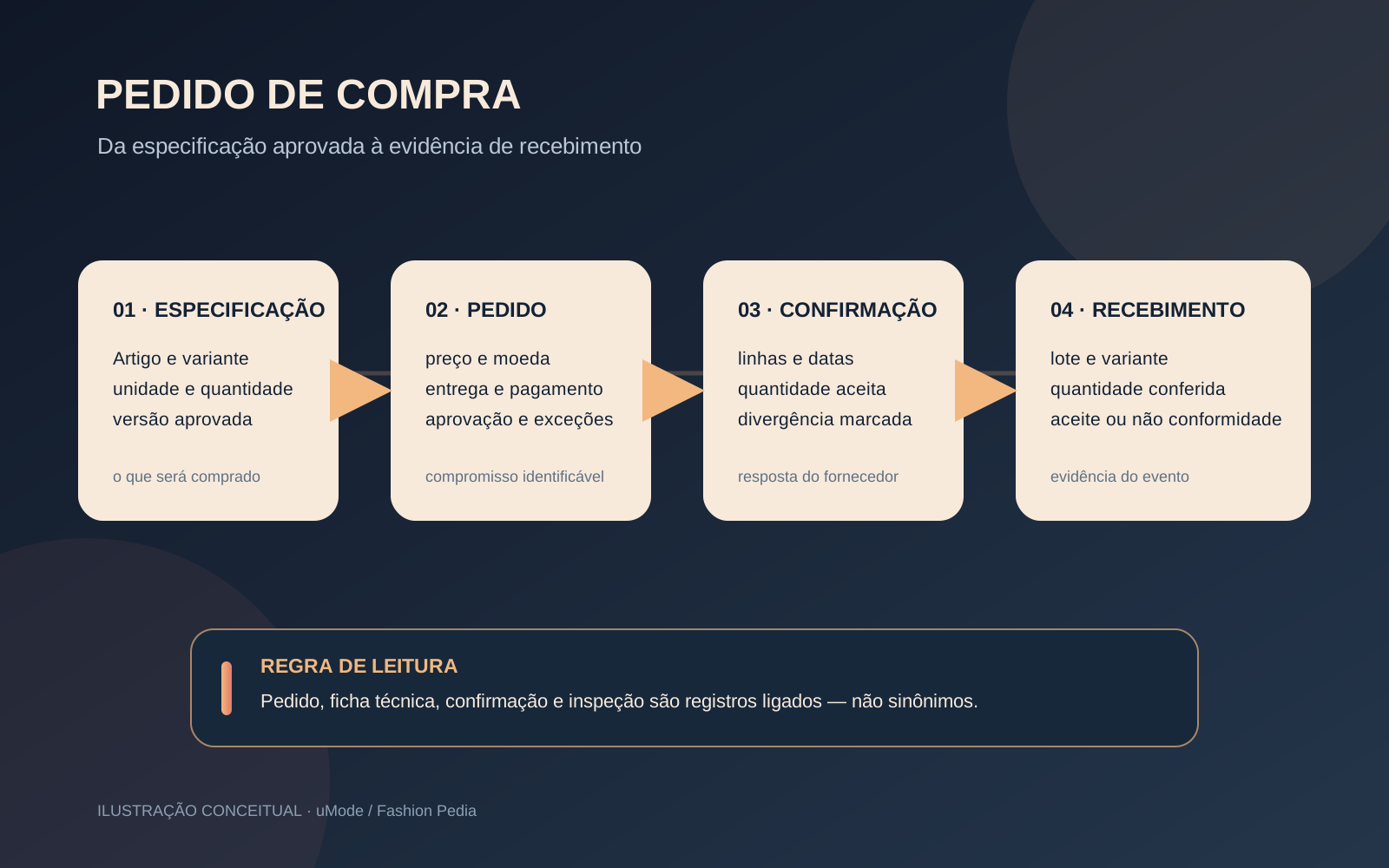
Purchase order in the fashion industry. A purchase order is the document through which a buyer requests goods or services and records conditions such as price and payment. In fashion, it works best when it connects style, variant, specification, quantity, delivery and receiving criteria to an approved decision, without replacing the technical specification or inspection.
Demand planning in fashion
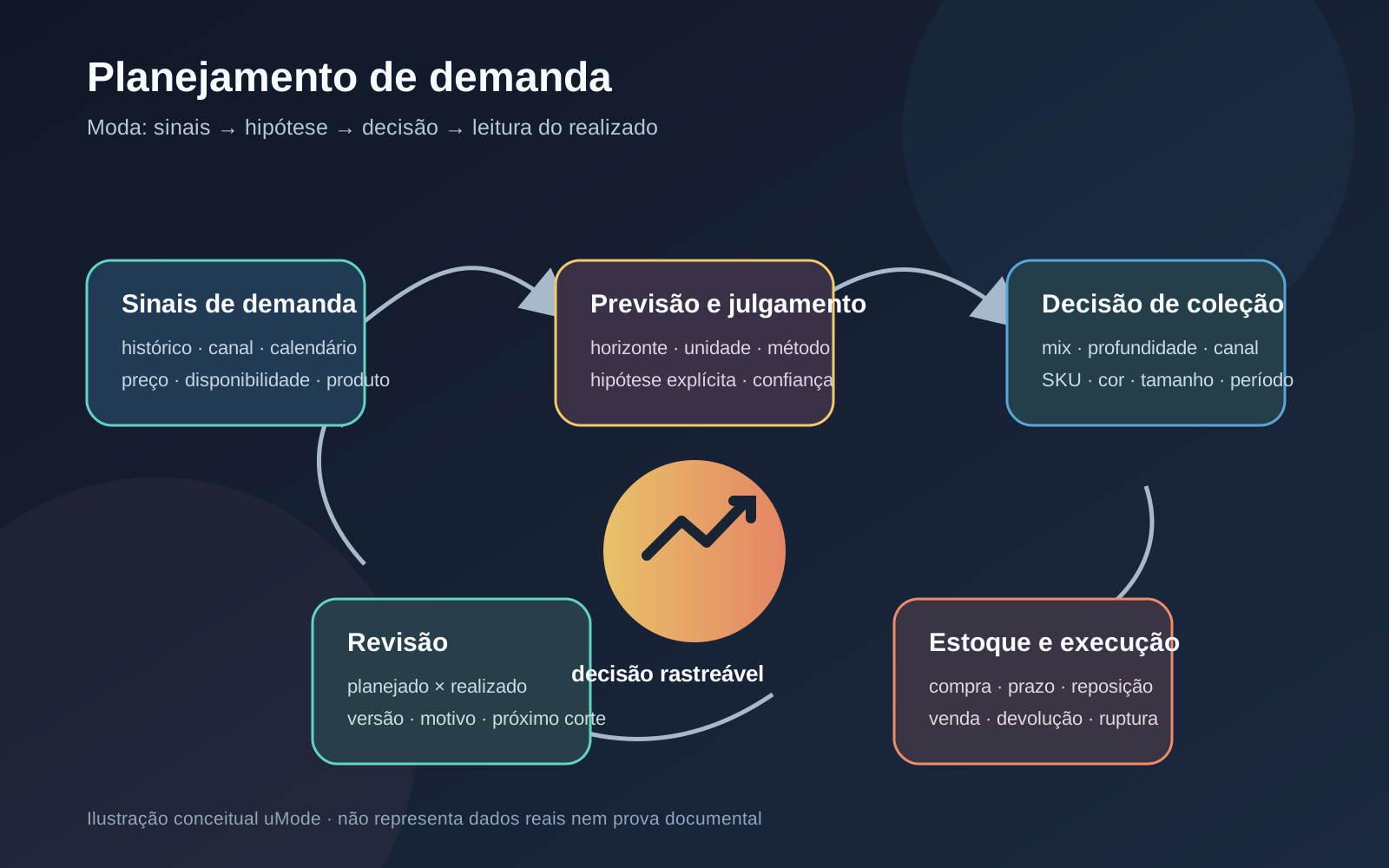
Demand planning in fashion turns demand signals, history, calendar context and judgement into explicit decisions about assortment, volume, channel and review. It combines forecasting with governance: every hypothesis needs a horizon, unit, owner and rule for revision when the collection or market changes.
Lead time in the fashion supply chain
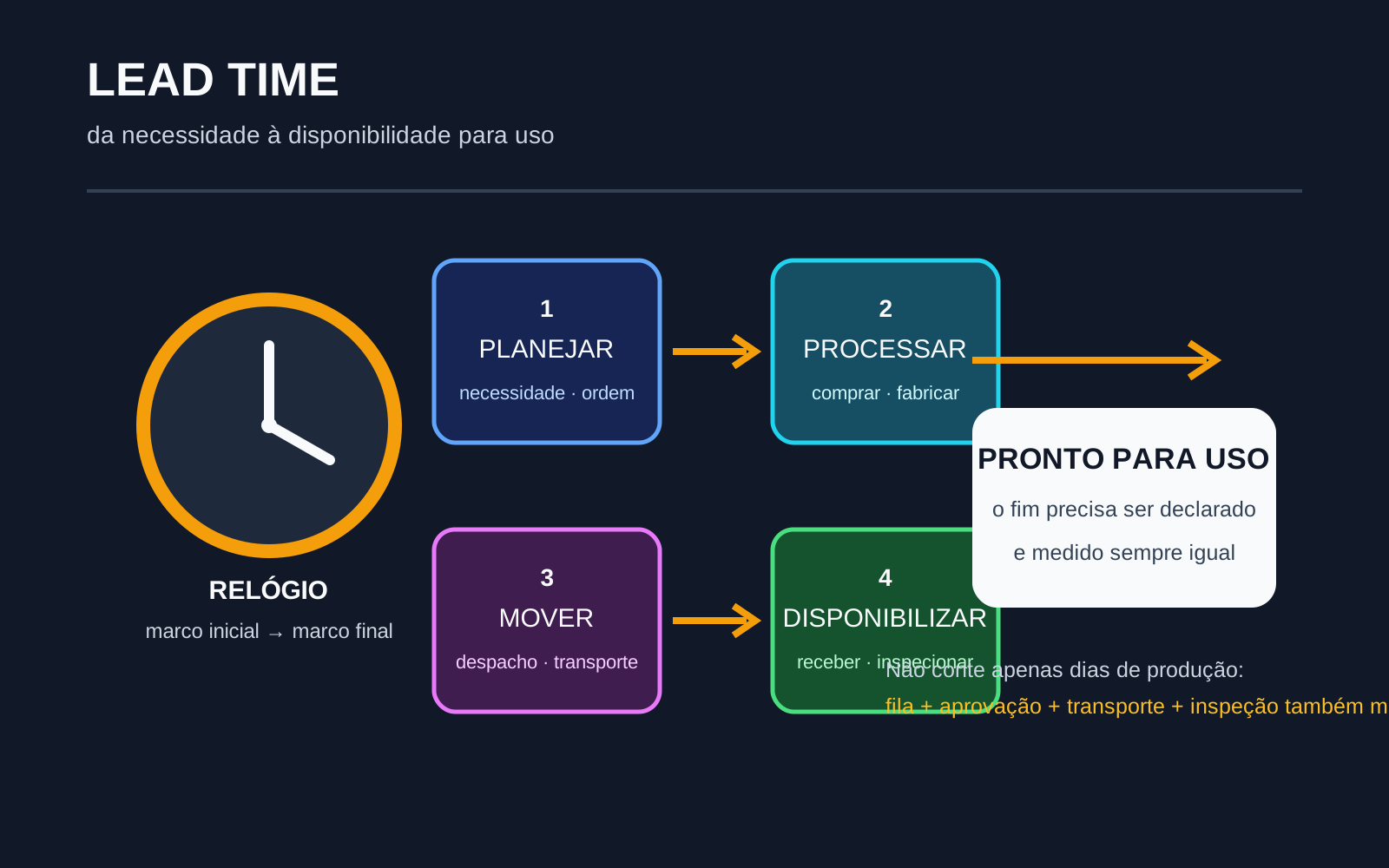
Lead time in the fashion supply chain. Lead time in a fashion supply chain is the elapsed time between defined operational milestones, such as ordering and receipt or design and production. A useful measure states its object, start, end, waiting periods, calendar, unit and availability condition.
Textile and apparel supply chain
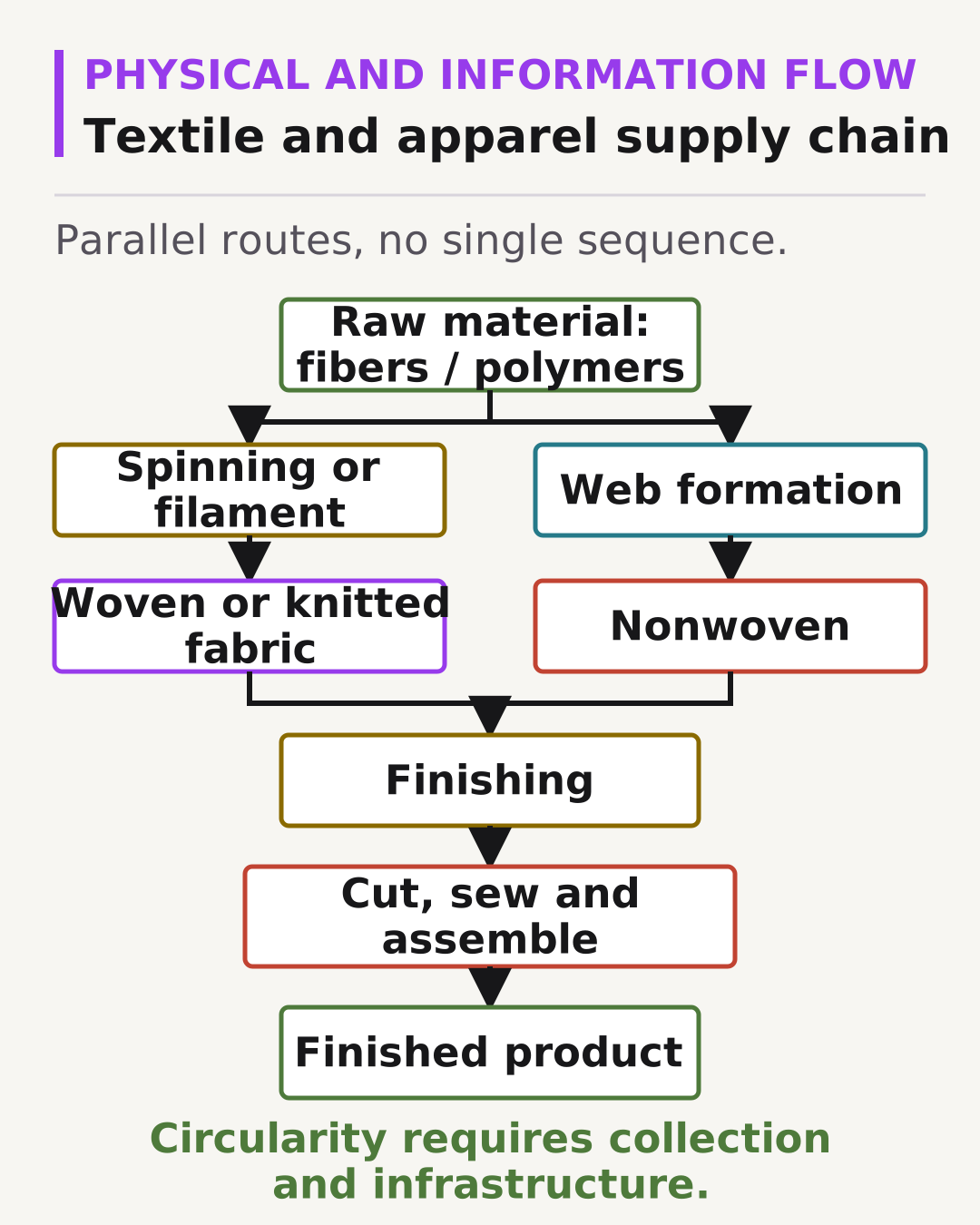
The textile and apparel supply chain transforms natural or manufactured raw materials into yarns, woven or knitted fabrics, and then finished articles. Its reference flow covers fibres, spinning, material formation, wet processing, cutting and assembly, while the real system also includes suppliers, subcontracting, distribution, use and recovery routes.
Sources
Want to apply this to your operation?