Lead time in the fashion supply chain
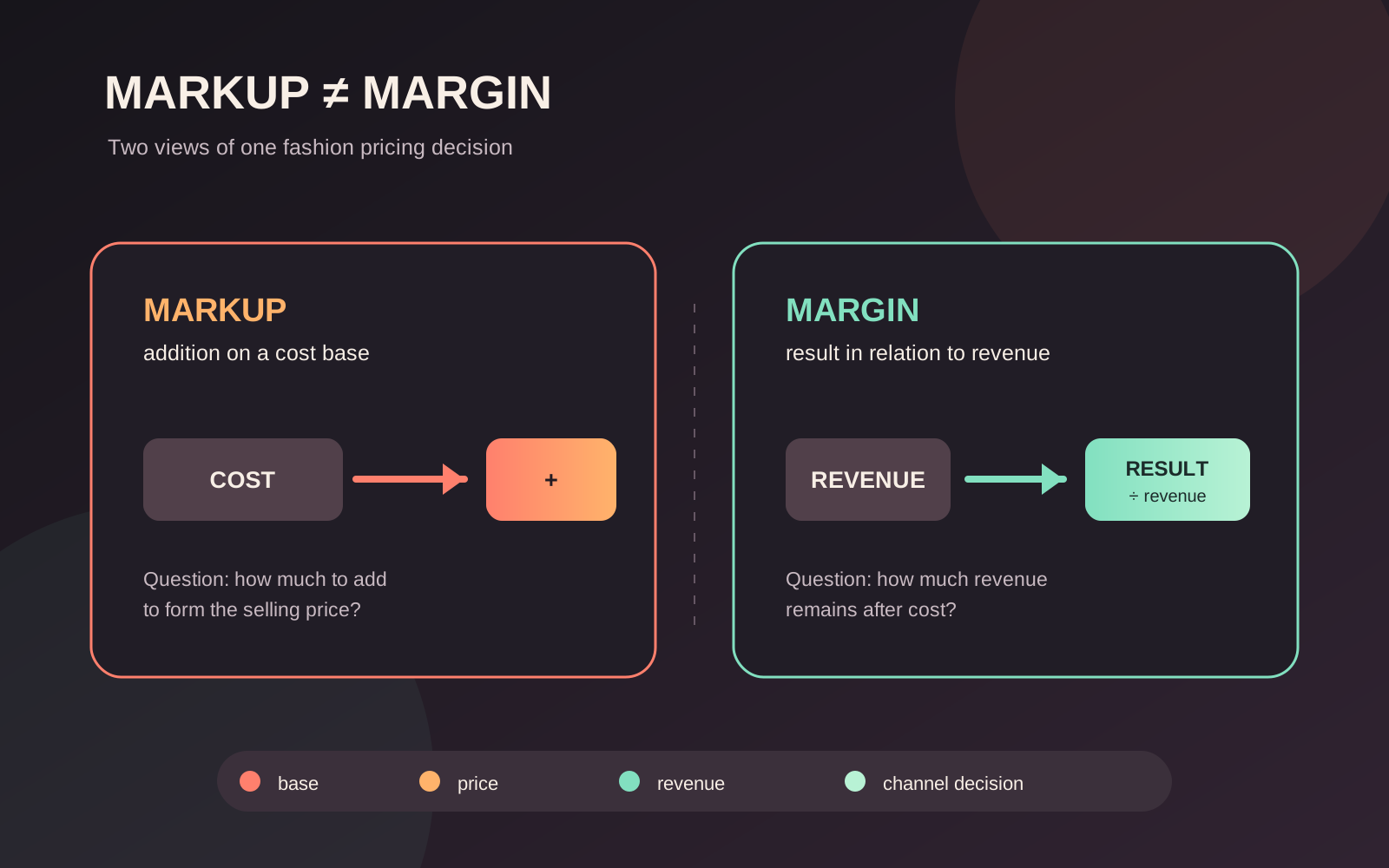
Lead time in the fashion supply chain. Lead time in a fashion supply chain is the elapsed time between defined operational milestones, such as ordering and receipt or design and production. A useful measure states its object, start, end, waiting periods, calendar, unit and availability condition.
On this page
What is Lead time in the fashion supply chain?
Lead time is the elapsed time between two defined process milestones. Cambridge Dictionary places it between a product's design and production or between ordering and receiving; the general definition also describes it as the latency between initiation and completion. In fashion operations, the useful question is not simply “how many days?” but “days between which events, for which object and under what availability condition?”
A collection calendar can contain several clocks: tech pack development, an RFQ, sample approval, purchase order release, manufacturing, dispatch and receipt. These clocks should not be added automatically. Record the start and end milestone for each measure, the SKU or style, supplier, quantity, time unit and calendar. The same garment can have a development lead time and a replenishment lead time; they answer different operational questions.
How should a fashion order's time be decomposed?
The operational decomposition separates preprocessing, processing and postprocessing. Preprocessing begins when the requirement is known and ends when a purchase order is released or a production job is created. Processing covers procurement or manufacturing. Postprocessing starts at receipt and ends when a purchased item is available in inventory, and may include quarantine and inspection.
This map prevents a manufacturing promise from being compared with an availability date. For an outsourced garment, the measurement sheet should state whether it includes queue, setup, run, move, inspection, put-away, transport and internal release. Transport can matter to material-requirements planning; when it is excluded, the indicator describes only supplier processing, not the time required before the operation can use the material.
At supply-chain level, total lead time combines the buyer's internal time with the supplier's external time. The external component can cover development, manufacture, dispatch and delivery. In supplier qualification, therefore, ask which event starts the quoted duration and which event closes it. Without that convention, two partners can report correct numbers for incompatible scopes.
How can a team measure and improve lead time without hiding waiting?
Start with a measurement record: object, lot, style, supplier, start, end, calendar, waiting hours, waiting reason, promised date and actual date. Separate processing time from idle time. A late approval, a tech-pack change, a queue or an inspection are not the same kind of duration, even when all appear as calendar days.
Supplier relationship management is part of time control. CIPS recommends assessing capability to meet contractual needs and measuring performance during the contract; it also links trust, transparency, information sharing, risk management and communication to the buyer-supplier relationship. Use those dimensions to define who updates a milestone, who confirms capacity, which order version is valid and when an exception is escalated. This connects lead time to OTIF, but does not make lead time proof of a complete or defect-free delivery.
For a collection review, compare measures with the same start, end, unit and population. Do not substitute lead time for MOQ: MOQ is a quantity condition, while lead time is a duration. Nor should it be confused with product development, which may contain several sample cycles, or with OTIF, which evaluates delivery against the operation's defined date and completeness criteria. The indicator is useful only when its calculation rule stays stable and exceptions remain visible.
What questions should the indicator answer?
Before publishing a number, ask: does the clock start at need identification, order placement, approval or release? Does it end at supplier dispatch, shipment, receipt or availability for use? Does the measure include transport, inspection, quarantine and put-away? Is the lot raw material, pilot production or scaled production? These answers form the indicator's interpretive contract and prevent a fashion page from turning a process measure into a promise.
Links to RFQ, supplier qualification, purchase order, OTIF, MOQ and tech pack place lead time in the supply-chain graph. They are working relationships, not synonyms: each one changes which process milestone should be observed.
Verified facts
- The Cambridge entry places lead time at either the design-to-production interval or the order-to-receipt interval.
Source: dictionary.cambridge.org ↗ - The article treats lead time as a latency measure spanning a process from initiation through completion.
Source: en.wikipedia.org ↗ - In manufacturing, manufacturing lead time can include order preparation, queue, setup, run, move, inspection and put-away time.
Source: en.wikipedia.org ↗ - In supply chain management, a conventional definition measures the time from a customer order until the product is ready for delivery.
Source: en.wikipedia.org ↗ - Total lead time combines internal lead time, linked to the buying organisation's processes, and external lead time, linked to the supplying organisation's processes.
Source: en.wikipedia.org ↗ - External lead time can include development, manufacture, dispatch and delivery.
Source: en.wikipedia.org ↗ - In manufacturing, supplier-part shipping time may be included because the company needs to know when parts will be available for material requirements planning.
Source: en.wikipedia.org ↗ - The lead-time decomposition presented in the source includes preprocessing, processing and postprocessing lead time.
Source: en.wikipedia.org ↗ - The source labels preprocessing lead time as planning or paperwork time before a purchase order or job is released.
Source: en.wikipedia.org ↗ - The processing stage covers procurement or manufacturing of the item.
Source: en.wikipedia.org ↗ - Postprocessing lead time is the time to make a purchased item available in inventory after receipt, including quarantine and inspection.
Source: en.wikipedia.org ↗ - CIPS defines supplier relationship management as the management and maintenance of the relationship between a buyer and supplier.
Source: cips.org ↗ - CIPS recommends considering a supplier's capability to meet contractual needs and measuring performance during the contract.
Source: cips.org ↗ - CIPS describes trust, transparency, information sharing, risk management and communication as factors in the buyer-supplier relationship.
Source: cips.org ↗
Related entries
Fashion Supplier Qualification
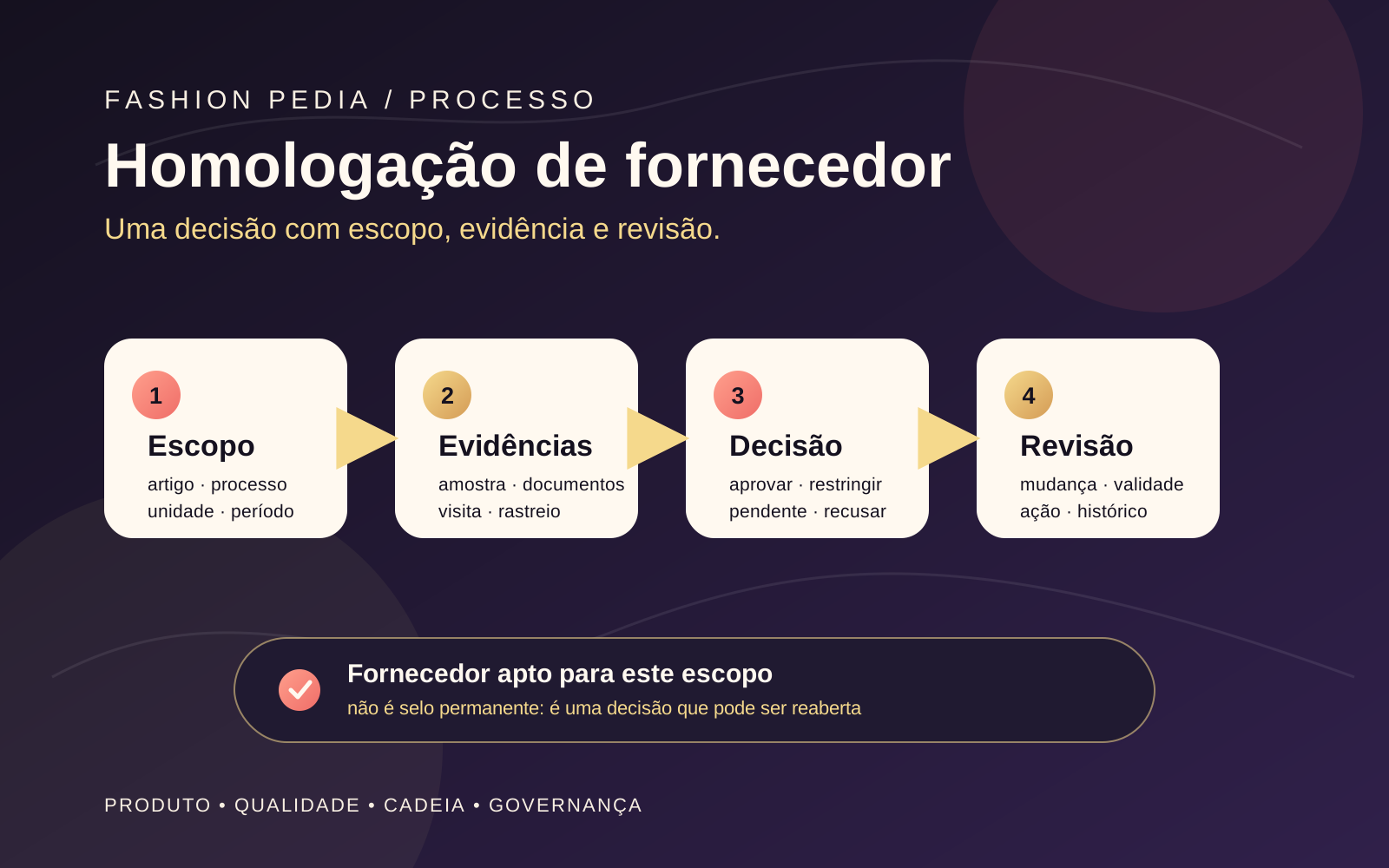
Fashion supplier qualification is the process of deciding, for a defined scope, whether a company can be used with explicit requirements, evidence, responsibilities and review points. In fashion, the decision should connect development, quality, purchasing, production and traceability without confusing a vendor record, a certificate or a single order with permanent approval.
RFQ in the fashion supply chain
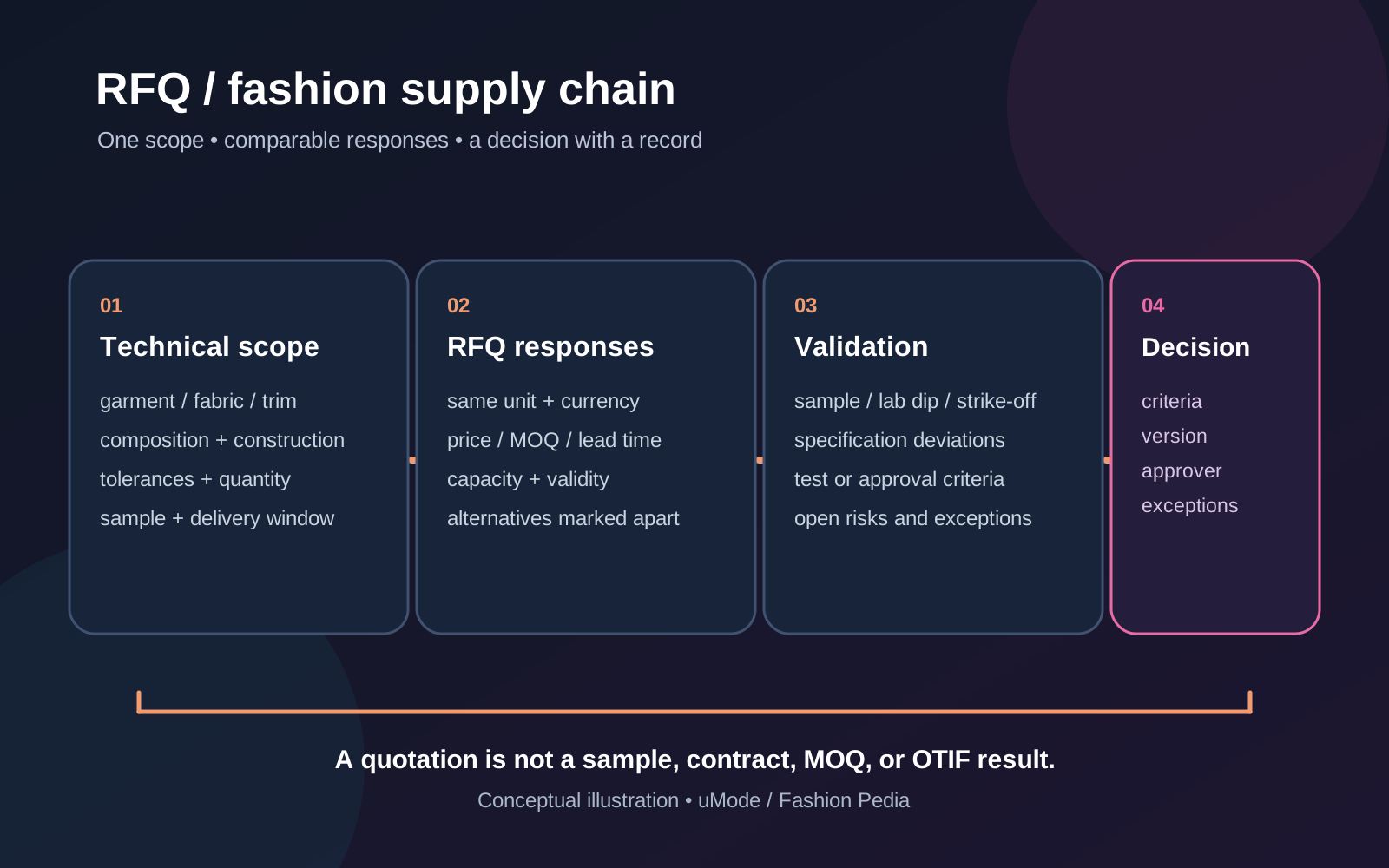
RFQ in the fashion supply chain. An RFQ (Request for Quotation) is a process for requesting and comparing quotations against the same product, service, or material scope. In fashion, it turns garment, fabric, trim, or finishing requirements into a response-ready request, separates price from capacity and timing, and records which requirement version supported the decision.
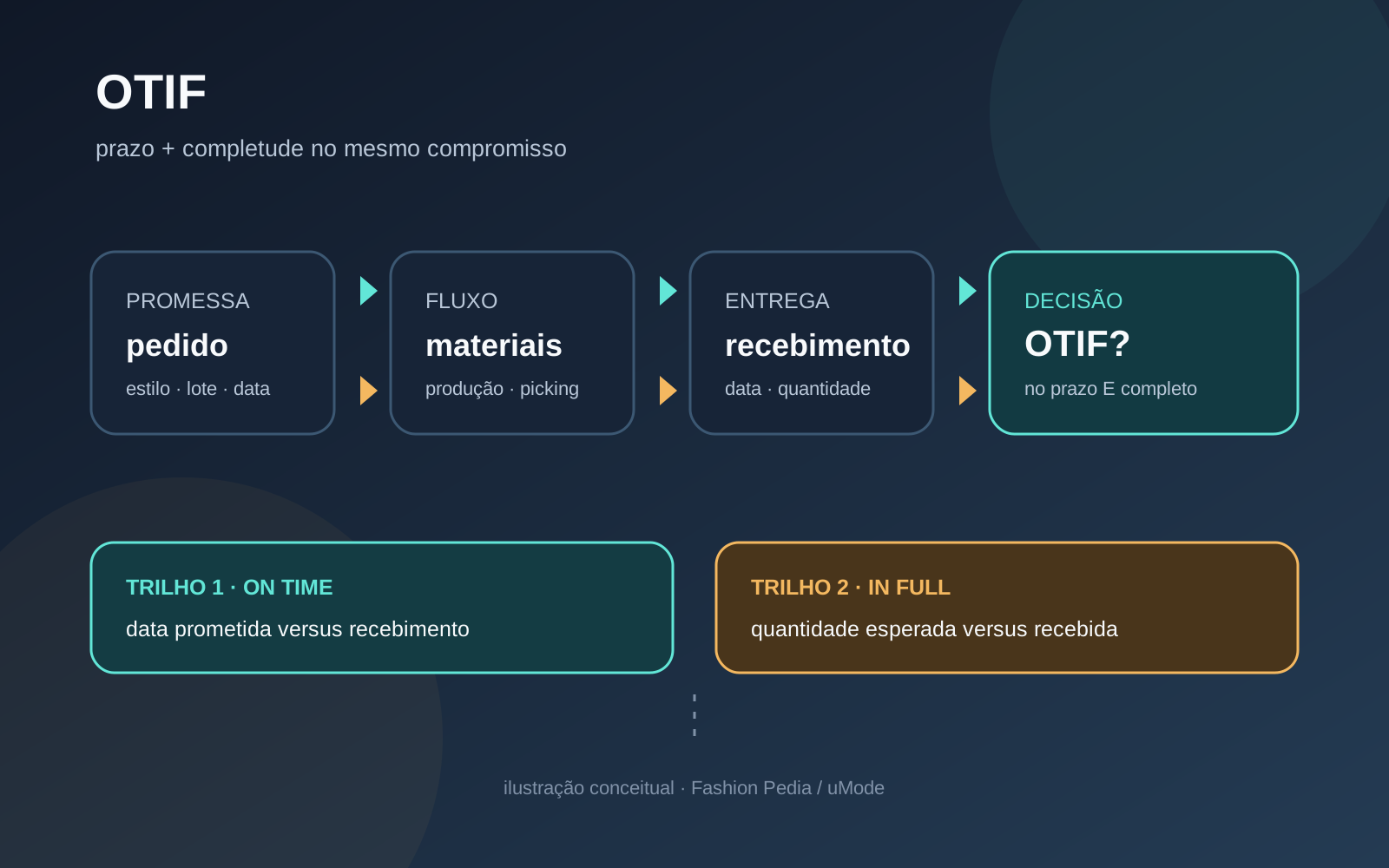
OTIF in the fashion supply chain
OTIF in the fashion supply chain. OTIF (on-time in-full) measures whether an order arrives on the agreed date with all expected items or quantities. In fashion, it can be applied to finished-goods orders, materials, or internal stages when the measured event, delivery window, and completeness rule are explicit.
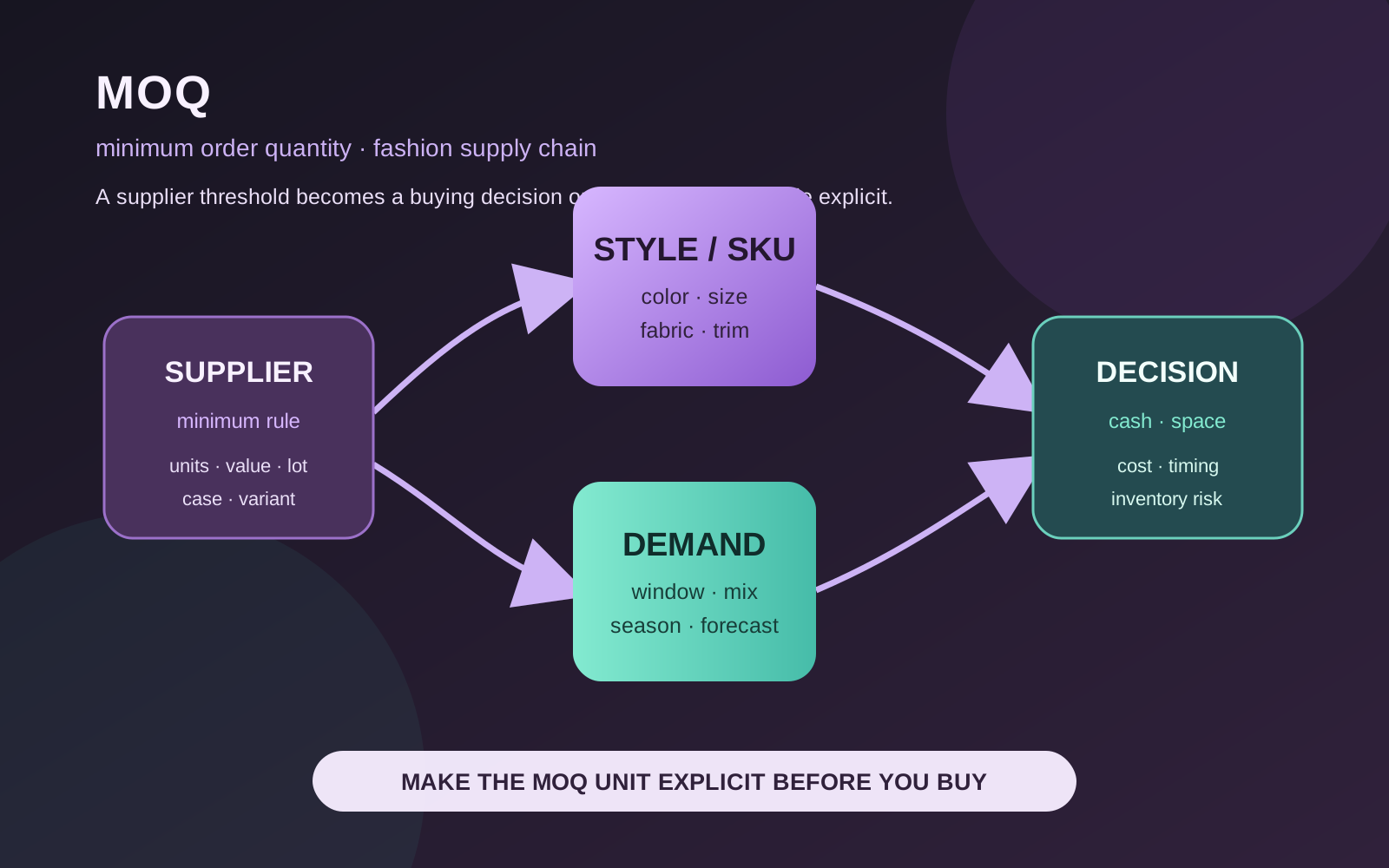
MOQ in the fashion supply chain
MOQ in the fashion supply chain. MOQ (minimum order quantity) is the smallest quantity a supplier accepts in a single order. In fashion, the rule is useful only when it states whether the threshold applies to a style, SKU, color, size, material, lot, case, or order value, and when it is tested against demand, cash, space, and leftover-stock risk.

Fashion product technical specification
A technical specification is the controlled information set that translates an approved fashion product into verifiable sampling and manufacturing requirements. It brings together drawings, materials, measurements, construction, tolerances, identification, labelling, comments and revision history; its content varies by category, company, market and stage.
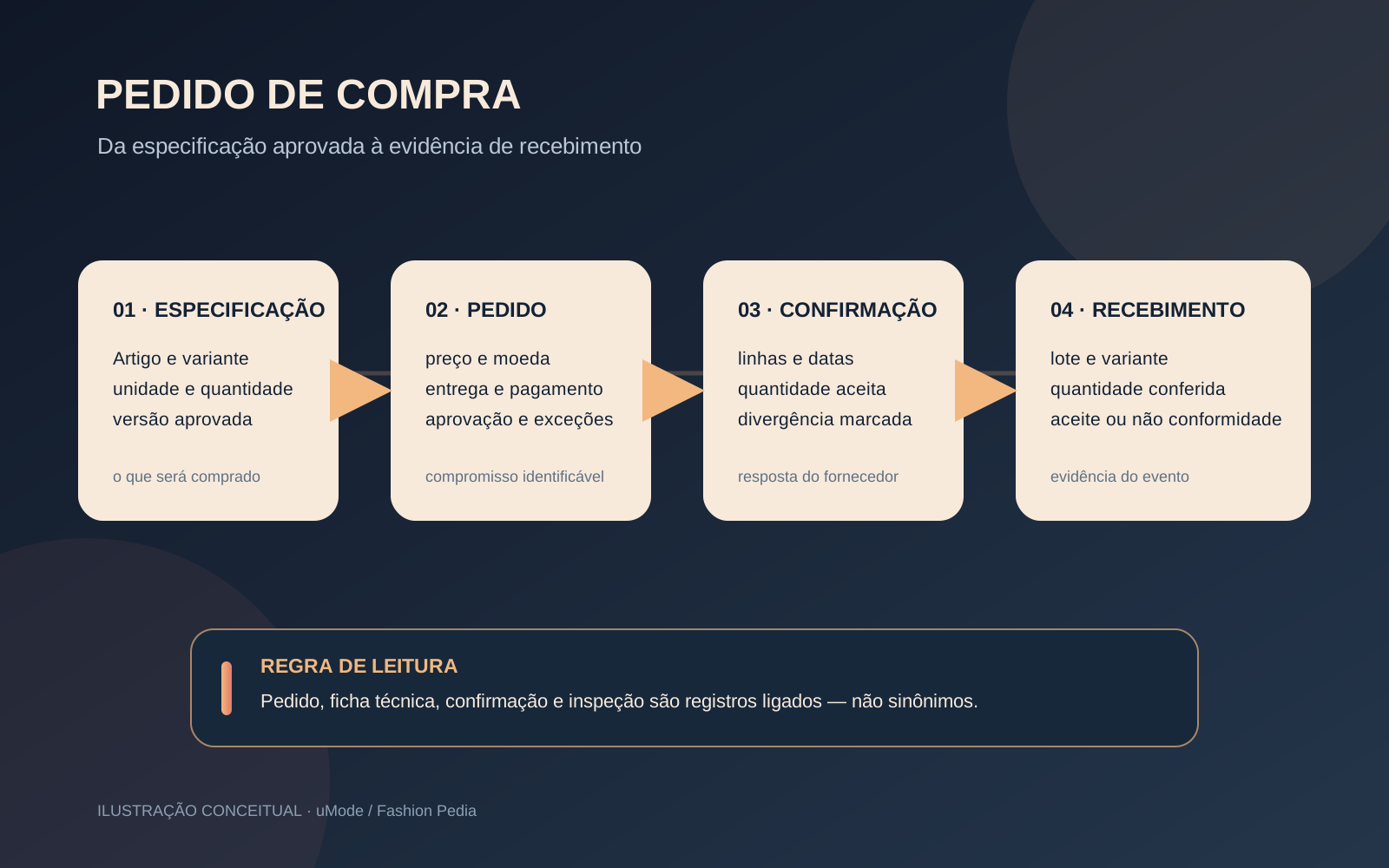
Purchase order in the fashion industry
Purchase order in the fashion industry. A purchase order is the document through which a buyer requests goods or services and records conditions such as price and payment. In fashion, it works best when it connects style, variant, specification, quantity, delivery and receiving criteria to an approved decision, without replacing the technical specification or inspection.
Sources
Want to apply this to your operation?