Textile and apparel supply chain
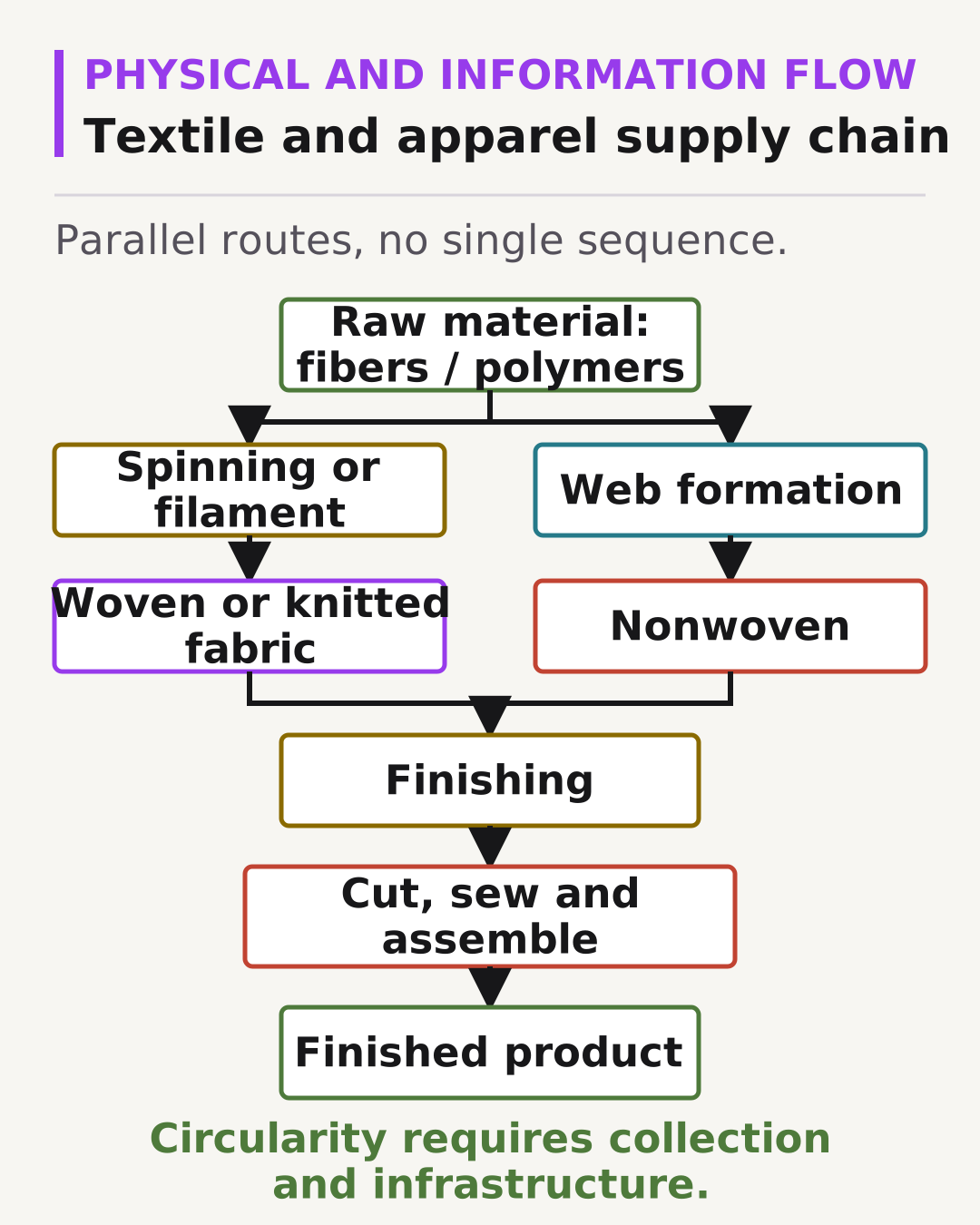
The textile and apparel supply chain transforms natural or manufactured raw materials into yarns, woven or knitted fabrics, and then finished articles. Its reference flow covers fibres, spinning, material formation, wet processing, cutting and assembly, while the real system also includes suppliers, subcontracting, distribution, use and recovery routes.
On this page
What is the textile and apparel supply chain?
The textile and apparel supply chain is the set of activities that converts raw materials into textile surfaces and then into finished products. Its basic map starts with textile fibre, continues through spinning, branches into woven or knitted material formation, and converges again in processing, garment manufacturing and distribution. This map is a reading framework, not a single factory line: companies may combine several stages, buy pre-processed materials or outsource specialised operations.
It is also useful to distinguish the textile chain from the apparel chain. The first produces yarns, woven fabrics, knits, nonwovens and finishes; the second turns those materials into clothing, home textiles or technical products. Both also depend on chemicals, machinery, trims, packaging, transport, development services and technical information. A garment's commercial journey may therefore cross several organisations and countries before reaching its user.
How does raw material become woven or knitted fabric?
The textile flow prepares the fibre, forms the yarn and builds a surface. In spinning, staple fibres are cleaned, aligned and twisted according to the raw material and intended yarn count; manufactured filaments may follow different formation and texturising routes. Weaving interlaces warp and weft systems to produce woven fabric, while knitting forms loops and may use circular or flat-bed machines. These structures are not interchangeable: they affect stretch, dimensional stability, drape, consumption and cutting method.
Before or after material formation, textile processing prepares, colours and modifies performance. Depending on the product, the sequence may include washing, bleaching, sizing, desizing, dyeing, printing and mechanical or chemical finishing. The order changes with fibre, construction and intended effect; a “finished fabric” is therefore more than fabric directly off the loom or knitting machine.
How does apparel manufacturing work?
Apparel manufacturing converts an approved textile material into repeatable units. Fashion product development defines the style, materials, measurements and requirements; patternmaking, grading, marker planning, spreading, cutting, preparation, sewing or assembly, finishing, inspection and packing follow. Not every product uses exactly the same sequence, and embroidery, laundry, placement printing or trim application may take place in subcontracted units.
The technical specification accompanies this transition because it records which version is to be produced and the parameters against which materials and samples will be assessed. When information changes without control, the problem does not remain in the office: it may reach cutting, the trim supplier, labelling, cost or timing. Visibility of status, owners, approvals and exceptions is therefore part of the real flow even though it is not a physical operation.
Why does the chain not end at the factory?
The chain continues through quality control, distribution, retail, use, maintenance, collection and possible reuse or recycling routes. The OECD includes intermediaries and recyclers because decisions and risks cross company boundaries. Mapping only the direct supplier conceals upstream stages; mapping only production and sale erases use and end of life.
Understanding the links helps locate the correct point of a decision, delay or nonconformity. It also prevents the industry from being treated as a fully vertical and linear operation. The most useful map connects product, process, executing unit, specification version and approval evidence without confusing that governance with manufacturing itself.
Verified facts
- The textile and apparel chain has a long flow that starts with fibre preparation and spinning, passes through fabric formation and reaches the manufacture of finished products.
Source: economia.seade.gov.br ↗ - The subsectors described by the Seade Foundation include fibres, spinning, weaving, knitting, finishing or wet processing, and the manufacture of finished goods.
Source: economia.seade.gov.br ↗ - Supply-chain stages may operate at different scales, as specialised operations or with varying degrees of vertical integration.
Source: economia.seade.gov.br ↗ - In CETESB's description, spinning obtains yarn from textile fibres and may send it to processing, weaving or knitting.
Source: cetesb.sp.gov.br ↗ - Weaving and knitting form, from yarn, woven fabrics and circular or flat-knitted fabrics respectively.
Source: cetesb.sp.gov.br ↗ - Yarn processing may involve dyeing, sizing, twisting and special treatments.
Source: cetesb.sp.gov.br ↗ - The finishing of fabrics, knits or made-up articles may include preparation, dyeing, printing and finishing operations.
Source: cetesb.sp.gov.br ↗ - The OECD organises the chain into raw-material production or extraction, fibre processing, material manufacturing, finished-goods manufacturing, intermediation and recycling.
Source: oecd.org ↗ - The raw-material stage connects the apparel chain to sectors such as agriculture, livestock, forestry, petrochemicals and extractive industries.
Source: oecd.org ↗ - In the tier convention described by the OECD, finished-product assembly is often called tier 1 or cut-make-trim, while intermediate processes are commonly associated with tiers 2 and 3.
Source: oecd.org ↗
Related entries
Textile spinning
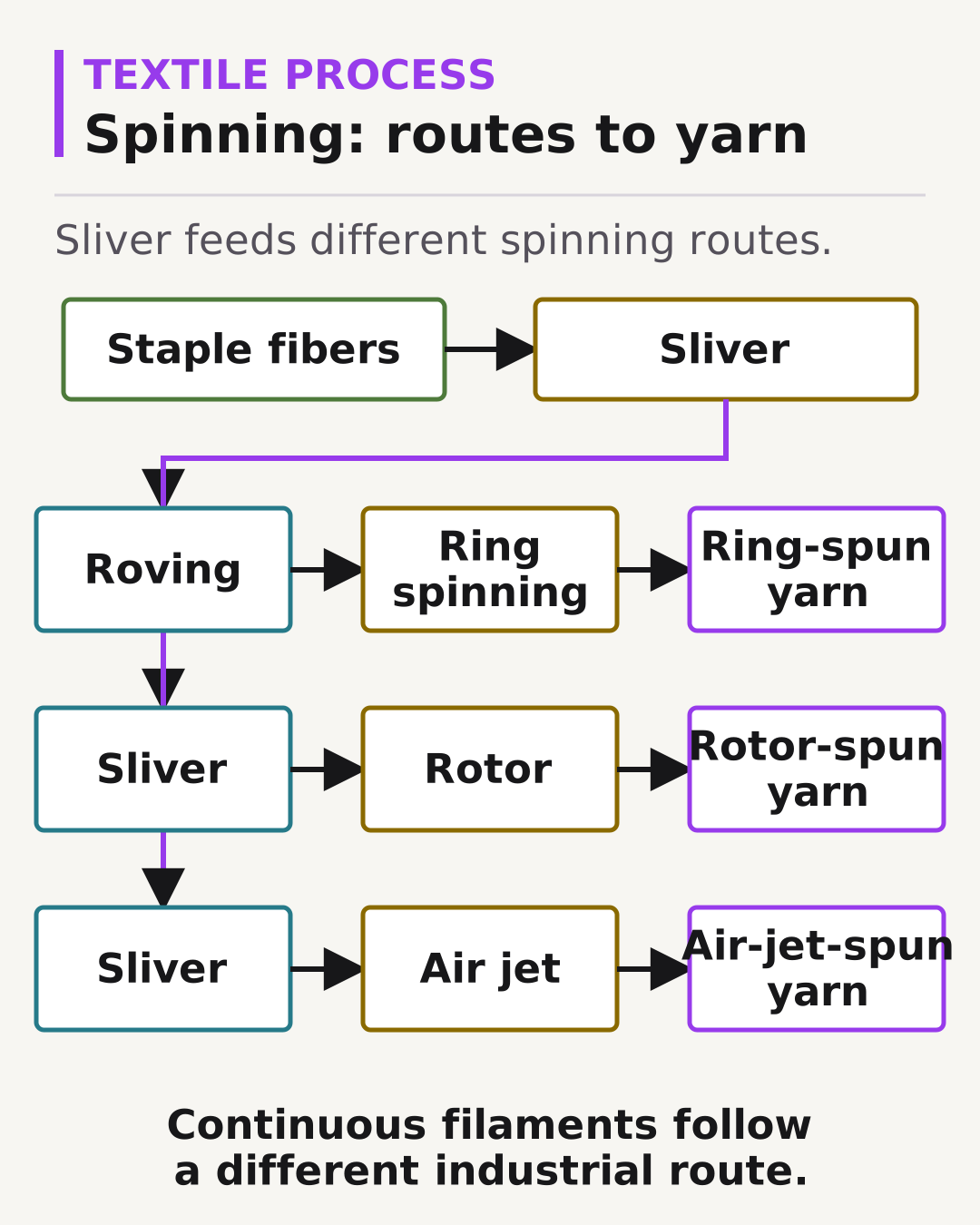
Yarn production follows two distinct technical routes: spinning turns staple textile fibers into yarn through preparation, alignment, attenuation, and consolidation, while continuous-filament processing assembles or transforms filaments without repeating the full preparation used for short fibers. These routes determine properties of yarn sent to weaving or knitting.

Industrial weaving
Weaving is the process of forming fabric by regularly interlacing two yarn systems: warp in the lengthwise direction and weft across the width. The construction results from warp preparation, shed formation, weft insertion and beat-up, and control of yarn delivery and fabric take-up.
Industrial knitting
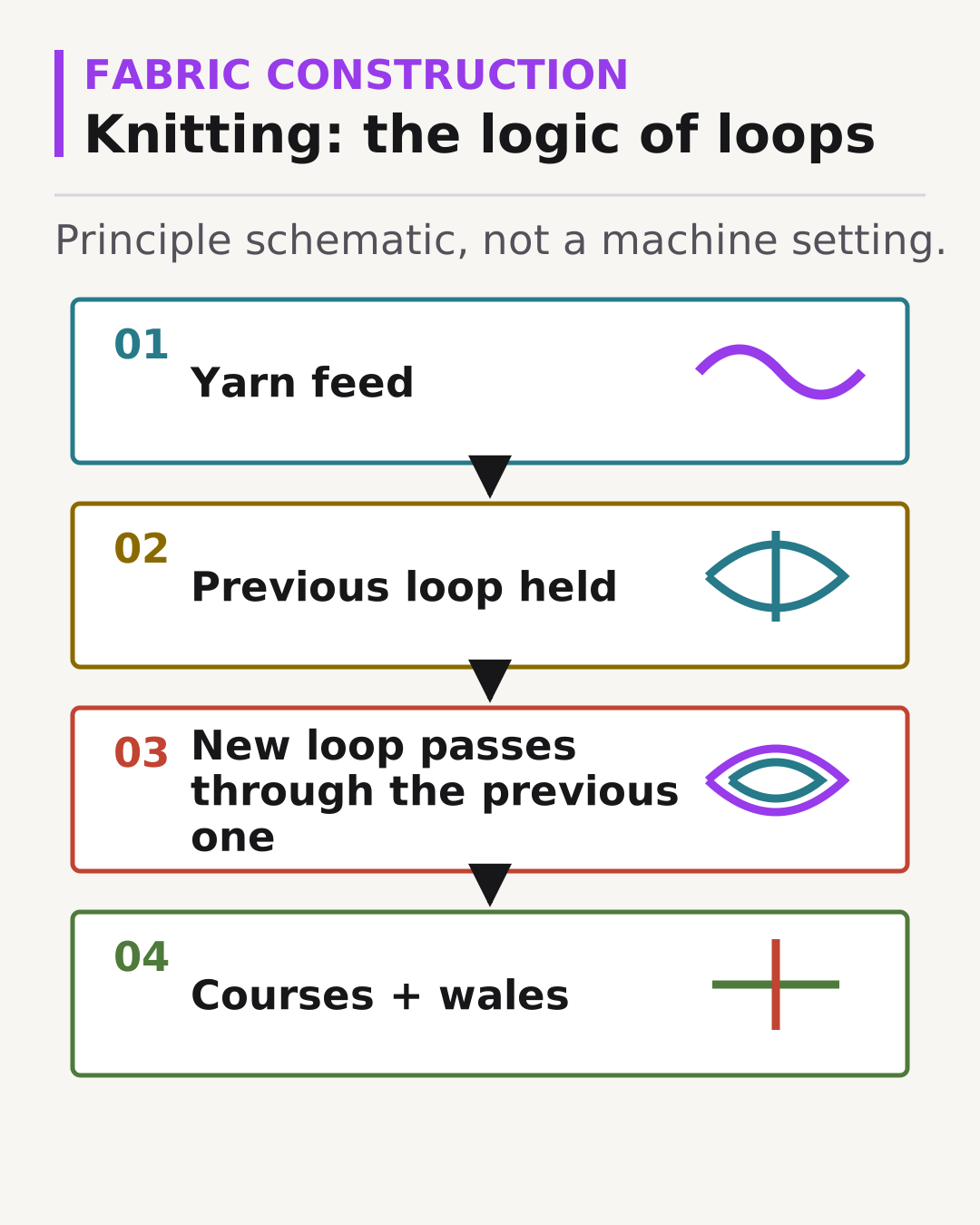
Knitting is the process of forming fabric through series of intermeshed loops. It divides into weft knitting, in which yarn travels across the width and needles form loops in sequence, and warp knitting, in which parallel yarns feed needles that work simultaneously along the fabric length.
Fashion product development
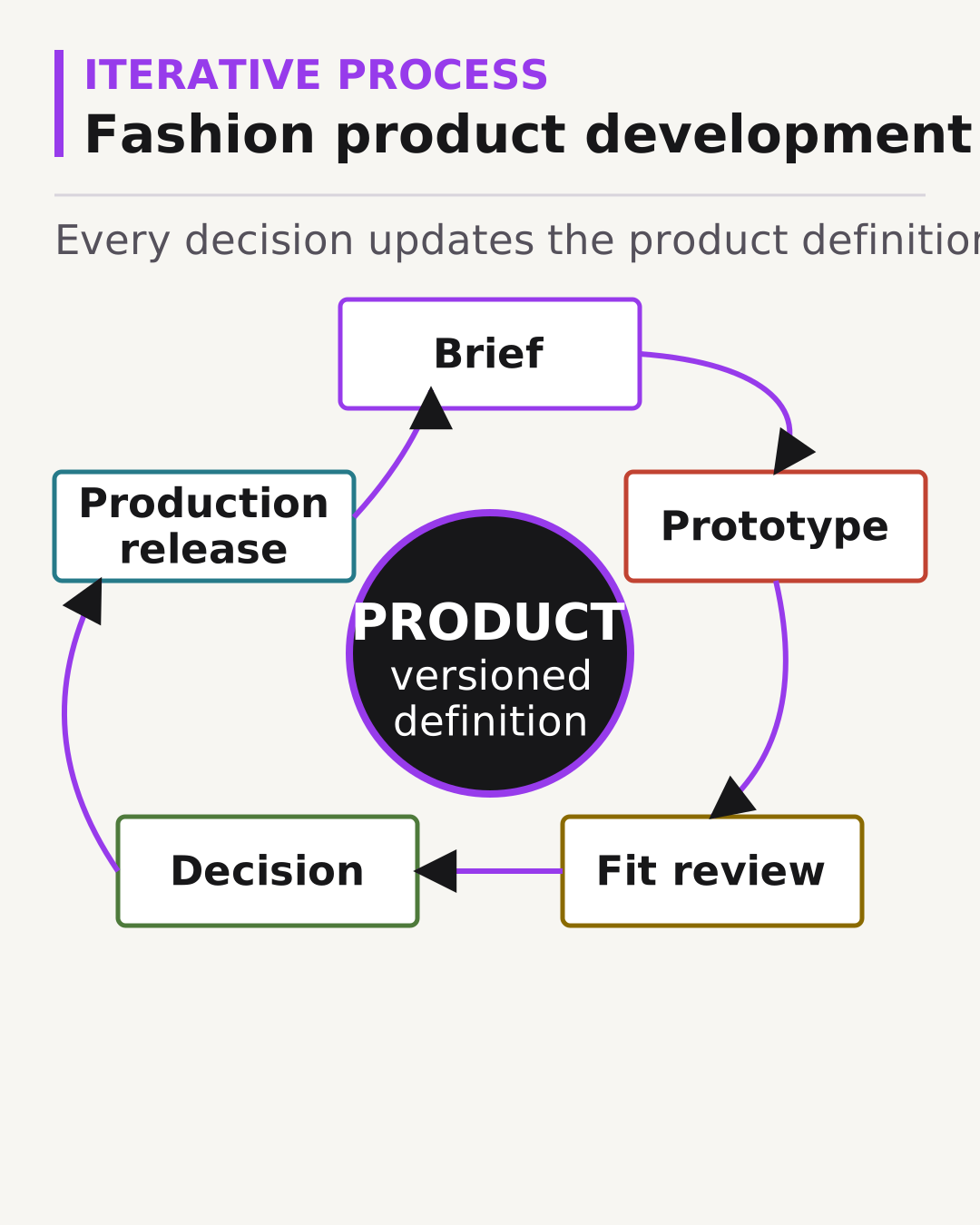
Fashion product development is the process that turns an opportunity or brief into a product specified and approved for manufacturing. It coordinates concept, assortment, materials, patternmaking, samples, fit, cost, quality, compliance and timing through decision cycles rather than an isolated creative sequence.

Fashion product technical specification
A technical specification is the controlled information set that translates an approved fashion product into verifiable sampling and manufacturing requirements. It brings together drawings, materials, measurements, construction, tolerances, identification, labelling, comments and revision history; its content varies by category, company, market and stage.
Sources
- https://economia.seade.gov.br/industria-textil-confeccoes-estado-sao-paulo/
- https://cetesb.sp.gov.br/consumosustentavel/wp-content/uploads/sites/20/2013/11/guia_textil.pdf
- https://www.oecd.org/en/publications/responsible-business-conduct-spotlights_03a75bf9-en/due-diligence-essentials-for-responsible-garment-and-footwear_c7ae4e4a-en.html
Want to apply this to your operation?