Sourcing and supplier management
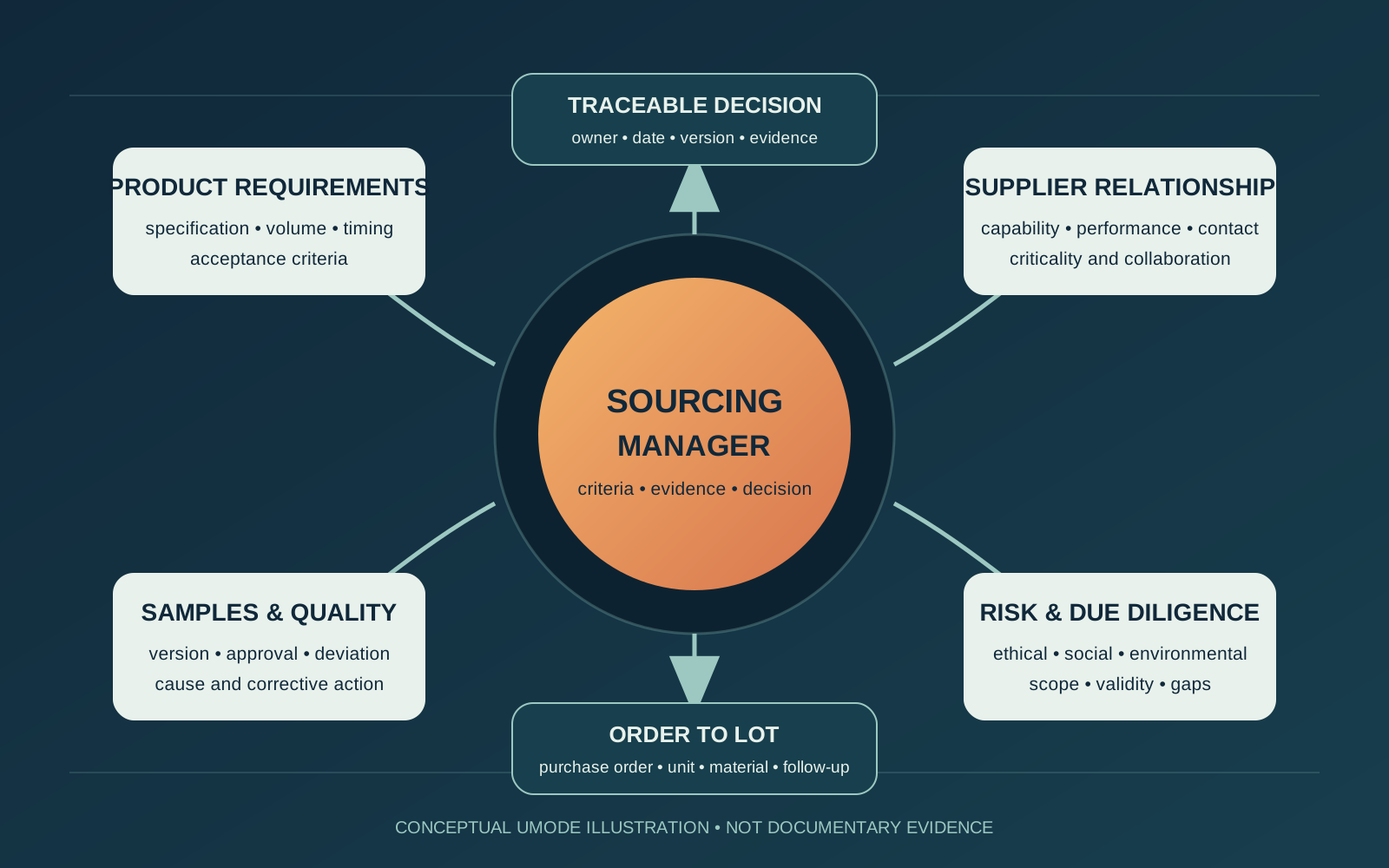
Sourcing and supplier management. Fashion sourcing requires visibility into units and processes, prioritization of human risks, worker dialogue, remediation and a decision trail tied to orders and lots.
On this page
Sourcing and supplier management
Fashion sourcing requires visibility into units and processes, prioritization of human risks, worker dialogue, remediation and a decision trail tied to orders and lots.
What is Sourcing and supplier management?
The contracted entity may not be the unit cutting, sewing, washing, embroidering or packing. Record legal entity, addresses, subcontractors, processes, capacity, shifts, contacts and changes. Supplier records should connect a unit to products and orders. Short deadlines and volume changes move work to third parties; the record needs a date and owner. A certificate or old audit does not prove current transparency.
How should diligence be prioritized without reducing people to scores?
The ILO describes forced labour as a severe violation across countries and sectors. The first filter is potential impact on people, not only delay. Prioritize labour-intensive processes, opaque intermediaries, migrant recruitment, employer-linked housing and sudden changes. Risk management should show reason, source, date, uncertainty and decision. A score orders work but cannot replace interviews and worker voice.
What must due diligence ask workers?
The ETI Base Code treats freely chosen employment, association and safety as labour standards. Test document retention, recruitment fees, freedom to leave, organization, grievance channels and facility conditions. Social auditing gathers evidence, but an announced visit does not end investigation. Record who was heard, language, anti-retaliation protection and method limits.
How can a finding become verifiable remediation?
Define cause, affected people, immediate protection, owner, deadline, resources and verification. Automatic termination can remove income without repairing the cause. Due diligence combines prevention, mitigation, follow-up and proportionate remedy. Connect plan, order, unit and lot through Textile traceability, preserving versions. Closure needs attributed or independent evidence.
How can evidence survive from order to lot?
A sourcing decision must survive commercial change. Link order, style, raw material, production unit, subcontractor, audit, interview, corrective plan and shipment approval. When volume changes or a factory is replaced, record the event before updating the supplier record; otherwise the company loses why an earlier conclusion no longer applies. Textile traceability preserves relationships and versions needed to examine impact. Remediation needs state, evidence and owner, including when it changes a buying decision. This trail supports fair comparison and grounds a pause when serious signals appear.
A useful record distinguishes what the company knows, what the supplier states, what workers report and what remains uncertain. That distinction prevents a polished compliance file from being mistaken for current conditions. It also creates a practical follow-up rhythm: refresh high-impact evidence after material changes, compare corrective actions with the original finding, and preserve the reason for every sourcing decision.
Verified facts
- The ILO classifies forced labour as a severe human-rights violation.
Source: ilo.org ↗ - The ILO says forced labour affects countries and sectors broadly.
Source: ilo.org ↗ - The ILO reports that 63% of forced labour occurs in the private economy.
Source: ilo.org ↗ - The ILO links forced labour with disruption of fair competition.
Source: ilo.org ↗ - The ETI Base Code is founded on ILO conventions.
Source: ethicaltrade.org ↗ - The ETI Base Code requires freely chosen employment.
Source: ethicaltrade.org ↗ - The ETI Base Code rejects forced or slave labour.
Source: ethicaltrade.org ↗ - The ETI Base Code covers association and collective bargaining.
Source: ethicaltrade.org ↗ - The ETI Base Code includes safe and hygienic conditions.
Source: ethicaltrade.org ↗ - Labour standards should guide supplier selection, monitoring and remediation.
Source: ethicaltrade.org ↗
Sources
Want to apply this to your operation?