Open to buy in fashion retail
Open to buy in fashion retail. Open to buy (OTB) is a planning process that calculates how much inventory a retailer needs to buy to reach a sales target, using forecast sales, opening stock and desired closing stock. In fashion retail, the balance should be read by period, category, channel and stock cover; it guides buying without replacing assortment decisions.
On this page
What is Open to buy in fashion retail?
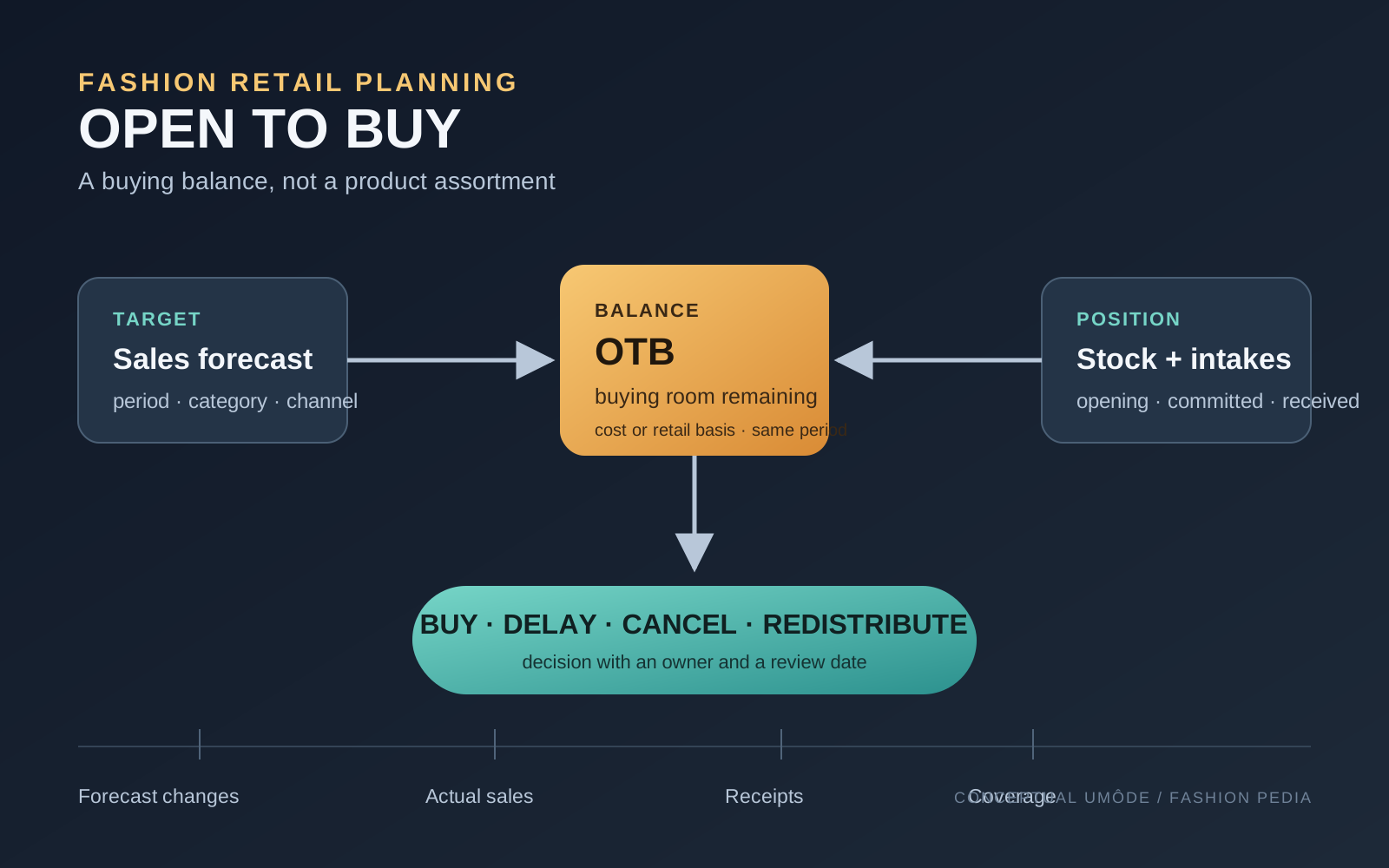
Open to buy (OTB) is a buying-planning process: it calculates how much inventory still needs to be bought to reach a sales target. The retail planning definition used here combines forecast sales with opening stock and desired closing stock. OTB is therefore not a collection name or a product list; it is a discipline for sizing incoming inventory.
In a fashion operation, the scope must be explicit. Record the category, channel, season, period, currency and valuation basis—cost or retail—before comparing plans. The balance should also separate opening stock, expected sales, desired closing stock and purchases already committed. Without that separation, a confirmed intake can look like cash that is still available for buying.
OTB connects with collection planning, line planning and assortment planning, but it answers a different question: how much buying room remains inside the plan? The choice of which products occupy that room remains tied to assortment, depth, size curve and the collection calendar.
How does the calculation work, and when does it change?
The calculation starts with the sales target and desired opening and closing stock levels. A practical way to structure the reading is to compare the inventory needed for planned sales with the inventory expected to be available, then subtract inventory already ordered or committed. Company policy determines whether the result is expressed at cost or retail; the bases should not be mixed in one line.
A forecast is an input, not a permanent truth. Demand planning uses historical data to anticipate future customer demand, while inventory management requires visibility into when to order, how much to order and where to store stock. The buyer or planner should therefore review the curve when actual sales, shipments, returns, cancellations or calendar changes arrive. The review may reduce a buy, move a delivery or create room for replenishment.
The control is clearer when each category has a plan line, a committed line and an actual line. The plan records intent; committed records orders and confirmed intakes; actual records observed sales, receipts and stock. This is a governance recommendation that prevents the same value from being counted twice.
How can OTB be used for a fashion collection?
Use OTB as a bridge between merchandising, buying and finance, starting with a category or product family whose sales target and period are defined. A template can divide the plan by department, category or class and track stock cover. In fashion, that granularity makes it visible that a jacket budget does not automatically replace the need for footwear or a particular size curve.
In a weekly or monthly review, compare the plan with actual sales and intakes. Cover may fall because sales accelerated, a supplier was late or the forecast was high; the balance alone does not explain the cause. Connect the decision to initial allocation, replenishment and sell-through, keeping the concepts distinct: allocation distributes, replenishment buys again, and sell-through measures the relationship between sales and availability.
The reading also needs to include margin and markdown exposure. A seemingly adequate volume can carry price-reduction risk; a smaller buy can protect cash but leave a size curve incomplete. OTB sets a buying limit within the adopted assumptions, not a guarantee of sales, margin or the absence of stockouts.
What are the process limits?
OTB depends on the quality and freshness of its inputs. A forecast can change; a receipt can be late; a sale can include a return; and an assortment decision can alter the stock composition. The process should record these exceptions and preserve the reference period instead of comparing numbers from different weeks or bases.
OTB should also be kept distinct from markup and margin, assortment planning and replenishment. OTB answers the budget and intake-capacity question; it does not choose the silhouette, color, size curve, supplier or channel by itself. Its value is making buying room and the consequence of each commitment visible.
A mature routine closes the loop: record the plan, update commitments, incorporate sales and receipts, compare actual performance and document the next decision. This discipline matters especially in seasonal collections, where a late buy can arrive after the commercial window. Keep the indicator attached to an action the team can take—buy, delay, cancel, redistribute or mark down—and to the person responsible for that action.
Verified facts
- A retail business can use OTB to calculate the inventory needed for its planned sales targets.
Source: retaildogma.com ↗ - The OTB calculation uses sales forecasts, opening stock levels and desired closing stock levels.
Source: retaildogma.com ↗ - OTB is a retail budgeting task that helps avoid overstocking or understocking situations when it is done correctly.
Source: retaildogma.com ↗ - The OTB process seeks an inventory level that supports budgeted sales and avoids cash-flow problems caused by holding too much inventory.
Source: retaildogma.com ↗ - The OTB method considers sales, margins and the desired stock level to determine how much inventory should be bought.
Source: retaildogma.com ↗ - After inventory is ordered, actual sales and intakes can be tracked monthly to maintain visibility over inventory.
Source: retaildogma.com ↗ - An OTB template can organize a buying plan for the whole business and divide it into departments, categories or classes.
Source: retaildogma.com ↗ - Updating a planning template with incoming shipments and actual sales provides visibility over inventory levels and supports planning for the next season.
Source: retaildogma.com ↗ - Demand forecasting uses historical data to anticipate future customer demand and guide data-driven decisions.
Source: ibm.com ↗ - Inventory management makes ordering timing, order quantity and storage location visible to the operation.
Source: ibm.com ↗ - Oracle Retail Allocation can use plan information, history or a combination of both to compare actual sales with the plan and reforecast from in-season performance.
Source: oracle.com ↗
Related entries
Collection planning
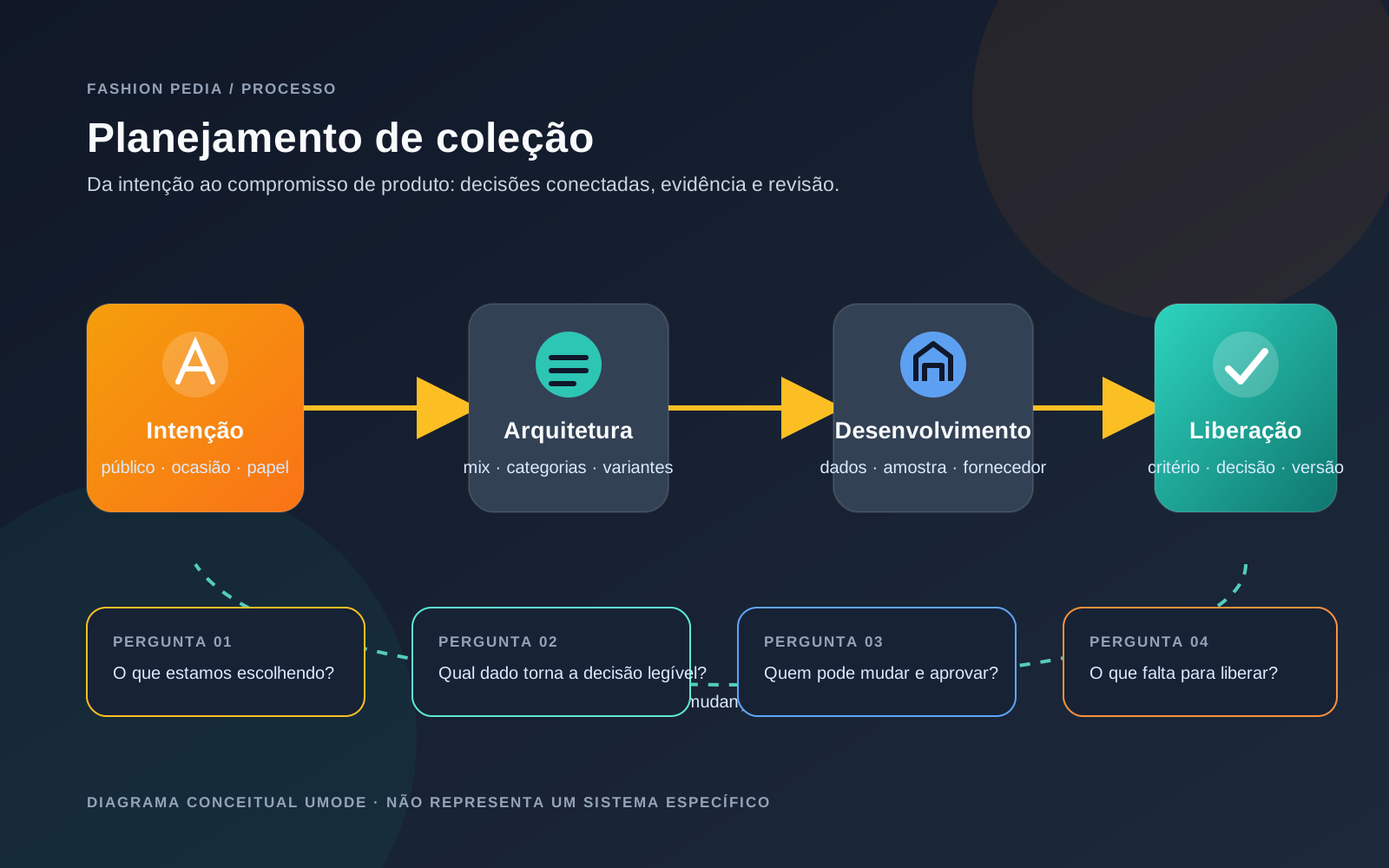
Collection planning is the process of turning a collection intention into controlled decisions about products, data, stages, owners, changes and release criteria. It connects product direction, development, sourcing and information without reducing the plan to a calendar or a software tool.
Collection line plan
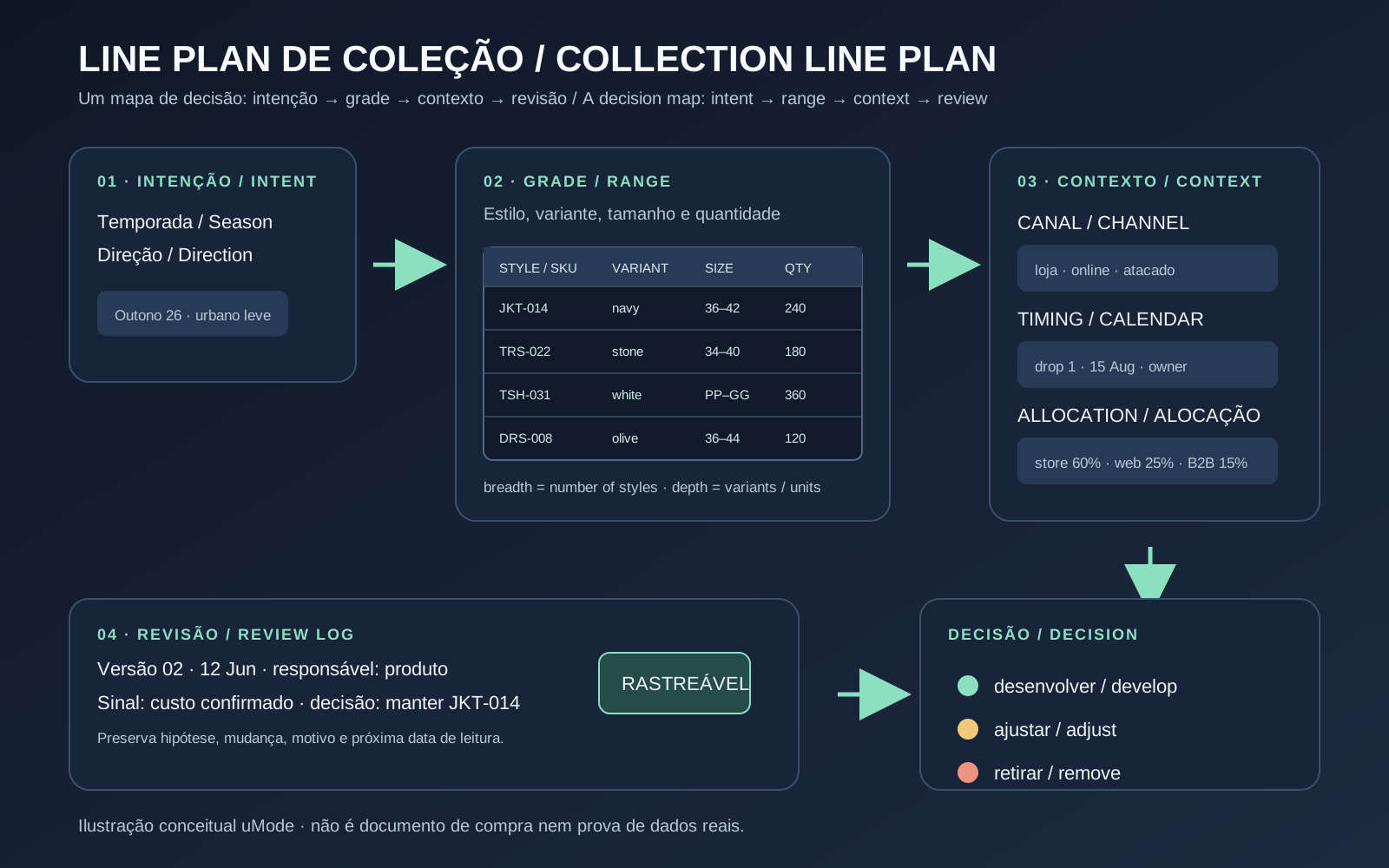
A collection line plan is the operating record that turns collection direction into a grid of styles, variants, sizes, channels, quantities and decision milestones. It defines what is planned for development or buying without replacing a tech pack, budget, forecast or product validation.
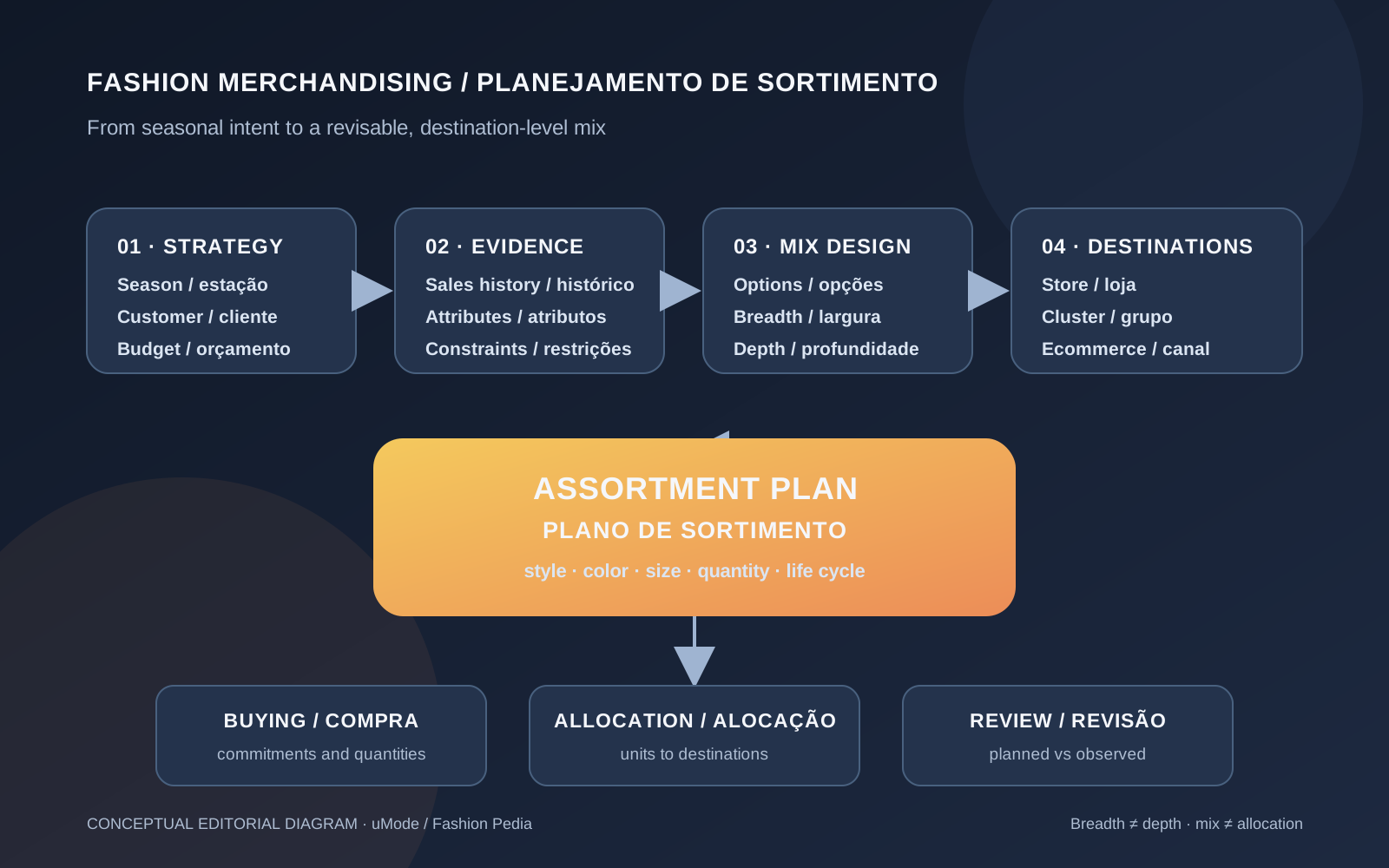
Assortment planning in fashion
Assortment planning in fashion. Assortment planning is the process of deciding which styles, categories, colors, sizes, and quantities belong in each season, store, channel, or store group. In fashion, it turns a merchandise plan into buyable options by relating breadth, depth, and local context without confusing the mix with buying or allocation.
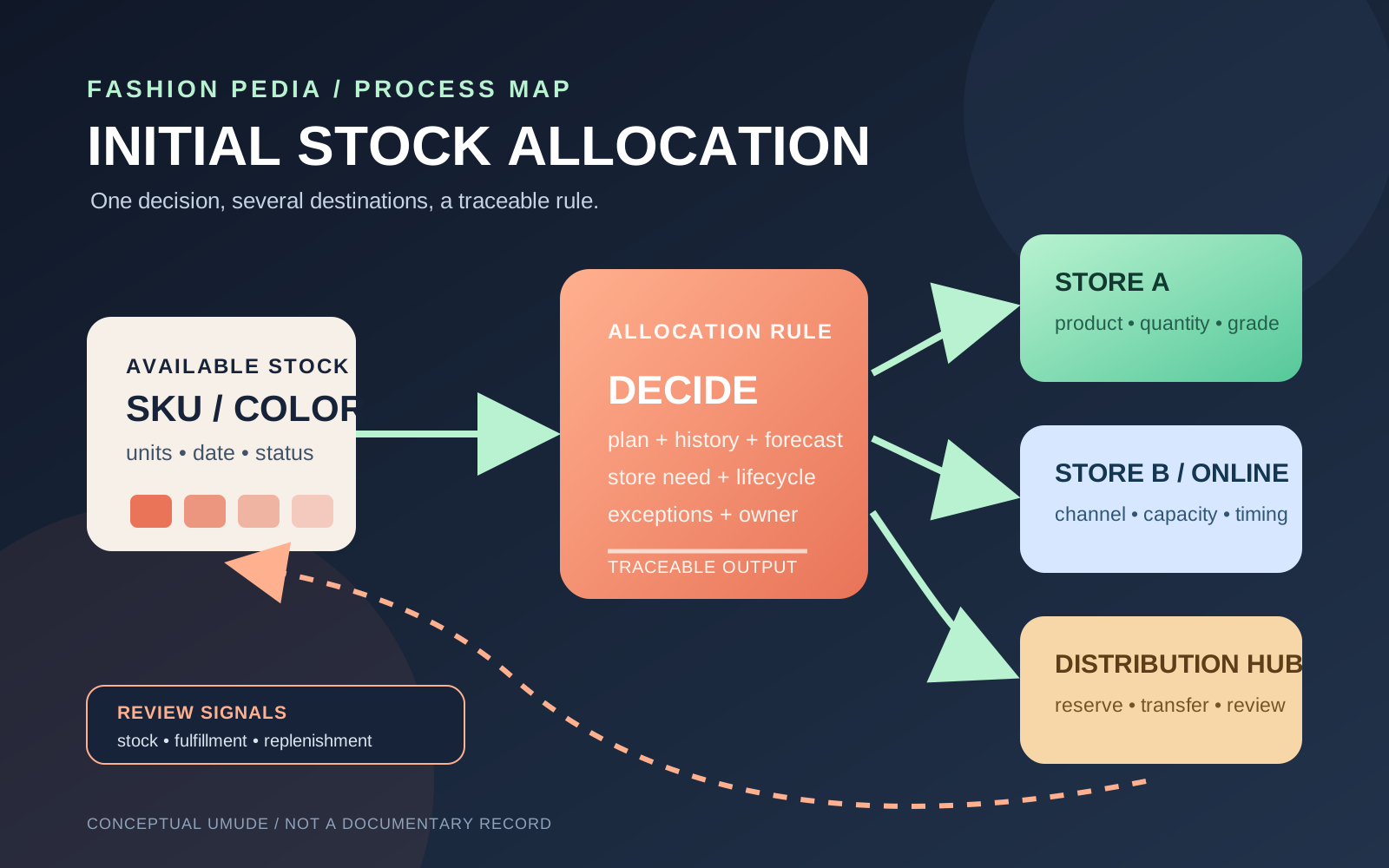
Initial Stock Allocation
Initial stock allocation is the process of deciding how the first available quantity of a product will be distributed across stores, channels, or other service points. A sound record makes the product, destination, quantity, data source, and exceptions visible.
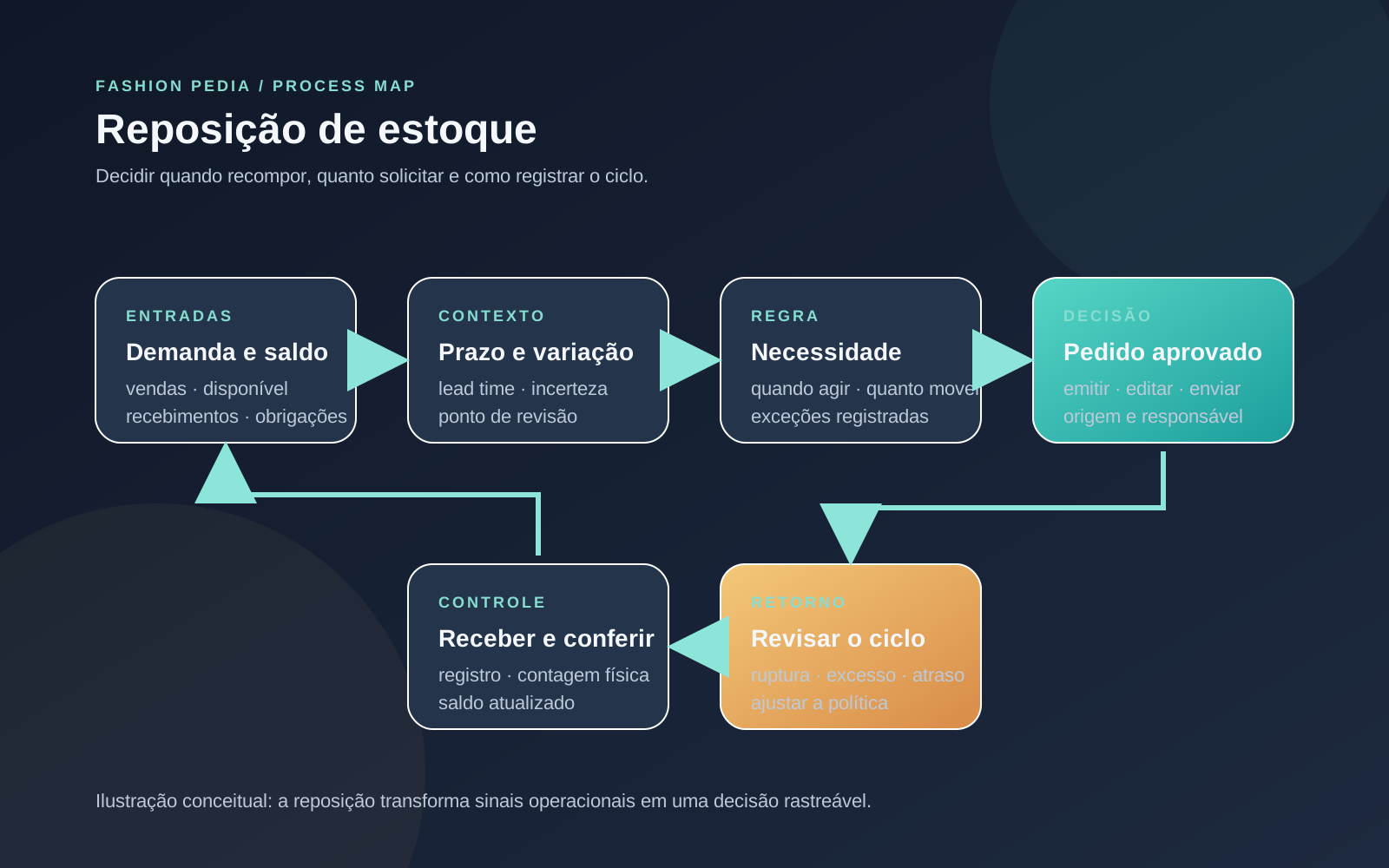
Inventory replenishment
Inventory replenishment is the process of deciding when to restore an item's availability and how much to request for a future need. The decision combines recorded stock, demand, expected receipts, obligations, purchasing lead time and demand variation; the order must then be approved, received and recorded.
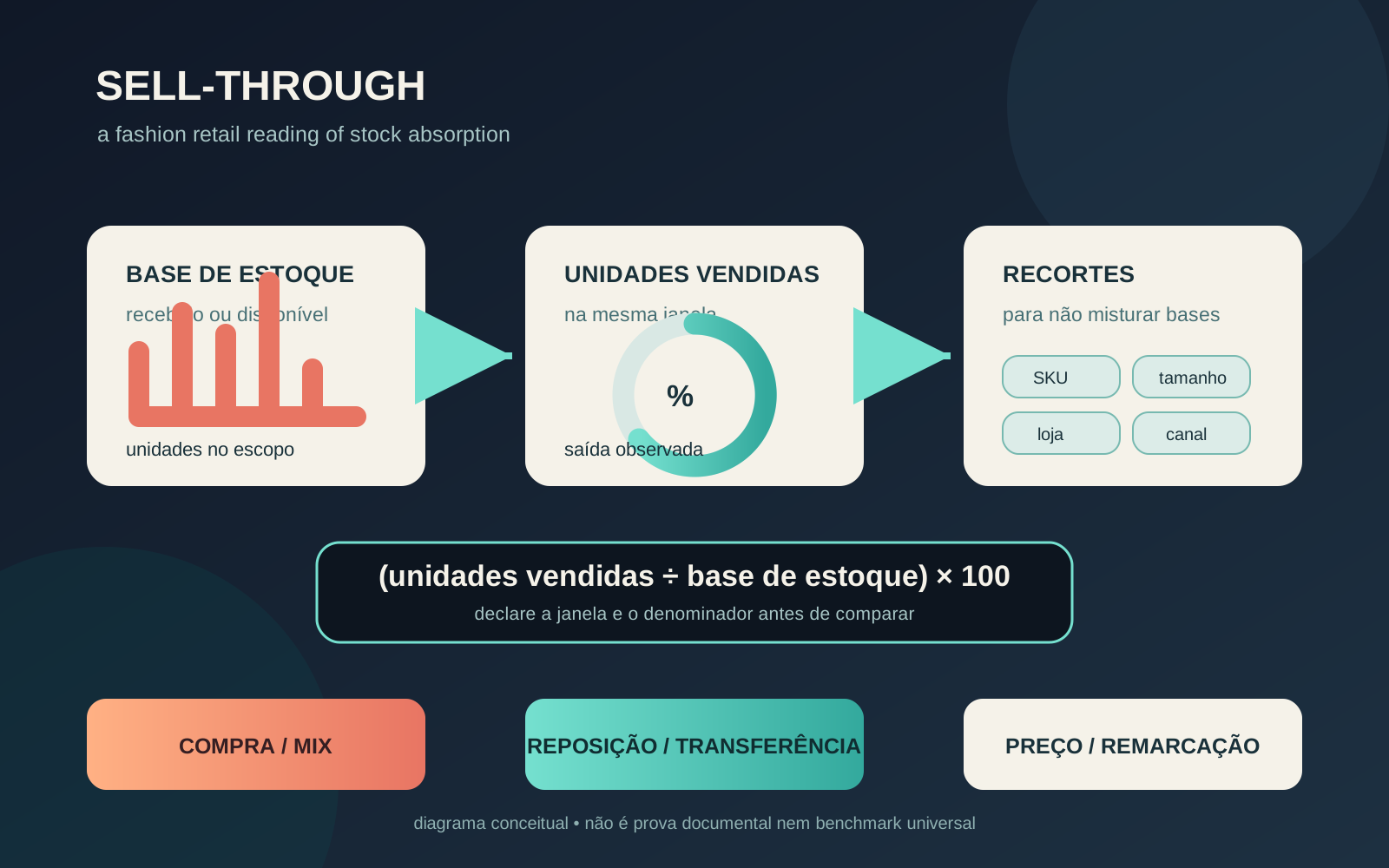
Sell-through in fashion retail
Sell-through in fashion retail. Sell-through is the percentage of units sold from inventory received or made available within a defined window. In fashion retail, the metric becomes useful when it is cut by style, color, size, store, channel, and product life cycle, with the denominator stated before it informs buying, replenishment, or markdown decisions.
Markup and margin in fashion
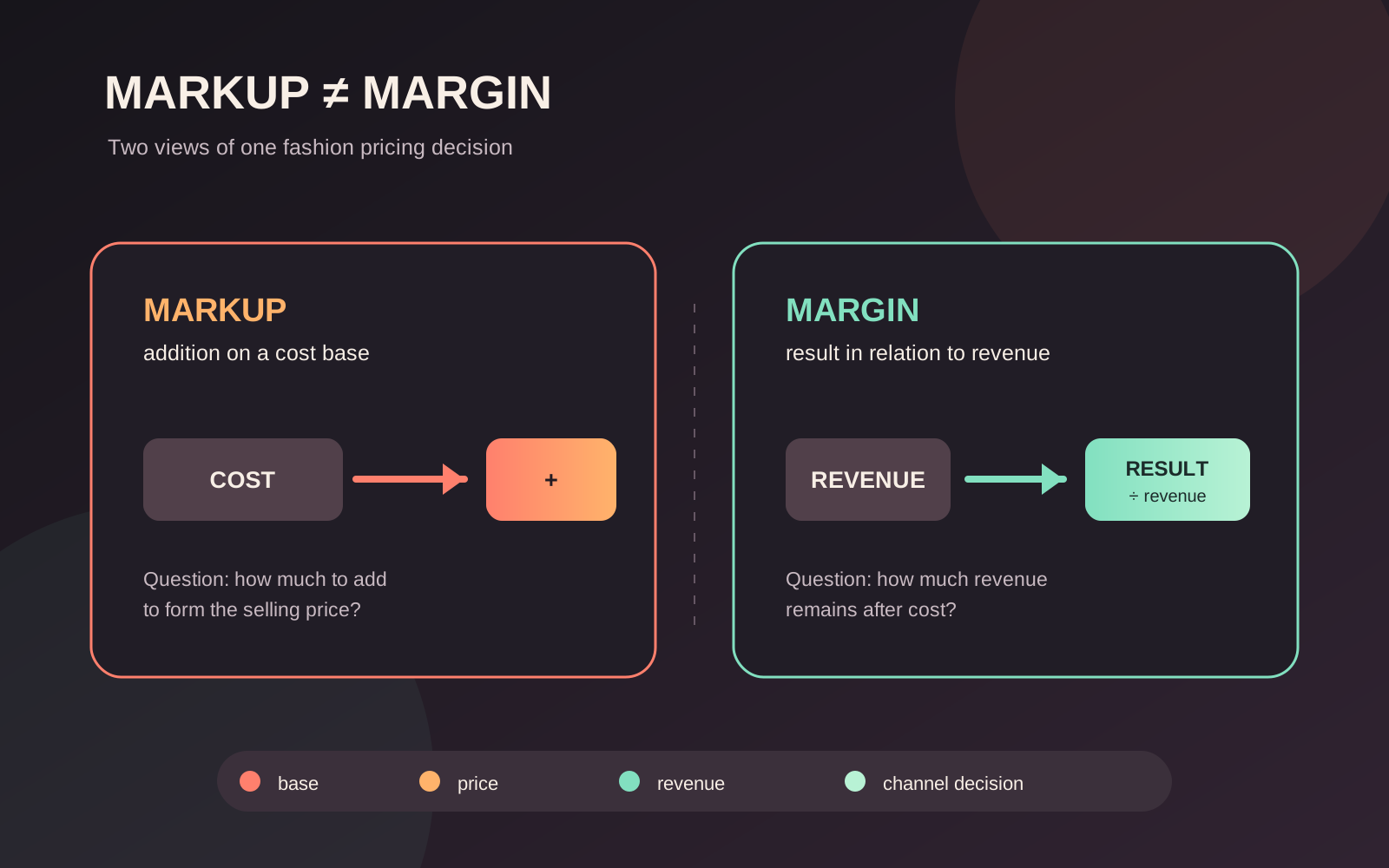
Markup and margin in fashion. Markup is the amount added to cost to form a selling price; margin is the share of revenue left after cost. In fashion, keeping the two bases separate makes price, cost, discount, and result comparisons more reliable.
Sources
Want to apply this to your operation?