How to reduce key-person dependency
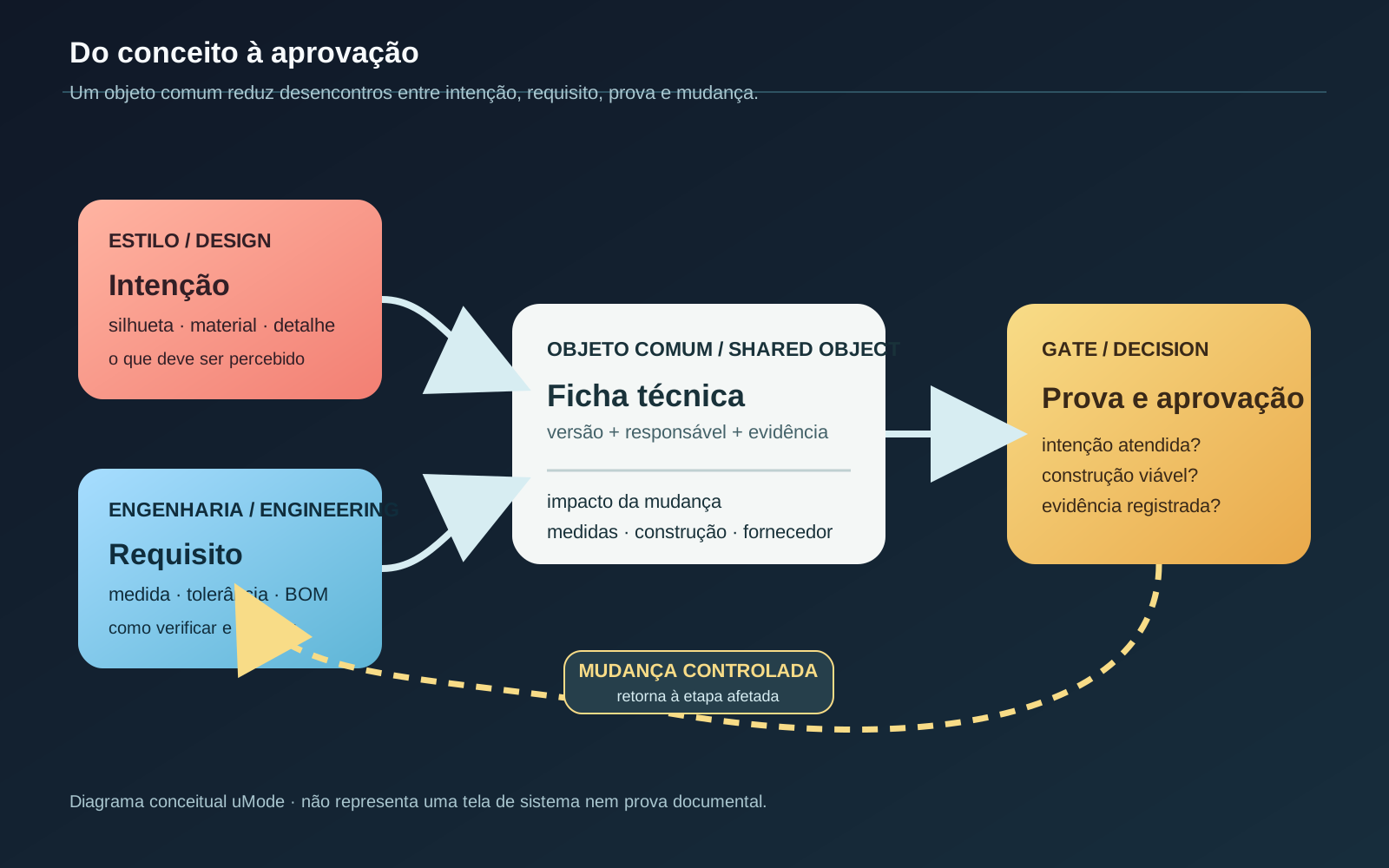
How to reduce key-person dependency. Reducing key-person dependency means turning decisions, criteria and tacit knowledge into a shared, verifiable and practiced process. In fashion, that requires mapping concentration points, preserving context and versions, creating role coverage and testing continuity across sample approval, tech packs, buying and supplier decisions.
On this page
What is How to reduce key-person dependency?
Key-person dependency exists when a critical decision, approval criterion or operational relationship can only be recovered through one person. The warning sign is not expertise itself; it is the combination of concentration, low substitutability and missing shared context. Start with the workflow rather than the job title: collection management, tech pack, sample approval, buying, production or supplier support.
NIST frames contingency planning as an activity with its own purpose, process and format, connected to organizational resilience and the system development life cycle. That framing changes the question from “who knows how to do this?” to “which operation must continue, with what information and what fallback?”. Map the flow with both the person who performs it and the person who receives its output, so that priorities are not defined by the specialist’s memory alone.
How can knowledge be mapped and distributed?
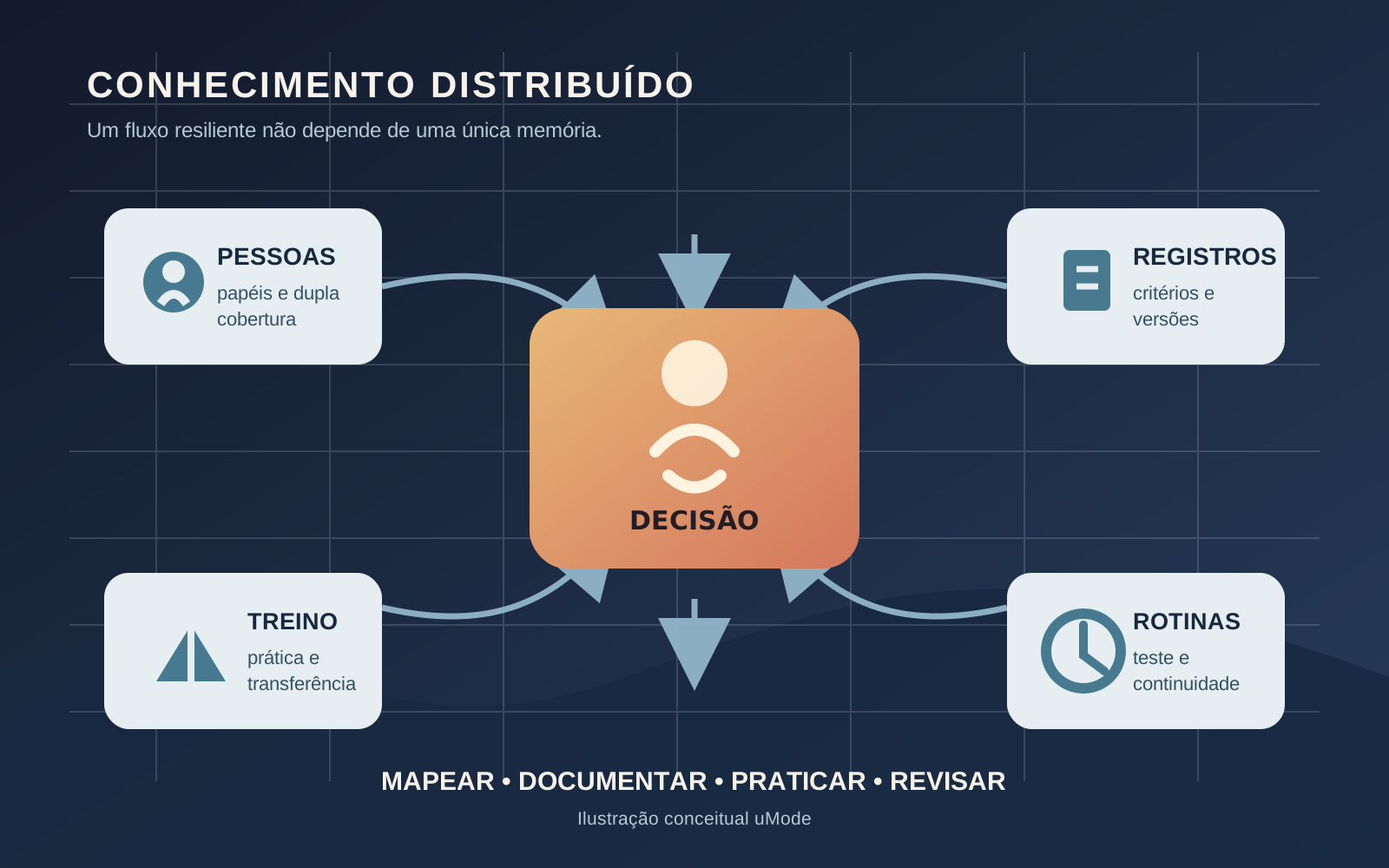
List recurring decisions and their triggers: a measurement change, material choice, color approval, delivery exception, supplier replacement or order release. For each one, record the input, criterion, owner, approver, version, evidence and escalation condition. UK guidance on knowledge assets recommends a strategy applied within the organization and describes three sections with core content; use that discipline to connect inventory, responsibility and execution rather than creating a document nobody uses.
Distribution does not mean removing technical authority. It means creating backup coverage, a source of truth and a way to explain decisions. Preserving institutional knowledge means keeping the reason for a change with the record, not just the final outcome. Enterprise context for AI can support retrieval and comparison when data has stable identity and version; it should not decide alone when criteria are missing or contractual impact is high.
In a fashion value chain, connect the record to collection governance and traceability. A tech pack without history, a comment not tied to a style, or an approval without a date still depends on memory even if it has been saved somewhere. Use stable naming, clear permissions and a rule for closing invalid versions.
How can continuity be tested without the central person?
Test the operation with a real case and a substitute who was not part of the original decision. NIST advises personnel to evaluate systems and operations to determine contingency requirements and priorities. In practice, select a high-impact flow and simulate the specialist’s absence: find the latest valid version, interpret the criterion, perform the next step, record an exception and request approval.
Exercises are not theatre. UK continuity guidance says that regular testing creates learning opportunities for disruptive incidents, validates capability and supports continuous improvement; it also reports that exercises revealed shortcomings in plans. Turn each failure into an action: a missing field, stale contact, excessive permission, unexplained decision or private-conversation dependency. Governing AI agents belongs after boundaries, escalation ownership and a safe interruption path have been defined.
Measure coverage and recovery, not speed alone. Track how many decisions have a trained substitute, how many flows have an explicit criterion, how long it takes to find the valid version and how many tests end with a gap. CIPD describes succession planning as identifying and growing talent for leadership and business-critical positions; in fashion, that supports risk-based cross-training rather than indiscriminate redistribution. People’s trust is also part of the design: documentation should not become surveillance or punishment for raising an exception.
Reducing dependency is a cycle of mapping, recording, practicing and reviewing. The goal is not to make people interchangeable; it is to give important decisions recoverable context, defined coverage and a safe path for exceptions.
Verified facts
- NIST presents contingency planning as an activity with its own purpose, process and format, supported by practical guidance.
Source: csrc.nist.gov ↗ - NIST relates contingency planning to organizational resilience and the system development life cycle.
Source: csrc.nist.gov ↗ - NIST advises personnel to evaluate information systems and operations to determine contingency-planning requirements and priorities.
Source: csrc.nist.gov ↗ - The UK Government describes knowledge-asset management as requiring a strategy and practical application within an organization.
Source: gov.uk ↗ - The UK guidance for knowledge-asset strategies sets out three sections and core content for each section.
Source: gov.uk ↗ - The UK Government Knowledge and Information Management Profession supports the creation, organization and exploitation of information and knowledge.
Source: gov.uk ↗ - UK continuity guidance says that regular exercises and tests create learning opportunities for disruptive incidents.
Source: gov.uk ↗ - The UK guidance describes exercises and tests as ways to validate and continuously improve continuity capability.
Source: gov.uk ↗ - The same guidance reports that exercises revealed shortcomings in the plans of organizations that carried them out.
Source: gov.uk ↗ - CIPD describes succession planning as identifying and growing talent to fill leadership and business-critical positions in the future.
Source: cipd.org ↗ - CIPD defines the aim of succession planning as filling key roles when an employee leaves the organization or changes role.
Source: cipd.org ↗
Related entries
How to preserve institutional knowledge
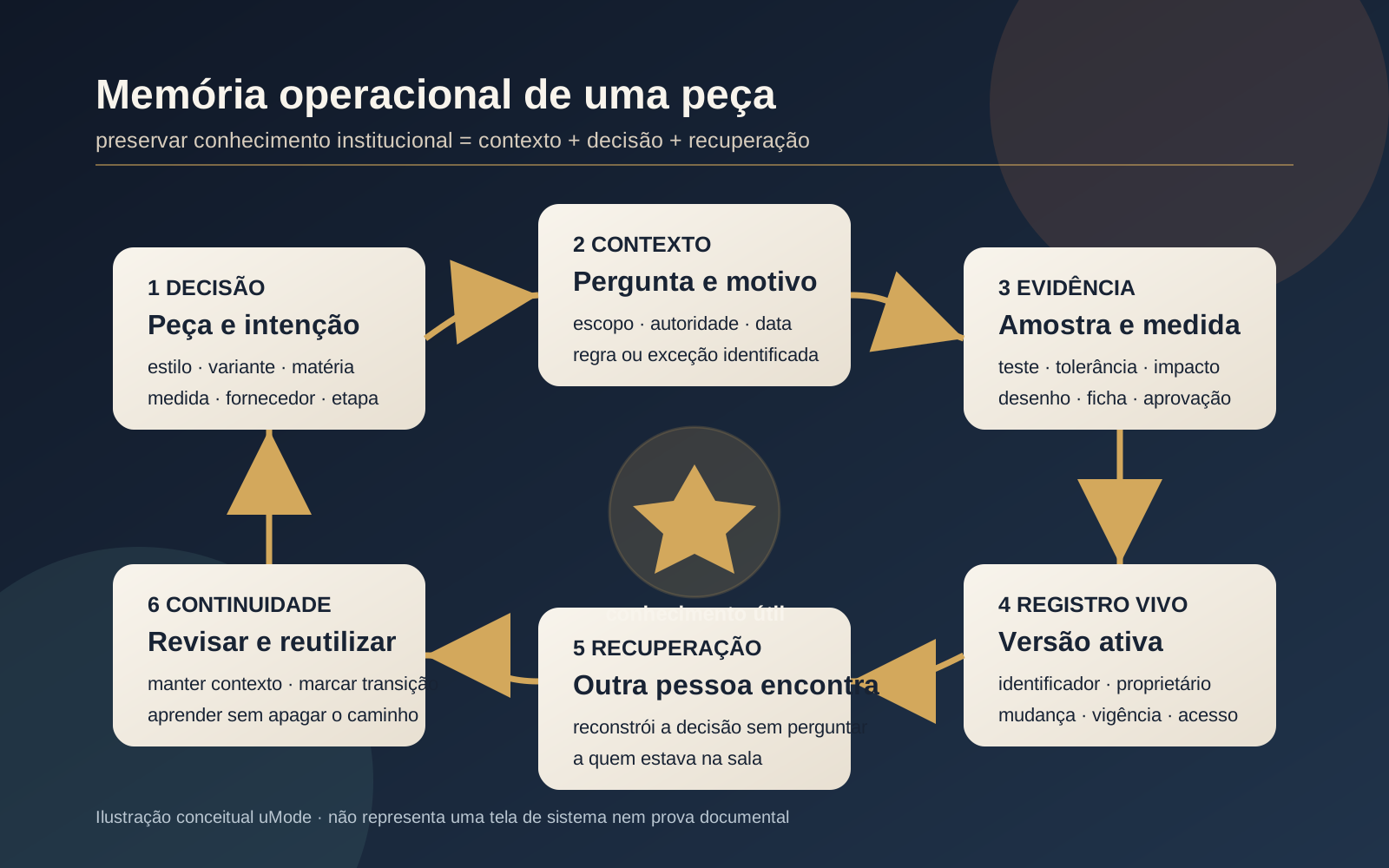
How to preserve institutional knowledge in fashion: turn product decisions, criteria, and exceptions into contextual, versioned, retrievable records. The process starts by defining the object, linking each record to its origin and authority, and ends with a real retrieval test performed by someone else.
How to Give Company Context to AI
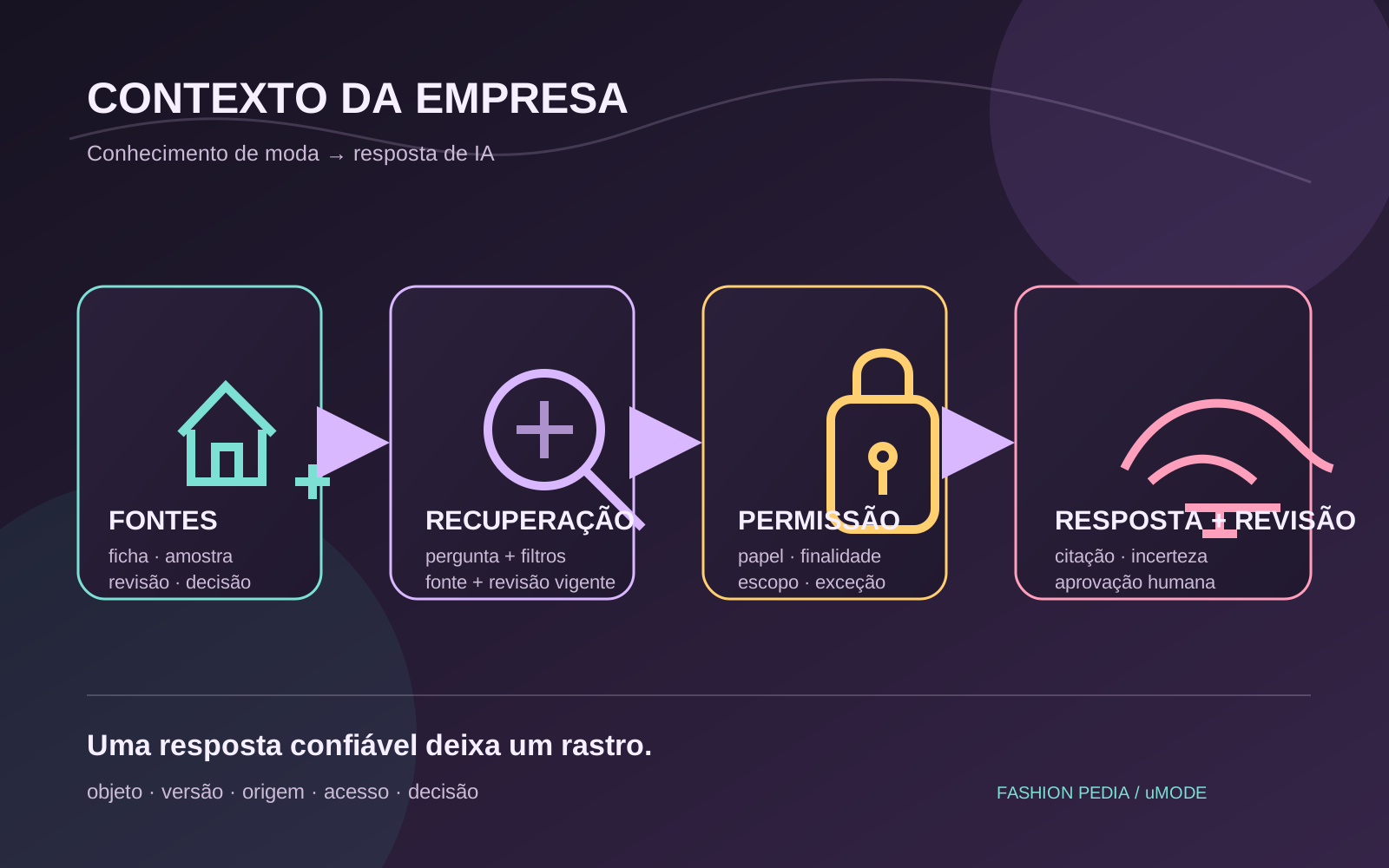
How to Give Company Context to AI. Giving company context to AI means turning scattered knowledge into retrievable information bounded by source, scope, freshness, and permission. The process combines a trusted knowledge base, relevant retrieval, clear instructions, and human evaluation—not simply a longer prompt.
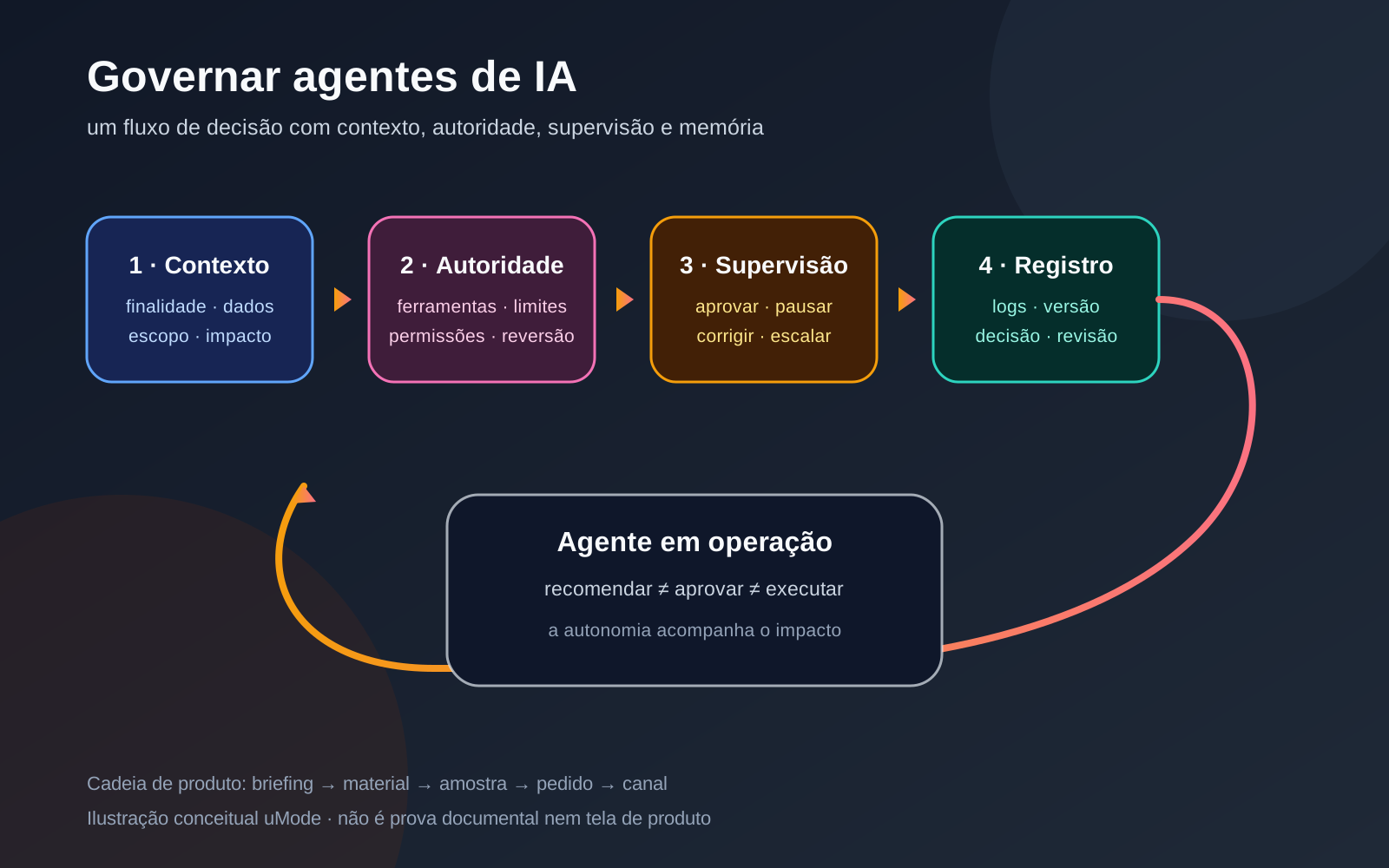
How to govern AI agents in a company
How to govern AI agents in a company. In a company, governing AI agents means defining purpose, context, authority, data, supervision and records before a system is allowed to recommend or execute actions. The process combines continuous risk management with autonomy levels proportional to impact, without treating a framework as automatic permission.

Collection management
Collection management coordinates a fashion line's journey from idea through production, service and disposal by connecting people, product data, processes, decisions, versions and events across teams and partners.

Fashion product technical specification
A technical specification is the controlled information set that translates an approved fashion product into verifiable sampling and manufacturing requirements. It brings together drawings, materials, measurements, construction, tolerances, identification, labelling, comments and revision history; its content varies by category, company, market and stage.
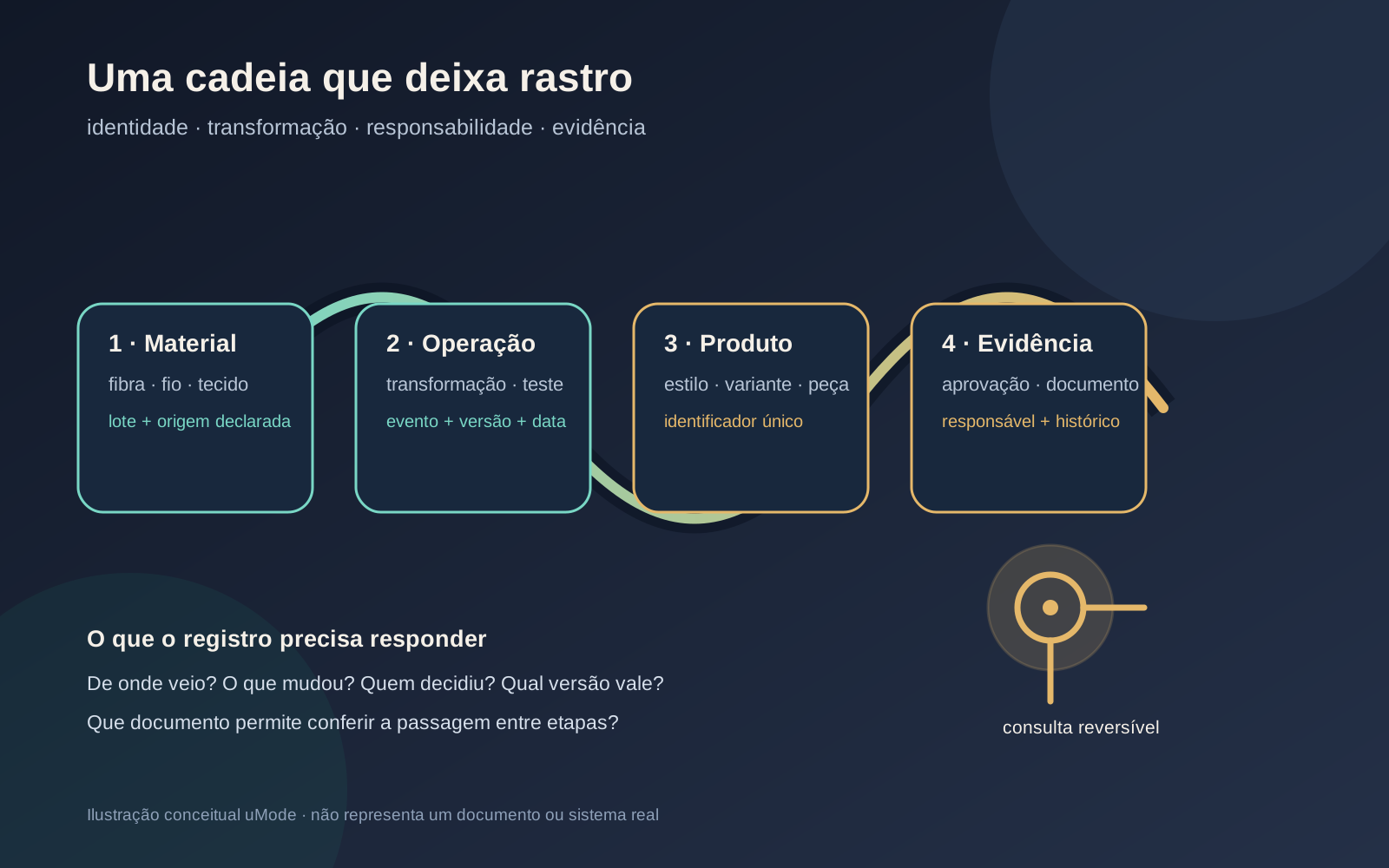
Traceability in the fashion supply chain
Traceability in the fashion supply chain. Fashion supply-chain traceability is the process of linking a product, material or component to the entities, activities, responsible parties and records that explain its transformation and movement. In practice, it combines identifiers, events, relationships and evidence so a product history can be checked.
Sources
- https://csrc.nist.gov/pubs/sp/800/34/r1/final
- https://www.gov.uk/government/publications/knowledge-asset-management-strategy
- https://www.gov.uk/government/organisations/civil-service-government-knowledge-information-management-profession
- https://www.gov.uk/government/publications/examples-of-good-practice-in-public-sector-business-continuity-management-exercising
- https://www.cipd.org/en/knowledge/factsheets/succession-planning-factsheet/
Want to apply this to your operation?