Traceability in the fashion supply chain
Traceability in the fashion supply chain. Fashion supply-chain traceability is the process of linking a product, material or component to the entities, activities, responsible parties and records that explain its transformation and movement. In practice, it combines identifiers, events, relationships and evidence so a product history can be checked.
On this page
What is Traceability in the fashion supply chain?
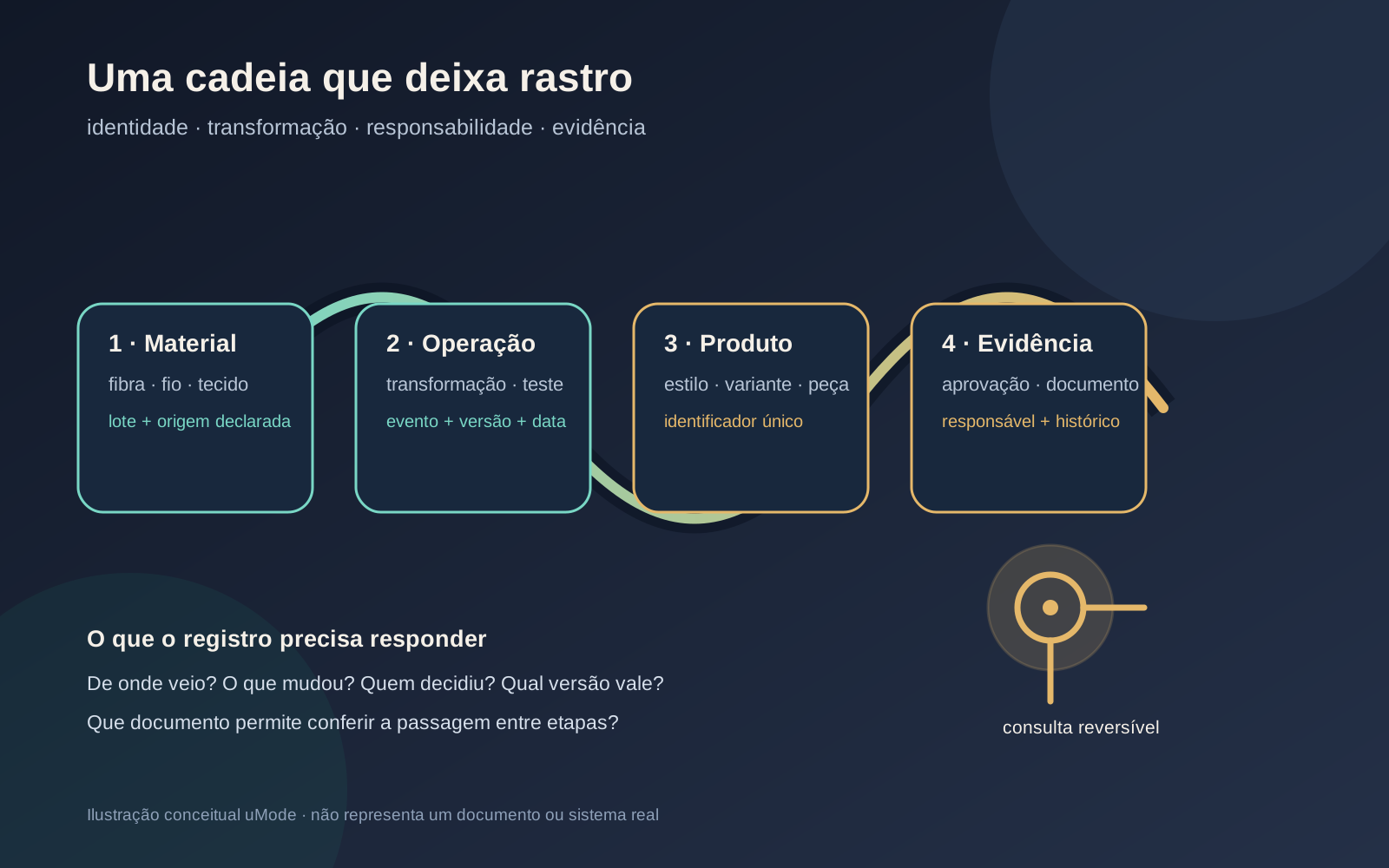
Traceability follows the checkable history of a garment, material or component: who or what was involved, which activities took place and which records support each handoff. This is close to the W3C provenance model, which organizes information about entities, activities and people so that quality, reliability or trustworthiness can be assessed. In a fashion supply chain, the object may be a fibre, yarn, fabric, trim, batch, garment, style or product variant.
The first task is to define the unit and its identifier. A style code should not automatically be treated as the identifier for every fabric batch; an approval note is not the same as the approved specification; a supplier statement does not replace the event that links it to received material. The process becomes clearer when each object has an identity, each transformation has a date and responsible role, and each document points to the version it describes. Technical pack and data governance help maintain that shared vocabulary.
How is a transformation chain recorded?
Recording a chain means linking objects, activities and responsible parties, rather than merely accumulating files. PROV was designed for wide publication and interchange of provenance on the Web and other information systems, and it supports formats such as RDF and XML. That principle can guide a fashion workflow: link an incoming batch to spinning, relate the yarn to fabric formation, connect the fabric to a cutting order, and preserve the relationship between the manufactured garment and its shipment.
An operational record should distinguish creation, use, change, approval and closure. For each event, it should identify the affected object, version, responsible role and checkable evidence. When a composition changes, for example, the history should connect the new specification to the supplier, sample and affected batch; when an approval is replaced, the previous version should remain identifiable. Version control makes the sequence auditable without confusing the current state with an old copy.
The design does not need to start with the entire chain. A critical workflow can be bounded between material receipt, development, production and distribution, as long as its boundaries are explicit. The useful test is bidirectional: start with a product and find its materials and events, or start with a batch and find its related products and destinations. Textile and apparel chain supplies the sector frame; the data map must describe the actual relationships in that case.
What changes with identifiers and digital passports?
Regulation (EU) 2024/1781 establishes a framework for ecodesign requirements and says that digital product-passport data should be accurate, complete and up to date. It also requires open standards and an interoperable, machine-readable, structured, searchable and transferable format. For fashion, this reinforces a process rule: the identifier, the data and the relationship between them must survive a handoff between departments, suppliers or systems.
The same regulation describes a unique product identifier as fundamental to traceability across the supply chain. A passport, however, cannot repair an undefined origin by itself. It is useful only when the data has an owner, scope, version, update method and relationship to the evidence that supports it. Digital product passport can be the consultation layer; it should not erase the operational history explaining how the information was produced.
Due diligence widens the field of attention. The European Parliament describes rules reaching upstream and downstream partners, including supply, production and distribution, and cites impacts such as child labour, labour exploitation, pollution and biodiversity loss. That does not turn traceability into automatic proof of compliance. It means the process must be able to locate partners, activities and risk signals within its declared scope. Fashion due diligence can be connected to the flow, provided its obligations are not confused with the mere existence of a supplier record.
How can a team test whether traceability works?
A useful test selects a product or batch and tries to reconstruct its history without relying on informal memory. The result should show where identity begins, which transformations were recorded, who approved each change, which documents support the current version and where the chain stops being observable. The reverse test searches for every destination related to a batch. Gaps should appear as named missing links, not as a percentage that hides the absent step.
Indicators can track completeness by stage, version conflicts, data age, open exceptions and the time required to answer a query. They are decision instruments: a gap needs an owner and deadline; a conflict needs resolution; a partner without evidence needs a defined risk boundary. Fashion PLM can organize product and lifecycle relationships, but traceability still depends on definitions, responsibilities and records that cross tool boundaries.
Verified facts
- Provenance is information about the entities, activities and people involved in producing data or a thing, used to assess quality, reliability or trustworthiness.
Source: w3.org ↗ - PROV aims to enable the wide publication and interchange of provenance on the Web and other information systems.
Source: w3.org ↗ - PROV represents and interchanges provenance through widely available formats such as RDF and XML.
Source: w3.org ↗ - PROV consists of 12 documents, including the overview document.
Source: w3.org ↗ - Regulation (EU) 2024/1781 establishes a framework for setting ecodesign requirements for sustainable products.
Source: eur-lex.europa.eu ↗ - The regulation says that data contained in a digital product passport should be accurate, complete and up to date.
Source: eur-lex.europa.eu ↗ - Digital product-passport data must be based on open standards and use an interoperable, machine-readable, structured, searchable and transferable format.
Source: eur-lex.europa.eu ↗ - The regulation describes a unique product identifier as fundamental to enabling traceability across the supply chain.
Source: eur-lex.europa.eu ↗ - The European due-diligence rules reach upstream and downstream partners, including supply, production and distribution.
Source: europarl.europa.eu ↗ - Impacts cited by the directive include slavery, child labour, labour exploitation, biodiversity loss, pollution and destruction of natural heritage.
Source: europarl.europa.eu ↗ - Companies covered by the rules must integrate due diligence into their policies, make related investments and seek contractual assurances from partners.
Source: europarl.europa.eu ↗
Related entries
Textile and apparel supply chain
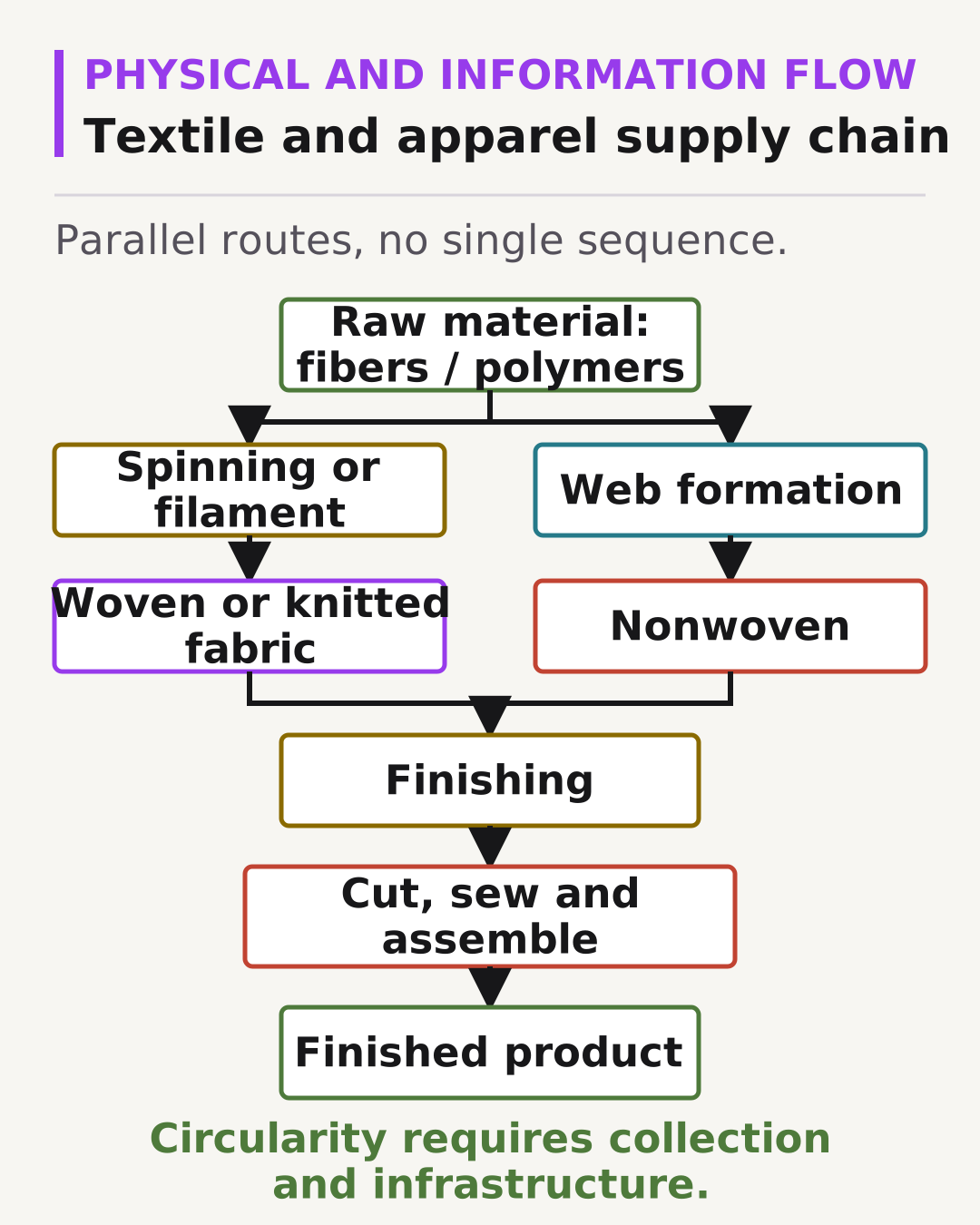
The textile and apparel supply chain transforms natural or manufactured raw materials into yarns, woven or knitted fabrics, and then finished articles. Its reference flow covers fibres, spinning, material formation, wet processing, cutting and assembly, while the real system also includes suppliers, subcontracting, distribution, use and recovery routes.

Fashion product technical specification
A technical specification is the controlled information set that translates an approved fashion product into verifiable sampling and manufacturing requirements. It brings together drawings, materials, measurements, construction, tolerances, identification, labelling, comments and revision history; its content varies by category, company, market and stage.
How to structure fashion data governance
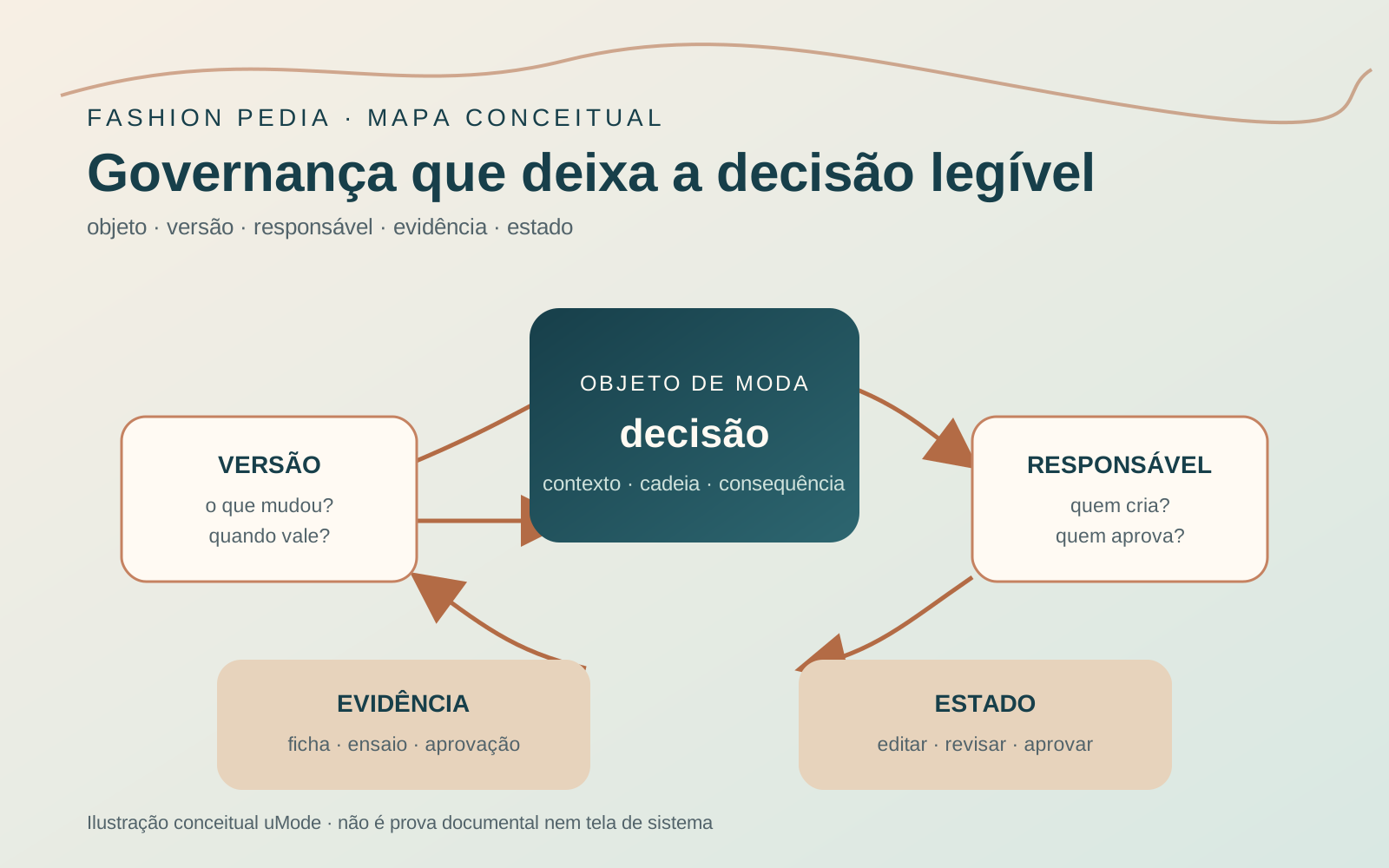
How to structure fashion data governance. Fashion data governance organizes objects, meanings, owners, versions, permissions and evidence around product and supply-chain decisions. A useful structure starts with a critical workflow, states what must be known at each step, and connects a decision to the record that lets another person verify it.
How to control tech pack versions
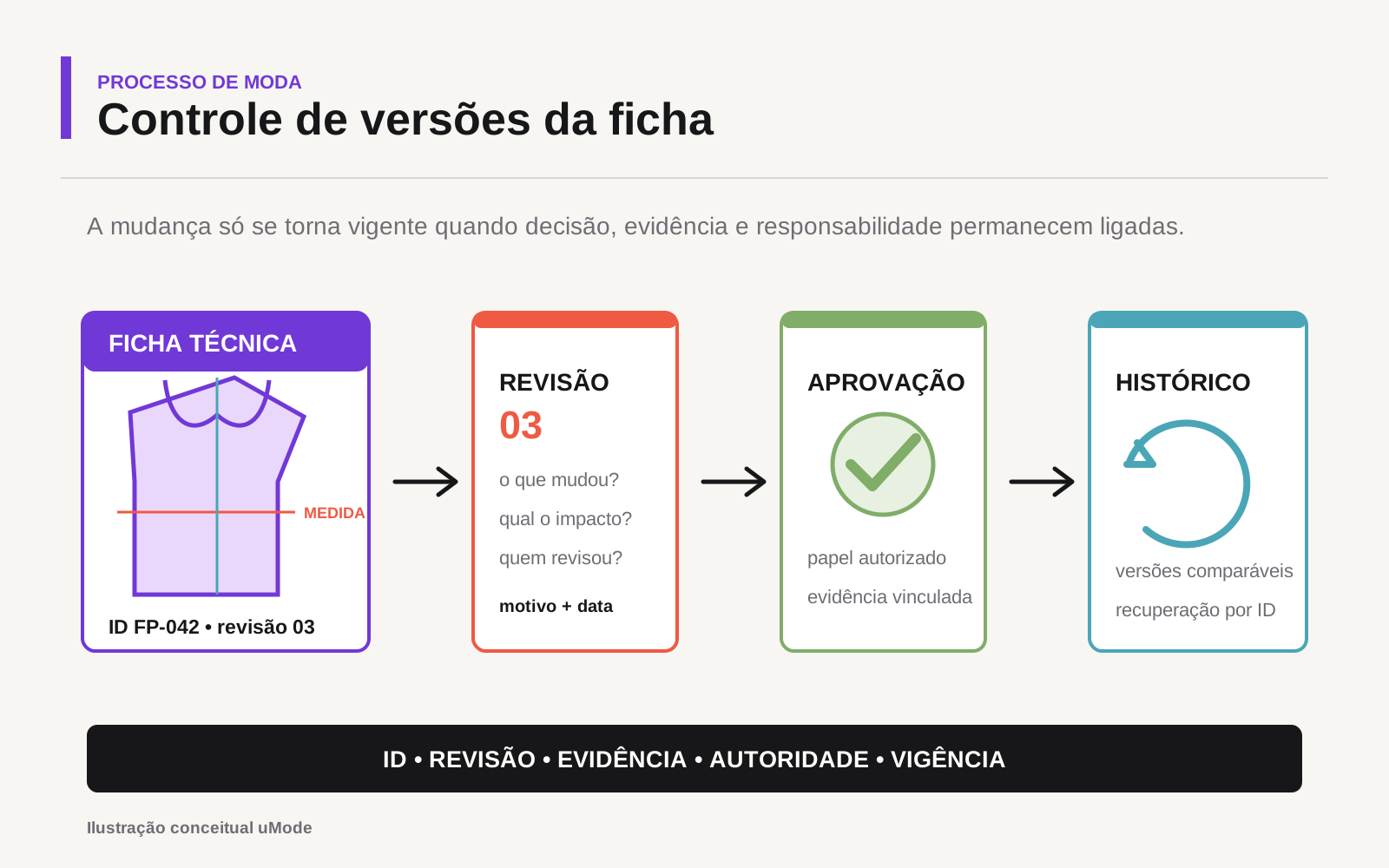
How to control tech pack versions. Controlling tech pack versions means recording every product change with an identifier, owner, reason, status, approval and effective date. The method applies configuration-control and product-lifecycle principles to the concrete decisions of an apparel supply chain.

Fashion PLM: data, product, and lifecycle
Fashion PLM is the structured management of the data, decisions, and workflows that follow a product and a collection from concept through post-launch. It connects tech packs, materials, costs, samples, approvals, suppliers, and versions so that every function works from a traceable product definition.
Sources
Want to apply this to your operation?