How to preserve institutional knowledge
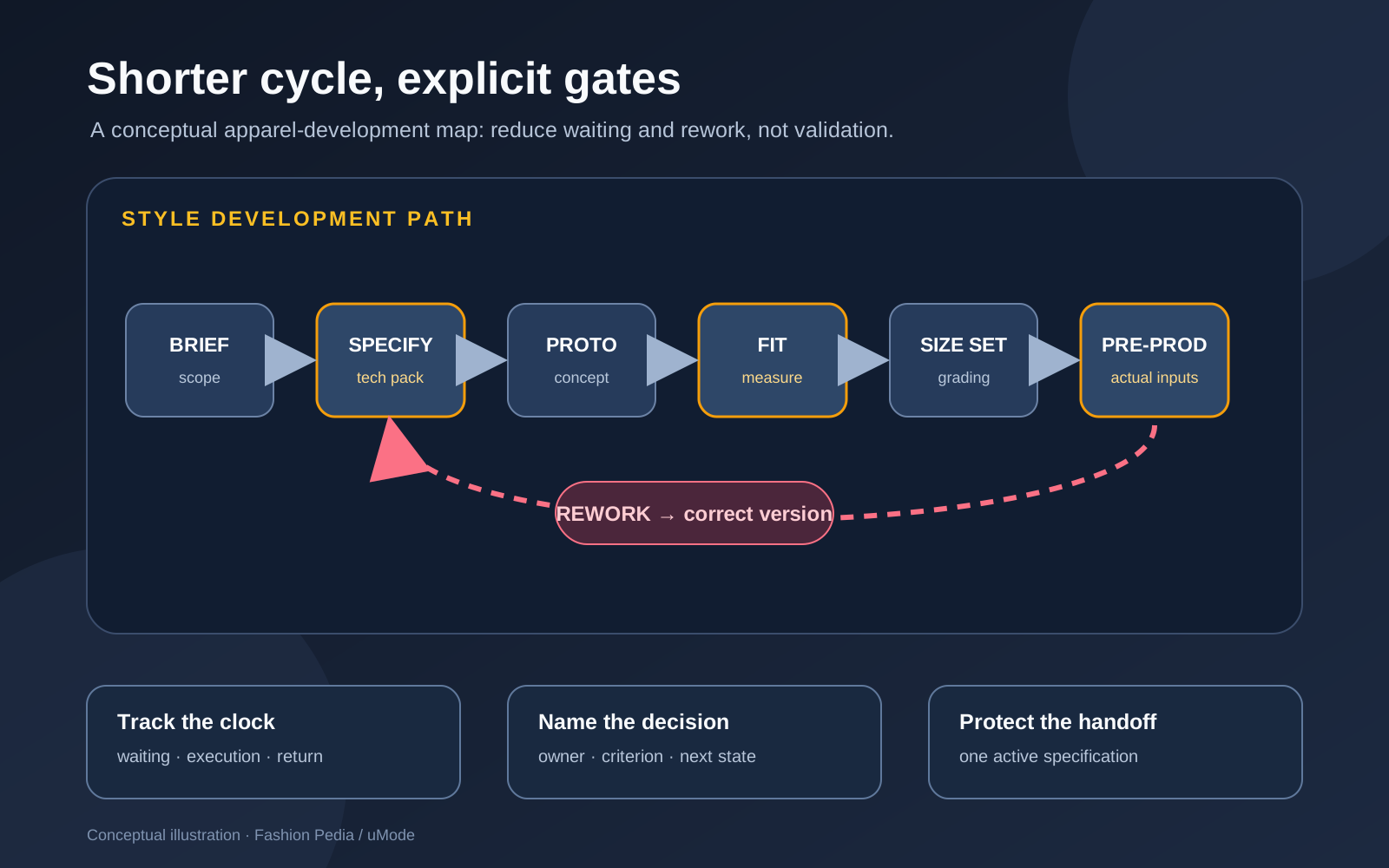
How to preserve institutional knowledge in fashion: turn product decisions, criteria, and exceptions into contextual, versioned, retrievable records. The process starts by defining the object, linking each record to its origin and authority, and ends with a real retrieval test performed by someone else.
On this page
What is How to preserve institutional knowledge?
How to preserve institutional knowledge in fashion starts by recording how a product decision was made, in what context, by whom, with which evidence, and under which version. It does not mean archiving every conversation or freezing a collection. It means making the reasoning recoverable so another person can review a tech pack, repeat a sample approval, or understand why a material was replaced.
Make the scope concrete. Choose one object — a style, variant, material, measurement, supplier, fitting criterion, or catalog rule — and give it an identifier, an owner, and a state. The National Archives says thorough planning is essential for good information management; in a fashion workflow, that means deciding in advance which records are required, who may change them, and when they stop being valid.
How can a collection decision become recoverable memory?
Turn each decision into a short record with six fields: question, decision, reason, evidence, authority, and next review. For a pattern change, add the affected style, reference size, measurement method, tolerance, date, and expected impact. For a fabric substitution, connect composition, supplier, sample, applicable test, and version to the product-development record.
Provenance gives this record a shape. W3C defines provenance as information about the entities, activities, and people involved in producing a piece of data or thing, and connects that context with assessments of quality, reliability, and trustworthiness. In fashion operations, record who made the sketch, who measured the garment, which sample was inspected, and which approval closed the stage. This separates observed evidence from an opinion, hypothesis, or aesthetic preference.
The record must also survive movement between teams. NIST describes PLM systems as managing product and process data throughout the product lifecycle so the right information reaches the right systems at the right time. Use that principle to connect PLM, costing, the tech pack, a supplier request, and retail information without copying ownerless fields. When two versions exist, state which one is active and why the previous one was replaced.
How do you test whether the knowledge can still be used?
Test retrieval, not merely file existence. Give a case to someone who did not participate in the decision: “Which measurement was approved, in which size, for what reason, and with what tolerance?” That person should find the active version, distinguish an exception from a rule, and point to the evidence without relying on the creator’s memory.
Run the test in three fashion situations: a collection-governance review, an urgent raw-material substitution, and a return to an approved sample. In each case, check whether the path shows inputs, decision, impact, authority, and output. NIST says contextualising manufacturing data relative to other lifecycle phases is necessary for understanding system behaviour and satisfying traceability requirements; an isolated document is therefore insufficient when a change crosses design, purchasing, production, and inspection.
The same test exposes integration gaps. NIST describes challenges in integrating information across the lifecycle and reports an implementation that fuses design, planning, manufacturing, and inspection data to support lifecycle decision making. In fashion operations, start with a small observable thread: one style, one material, one sample, and one approval. Expand to material traceability and data governance only when fields and owners are clear.
What should be preserved, reviewed, or discarded?
Preserve what allows the team to act again: an approved decision, a measurement criterion, a tested procedure, a recurring exception, an attribute definition, a supplier relationship, and a fitting result. Review records whose context changed; mark the new effective version and retain the previous one to explain the transition. Discard only under an explicit retention and access policy, never because a file looks old.
The National Archives brings policies, process, tools, and technology together as a combination for realising the value of information, and presents continued access to digital information in the future as a preservation challenge. For fashion, this means that naming, permissions, format, location, and an opening test belong to the process rather than to the period after a tool purchase.
W3C designed PROV to enable wide publication and interchange of provenance information on the Web and in other information systems. That does not require a brand to adopt one particular standard; it marks a useful boundary. If another team cannot reconstruct the decision from the record, the knowledge is still trapped in the person, channel, or system where it began.
Quick questions. Can you start without a new system? Yes: define one object, map its flow, and test retrieval. Does keeping more files solve the problem? Not necessarily; without context, version, and authority, volume can hide the decision. Is a tech pack enough? It preserves part of the product definition, but it does not replace the history of changes, approvals, and exceptions that explains the garment’s path.
Verified facts
- The National Archives provides guidance, tools, and templates to help with information management.
Source: nationalarchives.gov.uk ↗ - The National Archives considers thorough planning essential for good information management.
Source: nationalarchives.gov.uk ↗ - The National Archives groups policies, process, tools, and technology as a combination for realising the value of information.
Source: nationalarchives.gov.uk ↗ - The National Archives describes digital preservation as a challenge tied to continued access to digital information in the future.
Source: nationalarchives.gov.uk ↗ - PLM systems manage product and process data throughout the product lifecycle so the right information reaches the right systems at the right time.
Source: nist.gov ↗ - NIST identifies contextualising manufacturing data relative to other lifecycle phases as necessary for understanding system behaviour and meeting traceability requirements.
Source: nist.gov ↗ - NIST describes challenges in integrating information across the lifecycle and enabling efficient and effective decision making.
Source: nist.gov ↗ - NIST reports an implementation that fuses design, planning, manufacturing, and inspection data to support lifecycle decision making.
Source: nist.gov ↗ - W3C defines provenance as information about the entities, activities, and people involved in producing a piece of data or thing.
Source: w3.org ↗ - W3C connects provenance with assessments of the quality, reliability, and trustworthiness of data or things.
Source: w3.org ↗ - PROV was designed to enable wide publication and interchange of provenance information on the Web and in other information systems.
Source: w3.org ↗
Related entries

Fashion product technical specification
A technical specification is the controlled information set that translates an approved fashion product into verifiable sampling and manufacturing requirements. It brings together drawings, materials, measurements, construction, tolerances, identification, labelling, comments and revision history; its content varies by category, company, market and stage.
Fashion product development
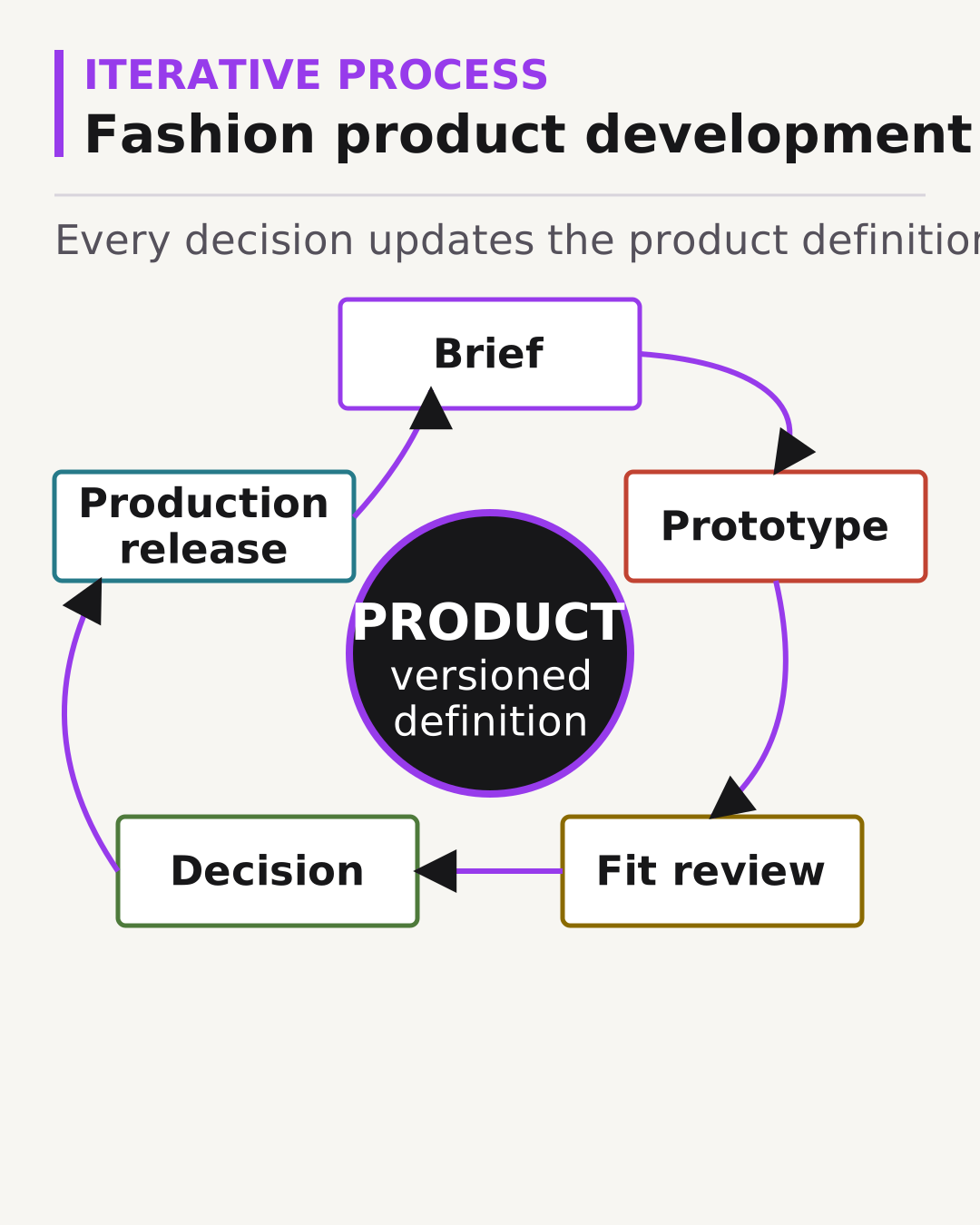
Fashion product development is the process that turns an opportunity or brief into a product specified and approved for manufacturing. It coordinates concept, assortment, materials, patternmaking, samples, fit, cost, quality, compliance and timing through decision cycles rather than an isolated creative sequence.
Collection governance: roles, gates, and evidence
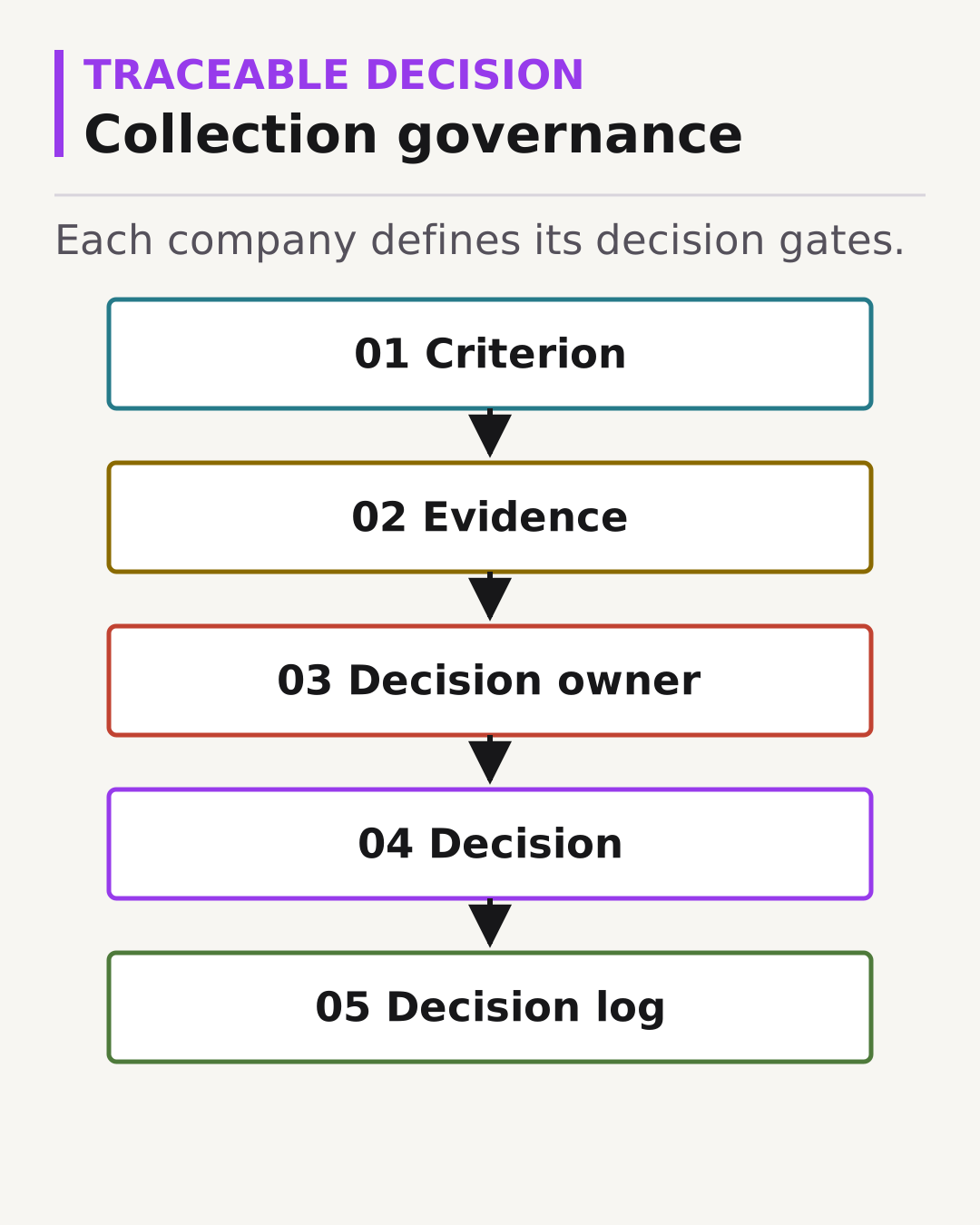
Collection governance describes the practice of making roles, criteria, evidence, decisions, and exceptions explicit in fashion development. The term does not designate one industry standard; it synthesizes principles of process management, evidence-based decisions, due diligence, and traceability.

Fashion PLM: data, product, and lifecycle
Fashion PLM is the structured management of the data, decisions, and workflows that follow a product and a collection from concept through post-launch. It connects tech packs, materials, costs, samples, approvals, suppliers, and versions so that every function works from a traceable product definition.
Traceability in the fashion supply chain
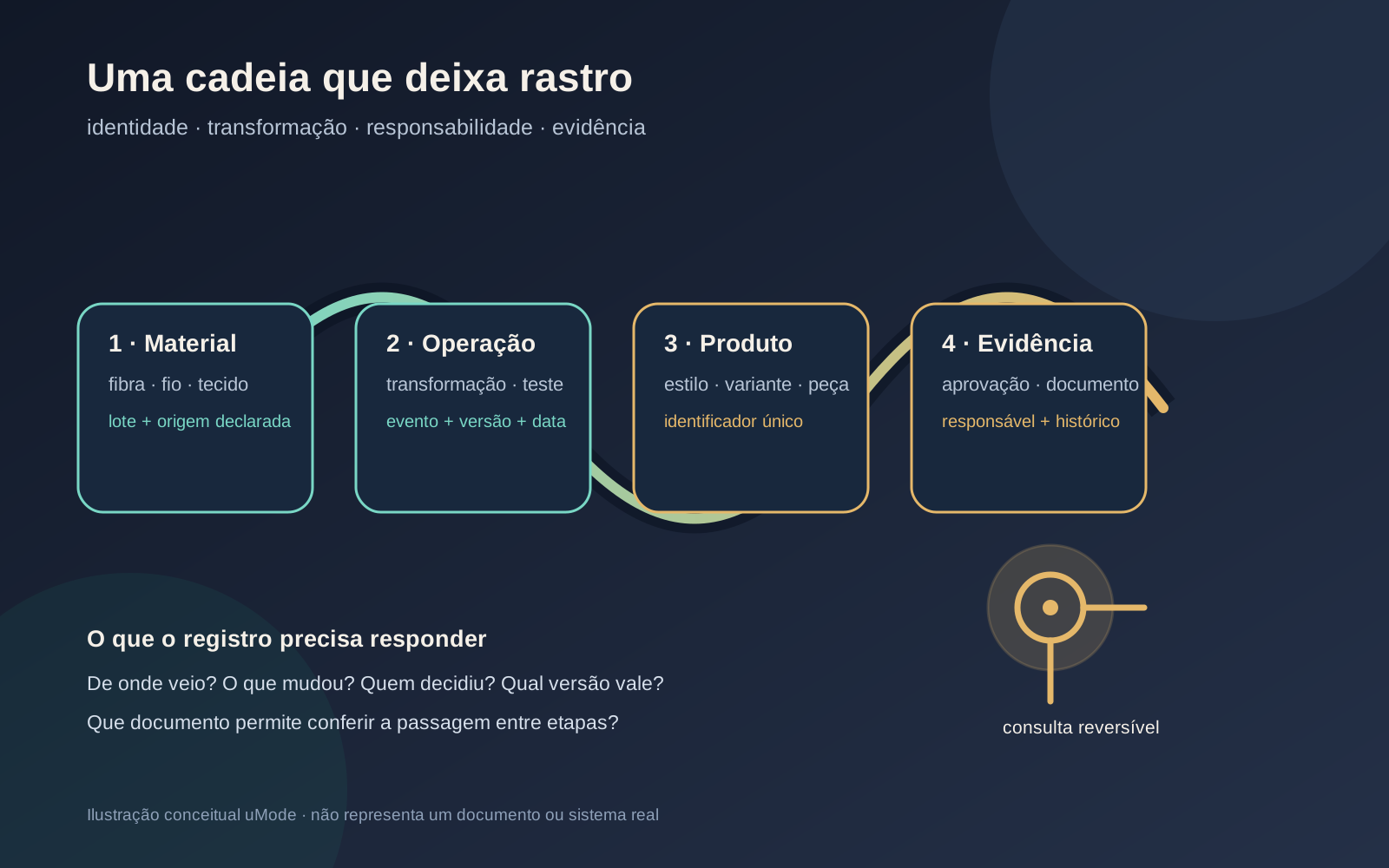
Traceability in the fashion supply chain. Fashion supply-chain traceability is the process of linking a product, material or component to the entities, activities, responsible parties and records that explain its transformation and movement. In practice, it combines identifiers, events, relationships and evidence so a product history can be checked.
How to structure fashion data governance
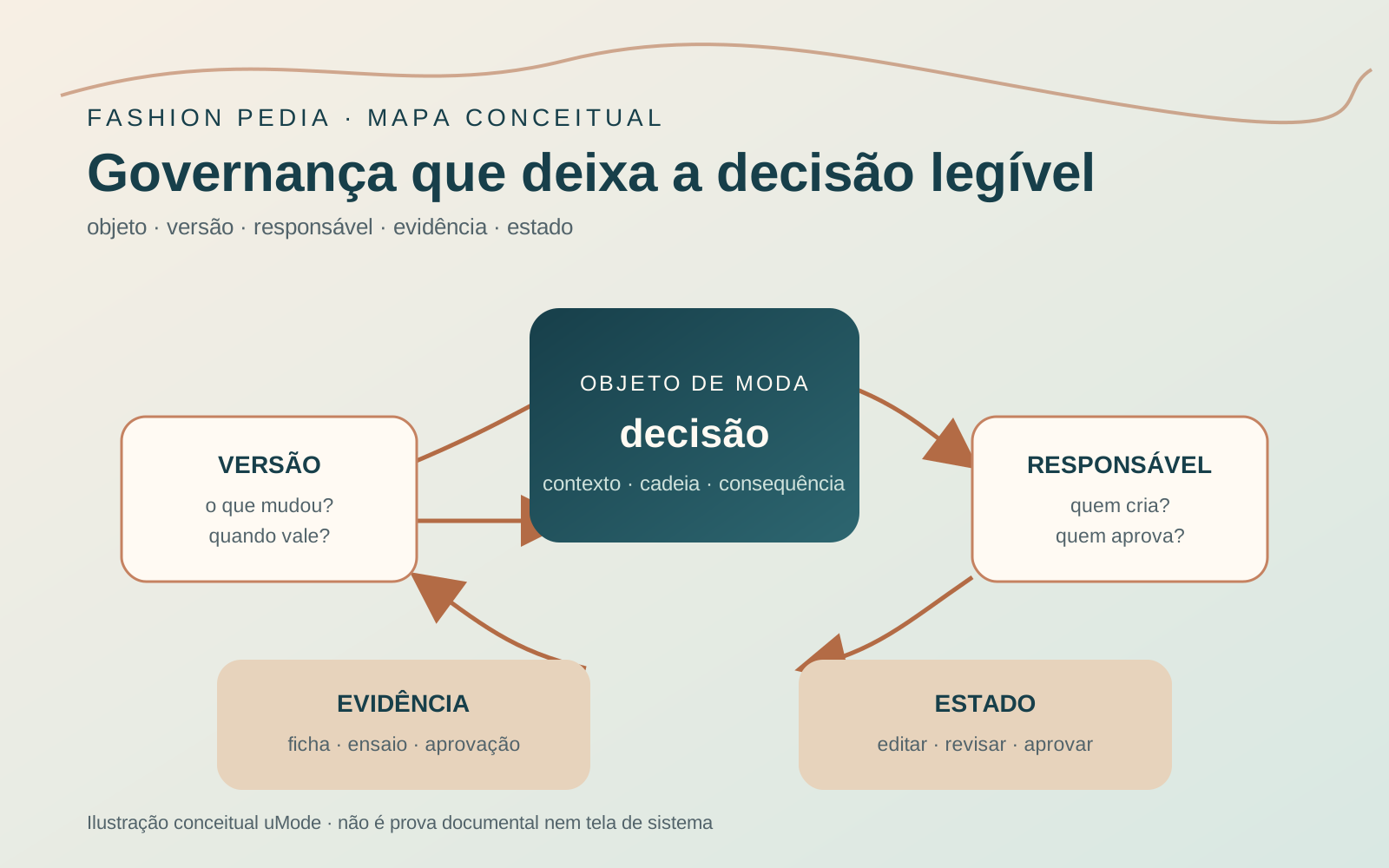
How to structure fashion data governance. Fashion data governance organizes objects, meanings, owners, versions, permissions and evidence around product and supply-chain decisions. A useful structure starts with a critical workflow, states what must be known at each step, and connects a decision to the record that lets another person verify it.
Sources
Want to apply this to your operation?