Fashion merchandiser
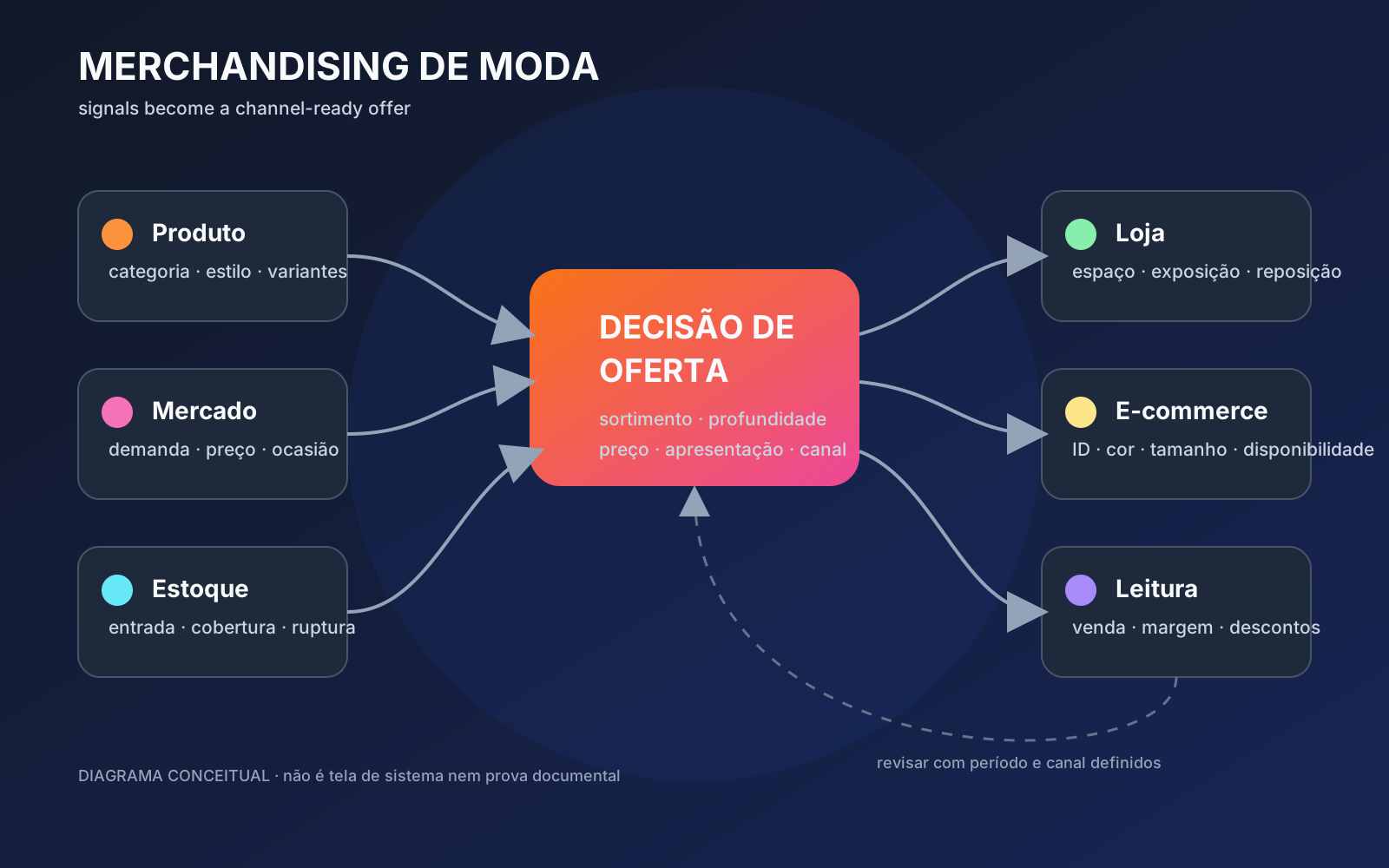
A fashion merchandiser turns market, product, and inventory signals into decisions about assortment, price, presentation, and availability. The role changes with the channel and the company: it may work alongside buyers, product planners, supply-chain teams, and e-commerce without being identical to buying or visual merchandising.
On this page
What is Fashion merchandiser?
A fashion merchandiser connects product decisions with the way an offer reaches the customer: reading the assortment, tracking availability, coordinating price and presentation, and observing how timing changes the question by channel. The work is commercial, but it is not simply “putting clothes in a window.” It turns market and operating signals into an offer that can be described, bought, presented, and monitored.
The title has no universal boundary. Its scope changes with the platform, the size of the business, and its budget. One company may separate product merchandising, planning, buying, e-commerce, and visual merchandising; another may combine some of them. Declare the decision scope before judging the role. A fashion buyer handles buying commitments; collection planning sets line premises; merchandising reads the commercial bridge between those decisions and the channel.
How does assortment become a channel decision?
Start with a defined unit: a category, collection, product family, store, website, or period. Then read the offer at two levels. The first is assortment architecture: the variety of styles, categories, colors, and occasions. The second is depth: the quantity and variant availability attached to each item. Keeping breadth and depth separate prevents “mix” from becoming a vague product list.
The channel changes the question. In a store, presentation can depend on space, exposure, and replenishment. In e-commerce, it also depends on catalog data, images, attributes, price, and availability. Google Merchant Center states that product data is used to match items to queries and that errors can limit or prevent display. A missing color, size, or identifier is therefore not merely a catalog nuisance: it can interrupt how the channel reads the offer. Assortment planning and colorway provide precise names for these choices without collapsing the commercial item into its presentation.
Inventory is both constraint and signal. Inventory management follows products to the point of sale and aims for availability in the right place and time. Visibility supports questions about when to order, how much to order, and where to store. For a merchandiser, that means comparing sales with availability: weak sales may reflect weak demand, but they may also coincide with a missing size, a color stockout, or a delayed intake. Keep the period and channel attached to the interpretation.
How does the role work with buying, data, and performance?
The merchandiser does not automatically replace the buyer. A professional retail-buyer profile separates range selection, analysis of buying patterns, review of sales, margins, and discounts, and stock planning with merchandising and supply-chain teams. A merchandiser may use those inputs, challenge the mix, and recommend adjustments, but authority over suppliers, contracts, budgets, and orders depends on the organisation.
Catalog structure is part of the decision. For variants, keep a stable unit for the item group and record color and size without losing the relationship among related offers. The identifier is not a performance metric; it preserves product identity between feed, page, and channel. Open-to-buy may appear as a planning control, but it should not be treated as a synonym for the job or as automatic buying authority.
Performance reading also needs a denominator and a period. Sell-through can support a conversation about units sold against units made available, provided the time window and denominator are explicit. On its own, the measure cannot explain whether a line was well chosen, adequately stocked, or affected by a price change. A sound routine records intake, stockouts, discounts, returns, and transfers before comparing channels.
What are the limits of the role?
A fashion merchandiser works inside a system of dependencies, not above it. Product, calendar, supplier, inventory, price, channel content, and store capacity can pull in different directions. A recommendation should make its input visible, name the open exception, and identify who can approve the change.
There is also a difference between offer and presentation. Visual merchandising concerns the perceptible organisation of space and product communication; fashion merchandising may include that layer, but it can also track selection, assortment, price, and availability. In digital channels, attributes such as item group ID, color, and size help represent variants, but they do not prove conversion or profitability. Initial allocation and stock replenishment are related decisions: one distributes availability, while the other responds to what happens afterward under the business’s rules and data.
Quality comes from keeping the decision proportional to its context. If the problem is a stockout, the answer is not automatically to buy more; if the issue is excessive variety, reducing SKUs without considering channel and occasion is not enough. The role becomes precise when it states the decision unit, separates breadth from depth, and compares actual performance without assigning to merchandising an outcome that depends on many teams.
Verified facts
- Fashion merchandising is a retail strategy for presenting clothing, accessories, and other fashion items to consumers; market research informs product selection, assortment planning, and retail prices.
Source: shopify.com ↗ - The fashion merchandising role varies with a business's platform, size, and budget, and typically works with purchasing agents, product planners, and fashion marketing teams.
Source: shopify.com ↗ - A retail buyer plans and selects merchandise ranges for physical stores and online channels while balancing demand, price, choice, quality, and availability.
Source: prospects.ac.uk ↗ - Listed retail-buying responsibilities include analysing buying patterns, reviewing sales, margins, and discounts, and planning stock levels with merchandising and supply-chain teams.
Source: prospects.ac.uk ↗ - Inventory management tracks inventory from manufacturer to warehouse and point of sale, aiming to have the right products in the right place at the right time.
Source: ibm.com ↗ - Inventory visibility supports decisions about when to order, how much to order, and where to store stock, especially when inventory is spread across locations.
Source: ibm.com ↗ - Too little inventory where it is needed can create unhappy customers, while large inventories carry storage and insurance costs and risks of spoilage, theft, and damage.
Source: ibm.com ↗ - Merchant Center uses product data to match items to queries; incorrect, inaccurate, or missing data can cause disapprovals, limited eligibility, or display problems.
Source: support.google.com ↗ - Merchant Center variant data includes attributes such as item group ID, color, and size, which help distinguish related offers.
Source: support.google.com ↗
Related entries
Collection planning
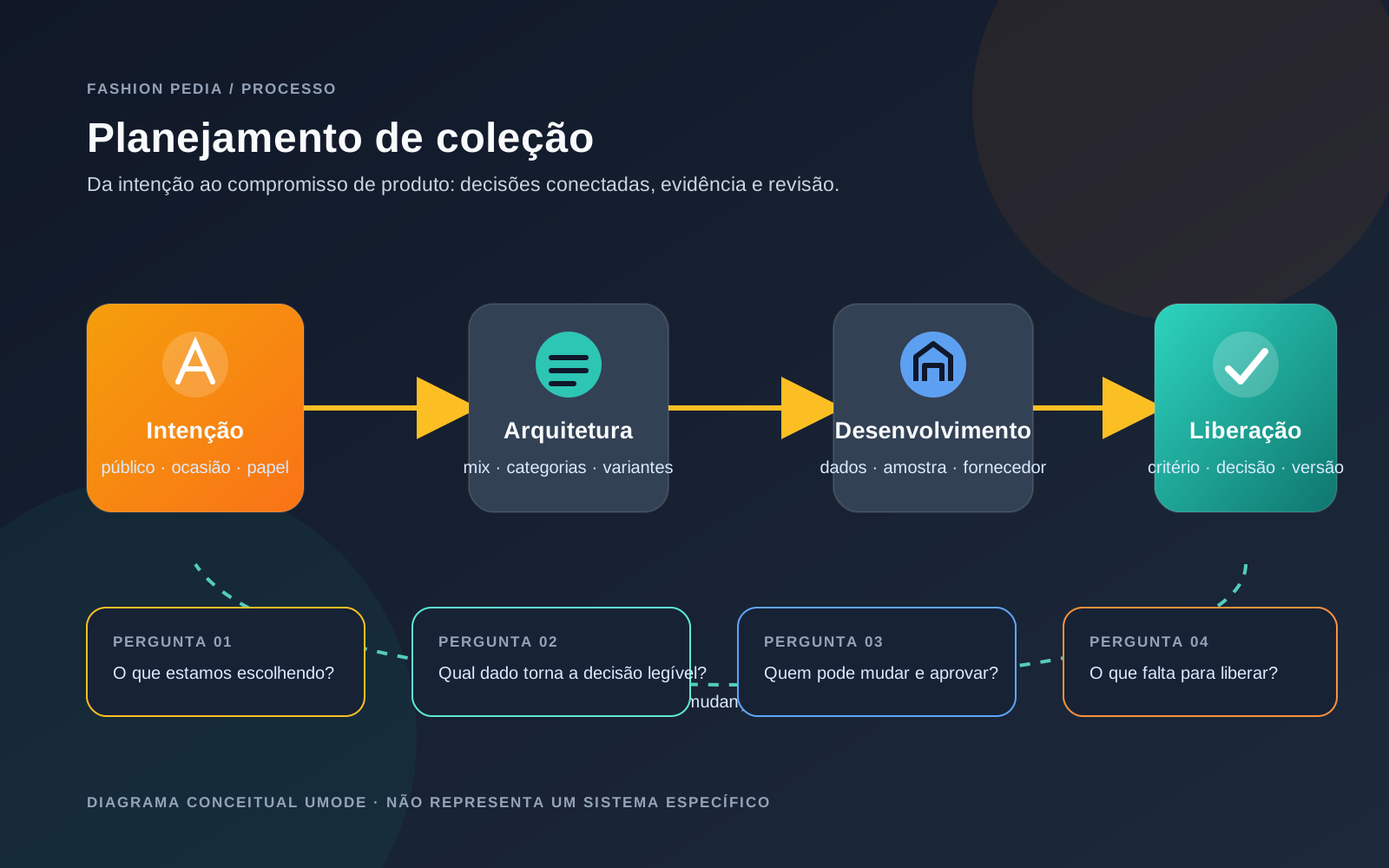
Collection planning is the process of turning a collection intention into controlled decisions about products, data, stages, owners, changes and release criteria. It connects product direction, development, sourcing and information without reducing the plan to a calendar or a software tool.
Fashion buyer
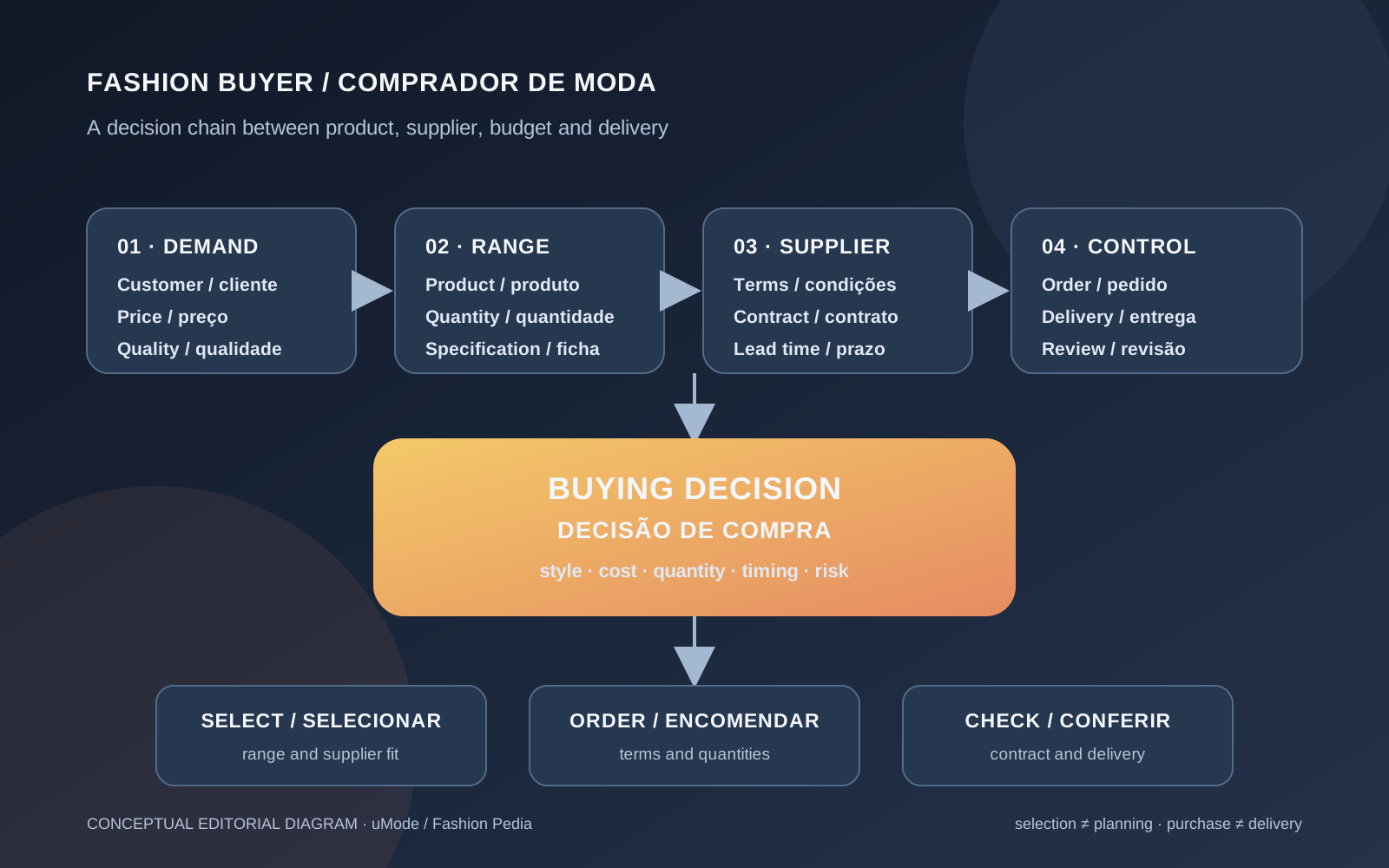
A fashion buyer turns a commercial need into a range, supplier, price, quantity, and timing decision. The role combines product and market reading with negotiation and execution follow-up. It connects selection, commercial commitment, and delivery review without automatically owning planning, design, technical approval, or quality control.
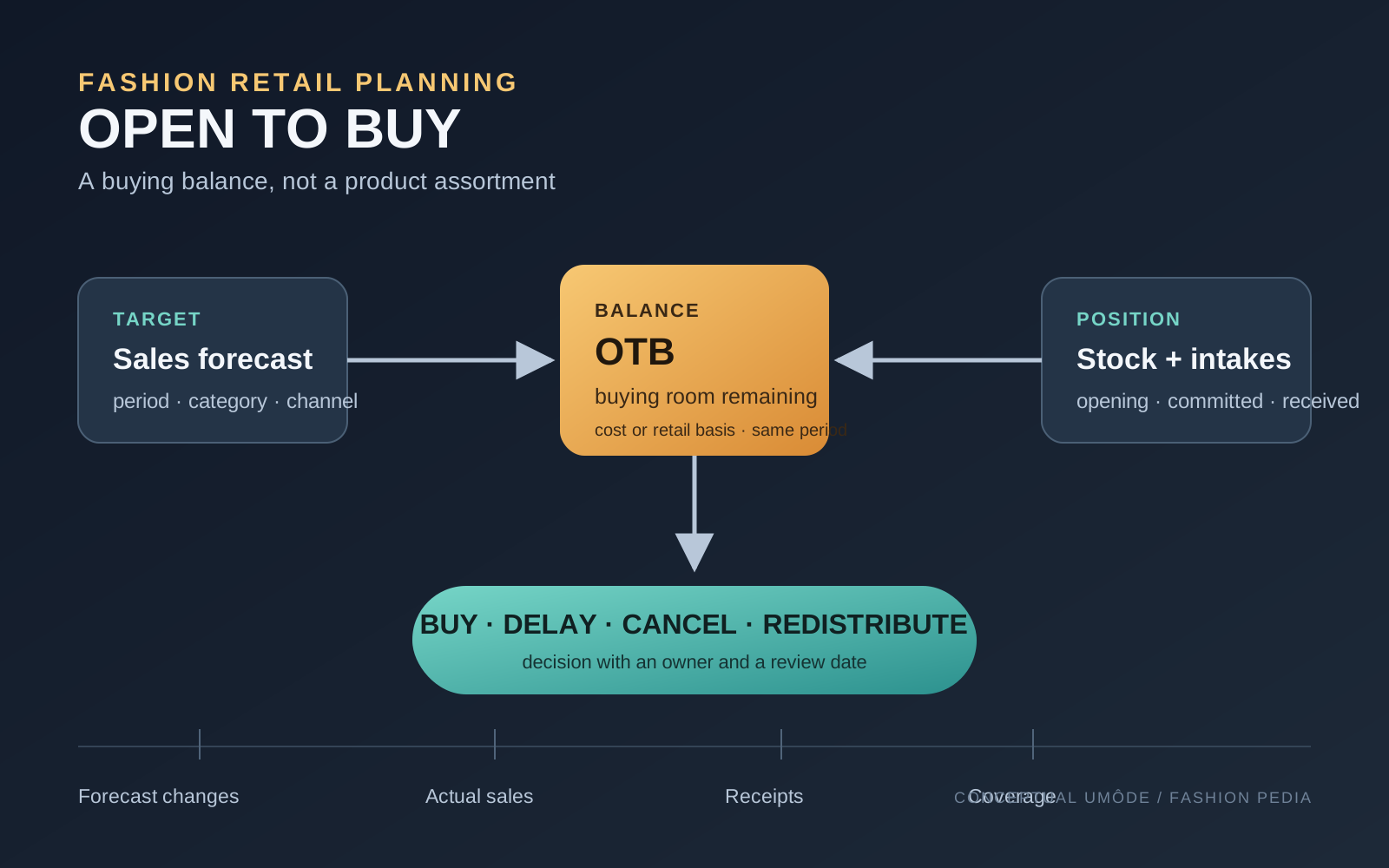
Open to buy in fashion retail
Open to buy in fashion retail. Open to buy (OTB) is a planning process that calculates how much inventory a retailer needs to buy to reach a sales target, using forecast sales, opening stock and desired closing stock. In fashion retail, the balance should be read by period, category, channel and stock cover; it guides buying without replacing assortment decisions.
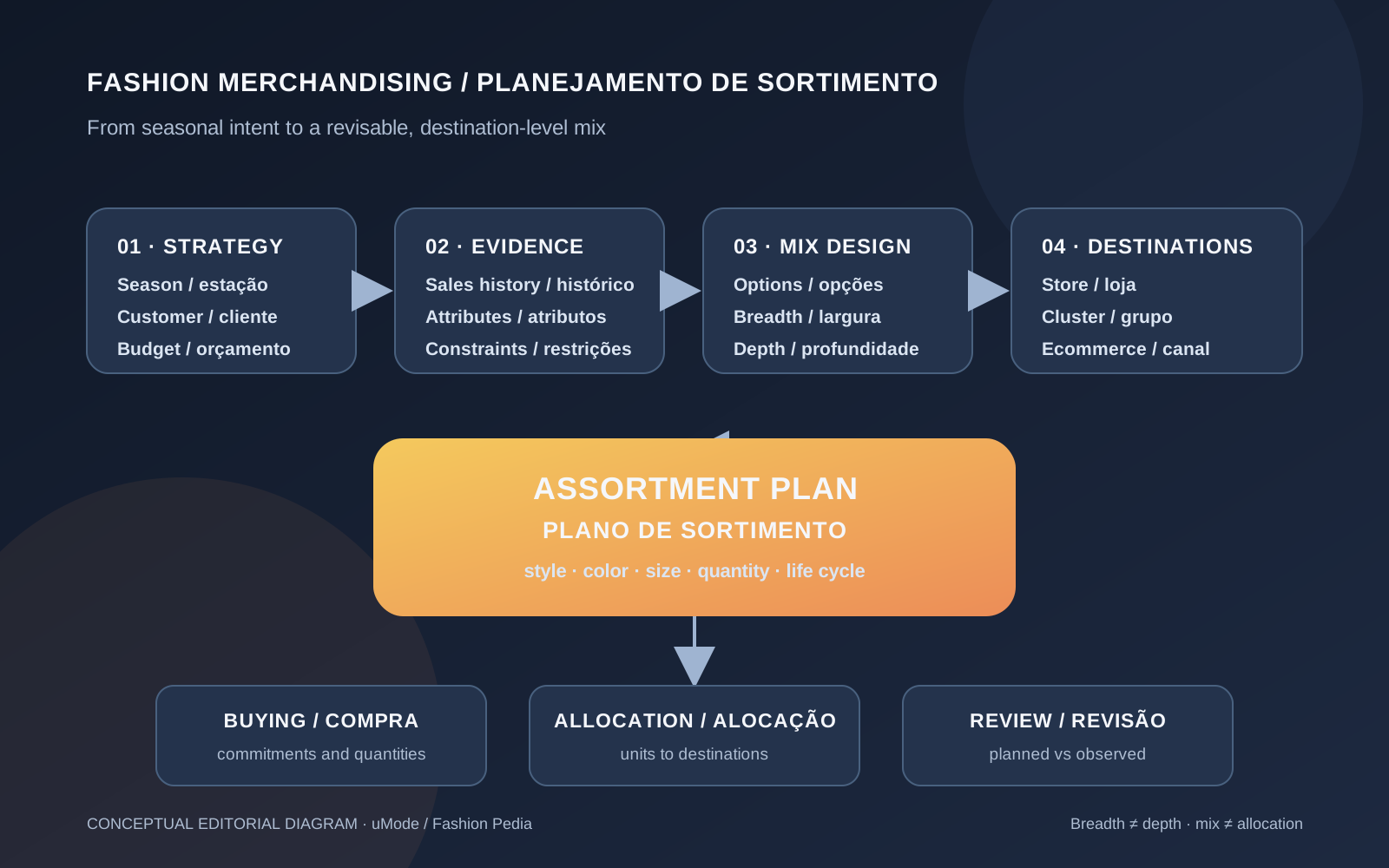
Assortment planning in fashion
Assortment planning in fashion. Assortment planning is the process of deciding which styles, categories, colors, sizes, and quantities belong in each season, store, channel, or store group. In fashion, it turns a merchandise plan into buyable options by relating breadth, depth, and local context without confusing the mix with buying or allocation.
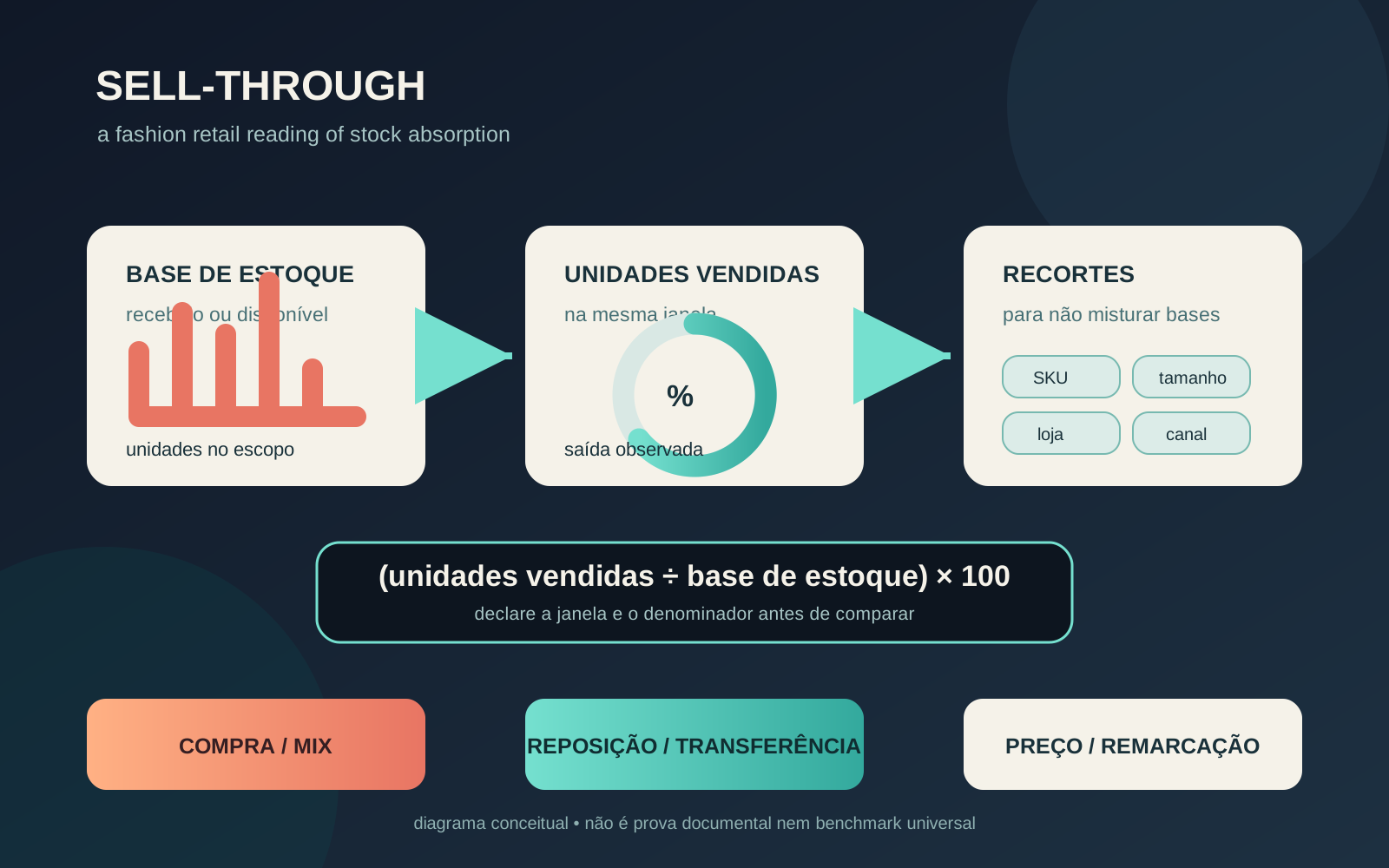
Sell-through in fashion retail
Sell-through in fashion retail. Sell-through is the percentage of units sold from inventory received or made available within a defined window. In fashion retail, the metric becomes useful when it is cut by style, color, size, store, channel, and product life cycle, with the denominator stated before it informs buying, replenishment, or markdown decisions.
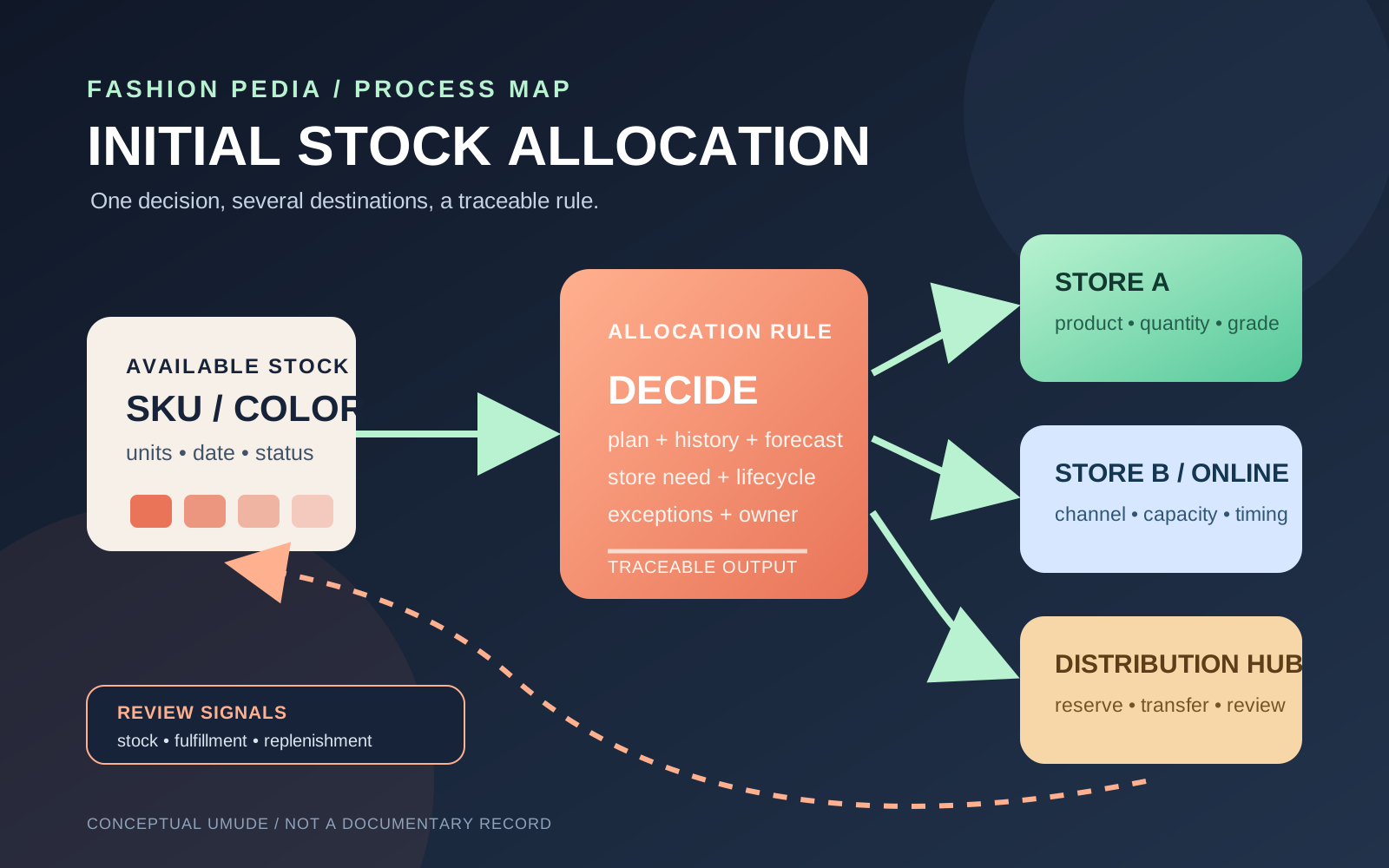
Initial Stock Allocation
Initial stock allocation is the process of deciding how the first available quantity of a product will be distributed across stores, channels, or other service points. A sound record makes the product, destination, quantity, data source, and exceptions visible.
Inventory replenishment
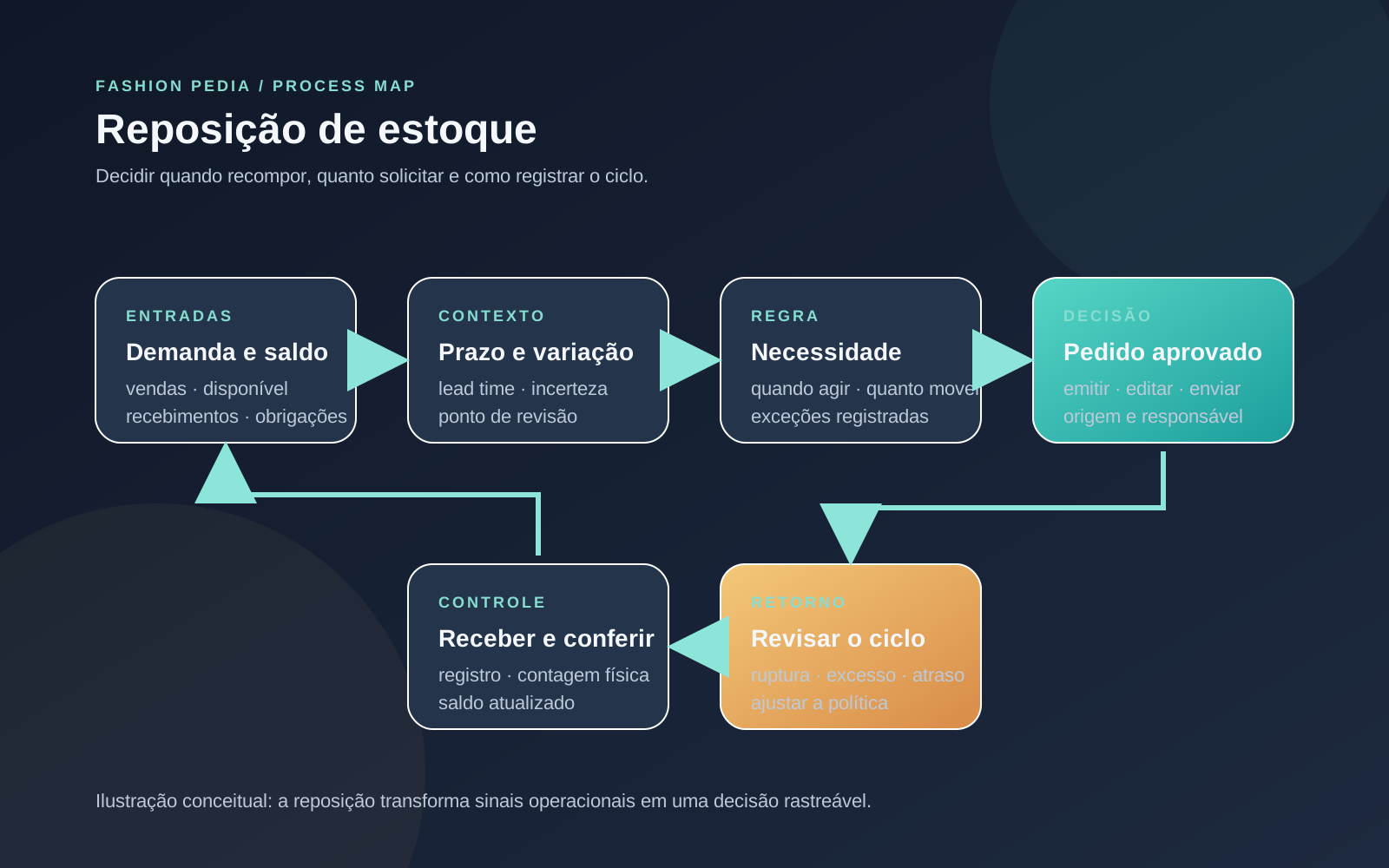
Inventory replenishment is the process of deciding when to restore an item's availability and how much to request for a future need. The decision combines recorded stock, demand, expected receipts, obligations, purchasing lead time and demand variation; the order must then be approved, received and recorded.
Sources
Want to apply this to your operation?