Sell-through in fashion retail
Sell-through in fashion retail. Sell-through is the percentage of units sold from inventory received or made available within a defined window. In fashion retail, the metric becomes useful when it is cut by style, color, size, store, channel, and product life cycle, with the denominator stated before it informs buying, replenishment, or markdown decisions.
On this page
What is Sell-through in fashion retail?
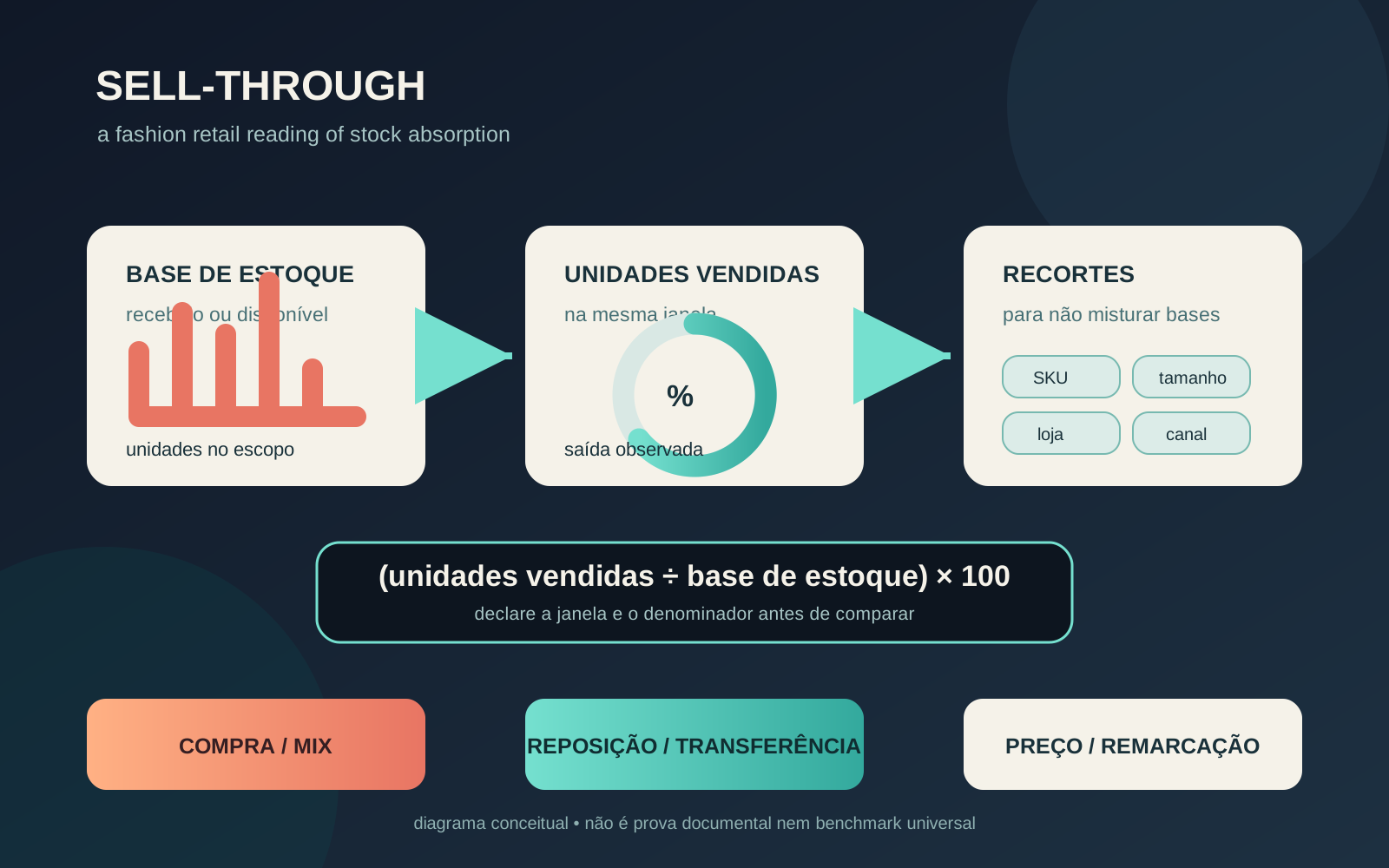
Sell-through is the percentage of units sold against inventory received or made available within a defined window. The editorial formula is (units sold ÷ units received or stock on hand) × 100; the denominator must not remain implicit. In an assortment, this lets a team inspect a jacket, color, or size without blending results that use different bases. The metric describes inventory absorption, not a single cause of demand.
The metric can be calculated monthly to reveal trends and differences between styles and sizes of the same product. The window can also be weekly, quarterly, or annual, as long as the comparison uses compatible periods. A 60% result after two weeks answers a different question from 60% across a collection’s full life cycle; the number is readable only with its window and the inventory base.
How do you calculate it without hiding the denominator?
Start by recording four fields: units sold, inventory basis, period, and cut. Then apply the formula without mixing unit counts with monetary values. If received units are the basis, the calculation measures the exit of that receipt; if stock on hand is the basis, the business must define what entered availability and how replenishments, transfers, and returns were treated. Those are governance recommendations for reproducibility, not a universal benchmark.
In fashion retail, repeat the calculation by style, color, size, store, supplier, product line, and channel when the decision needs that granularity. A size cut can show that the reference average hides a broken size curve; a store cut can separate local demand from an availability problem. Keep every result attached to its window, assortment, and cut-off event.
Is sell-through the same as inventory turnover?
No. Sell-through follows the percentage of a reference or collection sold in a period; inventory turnover estimates how many times inventory is sold and replaced over a longer horizon. Turnover uses a value-based convention, commonly cost of goods sold divided by average inventory, while sell-through usually operates on units. Reading both numbers together helps prevent sales speed from being mistaken for financial efficiency.
Average inventory can be calculated as the average of beginning and ending inventory, but consistency in the formula is essential when comparing periods. Turnover interpretation also depends on industry and product: directly comparing a fashion operation with another sector can distort the conclusion. Even within fashion, high turnover does not prove that the assortment is healthy: a very high rate can accompany insufficient inventory, stockouts, and lost sales.
What decisions can the metric support?
Sell-through can support buying, replenishment, transfer, presentation, and markdown reviews when the result is read alongside availability, margin, and life cycle. A high-rate reference with stock still available may warrant a replenishment review; a low rate may prompt a review of price, mix, or calendar, but the metric alone cannot identify which hypothesis is correct. These are conditional operating decisions, not guaranteed effects of the metric.
The dashboard should therefore show the product, unit of analysis, window, denominator, and exceptions. Turnover adds a view of average inventory and tied-up capital; sell-through adds a view of reference absorption. The pair connects to inventory turnover, inventory replenishment, initial allocation, sell-out, GMROI, and collection planning, without treating those entries as synonyms.
A low turnover rate can be associated with overstocking; the hypothesis still needs to be checked against price, availability, and size-level behavior. The purpose of sell-through in fashion planning is to make the question testable: how much moved, from which base, in which window, and toward which decision—not to turn an isolated percentage into a diagnosis.
Verified facts
- Sell-through measures the percentage of inventory sold in relation to units received during the same period.
Source: shopify.com ↗ - Sell-through can be calculated monthly to show sales trends and differences between styles and sizes of the same product.
Source: shopify.com ↗ - One presented sell-through formula divides total sales by stock on hand and multiplies by 100.
Source: shopify.com ↗ - The measurement window can be annual, quarterly, monthly, or weekly, depending on the sales objective.
Source: shopify.com ↗ - The metric can be calculated by supplier, product line, store location, and other cuts.
Source: shopify.com ↗ - Sell-through follows the performance of one specific product or collection over a defined period.
Source: shopify.com ↗ - Inventory turnover is calculated as cost of goods sold divided by average inventory.
Source: lightspeedhq.com ↗ - A very high turnover rate can indicate insufficient inventory, cause stockouts, and lead to lost sales.
Source: lightspeedhq.com ↗ - Interpreting a turnover rate depends on the industry and product type, and comparisons across different sectors can distort the reading.
Source: en.wikipedia.org ↗ - A low turnover rate can be associated with overstocking.
Source: lightspeedhq.com ↗ - Average inventory can be calculated as the average of beginning inventory and ending inventory.
Source: en.wikipedia.org ↗ - Consistency in the formula used is important for turnover comparisons to remain interpretable.
Source: en.wikipedia.org ↗
Related entries
Inventory turnover
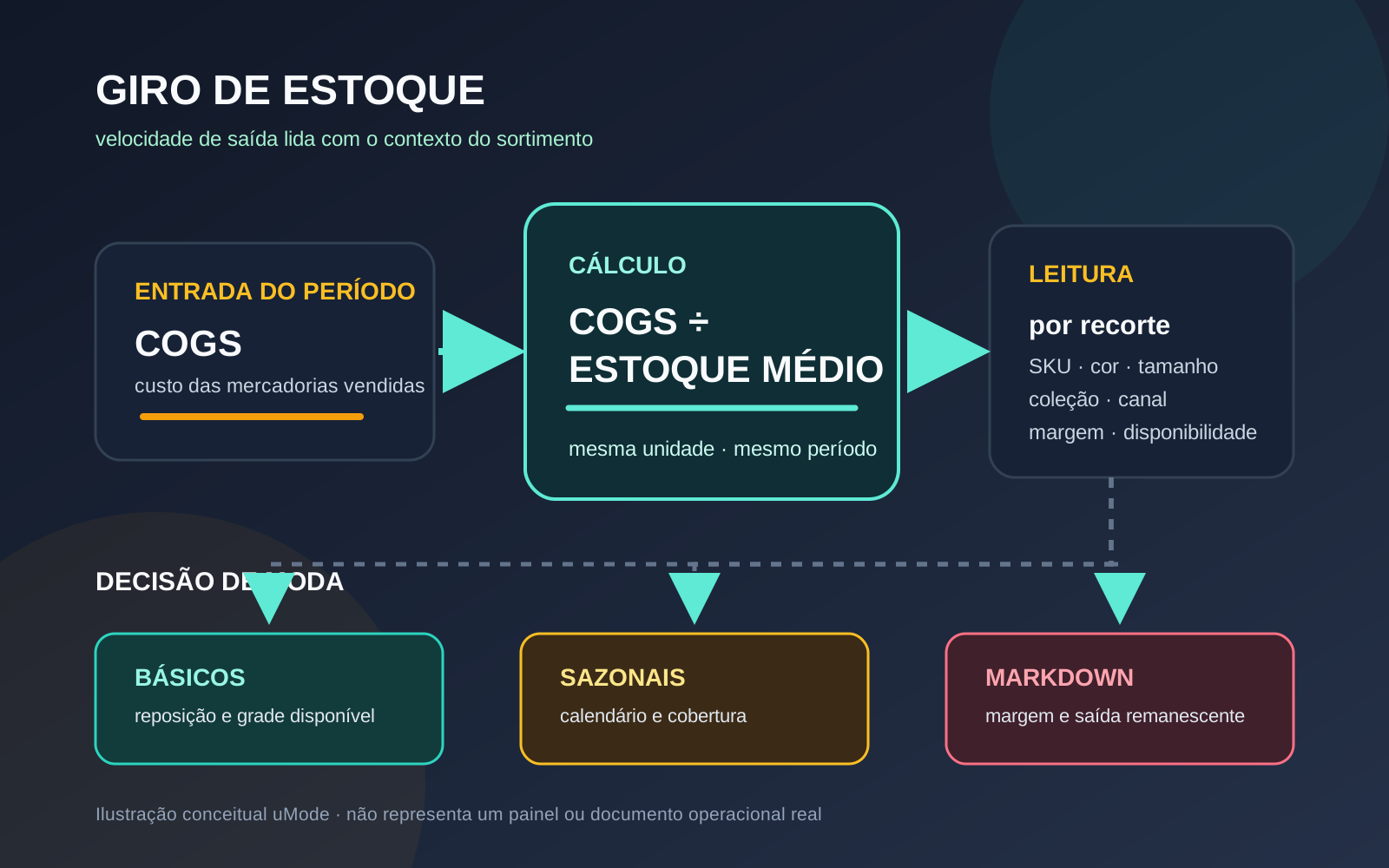
Inventory turnover is the ratio of cost of goods sold to average inventory over a defined period. In fashion retail, it must be read by product, collection, and channel alongside availability, margin, coverage, and markdowns, because speed of movement does not explain assortment quality on its own.
GMROI in fashion retail
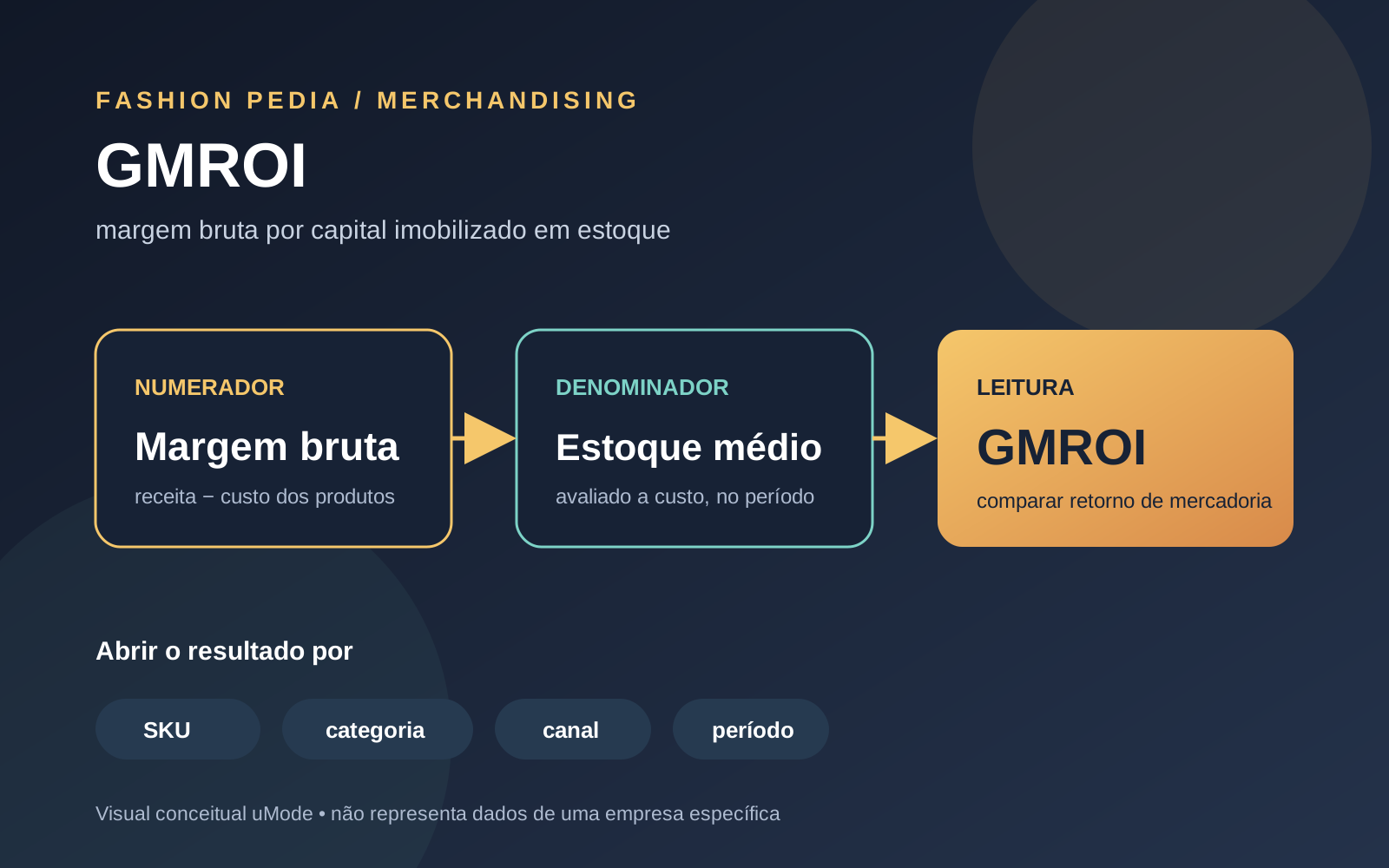
GMROI in fashion retail. GMROI is a merchandising metric that relates gross profit to average inventory cost. In fashion retail, it helps compare the return of categories, SKUs, and channels when margin, cost, period, and analytical unit are kept consistent.
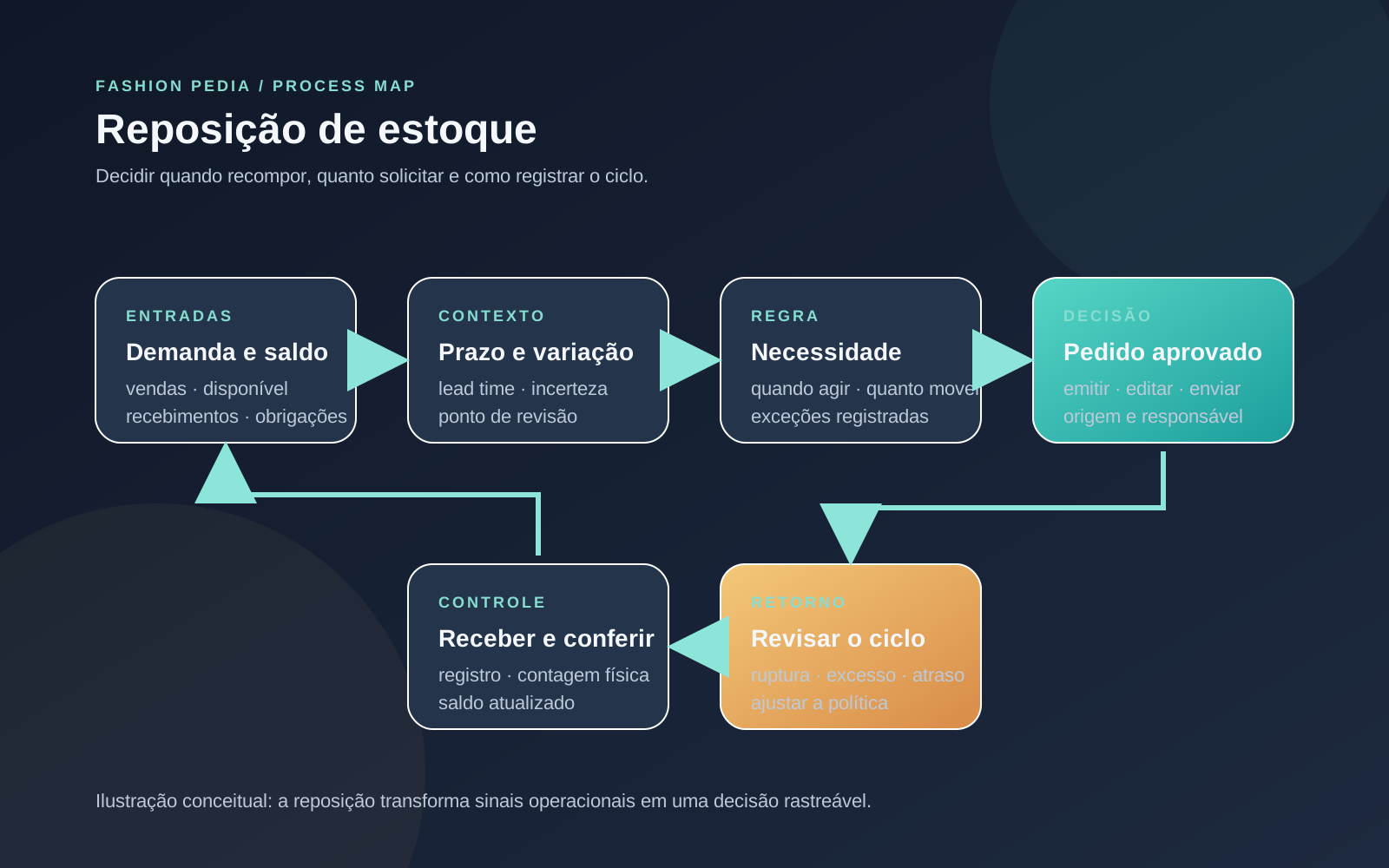
Inventory replenishment
Inventory replenishment is the process of deciding when to restore an item's availability and how much to request for a future need. The decision combines recorded stock, demand, expected receipts, obligations, purchasing lead time and demand variation; the order must then be approved, received and recorded.
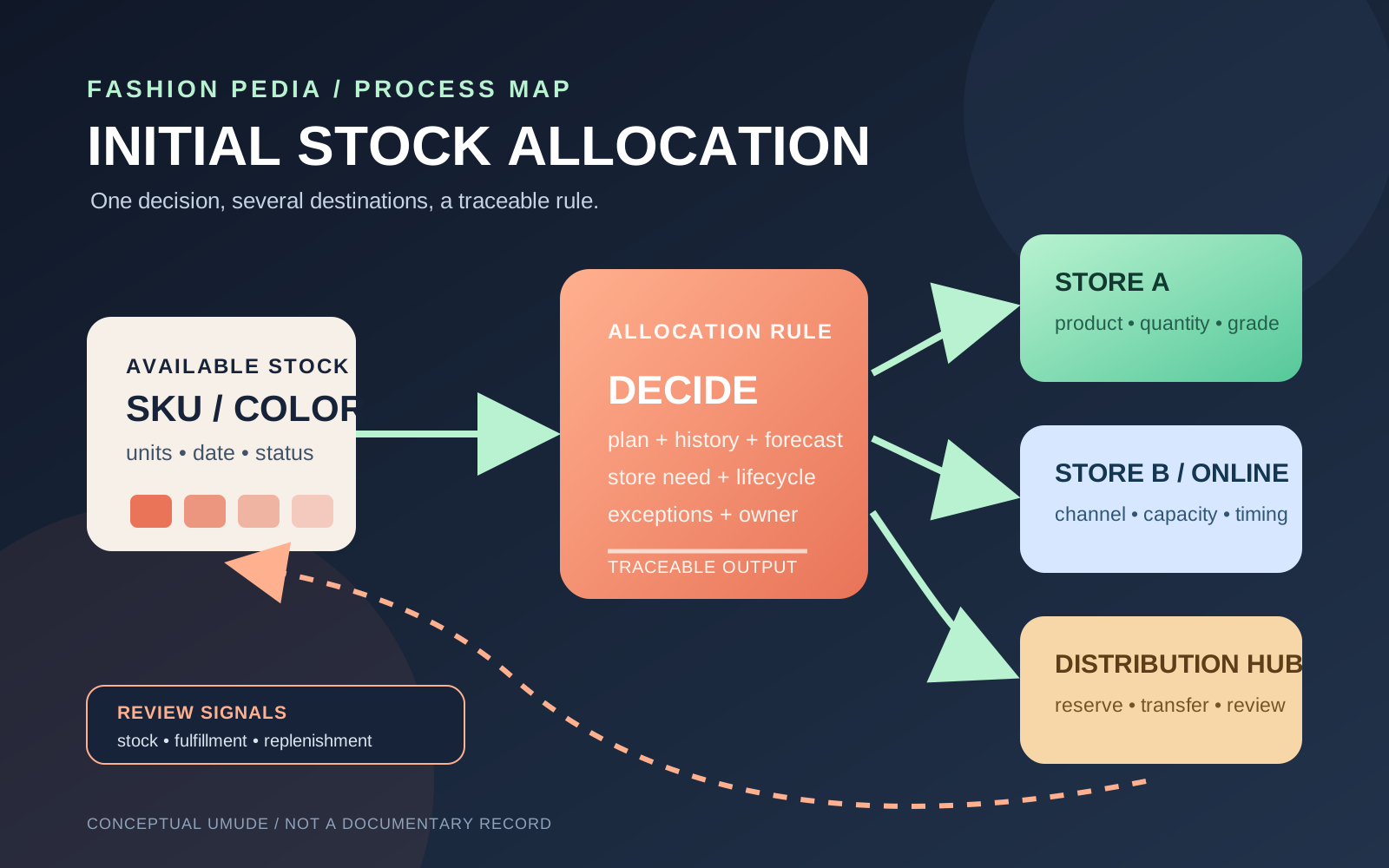
Initial Stock Allocation
Initial stock allocation is the process of deciding how the first available quantity of a product will be distributed across stores, channels, or other service points. A sound record makes the product, destination, quantity, data source, and exceptions visible.

Sales and sell-out in fashion
Sales and sell-out in fashion. Sell-out is the revenue or unit volume of a brand or reference sold to final consumers at the point of sale. In fashion, the reading must separate output by store and channel from retailer replenishment, while keeping the product grid, available stock and measurement period visible.
Sources
Want to apply this to your operation?