Collection map
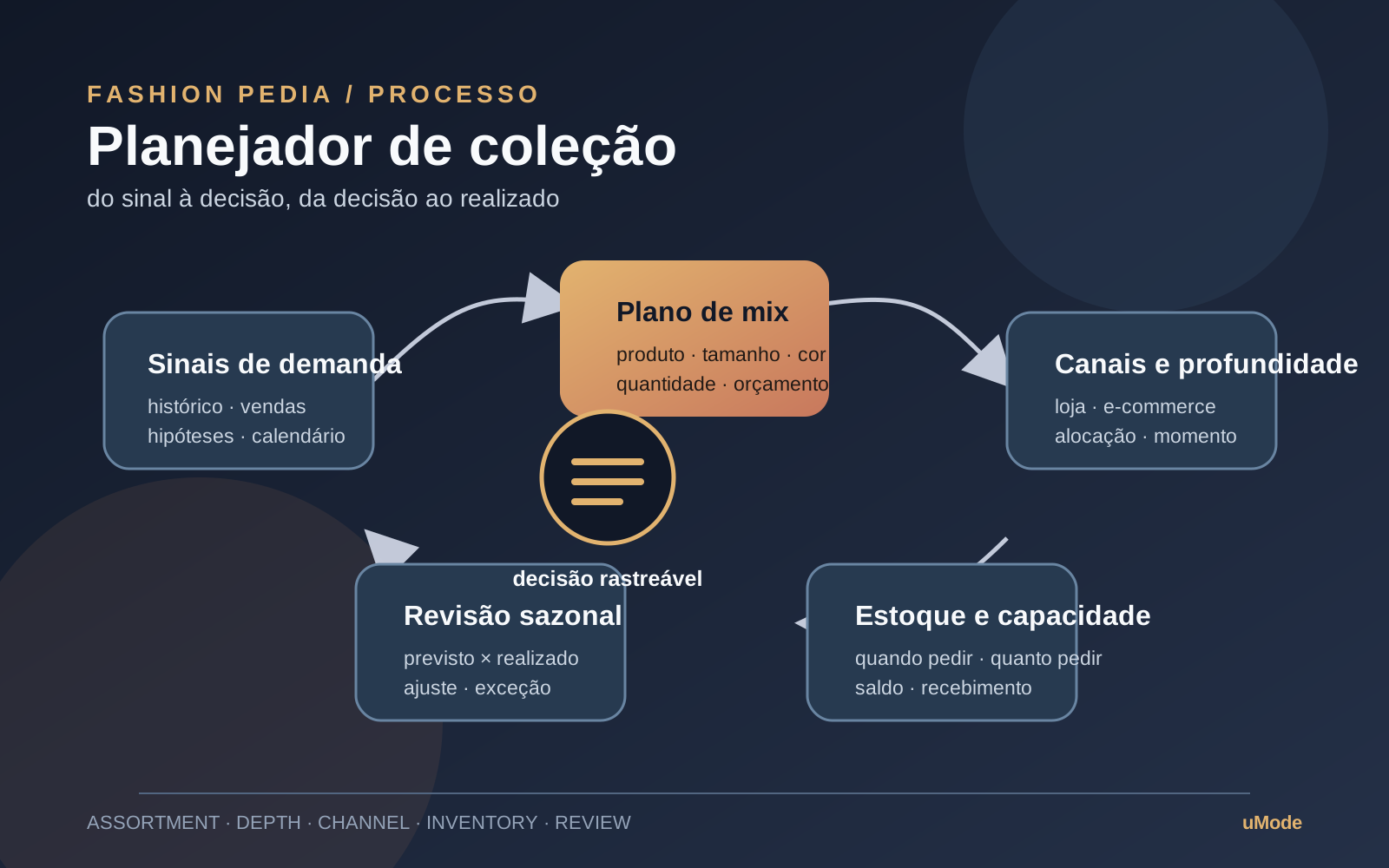
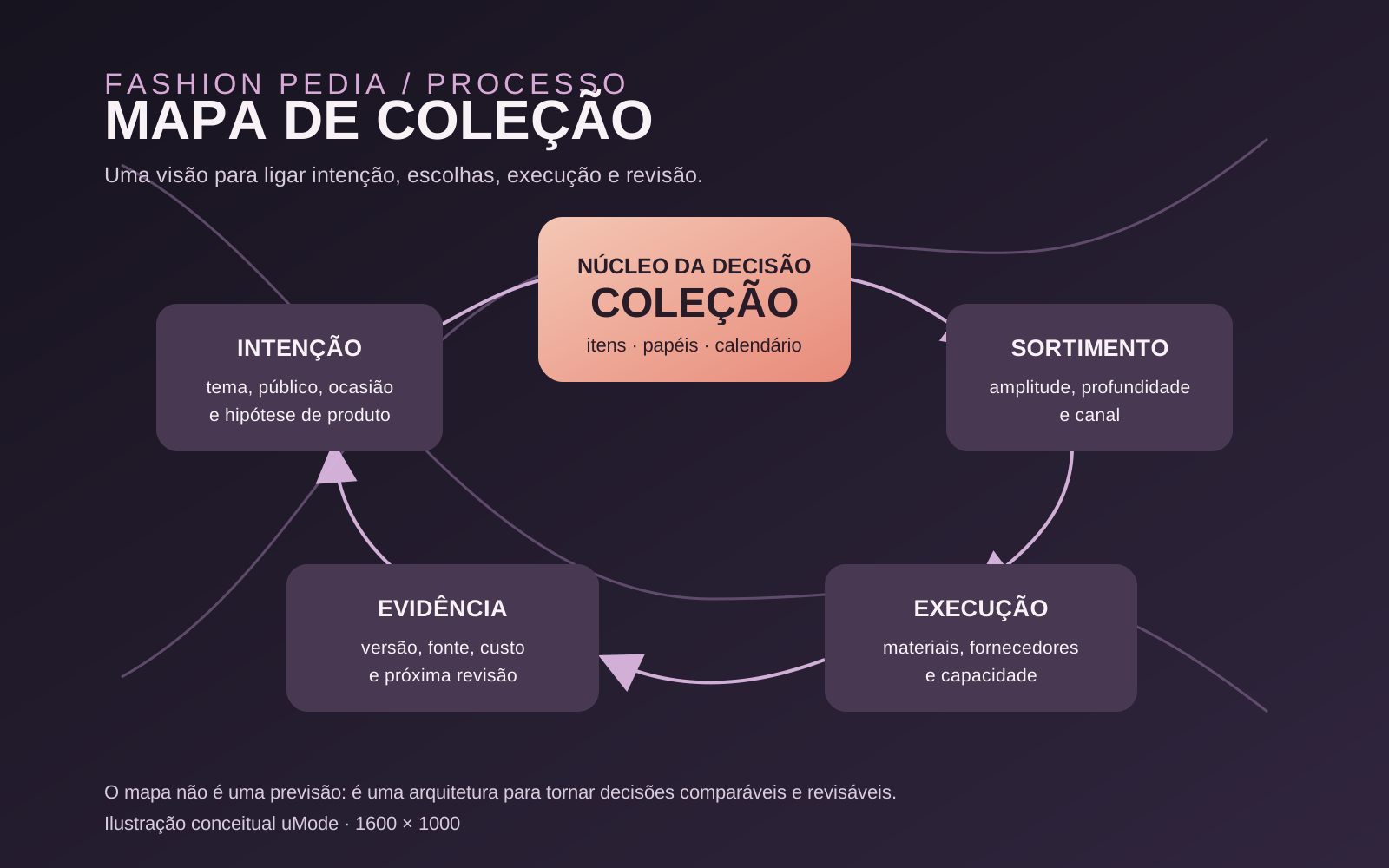
A collection map is a process view that makes the relationships between intent, items, assortment, execution, and review explicit. It organizes hypotheses and decisions for comparison without confusing planning with a guaranteed forecast or automatic purchasing authority.
On this page
What is Collection map?
A collection map is a process view that connects creative intent to the items to be developed, assortment choices, and execution conditions. Its unit is not only the sketch: it is the set of decisions that makes each item legible inside the collection. For each family or product, the map can record its role, channel, price band, variations, material, owner, version, and next review.
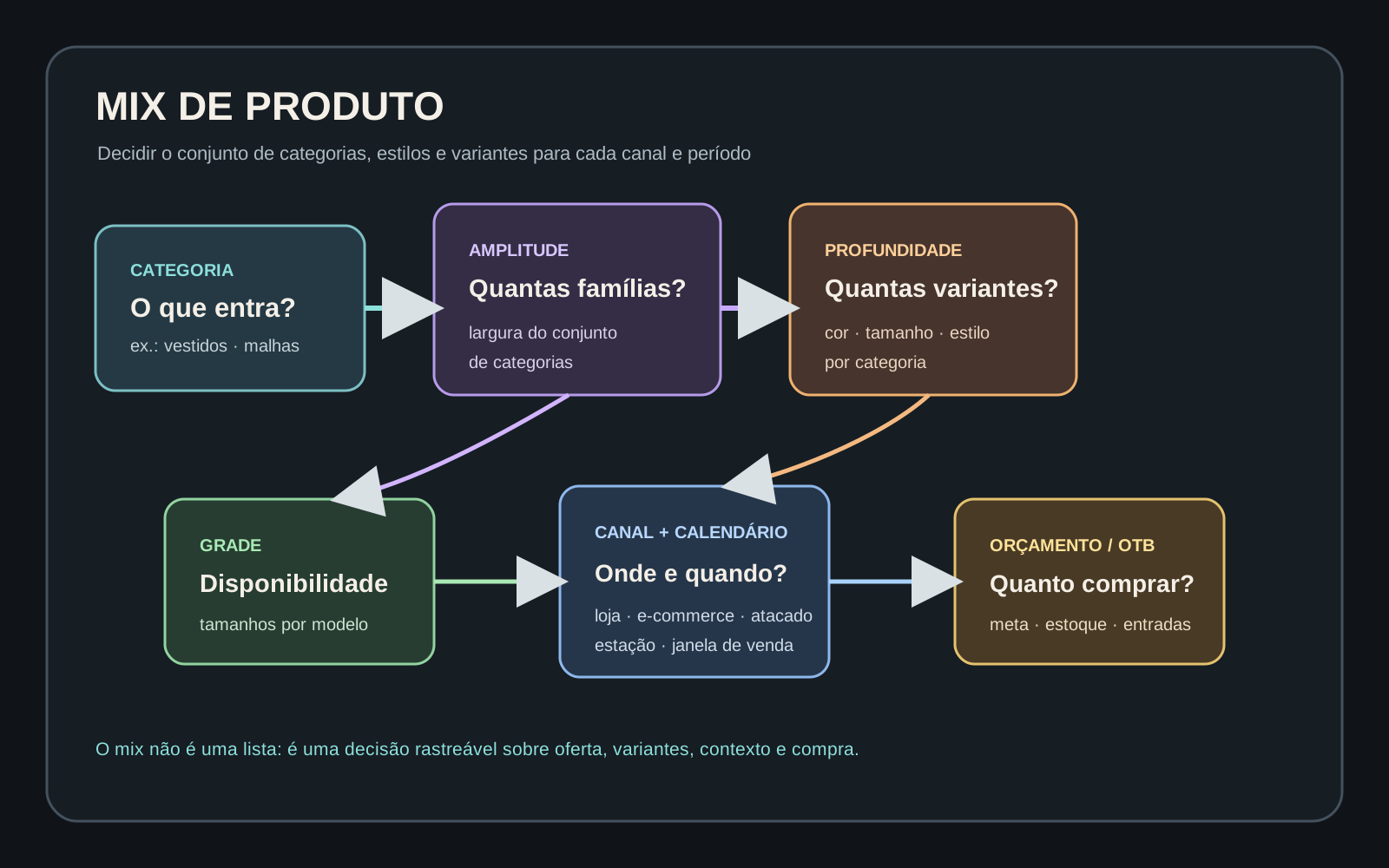
The distinction between breadth and depth is a useful foundation. Breadth asks how many product types make up the set; depth asks how many variations each type receives. Assortment planning also considers the time of year, categories, sizes, and colors. A map therefore prevents “more products” from being treated as a synonym for “more options”: expanding categories and deepening variants are different decisions, with different consequences for development and sourcing.
How should collection decisions be structured?
Start with the product or business question that the map must make answerable. Then divide the collection into layers: direction and intent; families and items; variants; channels; calendar; materials; suppliers; and approval states. Each layer needs a stable definition. An item marked “planned” should not be confused with an item purchased, while a listed color is not the same as an approved color.
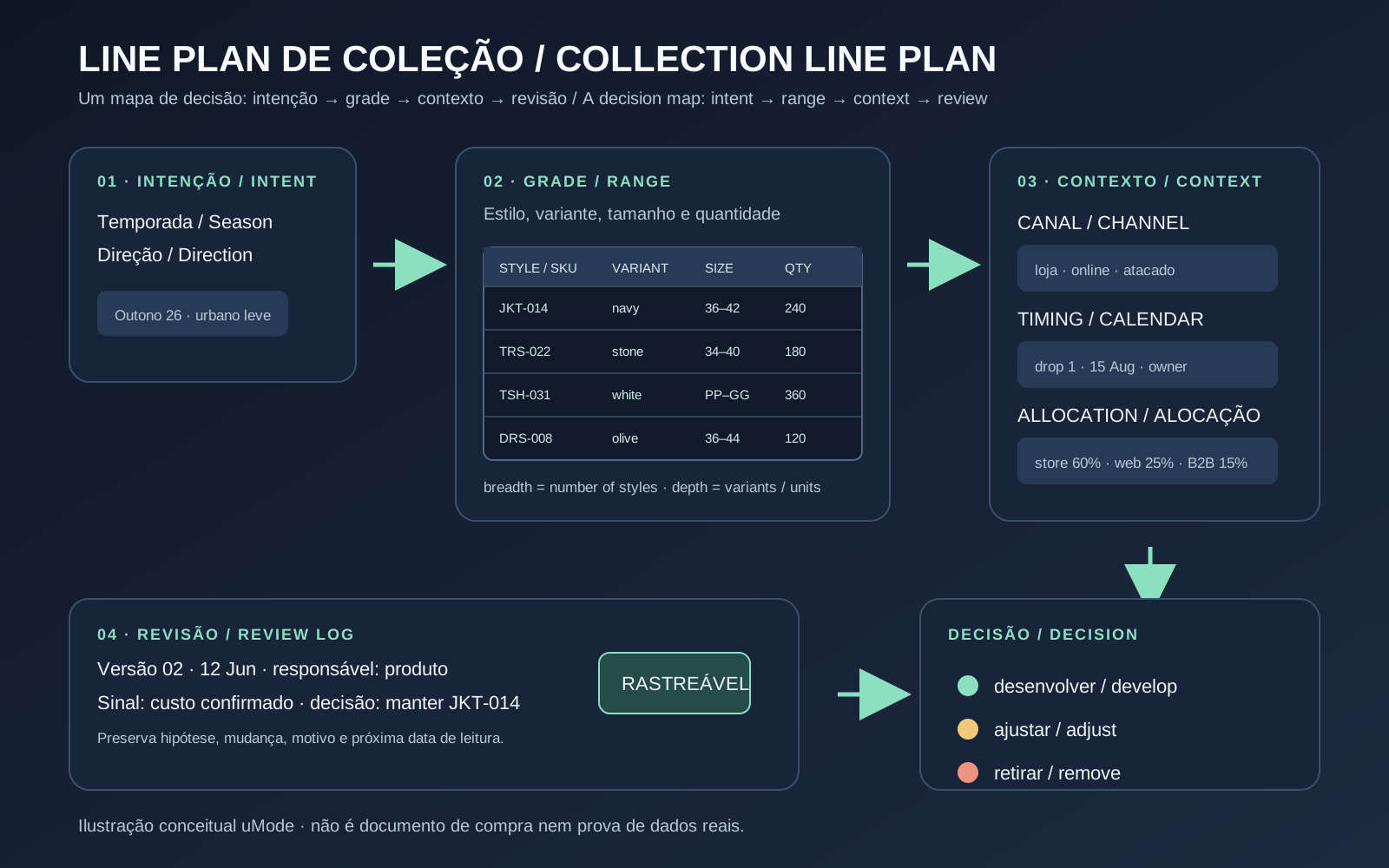
A simple record can contain an item identifier, family, role in the set, channel, variations, planned quantity, premise source, owner, dependencies, and review date. The planned number should remain separate from the hypothesis that produced it. When the team changes breadth, depth, category, or budget, the previous version and reason for the change remain important for understanding the process.
Sourcing enters the map as a verifiable constraint, not as a late detail. CottonWorks connects obtaining cotton to the final product’s requirements, specifications, and the search for suitable suppliers. In consequence, the line should show which decisions depend on a fiber, finish, capacity, or deadline. The traceability described for U.S. cotton also illustrates why material origin and movement can be relevant fields when a decision depends on them.
How can the map connect to execution and review?
The map should follow the product journey without claiming that the record replaces execution. Oracle’s description of PLM covers the journey from ideation through development, service, and disposal and includes information and processes across the lifecycle. In practice, this suggests linking the collection view to documents, versions, requirements, changes, samples, costs, and approvals when those records exist. The link can use a technical specification, fashion PLM, or another controlled record; the tool’s name does not change the need for identity and history.
Review should be triggered by an observable change: unavailable material, an incompatible deadline, a withdrawn variant, a changed cost, a failed sample, a new channel, or updated commercial evidence. For each change, record the decision, impact, and who can approve it. A map that shows only the current state loses its ability to explain the path; a map that preserves versions can distinguish a forecast error, a deliberate change, and an execution failure.
Relations with line plan, product mix, demand planning, size grading, and collection governance keep the scope visible. The line plan organizes the planned composition; the mix makes the set’s logic explicit; demand provides a hypothesis to test; grading describes size distribution; and governance defines roles, criteria, and exceptions. None of these records alone turns the map into a guarantee of sales, margin, timing, or availability.
What are the map’s limits?
A collection map is a coordination instrument. It does not remove uncertainty, replace technical testing, or authorize a purchase simply because an item appears as approved. It should also preserve the difference between intent, capacity, orders, stock, and sales. When information is unavailable, the gap should remain visible; filling it with an undocumented assumption weakens the decision.
The final question is not whether the map is full, but whether the team can answer what is being decided, which dependency could interrupt execution, which source supports the premise, and when the state will be reviewed. This discipline makes the collection comparable across stages without reducing creation to a fixed list of codes.
Verified facts
- Assortment planning describes the process of choosing which products to stock at key points throughout the year.
Source: shopify.com ↗ - Assortment planning considers the products, sizes, colors, or categories that will be stocked at any time.
Source: shopify.com ↗ - An assortment strategy defines product types, the number of variations, and the budget and storage space allocated to each product.
Source: shopify.com ↗ - Breadth is the variety of products sold, while depth is how many variations, such as sizes or colors, each product has.
Source: shopify.com ↗ - An assortment plan becomes reality only when the shortlisted products can be sourced within the specified timeframe.
Source: shopify.com ↗ - CottonWorks presents sourcing cotton that meets requirements as key to delivering the ideal final product.
Source: cottonworks.com ↗ - CottonWorks offers a resource for finding suppliers that fit the specifications of the product developer.
Source: cottonworks.com ↗ - Cotton in the United States is traceable from the gin to the mill, according to CottonWorks.
Source: cottonworks.com ↗ - PLM is the strategic process of managing a product's complete journey from initial ideation through development, service, and disposal.
Source: oracle.com ↗ - PLM software manages information and processes at every step of a product or service lifecycle across globalized supply chains.
Source: oracle.com ↗
Related entries
Collection line plan
A collection line plan is the operating record that turns collection direction into a grid of styles, variants, sizes, channels, quantities and decision milestones. It defines what is planned for development or buying without replacing a tech pack, budget, forecast or product validation.
Product mix
A product mix is the decision about which categories, styles, and variants a fashion operation offers in each channel and period. The process separates breadth, depth, size range, demand, and buying so a collection intention becomes a checkable offer.
Demand planning in fashion
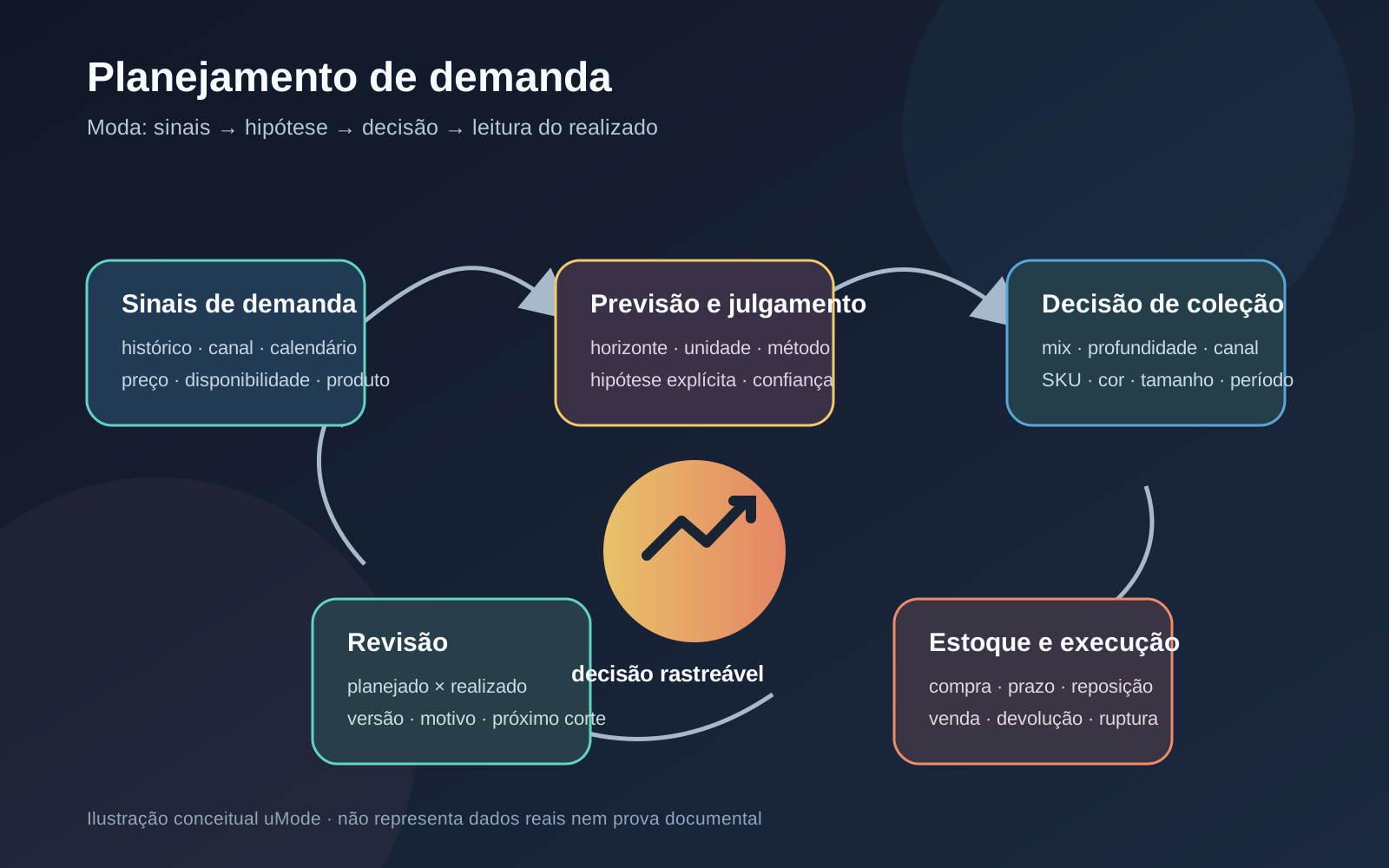
Demand planning in fashion turns demand signals, history, calendar context and judgement into explicit decisions about assortment, volume, channel and review. It combines forecasting with governance: every hypothesis needs a horizon, unit, owner and rule for revision when the collection or market changes.

Fashion product technical specification
A technical specification is the controlled information set that translates an approved fashion product into verifiable sampling and manufacturing requirements. It brings together drawings, materials, measurements, construction, tolerances, identification, labelling, comments and revision history; its content varies by category, company, market and stage.

Fashion PLM: data, product, and lifecycle
Fashion PLM is the structured management of the data, decisions, and workflows that follow a product and a collection from concept through post-launch. It connects tech packs, materials, costs, samples, approvals, suppliers, and versions so that every function works from a traceable product definition.
Collection governance: roles, gates, and evidence
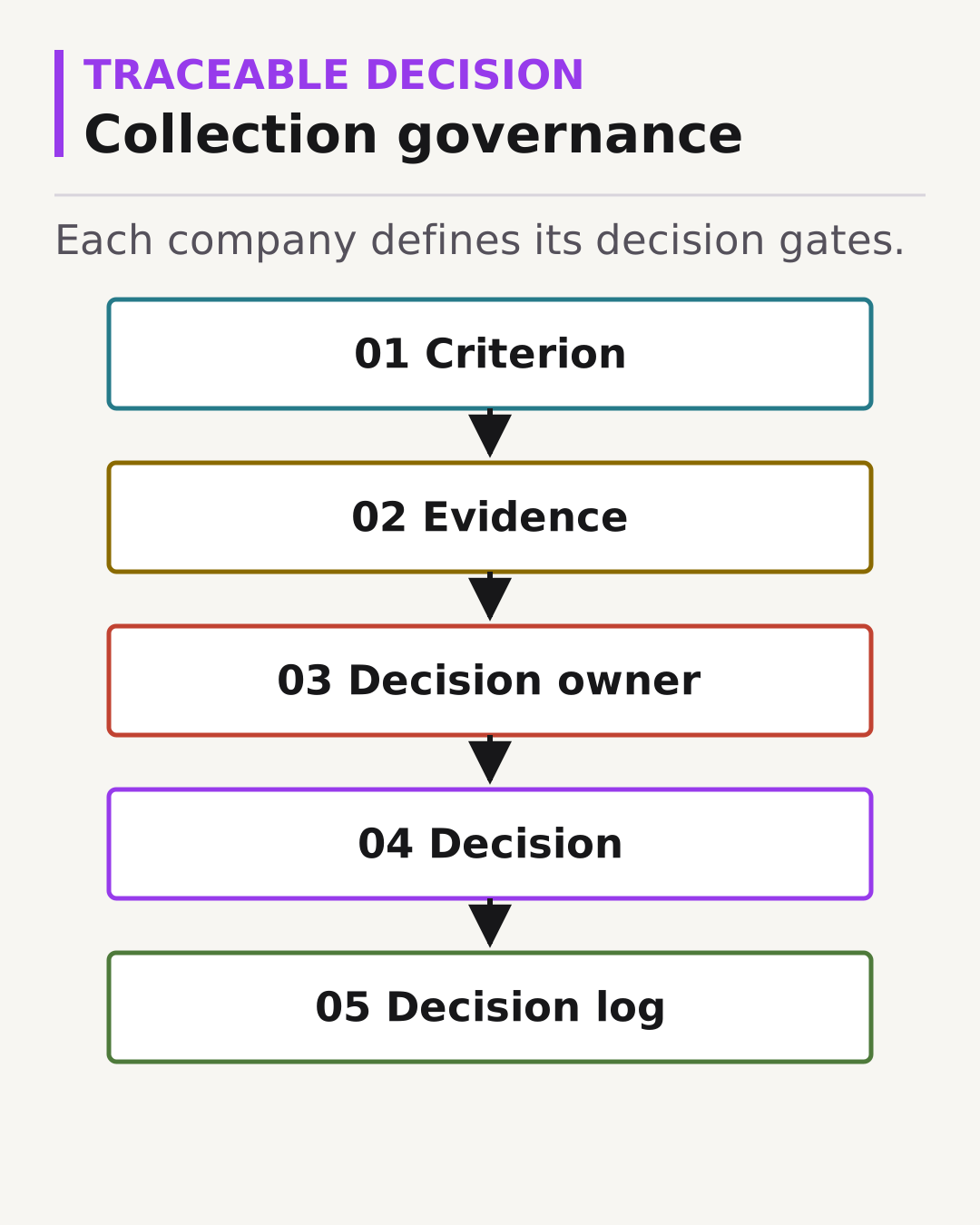
Collection governance describes the practice of making roles, criteria, evidence, decisions, and exceptions explicit in fashion development. The term does not designate one industry standard; it synthesizes principles of process management, evidence-based decisions, due diligence, and traceability.
Sources
Want to apply this to your operation?