Markup and margin in fashion
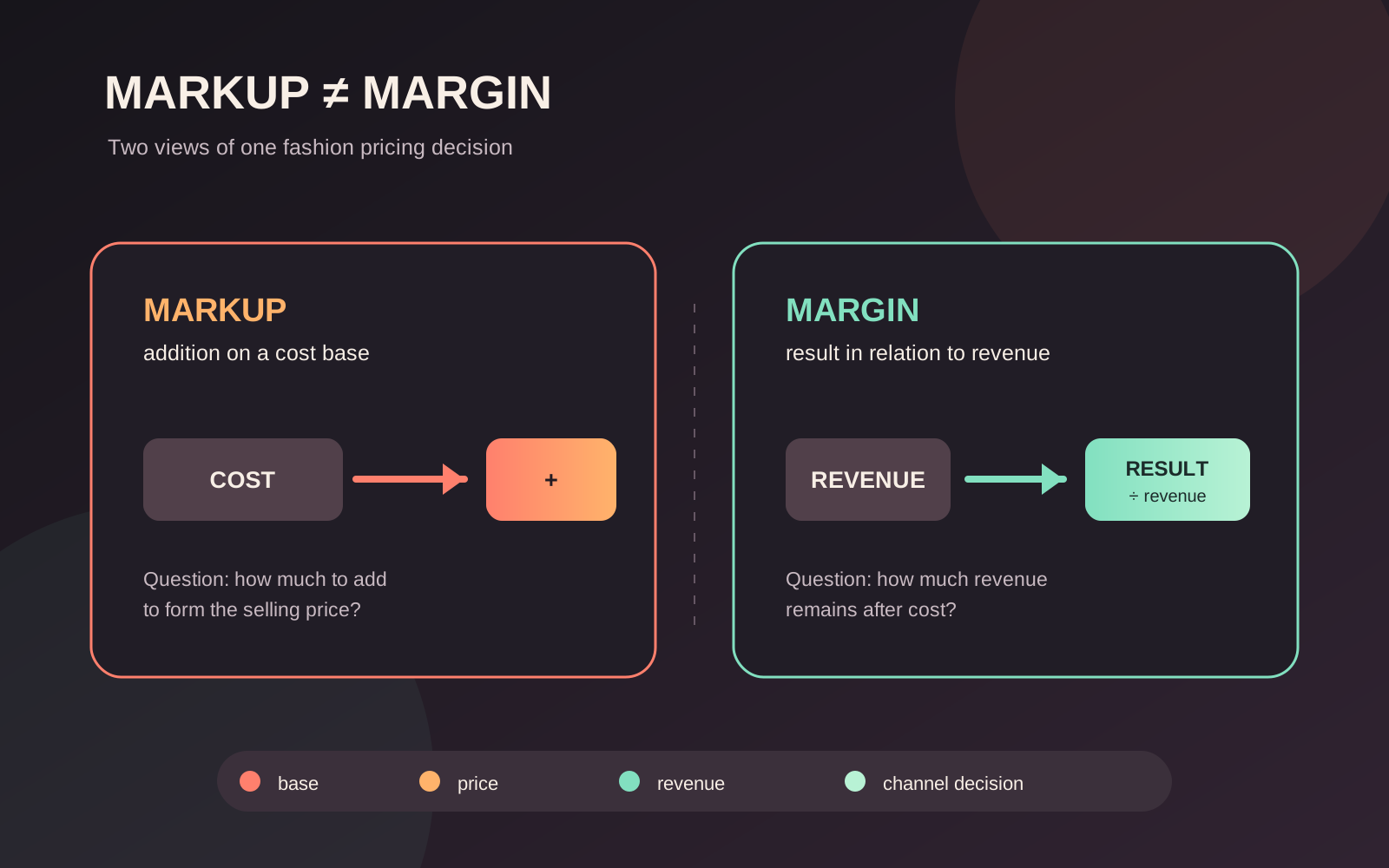
Markup and margin in fashion. Markup is the amount added to cost to form a selling price; margin is the share of revenue left after cost. In fashion, keeping the two bases separate makes price, cost, discount, and result comparisons more reliable.
On this page
What is Markup and margin in fashion?
Markup measures the difference between average selling price and the corresponding unit cost. Markup percentage divides that amount by unit cost. Gross margin, in contrast, measures the percentage of revenue remaining after cost of goods sold is deducted; its formula divides gross profit by net revenue. Therefore, a 30% markup is not a 30% margin: the denominators are different.
In fashion, the distinction begins with the decision level. Collection planning may work with an estimated cost, while a line plan organizes styles, colors, and quantities. Product cost formation must state which components enter the base before anyone applies a percentage.
How can a price be calculated without changing the base?
In cost-plus pricing, a markup is added to cost to arrive at the selling price. An operational sequence is to define the product and period, list fixed and variable costs, calculate unit cost, set a desired margin, and test the price against market and channel conditions. Fixed costs do not change with the number of products made, while variable costs change with production volume and can include cost of goods sold.
Unit cost can be calculated by adding total variable and fixed costs and dividing by units produced. When the objective is a specific margin, target price can be calculated by dividing unit cost by 1 minus the margin expressed as a decimal. A 20% margin therefore uses 0.8 as the divisor; that operation must not be confused with adding 20% to cost.
This calculation is a baseline, not permission to release a price. Product pricing also considers market conditions and profit goals. Before a price list is finalized, record whether the amount is a full or net price and whether the channel changes discounts, freight, taxes, commissions, or returns. These fields make fashion sourcing, retail, and ecommerce decisions more comparable.
How should this reading be used in fashion management?
A useful application separates three questions: what the product costs, how much was added to form the price, and how much revenue remains after cost. The first block connects with open to buy and buying; the second with price architecture and calendar decisions; the third with sell-through and GMROI. These relations support navigation, but they do not turn different metrics into synonyms.
For a collection analysis, record the formula, unit, date, channel, and cost scope. If the collection is manufactured in-house, cost of goods sold should remain tied to direct costs of producing and delivering the specific goods. If ready-made goods are purchased, the record should state which unit cost was adopted. A comparison is interpretable only when the base stays stable or the change is documented.
The SBA recommends categorizing expenses on the balance sheet and using cost-benefit analysis for business decisions. In a fashion team, that can become a review routine: identify a cost change, recalculate price and margin, test channel impact, and record the decision. The method does not remove demand risk; it makes the hypothesis being compared explicit.
Which confusions should be avoided?
The most common confusion is using “margin” for any percentage applied to cost. Another is comparing gross margin with net profit: gross margin deducts cost of goods sold, not every operating expense. It is also risky to apply one markup to products with different cost bases, channels, or discount levels.
The process should preserve the difference between unit cost, selling price, net revenue, and gross result. GMROI adds a return-on-inventory reading; sell-through tracks unit sales against the defined inventory or offer; open to buy concerns a buying budget. Each indicator answers a different question and needs its own formula.
A mature price sheet shows the denominator before the percentage. It also records the period and cost source, because a rate without a base cannot support audit or comparison. The editorial purpose of this entry is to teach the separation as applied to fashion: markup organizes the addition to cost; margin interprets what remains of revenue after cost.
Verified facts
- Markup is the difference between average selling price and the corresponding unit cost.
Source: wallstreetprep.com ↗ - Markup percentage divides the markup amount over unit cost by unit cost.
Source: wallstreetprep.com ↗ - Gross margin measures the percentage of revenue remaining after deducting cost of goods sold.
Source: wallstreetprep.com ↗ - Gross margin is calculated by dividing gross profit by net revenue.
Source: wallstreetprep.com ↗ - Cost of goods sold contains direct costs tied to producing and delivering specific goods and services.
Source: wallstreetprep.com ↗ - In cost-plus pricing, a markup is added to cost to arrive at the selling price.
Source: shopify.com ↗ - Product pricing is based on production costs, market conditions, and profit goals.
Source: shopify.com ↗ - Fixed costs do not change regardless of how many products are made.
Source: shopify.com ↗ - Variable costs change with the number of products produced and can include cost of goods sold.
Source: shopify.com ↗ - Unit cost can be calculated by adding total variable and fixed costs and dividing by units produced.
Source: shopify.com ↗ - A target price with a desired margin can be calculated by dividing unit cost by one minus the margin expressed as a decimal.
Source: shopify.com ↗ - The Small Business Administration recommends categorizing expenses on the balance sheet and using cost-benefit analysis for business decisions.
Source: sba.gov ↗
Related entries
Open to buy in fashion retail
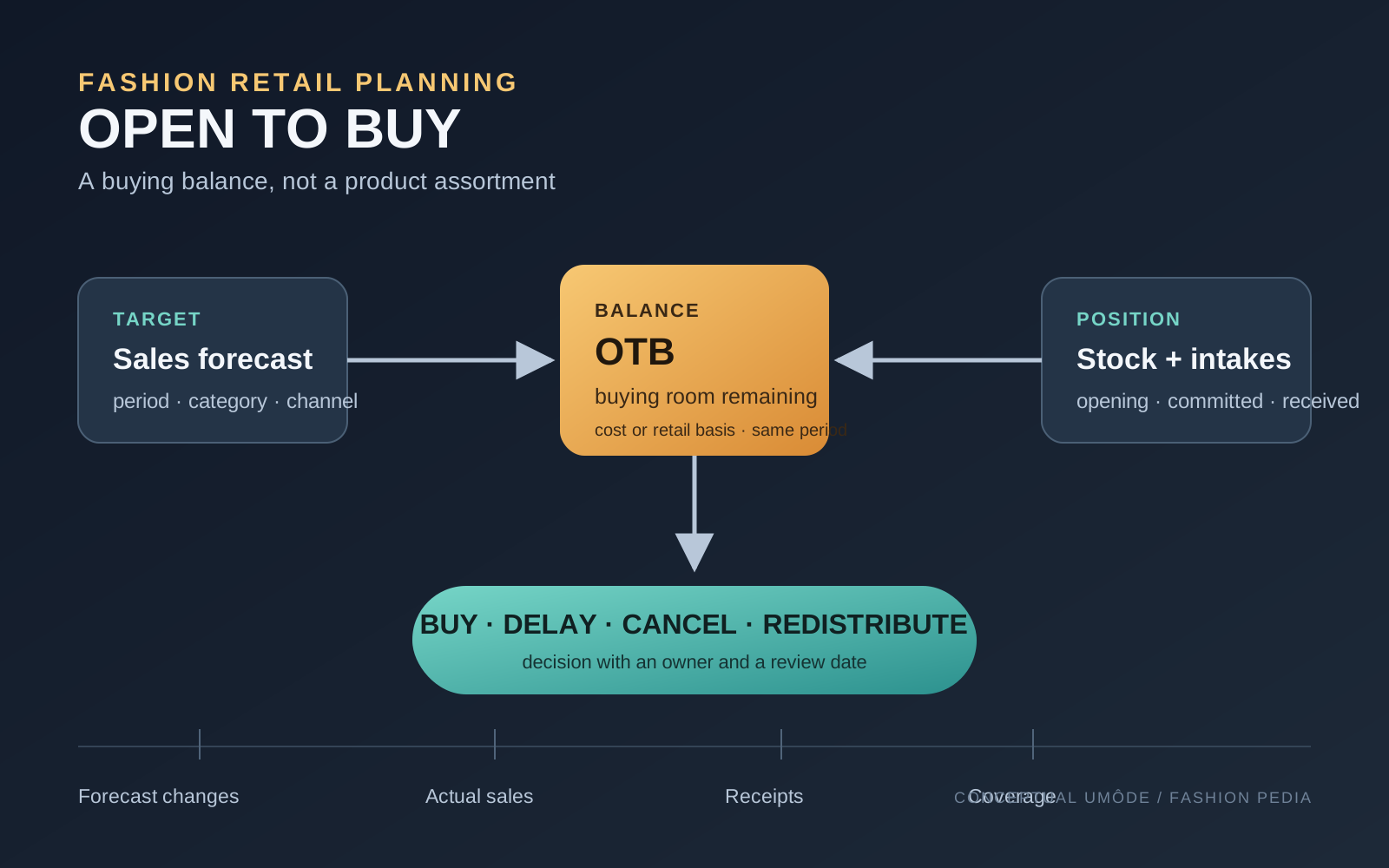
Open to buy in fashion retail. Open to buy (OTB) is a planning process that calculates how much inventory a retailer needs to buy to reach a sales target, using forecast sales, opening stock and desired closing stock. In fashion retail, the balance should be read by period, category, channel and stock cover; it guides buying without replacing assortment decisions.
Collection line plan
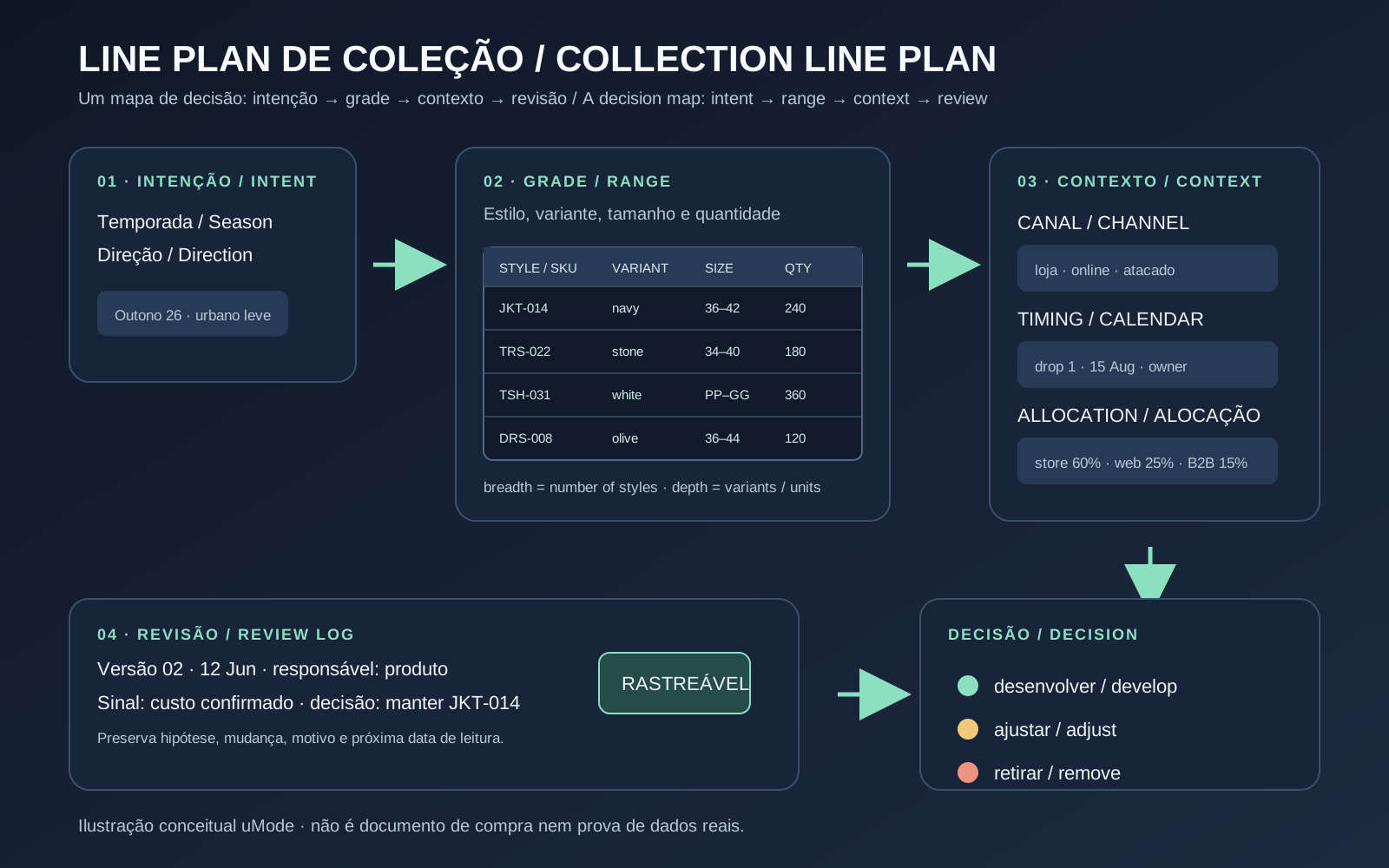
A collection line plan is the operating record that turns collection direction into a grid of styles, variants, sizes, channels, quantities and decision milestones. It defines what is planned for development or buying without replacing a tech pack, budget, forecast or product validation.
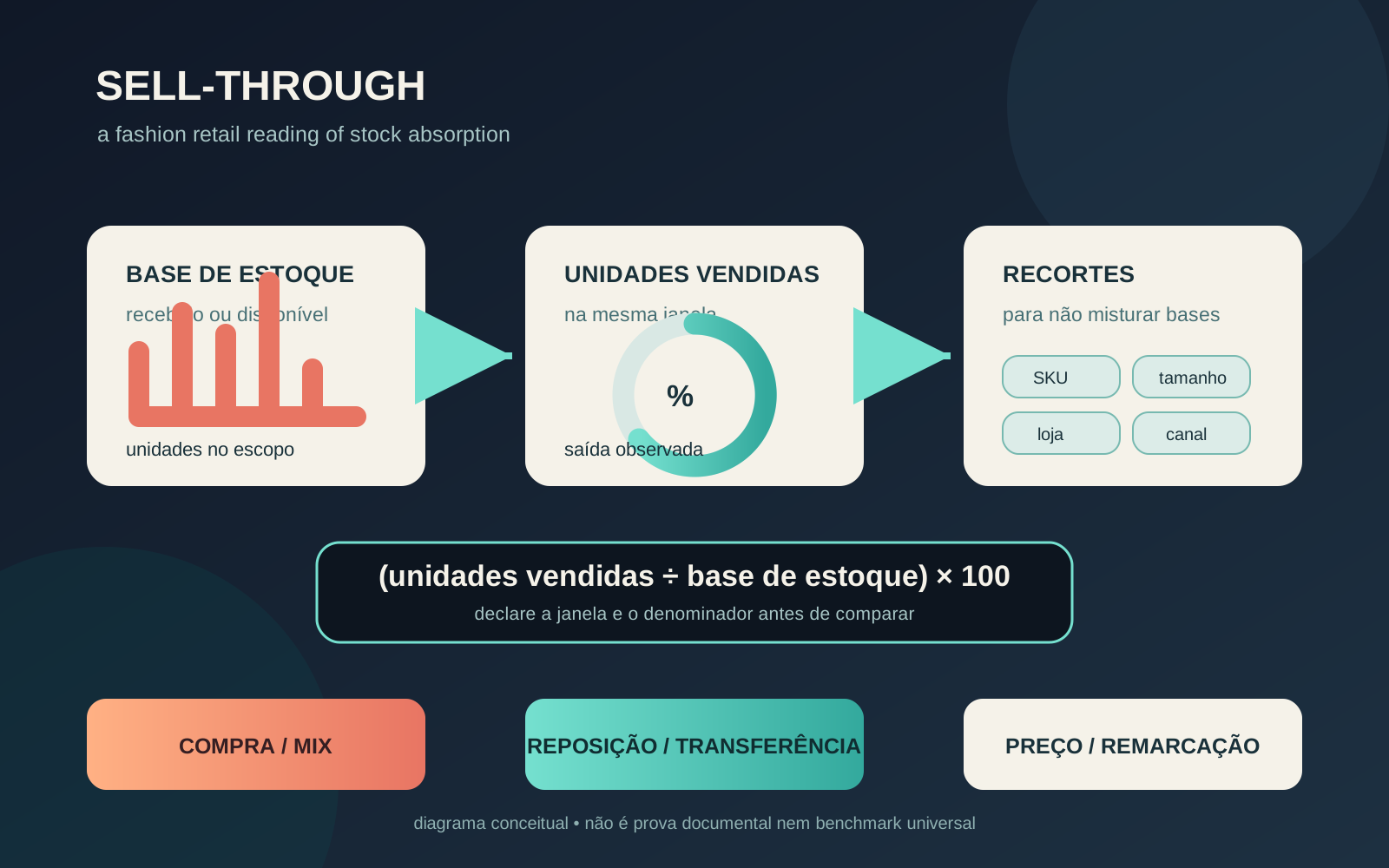
Sell-through in fashion retail
Sell-through in fashion retail. Sell-through is the percentage of units sold from inventory received or made available within a defined window. In fashion retail, the metric becomes useful when it is cut by style, color, size, store, channel, and product life cycle, with the denominator stated before it informs buying, replenishment, or markdown decisions.
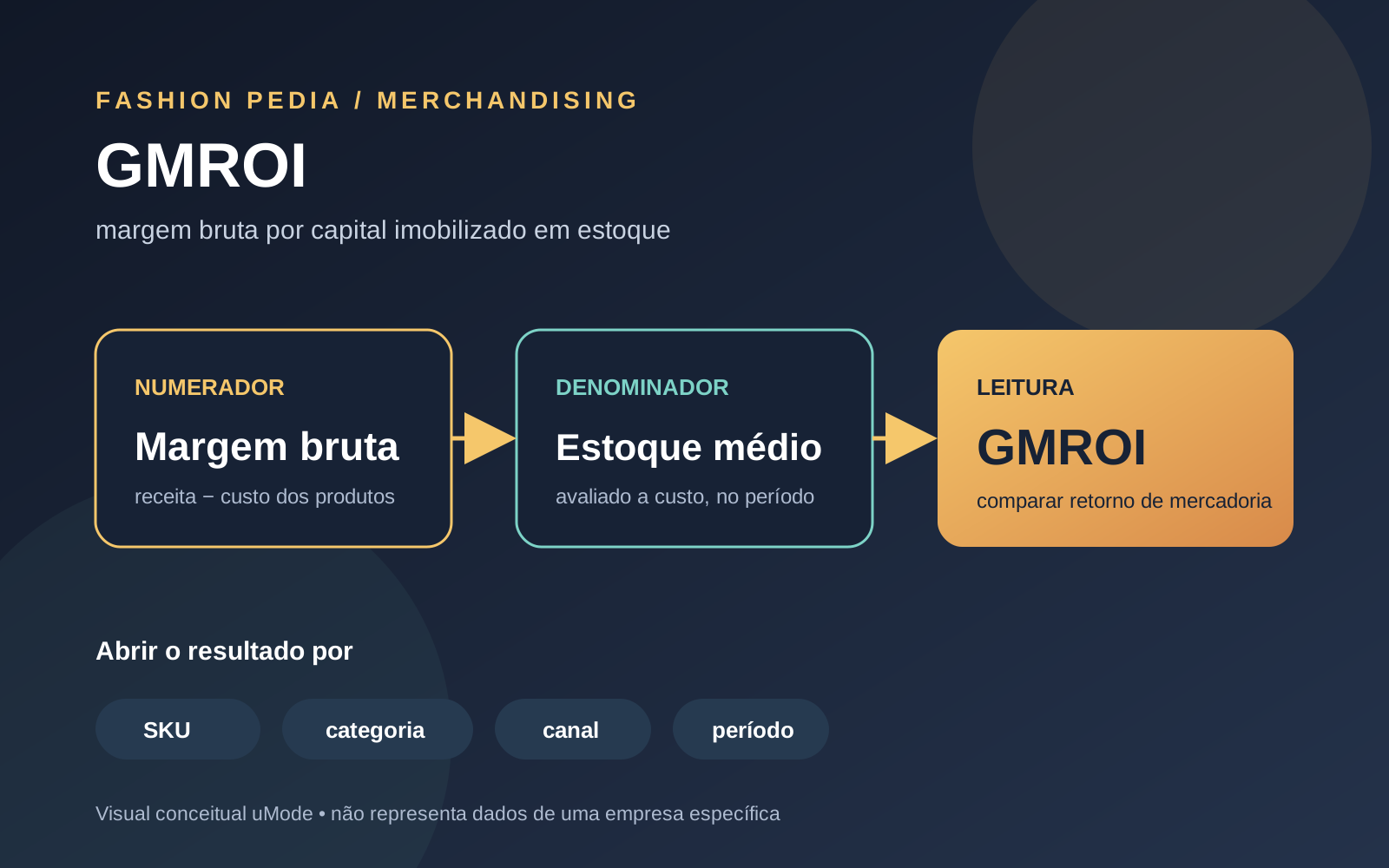
GMROI in fashion retail
GMROI in fashion retail. GMROI is a merchandising metric that relates gross profit to average inventory cost. In fashion retail, it helps compare the return of categories, SKUs, and channels when margin, cost, period, and analytical unit are kept consistent.
Sources
Want to apply this to your operation?