Inventory turnover
Inventory turnover is the ratio of cost of goods sold to average inventory over a defined period. In fashion retail, it must be read by product, collection, and channel alongside availability, margin, coverage, and markdowns, because speed of movement does not explain assortment quality on its own.
On this page
What is Inventory turnover?
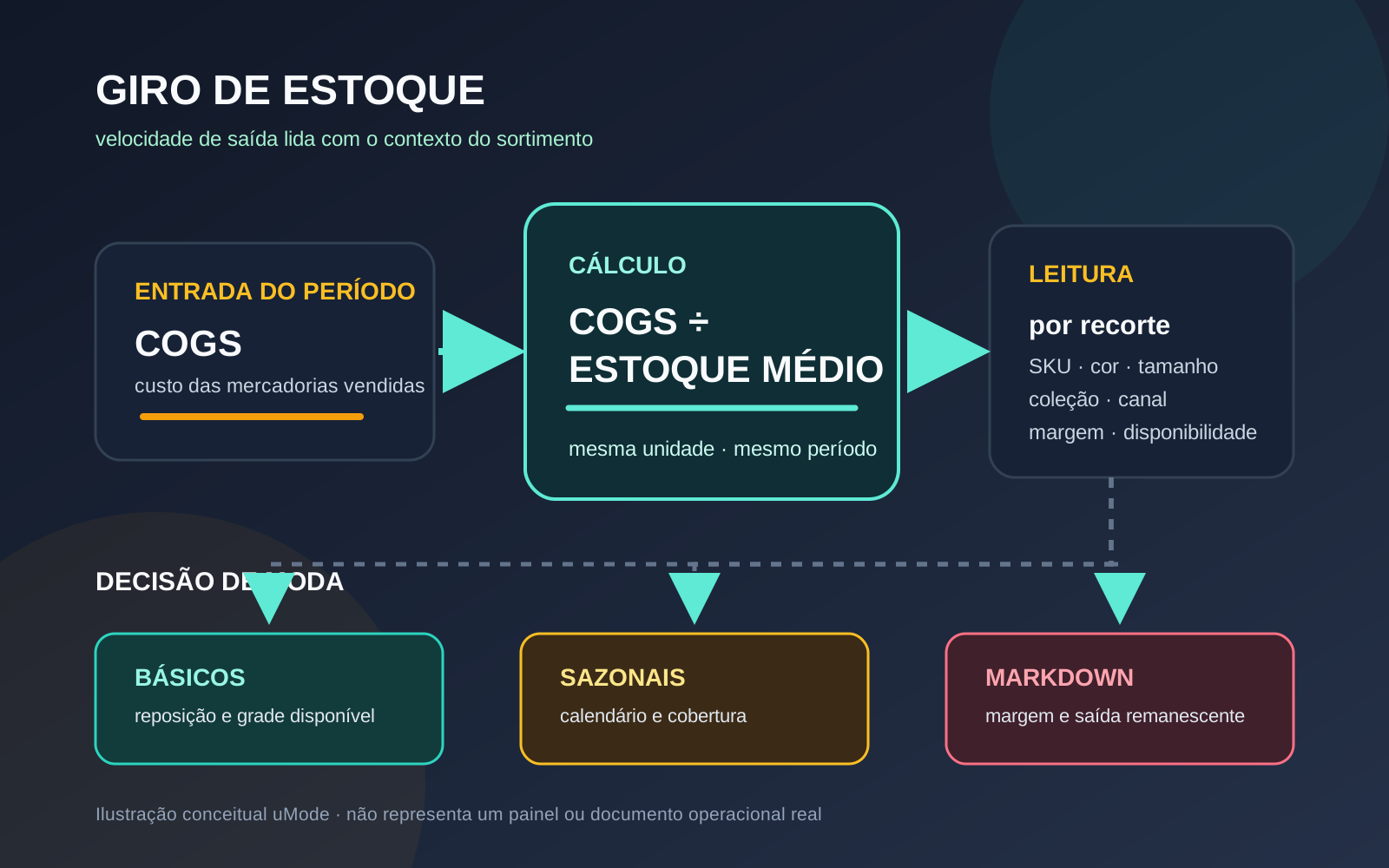
Inventory turnover is the relationship between cost of goods sold and the average inventory held during a period. The definition is financial, but the fashion reading is operational: one aggregate ratio can mix replenishment basics, seasonal products, sizes, colors, channels, and different points in the calendar. Declare the period, valuation basis, and slice before comparing results.
The base formula is:
inventory turnover = cost of goods sold ÷ average inventory
Average inventory must follow a stable convention, such as the average of opening and closing balances or a defined series of closing balances. Do not switch the basis between collections or channels simply to make the number look better. Sell-through answers a different question: how much available inventory sold in a defined window. GMROI adds the relationship between margin and inventory investment; neither measure is a synonym for turnover.
How should it be calculated and sliced?
Start with a table that preserves SKU, style, color, size, collection, channel, and period. Then use cost of goods sold and average inventory on the same monetary basis. A sales-based alternative can be affected by markup and make the ratio appear higher, so the chosen convention should be recorded in the dashboard and close process.
The number becomes useful only with a time reading. Annual turnover can provide a monthly intuition, but it does not show that every month behaved alike. Compare equivalent periods, separate launches from replenishment, and flag promotions or markdowns. If the business also uses DSI, treat it as a related indicator rather than a second definition of turnover: it expresses, in days, the average time capital remains tied up in inventory under the same time and valuation basis.
A practical routine is to close the period, validate sales, returns, and transfers, calculate turnover by slice, investigate the largest deviations, and record the decision. Demand planning and replenishment are decision processes around the metric, not hidden parts of its formula.
How should high or low turnover be interpreted in fashion retail?
High turnover may accompany efficient movement, but it can also reveal short buying, broken size curves, or stockouts. Low turnover may point to excess and carrying costs, but it can also fit a seasonal collection that is still within its selling calendar. The indicator flags a situation; it does not identify the cause by itself.
Ask different questions for each slice. If turnover rose with missing sizes or colors, investigate availability before celebrating the result. If it fell after a launch, treat exposure, price, calendar, receipt timing, and assortment fit as working hypotheses. If the business uses just-in-time logic, record the expected benefit of leaner inventory together with the stockout risk, rather than treating the strategy as universal.
Seasonality belongs in the forecast and in the interpretation. Core products may call for frequent replenishment; collection pieces may have a short window and end in markdown; accessories may follow another calendar. Safety stock is not an automatic consequence of a turnover target: it depends on the desired service level, variability, lead time, and buying policy.
What decisions can the metric support — and what can it not support?
Turnover can structure a conversation about buying, replenishment, allocation, and item exit when margin is considered alongside speed. A fast sale with low margin does not solve profitability; a slow sale with high initial margin may require investigation of price, availability, or markdown before liquidation. Markdown is one possible commercial decision, not an automatic explanation for every low-turnover result.
The dashboard should show value, unit, window, slice, data source, and exceptions. Keep the observed fact separate from the causal hypothesis. This lets assortment, sell-through, and turnover be compared without collapsing available inventory, ending inventory, sales, and cost into one denominator. The result is a fashion-specific reading process: measure speed, locate the constraint, and decide the next move.
Verified facts
- Inventory turnover expresses how many times inventory is sold and replaced during an accounting period.
Source: shopify.com ↗ - The usual formula divides cost of goods sold by average inventory.
Source: shopify.com ↗ - An annual turnover of 12 can be read as average movement through the store once per month.
Source: shopify.com ↗ - Using cost of goods sold avoids the markup effect that can inflate a ratio calculated with sales.
Source: lightspeedhq.com ↗ - DSI is a related measure that puts turnover into daily context and measures the average time cash is tied up in inventory.
Source: lightspeedhq.com ↗ - Extremely high turnover can indicate ineffective buying and low inventory, resulting in stock shortages and lower sales.
Source: shopify.com ↗ - Low turnover can mean products get stuck in a warehouse and acquire holding costs.
Source: shopify.com ↗ - A just-in-time strategy can trim carrying costs but carries a risk of increased stockouts.
Source: shopify.com ↗ - High turnover does not include profit margin by itself; a product can sell quickly while carrying a low margin.
Source: lightspeedhq.com ↗ - Seasonal fluctuations can distort turnover through peaks and valleys, so the ratio needs seasonal context.
Source: lightspeedhq.com ↗ - Monitoring inventory levels uses inventory turnover and days’ sales in inventory as two financial ratios.
Source: accountingcoach.com ↗
Related entries
Sell-through in fashion retail
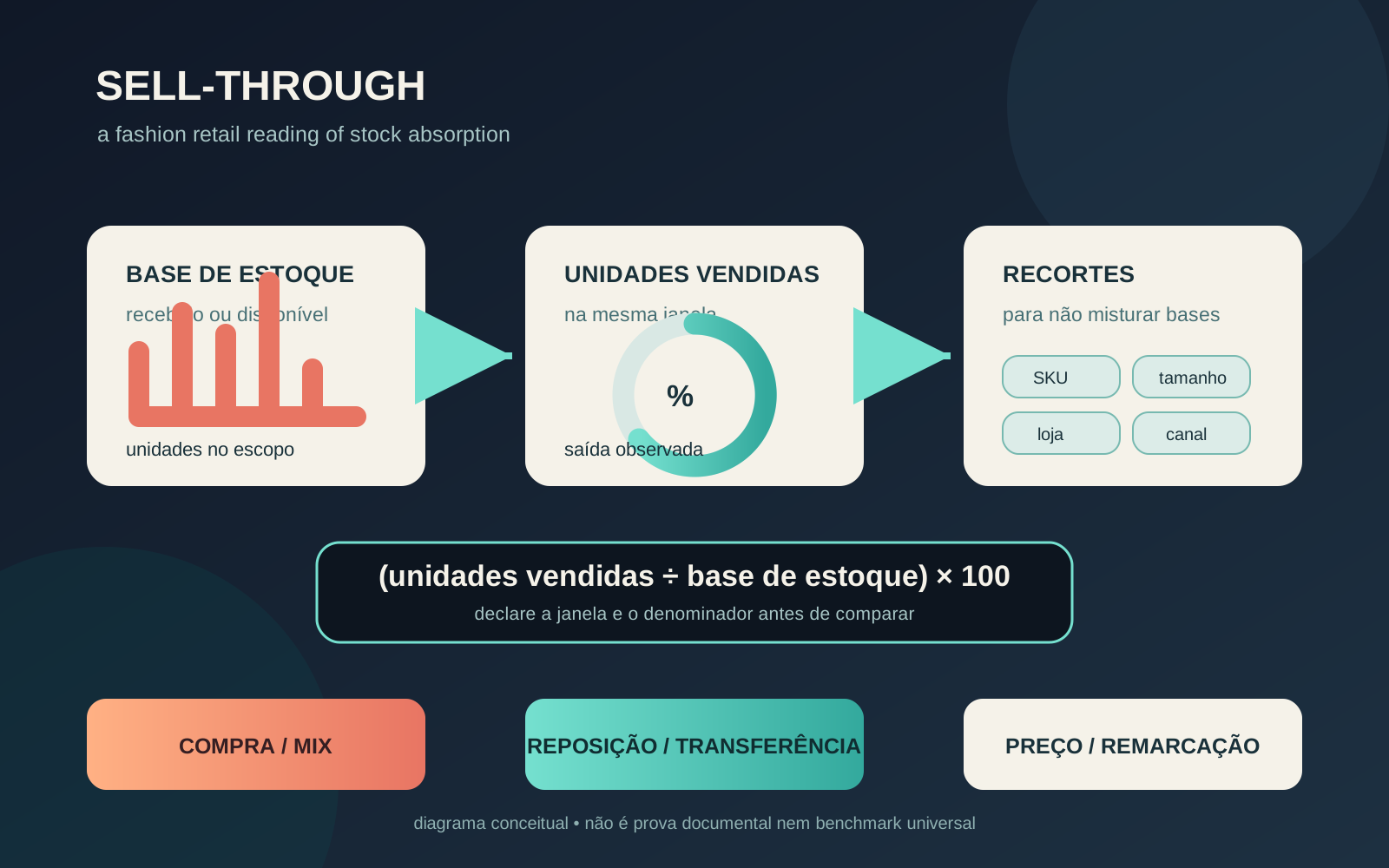
Sell-through in fashion retail. Sell-through is the percentage of units sold from inventory received or made available within a defined window. In fashion retail, the metric becomes useful when it is cut by style, color, size, store, channel, and product life cycle, with the denominator stated before it informs buying, replenishment, or markdown decisions.
GMROI in fashion retail
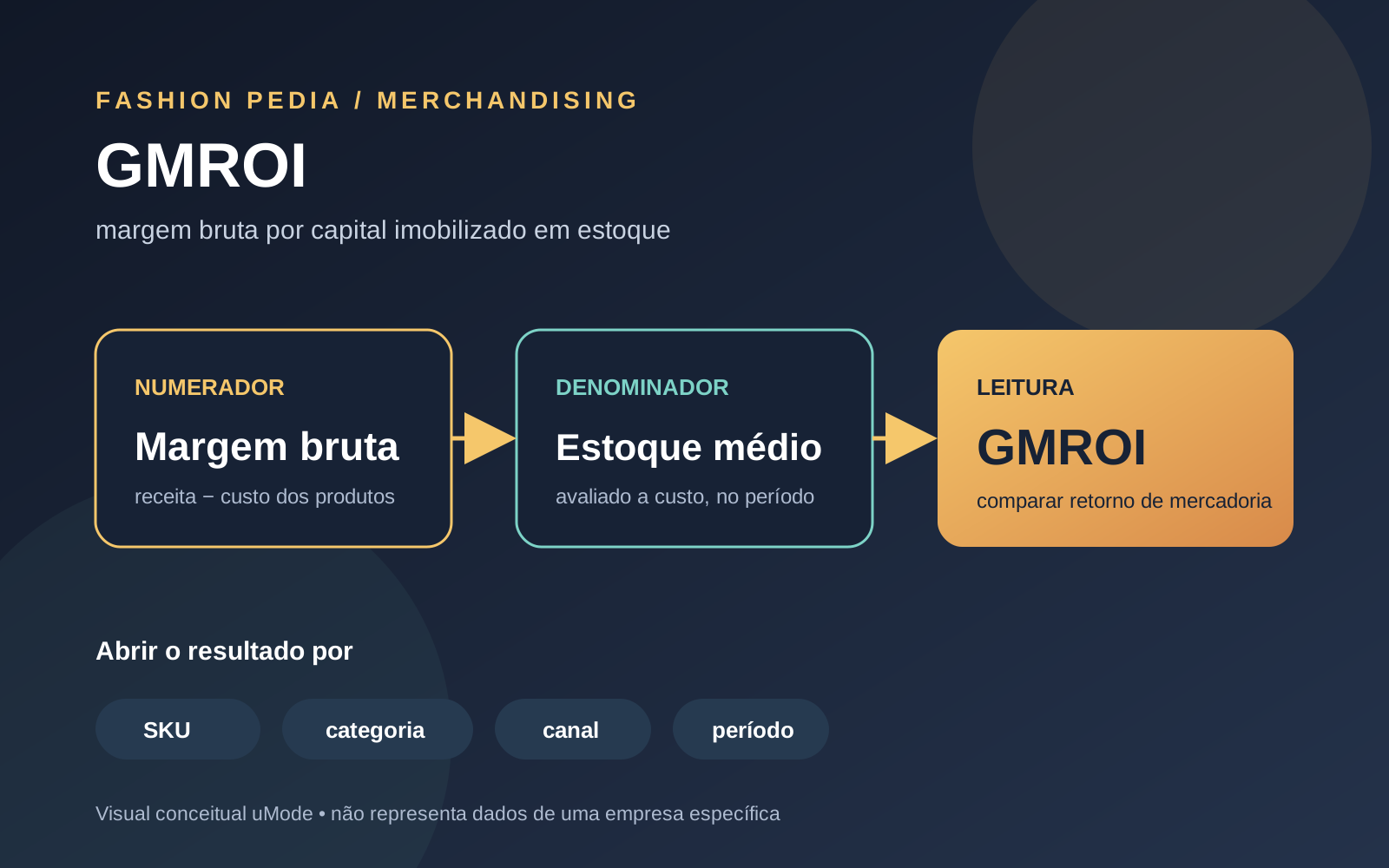
GMROI in fashion retail. GMROI is a merchandising metric that relates gross profit to average inventory cost. In fashion retail, it helps compare the return of categories, SKUs, and channels when margin, cost, period, and analytical unit are kept consistent.
Inventory replenishment
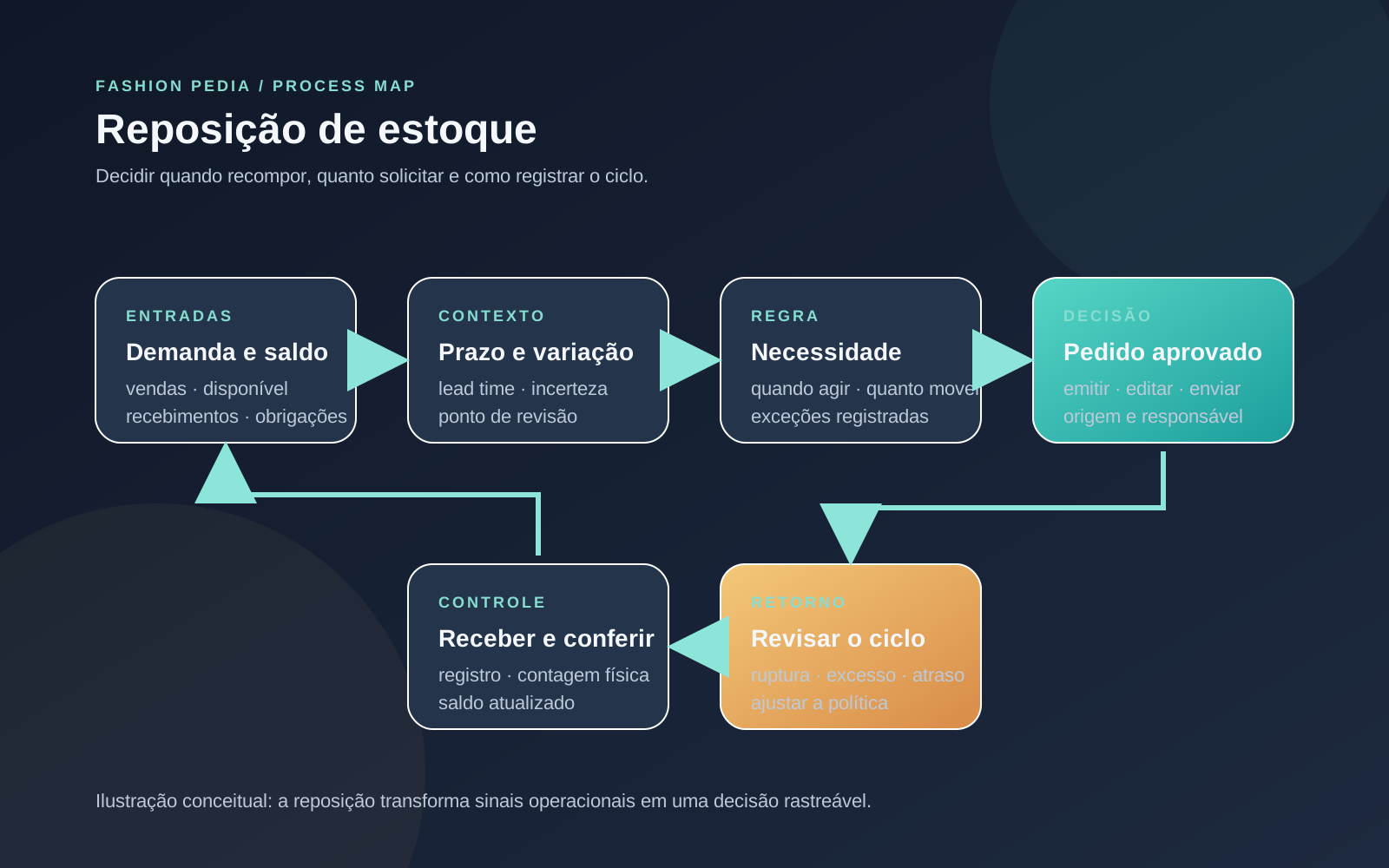
Inventory replenishment is the process of deciding when to restore an item's availability and how much to request for a future need. The decision combines recorded stock, demand, expected receipts, obligations, purchasing lead time and demand variation; the order must then be approved, received and recorded.
Demand planning in fashion
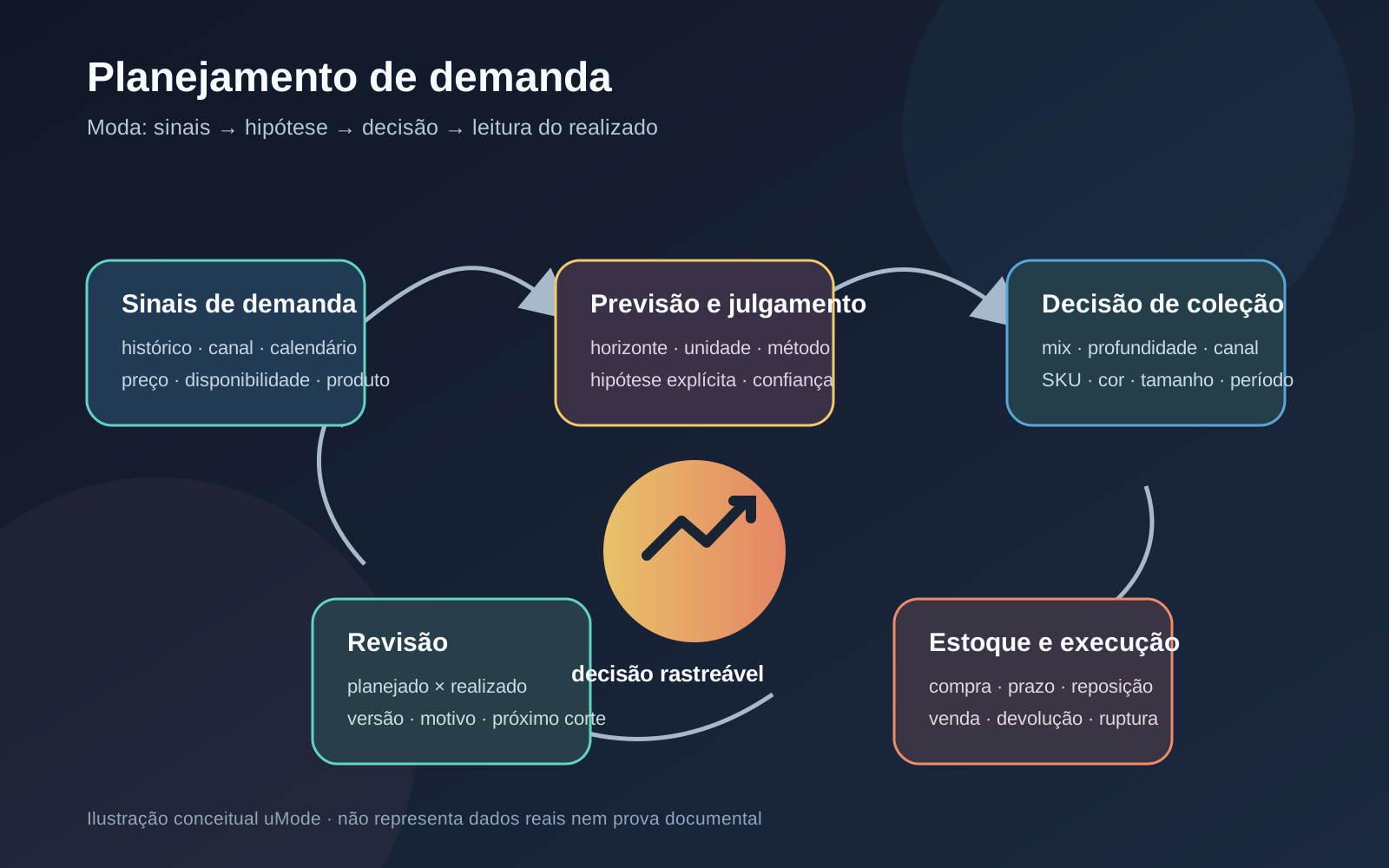
Demand planning in fashion turns demand signals, history, calendar context and judgement into explicit decisions about assortment, volume, channel and review. It combines forecasting with governance: every hypothesis needs a horizon, unit, owner and rule for revision when the collection or market changes.
Sources
Want to apply this to your operation?