Fashion retail markdown
Fashion retail markdown is a controlled price reduction applied to a defined product, location, and channel to move stock while preserving visibility into size availability and margin. The process starts with sellable inventory and sales signals, applies a documented rule, and measures the result rather than treating a new ticket price as the result itself.
On this page
What is Fashion retail markdown?
A markdown is a planned price reduction for merchandise identified by style, color, and size, used to decide the next commercial destination of that size run. In fashion retail, the question is not “which discount should we use?” but “which product, in which location, with which sellable stock, needs a new rule now?” A clearance label may be the visible outcome, but the process connects pricing, collection management, and sell-through reading.
The decision source must be granular. A blue coat in size 40 at one store can have a different situation from the same SKU online; therefore record the object, location, channel, previous price, current price, and analysis window. Do not mix available units with reserved units or goods in transit.
How is a markdown decision made?
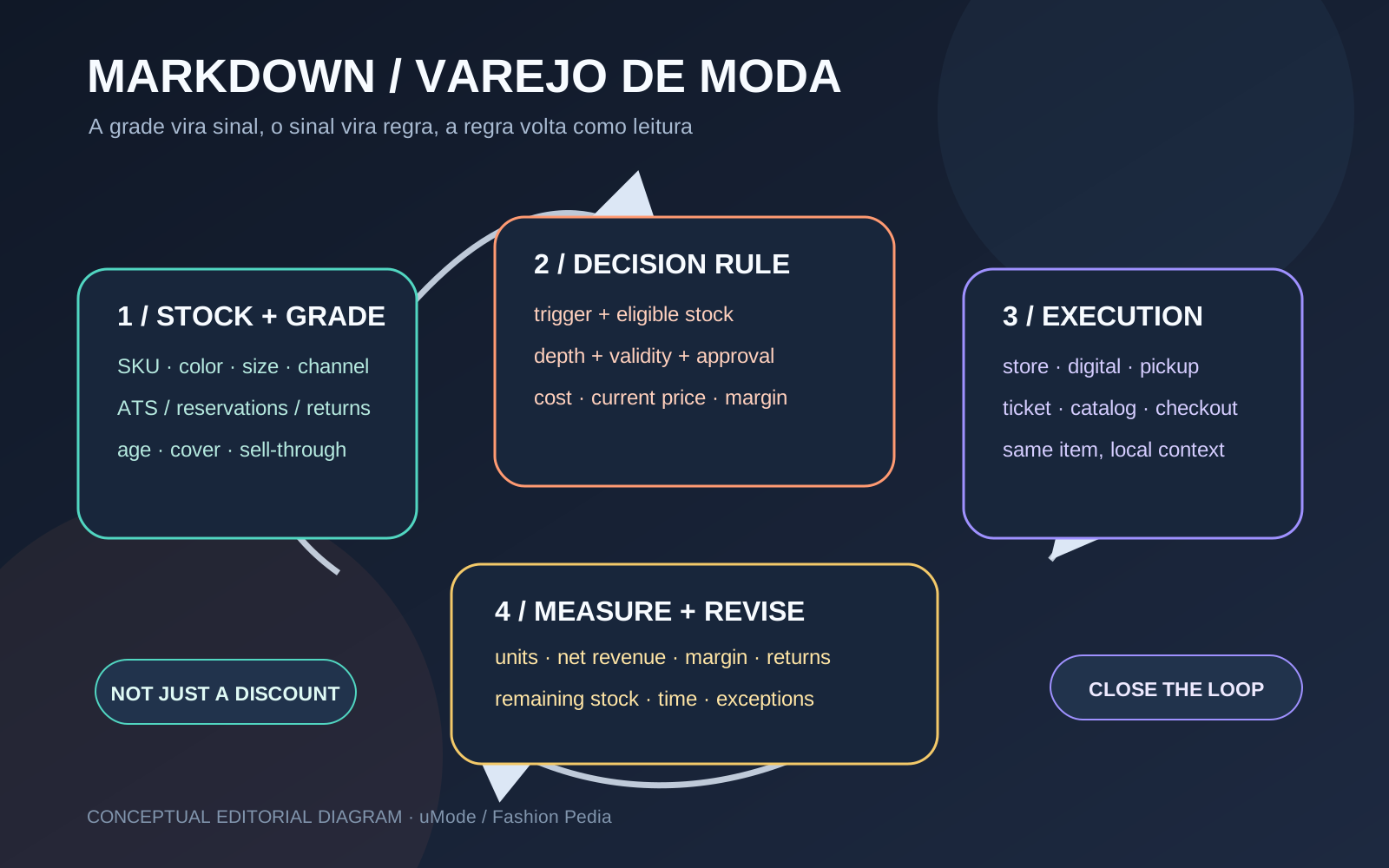
First measure the stock that can actually be sold. ATS is a useful reference for separating units for sale from units already committed; existing orders, pending shipments, and backorders should not be treated as free availability. Reconcile ATS with reservations, transfers, returns, and stockouts before calculating a trigger.
Next choose the signal. Use a documented combination of stock age, period sales, size-run depth, weeks of cover, collection calendar, and store differences. The purpose is not to reward one isolated sale; it is to identify when the current price no longer fits the stock that must move. Sell-through can sit on the dashboard when its denominator and time window remain fixed.
Then formulate the price rule. Compare cost, current price, available margin, upcoming events, and channel inventory; define depth, validity, eligibility, and approval. A markdown ladder may begin with a moderate cut and advance only when the signal persists, but the levels are company policy, not a universal law. Preserve the reference full price and the reason for change so markdown is not confused with an undiagnosed promotion.
How should it run across stores, digital, and the size run?
Execution must reach the selected product across the chosen touchpoints without erasing the difference between a store, central stock, and digital stock. Merchandising systems can handle regular, promotional, and clearance pricing across touchpoints; operationally, the team should test the catalog, ticket, display, product page, checkout, reservation, and pickup flow before opening the new condition. Initial allocation and replenishment explain why the item is in a place, but neither replaces the price decision.
The size run needs its own treatment. If only extreme sizes remain, a markdown may lift unit movement without solving the customer’s search for the core size. If the run is split among stores, consider transfer or exposure before deepening the reduction. Log exceptions for returns, defects, campaigns, reservations, and transfers; a rule that ignores these states turns accounting stock into false availability.
In an omnichannel operation, reconcile inventory visibility before communication. Inventory management follows the flow to the point of sale and must answer when to order, how much to order, and where to store stock; in fashion, that means preserving the link between SKU, color, size, store, warehouse, and channel. Demand planning gives context for the next collection, while collection management records the commercial intention that the markdown is correcting or accelerating.
How can the effect be measured without confusing discount and result?
Measure by product and channel: units sold, net revenue, gross margin value, margin rate, remaining stock, returns, stockouts, and time since the change. Declare numerator, denominator, period, exclusions, and unit; compare equivalent groups or windows when operations allow it. Unit growth can coexist with margin loss, and lower stock can reflect a transfer or return rather than demand created by price.
Read before, during, and after the event while recording price, exposure, media, availability, and manual interventions. Demand forecasting can use process and sales patterns, but an observed markdown should not be presented as the sole cause when channel, assortment, weather, campaign, or availability also changed. Pricing should retain the rule and version; replenishment should retain the physical movement; analysis compares both histories.
Limits and common confusions
Markdown is not a synonym for promotion, total clearance, a pricing error, or commercial success. It is a localized decision about merchandise and an inventory context. Do not use ATS as physical stock, treat sell-through as margin, or compare stores without aligning size run, period, exposure, and availability. Do not copy a discount ladder from another collection: weather, novelty, opening price, and size-run depth change the problem.
The minimum record is one event sheet: product, color, size, location, channel, previous price, new price, start, planned end, trigger, owner, exception, and outcome measures. That record lets the next cycle review the rule without turning a local decision into a universal recommendation.
Relations to other fashion processes
Markdown depends on collection management, connects with demand planning, changes replenishment decisions, and can follow an uneven initial allocation. It also relates to sell-through and pricing, but each entry keeps its own unit, formula, and position in the chain.
Verified facts
- Markdown is used in retail as a pricing action to clear seasonal merchandise.
Source: oracle.com ↗ - A pricing engine can handle regular, promotional, and clearance prices across touchpoints.
Source: oracle.com ↗ - Price analysis can combine cost, current price, margin, upcoming events, and inventory data.
Source: oracle.com ↗ - Inventory allocation can reduce the likelihood of overstocks and future markdowns.
Source: oracle.com ↗ - Retailers can determine an individual store's need using metrics that fit the product, store characteristics, and product lifecycle.
Source: oracle.com ↗ - ATS is the number of units of a product that are currently for sale.
Source: shopify.com ↗ - Units reserved for existing orders, pending shipment, or backorders are excluded from ATS.
Source: shopify.com ↗ - Shopify presents ATS as on-hand inventory minus outstanding purchase orders, outstanding sales, and future sales.
Source: shopify.com ↗ - Inventory management tracks products from manufacturers to warehouses and from those facilities to the point of sale.
Source: ibm.com ↗ - Multichannel operations spread inventory across the supply chain and need visibility to reduce stockouts, oversells, and markdowns.
Source: ibm.com ↗ - Inventory management must address when to order, how much to order, and where to store stock.
Source: ibm.com ↗ - IBM describes evaluating process patterns as a way to forecast future demand and sales.
Source: ibm.com ↗
Related entries

Collection management
Collection management coordinates a fashion line's journey from idea through production, service and disposal by connecting people, product data, processes, decisions, versions and events across teams and partners.
Demand planning in fashion
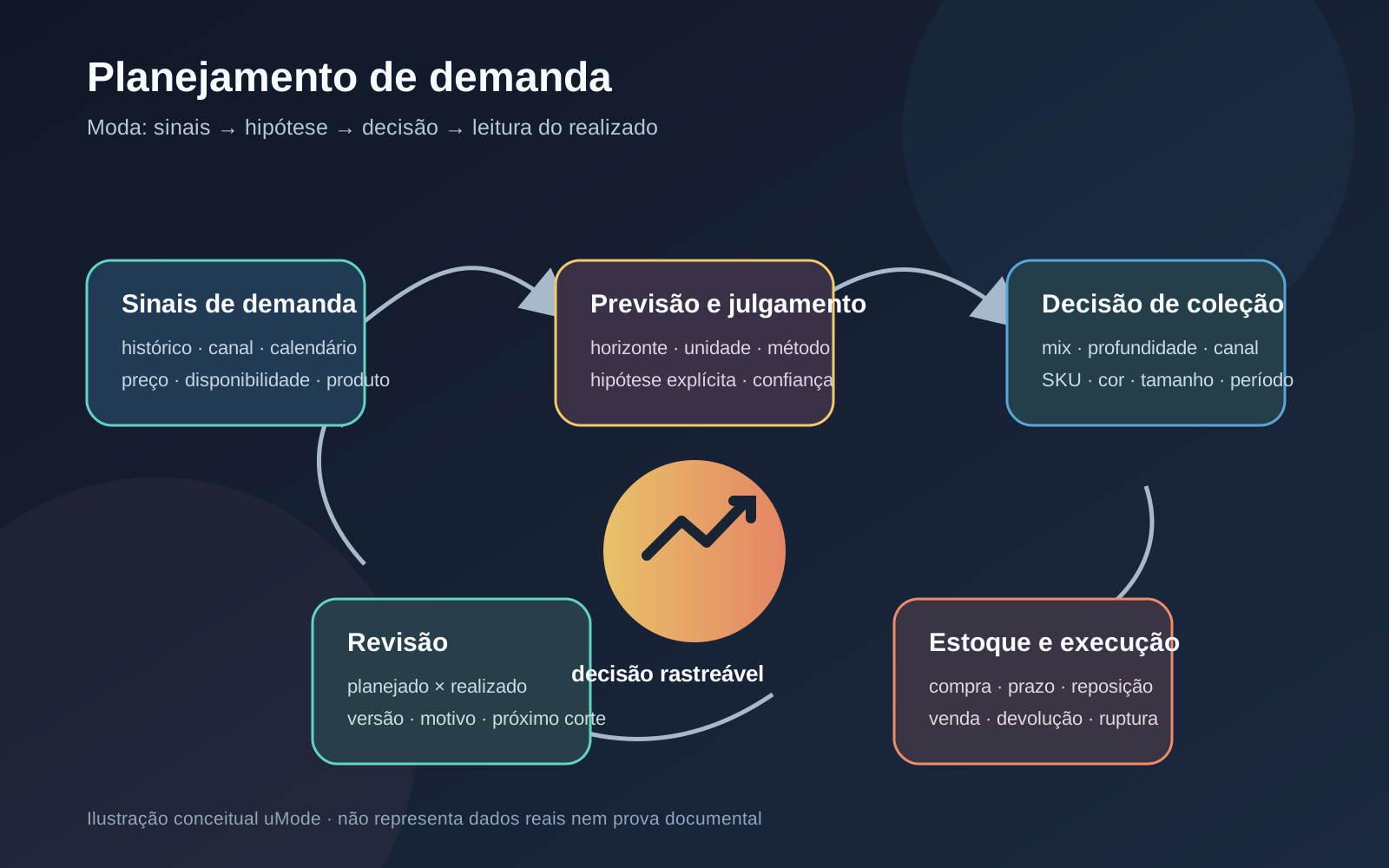
Demand planning in fashion turns demand signals, history, calendar context and judgement into explicit decisions about assortment, volume, channel and review. It combines forecasting with governance: every hypothesis needs a horizon, unit, owner and rule for revision when the collection or market changes.
Inventory replenishment
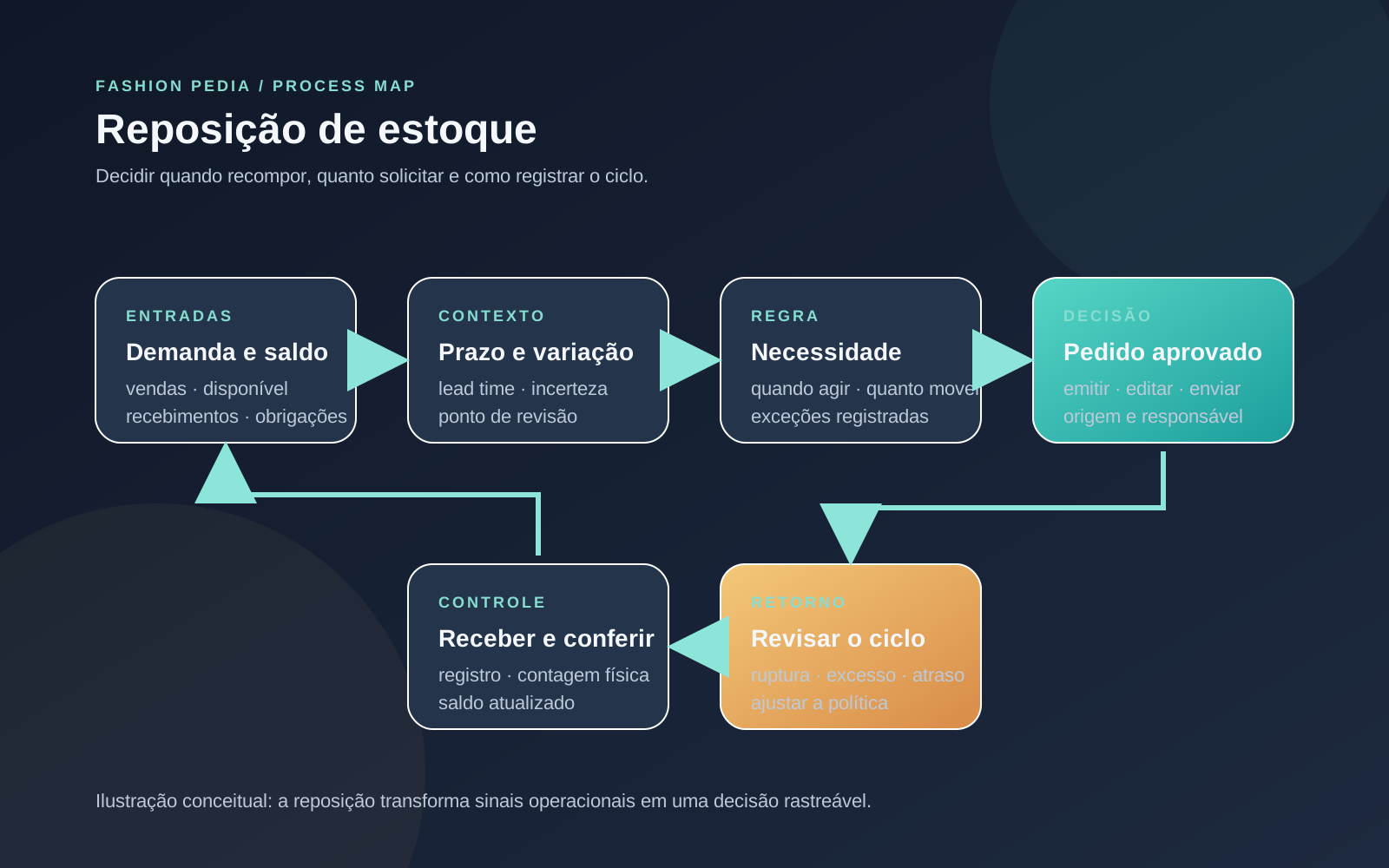
Inventory replenishment is the process of deciding when to restore an item's availability and how much to request for a future need. The decision combines recorded stock, demand, expected receipts, obligations, purchasing lead time and demand variation; the order must then be approved, received and recorded.
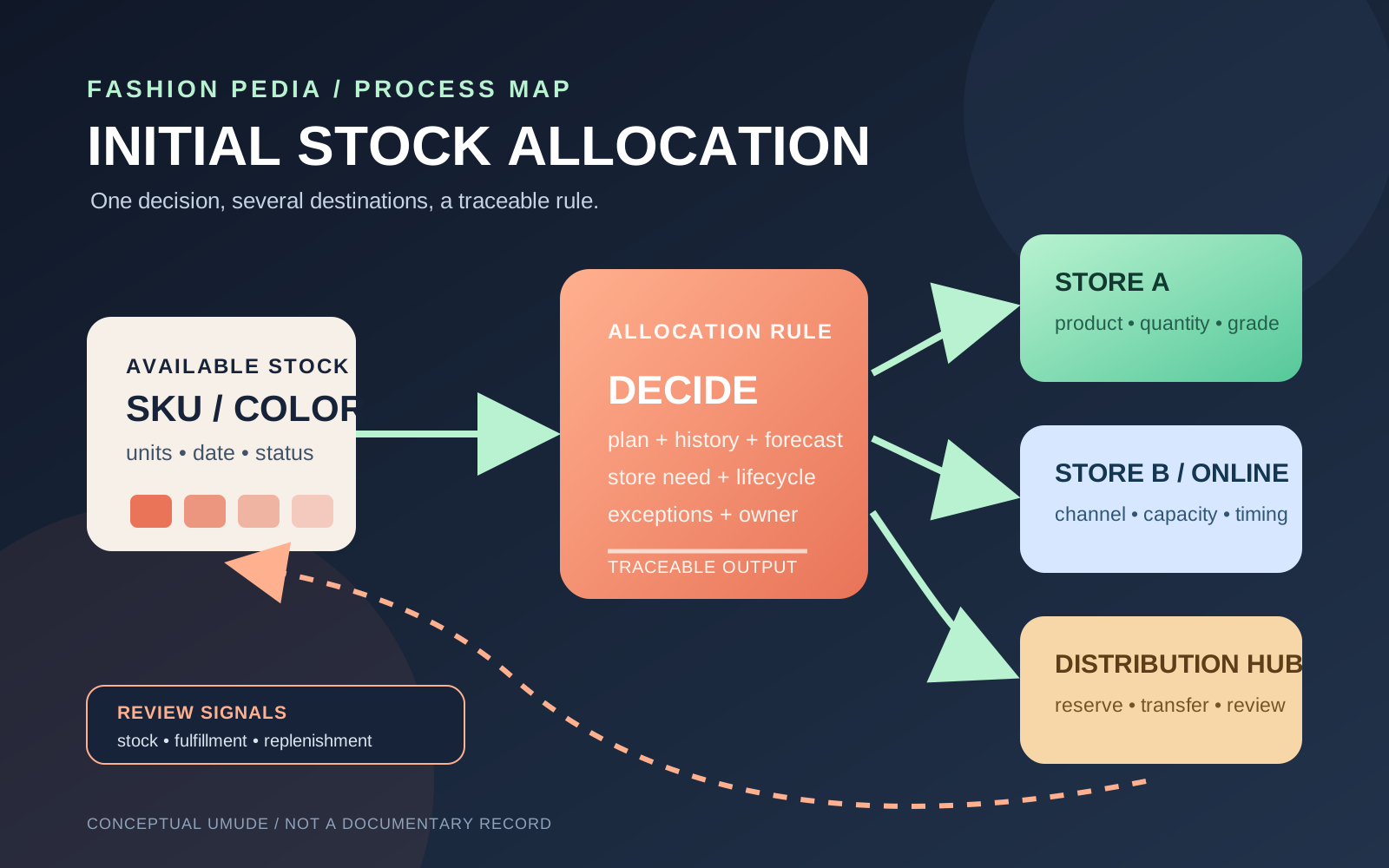
Initial Stock Allocation
Initial stock allocation is the process of deciding how the first available quantity of a product will be distributed across stores, channels, or other service points. A sound record makes the product, destination, quantity, data source, and exceptions visible.
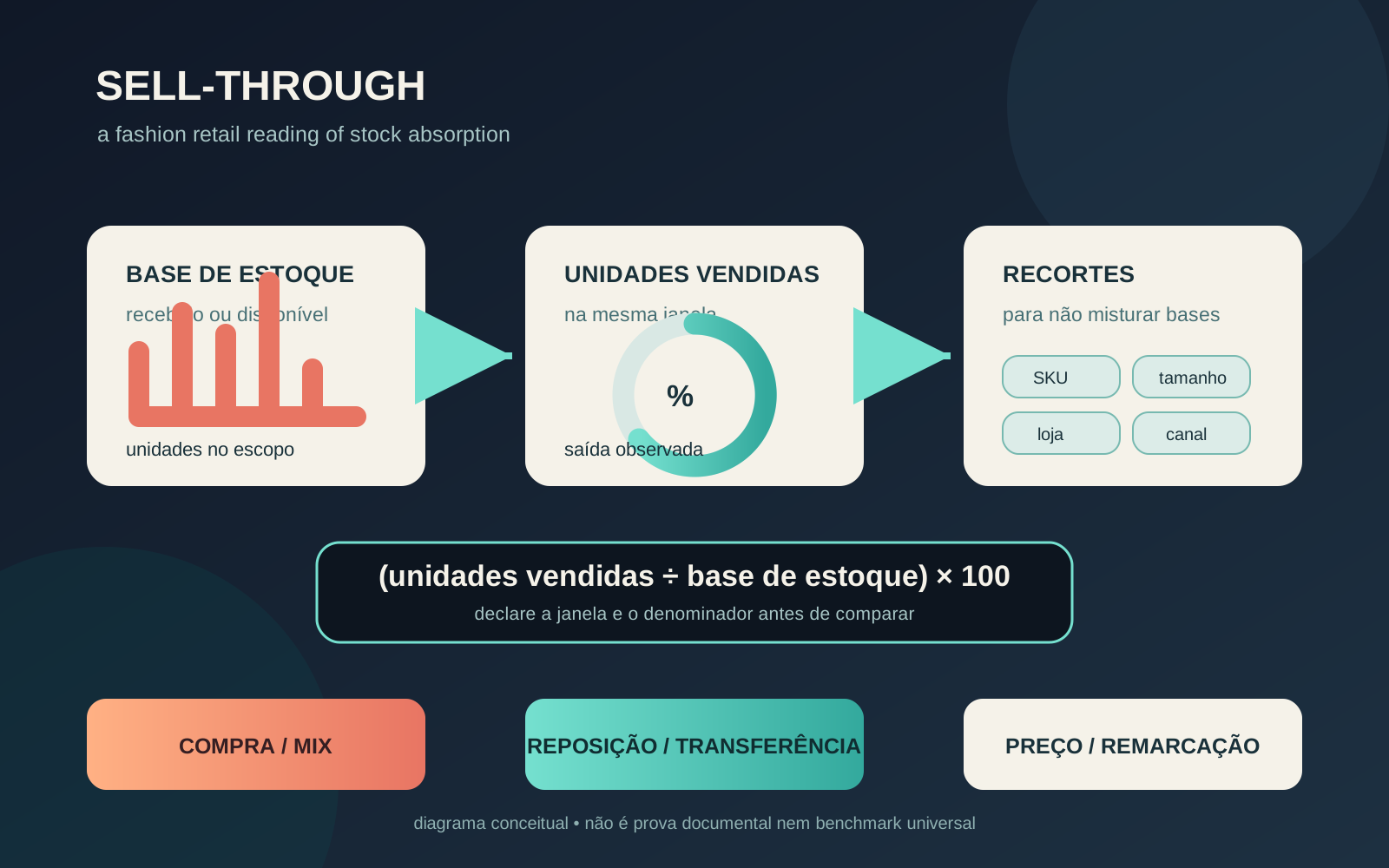
Sell-through in fashion retail
Sell-through in fashion retail. Sell-through is the percentage of units sold from inventory received or made available within a defined window. In fashion retail, the metric becomes useful when it is cut by style, color, size, store, channel, and product life cycle, with the denominator stated before it informs buying, replenishment, or markdown decisions.
Sources
Want to apply this to your operation?