Information context and governance in fashion
Information context and governance in fashion is a process for keeping product and collection objects connected to decisions, versions, responsibilities and evidence. It combines provenance, identifiers, access rules, controlled change and interoperability criteria; it is not merely archiving or selecting a tool.
On this page
What is Information context and governance in fashion?
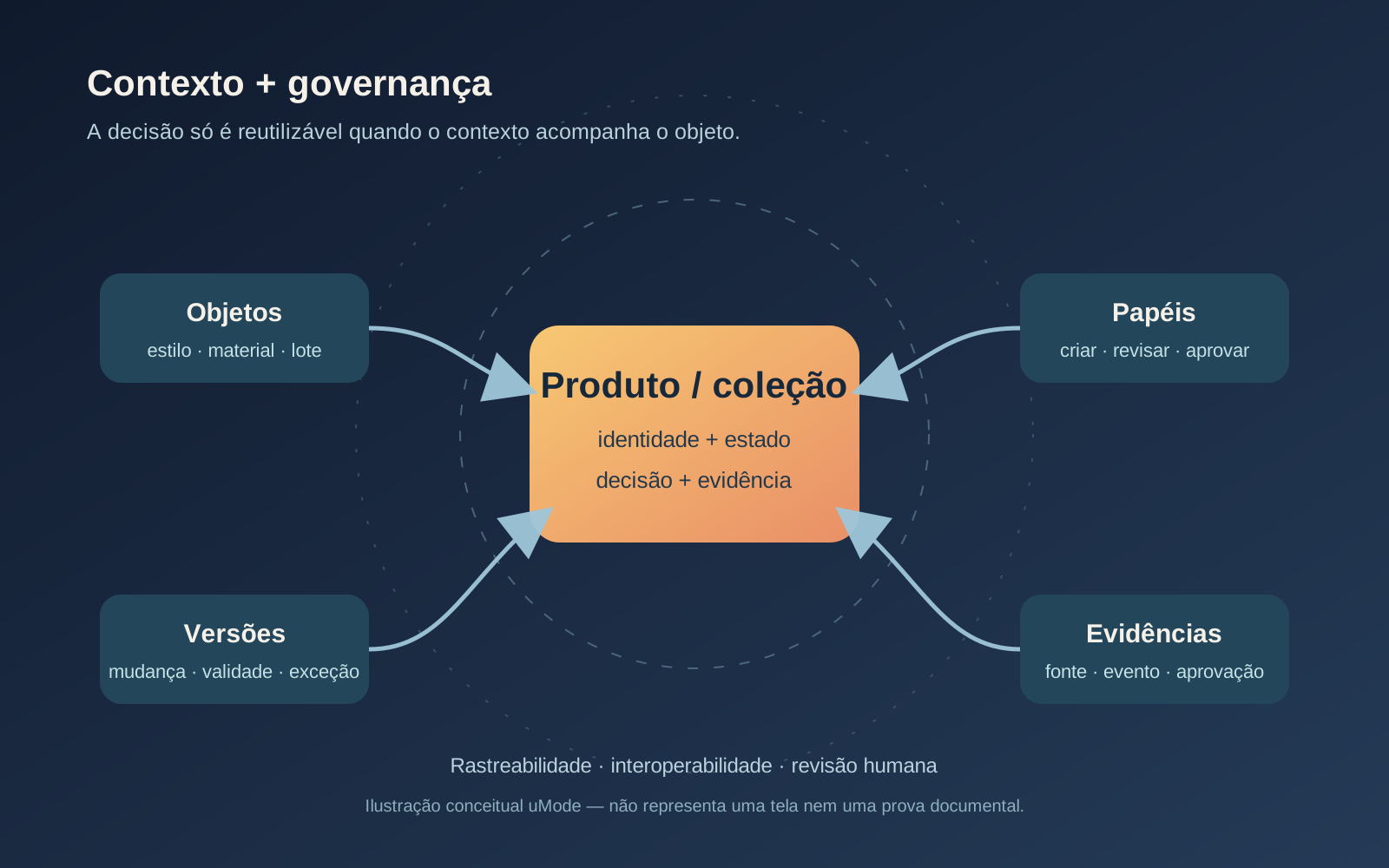
Information governance in fashion makes the relationship between a product object, a decision, an accountable role, the valid version and the evidence for checking the record explicit. The process can cover a collection, a tech pack, a material, a sample, a supplier or a care rule; it does not make a spreadsheet a trustworthy source by itself. Version control makes changes visible, while data governance defines the meaning of each field and who is responsible for it.
Provenance has a more precise technical meaning. W3C describes it as information about the entities, activities and people involved in producing data or a thing, which can support assessments of quality, reliability or trustworthiness. In a fashion workflow, that can connect a measurement to a tech pack, a tech pack to a revision, a revision to an approval and an approval to a sample. The value is not the number of records but the ability to reconstruct the sequence without losing authorship, time or rationale.
How should context, roles and versions be organized?
Start by defining the object: style, variant, colour, material, supplier, batch, sample or document. Then specify its identifier, attributes, state, owner, permissions and links to other objects. A composition change, for example, should not appear only as new wording; it should show which version it replaced, at what stage it happened and which teams must reassess cost, fit, labelling, quality or timing. A tech pack is more useful when it records the product definition and points to checkable evidence instead of collecting detached comments.
NIST’s AI Risk Management Framework is a governance reference for AI systems, not a fashion-specific standard. NIST says that it is voluntary and intended to incorporate trustworthiness considerations into the design, development, use and evaluation of AI products, services and systems. NIST also records that the framework was developed through an open, transparent, collaborative and consensus-driven process. For a fashion team using AI for research, classification, forecasting or service, the operational lesson is to separate purpose, use context, limitations, review and accountability; the reference does not authorize a promise of automatic accuracy.
The W3C PROV family supplies another vocabulary: a model and serializations intended for interoperable provenance exchange in heterogeneous environments. PROV also enables provenance to be represented and exchanged in formats such as RDF and XML. This does not require a company to adopt one architecture. It means that an integration should state what identifies the object, which events change its state, which relationships must cross systems and how synchronization failure will be handled.
How can governance be applied across a collection lifecycle?
In briefing, record intent, scope and decision criteria. In development, connect design, measurements, materials, samples and comments to the same product identity. In sourcing, preserve the supplier, stated origin, received document and information validity. In quality, distinguish a reported value, a test result, a deviation and an approval. In production and retail, keep the links among batch, item, label, channel and update. Fashion PLM can support the product lifecycle, but it does not replace role definitions or resolve conflicts of meaning between systems.
Regulation (EU) 2024/1781 illustrates requirements that make context quality testable: when applicable, a digital product passport must contain accurate, complete and up-to-date data; it must connect to a persistent unique product identifier; and its data must be based on open standards and an interoperable, machine-readable, structured, searchable and transferable format. The same regulation allows model-, batch- or item-level scope and limits the storage of customer personal data without explicit consent. These requirements are not a universal recipe for every collection, but they help test whether identity, scope, access and update rules have been defined.
Which controls make information useful for decisions?
Choose indicators that trigger a response: completion of critical fields by stage, duplicate identifiers, information age, version conflicts, approval time, open exceptions and the success of reconstructing a product or batch. Use qualitative samples alongside numerical coverage: a field filled with a copied value can look complete while being out of context. Fashion traceability should be tested by following an object to its evidence, not only by counting documents.
Define exception handling as well. An urgent change needs an authorizer, impact, deadline and closing condition. Temporary access needs scope and expiry. An AI answer without a sufficient basis should be routed to human verification when a decision requires confirmation. AI applied to fashion can locate and compare information, but governance remains responsible for explaining where the data came from and who may turn it into a decision.
Implementation can start with one critical flow, such as sample approval or material substitution. Map objects, states, owners, evidence and integrations; test a real exception; record what could not be reconstructed; and only then expand. Collection management and tech packs are connection points, not synonyms for governance. The intended result is a chain of context that enables speed without sacrificing identity, review and accountability.
Verified facts
- NIST describes the AI Risk Management Framework as voluntary and intended to incorporate trustworthiness considerations into the design, development, use and evaluation of AI systems.
Source: nist.gov ↗ - NIST states that AI RMF 1.0 was released on January 26, 2023.
Source: nist.gov ↗ - NIST describes the AI RMF development as open, transparent, collaborative and consensus-driven, with public comments and workshops.
Source: nist.gov ↗ - W3C defines provenance as information about entities, activities and people involved in producing data or a thing, used to assess quality, reliability or trustworthiness.
Source: w3.org ↗ - The W3C PROV family defines a model and serializations for interoperable provenance exchange in heterogeneous environments such as the Web.
Source: w3.org ↗ - PROV enables provenance to be represented and exchanged using widely available formats such as RDF and XML.
Source: w3.org ↗ - Regulation (EU) 2024/1781 requires digital product passport data to be accurate, complete and up to date when the passport applies.
Source: eur-lex.europa.eu ↗ - Regulation (EU) 2024/1781 connects the digital product passport to a persistent unique product identifier.
Source: eur-lex.europa.eu ↗ - Regulation (EU) 2024/1781 requires passport data to be based on open standards and use an interoperable, machine-readable, structured, searchable and transferable format.
Source: eur-lex.europa.eu ↗ - Regulation (EU) 2024/1781 says customer personal data should not be stored in the digital product passport without explicit consent under the GDPR.
Source: eur-lex.europa.eu ↗ - Regulation (EU) 2024/1781 allows the digital product passport to be established at model, batch or item level as specified by the applicable delegated act.
Source: eur-lex.europa.eu ↗
Related entries
How to structure fashion data governance
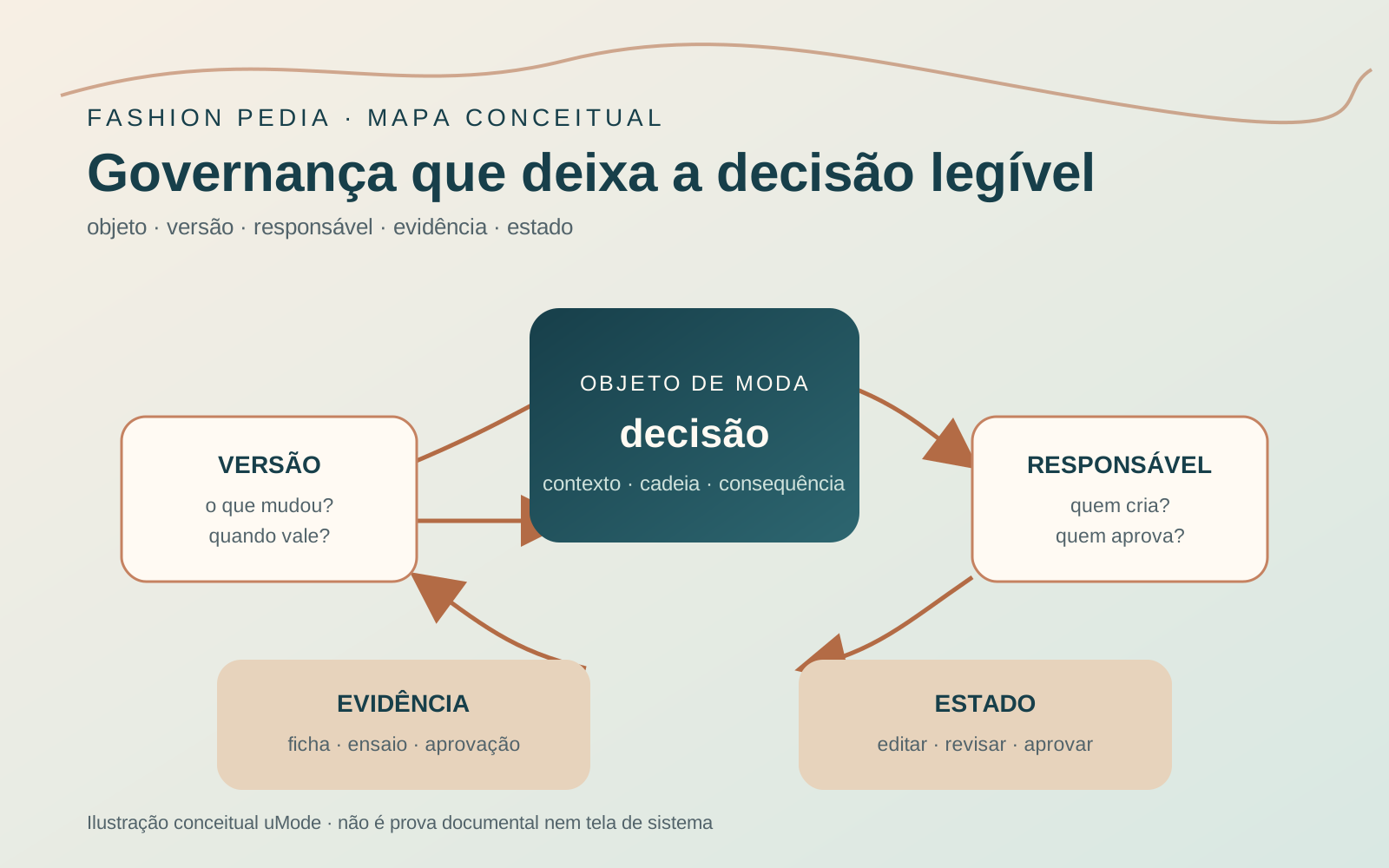
How to structure fashion data governance. Fashion data governance organizes objects, meanings, owners, versions, permissions and evidence around product and supply-chain decisions. A useful structure starts with a critical workflow, states what must be known at each step, and connects a decision to the record that lets another person verify it.
How to control tech pack versions
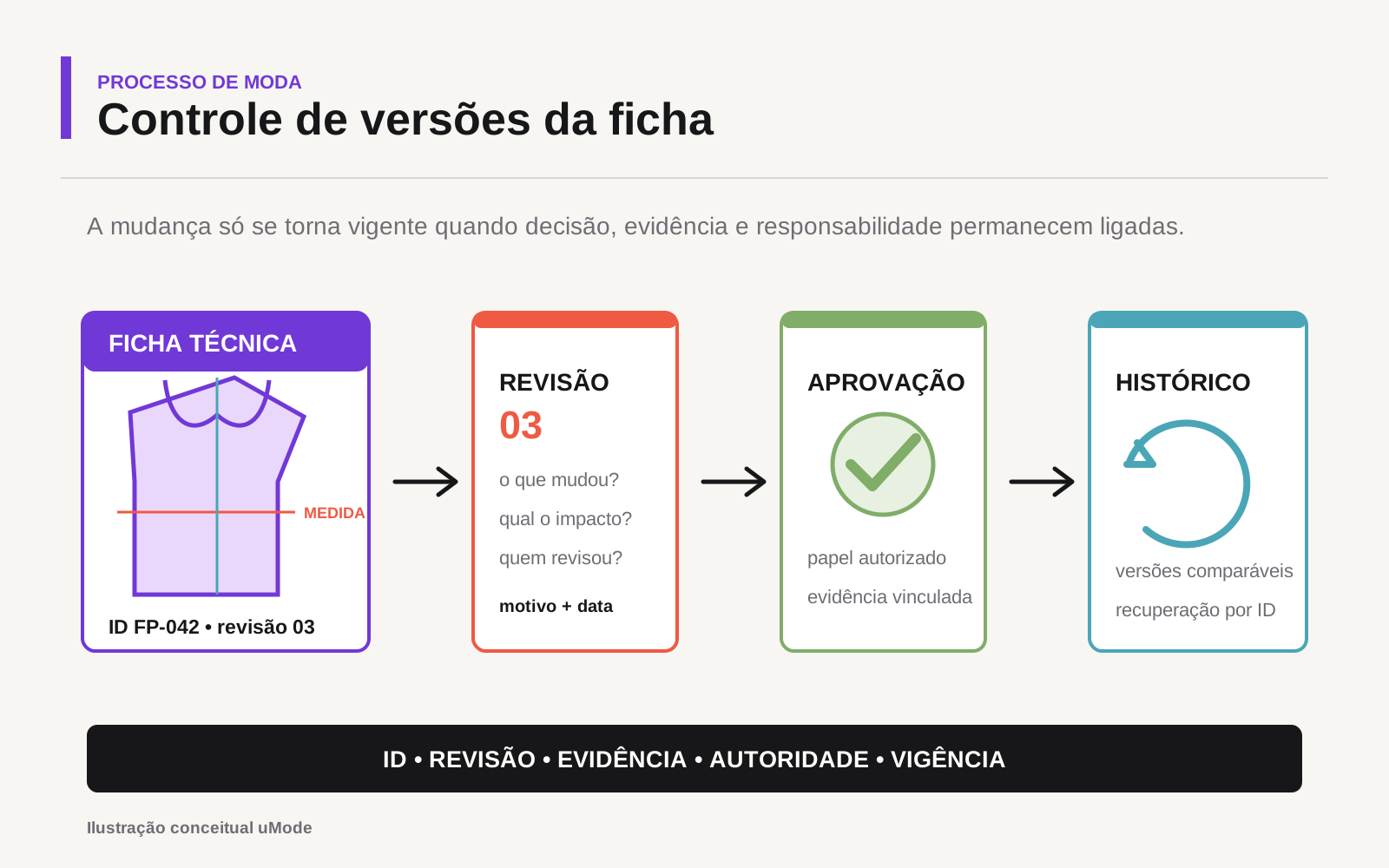
How to control tech pack versions. Controlling tech pack versions means recording every product change with an identifier, owner, reason, status, approval and effective date. The method applies configuration-control and product-lifecycle principles to the concrete decisions of an apparel supply chain.
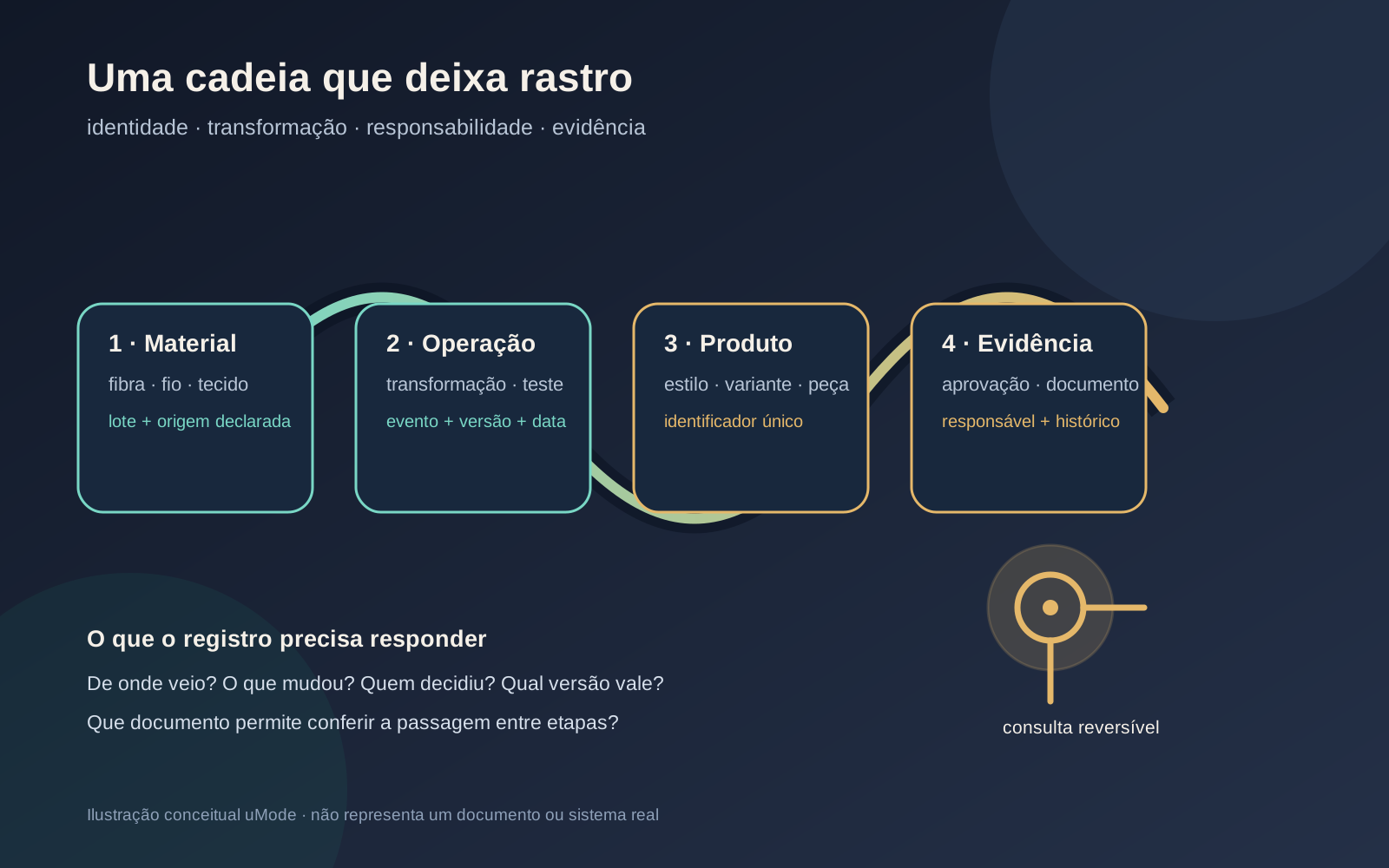
Traceability in the fashion supply chain
Traceability in the fashion supply chain. Fashion supply-chain traceability is the process of linking a product, material or component to the entities, activities, responsible parties and records that explain its transformation and movement. In practice, it combines identifiers, events, relationships and evidence so a product history can be checked.

Fashion PLM: data, product, and lifecycle
Fashion PLM is the structured management of the data, decisions, and workflows that follow a product and a collection from concept through post-launch. It connects tech packs, materials, costs, samples, approvals, suppliers, and versions so that every function works from a traceable product definition.

Fashion product technical specification
A technical specification is the controlled information set that translates an approved fashion product into verifiable sampling and manufacturing requirements. It brings together drawings, materials, measurements, construction, tolerances, identification, labelling, comments and revision history; its content varies by category, company, market and stage.
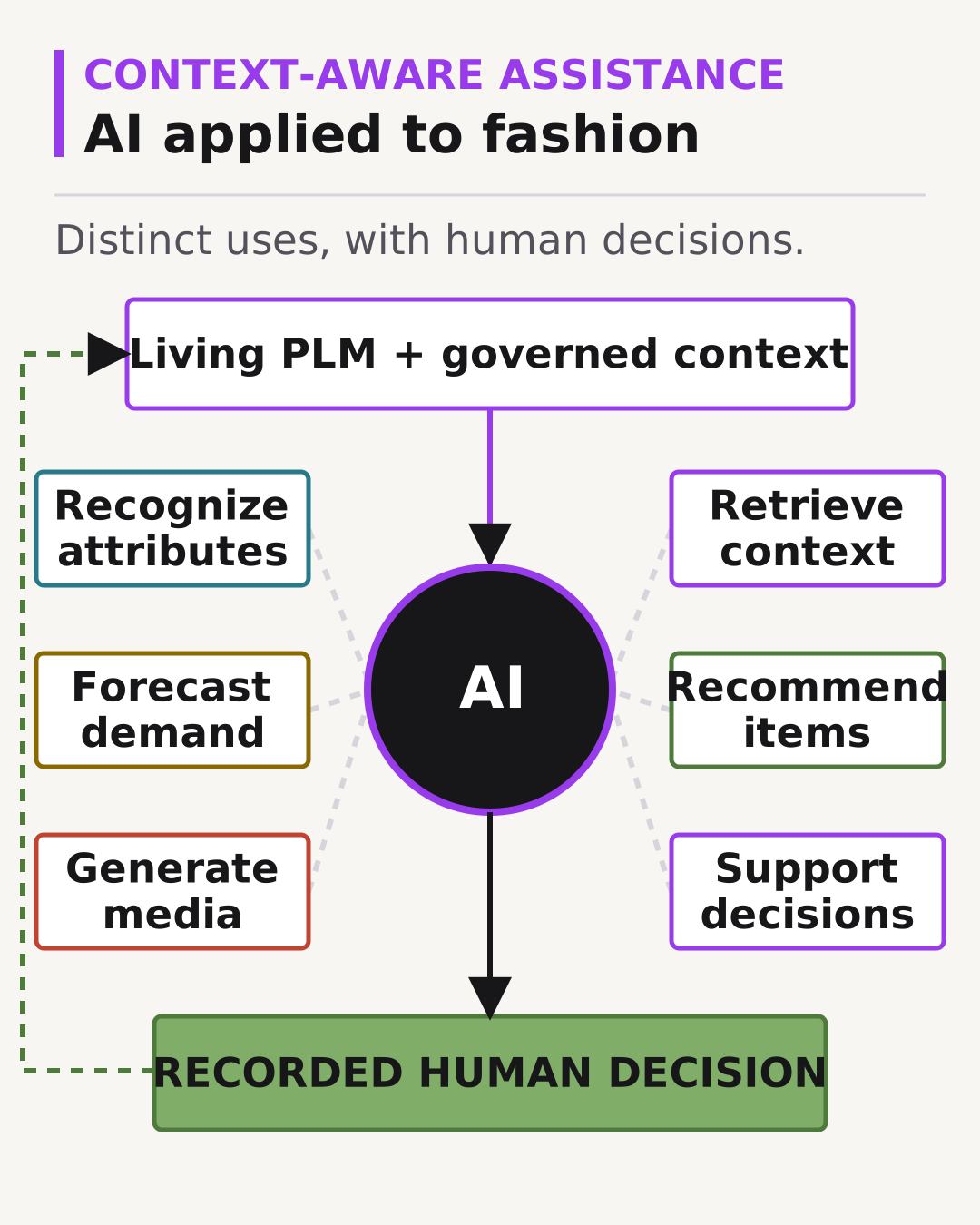
AI in fashion: applications and limits
Applications of AI in fashion use computational models to recognize attributes, retrieve knowledge, generate visualizations, and support decisions across creation, development, and commercialization. Their limits depend on the data, use context, evaluation, human oversight, and integration with the product workflow.
Sources
Want to apply this to your operation?