Garment technologist
A garment technologist connects product requirements, materials, construction, measurements, fit and quality so that a garment can be checked and released against explicit criteria. The concrete scope depends on occupational standards, training and the organization where the role is practiced.
On this page
What is Garment technologist?
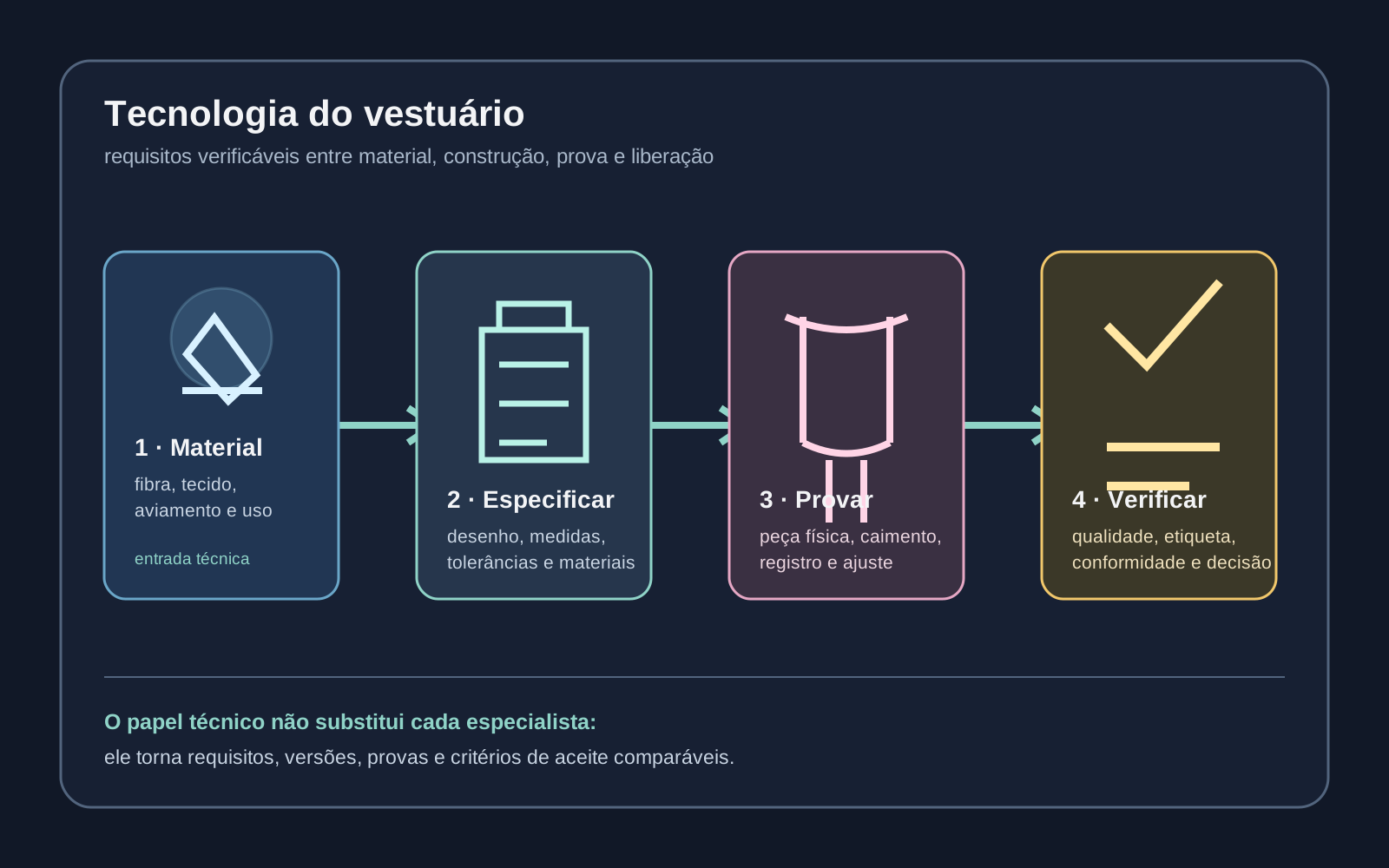
A garment technologist connects product requirements to checkable decisions about material, construction, measurement, fit and quality. The most precise definition is not a universal job title: the occupational standard consulted describes a product technologist through records and specifications, while training and organizational design determine actual authority. The role works across product engineering, patternmaking, suppliers, samples and production without automatically replacing the responsibility of each specialist.
Which documents and decisions belong to the work?
The starting point is a tech pack or an equivalent specification set. The occupational source includes working drawings, measurements, materials, labelling, quality standards and tolerances; it also treats tracking, review notes and product history as technical records. Documentation is therefore a work output, not decorative paperwork. The controlled object needs an identity, a version and a link to the sample or decision it describes.
In production quality, the vocabulary must be observable: seam type, stitch type, tolerance and finish are more checkable requirements than adjectives such as “well made.” A technologist can organize the passage from drawing to construction and acceptance, but final approval depends on the company’s criteria and responsibility matrix.
How are measurements and fit evaluated?
Body measurements and garment measurements serve different purposes; the product specification still needs to state how the garment will be measured and what variation is acceptable. This separation prevents confusion between body, pattern, size chart and finished dimensions.
The Fashion Institute of Technology technical curriculum combines technical sketching, documentation, garment specification, fitting, technical communication and CAD in development for production. That defines a work base combining representation, fit and communication; in a real workflow, the fit result should return to the product-development cycle as an identified revision rather than an untraceable comment.
Where do compliance and professional limits enter?
In Brazil, a textile product intended for sale must carry identification, origin, fibre composition, care information and size or dimension where applicable, in permanent, visible information and in Portuguese, according to Inmetro guidance. The same source says that a regulated product sold with incorrect mandatory information is irregular. Composition and care data therefore belong early in the specification, not only in final artwork.
These requirements do not make a technologist a universal legal authority. The role may prepare, check or route information; formal responsibility depends on the organization, market and applicable rules. It is also wrong to collapse patternmaking, product engineering, quality, buying and technology into one job: the roles collaborate, but their approval powers are not interchangeable.
How does the role connect to other fashion topics?
A garment technologist is best understood as a technical integration role. It links specifications, data quality, product lifecycle management, fit, construction and compliance. Its contribution becomes visible when a decision can be located, measured, revised and compared with the corresponding sample or requirement. The boundary remains organizational: title, training and practice must be read together.
Verified facts
- The English occupational standard for a product technologist describes tech packs with specifications, working drawings, measurements, labelling, quality standards, tolerances and materials.
Source: skillsengland.education.gov.uk ↗ - The occupational standard treats tech packs, specifications, tracking, review notes and product history as technical records.
Source: skillsengland.education.gov.uk ↗ - The occupational standard places manufacturing requirements within its production-quality section.
Source: skillsengland.education.gov.uk ↗ - The Fashion Institute of Technology technical curriculum combines technical sketching, documentation, garment specification, fitting, technical communication and CAD in development for production.
Source: catalog.fitnyc.edu ↗ - The Fashion Institute of Technology curriculum connects fitting and technical communication with product development for production.
Source: catalog.fitnyc.edu ↗ - In Brazil, Inmetro requires textile products intended for sale to carry identification, origin, fibre composition, care and size or dimension where applicable, in permanent, visible information and in Portuguese.
Source: gov.br ↗ - Inmetro considers a textile product covered by the regulation irregular when it is sold with incorrect mandatory information.
Source: gov.br ↗
Related entries
Fashion product engineer
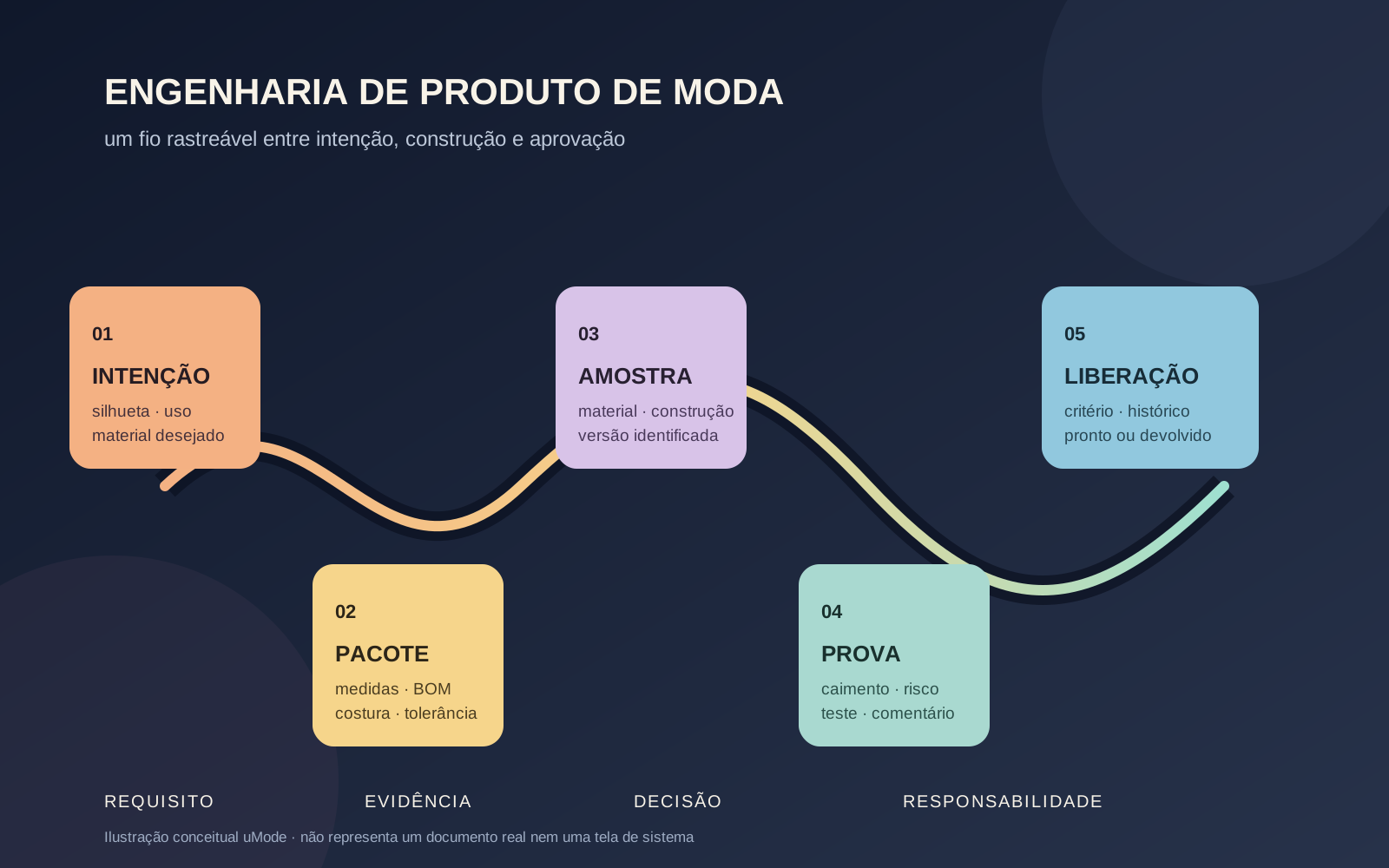
A fashion product engineer turns collection intent into specifications that can be checked through sampling and pre-production. The work connects construction, measurements, materials, costing, testing, fitting, quality control, and records that let a team approve or return a style without confusing the role with pattern cutting, buying, or inspection.
Garment patternmaker
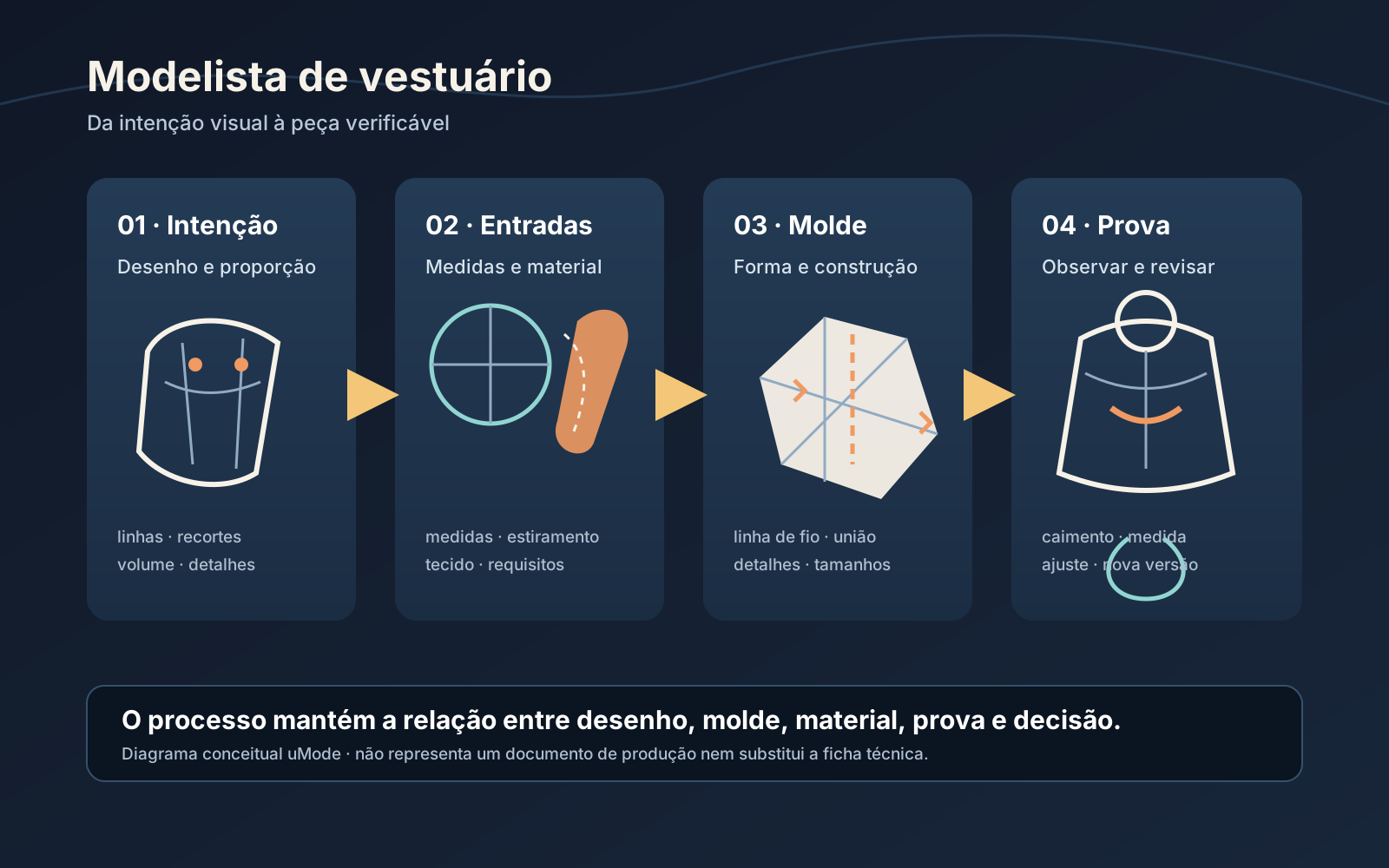
A garment patternmaker turns a garment drawing into patterns, fitting changes, and construction information that can be cut, assembled, and checked. The role combines shape interpretation, measurement logic, material awareness, and pattern revision without replacing design or production authority.

Fashion product technical specification
A technical specification is the controlled information set that translates an approved fashion product into verifiable sampling and manufacturing requirements. It brings together drawings, materials, measurements, construction, tolerances, identification, labelling, comments and revision history; its content varies by category, company, market and stage.
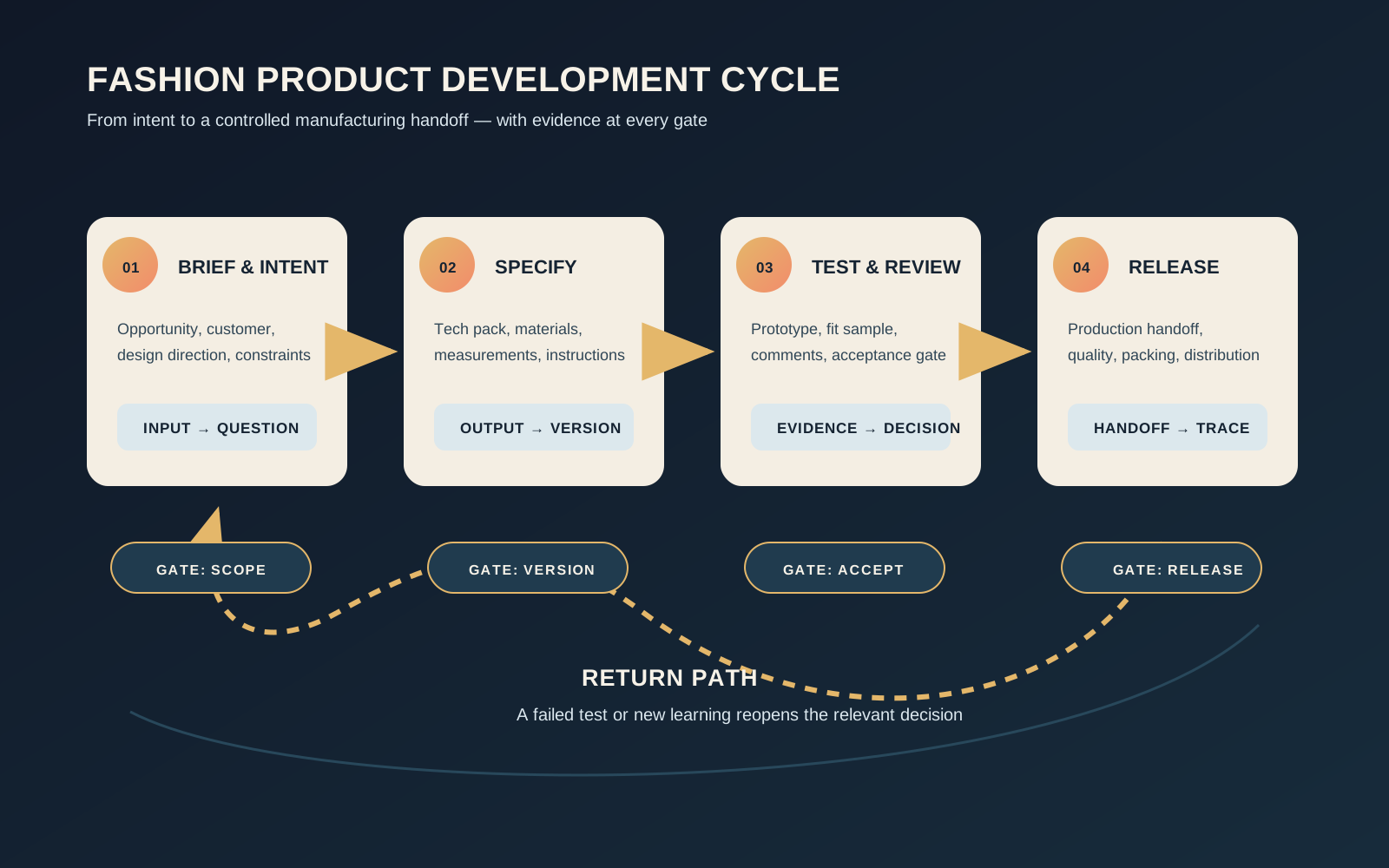
Fashion product development cycle
The fashion product development cycle turns an intent into a specified, tested, approved product ready for manufacturing. It connects design, materials, samples, instructions, quality, data and return decisions; it is not a linear recipe that every company follows in the same way.

How to improve product data quality
How to improve product data quality. Improving product data quality in fashion means separating style, variant, technical attribute and regulatory record; defining every field; validating source and format; and controlling the handoff from tech pack to catalog, label and sales channel. The process becomes dependable when each exception has an owner, evidence and a version.

Fashion PLM: data, product, and lifecycle
Fashion PLM is the structured management of the data, decisions, and workflows that follow a product and a collection from concept through post-launch. It connects tech packs, materials, costs, samples, approvals, suppliers, and versions so that every function works from a traceable product definition.
Sources
- https://skillsengland.education.gov.uk/media/2305/st0540_fashion-textiles-product-technologist-epa_for_publication_2-october-2018.pdf
- https://catalog.fitnyc.edu/pastcatalogs/2017-18/undergraduate/courses/pm/pm.pdf
- https://www.gov.br/inmetro/pt-br/acesso-a-informacao/perguntas-frequentes/avaliacao-da-conformidade/produtos-texteis/o-que-a-medida-regulatoria-para-produtos-texteis-estabelece
- https://www.gov.br/inmetro/pt-br/acesso-a-informacao/perguntas-frequentes/avaliacao-da-conformidade/produtos-texteis/se-um-produto-textil-possui-informacoes-incorretas-e-esta-sendo-comercializado-em-territorio-nacional-ele-esta-irregular
Want to apply this to your operation?