GMROI in fashion retail
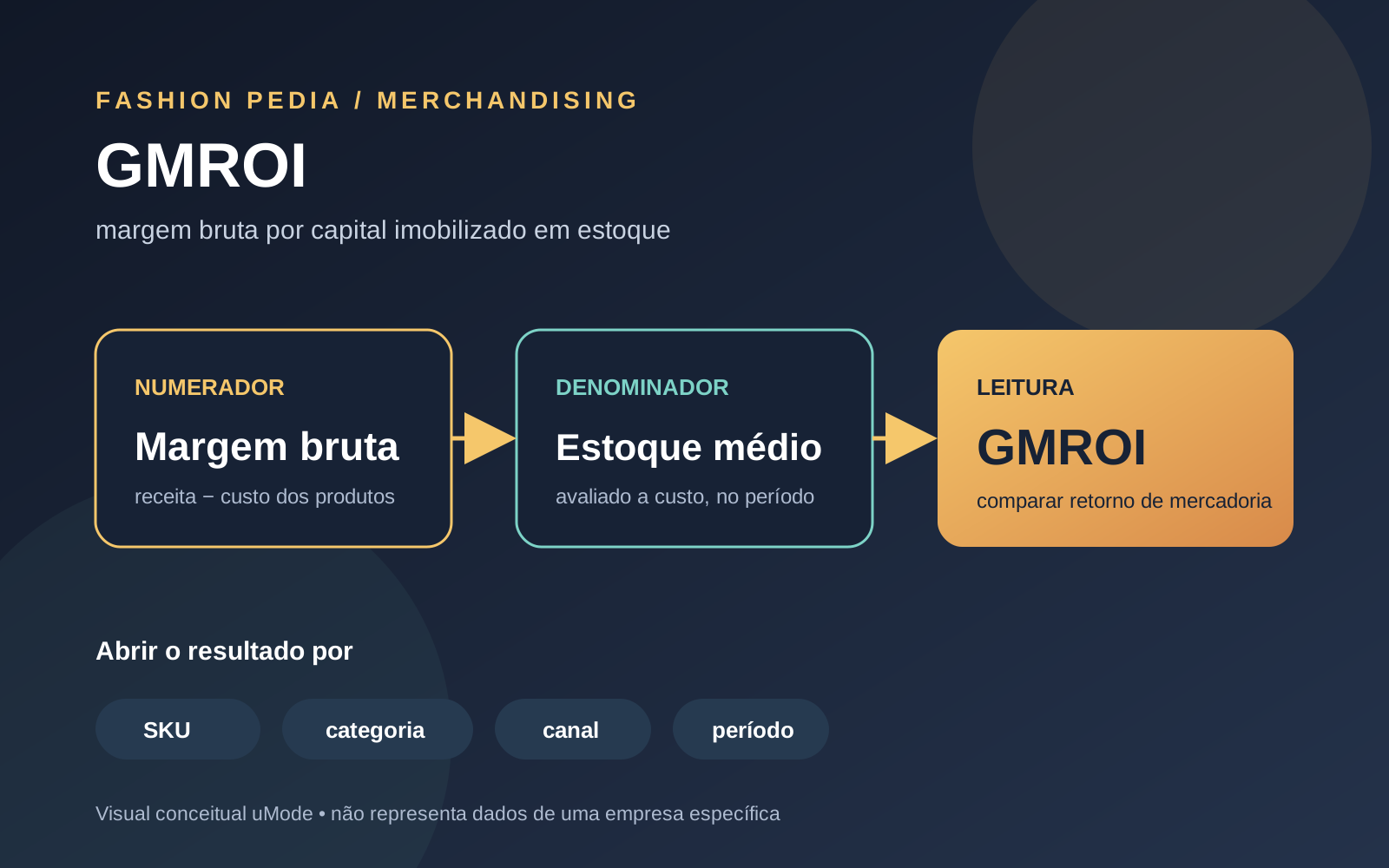
GMROI in fashion retail. GMROI is a merchandising metric that relates gross profit to average inventory cost. In fashion retail, it helps compare the return of categories, SKUs, and channels when margin, cost, period, and analytical unit are kept consistent.
On this page
What is GMROI in fashion retail?
GMROI, short for gross margin return on investment, measures how much gross margin comes back for each monetary unit invested in inventory. The formula is straightforward: gross profit divided by average inventory cost. In a fashion operation, the metric becomes useful when the analytical unit is explicit—collection, category, SKU, color, size, store, channel, or period. It then becomes a lens for deciding where merchandise capital is producing a return rather than an isolated dashboard number.
The metric does not replace net profit, cash flow, or demand analysis. It answers a narrower question: how much gross margin was produced by the inventory valued at average cost? A result of 2 means two units of gross margin for each unit invested, not two units of final profit. The currency, period, and cost convention used in the calculation must remain visible.
How should GMROI be calculated consistently?
Start by calculating gross profit: revenue minus cost of goods sold. Then calculate inventory at average cost. For a short reading, current cost and a previous-period cost may be used; for an annual reading, monthly beginning balances and December’s ending balance provide a broader view of fluctuations. The chosen method must stay the same when categories or channels are compared.
For fashion retail, record the sales window, cost policy, returns, markdowns, and inventory unit included. Comparing a basics category with a seasonal collection can mix different rhythms and buying decisions. GMROI can be read alongside inventory turnover and sell-through, but the indicators are not equivalent: GMROI looks at margin over inventory, while the others help describe inventory speed and conversion.
How can GMROI guide merchandising decisions?
Use GMROI to compare products, categories, departments, stores, or channels within a coherent scope. An aggregate result may hide that one category creates margin while another ties up capital; opening the result by SKU, color, and size makes the diagnosis actionable. When the indicator falls, investigate price, cost, buy depth, calendar, availability, and markdowns before choosing replenishment, transfers, or smaller orders.
Inventory turnover complements this reading. Low turnover may accompany excess or obsolescence; high turnover can hide insufficient inventory and stockouts. In fashion, speed matters because product turnover and obsolescence affect the usefulness of stock. The reference must therefore be comparable: comparing a fashion store with an operation from another industry distorts interpretation. Connect the decision to retail gross margin, open to buy, and assortment planning, without treating any of them as a synonym for GMROI.
What are the limits of the metric?
There is no universally good GMROI for every retailer. The reference depends on business type, mix, margin, selling speed, and how inventory is bought and held. First compare equivalent periods within the same operation, then use peers with a similar model. Document the formula, average cost, window, and exceptions so that a change can be explained.
The indicator also cannot identify a cause by itself. Low GMROI may come from compressed margin, excess inventory, or sales below plan; high GMROI can coexist with stockouts if inventory is too small. A fashion decision should combine the number with availability, commercial calendar, and assortment composition. This discipline connects the metric to inventory management and collection planning without turning a calculation into automatic approval.
Verified facts
- GMROI means gross margin return on investment and measures what is returned for each monetary unit invested in inventory.
Source: retaildogma.com ↗ - The GMROI formula divides gross profit by average inventory cost.
Source: shopify.com ↗ - Gross profit is calculated by subtracting cost of goods sold from revenue.
Source: shopify.com ↗ - Average inventory cost can be calculated by adding current cost to previous-period costs and dividing by the number of periods.
Source: shopify.com ↗ - The annual GMROI method can use each month’s beginning costs and December’s ending inventory, divided by 13.
Source: shopify.com ↗ - A GMROI of 2 represents two dollars of gross margin for every dollar invested in inventory.
Source: shopify.com ↗ - A storewide GMROI can hide differences between products or categories.
Source: shopify.com ↗ - GMROI can be used to compare SKUs, departments, or categories and support buying decisions.
Source: retaildogma.com ↗ - A GMROI above 1 indicates more than one monetary unit of gross margin for each monetary unit of inventory at average cost.
Source: shopify.com ↗ - The GMROI reference depends on the type of retail business, product mix, and inventory selling speed.
Source: shopify.com ↗ - Inventory turnover is calculated by dividing cost of goods sold by average inventory.
Source: en.wikipedia.org ↗ - Low turnover may point to overstocking, obsolescence, or deficiencies in the product line or marketing effort.
Source: en.wikipedia.org ↗ - High turnover may indicate inadequate inventory levels and result in stock shortages.
Source: en.wikipedia.org ↗ - Inventory rotation is a major concern in fashion industries.
Source: en.wikipedia.org ↗
Related entries
Sell-through in fashion retail
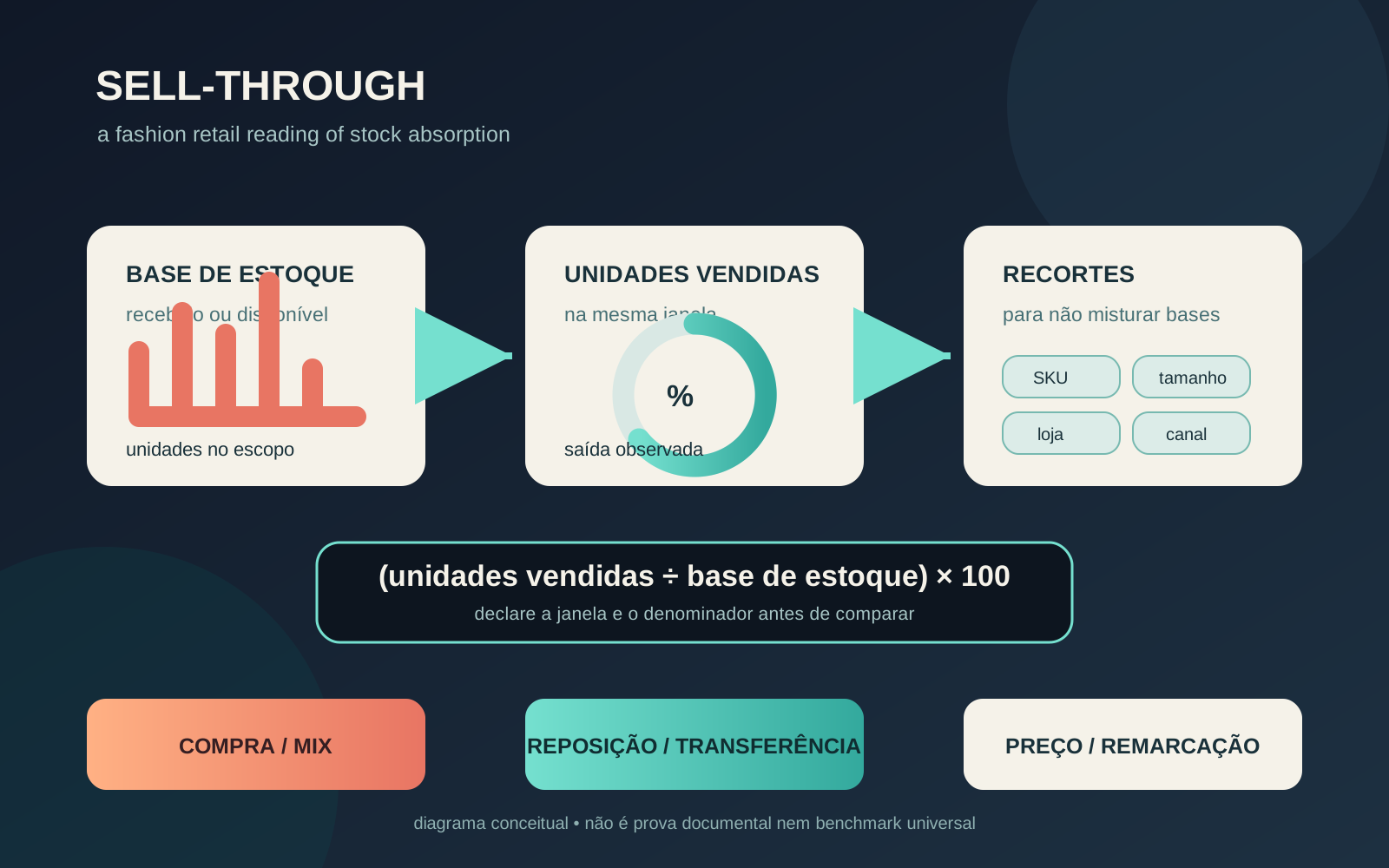
Sell-through in fashion retail. Sell-through is the percentage of units sold from inventory received or made available within a defined window. In fashion retail, the metric becomes useful when it is cut by style, color, size, store, channel, and product life cycle, with the denominator stated before it informs buying, replenishment, or markdown decisions.
Inventory turnover
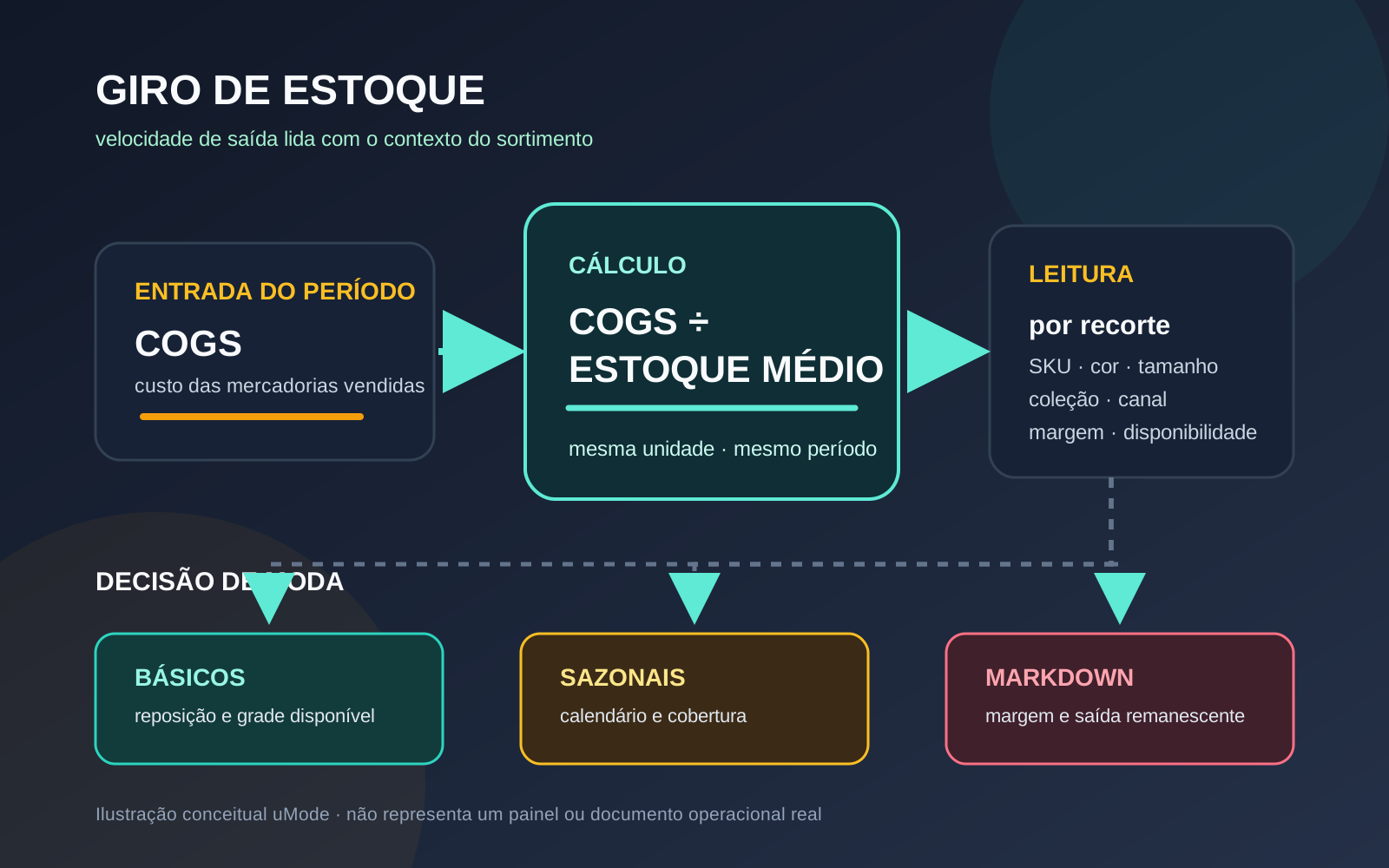
Inventory turnover is the ratio of cost of goods sold to average inventory over a defined period. In fashion retail, it must be read by product, collection, and channel alongside availability, margin, coverage, and markdowns, because speed of movement does not explain assortment quality on its own.
Open to buy in fashion retail
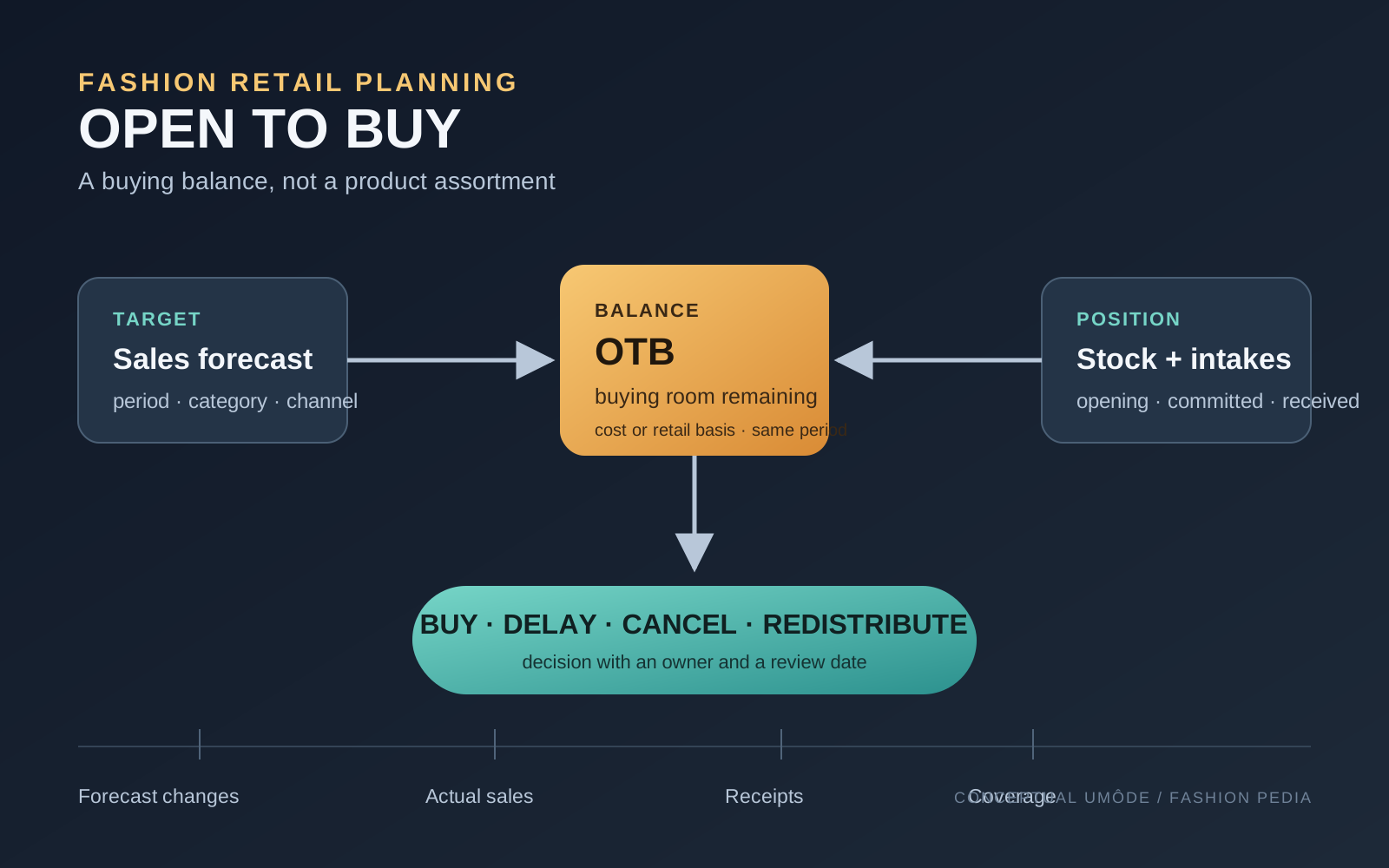
Open to buy in fashion retail. Open to buy (OTB) is a planning process that calculates how much inventory a retailer needs to buy to reach a sales target, using forecast sales, opening stock and desired closing stock. In fashion retail, the balance should be read by period, category, channel and stock cover; it guides buying without replacing assortment decisions.
Assortment planning in fashion
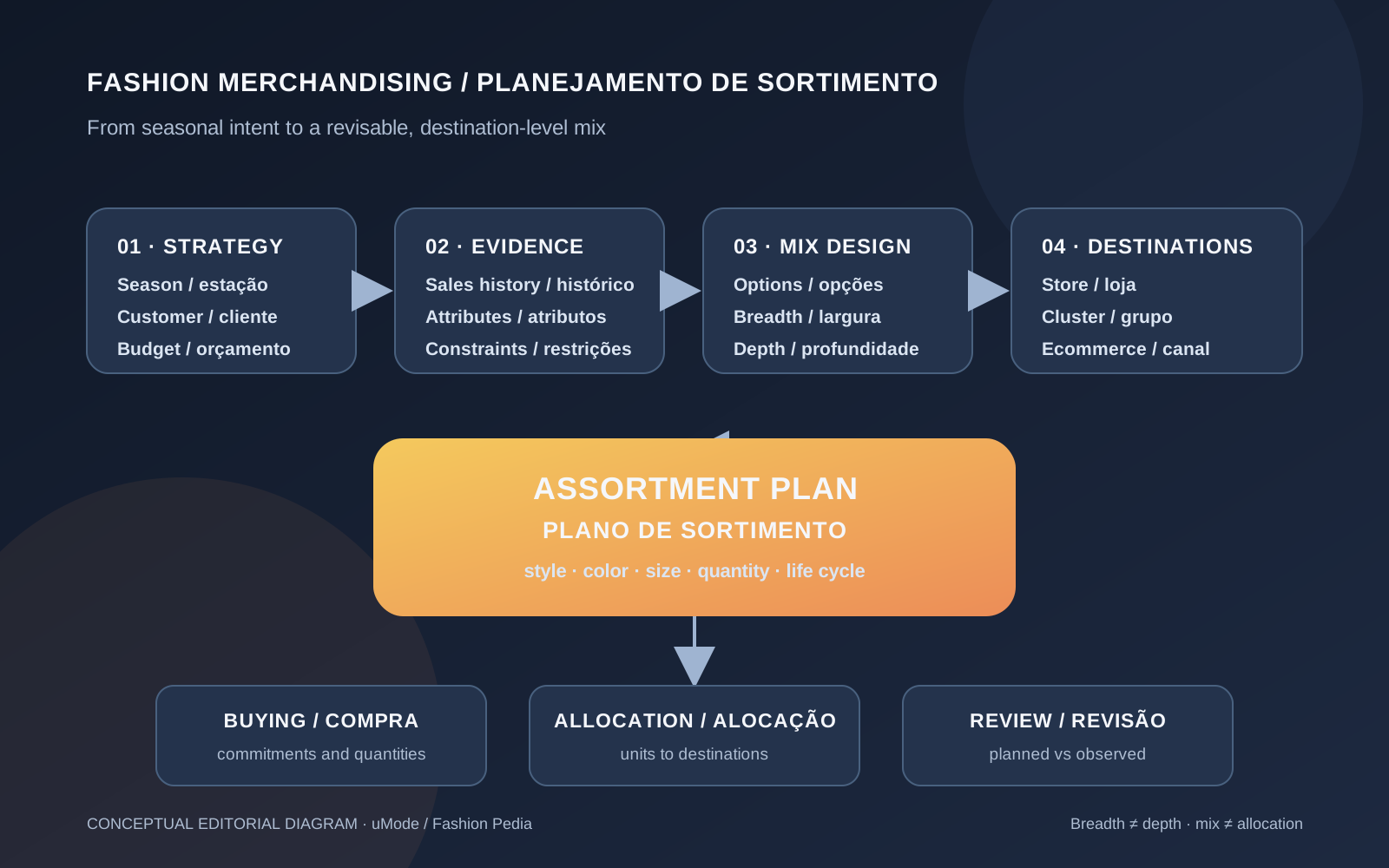
Assortment planning in fashion. Assortment planning is the process of deciding which styles, categories, colors, sizes, and quantities belong in each season, store, channel, or store group. In fashion, it turns a merchandise plan into buyable options by relating breadth, depth, and local context without confusing the mix with buying or allocation.
Sources
Want to apply this to your operation?