Fashion product development cycle
The fashion product development cycle turns an intent into a specified, tested, approved product ready for manufacturing. It connects design, materials, samples, instructions, quality, data and return decisions; it is not a linear recipe that every company follows in the same way.
On this page
What is Fashion product development cycle?
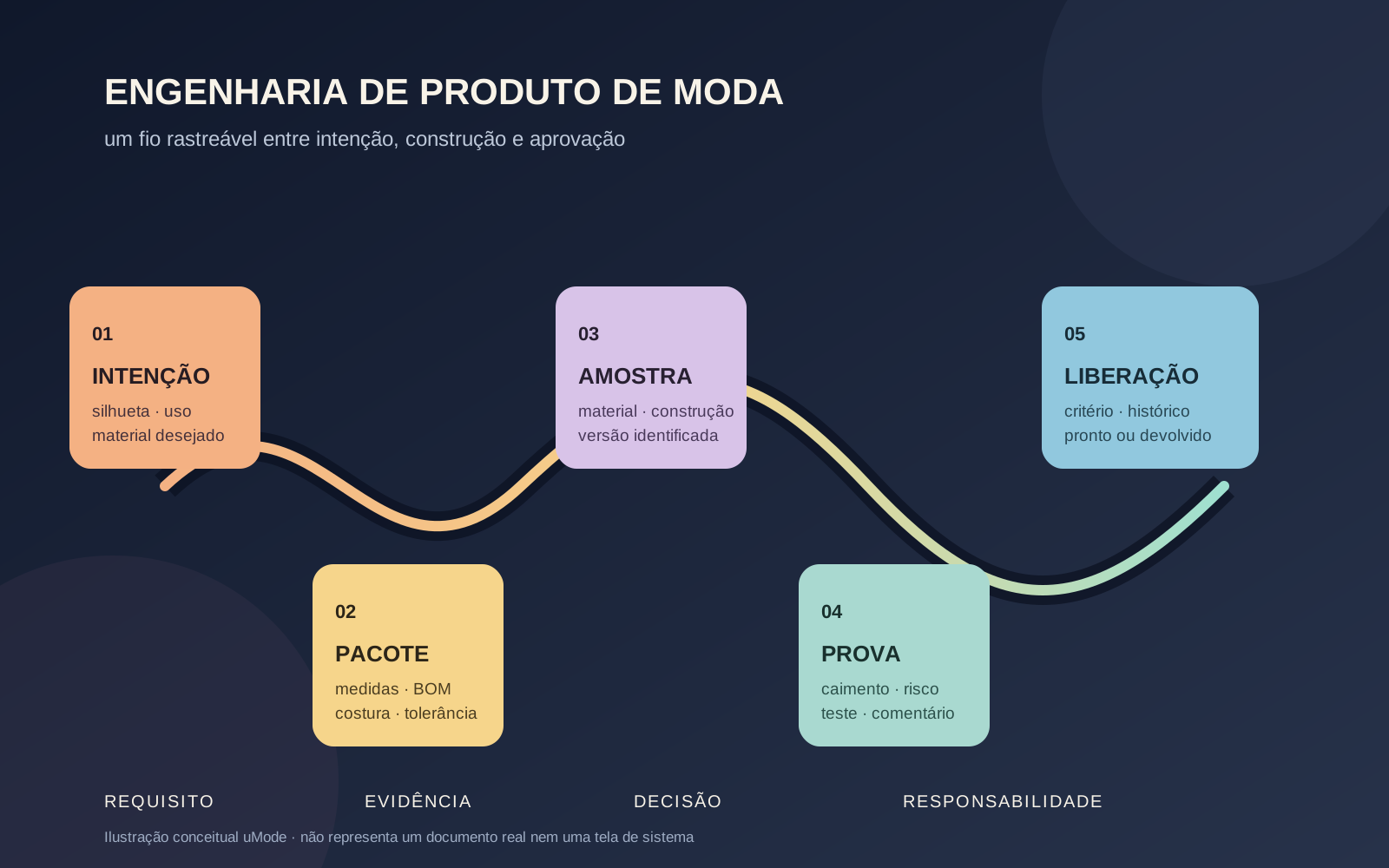
The fashion product development cycle is the path that turns a design intent into a specified, tested, approved product ready for manufacturing. Instead of treating development as a queue of tasks, it is more useful to follow decisions, artefacts, owners and returns across product engineering, the tech pack, patternmaking, samples and production.
Skills England describes technical support throughout development, with approved samples, specifications, production instructions and production patterns in place before manufacturing. This sets a practical boundary: an initial drawing is not yet a buildable instruction, and approving an image does not replace checking the physical product.
Which stages connect a brief to manufacturing?
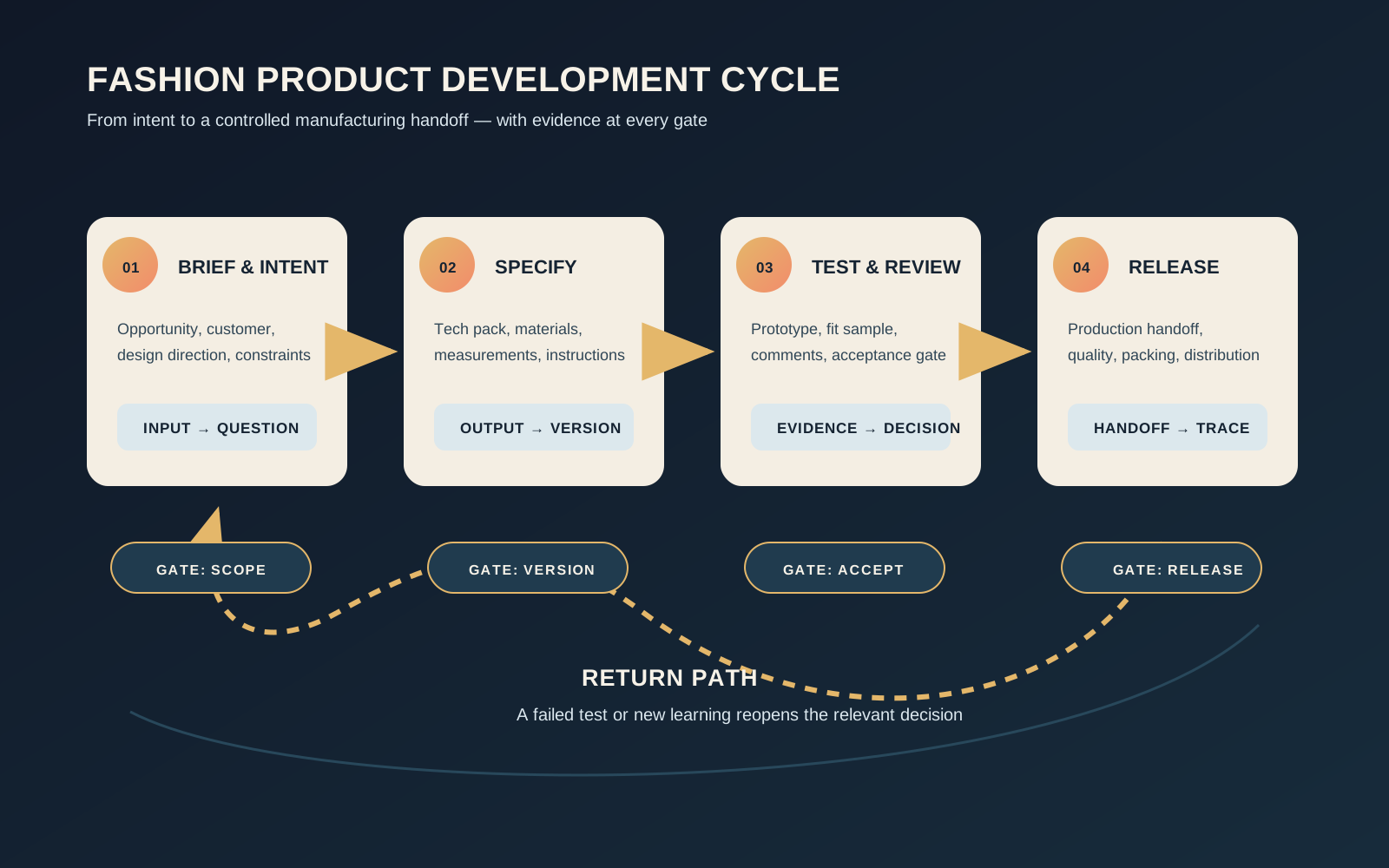
The first movement turns an opportunity or brief into a product proposal. The design is evaluated, materials and trims are considered through function, performance and aesthetics, and the team records what still needs to be learned. Evaluating new designs and supporting sewn-product samples are listed among the product-technologist duties in the Skills England standard.
The second movement makes the proposal verifiable. A tech pack and production specification organize specifications and instructions; a sample makes construction, proportion, material and finish available for review. Sample review, evaluation and approval are distinct milestones, not synonyms for making a sample. A useful gate records the version examined, acceptance criterion, open issue and decision to advance or return.
The third movement tests the solution at controlled scale before release. The Design Council describes delivery as testing solutions at small scale, rejecting what does not work and improving what does. In fashion, this gives an operational role to the fit sample and pilot garment: each should answer a development question rather than merely fill a calendar slot.
The fourth movement prepares the handoff to manufacturing. The production chain described by Skills England runs through pattern production, cutting, manufacturing, quality checking, packing and distribution. Specification version control prevents an obsolete instruction from travelling with the handoff; fashion PLM can organize data and processes, but it does not decide whether fit, construction or quality are acceptable.
Why does the cycle loop, and how does data help?
The cycle is not linear. The Design Council explains that new learning about the problem can send a team back to the beginning, while products can be improved iteratively. A rejected sample, unsuitable material or ambiguous instruction is therefore a reason to reopen the relevant decision and record a new version, not a deviation to conceal.
NIST describes PLM as managing product and process data throughout the lifecycle and delivering information to the appropriate systems at the appropriate time. It also connects contextualized manufacturing data with understanding system behaviour and meeting traceability requirements. In practice, the record should link drawing, specification, sample, decision, instruction and quality result without assuming that centralized data guarantees a correct decision.
The boundary with collection planning matters: the development cycle follows product transformation and release, while planning sets priorities and constraints for the range. The boundary with collection management also depends on the organization. Names may change, but a robust handoff makes clear which question was answered, what evidence was reviewed and which version is authorized to proceed.
What are the concept's limits?
There is no universal sequence of samples, gates or roles that fits every category, channel or supplier without adaptation. The sources support principles for development, testing, data and production handoff; each operation must define its own terminology and authority. The cycle should not be used to promise a schedule, cost or quality level without its own scope and evidence.
The concept is most useful when every phase has an observable output and a return is treated as part of the work rather than an administrative failure. That keeps the topic specific to fashion: it connects style intent to material, construction, sample, instruction, quality and release while preserving the differences between a tech pack, production specification, PLM and manufacturing.
Verified facts
- The Skills England occupational standard describes technical support throughout development, with approved samples, specifications, production instructions and production patterns in place before manufacturing starts.
Source: skillsengland.education.gov.uk ↗ - Typical product-technologist duties include evaluating new designs and supporting the production of sewn-product samples.
Source: skillsengland.education.gov.uk ↗ - The same standard includes sample review, evaluation and approval, as well as producing product specifications and production instructions.
Source: skillsengland.education.gov.uk ↗ - Fabric and trim analysis is connected to a design brief through function, performance and aesthetics.
Source: skillsengland.education.gov.uk ↗ - The main production process described by Skills England includes pattern production, cutting, manufacturing, quality checking, packing and distribution.
Source: skillsengland.education.gov.uk ↗ - PLM systems manage product and process data throughout the product lifecycle, delivering information to the right systems at the right time.
Source: nist.gov ↗ - Contextualizing manufacturing data relative to other lifecycle phases is necessary for understanding system behaviour and satisfying traceability requirements.
Source: nist.gov ↗ - In the Design Council's Double Diamond, delivery involves testing solutions at small scale, rejecting those that do not work and improving those that do.
Source: designcouncil.org.uk ↗ - The Design Council describes the process as non-linear: new learning about the problem can send a team back to the beginning while products and services are improved iteratively.
Source: designcouncil.org.uk ↗
Related entries
Fashion Product Development and Engineering
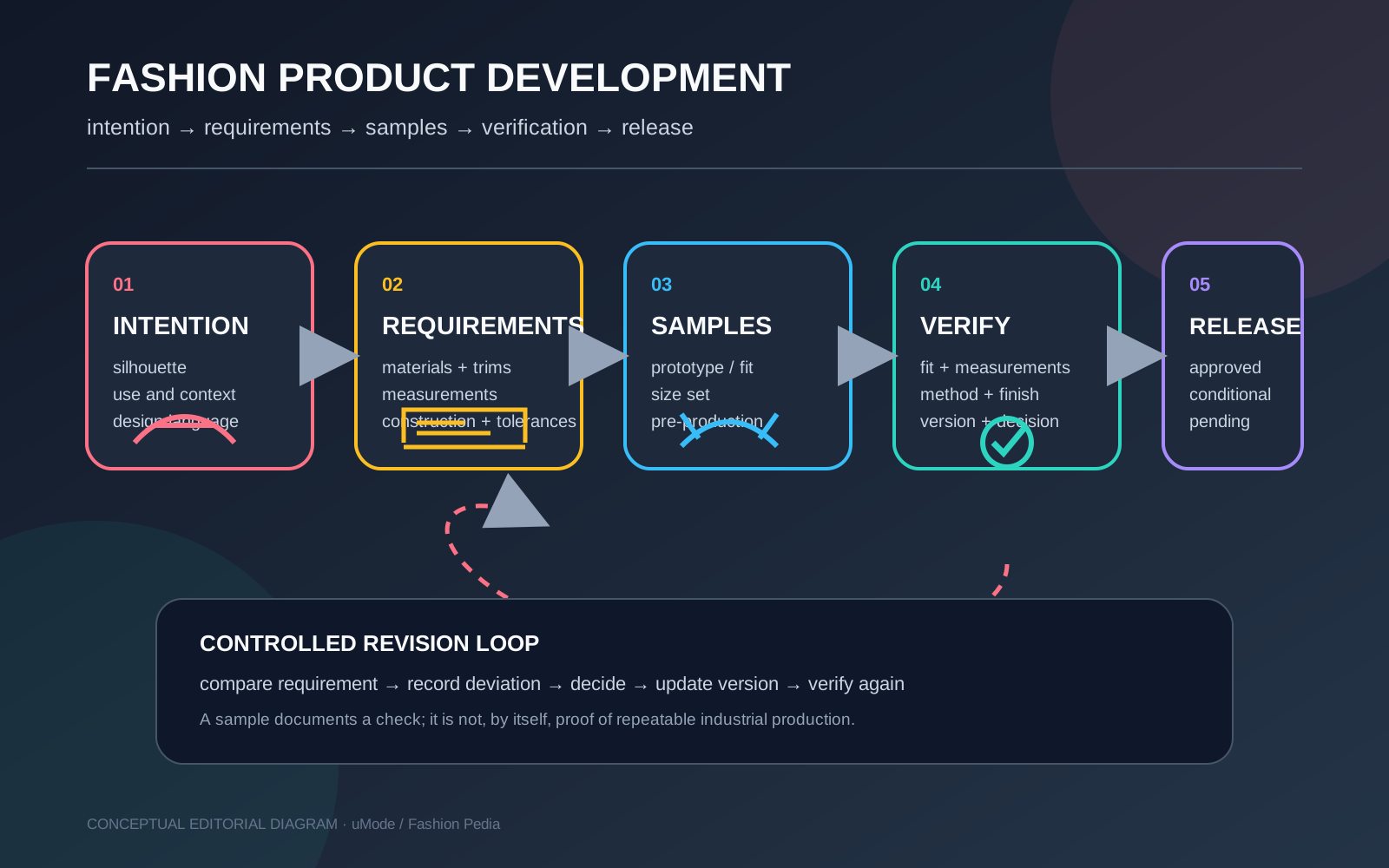
Fashion product development and engineering turns a design intention into verifiable requirements for building, fitting, revising, and releasing a garment or collection. The process connects concept, technical specification, patternmaking, materials, construction, measurements, samples, quality, cost, and lifecycle data without treating aesthetic approval as proof of industrial repeatability.

Fashion product technical specification
A technical specification is the controlled information set that translates an approved fashion product into verifiable sampling and manufacturing requirements. It brings together drawings, materials, measurements, construction, tolerances, identification, labelling, comments and revision history; its content varies by category, company, market and stage.

Fashion PLM: data, product, and lifecycle
Fashion PLM is the structured management of the data, decisions, and workflows that follow a product and a collection from concept through post-launch. It connects tech packs, materials, costs, samples, approvals, suppliers, and versions so that every function works from a traceable product definition.
How to control tech pack versions
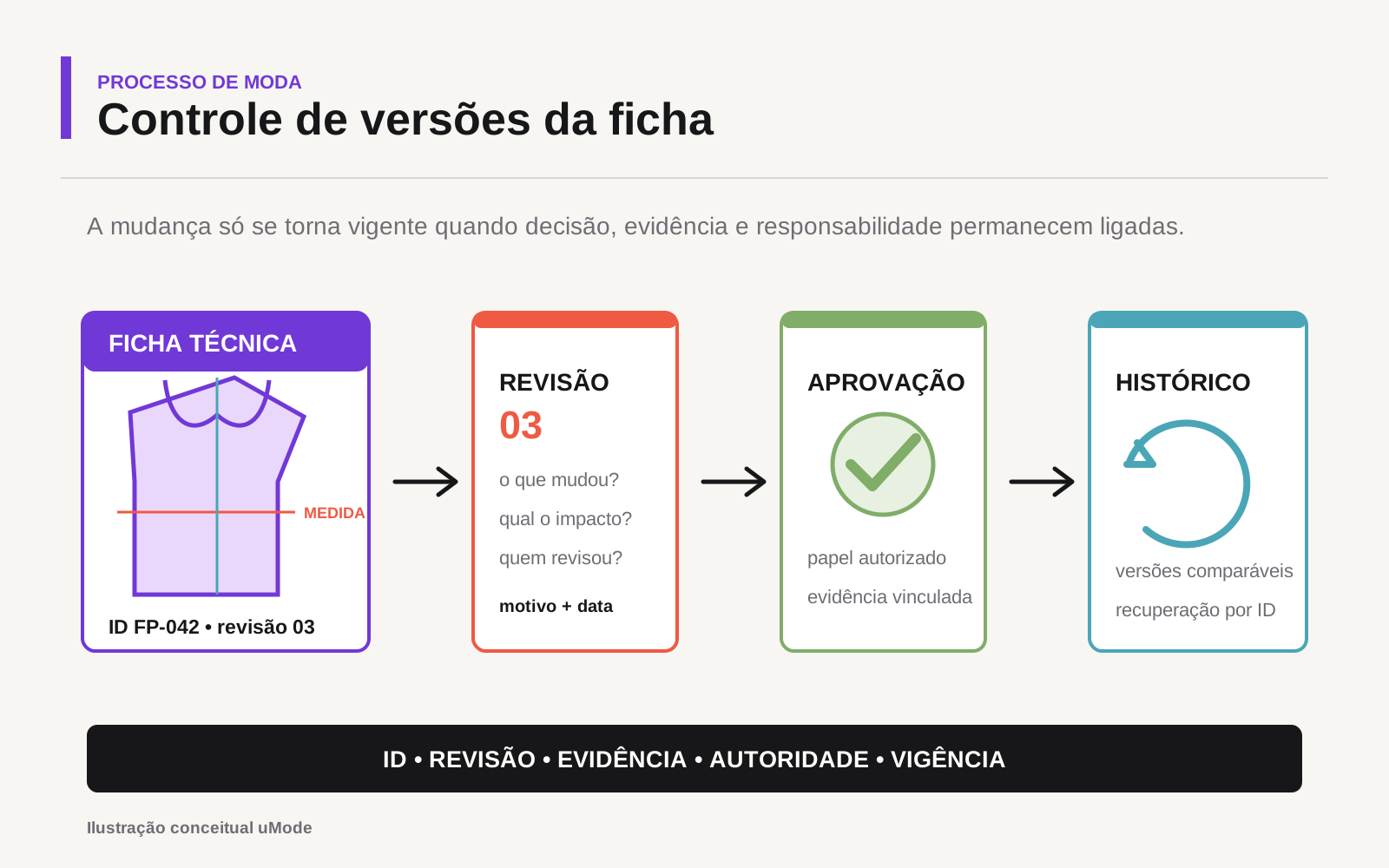
How to control tech pack versions. Controlling tech pack versions means recording every product change with an identifier, owner, reason, status, approval and effective date. The method applies configuration-control and product-lifecycle principles to the concrete decisions of an apparel supply chain.
Collection planning
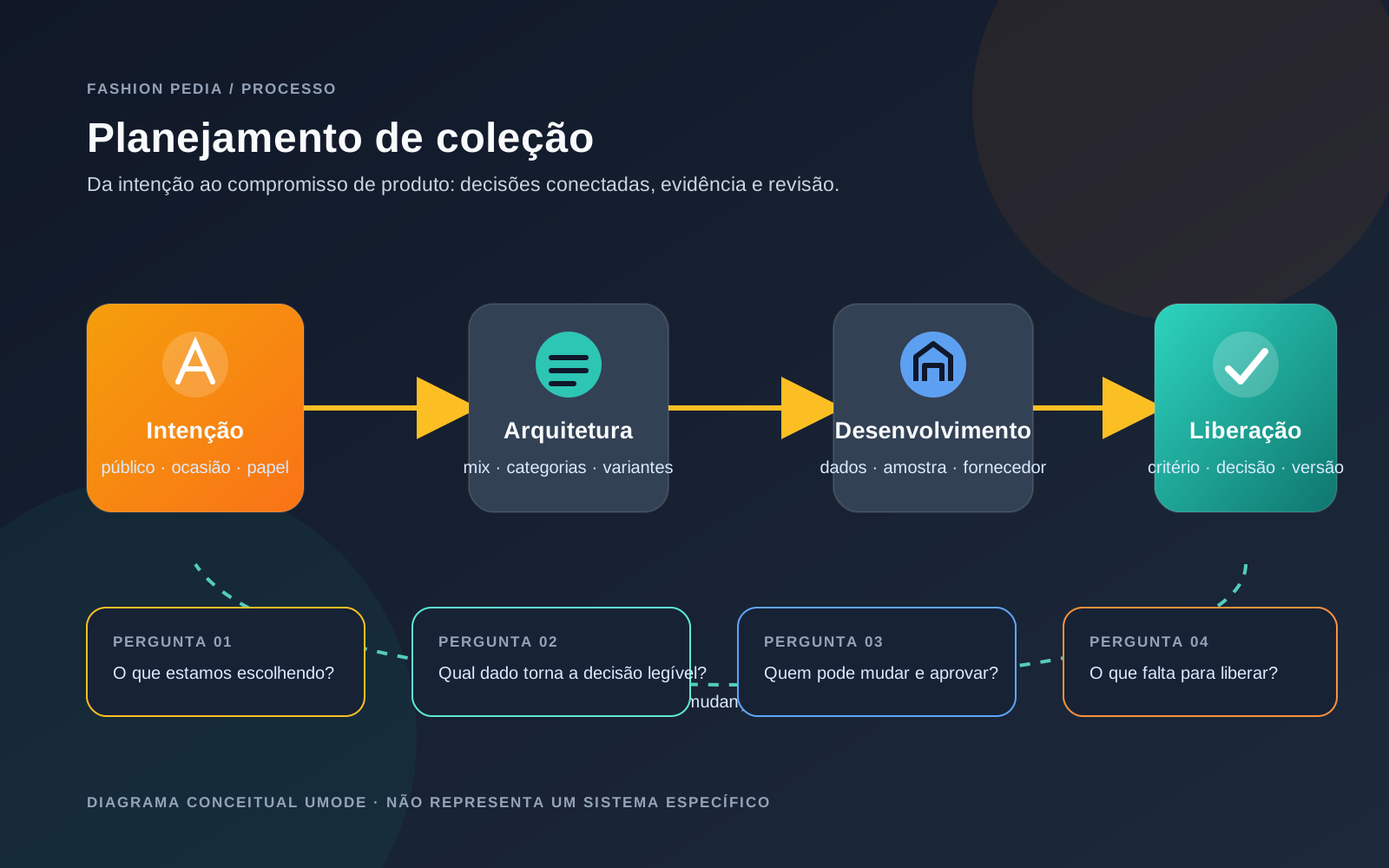
Collection planning is the process of turning a collection intention into controlled decisions about products, data, stages, owners, changes and release criteria. It connects product direction, development, sourcing and information without reducing the plan to a calendar or a software tool.
Sources
Want to apply this to your operation?