Fashion Supplier Qualification
Fashion supplier qualification is the process of deciding, for a defined scope, whether a company can be used with explicit requirements, evidence, responsibilities and review points. In fashion, the decision should connect development, quality, purchasing, production and traceability without confusing a vendor record, a certificate or a single order with permanent approval.
On this page
What is Fashion Supplier Qualification?
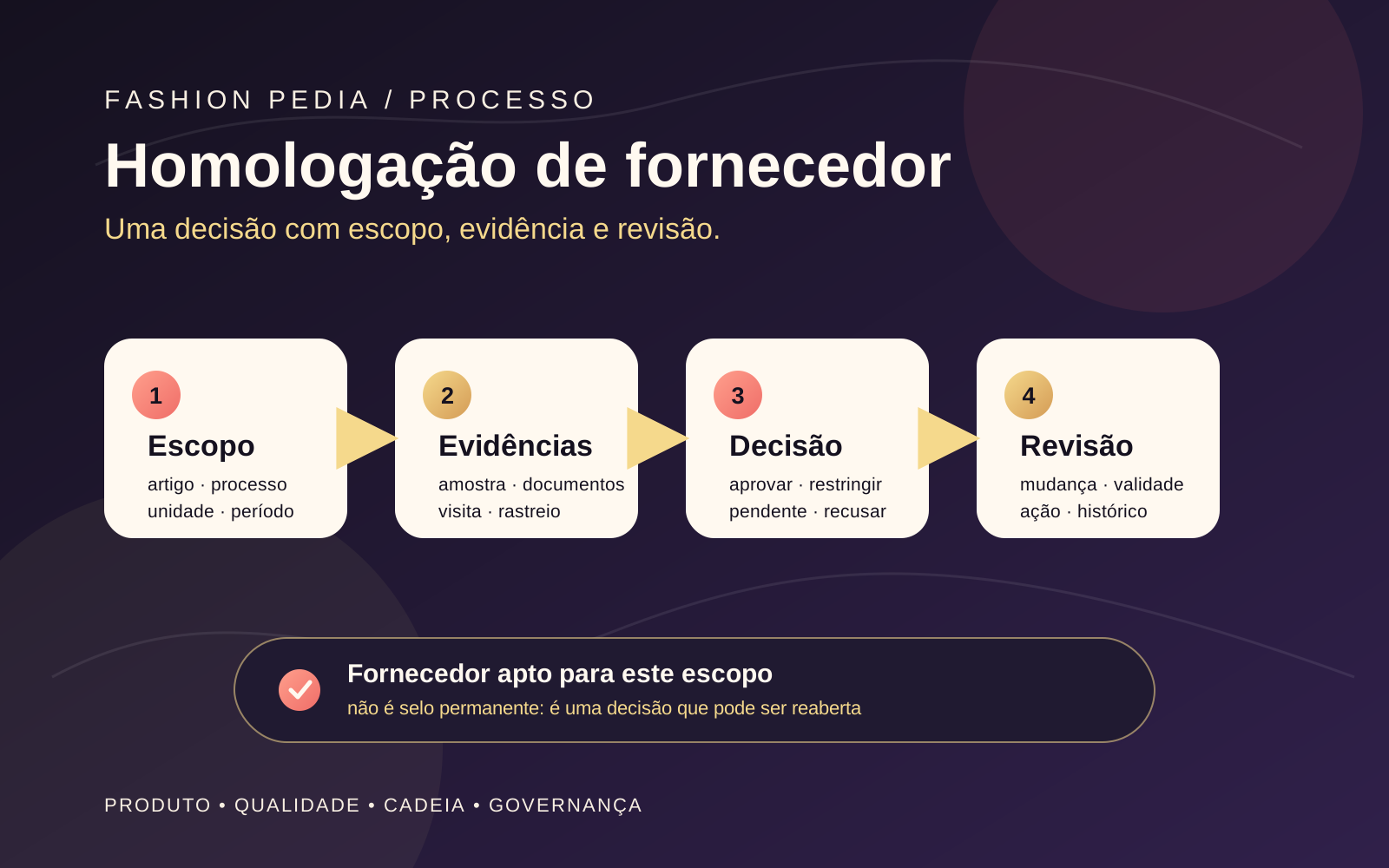
Fashion supplier qualification is a documented decision about whether a company is fit for a defined scope: a category, process, material, product, region or supply-chain stage. The process should begin by stating what will be sourced, which requirements are critical, what evidence is acceptable and who can approve it. That boundary connects fashion sourcing with supplier quality without treating a vendor record, quotation or certificate as a synonym for qualification.
The scope needs enough detail to distinguish a cutting unit, dyehouse, trims supplier and commercial agent. A useful record identifies the legal entity, production units, performed processes, subcontracting, declared capacity, documents, validity and review owner. GOTS shows why the whole chain matters: its system covers stages from fibre to trading and requires every company involved to be certified when a product is labelled GOTS-certified.
How should the assessment and decision be structured?
Assessment is clearer when exclusion requirements, verifiable evidence and monitoring criteria are separated. A qualification file can organize applicable legal compliance, sample quality, technical capability, agreed lead time, communication, traceability, working conditions and documentation. The result should be marked approved, approved with restrictions, pending or not approved, always tied to the scope and decision date.
Certificates can be part of the dossier, but they do not close the assessment. OEKO-TEX STANDARD 100 describes a path of application, sample, measurement criteria, testing, on-site visit, report and a one-year certificate. That is a useful model for arranging evidence, not permission to extend a certificate to a different article or unit. In a fashion tech pack, the link between article, composition, supplier and version should be explicit.
Qualification also has to examine risks that do not appear in a physical sample. The ILO warns that business links with contractors and suppliers can associate a company with forced labour, and notes that wage payment alone does not prove that work was voluntary. A questionnaire should therefore open a path to evidence, interviews, visits, corrective action and escalation; it should not operate as an automatic seal based only on declared answers.
How should a supplier be monitored after approval?
Approval is a control point, not a substitute for follow-up. The record should state which events trigger review: a change of unit, process or subcontractor; a raw-material change; an expired certificate; a nonconformity; a complaint; recurring delay; a regulatory change; or use in a new scope. GOTS requires annual on-site audits and transaction verification, illustrating why review may need both documentary evidence and operational observation.
For products sold into markets with sustainability requirements, the team should preserve the link between a declared characteristic and its source. European Regulation 2024/1781 establishes an ecodesign framework and emphasizes reliable, clear data; it also lists durability, repairability, upgradability, reusability and recyclability among possible design dimensions. This turns into a practical qualification question: can the supplier provide product- and lot-specific evidence, or only a general promise?
A simple matrix can track requirement, evidence, owner, verification date, result, corrective action and next review. Fashion traceability links material, transformation and documentation; social auditing helps address labour risks; textile certification helps interpret a certificate’s scope. When a decision changes, the history should retain the reason, affected scope and corresponding approval instead of deleting the earlier version.
What are the main limits and common confusions?
Qualification does not guarantee future performance, purchase from the supplier or prove that the entire chain is compliant. An audit can observe one unit at one moment; a certificate can cover a defined article, process or period. The team should not copy one supplier’s result to another, extend a document to an unlisted factory or treat a chemical-safety certification as proof of social conditions.
It is also risky to put every supplier under one undifferentiated score. A laundry, printer and label supplier have different exposures and need different evidence. The process becomes more useful when diligence matches potential impact and exceptions have an owner, deadline and closure criterion. The central question remains: what decision is being made, for which scope, and with what evidence can it be reopened?
Verified facts
- GOTS combines environmental, human rights and social requirements with independent certification across the textile processing supply chain.
Source: global-standard.org ↗ - GOTS covers stages from fibre processing and spinning through wet processing, manufacturing and trading.
Source: global-standard.org ↗ - To label a product as GOTS-certified, all companies involved in its production must be certified by approved independent Certification Bodies.
Source: global-standard.org ↗ - GOTS requires annual on-site audits and transaction-based verification systems to help ensure product integrity.
Source: global-standard.org ↗ - GOTS due diligence criteria are based on internationally recognised norms and include traceability and transparent product-flow documentation.
Source: global-standard.org ↗ - OEKO-TEX STANDARD 100 is a label for textiles tested for harmful substances, from yarn to finished product.
Source: oeko-tex.com ↗ - OEKO-TEX says that every thread, button and accessory is tested against a list of over 1,000 harmful substances.
Source: oeko-tex.com ↗ - OEKO-TEX reviews its limit values for harmful substances at least once a year.
Source: oeko-tex.com ↗ - The STANDARD 100 certification path includes application, sample verification, criteria definition, testing, an on-site visit, a report and a certificate issued for one year.
Source: oeko-tex.com ↗ - The ILO warns that companies may become associated with forced labour through business links with contractors and suppliers.
Source: ilo.org ↗ - The ILO says managers should be aware of the forms and causes of forced labour and how it may occur across sectors and supply chains.
Source: ilo.org ↗ - The ILO defines forced or compulsory labour as work or service exacted under the threat of a penalty and without voluntary offer by the person.
Source: ilo.org ↗ - The ILO notes that paying wages or other compensation does not by itself show that labour is not forced.
Source: ilo.org ↗ - European Regulation 2024/1781 establishes a framework for ecodesign requirements for sustainable products and links industry to reliable and clear data.
Source: eur-lex.europa.eu ↗ - European Regulation 2024/1781 lists durability, reliability, repairability, upgradability, reusability and recyclability among possible ecodesign improvements.
Source: eur-lex.europa.eu ↗
Related entries
Fashion sourcing
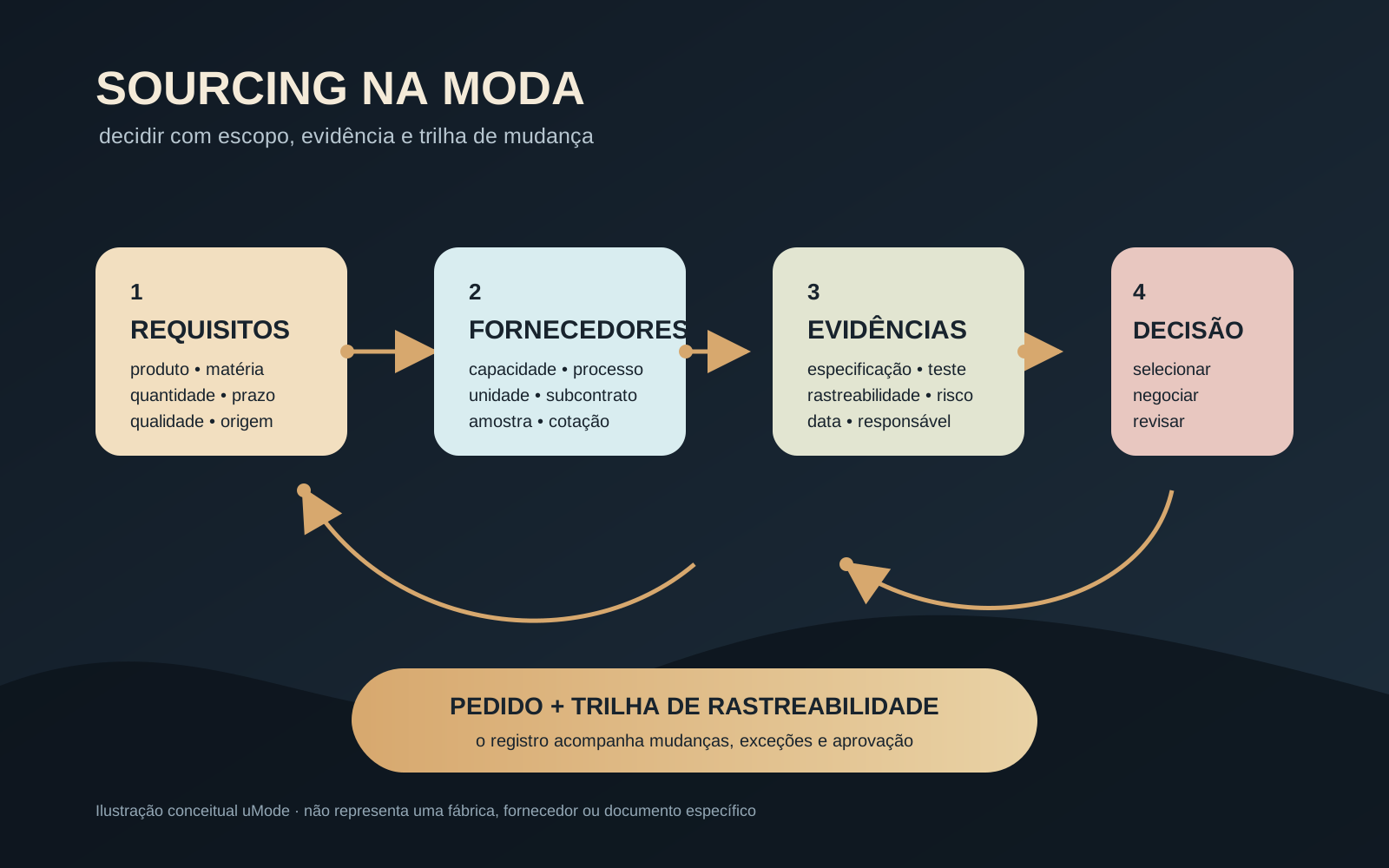
Fashion sourcing turns product requirements into a verifiable decision about materials, suppliers, capacity, cost, timing and risk. It connects samples, evidence and purchase orders without reducing supplier choice to the lowest price.
Traceability in the fashion supply chain
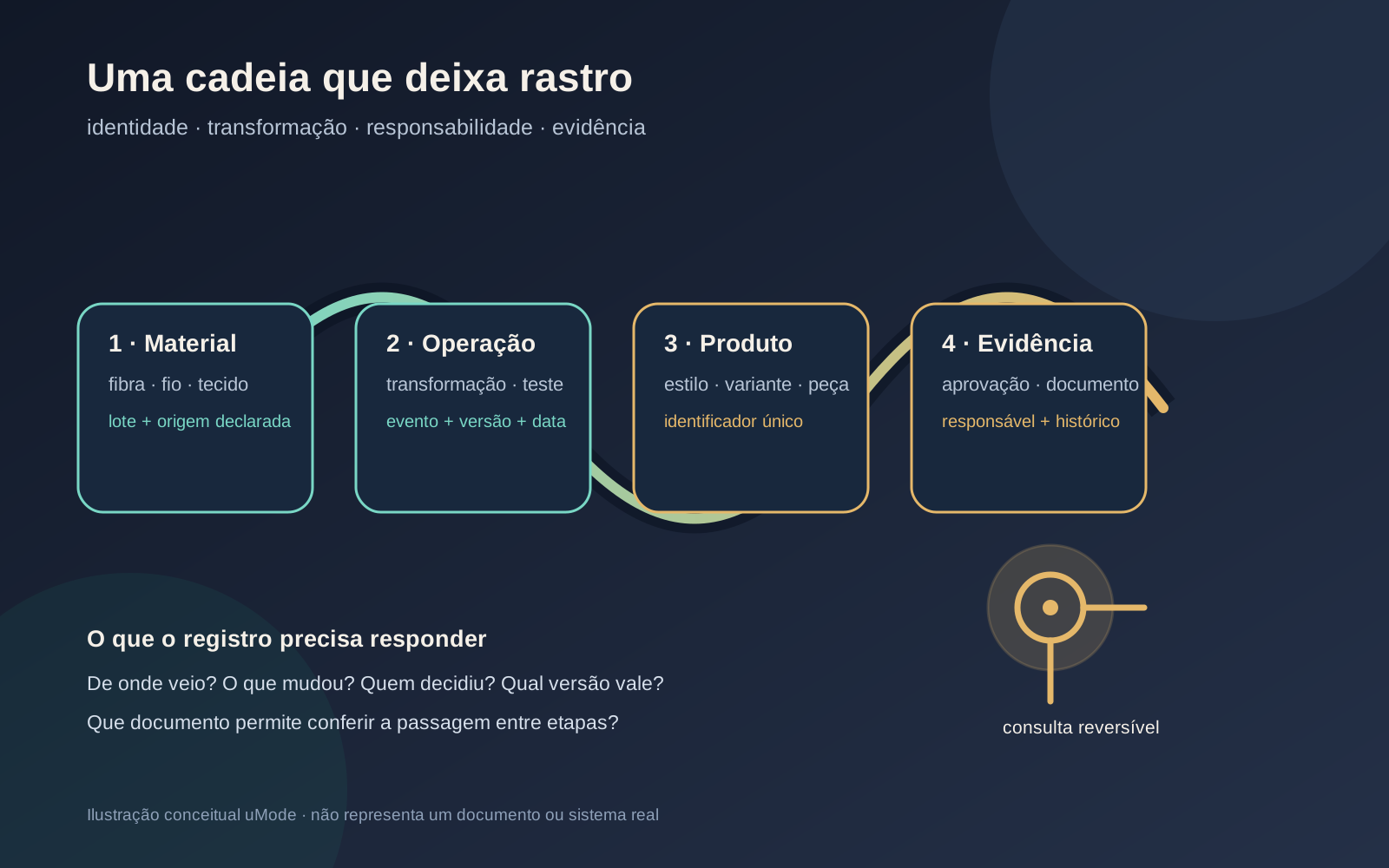
Traceability in the fashion supply chain. Fashion supply-chain traceability is the process of linking a product, material or component to the entities, activities, responsible parties and records that explain its transformation and movement. In practice, it combines identifiers, events, relationships and evidence so a product history can be checked.
Sources
Want to apply this to your operation?