Fashion E-commerce Merchandising
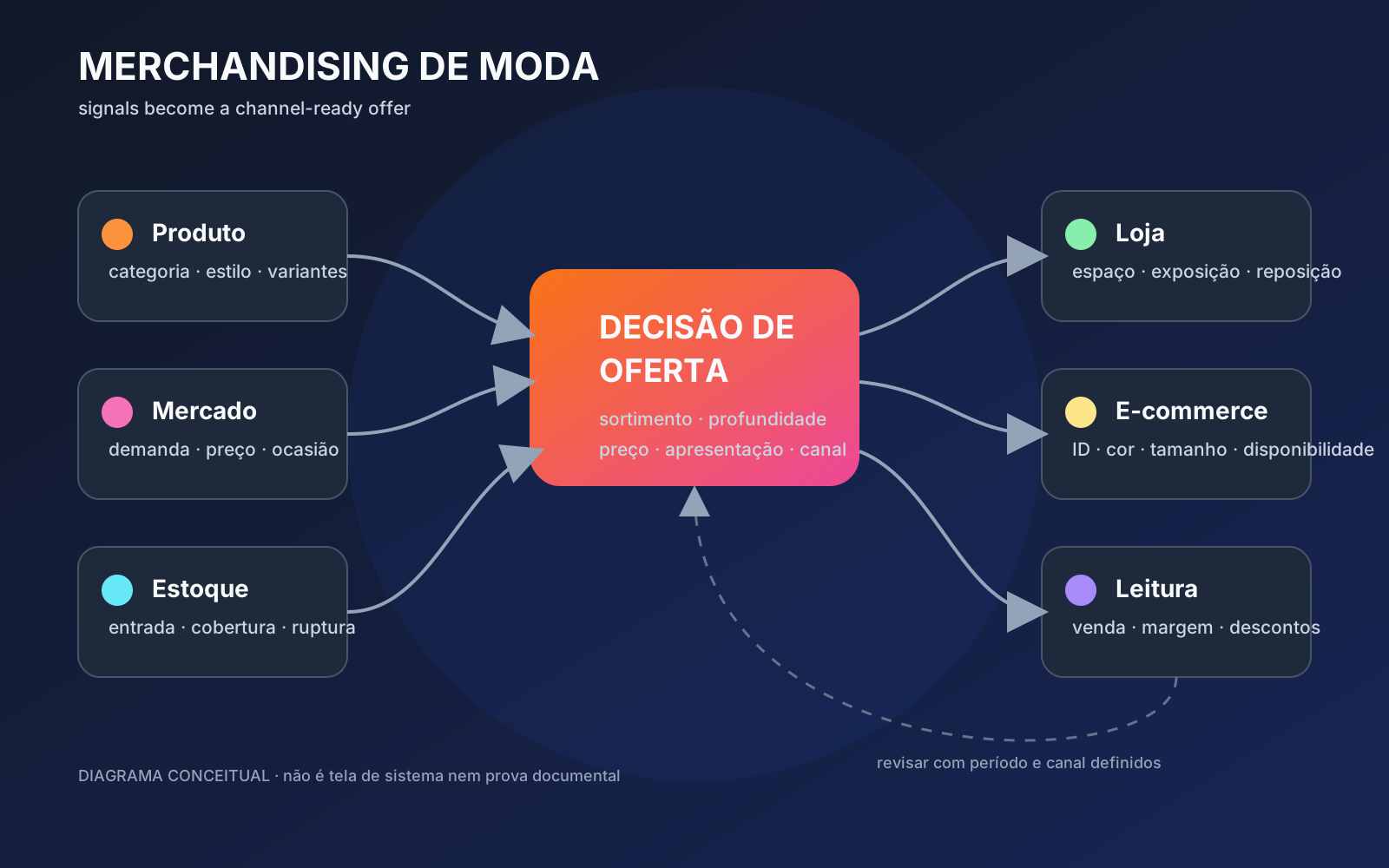
Fashion e-commerce merchandising is the process of organizing, presenting, and reviewing a fashion offer in digital channels. It coordinates product data, discovery, visual context, variants, price, and availability without confusing catalog guidance with a promise of sales.
On this page
What is Fashion E-commerce Merchandising?
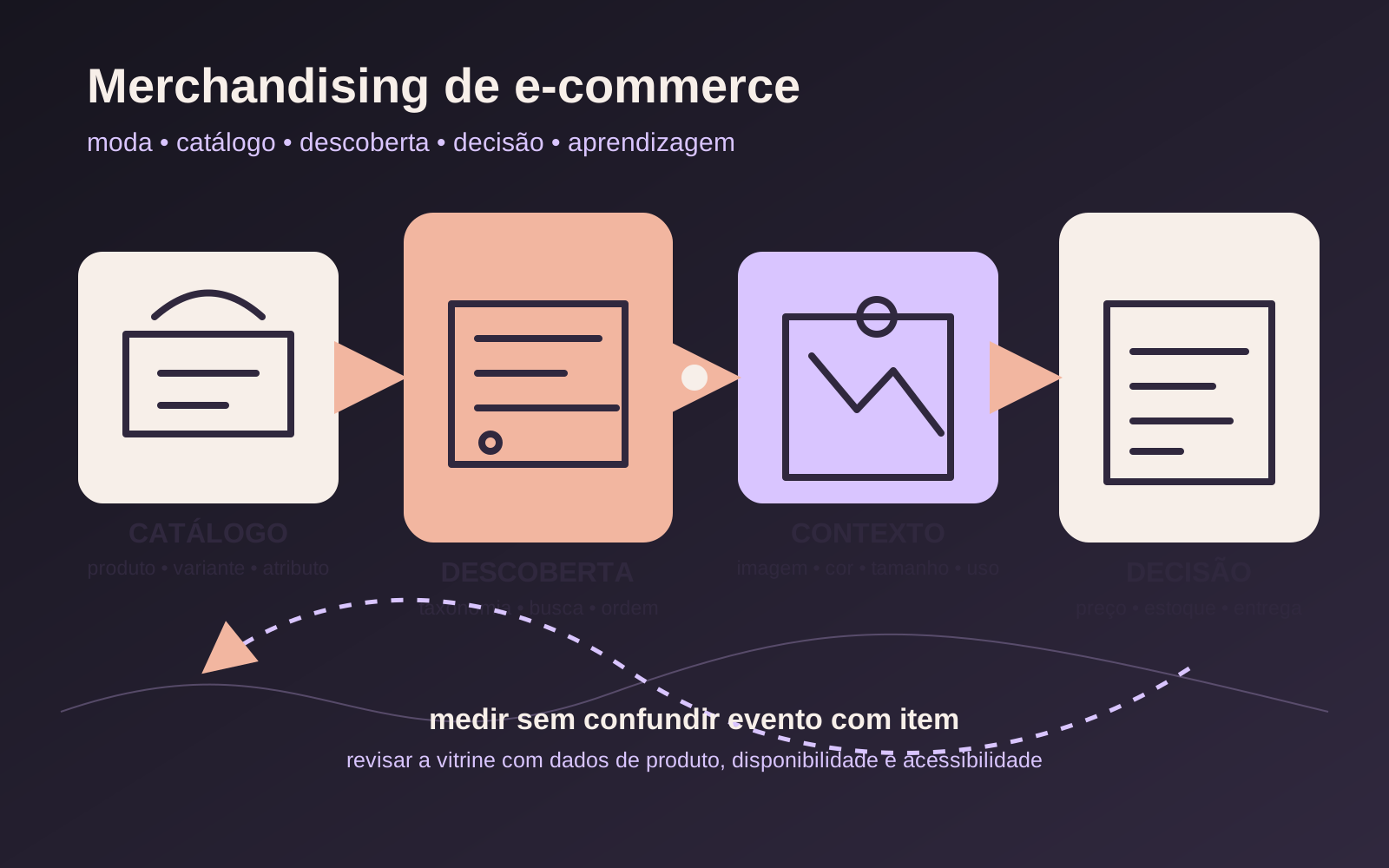
Fashion e-commerce merchandising is the process of deciding how an offer is described, found, compared, and reviewed in a digital channel. Its object is not only the storefront: it includes the catalog that supports the storefront, the relationship between a product and its variants, visual context, and the later reading of browsing and purchase signals.
The foundation is a legible catalog. An identifier separates one product from another; a variant represents a version such as a color or size; and attributes make comparison possible. In fashion, this makes explicit dimensions that shoppers can inspect in person, including color, material, and size. A tech pack may inform content decisions, but commercial copy still needs review for customer use rather than automatic copying.
Titles and descriptions should answer what is being offered quickly. A description is not a place to pile up keywords, accessories, or promises; it is where the product is described. The main image should represent the item a customer will receive, while alternative text explains the image's role for people who cannot perceive it visually. Digital accessibility belongs inside the merchandising process, not as a final cosmetic step.
How does the process work?
The process starts with a minimum record for each product and variant: identifier, title, category, color, size, material, image, price, and availability. The team compares these fields across the catalog, landing page, checkout, and structured data. When they conflict, the decision is to correct the source or pause exposure rather than hide the difference in the storefront.
Discovery combines taxonomy, search, filters, and sorting. A category should be specific enough to separate nearby intents; filters should use attributes that actually distinguish variants; and sorting should follow a rule the team can explain. Assortment defines the set being shown. Merchandising defines how that set is read: which entry receives editorial context, which item appears first, and which products stop being promoted when availability changes.
A product page is a checkpoint, not a storage room for information. The title should agree with what the shopper finds after opening the item; the description should remain focused; and the image should be coherent with the product. For collections with many variations, fashion SKU and PIM help preserve the distinction between item, group, and attribute, while collection management provides the calendar and intent that must be translated into the channel.
How should signals be measured?
Measurement must state what is being counted. An add-to-cart event is not automatically the number of garments added: Google Analytics documentation separates event scope from item scope. The team should therefore record whether it is reading interactions, units, list views, clicks, checkout, or purchase before comparing pages, categories, or periods.
This distinction prevents a rushed conclusion about the storefront. A drop may coincide with missing sizes, a price difference, insufficient imagery, or delivery friction; the data alone does not select the cause. Analysis should cross the signal with catalog, availability, and the change that was actually made. Ecommerce analytics can organize the reading, but it does not replace a testable hypothesis or an operational decision.
Limits and common confusions
Merchandising is not synonymous with fashion marketing, collection planning, or quality control. The first organizes the offer in the channel; the second works on communication and demand; the third works on intent, mix, and calendar; the fourth checks requirements. They connect, but they do not authorize the same claim.
A complete catalog should not be treated as proof of a complete experience. A source may require attributes and consistency while the team still needs to decide naming, governance, review, and priority. The process is useful when it makes decisions comparable and keeps visible what is confirmed, missing, or dependent on context.
Relations in the Fashionpedia graph
This page connects to PIM, assortment, fashion SKU, tech pack, collection management, and product development. These relations guide the process and do not turn neighboring entries into synonyms.
Verified facts
- Google uses product data to match products to relevant queries; accurate, correctly formatted data is needed for ads and free listings.
Source: support.google.com ↗ - Incorrect, inaccurate, or missing product information can cause disapprovals, limited eligibility, incorrect displays, or products not showing.
Source: support.google.com ↗ - In Merchant Center, a variant is a specific version of a product that comes in different variations, such as shirt sizes.
Source: support.google.com ↗ - A product identifier should be unique and remain the same when data is updated; the same product should use the same identifier across countries or languages.
Source: support.google.com ↗ - A title should accurately describe the product and match the title on its landing page, without promotional text.
Source: support.google.com ↗ - A description should contain only product information and should not include store links, sales information, competitors, other products, or accessories.
Source: support.google.com ↗ - The main image should accurately display the product, be crawlable, and not be a placeholder, enlarged thumbnail, watermark, or promotional border.
Source: support.google.com ↗ - Submitted availability should match the availability shown on the landing page, checkout pages, and structured data.
Source: support.google.com ↗ - For many apparel categories, Merchant Center uses variant attributes such as color, size, material, gender, and age group to describe products.
Source: support.google.com ↗ - Google Analytics distinguishes ecommerce metrics with event scope from metrics with item scope.
Source: support.google.com ↗ - In Google's Google Analytics example, an add-to-cart event counts the interaction, while the items-added metric counts product quantities in the event.
Source: support.google.com ↗ - Schema.org defines Product as any offered product or service and includes properties such as brand, category, and color.
Source: schema.org ↗ - WCAG 2.2 requires presented non-text content to have a text alternative serving an equivalent purpose, subject to defined exceptions.
Source: w3.org ↗ - WCAG documentation recommends that text alternatives and equivalents match the human language of the original content.
Source: w3.org ↗
Related entries
Fashion SKU
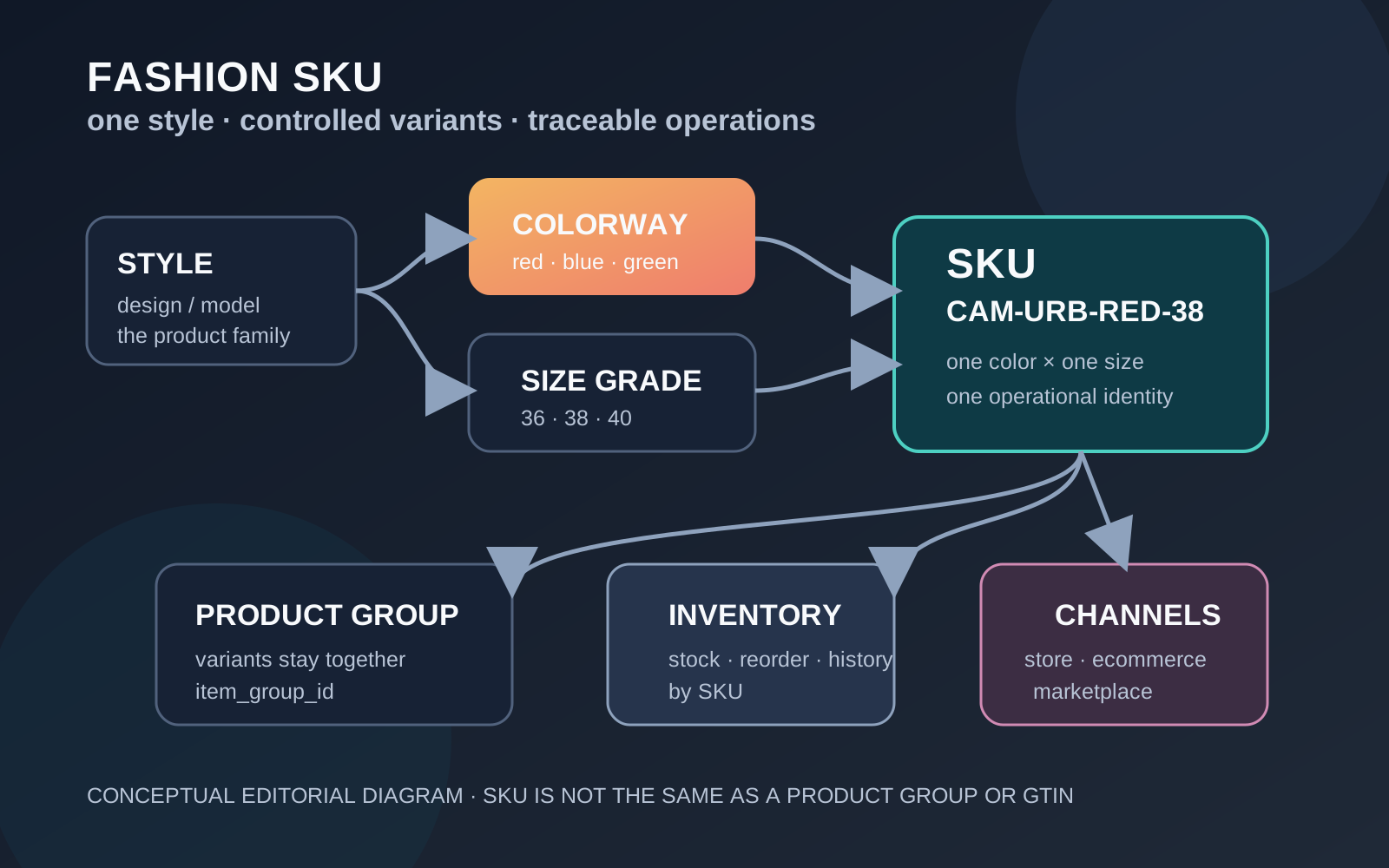
A fashion SKU is an identification unit used to distinguish items and variants in inventory control. In apparel, the useful distinction is between the individual SKU, the product group, color and size attributes, and assortment decisions.

Fashion product technical specification
A technical specification is the controlled information set that translates an approved fashion product into verifiable sampling and manufacturing requirements. It brings together drawings, materials, measurements, construction, tolerances, identification, labelling, comments and revision history; its content varies by category, company, market and stage.
Sources
Want to apply this to your operation?