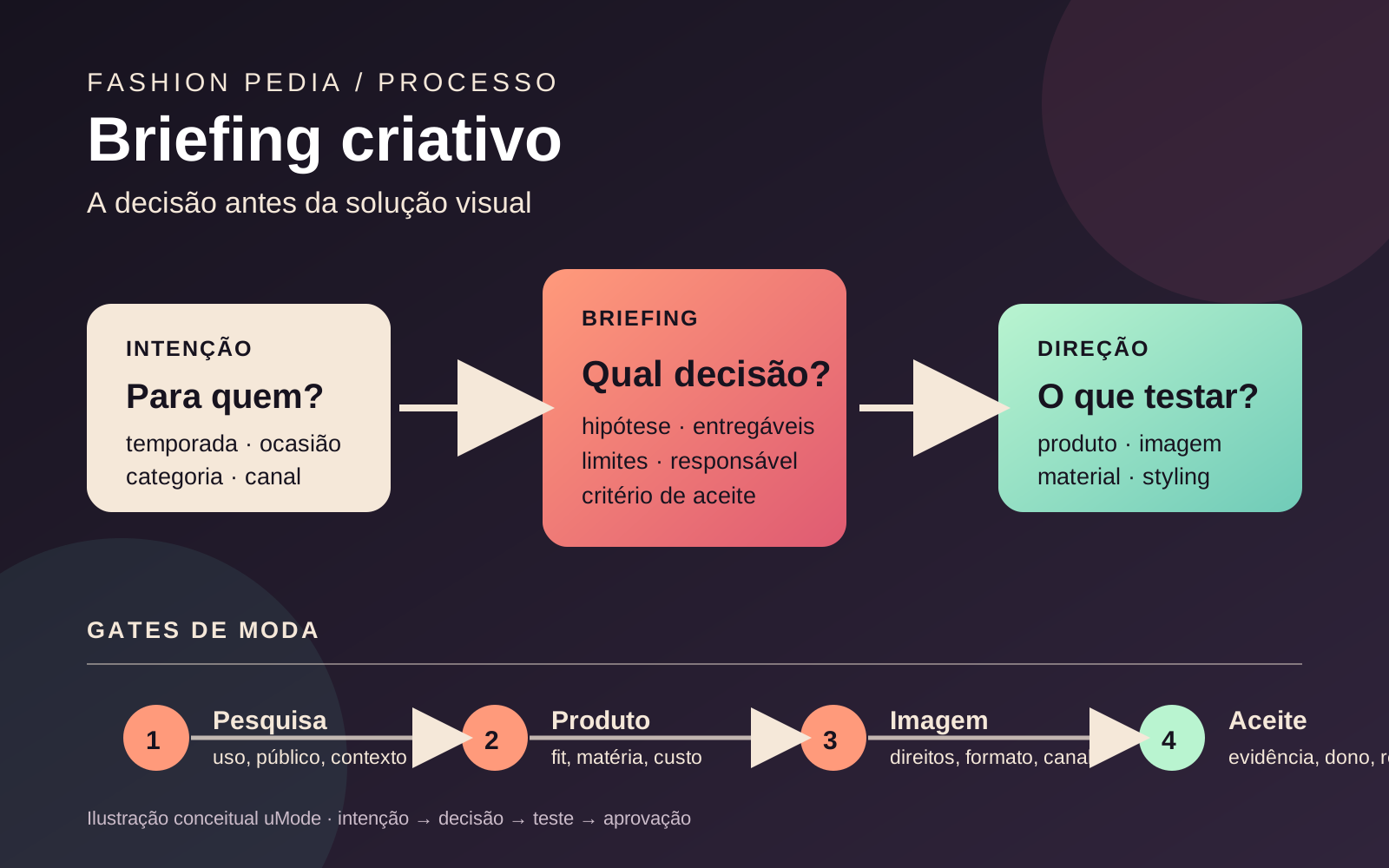
Collection visibility
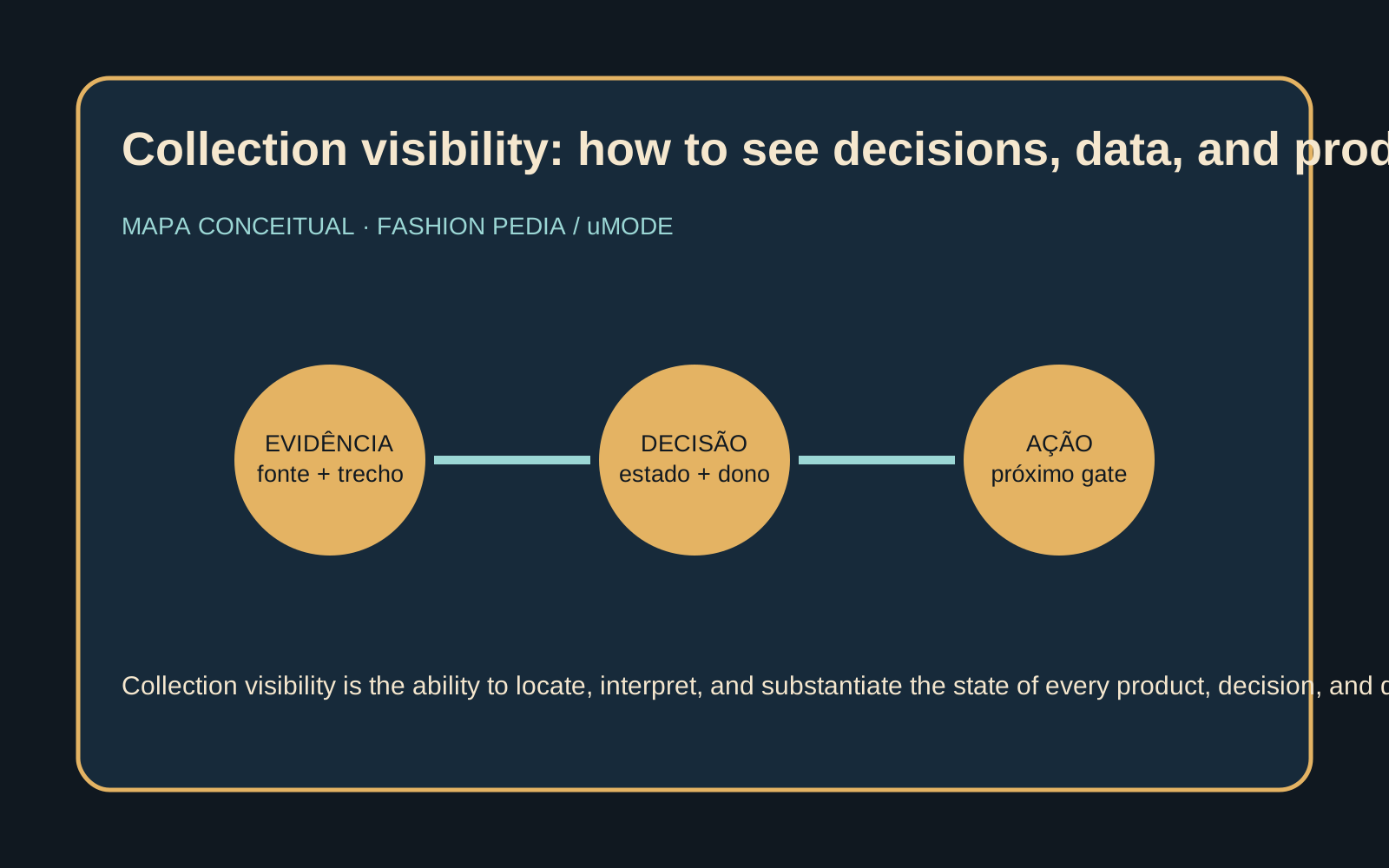
Collection visibility connects each style to a decision, evidence, version, and next owner. The goal is not to accumulate indicators, but to make the path from research to development, assortment, content, and execution legible, including uncertainty and blockers that need action.
On this page
A collection becomes genuinely visible when someone can answer, without rebuilding its history from scattered messages, what exists, which decision is current, and what evidence supports it. The object may be a line, style, color, or SKU; each level needs a stable identifier and an explicit relationship to the others. Shopify places research, selection, assortment, pricing, and presentation inside fashion merchandising. The practical consequence is that a dashboard should not show only the number of approved items. It should show the commercial hypothesis, the item’s role in the set, and the condition that still blocks the next action.
What is Collection visibility?
Start with observable status. For every item, record description, category, variant, material, size range, image, owner, last change, and next decision date. Then separate states that are often collapsed: idea accepted, brief complete, technical sheet reviewed, sample received, quality approved, cost confirmed, content complete, and buy released. A product can be ready on one axis and late on another. Oracle describes PLM as management of the complete journey from concept to disposal and lists items, documents, requirements, engineering changes, and quality workflows. Collection visibility must therefore cross creation and operations without turning “in development” into a vague answer.
How do data become a decision trail?
Tie every decision to a version and a reason. “Keep” may mean that a piece serves an opening-price role; “rework” may follow a failed measurement; “remove” may release development capacity. The record should point to the source used, the relevant excerpt, the decision owner, date, and effect on calendar, volume, channel, or content. IBM says ERP manages and streamlines organizational functions, processes, and workflows through automation and integration; its connected applications share a common database. That helps reconcile operational status, but it does not replace the explanation of why a style belongs in the assortment.
How should a collection meeting use the view?
Open with exceptions rather than reading a spreadsheet row by row. Filter items with stale evidence, changed requirements, overdue dependencies, or a conflict between technical and commercial status. A useful card opens the previous decision, compares versions, and assigns an action with an owner and deadline. If information does not exist, write “not provided” and keep the gap visible; a declared absence is safer than a plausible fill. The team can connect the view to collection management, ERP, PLM, and PIM, product, assortment, brief, and evidence.
Where does visibility stop?
Visibility is not a sales forecast, a margin guarantee, or an automatic buying authorization. It organizes what was observed and decided; it does not remove judgment, quality work, or accountability. A dashboard may be technically current and still be wrong if an identifier fails to follow a variant or if a supplier change never reaches published content. The design should therefore privilege provenance, versioning, and exceptions. A strong view reduces time spent searching for context while preserving the ability to challenge a decision and reopen the path that produced it.
Verified facts
- Fashion merchandising presents clothing, accessories, and other items to consumers as a retail strategy.
Source: shopify.com ↗ - Merchandising professionals use market research to influence product selection, assortment planning, and retail prices.
Source: shopify.com ↗ - Product presentation is treated as part of merchandising rather than as an isolated inventory step.
Source: shopify.com ↗ - PLM manages the complete product journey from initial ideation through development, service, and disposal.
Source: oracle.com ↗ - PLM software manages information and processes at every step of a product or service lifecycle across globalized supply chains.
Source: oracle.com ↗ - A PLM record can include items, parts, products, documents, requirements, engineering change orders, and quality workflows.
Source: oracle.com ↗ - Oracle describes modern PLM as a digital foundation and enterprise product record for product development and supply-chain strategy.
Source: oracle.com ↗ - Oracle presents alignment between enterprise planning and supply-chain execution as a way to drive faster innovation.
Source: oracle.com ↗ - ERP manages and streamlines an organization’s functions, processes, and workflows through automation and integration.
Source: ibm.com ↗ - Connected ERP applications share one common database, reducing resources needed to run a business end to end.
Source: ibm.com ↗
Related entries

Collection management
Collection management coordinates a fashion line's journey from idea through production, service and disposal by connecting people, product data, processes, decisions, versions and events across teams and partners.
ERP, PLM, and PIM
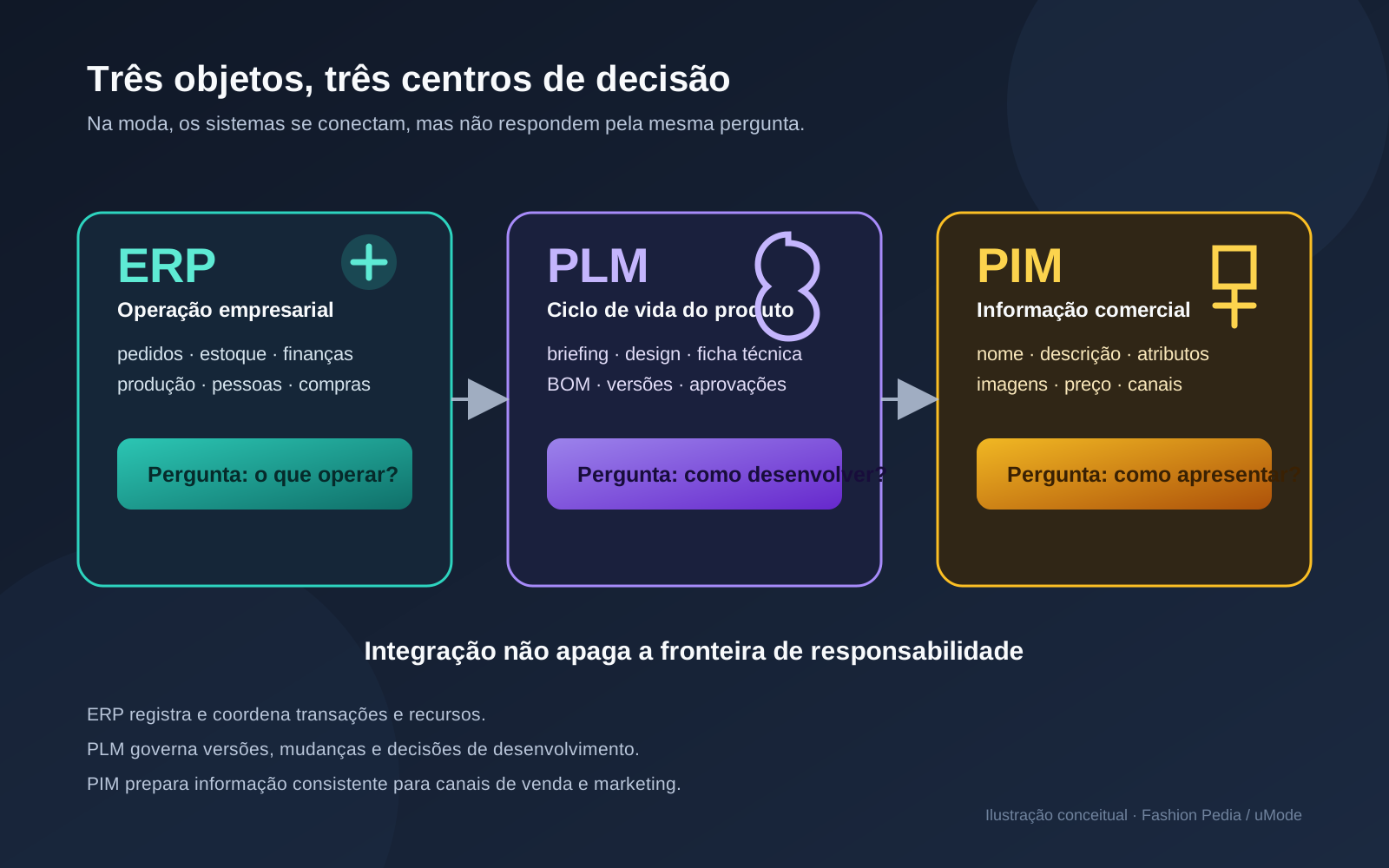
ERP, PLM, and PIM organize different objects in a fashion value chain: ERP integrates business processes and transactional data; PLM follows product lifecycle decisions and development; and PIM centralizes, enriches, and distributes product information for sales and marketing channels.
Sources
Want to apply this to your operation?