Assortment and allocation in fashion
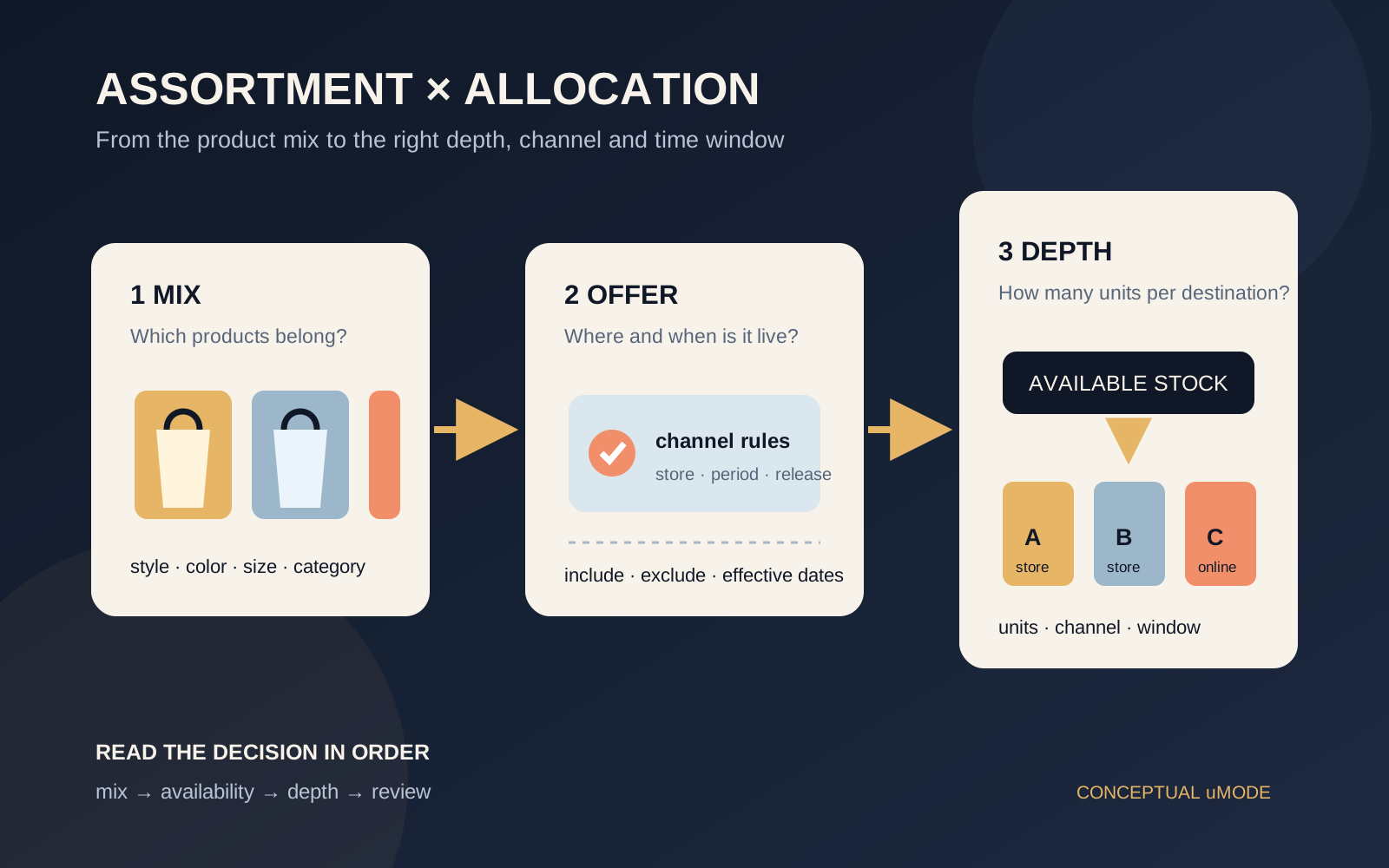
Assortment and allocation in fashion. Allocation decides where and when inventory will be available; assortment defines which products belong in each channel or store mix. In fashion, the decisions must be read together: a variant may exist in the product record, yet it becomes a channel offer only when the assortment includes it and the availability rule is effective.
On this page
What is Assortment and allocation in fashion?
Assortment is the decision about which products belong in a channel’s offer; allocation is the decision about how available inventory is distributed among the locations or channels that can sell it. Microsoft’s Commerce documentation describes an assortment as a relationship between channels and products and says it determines availability by store and period. In fashion operations, that separates two questions often merged together: “what belongs in the range?” and “how many units start at each destination?” Initial allocation addresses the second question; assortment planning addresses the first.
A style may be in the product record, approved, or physically available and still not belong to a store’s mix. It may also belong to the assortment without being ready for sale: the cited documentation requires a product to be released before it can be sold, ordered, counted, or received in the channel. The decision should therefore record product, variant, channel, store, period, and release state instead of treating “available” as a single status.
How does an assortment control availability?
An assortment controls availability by mapping channels and products, including channel groups and category hierarchies. A channel can have more than one active assortment; when inclusion and exclusion conflict by definition, the documented rule considers the product excluded. That precedence matters for capsules, regional restrictions, store tests, and removing one variant without rewriting an entire category.
Time is part of the definition. Assortments can have start and end dates, allowing a seasonal offer to be prepared and removed when its window ends. Dynamic assortments reference groups: if a category’s contents or a channel group changes while the rule is active, the definition follows that change. Before building a collection calendar, decide whether the intended object is a static list or a rule that updates with master data.
Processing is not an invisible detail: Microsoft states that assortments must be processed before they take effect. For a fashion team, that suggests a simple control: record the rule version, processing date, and confirmation that the channel received the expected definition. A link to PLM or a technical specification can help locate the variant, but it does not replace the commercial offer rule.
How does allocation turn the mix into inventory in the right place?
Allocation turns the selected mix into quantity by destination, within the channel’s available inventory, commercial window, and constraints. The operational source reviewed describes inventory management as tracking from manufacturer to warehouse and point of sale, with the aim of having the right products in the right place at the right time. This gives allocation a clear boundary: it does not decide which styles exist by itself; it operationalizes chosen presence.
Start with the decision unit: product, color, size, channel, store, and date. Then separate rules from signals. Display capacity, physical availability, target coverage, and channel priority may be premises of a rule; historical sales or a forecast should be treated as inputs with a defined period and meaning. Store clustering can group destinations under stated criteria, but it does not justify assuming that similar stores will respond identically.
Inventory visibility should answer when to order, how much to order, and where to store stock. That wording is not an allocation formula; it is a checklist for validating the data before distribution. An accurate inventory view is also associated with reducing stockouts, oversells, and markdowns. To review the result, compare plan and actual by channel and use sell-through only with an explicit period and denominator.
Why does the separation matter in fashion?
Fashion combines product variation, size curves, seasonality, and multiple channels. Oracle notes that fashion customers expect trend styles to be readily available and a seamless experience across channels, and it connects accurate inventory planning with growth, margins, and customer experiences. That is not a promise of results for every operation; it is a reason to treat availability and allocation as connected decisions.
The boundary with replenishment must remain visible. Assortment defines presence and allocation defines initial distribution or redistribution; replenishment responds to a later need under the chosen policy. If product data changes, release has not occurred, or an effective date has expired, increasing allocated quantity does not repair the offer problem.
An auditable record should retain the approved mix, inclusion or exclusion rule, identifier version, inventory considered, effective date, destinations, quantity, exceptions, and owner. Demand planning may provide an input, while collection management connects calendar and decisions, but neither relationship proves that a specific quantity will sell. The process is useful when it makes the hypothesis comparable with actual results and makes the next update signal explicit.
Verified facts
- Assortments can be used to manage product availability across channels.
Source: learn.microsoft.com ↗ - An assortment determines which products are available at specific stores and during a specific period.
Source: learn.microsoft.com ↗ - In Dynamics 365 Commerce, an assortment maps one or more channels to one or more products or hierarchical groups.
Source: learn.microsoft.com ↗ - Published assortments assigned to a channel determine that channel's overall product mix.
Source: learn.microsoft.com ↗ - Multiple active assortments can be configured for a channel.
Source: learn.microsoft.com ↗ - When a product is included and excluded in one or more assortments by definition, it is always considered excluded.
Source: learn.microsoft.com ↗ - A product must be released before it can be sold, ordered, counted, or received in the channel.
Source: learn.microsoft.com ↗ - Dynamic assortments change when the definition or contents of referenced channel or product groups change.
Source: learn.microsoft.com ↗ - Assortments are date-effective and can have start and end dates for availability by channel.
Source: learn.microsoft.com ↗ - Assortments must be processed before they take effect in Commerce.
Source: learn.microsoft.com ↗ - Inventory management tracks inventory from manufacturers to warehouses and from those facilities to the point of sale.
Source: ibm.com ↗ - Inventory management aims to have the right products in the right place at the right time.
Source: ibm.com ↗ - Inventory visibility includes knowing when to order, how much to order, and where to store stock.
Source: ibm.com ↗ - An accurate view of inventory helps reduce stockouts, oversells, and markdowns.
Source: ibm.com ↗ - In fashion retail, customers expect trend styles to be readily available and a seamless experience across channels.
Source: oracle.com ↗ - Oracle presents accurate inventory planning in fashion retail as supporting growth, margins, and customer experiences.
Source: oracle.com ↗
Related entries
Initial Stock Allocation
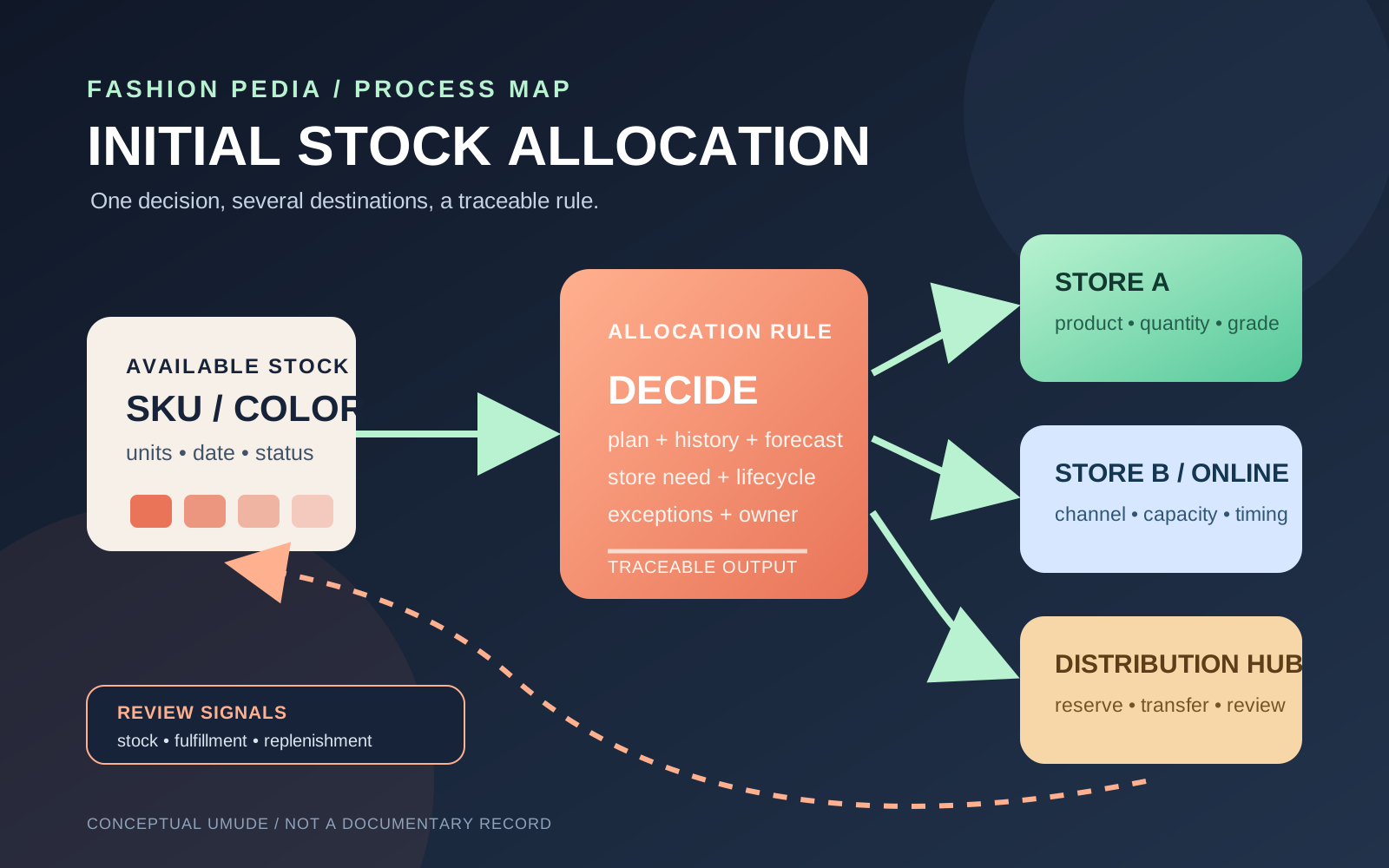
Initial stock allocation is the process of deciding how the first available quantity of a product will be distributed across stores, channels, or other service points. A sound record makes the product, destination, quantity, data source, and exceptions visible.
Assortment planning in fashion
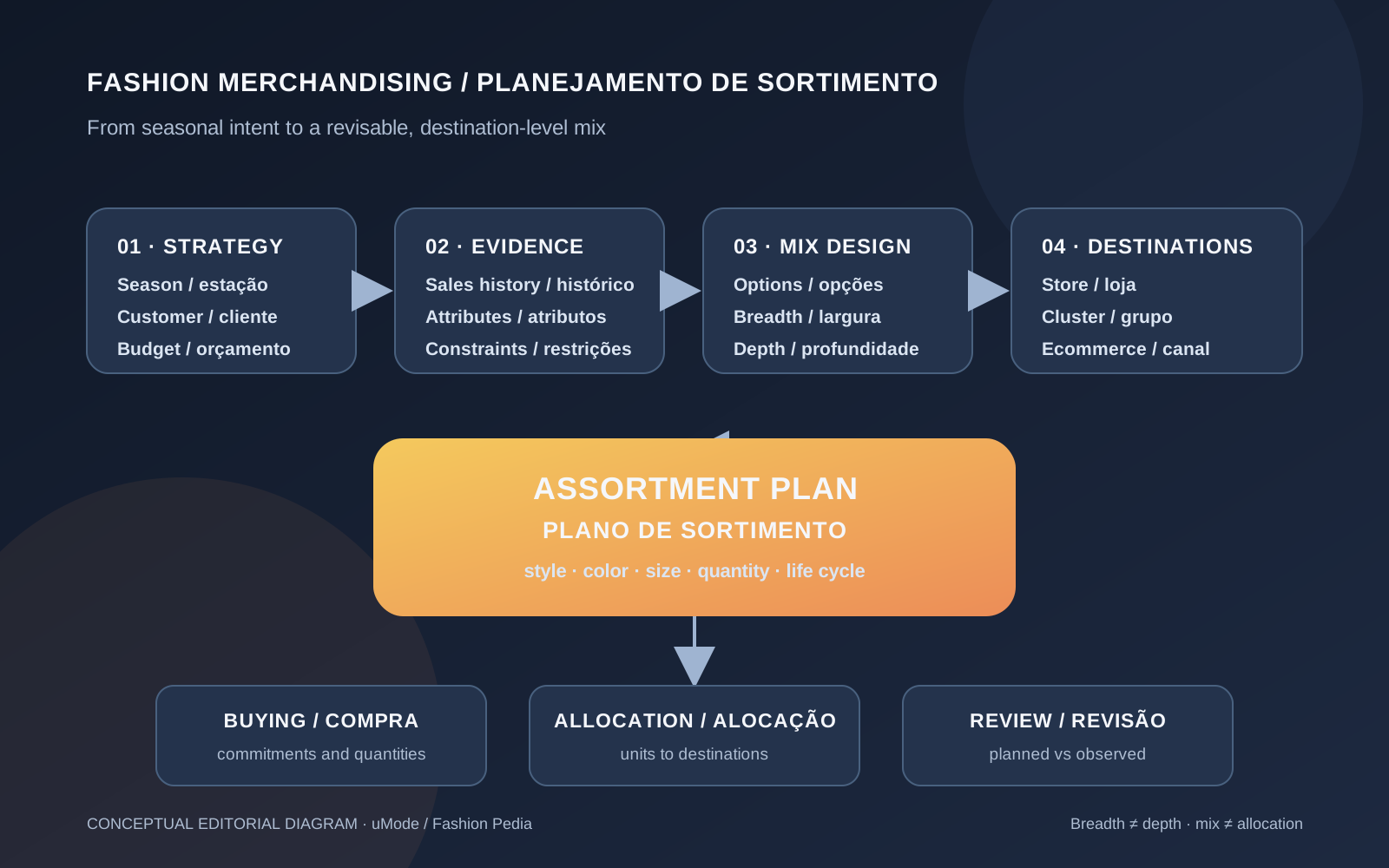
Assortment planning in fashion. Assortment planning is the process of deciding which styles, categories, colors, sizes, and quantities belong in each season, store, channel, or store group. In fashion, it turns a merchandise plan into buyable options by relating breadth, depth, and local context without confusing the mix with buying or allocation.
Store clustering in fashion retail
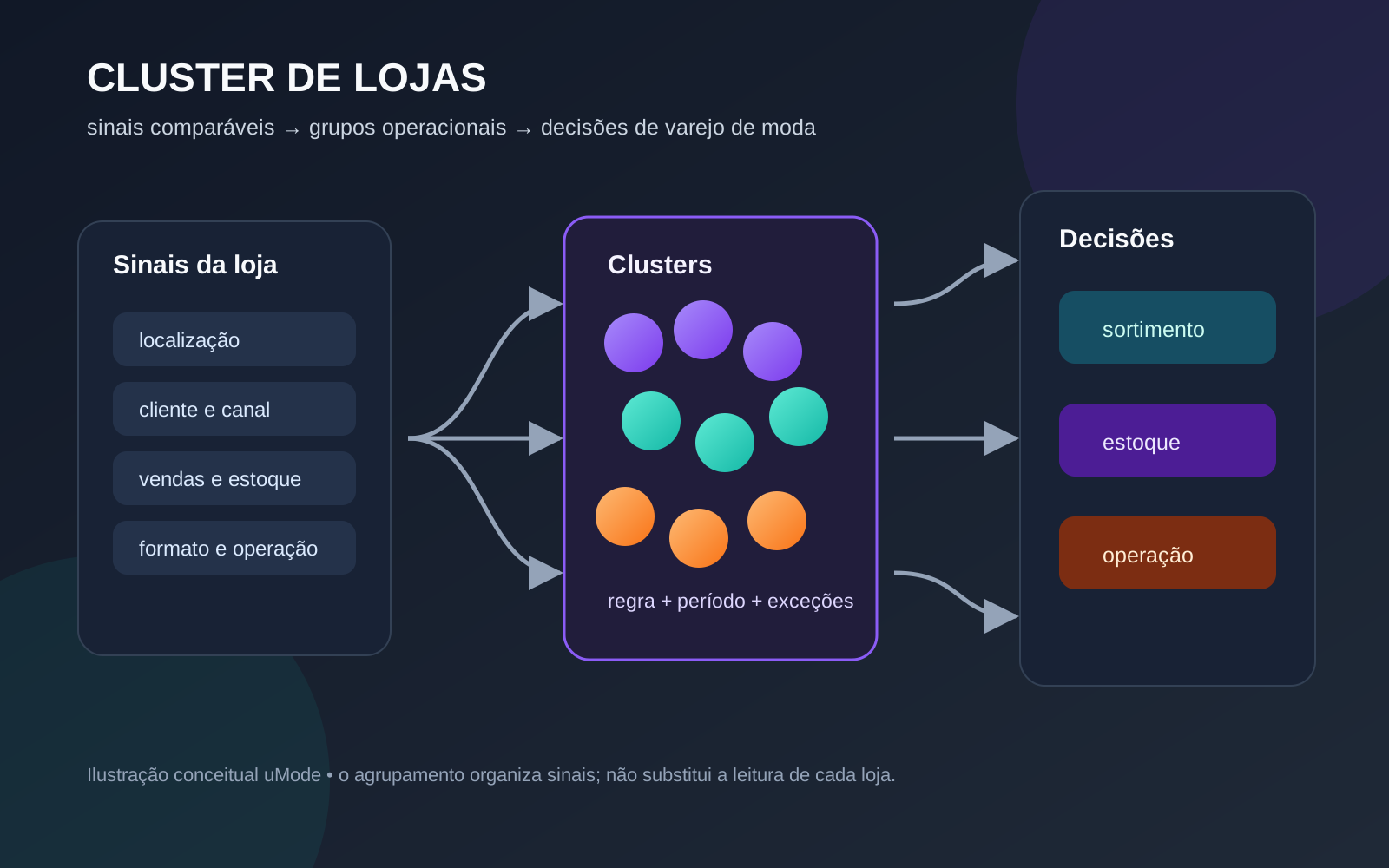
Store clustering in fashion retail. Store clustering is the process of grouping points of sale around relevant patterns in location, customer behavior, assortment, or operations so retail decisions can be made with more context. In fashion, it helps distinguish store needs without assuming that every unit should receive the same mix or inventory.
Inventory replenishment
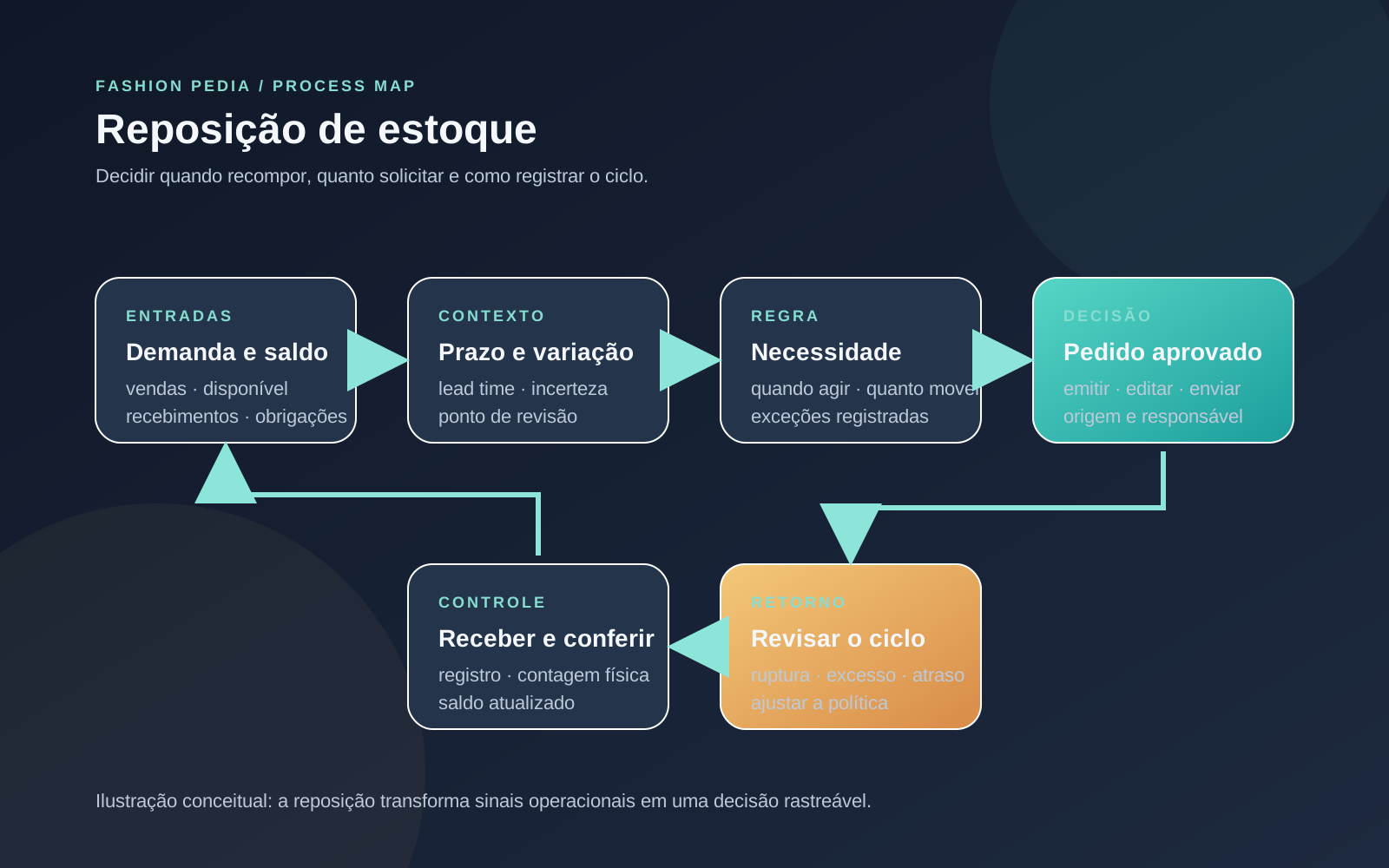
Inventory replenishment is the process of deciding when to restore an item's availability and how much to request for a future need. The decision combines recorded stock, demand, expected receipts, obligations, purchasing lead time and demand variation; the order must then be approved, received and recorded.
Demand planning in fashion
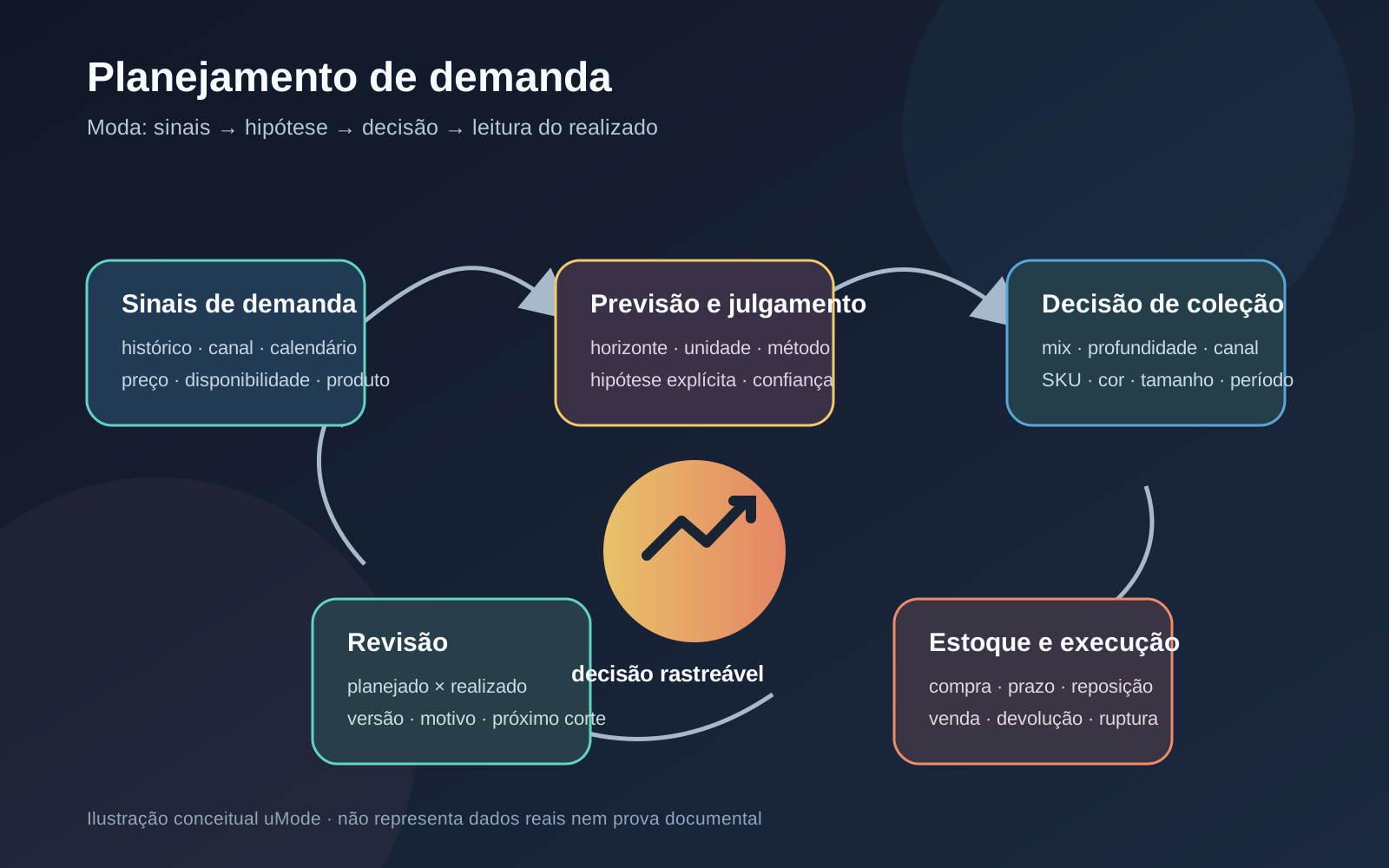
Demand planning in fashion turns demand signals, history, calendar context and judgement into explicit decisions about assortment, volume, channel and review. It combines forecasting with governance: every hypothesis needs a horizon, unit, owner and rule for revision when the collection or market changes.
Sell-through in fashion retail
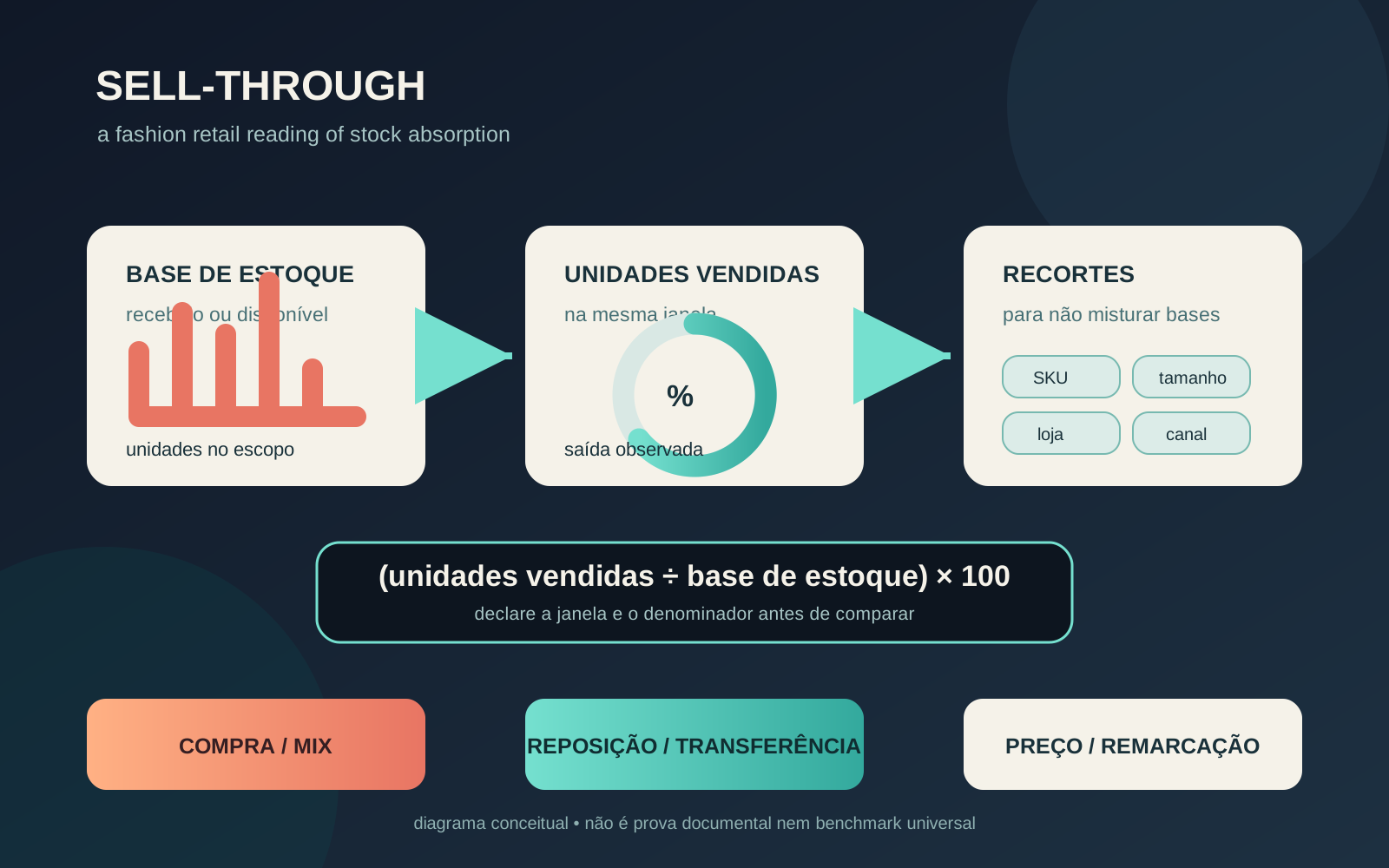
Sell-through in fashion retail. Sell-through is the percentage of units sold from inventory received or made available within a defined window. In fashion retail, the metric becomes useful when it is cut by style, color, size, store, channel, and product life cycle, with the denominator stated before it informs buying, replenishment, or markdown decisions.
Sources
Want to apply this to your operation?