Leather alternatives
Leather alternatives are a family of materials used in fashion applications traditionally associated with animal leather, but they are not a homogeneous category. Layer composition, performance, repairability, separability, and end-of-life routes must be evaluated for each construction.
On this page
What is Leather alternatives?
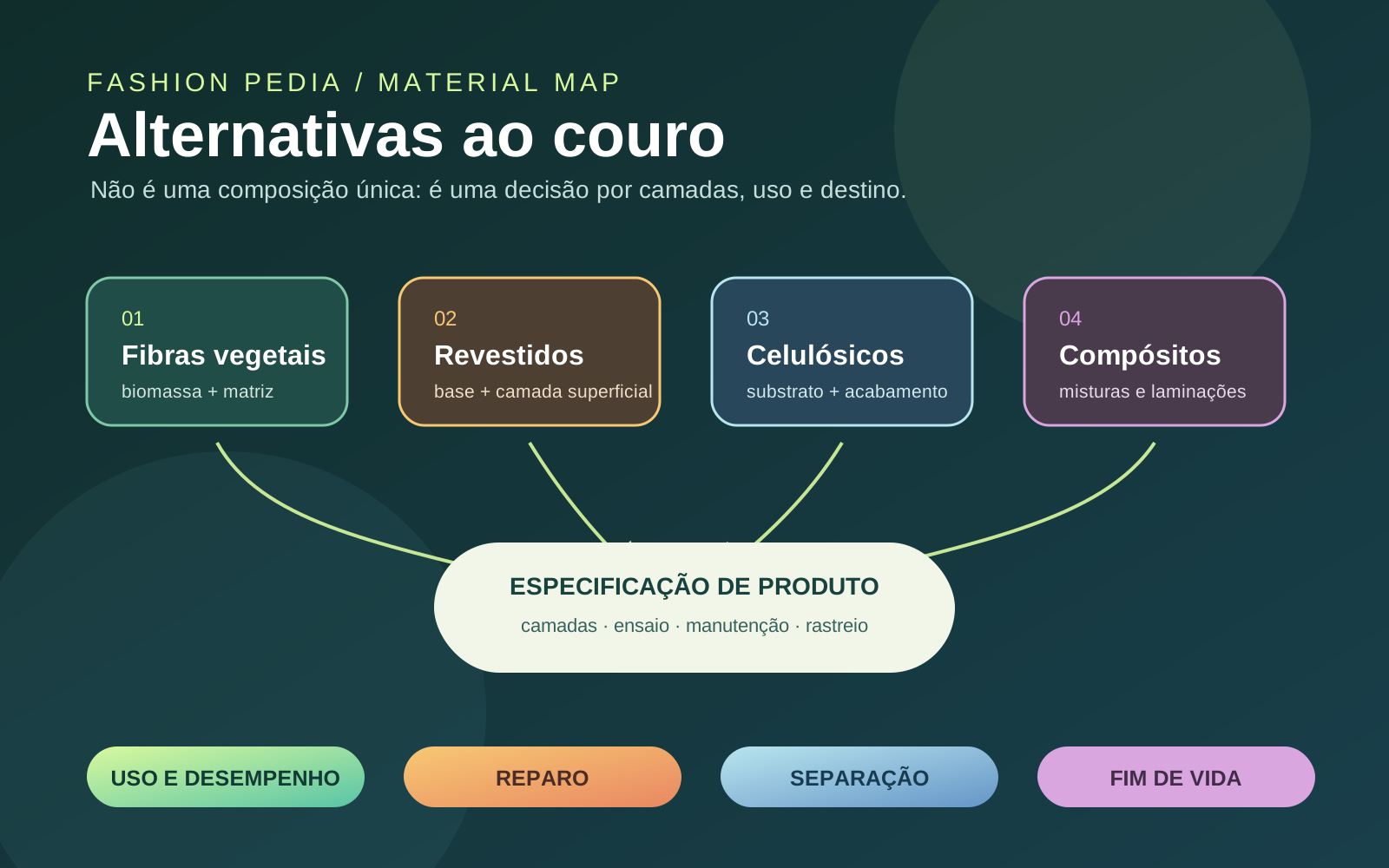
Leather alternatives are materials used in products traditionally associated with animal leather, but the label does not identify one composition. It may cover polymer surfaces on textile substrates, cellulosic structures, biomass-containing composites, and other constructions. The first technical question is therefore “what layers make up the material?” rather than “what is its commercial name?”.
Terminology also affects consumer communication. The FTC Leather Guides address representations about the composition and characteristics of leather and imitation products, so a surface that only looks like leather should be described by its actual composition. In a collection, animal leather is an application reference, not a universal environmental benchmark. A useful specification separates feedstock, substrate, coating, and finish.
Which material families and constructions belong to this category?
Alternatives can be compared through their architecture. A coated construction combines a base — such as a textile substrate — with a layer that changes touch, appearance, and protection. Another construction incorporates fibres or plant particles into a matrix or binder. Some materials foreground a biomass ingredient even though the final assembly also depends on polymers, adhesives, or lamination. “Plant-based”, “recycled”, and “biodegradable” are not synonyms.
Layer composition changes how a material responds to flexing, abrasion, water, heat, stitching, and bonding. A visual sample therefore cannot be extrapolated to a bag, strap, or shoe upper. The technical record should separate substrate, coating, thickness, mass per area, finish, and test method. Links to recycled polyester and recycled cotton are useful when those fibres are components, but they do not turn the whole laminate into a single fibre category.
How should a fashion product be evaluated?
The decision starts with use and expected service life. For a bag, relevant checks can include flexing, tear, abrasion, finish adhesion, stitchability, bonding, and change after cleaning; for footwear, flex zones and water contact may impose different demands. These are development criteria, not properties guaranteed by the word “alternative”. Quality control must be tied to the product part, lot, and test method.
The European textile strategy places durability, repair, and recycling at the centre of design. In product terms, this supports accessible, repairable, and, where possible, separable components. Combining substrate, coating, foam, metal, and adhesive can create a technical barrier to disassembly. The technical design should record joints, edges, hardware, and replacement points, connecting the material decision with technical design and traceability.
End of life requires the same precision. Blended fibres and chemicals of concern can make recycling more difficult, and a route available in a laboratory is not automatically available where the product is discarded. Supplier documentation should state layer composition, lot, declared origin, and care conditions. A tech pack can organise this information, but it does not replace testing or prove recyclability.
What environmental and communication limits should be stated?
A synthetic or coated alternative may be subject to microplastic release during use and washing; the EEA treats this mechanism as a recognised source for textiles made from synthetic plastic fibres. The same source identifies design, production, care, and end-of-life stages as intervention points. This does not mean every synthetic material behaves alike: construction, wear, maintenance, and use scenario remain relevant.
Biomass should not be converted into an automatic low-impact claim. A responsible decision separates composition, performance, and environmental communication. “Animal-leather-free” describes an origin choice; it does not by itself disclose plastic, durability, repairability, or disposal routes. The final choice should combine specification, testing, maintenance, repair availability, and verifiable documentation — including products that use natural dyes or recycled materials.
Connections
animal leather · recycled polyester · recycled cotton · traceability · quality control · technical design
Verified facts
- The United States Federal Trade Commission addresses imitation materials that may be confused with leather and requires attention to disclosure of non-leather content.
Source: ftc.gov ↗ - The European Commission textile strategy sets a vision for products that are durable, repairable, and recyclable on the European market.
Source: environment.ec.europa.eu ↗ - The European textile strategy identifies material composition, blended fibres, and chemicals of concern as aspects that affect recycling.
Source: eur-lex.europa.eu ↗ - The European Commission includes design requirements intended to make textiles last longer and become easier to repair and recycle.
Source: environment.ec.europa.eu ↗ - The European Commission plans to address the unintentional release of microplastics from synthetic textiles.
Source: environment.ec.europa.eu ↗ - The European Environment Agency recognises the wearing and washing of textiles made from synthetic plastic fibres as a source of microplastics in the environment.
Source: eea.europa.eu ↗ - The European Environment Agency identifies design, production, care during use, and end-of-life processing as possible intervention points for reducing or preventing textile microplastic release.
Source: eea.europa.eu ↗ - The European textile strategy mentions a Digital Product Passport as an action for the sector.
Source: environment.ec.europa.eu ↗ - The European textile strategy connects circular business models with reuse and repair services.
Source: environment.ec.europa.eu ↗ - The European strategy records that fibres are often blended, such as polyester with cotton, which makes recycling more difficult because technologies are limited.
Source: eur-lex.europa.eu ↗ - The European strategy records that less than 1% of textiles globally feeds into new textiles.
Source: eur-lex.europa.eu ↗ - The United States Federal Trade Commission describes the Leather Guides as addressing claims about the composition and characteristics of leather and imitation leather products.
Source: ftc.gov ↗
Related entries
Recycled polyester
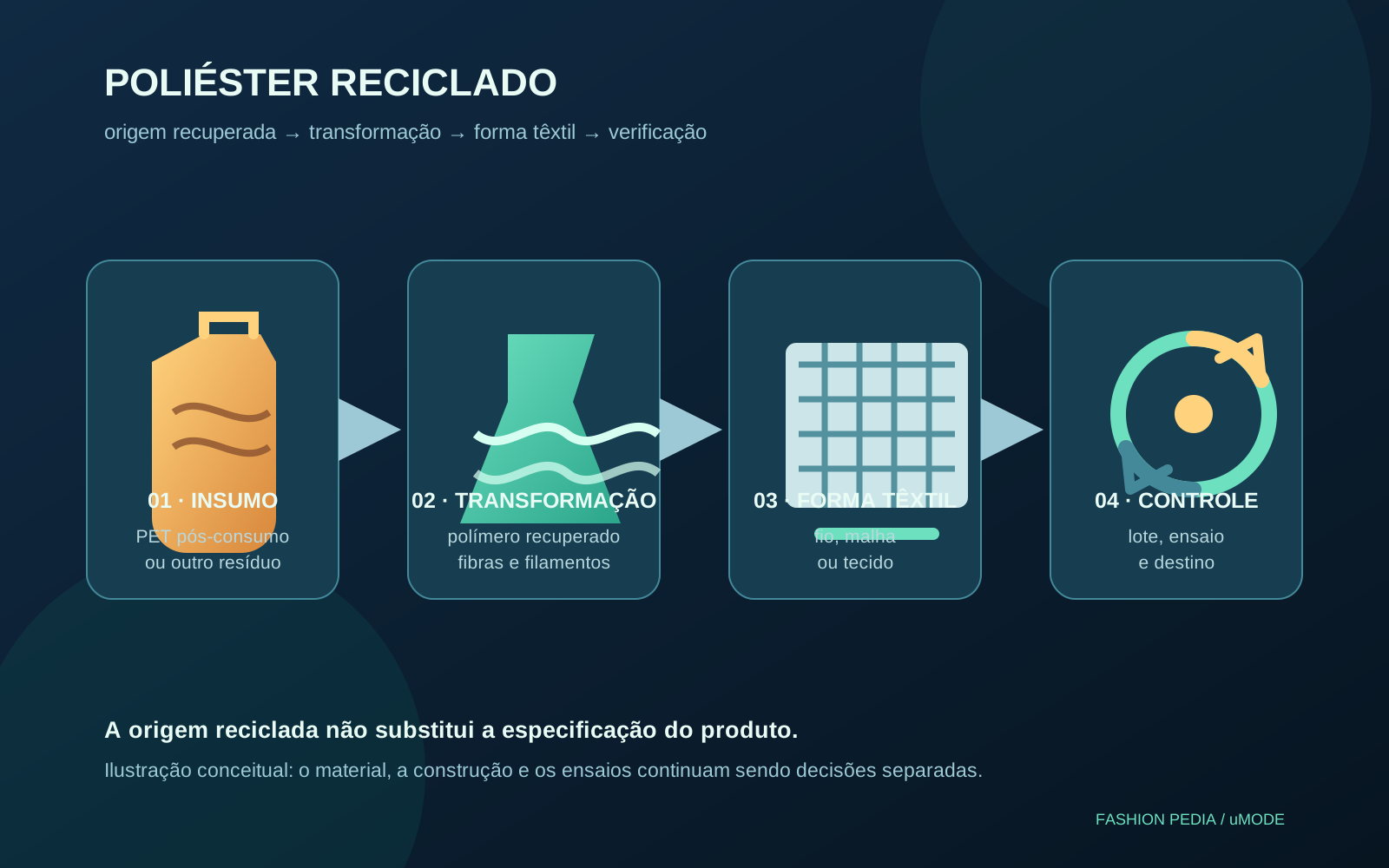
Recycled polyester is a textile material made when recovered polyester, including post-consumer PET in some products, is transformed into fibre or fabric. Recycled origin does not determine performance by itself: a useful specification separates feedstock, construction, lot, testing and the scope of any environmental claim.
Recycled cotton
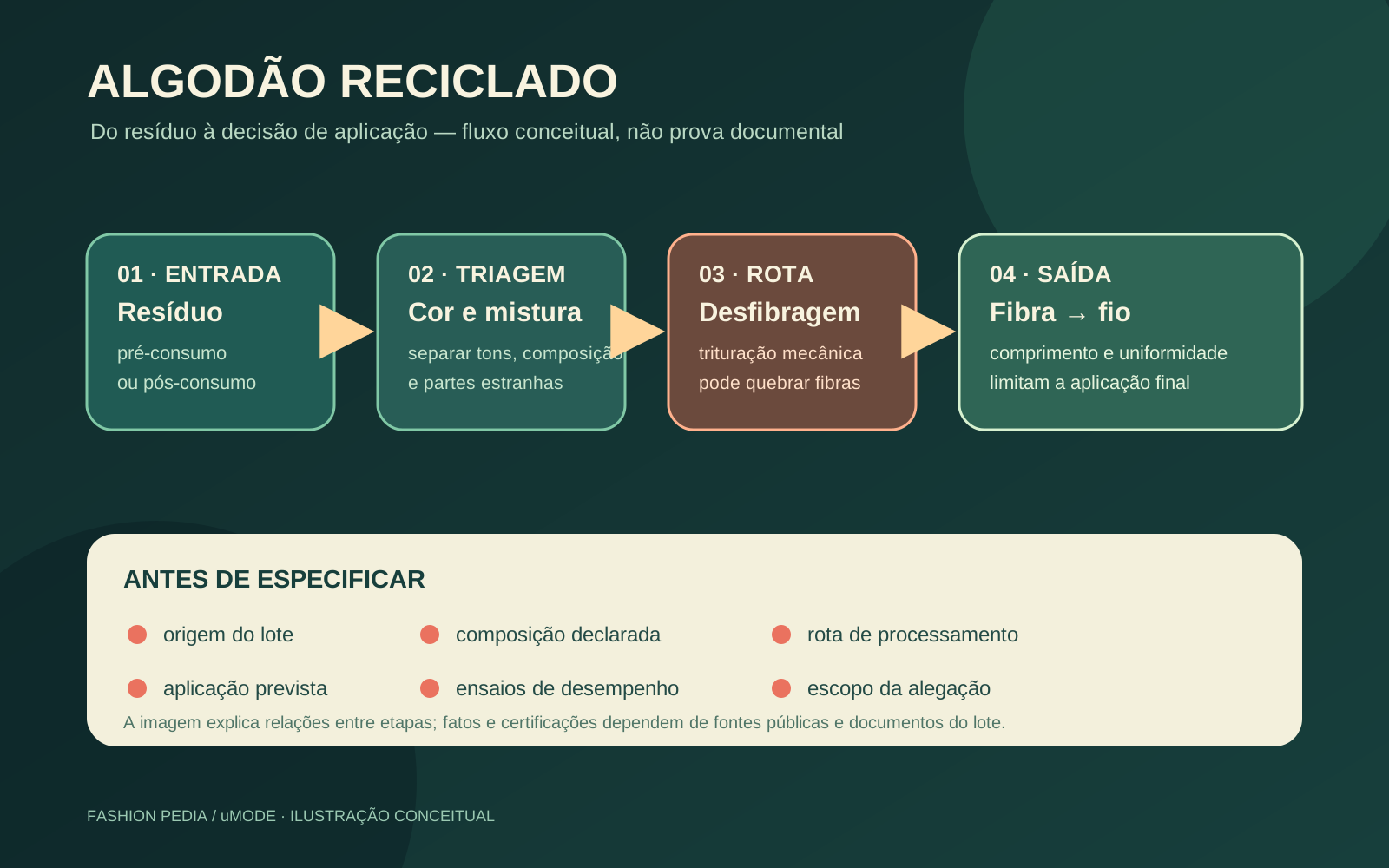
Recycled cotton is cotton fabric converted back into cotton fibre for reuse in textile products. The input may be pre-consumer or post-consumer material; sorting, shredding, fibre length and intended application determine what a given lot can deliver.
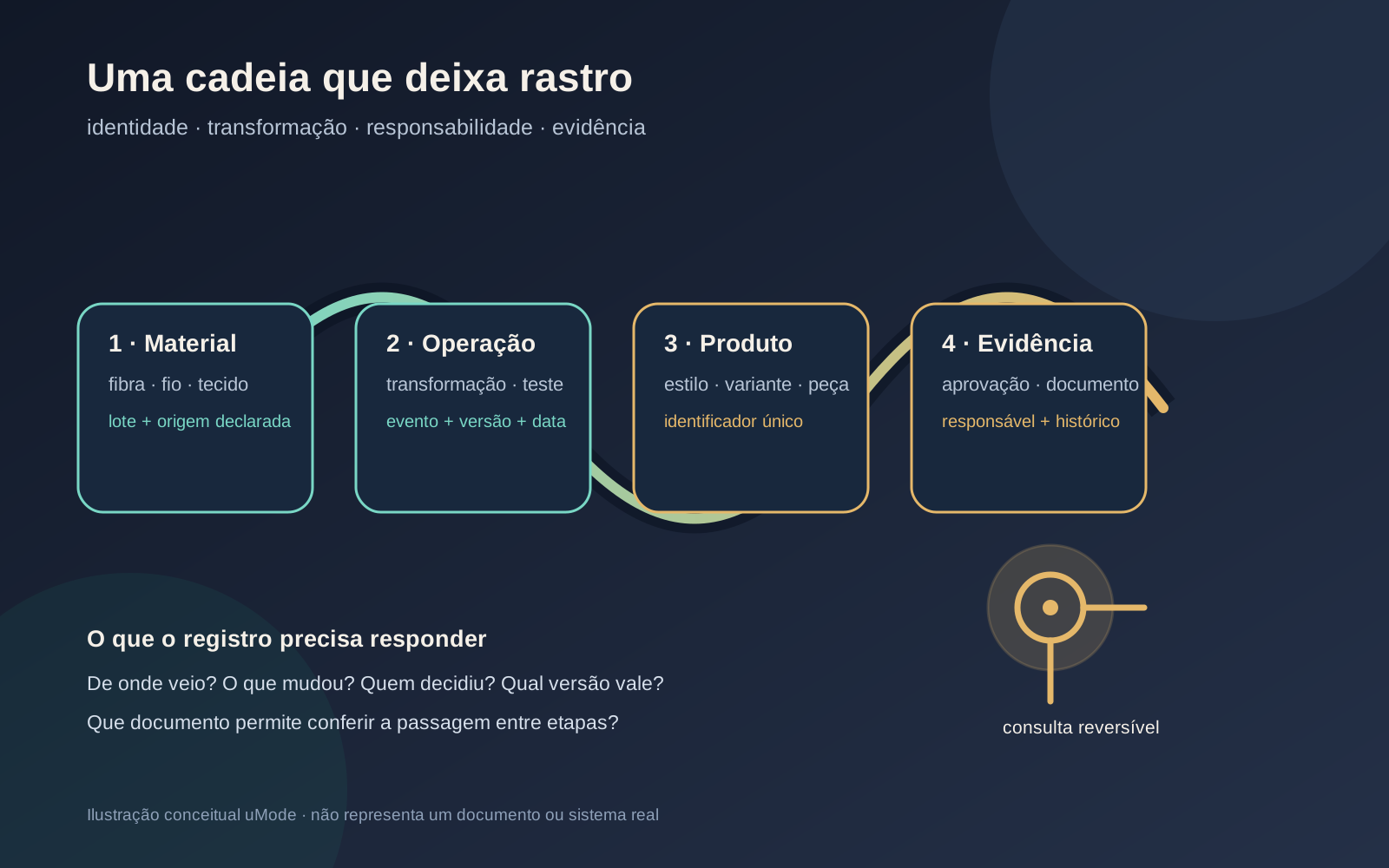
Traceability in the fashion supply chain
Traceability in the fashion supply chain. Fashion supply-chain traceability is the process of linking a product, material or component to the entities, activities, responsible parties and records that explain its transformation and movement. In practice, it combines identifiers, events, relationships and evidence so a product history can be checked.

Apparel quality control
Apparel quality control combines specifications, inspection, and testing to check whether fabrics, trims, and garments meet the expected performance for a product and end use. The process can examine color, drape, hand, durability, conformance, defects, fit, seam integrity, shrinkage, and drying performance. Quality decisions depend on the product and its intended use.
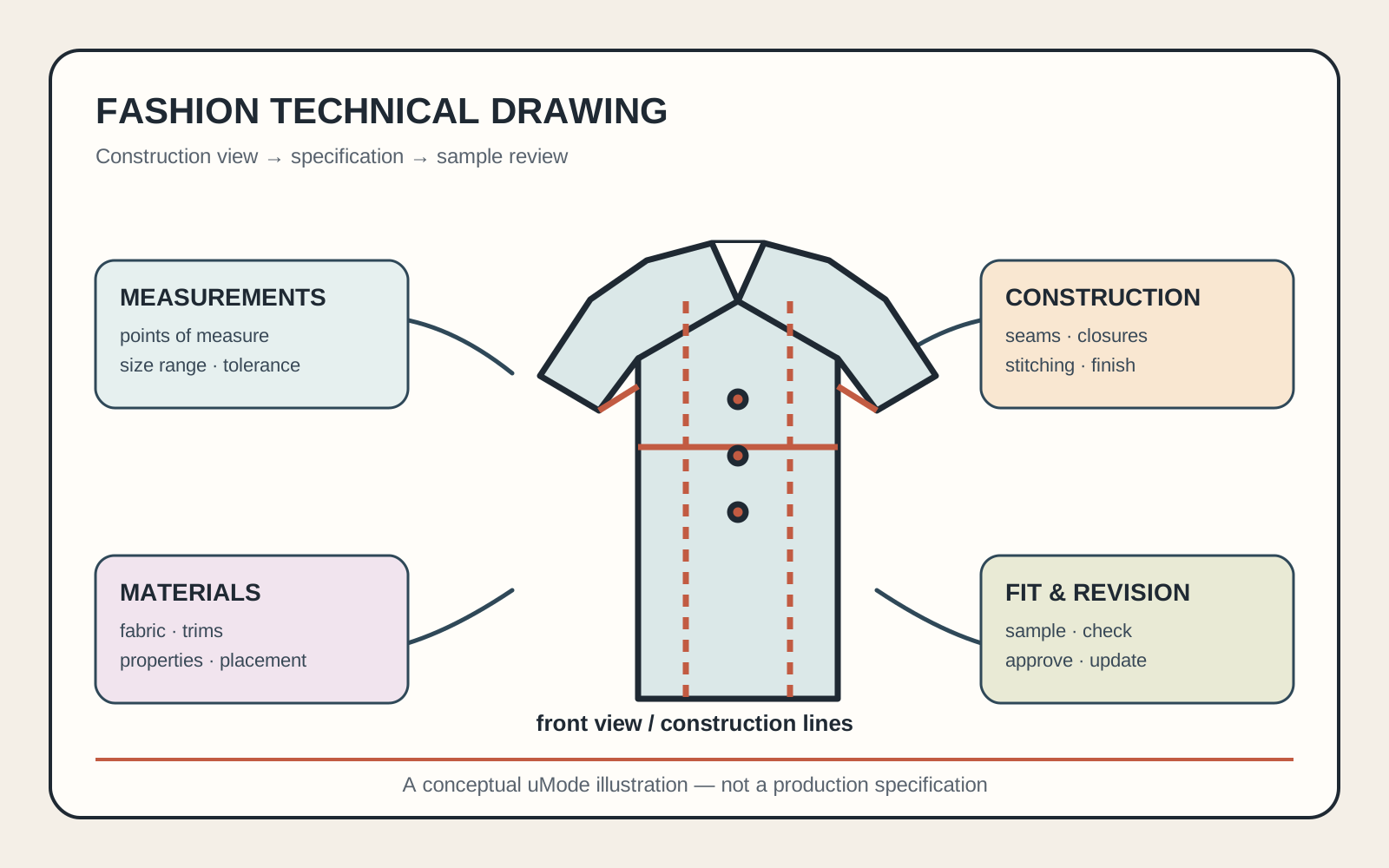
Fashion technical drawing
Fashion technical drawing is a construction-oriented representation used to communicate a garment’s form, details, measurements and manufacturing decisions. In apparel development it connects with patternmaking, specifications, fitting, materials and production; it does not replace a complete tech pack or physical validation.
Sources
- https://www.ftc.gov/legal-library/browse/rules/leather-guides
- https://environment.ec.europa.eu/strategy/textiles-strategy_en
- https://eur-lex.europa.eu/legal-content/EN/TXT/?uri=CELEX:52022DC0141
- https://www.eea.europa.eu/en/analysis/publications/microplastics-from-textiles-towards-a-circular-economy-for-textiles-in-europe
Want to apply this to your operation?