Lyocell
Lyocell is a regenerated cellulose fibre made by dissolving cellulose in an organic solvent and spinning the solution without forming cellulose derivatives. In fashion, it is a fibre input whose performance also depends on yarn, construction, and finishing.
What is Lyocell?
Lyocell is a regenerated textile fibre made from cellulose: the cellulose is dissolved in an organic solvent, spun, and regenerated without forming cellulose derivatives. This definition keeps the fibre distinct from a yarn, a fabric, and a finished garment. The name identifies the fibrous material; it does not describe the finished article by itself.
European regulatory nomenclature includes lyocell among textile fibre names. In a technical specification, the fibre identity should therefore remain separate from the article’s construction and finishing. When a blend is involved, read the declared composition as the composition of the specified material rather than as a synonym for pure lyocell.
How is the fibre formed?
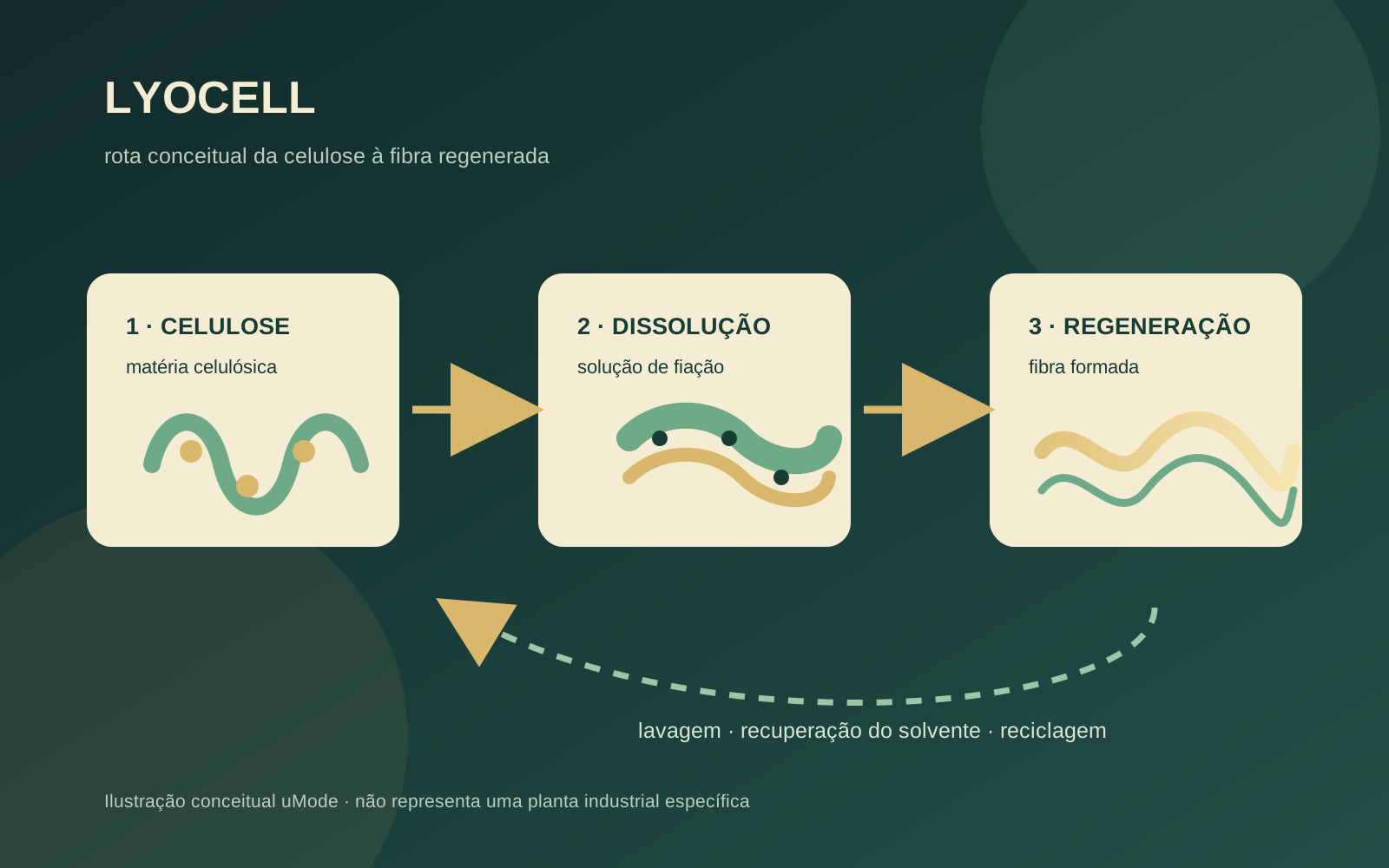
Lyocell fibre is produced by a method based on dissolving cellulose in N-methyl morpholine-N-oxide, known as NMMO. The spinning solution is extruded through a spinneret, passes through an air gap, and enters a coagulation bath where the cellulose is regenerated. The fibres are then washed; residual NMMO is recovered and recycled. The process includes post-treatments such as bleaching, finishing, and drying.
This sequence locates the fibre-formation process, but it does not replace examination of the finished article. After the fibre come yarn formation, weaving or knitting, and finishing. Each stage can change the appearance and behaviour observed in a garment.
Fibrillation is a specific technical issue: under wet abrasion, fibrous elements may become exposed at the fibre surface. The technical review connects reducing this phenomenon with changing spinning parameters, including air-gap conditions and draw ratio. For control, define the test, abrasion condition, and acceptable appearance rather than treating “anti-fibrillation” as an abstract promise.
Which properties matter in fashion?
The technical review reports high strength, excellent wet-state tenacity, and good draping characteristics for lyocell fibres. These results describe the fibres and conditions studied; they do not justify transferring the same performance to every article sold under the lyocell name.
In development, the decision should start with the end use. A lightweight fabric, a knit, or a twill may use the same fibre family while requiring different criteria for hand, cover, dimensional stability, surface, and durability. Confirm those criteria on the finished article, with sample, lot, and test defined by the project. Quality control records the comparison; it does not turn an observed characteristic into a universal guarantee.
Lyocell is therefore a fibre category with an identifiable formation route and properties that must be read at the right level: cellulosic fibres, viscose, yarn, fabric, and finishing are not synonyms. The specification question is which fibre was used, in which construction, and with which finish—not simply whether the label says lyocell.
Verified facts
- Lyocell is a regenerated cellulose fibre obtained by dissolution in an organic solvent and spinning without formation of derivatives.
Source: eur-lex.europa.eu ↗ - Lyocell fibre is produced by a dissolution method based on N-methyl morpholine-N-oxide, or NMMO.
Source: bioresources.cnr.ncsu.edu ↗ - In the lyocell process, the spinning solution is extruded through a spinneret, passes through an air gap, and is regenerated in a coagulation bath.
Source: bioresources.cnr.ncsu.edu ↗ - Lyocell fibres are washed, and residual NMMO is recovered and recycled.
Source: bioresources.cnr.ncsu.edu ↗ - The process finishing step includes post-treatments such as bleaching, finishing, and drying.
Source: bioresources.cnr.ncsu.edu ↗ - Under wet abrasion, fibrillation can expose fibrous elements at the surface of lyocell fibre.
Source: bioresources.cnr.ncsu.edu ↗ - Fibrillation can be reduced by changing spinning parameters, including air-gap conditions and draw ratio.
Source: bioresources.cnr.ncsu.edu ↗ - The technical review reports high strength, excellent wet-state tenacity, and good draping characteristics for lyocell fibres.
Source: bioresources.cnr.ncsu.edu ↗
Related entries
Viscose
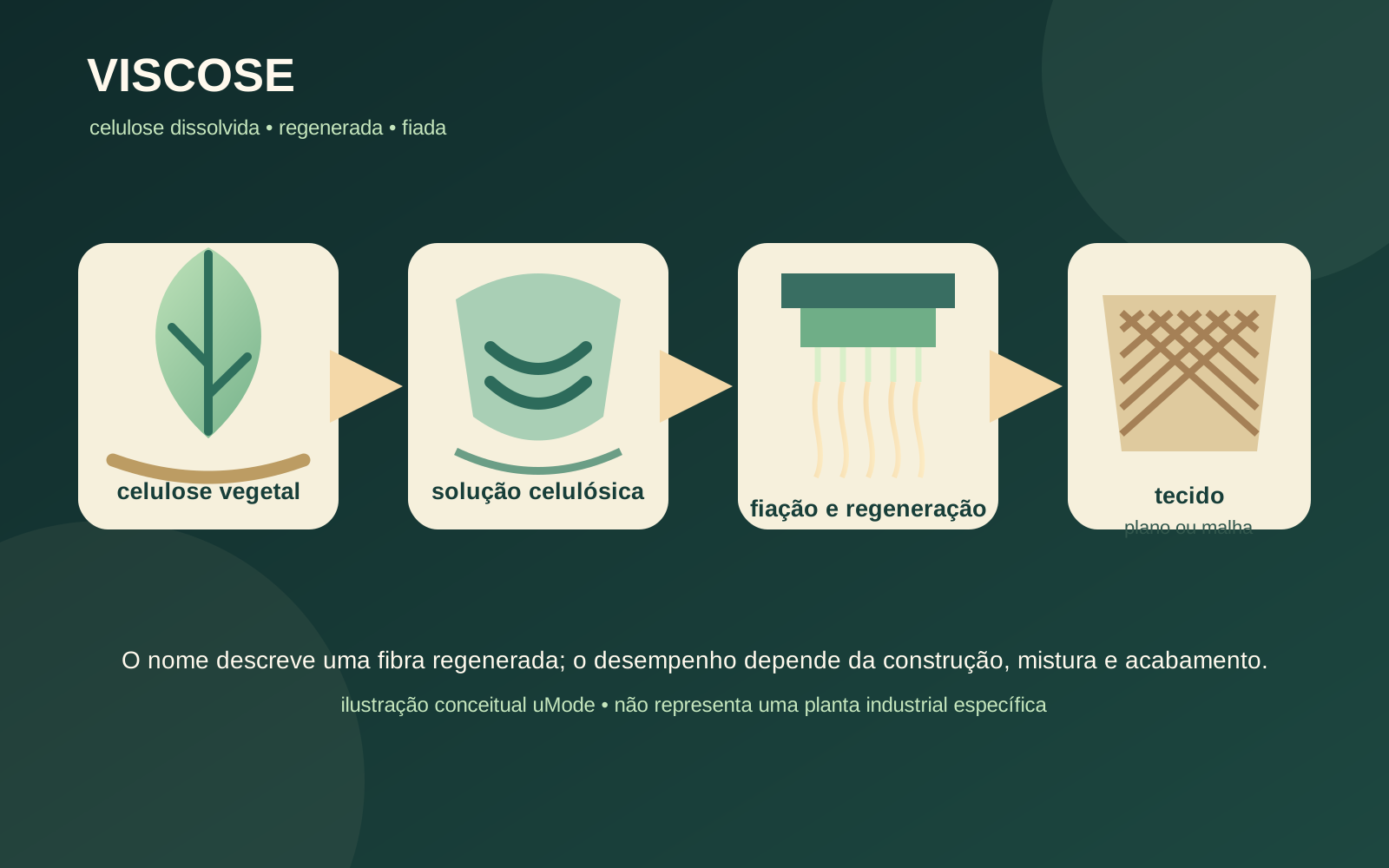
Viscose is a regenerated cellulosic fibre made by the viscose process and used as a textile material in yarns and fabrics. The name identifies the fibre, not one fixed appearance: construction, blends, finishing and wet-state behaviour must be assessed on the finished article.

Fashion product technical specification
A technical specification is the controlled information set that translates an approved fashion product into verifiable sampling and manufacturing requirements. It brings together drawings, materials, measurements, construction, tolerances, identification, labelling, comments and revision history; its content varies by category, company, market and stage.
Sources
Want to apply this to your operation?